


Processing
Likes
Comments
Share


@Wicked_Stix
Follow
Day 34 Gave her a flush and fresh nutrients. Added a little maxibloom. Switched lights to 12/12.
Nutrients per gallon
.5 tsp maxigro
.25 tsp maxibloom
.25 tsp armor si
.5 tsp calimagic
.1 tsp 90/10 humic/fulvic acid
Ph to 6.0

Processing
Likes
29
Share


@teddaykgb
Follow
okay, I was a bit confused with the dates uploading the diary, put these pics and video in week 4 of flower yesterday...
last pictures and video are at day 33F
they got dense bud compactor this week except the grinspoon...
dense you have to use once in the last 3 weeks of flower each, minus the flush. so week 5-6-7 of flower.
grin will get it at 11-12-13....:D:D

Likes
7
Share


@jojopfoh
Follow
Responding well to the bloom nutrients. it is so wide and tall now. I will defoliate and LST this week. She is just exploding. I did some defoliation, removed lower buds and added more stakes to open her up. Her bud stacking is remarkable

Likes
517
Share


@Legendaryseedthumb
Follow
Hello guys I’m sorry that I missed one week, the last week when she turned pink!
Day 101 - harvest day, I had to wet trim my plant because i have problems with the humidity, it’s 98% rh outside and raining like hell.
I haven’t invested in a dehumidifier yet didn’t think I had to use one🤦♂️🏽
Day 103 - day 3 drying
Day 104: today I hade to cut the buds from the branches because my rh is to high hahaha!
😃
Day 105: I put my buds to jars today. I had a total of 124g trimmed buds!
Day 106: had to put my buds outside the jars for 12hr for now to start with, had them over night and rh was 70% in the jars… having them now for drying again in 55%-60% rh

Likes
3
Share

@IIIStonerIII
Follow
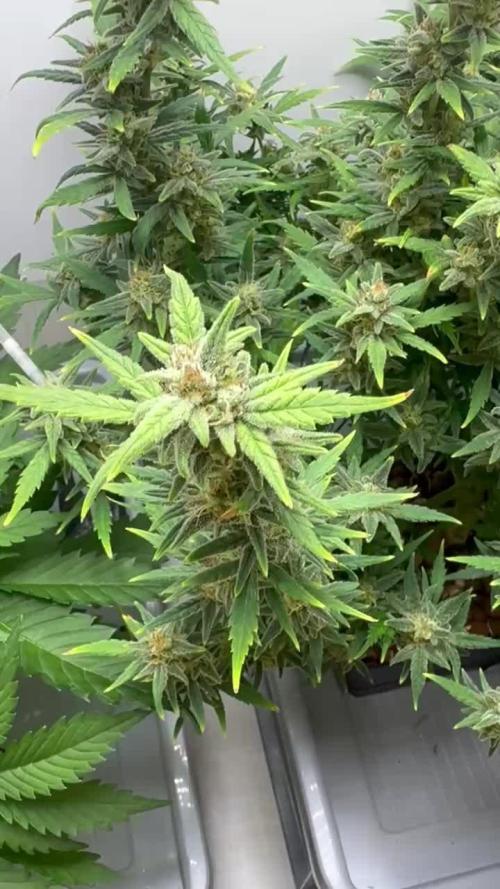
Last update. ill let her be, just a few more days in PH regulated Tapwater then' she'll get the cut. theres already a 2nd plant waiting to flower in there so im no to sad about the end. this was definitely my biggest learning experience when it comes to growing. good she was super forgiving. ☺️

Likes
17
Share


@rockbo47
Follow
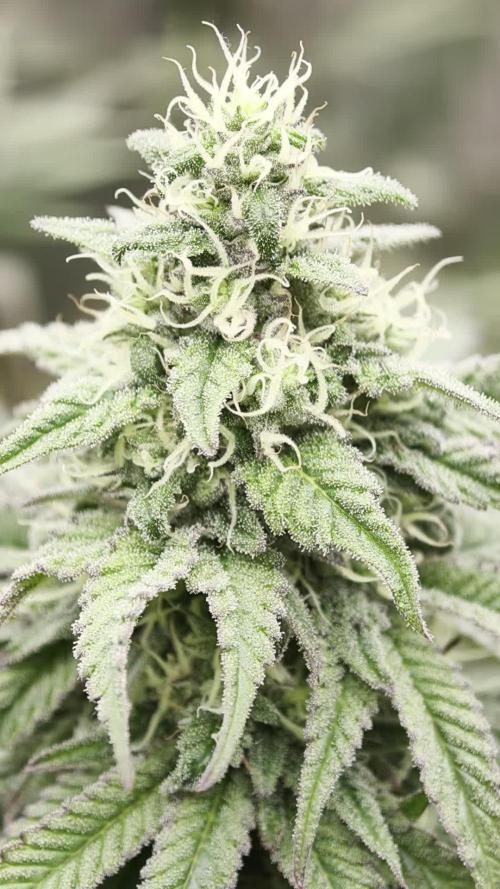
SUMMARY: Still on Mid Bloom strength nutes this week (+ 1 tablespoon of molasses per 5L). Irrigating once every 24hrs as always with her taking in about 2.2L average per day and always aiming for 20-30% runoff. Whilst she has many tops, they're very skinny and I'm not sure they are going to fill out to be honest.
DAY 58
------
Friday 19th February 18:30
I found the tent at 28% RH. No idea how that's occurred but I did notice it was hotter then usual this morning. I turned the dehumidifier of for a couple of hours and it jumped back up to 61% and so I will just set it to 55% RH.
I fed Jesus 2.2L of early bloom nutes which produced 195ml runoff (9%). Will up this back to 3L tomorrow. I adjusted a couple of ties to expose more bud sites. [24°C/52%]
DAY 59
------
Saturday 20th February 11:30
The tent temp has been sat at around 23°C overnight somehow. The dehumidifier keeping the humidity around 45-50% seems to also keep the temps between 23-27°C.
Saturday 20th February 18:30
I fed Jesus 3L of mid bloom nutes which produced 1050ml runoff (34%). Looks like i have a humidity problem and so ive reluctantly removed some more leaves from Jesus as she is bushy again after a week or perhaps I didnt defol enough. If I have the dehumidifier off the humidity is in the low 60s but if I lower it to like 45-50% then the temps stays too high between 24°C-33°C. [22°C/64%]
DAY 60
------
Sunday 21st February
11:30
I made 5L of early bloom nutes at a pH of 5.8 and 5L of mid bloom nutes at a pH of 5.6, both made with tap water.
Sunday 21st February 18:30
I fed Jesus 2.5L of mid bloom nutes which produced 825ml runoff (33%). [22°C/49%]
DAY 61
------
Monday 22nd February 11:45
I made 5L of mid bloom nutes with rain water at a pH of 5.9. I am adding half a tablespoon of molasses to every 5L now by adding just enough boiling water to liquify the molasses and then pour it into the feed.
Monday 22nd February 18:30
I fed Jesus 2.5L of mid bloom nutes with molasses which produced 710ml runoff (28%). [22°C/55%]
DAY 62
------
Tuesday 23rd February 18:30
I fed Jesus 2.3L of mid bloom nutes which produced 640ml runoff (28%). With the dehumidifier set to 50% RH it seems to keep it at around 50% RH though the temps between 25-30°C. If I turn the dehumidifier off the RH climbs to 60-64%. Removing more leaves will lower the humidity and I do pluck the odd one every day that is blocking light (I rotate the plants daily 25° per day to ensure all sides get a fair share of light). [25°C/50%]
DAY 63
------
Wednesday 24th February 18:30
I fed Jesus 2120ml of mid bloom nutes with molasses which produced 200ml runoff (10%). The temps have risen to 30°C due to the dehumidifier. It is currently set to 50% RH which keeps the temps around 28-30°C and the RH at around 38-40%. I have increased the setting to 65% to see if that helps lower the temp and increase the RH up to 45-50%. [30°C/40%]
DAY 64
--------
Thursday 25th February 11:30
I made 10L of mid bloom nutes with rainwater and molasses (level tablespoon per 5L). 5L at a pH of 5.9 and 5L at a pH of 5.8
Thursday 25th February 18:30
I fed Jesus 2.4L of mid bloom nutes which produced 700ml runoff (29%). [22°C/55%]
Likes
18
Share

@XII_XII_MrGreen
Follow
I've put them in a bigger tent this week, hope they can get comfortable fast 😀

Processing
Likes
23
Share


@WolverineGreens
Follow
🔥🔥🔥This heatwave is killin me.🔥🔥🔥
Thank God for the rain. Set kickin myself for deciding to hand water when I have everything I need to make an automated system.
Taking clones trying to decide which strains to keep.
Gave my gf's son 2 of the 3 pots that I had, so I'm down to 31 total.
Indoor and outdoor should finish at the same time for a 50 plants harvest in the fall.😀😀
Even if I gotta build my kid a hamster ball, I need schools to open.


Likes
1
Share

@Amboss
Follow
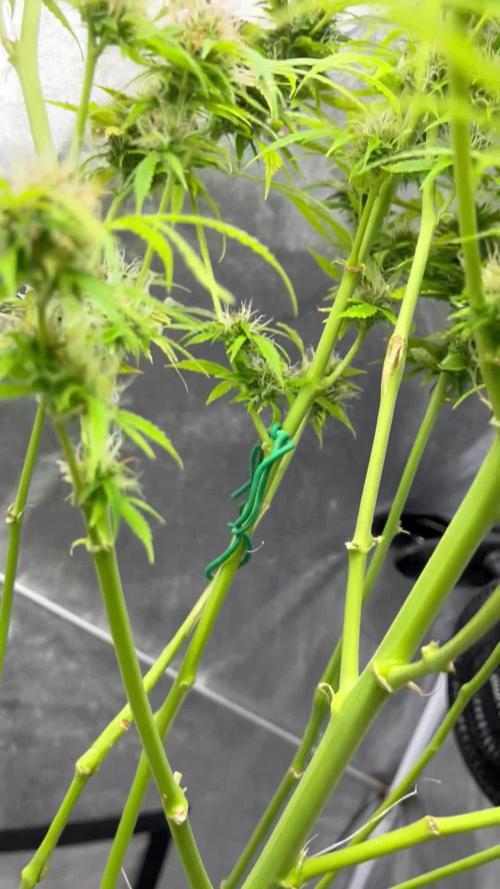
The Beast is growing… i give her another week
She is really big and Drinking Like in all inclusive Hotel💪💪💪only water
Likes
36
Share


@Ferenc
Follow
Day 58, 11th of November 2020:
I set the lamp 15 minutes shorter to switch off earlier so she receives 11:45 of darkness. I would like to imitate the nature when longer nights come with time till the 4th week (when she will receive 13 hours darkness a day 15 minutes minus 4 times = 1hour) so every week 15 min longer darkness for 4 weeks and then back to 12/12 to have bigger buds from the 4th week....
I am in love with this one just look at the structure so nice leaves bushy and the smell is great. Pistils are coming she is showing her sex ;)
Good job Zamnesia....
All good strech will end soon and she will think about more bud making lol...
Fertilization happens every 2nd day with the mix and ratio above.
Let's go ;)

Likes
21
Share


@The_La
Follow
I am 2 days into flushing , the buds look nice and frosty and are smelling good , I will flush for 9 days before trimming.
The pictures are not the best in the world and don't quite do them justice . I will get some pics posted during lights out .
This has been the longest grow I have ever done , I really hope she's worth it !
I've taken these girls as far as I can go , by looking at the pictures when lights are of I can clearly see they are finished .
They are turning purple but that's because of the cold climate here and that temps are dropping to 9c once lights are off .
Likes
8
Share


@BuddyHolly
Follow
Harvesting this week. Probably going to do a staggered harvest, half this week, and the rest next week. Developed nutrient burn, I’m assuming root debris breakdown. I was unable to fully change out buckets once trellis net filled up and canopy developed. Switched to Athena cleanse to help sterilize root debris.
Smells like jelly donut bakery, extremely sticky. Buds stick to wall lol.
The last pictures will be featured in new diary. Breeder Barney’s farm. Mimosa orange punch and Pineapple Express 3.5 weeks old in hydroponic bucket. Blue dream in fox farm ocean forest soil for outdoor transfer. Attempting cloning this season

Likes
5
Share


@Fefa128
Follow
Sorry again for the poor media content. The project was coming to an end and I was starting with another one, my first hydro grow.
Pollen was kept fertile and used after with great results too.
Sadly I don't think I have the notes where I counted how many seeds came from this plant, but well see, I'll keep digging.

Likes
19
Share


@ArtisticGrown
Follow
Hello, the time has come We have harvested the Guava Slushy! it wa a long run she was such an amazing plant, I learned a lot had my ups had my downs! We made it through even tho we struggled with heat in these last weeks of flower causing the plant to be stunned. I am newe to growing and learning along the way! I am so greatful for this grow in the 5x5. I used half the plant to freeze and make bubble hash.
She smells like sweet sweet melons oh my!
I waited tell the thrichomes were milky!!
Here are a bunch of photos.
Ill be updating more soon! MUCH LOVE
lets give it to the guava
Likes
52
Share

@Targona
Follow
Hello GrowDiaries friends.
74 days since my little girl sprouted from seed/harvest time🌱
Technical and general parameters from the breeder Original Sensible Seeds:
OG Eddy Lepp Auto 💚🌺💚🌺
Growing OG Eddy Lepp Auto by the breeder:
OG Eddy Lepp Auto is a cannabis strain created in honor of medical cannabis activist Charles “Eddy” Lepp.
With a predominance of indica, it produces dense spherical buds with a rich dark green color and a touch of dull brown, which highlight the bright orange pistils that sparkle like flames. From seed to harvest in less than 70 days
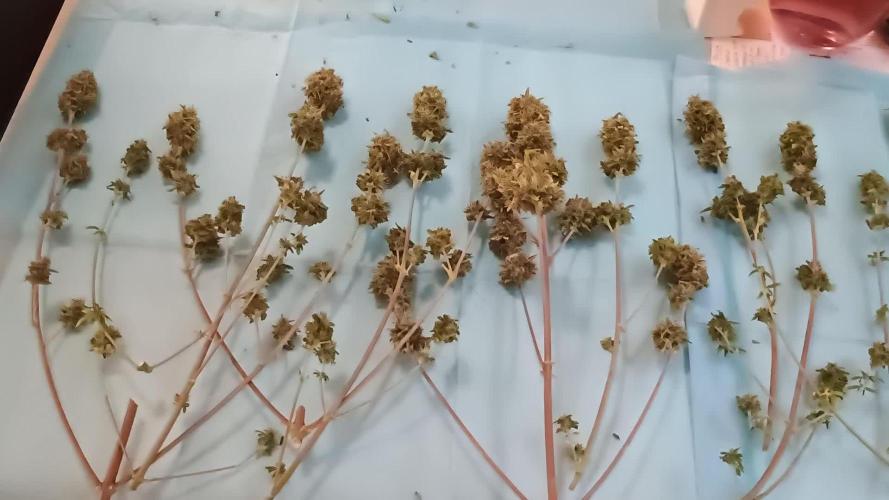
My experience: I made two major mistakes when growing - high pH at the beginning of flowering and over-fertilizing during one watering 💩💩 It affected all the plants in the tent. Some more, some less. This plant was one of the more resistant ones. Autoflowering plants are very sensitive, this strain did very well in this test. I really like it and it has incredibly hard and thick buds 💚🌺🌱 I am really very happy with the harvest result 👍🌞
OG Eddy Lepp Auto strain data sheet
Brand: Original Sensible Seeds
Parents: OG Kush × Grape Ape × autoflowering genetics
Genetics: Hybrid 50/50
Flowering type: Autoflowering
Flowering time: 60 - 70 days
THC: 22%
CBD: Low
Terpenes: Dom. terpene: Limonene
Other: Myrcene
For growing I used:
----------------------------------------------------
Growing tent Mammoth PRO+ 80: 80x80x180 cm
1x circulation fan: 15 W 🌬️
LED lighting: Mars Hydro TS 1000 - 150 W - vegetation and flowering 💡💡
Exhaust: duct fan - RAMTT100 🌬️
Odor filter: carbon filter PRO-ECO HF 160-240m3/h - 100mm - maximum air flow up to 240m3/h
4x Airpots 11 l
I mix the substrate:
Biobizz Lightmix + Perlite + Coco coir
For sale here 👇👇👇👇👇👇👇👇👇👇👇👇:
⚡⚡⚡⚡⚡⚡https://originalsensible.com/original-sensible-seeds-og-eddy-lepp-auto~22667 ⚡⚡⚡⚡⚡⚡
Thanks for the likes :)
See you soon 😍😍
Likes
1
Share

@PicoDeGallo
Follow
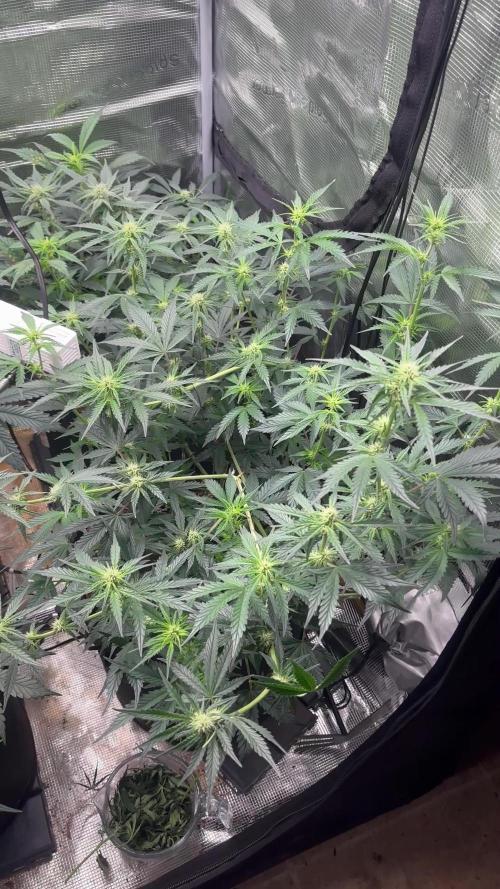
Fast Buds RF3 Auto Mixed pack (4 of 5 seeds)
Everything is coming along fine.
I pinned down most of the branches last week but, the #4 plant is starting to stretch so I added 2 more pins to get the head space more even for the light.
The #1 and #2 plants are starting to get some frost and look like they might be the same variety.
Likes
1
Share

@420abbybox
Follow
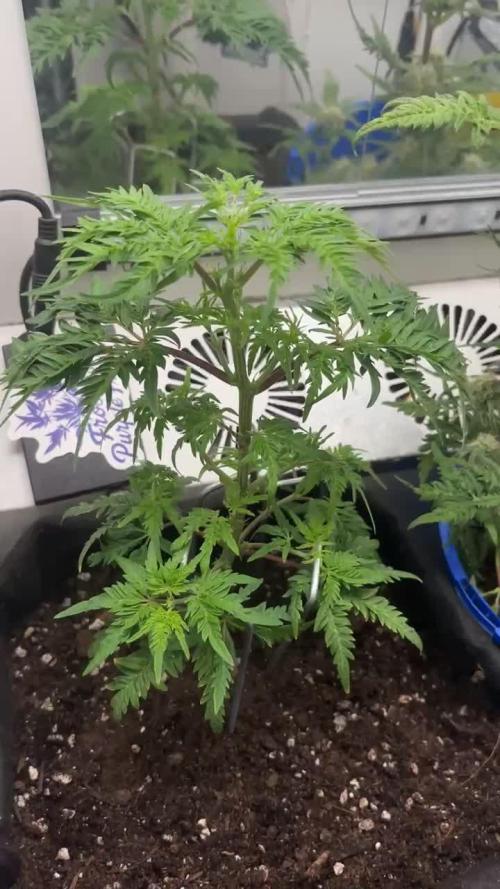
On the first week of flower after 2 weeks in seedling stage and 10weeks of vegative growth it is ready for 12/12 switch with multiple side branches and good node spacing looking forward to seeing the stretch/start of preflower

Likes
74
Share


@AsNoriu
Follow
Day 48. Very busy week for me, this weekend I'll make a plan and we will see were each girl is ...
Till then only pure water all week.
Girls are starting to pump up and maybe I'll have 2 ounces from half of the plants, that's a lot better than my first view after holidays was ...
There is one problem too, as seen in photos, one Lemonade OG in stucked in veg mode, her sister is second biggest plant in all tent after FB Strawberry Pie. Hope she will catch up others soon ....
Happy Growing !!!


Likes
4
Share


@Ibgrowing
Follow
First week of flowering!
I chose to also do some lst on this lady, a bit of a different approach. She survived a couple of very warm days(32°C). The lower leaves started to die off so I used some more nutes.
Watered with 2l(nutes), 1,5l(no nutes) and 2l(nutes).
She is starting to smell a bit also, looking forward to seeing the buds!