


Likes
Comments
Share


@Crusty_Juggler
Follow
60x60 cm tent in a 1920's peek-in-closet
Oversized vent for silence
High power DIY LED
True SoG 12/12 from seed with 15 plants in 2L pots
Watering all plants in bottom tray with 30% of total pot size (10L)
WEEK 1
DAY 1 - Germinated in paper towel
DAY 3 - Planted into pots + Lights ON at 125w
DAY 5 - All plants have broken soil
DAY 7 - Slight stretch - Light at 185w
WEEK 2
Two of the Iced Out are lagging behind, others are on point - I'm trying to push light and nutes to the max.
Extraction fan (AC infinity Cloudline T6) on level 2.
DAY 13 - First full watering (10L) with 20 ml Canna Terra Vega
DAY 14 - Circulation fan turned on (low) during lights on
WEEK 3
Good growth, two Iced Out still lagging
DAY 18 - Light at 225w, Extraction fan on level 3 during lights on
DAY 20 - 2nd watering, 8L with 30ml Vega + Light at 250w
DAY 21 - On point, mostly :) Could've pushed nutes a bit more from the go
WEEK 4
DAY 24 - So far this week I'm just kicking back and watching them do their thing. The two lagging Iced Outs are trying to catch up.
DAY 26 - Watering 10L with 50 ml Vega (one day too late...) + light on 300w (max)
DAY 28 - 4 weeks from popping the seeds, looking good except for the two Iced Outs, one of them is trying to get with the program, the other... Well, some plants are just pricks.
WEEK 5
I think this is the week we'll see them take off :)
DAY 29 - Plants are starting to show sex, removed 2 Urkle Mints males, the other two are females, the rest are fems so we're down to 13 female plants total with only a single weakling
DAY 29 - Watering 8L with 50ml Vega (shouldn't have been later than today!)
DAY 33 - plants exploded over the last 4 days and most are stretching and starting to flower
DAY 33 - Watering 10L with 60ml Vega (feeding Vega once or twice more then we switch to Flora)
DAY 35 - Just cruisin' 😎

Likes
24
Share


@Kitties_and_Colas
Follow
Not a record breaking yield but a few rock hard colas.. first time we've topped an auto and in not displeased with the results..we have a bad habit of not weighing wet/dry as this is all for personal use but we will get weights on the next plant... rough guess would be 1.5oz maybe a little more..this is a very sleepy strain but has been a great change from all the Kush..thanks for reading and happy growing 🐱
Likes
10
Share


@HideAndFly420
Follow
Flowering period started, i added adv nutrients to biobizz line and i just have to understand the reaction of blue dream, i just think there is something too much.
I m not sure cause i'm experiencing problems with temperature and humidity too, so i can't exactly recgnize wich is the problem now.
i'll update next week hoping the problem will be solved.
Let's go!

Likes
142
Share


@MadeInGermany
Follow
Hi everyone 🤗
This week it looked more and more astonishing after opening the box a wonderful sweet smell wafts through the room 👍.
A few days ago the Blue Cheese Phenotype 1 was harvested and placed in the dark room :-).
This week both Kosher Tangie Kush phenotypes will be harvested 👍.
Next week the Blue Cheese phenotypes 1 and 2 will be harvested ;-) everyone else needs a while 😀.
I wish you all a nice week, stay healthy 🙏🏻 and let it grow 🌱👍


Likes
5
Share


@DemonDabsSolventless
Follow
🚨🚨🚨🚨🚨
Week III
🚨🚨🚨🚨🚨
A WEEK OF A LOT OF PATIENCE, PLANTS STOPPED AND I TRIED TO MODIFY THE WIDE ASPECT OF LIGHT TO UNLOCK THEM, AS I HAD ALREADY SCHEDULED LET'S PULL ON TO 6 WEEKS OF VEGETATION AND WAIT FOR BETTER DEVELOPMENTS
📝📝📝📝📝
Notes
📝📝📝📝📝
CHANGE IN THE WATERING JOURNEY, LEAVING 1 WATERING DAY FOR 2 DRY WATERING FOR EVERY DAY NO, BEING 1 WATERING WITH NUTRIENTS AND ANOTHER WATER ONLY.
📝📝📝📝📝

Likes
5
Share


@RastaRick
Follow
Full on flowering. Gave first 10ml dose of bio pk 5-8 on day 37 with 1tsp bactrex in 1L water. Triton Biscotto Lime Auto is a bit behind but looks ok. All got massive defoliation and still tons of leaves... Natural form maybe was a mistake hahahah


Likes
10
Share


@Gram_Solo
Follow
Tropicanna Banana is all done. 2 weeks in the jars to cure now.
got just over 2 ounce of this plant so not too bad. should be a good daytime smoke.


Likes
67
Share


@Basementganja
Follow
Day 84 - Truckin steady!
2.5 gallons dosage of the above nutes every 4 days! This weeks food has the addition of dry koolbloom (3.1 grams / 2.5 gallons).
Just plucking the occasional leaf that looks at me funny, and watering when dry! (every 4 days)


Likes
24
Share


@Canadian
Follow
Day 92 from seed the plant has responded very well to lifting her up to have more exposure to the light the buds start to fatten them right away unfortunately it's too late to get huge buds as I was hoping in the beginning but nevertheless for sure it will give me a very good quality flower despise the lack of light in the most important weeks for Bud development and unfortunately that time cannot be claimed back despise that she looks beautiful and I'm sure she will be delightful to smoke .
Thank you for reading I will continue to update have a happy grow.

Likes
14
Share


@CannabisKreep
Follow
#1 is really bringing in the purple tones now, the smell is unbelievable, very strong and potent.
They are all getting really nice orange hairs that contrast well with the light green crystal coated buds.

Likes
7
Share


@Stickygreens420
Follow
3/20/2023 - Day 22 Flower: So far the plants look like they handled the big defoliation just fine. Nice and healthy and they are all preying. Seeing the first signs of some tricomes.
3/22/2023 - Day 24 Flower: watered 4 gallons of water at at a 6.6 ph mixed with Jay Plantspeaker Quillaja as a wetting agent, Rootwise Enzyme Elixer, and Bio-Phos, BuildASoil Big 6, BuildABloom, Coconut Powder, Pure Protein Dry, Fermented Comfrey and Fermented Peach. Not much to report. Plan to keep the plants on 12/12 for one more week, then drop to 11 hours on and 13 hours off for the final weeks of flower.
3/26/2023: watered 4 gallons mixed with ThermX-70, BuildABloom, Rootwise Bio-Catalyst, coconut powder, and Yah-Whey Thrive. Went lighter on the nutrients today. Figured I've gone heavy enough for a while, so a lighter feeding couldn't hurt. Overall, the frost is coming on and the flowers are starting to add some weight. Other than the leaf curl issue from a couple weeks ago, everything else continues to go smoothly.

Likes
15
Share


@420DeepGrow
Follow
Gracias al equipo de Seedsman y XpertNutrients sin ellos esto no sería posible.
💐🍁 Alaskan Do-Si-Dos:
Alaskan Do-Si-Dos ha sido desarrollada por expertos como una versión mejorada de la siempre popular variedad Alaskan Purple de Seedsman. La introducción de la genética Do-Si-Dos en la Alaskan Purple ha creado un híbrido índica/sativa que aumenta la potencia y el rendimiento al mismo tiempo que mejora el perfil de sabor y sigue siendo versátil en lo que respecta al cultivo en exterior.
La Alaskan Do-Si-Dos está destinada principalmente al cultivo al aire libre y en invernaderos. Las plantas crecen altas y prosperan en climas fríos, templados, cálidos y secos, al mismo tiempo que se desempeñan bien en altitud. Esto no impide que se cultive en interior, pero estas plantas grandes necesitarán mucho espacio. Las plantas muestran una resistencia moderada al moho pero, si se cultivan en interiores, hay que tener en cuenta que son RUIDOSAS, por lo que se beneficiará del uso de filtros de aire de carbón. En exterior, en latitudes septentrionales, la cosecha está prevista para finales de septiembre, mientras que en interior las plantas tardarán entre 8 y 10 semanas en completar la floración. Los rendimientos en exterior son muy altos y pueden superar fácilmente los 750gr/planta, mientras que en interior los rendimientos son elevados, hasta 600gr/m2. Los cogollos maduros tienen una densidad media y mantienen un color verde medio.
🌻🚀 Consigue aqui tus semillas:
https://www.seedsman.com/eu-es/alaskan-do-si-dos-feminised-seeds-sman-aldsd-fem
🍣🍦🌴 Xpert Nutrients es una empresa especializada en la producción y comercialización de fertilizantes líquidos y tierras, que garantizan excelentes cosechas y un crecimiento activo para sus plantas durante todas las fases de cultivo.
Consigue aqui tus Nutrientes:
https://xpertnutrients.com/es/shop/
📆 Semana 9:
El engorde de los cogollos está prácticamente terminado y solo falta que maduren un poco antes de ser cosechada.
Gran trabajo por parte de mis colaboradores, estoy bastante contento con este grow, el próximo tendré más atención en la etapa de crecimiento, la cual es muy importante si quiero obtener una cosecha de calidad.
A partir de ahora agua hasta el fin.

Likes
19
Share


@CanabisLoverHobbyGrower
Follow
Explosive growth this last week,.. especially gorilla cookies but all really,.. looking healthy,... roll on next week 👌
Processing
Likes
8
Share


@Lazuli
Follow
the flowering starts to kick in now, the stems of this plant smell like cherry bubblegum with a hint of glue

Likes
3
Share


@Dargaville_Dukes
Follow
Everything is going great. They've responded well to topping and training. Two more weeks before changing to flowering cycle.
Likes
4
Share

@GothBotanical
Follow
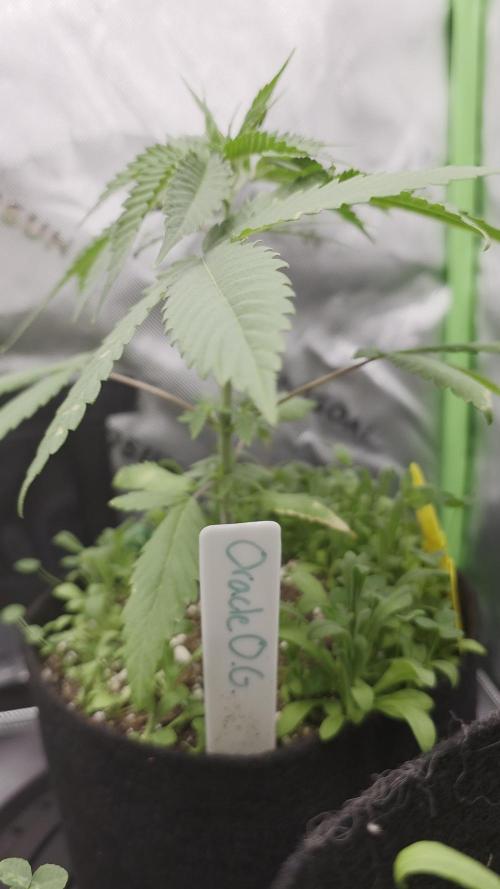
This week the photoperiods really settled into their training rhythm. Early in the week I introduced silica into their watering for added stem strength. Midweek (Sept 4) I topped the plants above the 4th/5th node, leaving clean spacing to avoid splitting, and also removed the lower nodes to simplify their structure for the 32×32 tent. By the end of the week, each plant was forming four healthy mains that should train out evenly.
Early in the week I also cleaned up the soil surface by pulling out some weeds that had sprouted in the cover crop mix. I originally mistook them for thyme, but once they developed it was clear they weren’t. Removing them freed up space and ensured the true cover crop and main plants had full access to water and nutrients.
The plants showed no stress from topping or pruning — leaves stayed a strong, even green, and they were “praying” toward the light after each adjustment.
I also uppotted them into their next pots this week. Roots had begun filling their containers, and the timing lined up well with topping. Each transplant went smoothly, and the plants showed no signs of shock afterward.
On the feeding side, I watered with silica and began brewing a compost tea (worm castings, kelp, a touch of fish emulsion) for a 18–24 hr cycle to use in the next watering. Watering cadence was every 2–3 days, depending on dryback.
Overall, week 5 was about building structure and resilience. The plants bounced back quickly from topping, are holding great color, and are on track to fill out the tent evenly as training continues.

