


Likes
Comments
Share


@Naujas
Follow
There are no photos for a few days, I was away on a short vacation :) when I returned, I immediately started working with her, I cut off the single leaves, and used a little LST, Overall, the girl looks really beautiful;) strong, thick branches, I think she will give really tasty buds :) It is an autoflower, but it is not blooming yet, I think it will start soon, all my auto strains that I have grown before, started really earlier, but it is not a problem for me, and maybe even + she will be bigger with bigger flowers :) good luck to everyone :).

Likes
2
Share


@GodZilla_Owner
Follow
🔄 Looking back:
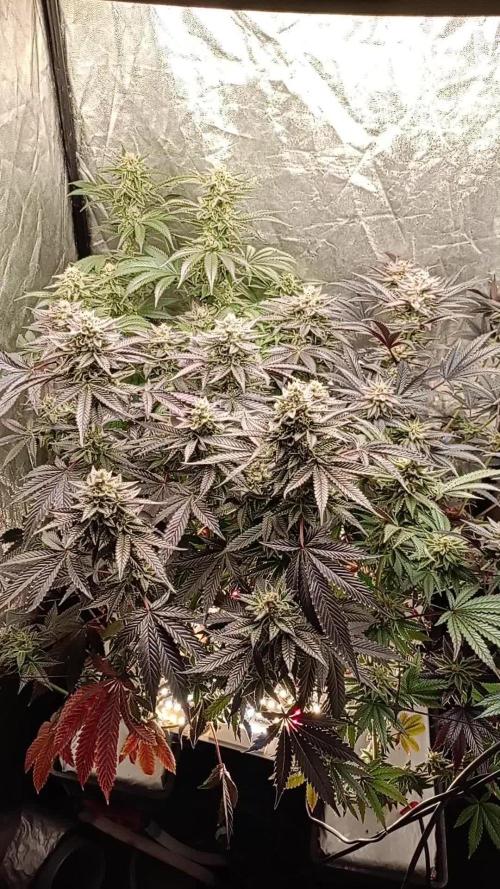
Mimosa Evo #3 (Day 0 of flower) is still doing well overall, but continues to show signs of overfeeding 🚫
She doesn't seem very hungry, so I’ll lower the EC further – aiming for around 0.8 or maybe even 0.7.
🕒 Flowering begins:
This week I flipped Mimosa Evo #3 to 12/12!
Stretch is just around the corner 🌿📏
Really curious to see how much she'll take off in the next days – it’s getting exciting now!




Likes
25
Share


@Belverde
Follow
Ola guys.. First day of flowering for this two super Cookies Kush plant..
For now they aren't directly under the Black Dog light😍, because I don't have much space...but in a couple of days I want to put they in better and definitely position..
I cut off some leafs and small branches, and I spraying they with a mix of 2 ml Acti-vera and 2 ml Fish-mix..and they, apparently, responds well..
I never do it before..so..we will to see what's append..
Hope the best, and.. Thanks for the time to reading🙏..
See you next week.. bye 😊✌️

Likes
50
Share


@Blabina
Follow
😍 And here we are. 😍
👻 Every explanations about the moovie and what I did are written at the end of the video. 10 minutes of your life to watch 57hours and 54 minutes of my Quickgreen's life. ♥️Shot in 2k ♥️Watch it fulll screen ! 👻
♫♪ Music : Act I Year 1 of Akhnaten's Reign (Thebes) - Scene 1 Funeral of Amenhotep III ♥️♫ by Philip Glass ♪♫ End credits : Act I Year 1 of Akhnaten's Reign (Thebes) - Prelude - Refrain, Verse 1, Verse 2 ♥️♫ by Philip Glass ♪♫
😻It was a lot of work while I was feeding them at the same time, I got a small place for the grow area and the camera (who isn't small at all).
💪Thank you to my dwarves who accompany me during this creative process 💪
Enjoy the moovie ! 👻
👉 12th of october 2021 / DAY 6 👉 Shooting the film from day 10 late at night, this feed was not too hard (I bumped the tripod of my camera on day 5) 👽Calmag 1.6 ml/2L + 👽 Acti-Vera 0.8ml/2L 👽Bio-Grow 0.6ml/2L 👽Bio-Heaven 0.8ml/2L 👽Terra Aquatica Root booster (GHE) 10 ml/2L /// p.h. 6.3 EC : 07
I mooved a bit while feeding Quickgreen, the big star of the movie, during the shot... I will take some pictures of the 2 others on the following days when the moovie will be over.
👉 13th of october 2021 / DAY 7 👉 Finish and uploaded the moovie. First time my lovely quick have a light break !!! Lights where on for 3 days. 12h00 to 18h00, lights are off.
18h00 : 👽Calmag 2 ml/2L + 👽 Acti-Vera 2 ml/2L 👽Bio-Grow 0.6ml/2L 👽Bio-Heaven 1 ml/2L 👽Terra Aquatica Root booster (GHE) 10 ml/2L /// 😇 p.h. 6.0 EC : 07 degree 22° 😇 Run-off : The smart pot are in direct contact with "fresh" wood, naked wood so I don't know if the run-off is accurate despite the plastic plant cup i've put under them to retrieve the water and to test it : 😰 Quigreen (moovie star) : E.C. 1, ph. probably 7 degree 19° ... 😰 QuickPink : E.C. 1.2 ph 7.2 degree 19° 😰 QuickBlue : E.C. : 1.1 ph 7.3 degree 19°
Tent : Temp 24.2°- 19.5° // 61-81 % (light on - light off)
👉 14th of october 2021 / DAY 8 👉 👽Calmag 1 ml/1L + 👽 Acti-Vera 1 ml/1L 👽Bio-Grow 0.3333 ml/1L 👽Bio-Heaven 1 ml/1L 👽Terra Aquatica Root booster (GHE) 5 ml/1L /// 😇3 L. p.h. 5.9 EC : 08 degree 22° 😇 Run-off : from 0.8 to 1.2, quick blue seems to have troubles, ph seems decreasing, 6.9 about.
👻👻👻 New video : x3 speed with new music ! I keep shooting so I am adding materials, I will keep shooting until I have to close the tent in flow (smell reason)... Let's do it !👻👻👻 Edit : I've left a black frame (you will see shortly a fast cut) to show when the light turn off. So 6 hours in real life are not showned anymore since today.
👻💪😍Dwarves POWER 😍💪👻
👉 15th of october 2021 / DAY 9 👉 12:00 : took dailies back and added in editing timeline. Mooved the light from 100cm to ☼ 79cm (31inch) MAX 24.4°//92% MIN 20.4°//45% : average : 23°//61% Fan is on since yesterday (not the extractor but tent is a bit open on top so... we are good. /autoflower power
18h00: 👽Calmag 2 ml/3L + 👽 Acti-Vera 2 ml/3L 👽Bio-Grow 1 ml/3L 👽Bio-Heaven 2 ml/3L 👽Terra Aquatica Root booster (GHE) 15 ml/3L /// 😇3 L. p.h. 6.0 EC : 07 degree 23,8°
👉 16th of october 2021 / DAY 10 👉 12:00 : took dailies back and added in editing timeline. 👻👻👻 New video : x5 speed ! ... Let's do it !👻👻👻
18h00 : 👽Calmag 2 ml/3L + 👽 Acti-Vera 2 ml/3L 👽Bio-Grow 1 ml/3L 👽Bio-Heaven 2 ml/3L 👽Terra Aquatica Root booster (GHE) 15 ml/3L /// 😇3 L. p.h. 5.9 EC : 07 degree 22,4°
👉 17th of october 2021 / DAY 11 👉 12:00 : took dailies back and added in editing timeline.
18h00 : 👽Calmag 2 ml/3L + 👽 Acti-Vera 2 ml/3L 👽Bio-Grow 1.2 ml/3L 👽Bio-Heaven 2 ml/3L 👽Terra Aquatica Root booster (GHE) 15 ml/3L /// 😇3 L. p.h. 5.9 EC : 08 degree 21,4° /// Run-off pretty much the same for quickblue quickgreen and quickpurple. E.C. around 0.9 and p.h from 6.9 to 7.0, I don't know why my p.h is so high....
👉 18th of october 2021 / DAY 12 👉 12:00 : took dailies back and added in editing timeline.
👽Calmag 2 ml/3L + 👽 Acti-Vera 2 ml/3L 👽Bio-Grow 1.2 ml/3L 👽Bio-Heaven 2 ml/3L 👽Terra Aquatica Root booster (GHE) 15 ml/3L /// 😇3 L. p.h. 6.0 EC : 08 degree 21,5° /// Changed light hours : 13h00 - 19h00 dark
👉 19th of october 2021 / DAY 13 👉 19:00 : took dailies back and added in editing timeline.
👽Calmag 2 ml/3L + 👽 Acti-Vera 2 ml/3L 👽Bio-Grow 1.8 ml/3L 👽Bio-Heaven 2 ml/3L 👽Terra Aquatica Root booster (GHE) 15 ml/3L /// 😇3 L. p.h. 6.0 EC : 09 degree 23,3°
👻👻👻👻 /// The moovie (quick green) star IS UNFORTUNATLY NOT the QUICKEST Quick one I have, completly the opposite, she is definitly the slowest to grow (so I will take more time to shoot to have something more "spectacular" to show)👻👻👻👻
👉 20th of october 2021 / DAY 14 👉 13:00 : took dailies back and added in editing timeline.
19h00 : 👽Calmag 2 ml/3L + 👽 Acti-Vera 3 ml/3L 👽Bio-Grow 1.8/2.0 ml/3L 👽Bio-Heaven 2 ml/3L 👽Terra Aquatica Root booster (GHE) 15 ml/3L /// 😇3 L. p.h. 6.0 EC : 1.0 degree 24.2°

Likes
52
Share


@MissFlowerPower420
Follow
Transplanted into big girl pot now . Really pleased with her progress . Keep singing Tom petty last dance with Mary Jane.
Think she's likes it lol .
Happy growing n peace to my fellow herbalists 🕊️🕊️🕊️

Likes
8
Share

@GREENPHOENIX6262
Follow
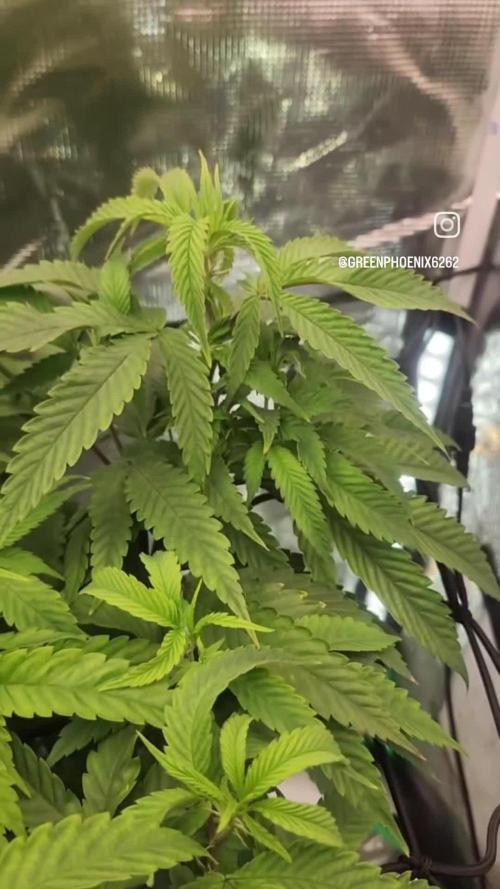
01/31 - HST SOG completed - rebounding accordingly - increased feeds to every other day between clean water and nute feeds - Lights have been picked up to make soon for SOG - looking to pluck clones in about 2/3 weeks
02/04 - Deep into week 13 veg running without any issues - Uptake in Silica and Nitro feeds - HST is coming along accordingly - Clones will be pulled in the next coming weeks - Water feeds have increased to about 1.75 galls every other day.


Likes
19
Share


@RDWCGrowing
Follow
Strain was a great producer.
shake:
41.5grams
77.5grams
2.0 grams
Total= 121grams
FLower:
116.6
112
60.1
57.3
63.7
44
26.1
Total: 479.9grams
TOTAL Trim and Flower = 121 + 479.8 = 600.8grams = 21.25oz
Likes
15
Share


@greenflipcali89
Follow
Finishing final week before the flip to flower. All three ladies looking great. Swapped out taller legs for plant stand supporting Napali Pink (NPK, 13"), compared to The Bling (17") and Mimosa (15"). I pulled all smaller nodes starting at base and working up to 1/2/3 nodes, trying to maintain a tight node spacing for future bud development. Eliminated sucker branches. Released tension wire holding down NPK to get her to catch up with other two. I should have potted up, but plan to tomorrow (Day 2 of Week 1 Flower) to their finishing size of 7 gal fabric pots. Expecting some excellent root growth, resulting in hopefully bigger buds!
Mimosa - she was the one to have first caught Powdery Mildew, having accidentally left her outside when I transplanted a few weeks ago. Sprayed her down well with potassium bicarbonate/veg oil/Dawn/water solution. Eliminated PM, but some leaves burned in process. Nevertheless, she bounced back well. She is also the tallest in the bunch at 18" tall.
Napali Pink (NPK) - she was added in about a week after the other two; Hawaiian cultivar of Hindu Sun/Kauai Electric/Alaskan Thunderfuck; she is also the most hardiest and was the only plant to not get PM! Attribute that to her tropical roots, making her less susceptible to PM. She is the shortest at 13". Changed out the legs of the plant stand to accommodate and bring her up to same height as others.
The Bling - this one surprised me big-time! I was ruling her out initially, after suffering some bad trauma (her main stalk was damaged), which caused her to grow 3-blade leaves! Weeks passed and she bounced back. She also contracted PM, but not as bad. A very lanky strain, with some weird node spacing. Trying to tighten up by defoliating to top node on all stems. She responded well and has since started to grow normally again, with 7-blade leaves.

Likes
13
Share


@YOUNGSTERBR
Follow
semana evolutiva, acertando os fatores que faltavam, mantendo o VPD, coloquei a Tela de SCROG para segurar o topo que já tinha ultrapassado a borda do vaso, os demais ramos continuo puxando para a borda, até agora nenhum Pistilo, fechando 4 semanas muito bem, sem estresse e com diferentes intensidades de técnicas em cada Auto, to fazendo meus próprios testes, coloquei as Auto do vaso mais largo para Green House que eu fiz, para posicionar os vasos do Indoor na posição final e adicionar a tela de SCROG, as Auto Outdoor adoraram a casa nova! seguimos..

Likes
16
Share


@GreeneScene
Follow
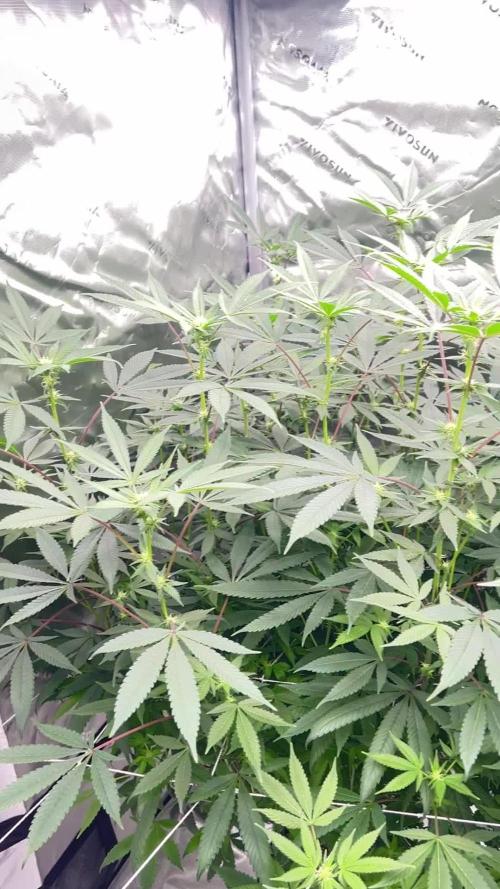
This week made a few oopsies . I gave un-ph’d water to one of the plants “moving to fast” . Started defoliation during this week to attempt to redirect plant energy into establishing a full canopy since flowering has initiated.
Whilst defoliating I broke a branch that had to be taped to save it.
Humidity went out of whack when I stored 4 prepped 5 gal pots for transplant in the tent sooo I’ve got to buy a dehumidifier bc at one point all my plants fell out in a fit .
STILL haven’t filled these pots out, & I’m kinda sure/unsure it’s time to re-amend the soil for flowering. I’m conflicting on waiting until beginning/middle of week 7 so I can flush week 11 & 12 .
I think that covers it pretty well Week 5 in the 📚 📕 📖.

Likes
21
Share


@Mr_Motalovah
Follow
Hello Growers and Tokers! 👋 👩🌾 🧑🌾.🔥💨
THE MOST PHOTOGENIC
Thinking about changing the title of the diary to that.. 😂😂
I swear the camera loves this one..
And it's not the placement because I've tried moving them to that same spot and the pictures just don't come out the same.
I guess the others just need to mature a bit more and they'll be more appealing in pictures because in person they really are.. 😍
Green sensation is really bringing it to the table. Buds are getting fat, stinky and sticky!
I'll have to add a bit of support for sure because some are starting to bend a bit.
Smell is just grrreat!
She's definetly not ready yet so those 40-45 days of flower aren't that correct.. No problem with me though, i'm glad they've got more time to rippen up.
Not much difference in nutrients.. I do use 2ml/L of enzymes every 10 days or so in flower.. Noticed it does great work in the roots during flower.
Hope you enjoy the pics and vids. Taken on day 42 of flower.
Check out the other strains i've got going as well.
Take care out there!
One love!

Likes
24
Share


Likes
9
Share


@Dormando
Follow
BEGIN WEEK 7 -
Day 43 - 12/4 -
No Water.
Light 18hrs.
No adjustment.
Mostly even spherical canopy formed; I'd say seems pretty decent for first ever growing experience! :D
Start flowering Mid-Week 7 - Day 47.
Day 44 - 12/5 -
A cup of plain water.
Light 18hrs.
Day 45 - 12/6 -
No Water.
Light 18hrs.
Day 46 - 12/7 -
Bloom Ferts. 1.3 + 0.9 ml/l
Light 18hrs.
No adjustment.
Day 47 - 12/8 -
Start official Flowering - Light 12/12.
2 cup Plain Water.
Day 48 - 12/9 -
Light Water.
No adjustment.
Day 1 into Flowering.
Day 49 - 12/10 -
1.5 Bloom + 1 CalMag.
Day 2 into flowering.
Red streaks on stems. Bright yellowish green new grown leaves seen. Question.
Overall looks good. Concerned about bright yellow new growth and red streaks on stems.
END WEEK 7.
Likes
3
Share


@Andres2pistilos
Follow
Eata semana comprende del 9/11 hasta el 15/11
Voy a cambiar el fotoperiodo a floración el dia 17/11
Está semana subí la luz al 100% de potencia, he continuado con algunas podas de hojas ocasional
Baje a 2.0 de EC y me mantengo entre 5.5 y 5.8 de pH

Likes
145
Share


@biggreens420
Follow
Love everything about this plant will be training better on the next run see if can improve the yield overall easy enough to grow would recommend this is a different strain than what im use to got a nice taste of its own lovinf the rqs strains at the minute .made some bubble hash from the trim and popcorn buds got 25.6 gram of it from ,3 plants and put a vid n few pics of the process on thanks fot following thid journey with me thanks for reading happy growing guys0
Likes
9
Share


@Kelly420
Follow
Everything is on point. I’m at day 35 of flowering. I remember a while back there were a lot of Barney’s farm haters saying they only got hermaphrodites or whatever their bs. Either you just sucked as a grower or you got an absolute fluke. Everything I have ever ordered from Barney’s farm has not only been stellar. But everything I have grown from them vs the same strain from other breeders , Barney’s farm has always taken number one. Many thanks to those wonderful people at BF across the world. Keep it up. I don’t work for them nor sponsored. But would love to. As they are tha shizznit.
Likes
9
Share


@LetsGrowSome
Follow
Starting week 10 now. Ran into some more underwater issues as well as I think I did not supply enough dry nutes in the beginning to pot since had some slight deficiencies showing before underwatering. Getting close to harvest so just gonna ride it out. Also in process of changing the ventilation system so have had a couple of high temp issues over 80f. Under control for now till I get the setup finished and noted to add more fertilizer to next grow. Even with my errors the girls are sticky and smelling good.
Likes
16
Share


@GODSGIFT_2005_JM
Follow
Grow tent⛺️ check out MARSHYDRO
💡 GROW LAMPS 💡 check out:
VIPARSPECTRA PS2000 (200W) & XS2000 (240w)
MARSHYDRO ts1000 (150w) & fc3000 (300w)
NUTRIENTS: GREENHOUSE FEEDING BIO LINE —-ORGANIC STYLE GROWING
