


Likes
Comments
Share




Processing
Likes
1
Share


@GumGumKing
Follow
This week the plant gets swapped to bloom nutes but no until the end of the week so the next week will reflect that set of nutrients.
Sunday
Res testing at 320ppm, 5.8 PH. Growth is looking great, with more tops forming near top node as plant is forced down. All new growth is deep green. The lower leaves are still spotted but have not progress nearly as much as they have been recently. Adjusted PH to 6.0 to help with calcium uptake.
Monday
Res ppm 320, 6.1 PH. Plants new growth is healthy. LST'd top node so newer lower nodes can catch up for a day or two. Plant is starting to smell. Will let it the plant correct itself, then perform res change by the end of the week, to swap to bloom.
Tuesday
Res: 320ppm 6.1 PH. Lower nodes have filled in more, top node has mostly corrected itself. Calcium deficiency has slowed greatly but still present want to give another day or two of recovery from lst then will do the res change. Removed lowest leaves.
Wednesday
Res: 320ppm 6.1 PH Plant growth is excellent. Largest leaf is slowly showing more calcium deficiency. Flushed and swapped to bloom, orca, silica, cal-mag. 450 ppm 6.2. moved leaves around and rearranged so lower nodes get more light.
Thursday
Res: 420 6.3 adjusted to 6.2. Plant and root growth are looking great.
Friday
Res: 420ppm 6.18 ph, adjusted to 6.25. Plant and roots are blowing up with some stretching beginning. Smell is intensifying but still no pistils, yet.
Saturday
Res: 470ppm 6.3 ph. She's filling out really well. Daily photos show just how quick everything happens.

Processing
Likes
24
Share


@Grnhead
Follow
Just getting going again after some mods to my grow box. I’ve replaced the main CFL bulb with an LED and it is much brighter. I also removed the second carbon filter to create more space in the box. The new setup allows for more even space and light distribution and overall more growing space.
With the additional light I thought I would try out CO2 so I added an Exhale365 bag.
Starting out with 3 plants, 2 Pineapple Express and 1 Pineapple Skunk. There was some type of burn on the first seedling but that was earlier on and it has grown a lot since I first noticed it. I planted the seeds days apart so a few are behind.
Growbox summary:
* grow space: 19”H x 17”W x 21”D
* 4 small, 1 medium internal fans
* 3 gallon hydro reservoir
* 6 inch exhaust fan + 4 inch exhaust fan in sequence
* 150W Mars Hydro TS-1000 (new)
* 3 X 20W LED side lights (+1 new)
* Exhale CO2 bag (new)
Water temps are ranging from 68 up to 70.
It’s a small space, but with light covering all sides I think I can get a decent yield. Last time 3.2 ounces were harvested from it. Hoping to hit 5 ounces this time by creating fewer, but larger colas.
Day 6 update:
* The pinex-1 is looking a little funky. It has weird leaf growth, some minor defects in color, super short compared to the others, and the first leafs are starting to canoe a little.
* pinex-2 and pskunk are looking good and growing well, but the leaves aren’t very green.
* decided to bump up nutrients a little by moving to week 2 on the schedule and diluting to 60%. That took the ppm up from 400(200 base) to 630(210 base). Hoping if they weren’t getting enough nutrients that this will fix it.
* the new light might be a little to bright for these babies. Dimmed it to about 75% power.


Likes
38
Share


@Zurban_Poison
Follow
Hello everyone, people!
This is the largest Autoflowering plant that I have ever grown!)) The photo still does not convey the entire volume and its size .. it is just gigantic! fills a 1 square meter grow tent .. flowering started well! and develops without any problems .. received the first doses today Nirvana and Big Bud from advanced nutrients!!

Likes
7
Share

@Yamamoto420
Follow
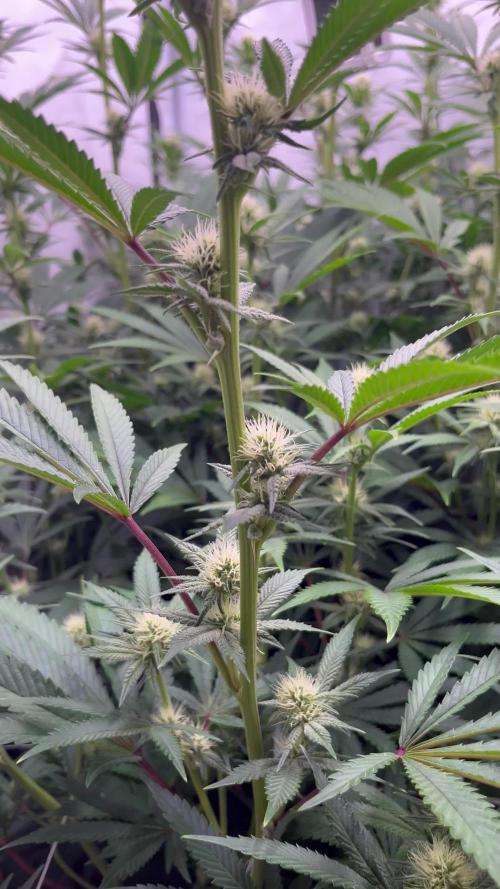
Week 3 flower day 16 the ladies are getting massive and tall, i knew i did a mistake veging them too long but no worries i hold my fingers that the wont starch more then they are, im very limited in height.. anyway the plants are very healthy and they are always hungry. The CO2 is like steroids for them I reach the easy to 2.2 and I know I can push even more. I’ll do it in the next weeks. After 21 days days i going for defoliation, I don’t want to do it now to stress the plans. I prefer to do it after this stretching finish.

Processing
Likes
27
Share


@WestOzzie
Follow
The big stretch has slowed, gathering she's getting ready for flowering now,the smell is getting stronger,im impressed how good she's going and really enjoying my first grow , hopefully she gets fat nugs soon
Likes
92
Share


@DogDoctorOfficial
Follow
🌱 Week 1: The Journey Begins! 🌟
Hey Grow Fam! 🙌 We’re off to an epic start with our TrolMaster adventure, and I’m already feeling the love for the setup, the seeds, and the growth happening in the room! So, let’s dive right in and get into the details of this exciting week!
🌿 Germination Update:
Our first Gorilla Melon seed from Fast Buds didn’t sprout, but no worries—round two was a success! 🦍🍈 The second seed has germinated and is looking full of potential. I’m throwing in a Sweet Seeds Papaya Zoap into the germination station too, so we’re keeping this exciting lineup going strong! Germination is such a key part of the journey, and having a healthy start is what it’s all about.
🔧 Room Build & TrolMaster Setup:
The build is coming along beautifully, and I gotta say, the TrolMaster system is blowing my mind! Everything’s under control like magic 🎩✨, and the TM+ app? Wow, just wow. I mean, I can literally be in the bathroom and still keep an eye on the plants—check all the metrics, adjust settings, and fine-tune what I need, all from my phone! 😂💧 This level of control is next level. I’m loving how smooth and seamless it makes managing the room. The gear is just unreal, and seeing it all come together is truly something special.
🌱 Nutrition Talk:
As for feeding, we’re starting light but smart! I’ve begun with 0.15ml of Regulator and 0.25ml of Startbooster per liter for now. I always believe in starting easy and ramping up as the plants develop. These early stages are crucial—balance is everything. For the time being, I feel this is more than enough to keep the babies happy and healthy. 🌿💧 The Regulator is working wonders in maintaining plant structure and health, while the Startbooster is fueling the early root and vegetative growth, laying down a solid foundation for the weeks to come. It’s about getting it right from the start—too much too early can be a killer. Keeping it steady with precision, that’s the goal!
Big Shout-Outs:
To the amazing team at @TrolMaster, @Fast_Buds, @Sweet_Seeds, @AptusHolland, and all the incredible sponsors—I’m beyond grateful for the support! 💚 And to my GrowDiaries fam and followers, you guys make this journey what it is—thank you for the love, and I’m so honored to have you along for this ride. 🙏
We’re just getting started, and I can’t wait to show you what’s next. Stay tuned for more updates, epic builds, gear reviews, and plenty of insight. Don’t forget to follow me on GrowDiaries, YouTube, and IG for exclusive content, and let’s make this grow the best one yet! 🌿🔥
Growers Love to All 💚💚💚
P.S.- A deep dive into the Full Spectrum Quantum Sensor (MBS-PAR):
The Full Spectrum Quantum Sensor (MBS-PAR) is an essential tool for any serious grower looking to optimize their light environment. This sensor measures photosynthetically active radiation (PAR), which refers to the spectrum of light that plants actually use for photosynthesis—typically between 400 and 700 nanometers and more depending .
What makes the MBS-PAR sensor special is its full spectrum capability, meaning it accurately detects not just visible light but also far-red and UV light—which are crucial for maximizing plant growth, development, and flowering. With this tool, I can monitor the exact intensity of light my plants are receiving, making sure they’re getting the optimal levels for every stage of growth.
By using this sensor in my grow room, I’ll be able to ensure that the light distribution is uniform across the canopy. Plus, it allows me to fine-tune the light output from my ThinkGrow LED setup, ensuring my plants are thriving under the best conditions. Whether it’s increasing light during the vegetative phase or fine-tuning it for flowering, the MBS-PAR sensor helps me keep everything on point. And the best part? I can monitor it all through the TrolMaster app, ensuring I can make adjustments whenever needed—even if I’m not in the grow room!
This level of precision means healthier plants, better yields, and maximum efficiency. It’s a game-changer for taking the guesswork out of lighting and getting closer to growing perfection! 🌱💡
Growers Love to All 💚💚💚


Processing
Likes
50
Share


@BarrieGrower
Follow
Again, added silicate to this grow too, probably should have done only one first to see how it does. Time will tell.
Did some super cropping on this grow too, seems to work.
The plant under to cobbs seems to be doing slightly better. Not really sure as they are just over a week longer into flower. I am tracking this and will know more at the end.
Buds are building and a pretty sight.
Going to water less and more frequently, lets see how that goes. Also during flower I am not going to let them dry out as much. Maybe half way, as best I can and then water again.
Cheers


Likes
2
Share


@Cysolja
Follow
Buds are fattening all the way up the stems now, plant has stopped getting taller and buds just seem to grow now

Processing
Likes
8
Share


@NOLOGIK
Follow
I cut the main top to have a structure with 4 main tops. all the rebirths
change Hours 12/12
the name already says a lot, I cut the main top and put it on the vase, making it look more homogeneous to receive the light, I changed the light cycle in 12/12 for the flowering,
it is a super strong plant thinking about what it has undergone for the first 3 months ...
Likes
41
Share


@KilgoreTrout
Follow
Danger! Problem. One of my top buds got so big it broke the stem. I tried to duct tape it but it didn't take. So I trimmed and started drying.
Started flushing 9/10. getting close!
Tricome pics everyday now


Processing
Likes
93
Share


@Ferenc
Follow
The 7th week started. Based on the Breeder's description it is supposed to be the final week for The Gelato Cookie D'ohpe so it should be ready to harvest. It is my first grow but I can say it needs a minimum of 2 weeks to be ready. I think 10 weeks at least. I have checked another diary with the same strain and it took 10-12 weeks to be finished. I placed the Purple Punch 38 hours Darkness so from now I will give 14 hours darkness and 10 hours light schedule to start flowering. They are in the same tent so I take out in the morning to be in darkness, and put back at night. I did reset the timers. Water: 125 ml 2x daily each plant so altogether 250ml a day for 2 plants. I raise up every week with 50 ml a week per plant. Fertilization the same amount of water the same acacia honey around 2 big spoons and bat guano 1 teaspoon per 1-liter water and I fertilize it 3 times a week every second day on Monday, Wednesday, Friday, plus one-half day like on Saturday once. So from today (Thursday), I started forcing the feminized strain Purple Punch to flower also after 45 days from germination. This week not too much things to say. The Gelato Cookie D'ohpe stopped growing just added an extra 5 cm to its height. Hopefully it focuses on the bigger buds creation. Purple Punch grew an extra 2 cm. End of the week Purple Punch is 37 cm, Gelato Cookie D'ohpe is 70cm.

Likes
84
Share


@bioaccessory
Follow
Если бы я не сидел пустым, я бы даже был бы рад такому неспешному развитию событий - растишка нехотя зацветает, но при этом уже прилично вымахала (≈86см), и это без центральной колы!😋 Всё хорошо, продолжаем полёт.
Из-за ремонта на теплотрассе у нас до сих пор не включили центральное отопление🌡️, поэтому приходится мириться с излишней влажностью💧, спасает кондиционер.
👉планирую добавить еще один досвет😎 - диоды deep red специально для цветения, на отдельной планке, оставайтесь на связи👈
Спасибо, что заглянули, и будьте здоровы! 🙏
Продолжение следует ...😶
Likes
45
Share


@Ultraviolet
Follow
2nd net is up. Early bud formations are promising. holding up to the extremes pretty well, some leaves taking minor damage, but overall, she is holding up, gave her 1 night at 50F see how she would react, stressful. Not advised as it messes with her metabolism, but I want to see if it triggers any anthocyanin response. Love to see her purp up but no signs yet.
Homework.
If Rubisco activity is impaired and it cannot properly function or regenerate its substrate, the plant's leaves are likely to turn a pale green or
lime green, a condition known as chlorosis. Essentially, Rubisco activity is highly regulated and susceptible to various environmental and metabolic factors that can cause it to become inhibited, leading to an apparent failure in RuBP regeneration due to a lack of consumption.
Rubisco regeneration is intrinsically linked to nitrogen supply because Rubisco is a major sink for nitrogen in plants, typically accounting for 15% to over 25% of total leaf nitrogen. The regeneration phase itself consumes nitrogen through the synthesis of the Rubisco enzyme and associated proteins (like Rubisco activase), and overall nitrogen status heavily influences the efficiency of RuBP regeneration. RuBisCO is a very large enzyme that constitutes a significant proportion (up to 50%) of leaf soluble protein and requires large investments in nitrogen. Insufficient nitrogen supply limits the plant's ability to produce adequate amounts of RuBisCO, thereby limiting the overall capacity for photosynthesis and carbon fixation. Maintaining the optimal, slightly alkaline pH is crucial for the proper function and regeneration of Rubisco. Deviations in either direction (too high or too low) disrupt the enzyme's structure, activation state, and interaction with its substrates, leading to decreased activity and impaired RuBP regeneration. (LIME GREEN CHLOROSIS)
Structural Component: Nitrogen is an essential building block for all proteins, and the sheer abundance of the Rubisco protein makes it the single largest storage of nitrogen in the leaf.
Synthesis and Activity: Adequate nitrogen supply is crucial for the synthesis and maintenance of sufficient Rubisco enzyme and Rubisco activase (Rca), the regulatory protein responsible for maintaining Rubisco's active state. Nitrogen deficiency leads to a decrease in the content and activity of both Rubisco and Rca, which in turn limits the maximum carboxylation rate, Vmax, and the rate of RuBP regeneration Jmax, thus reducing overall photosynthetic capacity.
Nitrogen Storage and Remobilization: Rubisco can act as a temporary nitrogen storage protein, which is degraded to remobilize nitrogen to other growing parts of the plant, especially under conditions of nitrogen deficiency or senescence.
Nitrogen Use Efficiency (NUE): The allocation of nitrogen to Rubisco is a key determinant of a plant's photosynthetic nitrogen use efficiency (PNUE). In high-nitrogen conditions, plants may accumulate a surplus of Rubisco, which may not be fully activated, leading to a lower PNUE. Optimizing the amount and activity of Rubisco relative to nitrogen availability is a target for improving crop NUE.
Photorespiration and Nitrogen Metabolism: Nitrogen metabolism is also linked to the photorespiration pathway (which competes with carboxylation at the Rubisco active site), particularly in the reassimilation of ammonia released during the process.
To increase RuBisCO regeneration, which refers to the process of forming the CO2 acceptor molecule Ribulose-1,5-bisphosphate (RuBP) during photosynthesis, the primary methods involve optimizing the levels and activity of Rubisco activase (Rca) and enhancing the performance of other Calvin-Benson-Bassham (CBB) cycle enzymes.
Biochemical and Environmental Approaches:
Optimize Rubisco Activase (Rca) activity: Rca is a crucial chaperone protein that removes inhibitory sugar phosphates, such as CA1P (2-carboxy-D-arabinitol 1-phosphate), from the Rubisco active site, thus maintaining its catalytic competence.
•Ensure optimal light conditions: Rca is light-activated via the chloroplast's redox status. Adequate light intensity ensures Rca can effectively maintain Rubisco in its active, carbamylated state.
•Maintain optimal temperature: Rca is highly temperature-sensitive and can become unstable at moderately high temperatures (e.g., above 35°C/95F° in many C3 plants), which decreases its ability to activate Rubisco. Maintaining temperatures within the optimal range for a specific plant species is important.
•Optimize Mg2+ concentration: Mg2+ is a key cofactor for both Rubisco carbamylation and Rca activity. In the light, Mg2+ concentration in the chloroplast stroma increases, promoting activation.
•Manage ATP/ADP ratio: Rca activity depends on ATP hydrolysis and is inhibited by ADP. Conditions that maintain a high ATP/ADP ratio in the chloroplast stroma favor Rca activity.
Enhance Calvin-Benson-Bassham (CBB) cycle enzyme activity: The overall rate of RuBP regeneration can be limited by other enzymes in the cycle.
•Increase SBPase activity: Sedoheptulose-1,7-bisphosphatase (SBPase) is a key regulatory enzyme in the regeneration pathway, and increasing its activity can enhance RuBP regeneration and overall photosynthesis.
•Optimize other enzymes: Overexpression of other CBB cycle enzymes such as fructose-1,6-bisphosphate aldolase (FBA) and triose phosphate isomerase (TPI) can also help to balance the metabolic flux and improve RuBP regeneration capacity.
Magnesium ions, Mg2+, are specifically required for Rubisco activation because the cation plays a critical structural and chemical role in forming the active site: A specific lysine residue in the active site must be carbamylated by a CO2 molecule to activate the enzyme. The resulting negatively charged carbamyl group then facilitates the binding of the positively charged Mg2+ion. While other divalent metal ions like Mn2+ can bind to Rubisco, they alter the enzyme's substrate specificity and lead to dramatically lower activity or a higher rate of the non-productive oxygenation reaction compared to Mg2+, making them biologically unfavorable in the context of efficient carbon fixation. The concentration of Mg2+ in the chloroplast stroma naturally increases in the light due to ion potential balancing during ATP synthesis, providing a physiological mechanism to ensure the enzyme is activated when photosynthesis is possible. At the center of the porphyrin ring, nestled within its nitrogen atoms, is a Magnesium ion (Mg2+). This magnesium ion is crucial for the function of chlorophyll, and without it, the pigment cannot effectively capture and transfer light energy.
Mg acts as a cofactor: Mg2+ binds to Rubisco after an activator CO2 molecule, forming a catalytically competent complex (Enzyme-CO2-Mg2+). High light + CO2) increases demand: Under high light (60 DLI is a very high intensity, potentially saturating) and high CO2, the plant's capacity for photosynthesis is high, and thus the demand for activated Rubisco and the necessary Mg2+ cofactor increases. Mg deficiency becomes limiting: If Mg2+ is deficient under these conditions, the higher levels of Rubisco and Rubisco activase produced cannot be fully activated, leading to lower photosynthetic rates and potential photo-oxidative damage.
Optimal range: Studies show that adequate Mg2+ application can enhance Rubisco activation and stabilize net photosynthetic rates under stress conditions, but the required concentration is specific to the experimental setup.
Monitoring is key: The most effective approach in a controlled environment is to monitor the plant's physiological responses e.g., leaf Mg2+ concentration, photosynthetic rate, Rubisco activation state, and adjust the nutrient solution/fertilizer to maintain adequate levels, rather than supplementing a fixed "extra" amount.
In practice, this means ensuring that Mg2+ is not a limiting factor in the plant's standard nutrient solution when pushing the limits with high light and CO2.
Applying Mg2+ through foliar spray is beneficial to Rubisco regeneration, particularly in alleviating the negative effects of magnesium (Mg) deficiency and high-temperature stress (HTS). While Mg can be leached from soil, within the plant it is considered a mobile nutrient, particularly in the phloem. Foliar-applied Mg is quickly absorbed by the leaves and can be translocate to other plant parts, including new growth and sink organs.
Foliar application of: NATURES VERY OWN MgSO4 @ 15.0g L-1 in a spray bottle.
Foliar sprays are often recommended as a rapid rescue measure for existing deficiencies or as a supplement during critical growth stages, when demand for Mg is high. Application in the early morning or late evening can improve absorption and prevent leaf burn.
The starting point [of creativity] is curiosity: pondering why the default exists in the first place. We’re driven to question defaults when we experience vuja de, the opposite of déjà vu. Déjà vu occurs when we encounter something new, but it feels as if we’ve seen it before. Vuja de is the reverse—we face something familiar, but we see it with a fresh perspective that enables us to gain new insights into old problems. Come walk in the enchanted forest.


Likes
Comments
Share

@BombBuds
Follow
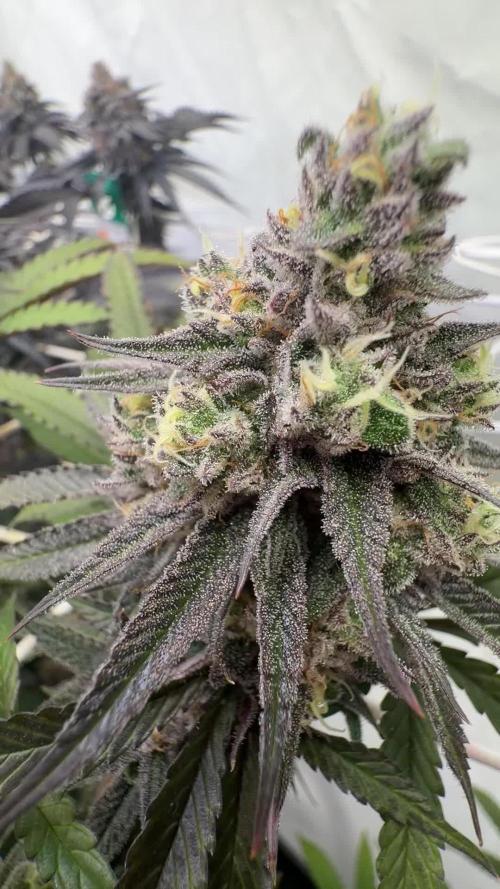
Endspurt! Letzte Woche hat begonnen. Bin sehr zufrieden wie sich alles entwickelt hat, nur leider hab ich an der seifuku 4-5 seeds gefunden ich hoffe das es nur eine teilweise Bestäubung war und nicht alles voll mit seeds ist


Likes
31
Share


@BigBadLion
Follow
Hey guys!
Sorry for the late update, I've been hella busy lately! 😱
This week was good and for that very reason it was uneventful. I did some defoliation to let the lower branches receive more light and it seems the plants received it well. 😁
Matcha still has some weird looking leaves 😰 but I suppose those are old leaves and they are just there because I didn't cut them earlier. Pistachio in another hand is doing great! 😍
I also took some photos of their roots, they look interesting! I suppose they are that way because the root mass below them must be huge.
Anyway, that's all for now. Thanks everyone for reading! 👋
Likes
62
Share


@Biglskin
Follow
2 of them really starting to cannibalise all their fan leaves.. on day 56 and wanted to make day 70. Not sure if I should cut down a few now or let them all keep going til the end.
Got the gnats under control.
Days are going by very slowly 😆
3 different genres of music to go with each strain haha.
Smells are out of this world when I unzip the tent! 24k and sour kosher all smelling gassy with lots of earthy undertones and the gelato just smells straight gasoline.
