Likes
Comments
Share
@Elpicor
Follow
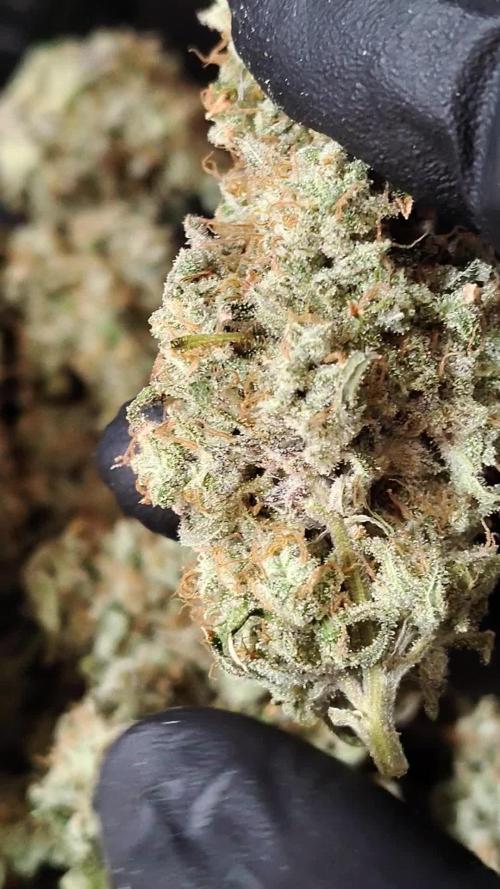
Start 25/10/2024 Harvest Day 74 - 06/01/2025 92 cm jet fuel was the taller No flush, flawless finish 2 ml a week an half before harvest then just watering with pH 8. Smelling exactly as described in Sweet Seeds site, a fruits explosion, special thanks! They sent me a lot of free stuff Thanks! Also thanks to Grow Diaries as my best professor ever...and obviously all of you sharing your magic experience, see ya next two weeks maybe
Likes
47
Share
Sorprendido por la noticia de mi primera colaboracion con MarsHydro 😊🙏 y muy sorprendido tambien por el envio de las semillas por parte de 420FastBuds. La marca numero uno en focos 💡, carpas de cultivo ⛺️, extractores 🌬️ y demás aparatos que necesitas para tu cultivo. Para esta aventura arrancaremos con 💡Mars Hydro TS 1000 Full Spectrum LED Grow Light 150W Regulable y 1 semilla autofloreciente a un ciclo de 20/4. Verdaderos 150w con este TS1000, la mejor luz de cultivo LED para principiantes. Ofrece una luz adecuada para 2-4 plantas 🌱. Su precio razonable, la marcada mejora del rendimiento y el control variable de la producción la hacen amigable para los nuevos cultivadores. Todo un tesoro para cualquier cultivador que este comenzando. Usaremos para esta aventura una carpa de 60x60x90, MarsHydro una carpa para los más exigentes.Con una solapa de cremallera mejorada, dobles cremalleras de metal con forro,reflectante diamante tipo Mylar, postes de metal para una estructura mas solida, no se puede pedir nada mas. Garantizando una respuesta en solo 24 horas tanto si has usado antes la marca como si no. Que decir de 420FastBuds, uno de los mejores bancos de semillas a nivel muendial. Si quieres una Auto de verdad, esta es tu cepa. Wedding Glue auto: Perfecta para concentrados. Una enorme cantidad de resina la hace ideal para aquellos que buscan los mayores rendimientos en extracciones. Auto súper productiva. ¡Esta variedad puede producir hasta 550gr/m2 en 70 días! ¡Entre las más fuertes del 2022! Una autofloreciente potente con un 26% de THC. Terpenos ideales para los golosos. Un delicioso sabor a vainilla dulce que te deja la boca agua. Perfectamente equilibrado. Un efecto bien equilibrado adecuado para uso diurno y nocturno. 💡 MarsHydro TS1000: https://www.amazon.com/gp/product/B07PLY1WKK ⛺️ 60 x 60 x 90 MarsHydro: https://www.amazon.com/dp/B081PN2QDN/ 🌻 Wedding Glue Auto: https://2fast4buds.com/es/seeds/wedding-glue-auto Solo le aplique en la estapa de crecimiento agua con un PH6.5 y humus de lombriz. Octava semana de floracion. Es una planta que ha requirido mas nutrientes que el resto, se han formado los cogollos y han engordado como locos, se han cargado además hasta las hojas de resina. Comienzo a disminuir la cantidad de nutrientes. 📆 Día 71: Riego con nutrientes EC 850. 📆 Día 72: Descanso 📆 Día 73: Riego con agua + flawless finish. Comienza el lavado de raíces. Ha quedado una planta sorprendente. 📆 Día 74: Descanso 📆 Día 75: Riego con agua 📆 Día 76: Descanso 📆 Día 77: Riego con agua
Likes
Comments
Share
Very pleased with the state of the Chemdawg bonsai, the ceramic cupcake reveal is working nicely. Still need to clean up those roots once they firm up a bit. She's also starting to show pre-flowers now. Meanwhile, the main Chemdawg is looking great, the octo-colas are shaping exactly like I hoped, and she's mostly outgrown the overwatered thing. That said, she's a very fast grower and I'm running out of horizontal room. I'll probably need to top her again just to slow her down compared to her tent-mate (Lemon Tart Pucker, growing in a much more indica fashion). Tent is still holding at 600 PPFD, 82 F (28 C) daytime temps, target VPD of 1.0. Did another Rootwise soak across the tent this week, plants seemed to enjoy it.
Likes
54
Share
@HinduGod
Follow
WOW LOOK AT DAT!!! PLANT IS LOOKING VERY VERY GOOD!!! THE SUN GOD AND I ARE ON GOOD TERMS FOR NOW!!!! HE HAS BEEN VERY VERY GOOD!!!! TOOK A COUPLE MORE BIG FAN LEAVES OFF TO LET THE SUN ON DA LOWERS!!!! DAT IS VERY VERY GOOD!!!! PLANT IS VERY VERY HEALTHY WITH NO CRITTER DAMAGE!!!!!😎😎😎 PLEASE COME AGAIN!!!!!
Likes
60
Share
Welcome to Bud Boutique Grow Diary - really appreciate all your love and support :) Dont forget to check out my other current grows! 🗓️ This Week: - Day 9 transplanted 2/2 with mycorrhizal Powder from Great White Shark into a 0.3 liter pots) - all still inside AC Infinity Germination Kit - keep up high humidity with about 80% and open the little air vents of the humidity dome to start with a minimum of air circulation Thank you for still staying with me 💚 ___________________________________________ --- 🌱 Strain (Sponsor) 🌱 --- 🏷️ Cookie Haze by Kannabia Seed Company https://www.kannabia.com/en/feminized-cannabis-seeds/cookies-haze --- 🥗 Nutrients and Feeding (Sponsor) 🥗 --- * 🍸 XPERT NUTRIENTS: Master Grow A+B, Master Root, Enzymes * 📅💪 baseline + additives: 2ml/l https://xpertnutrients.com/ ---💡 Lighting --- 💡AC INFINITY - Germination Kit https://acinfinity.com/grow-accessories/propagation/humidity-domes/humidity-dome-germination-kit-with-seedling-mat-and-led-grow-light-bars-5x8-cell-tray/#product-warranty --- 🏭 Grow Setup --- * 🏠🌿 Indoor: Homebox 120x120x200cm (4x4) * 📐🌀 PrimaKlima exhausting Fan 1180m3/h (running on 60-80%) & Can Light Filter 800m3/h & 1x Fanbox 1x Dyson fan for Air circulation https://primaklima.com/de/shop/ventilatoren-de/ec-ventilatoren/pk160ec-tc/ https://canfilters.com/products/filters/ All Likes and comments are highly appreciated!!! don't forget to check out my Instagram: budboutiquee - Bud Boutique
Likes
1
Share
Likes
68
Share
@Roberts
Follow
Northern Dragon Fuel has been growing good. She has gotten really hungry m, which caused my ph to start tracking upward. I have flushed it back down, and increased feed. Beside that it looks like flowering is right around the corner. Thank you Super Sativa Seed Club, and Medic Grow. 🤜🏻🤛🏻🌱🌱🌱 Thank you grow diaries community for the 👇likes👇, follows, comments, and subscriptions on my YouTube channel👇. ❄️🌱🍻 Happy Growing 🌱🌱🌱 https://youtube.com/channel/UCAhN7yRzWLpcaRHhMIQ7X4g
Processing
Likes
9
Share
The ladies are looking amazing. I'm real happy with their progress. They're keeping a real nice distance between nodes. They got their first feed yesterday at half dose. They've taken it well so will adjust accordingly moving forward. The Banner is putting out crazy roots. It's almost time to put this girl into the 40l smart pot. The lateral growth is thickening. I'm going to top her as soon as I can and do a bit of lst. There is a slight curling on the edge of the leaves(?) but other than that there's no other apparent issues. The Skittles is bossing it right now and will also need to be moved to the smart pot. Brilliant lateral growth and it is pretty much ready to top. The Blue Gelato and amnesia Haze are on Day 7 and are looking great for moving into their second week. They've been moved into their next pot and I'm hoping they catch up with the other ASAP. Update: This lady went into her 46l smart pot on day 18 ant topped at the same time. Time for an explosion of growth and some LST.
Likes
7
Share
@Eddjack
Follow
Sta esplodendo si iniziano a definire le prime cimette. Inizia a emanare anche un buon profumo molto fruttato, per fortuna esistono i filtri ai carboni attivi. Ora sta solo ad aspettare dopo le carenze iniziali si e ripresa alla grande vedremo in futuro che succederà. Dajeforte growes
Likes
15
Share
привет ребята,вот срезал мой куст, вроде не плохо вышло?! посмотрим сколько будет весить когда высохнут )))) амнезия мой любимый сорт,как только высохнут отпишусь какой будет результат ))) 30,06,2021 вот и результат почти 90 грамм,на весах 40 грамм но это моя доля урожая ,я выращиваю в месте с другом так что моя половина 40 грамм сухих шишек и мы еще и покурили пока шишки подсохли, так что приблизительно у меня получилось 85-90 грамм сухих шишек,шишки выросли толстыми но они не плотные,потому и такой результат, посмотрите мой апельсин у него хорошие плотные шишки , он начал цвести в 60 дней , растение без проблем,кто не любит ждать этот сорт не для него ))) 09,07,2021 мой урожай пересох, +35,3 с было очень жарко и я не мог контролировать температуру (( я ожидал результат лучше но не вышло, надеюсь дальше все нормализуется
Likes
45
Share
yesterday did some defoliation ! damn this cinderella jack is some bushy plan! so many leaves and i maybe cut of like 200 leaves from the 4 plant and they still it's looks so bushy. also pinched the tops of all my buds for the Budswelling but i forgot to make a video of it. but i will post the video from my last diary again just to show you what i did with the bud's for this budswelling if you look close to the pictures and zoom in you can see that all my buds have a little brown spot in the middle. that's where i pinched the buds yesterday and is the wound of doing this. but don't be afraid she will recover soon and produce some big fat compact buds with lot's of trichomes ! it worked on my last grow the auto ultimate to get some fat buds so i will be doing this all the time.
Likes
52
Share
Lacewings seemed to have mostly killed themselves by flying into hot light fixtures. I may have left the UV on which was smart of me :) Done very little to combat if anything but make a sea of carcasses, on the bright side its good nutrition for the soil. Made a concoction of ethanol 70%, equal parts water, and cayenne pepper with a couple of squirts of dish soap. Took around an hour of good scrubbing the entire canopy. Worked a lot more effectively and way cheaper. Scorched earth right now, but it seems to have wiped them out almost entirely very pleased. Attempted a "Fudge I Missed" for the topping. So just time to wait and see how it goes. Question? If I attached a plant to two separate pots but it was connected by rootzone, one has a pH of 7.5 ish the other has 4.5. Would the Intelligence of the plant able to dictate each pot separately to uptake the nutrients best suited to pH or would it still try to draw nitrogen from a pot with a pH where nitrogen struggles to uptake? Food for stoner thought experiments! Another was on my mind. What happens when a plant gets too much light? Well, it burns and curls up leaves. That's the heat radiation, let's remove excess heat, now what? I've always read it's just bad, or not good, but when I look for an explanation on a deeper level it's just bad and you shouldn't do it. So I did. How much can a cannabis plant absorb, 40 moles in a day, ok I'll give it 60 moles. 80 nothing bad ever happened. The answer, finally. Oh great........more questions........ Reactive oxygen species (ROS) are molecules capable of independent existence, containing at least one oxygen atom and one or more unpaired electrons. "Sunlight is the essential source of energy for most photosynthetic organisms, yet sunlight in excess of the organism’s photosynthetic capacity can generate reactive oxygen species (ROS) that lead to cellular damage. To avoid damage, plants respond to high light (HL) by activating photophysical pathways that safely convert excess energy to heat, which is known as nonphotochemical quenching (NPQ) (Rochaix, 2014). While NPQ allows for healthy growth, it also limits the overall photosynthetic efficiency under many conditions. If NPQ were optimized for biomass, yields would improve dramatically, potentially by up to 30% (Kromdijk et al., 2016; Zhu et al., 2010). However, critical information to guide optimization is still lacking, including the molecular origin of NPQ and the mechanism of regulation." What I found most interesting was research pointing out that pH is linked to this defense mechanism. The organism can better facilitate "quenching" when oversaturated with light in a low pH. Now I Know during photosynthesis plants naturally produce exudates (chemicals that are secreted through their roots). Do they have the ability to alter pH themselves using these excretions? Or is that done by the beneficial bacteria? If I can prevent reactive oxygen species from causing damage by "too much light". The extra water needed to keep this level of burn cooled though, I must learn to crawl before I can run. Reactive oxygen species (ROS) are key signaling molecules that enable cells to rapidly respond to different stimuli. In plants, ROS plays a crucial role in abiotic and biotic stress sensing, integration of different environmental signals, and activation of stress-response networks, thus contributing to the establishment of defense mechanisms and plant resilience. Recent advances in the study of ROS signaling in plants include the identification of ROS receptors and key regulatory hubs that connect ROS signaling with other important stress-response signal transduction pathways and hormones, as well as new roles for ROS in organelle-to-organelle and cell-to-cell signaling. Our understanding of how ROS are regulated in cells by balancing production, scavenging, and transport has also increased. In this Review, we discuss these promising developments and how they might be used to increase plant resilience to environmental stress. Temperature stress is one of the major abiotic stresses that adversely affect agricultural productivity worldwide. Temperatures beyond a plant's physiological optimum can trigger significant physiological and biochemical perturbations, reducing plant growth and tolerance to stress. Improving a plant's tolerance to these temperature fluctuations requires a deep understanding of its responses to environmental change. To adapt to temperature fluctuations, plants tailor their acclimatory signal transduction events, specifically, cellular redox state, that are governed by plant hormones, reactive oxygen species (ROS) regulatory systems, and other molecular components. The role of ROS in plants as important signaling molecules during stress acclimation has recently been established. Here, hormone-triggered ROS produced by NADPH oxidases, feedback regulation, and integrated signaling events during temperature stress activate stress-response pathways and induce acclimation or defense mechanisms. At the other extreme, excess ROS accumulation, following temperature-induced oxidative stress, can have negative consequences on plant growth and stress acclimation. The excessive ROS is regulated by the ROS scavenging system, which subsequently promotes plant tolerance. All these signaling events, including crosstalk between hormones and ROS, modify the plant's transcriptomic, metabolomic, and biochemical states and promote plant acclimation, tolerance, and survival. Here, we provide a comprehensive review of the ROS, hormones, and their joint role in shaping a plant's responses to high and low temperatures, and we conclude by outlining hormone/ROS-regulated plant-responsive strategies for developing stress-tolerant crops to combat temperature changes. Onward upward for now. Next! Adenosine triphosphate (ATP) is an energy-carrying molecule known as "the energy currency of life" or "the fuel of life," because it's the universal energy source for all living cells.1 Every living organism consists of cells that rely on ATP for their energy needs. ATP is made by converting the food we eat into energy. It's an essential building block for all life forms. Without ATP, cells wouldn't have the fuel or power to perform functions necessary to stay alive, and they would eventually die. All forms of life rely on ATP to do the things they must do to survive.2 ATP is made of a nitrogen base (adenine) and a sugar molecule (ribose), which create adenosine, plus three phosphate molecules. If adenosine only has one phosphate molecule, it’s called adenosine monophosphate (AMP). If it has two phosphates, it’s called adenosine diphosphate (ADP). Although adenosine is a fundamental part of ATP, when it comes to providing energy to a cell and fueling cellular processes, the phosphate molecules are what really matter. The most energy-loaded composition for adenosine is ATP, which has three phosphates.3 ATP was first discovered in the 1920s. In 1929, Karl Lohmann—a German chemist studying muscle contractions—isolated what we now call adenosine triphosphate in a laboratory. At the time, Lohmann called ATP by a different name. It wasn't until a decade later, in 1939, that Nobel Prize–-winner Fritz Lipmann established that ATP is the universal carrier of energy in all living cells and coined the term "energy-rich phosphate bonds."45 Lipmann focused on phosphate bonds as the key to ATP being the universal energy source for all living cells, because adenosine triphosphate releases energy when one of its three phosphate bonds breaks off to form ADP. ATP is a high-energy molecule with three phosphate bonds; ADP is low-energy with only two phosphate bonds. The Twos and Threes of ATP and ADP Adenosine triphosphate (ATP) becomes adenosine diphosphate (ADP) when one of its three phosphate molecules breaks free and releases energy (“tri” means “three,” while “di” means “two”). Conversely, ADP becomes ATP when a phosphate molecule is added. As part of an ongoing energy cycle, ADP is constantly recycled back into ATP.3 Much like a rechargeable battery with a fluctuating state of charge, ATP represents a fully charged battery, and ADP represents a "low-power mode." Every time a fully charged ATP molecule loses a phosphate bond, it becomes ADP; energy is released via the process of ATP becoming ADP. On the flip side, when a phosphate bond is added, ADP becomes ATP. When ADP becomes ATP, what was previously a low-charged energy adenosine molecule (ADP) becomes fully charged ATP. This energy-creation and energy-depletion cycle happens time and time again, much like your smartphone battery can be recharged countless times during its lifespan. The human body uses molecules held in the fats, proteins, and carbohydrates we eat or drink as sources of energy to make ATP. This happens through a process called hydrolysis . After food is digested, it's synthesized into glucose, which is a form of sugar. Glucose is the main source of fuel that our cells' mitochondria use to convert caloric energy from food into ATP, which is an energy form that can be used by cells. ATP is made via a process called cellular respiration that occurs in the mitochondria of a cell. Mitochondria are tiny subunits within a cell that specialize in extracting energy from the foods we eat and converting it into ATP. Mitochondria can convert glucose into ATP via two different types of cellular respiration: Aerobic (with oxygen) Anaerobic (without oxygen) Aerobic cellular respiration transforms glucose into ATP in a three-step process, as follows: Step 1: Glycolysis Step 2: The Krebs cycle (also called the citric acid cycle) Step 3: Electron transport chain During glycolysis, glucose (i.e., sugar) from food sources is broken down into pyruvate molecules. This is followed by the Krebs cycle, which is an aerobic process that uses oxygen to finish breaking down sugar and harnesses energy into electron carriers that fuel the synthesis of ATP. Lastly, the electron transport chain (ETC) pumps positively charged protons that drive ATP production throughout the mitochondria’s inner membrane.2 ATP can also be produced without oxygen (i.e., anaerobic), which is something plants, algae, and some bacteria do by converting the energy held in sunlight into energy that can be used by a cell via photosynthesis. Anaerobic exercise means that your body is working out "without oxygen." Anaerobic glycolysis occurs in human cells when there isn't enough oxygen available during an anaerobic workout. If no oxygen is present during cellular respiration, pyruvate can't enter the Krebs cycle and is oxidized into lactic acid. In the absence of oxygen, lactic acid fermentation makes ATP anaerobically. The burning sensation you feel in your muscles when you're huffing and puffing during anaerobic high-intensity interval training (HIIT) that maxes out your aerobic capacity or during a strenuous weight-lifting workout is lactic acid, which is used to make ATP via anaerobic glycolysis. During aerobic exercise, mitochondria have enough oxygen to make ATP aerobically. However, when you're out of breath and your cells don’t have enough oxygen to perform cellular respiration aerobically, the process can still happen anaerobically, but it creates a temporary burning sensation in your skeletal muscles. Why ATP Is So Important? ATP is essential for life and makes it possible for us to do the things we do. Without ATP, cells wouldn't be able to use the energy held in food to fuel cellular processes, and an organism couldn't stay alive. As a real-world example, when a car runs out of gas and is parked on the side of the road, the only thing that will make the car drivable again is putting some gasoline back in the tank. For all living cells, ATP is like the gas in a car's fuel tank. Without ATP, cells wouldn't have a source of usable energy, and the organism would die. Eating a well-balanced diet and staying hydrated should give your body all the resources it needs to produce plenty of ATP. Although some athletes may slightly improve their performance by taking supplements or ergonomic aids designed to increase ATP production, it's debatable that oral adenosine triphosphate supplementation actually increases energy. An average cell in the human body uses about 10 million ATP molecules per second and can recycle all of its ATP in less than a minute. Over 24 hours, the human body turns over its weight in ATP. You can last weeks without food. You can last days without water. You can last minutes without oxygen. You can last 16 seconds at most without ATP. Food amounts to one-third of ATP production within the human body.
Likes
84
Share
@Hempire
Follow
Nice buds growing :D I’m quite impatient ! I will put PK at the 30th 35th day I wait the buds bigger ! I do defoliation a lot and every day it’s insane how it grows every day ! I pinched the apex of the plants which I didn’t cut the apex.
Likes
36
Share
@Salokin
Follow
All is developing nicely, introduced cannazym and boost to the mix. Finally I have access to a better camera which you will see on the later pics. The cuttings I took seem to survive for now, with some outrooting their cubes already.
Likes
70
Share
All feeds with nutes use either a whole ratio or combination of "Veg Mix" and "Bloom Mix"concentrates DILUTED in water until a total ppm of add in is reached using a (Total Dissolved Solids)TDS Meter measured in PPM (parts per million). The "Veg Mix" concentrate will eventually be added in smaller ratios and "Bloom Mix" concentrate what will eventually replace the "Veg Mix" concentrate entirely with the ppm and ratios listed when I feed. Veg mix recipe is on week 3. Bloom Mix recipe is on week 5. Day 70/0 Flipped to 12/12 - increased ppfd by 100 and worked to stabilize temps/humidity with new gear. I used 15 minutes of IR light before main lights and then 30 minutes of UV light at mid day and will still use 15 minutes of IR light after main light are out. I plan to increase the time of UV lights to a max of 2.5 hours per day mid day but for now Im easing her into the treatments. Watered with 1.12 gallons of 6.3ph de-chlorinated tap water, used 50ppm of veg mix and 50ppm of bloom mix in the water. VPD is mostly steady 74F/65%RH/33%ILV Day 71/1 tested and calibrated my meter, tested the top soil 1 day after feed for ph - tested 4 times for an avg of 6.48 Trimmed brown leaves and did some HST/LST training/binding. Took control pics for UV treatments of 15 minutes per day. Will monitor and increase weekly it she holds up okay. Still doin 15 minutes of IR light before and after lights on/off. PPFD after training was 630 at highest and 540 lowest. VPD was 74F/60%RH/33%ILV Day 72/2 Just a watch today, VPD was 75F/60%RH/setting 4/10 of ILV (about 33% like the last tent) PPFD ranged from 530 to 650. I only used 5 minutes of UV light today as she has a tinge of browning on the tips of a few leaves. Im not cutting it out completely because I still plan to use upto 2.5 hrs by end of flower, so she needs to adjust. Im also still using 15 minutes of IR before and after main light schedule. Her stretch seems to be picking up, from 16 inches 2 days ago to 18 today. Day 73/3 VPD same as yesterday 75F/60%RH/40%ILV PPFD hit 670 at highest and 550 at lowest. Stayed with 5 minutes of UV light and monitored burnt tips from previous days... no spread, so I may add 5 more minutes tomorrow and monitor. 15 minutes of IR before/after main light schedule. Growth continues, another inch in stretch to 19 inches. I turned her slightly because there are still two runted colas that I rather provide more light to. It's been 3 days since last feed and I think with as much growth as she's putting on, I should feed again tomorrow. Im still introducing nutes in lower portions but will add 300ppm and feed about 2 gallons at a 25/75 ratio of veg:bloom mix to see if I can get some run off to measure conditions. Day 74/4 Watered with 2 gallons of 6.4 ph de-chlorinated tap water. I added 300ppm total of 25% Veg/75% Bloom. Starting ppm was 296; ending was 595 and I added a pinch of epsom salt. Poured over the whole base until I got runoff - Since I was so close to the whole 2 gallons, I used it all. I only used the feed water over the roots today as I want her to get the nutes from the soil since the transfer into new soil was so recent. So far VPD is 75F/60%RH/40%ILV. No issues with controls. PPFD was upto 700 at center so I raised the lights to almost 42" from soil - Since the plant is almost 20" that's 22" leaves to light. New PPFD now ranges at 480 to 650 on 70% power. I increased UV time to 10minutes today and took control pics for light burn. I am still using 15 IR before and after main lights. Took some black back picks since I think she's looking good now. Day 75/5 Started the day with evaluation of ph and control pics. Comparisons show no further spread of lock out issues from earlier or light burn of a more recent change. Upto 20 inches before HST/LST today. Meter was tested/calibrated and soil ph was tested 4 times for avg of 6.34 (yesterday's runoff was about 6.35 too) Soil temp is about 66F. Also tested CO2 and got 1050. Room VPD was 74F/60%RH/30%ILV I spread the leaves further apart because I noticed there were two colas not getting as much light and somewhat crowded by the colas near by. So I positioned the larger part of the tomato ring around the limbs extending here out to 32x32 and the used HST/LST to break and bend the center colas inward clockwise (I think I went a bit too hard on one as the others already show a bounce back and now one is still limp-ish (will monitor obviously) But with that the height is now 18" so 32x32x18 - but here's the kicker, I only have a 24x48 tent, so there's a few colas touching the walls and doorway now, so I may have to reconsider the larger ring. New position, new PPFD right?, not exactly, for some reason these settings still gave me range of 480 to 650 as I had yesterday with just a few more of the outer colas have 480 than yesterday. However, there's more light getting lower levels now and I only had to cut 1 leaf. Which is good because I did 15 minutes of UV today with the regular 15 minutes of IR before and after main lights. Day 76/6 VPD is a lil wonky now as humidity is starting to go up in the tent - so I plan to put in the dehumidifier this weekend and just leaving the humidifier off today and tomorrow. Heat seems to also be ticking up - so I reduced the temp on the heater and will monitor. Temps about 75 to 76 - humidity at about 62% as high as 65 though and Im trying to be at or under 60 this week. Increased ILV to 40% I repositioned the fans to hang on the lights while blowing down onto the plant. I tried to make every leaf dance a little. LST seemed to hold up okay - had to reposition a few branches and thinking I may have to build a larger box this weekend since the colas are now pressing the door and back wall. PPFD is between 470 and 700. I used 15 minutes of UV mid day with 15 minutes (30 total) IR before and after main light timers.
Likes
5
Share
10-24-2024 ALL THE STRAIN RECOMMEND FLOWERING TIME IS 7-8 WEEKS TRY TO FINISH WEEK 8 STILL HAS 19 MORE DAYS... LAST FEED WITH NUTS .BURNED SOME OF TOP FAN LEAVES ...... BUT CHECK OUT QUEEN,DR SLEEP , WULFF ,POWER... CRAZY FROST TOE TO HEAD SMELLS .............NEED TO RUN FANS WITH HIGHER SPEED FOR SMELL... NO MORE NUTS....JUST WATER .....STAY IN THE COURSE... STAY GREEN .... 10-27-2024 -HIT THEM WITH HUMBOLDT COUNTY NUTS G10 -5ML PER GAL SNOW STORM -5ML PER GAL PURPLE MAXX-7ML PER GAL EVERY TWO DAY NEED TO WATER....
Likes
8
Share
Day 26-21/05/22 everything looking good most of them going into flower now!!! Day 29-24/05/22 all looking good!!! Gonna start giving bloom nutrients this week. Day 32-27/05/22 all looking good started to give bloom nutrients. I feel like they should be bigger maybe not?
Likes
6
Share
@gdogfunk
Follow
Great strain!! Amazing smell and superb flavor and great Stoney buzz!!!
Likes
12
Share
@BudXs
Follow
These SECRET genetics look fine. All sprouted, 100% germ, no issues. Got some stretch on one, but thats cool, i like a bit of stretch, will bury her a bit on transplant. Dont trust the talking dog