




Likes
4
Share


@Organic473
Follow
The picture speaks for itself I’ve been busy but she stayed well and is about the bloom in full glory.

Likes
9
Share


@pzwags420
Follow
On day 1 I adjusted the PH from 6.6 to 6.2. The tallest cola is 13.75" away from light.
On day 2 I adjusted the PH from 6.4 to 6.2. The tallest cola is 12.5" away from light.
On day 3 the PH is 6.2. The tallest cola is 11.5" from the light.
On day 4 I didn't take data points long day...
On day 5 the rez PH is 6.2. the tallest cola is 10" from the light.
On day 6 the rez PH is 6.0. The tallest cola is 9.5" from the light. I defoliated heavily to bring in more light and airflow.
On day 7 The tallest cola is 9" from the light. I mixed up a new rez.

Likes
Comments
Share


@Algar
Follow
Just feeding her water and getting her ready for harvest, she’s almost there. Buds are really full and heavy. Branches are tilting down from the weight. I believe, i’ll harvest at the end of this week, but the rain might might put a dampner on that.
Processing
Likes
13
Share


@RandomNoob
Follow
Day 17. - The ghetto CO2 generator did it's thing! They all exploded yesterday.
I fed this morning @ full strength (1mL/L) Green Buzz Organig Grow Liquid, with about 1.5tsp molasses, and 1mL of Bokashi EM Juice (not bokashi tea, but the EM inoculant).
After feeding I tied up and down. Ponytails for the top fan leaves, to expose the bottom nodes. And stakes to get the bottom nodes a bit more horizontal.
Tangie is probably the prettiest out of the bunch. Before our first training, she was the most symmetrical and had shown the most growth in girth. The fan leaves were definitely shading the nodes underneath though, so I'm expecting some nice growth out of those tomorrow morning, after today's CO2 session.
I bumped up the smell in my diary to 'strong'. It's not flower smell yet, but the veg smell is reeking. A friend noticed it as soon as I opened my vent-room door. But the good news is that she said she couldn't smell anything before then. When I open the tent, it's so strong that it's dank already. Again, not a flower smell...but I've never smelled a stronger veg-oder than these.
Nobody could ever convince me that yeast is futile or too much work. The growth from day 16-->17 was simply mind-blowing. I'm expecting more tomorrow, after the heavy feeding today.
Day 20. So...some news. Yesterday I got the new fan. Freaking sweet- screw that clip on fan nonsense.
And today, I've been busy.
Non-tent related...
I put together a worm farm. So I'm hoping for castings in a few months. Fed the bokashi bucket. I've had a problem with fungus flies (look like gnats, but live in soil). Elsewhere, notice that this falls under 'Non-tent related' :D. So I removed the top inch of soil in that houseplant, sprayed a soapy water mixture and covered with 1.5 inches of sand. I'm including this here, because I was terrified that those dudes would somehow find their way to my tent (on the other side of the house). But I think I've seen the last of them.
Tent related...
I watered with a nice castings tea that brewed for about 24 hours. I hope I didn't f*ck up. I hit GG and Strawberry Cheesecake with it before I pH'ed it down. So they got dosed at around 7.6. I went back to them and hit them with a cup of pH'ed tea (6.5). Then the light cut off, and it was their bedtime. I had to wait for LST until after their nap. But while they were on black out, I got a package. Some dope-AF smartplugs. I can now control my LED, my exhaust, and my air mover from my phone. There's a built in digital timer where I can schedule on/off's. And it *measures* my usage! :D How cool is that?! Welcome to the space age. I also got a USB microscope, which is also badass. So look for pics from that in the coming weeks... Later when the light went back on (courtesy of my new smartplug!) I went back and did LST and pics for today.
Day 21. New dehum. It's loud AF and uses a boatload of electricity. But let's see if they look a little better, once the humidity sinks. It's been at 85-90%. It's like a jungle sometimes it makes me wonder how I keep from going under...

Likes
16
Share


@Mastr
Follow
Hi everyone this girl absolutely monster she is 80cm tall and so wide too lots off branches I can't be anymore happy I enjoyed give time for them and treat them how they deserve I also play music for my plant too only when light one
This week I feed her
1ml silica
.5 cal mag
4ml bloom
2ml big bud
2ml biobizz algamic
With 3 litre ph water everother day without any run off
Day 45 I relize top branches turn too yellow and some stem is purple I will flush her with 5 litre ph water 💧
Day 46 I flush her again with 6 litre ph water coz nutrient lock out bud not rippen
Day 48 she is so happy and I can see bud rippen I'm very happy she had 3 main cola I'm sure she produce over 5 ounces let see not long left
Today day 49 she smell so fruity smell like citrus and lemon
Likes
Comments
Share



Likes
1
Share


@Ultraviolet_
Follow
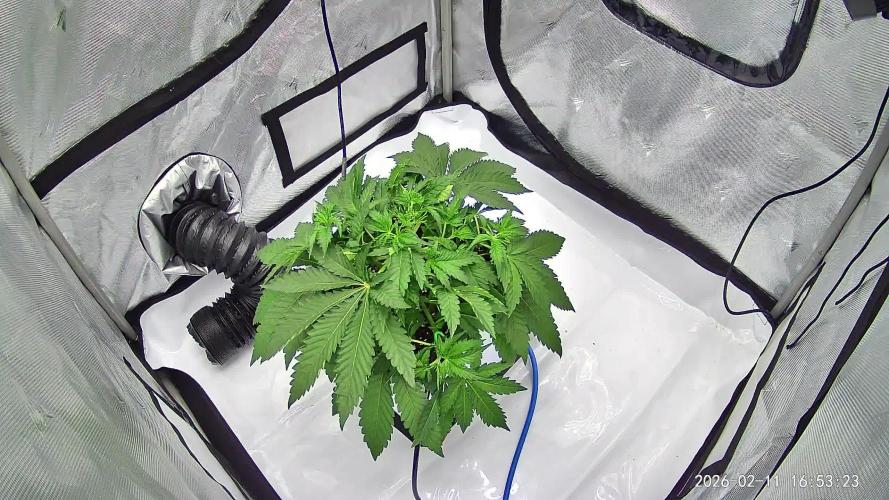
Turned off IR @ nights
Red wigglers (Eisenia fetida) are highly beneficial. They are considered an ideal choice for "no-till" or container-based organic growing because they live in the upper layers of soil, feeding on organic mulch rather than the plant's root system. Red wigglers accelerate the breakdown of organic amendments and produce high-quality, nutrient-dense worm castings directly in the root zone. Clover is another exceptional component of an organic rhizosphere, offering a sustainable, self-sustaining alternative to synthetic nitrogen fertilizers produced via the energy-intensive Haber-Bosch process. By forming a symbiotic relationship with Rhizobia bacteria, clover converts atmospheric nitrogen N2 into ammonium NH4, providing a steady, slow-release nutrient source that enhances soil health and reduces environmental impacts. Red clover offers superior nitrogen fixation and biomass production compared to white or yellow clover, making it the premier choice for maximum soil vitality, particularly for improving soil structure and providing a high-volume nitrogen credit for subsequent crops.
If it is fully functional and efficient soil, the rhizophagy cycle is far superior long-term than any synthetic delivery when it comes to preventing deficiencies, not because it's "better," per se. The medium will require a very high CEC to make it to harvest without re-fertilization. The rhizosphere acts as a dynamic, interactive exchange where plants and soil microbes trade resources based on immediate needs. When a plant lacks a specific nutrient, it changes its physiology and releases specialized chemical cocktails—root exudates—into the surrounding soil. These exudates, which include sugars, amino acids, and organic acids, serve as a "shopping list" to attract specific microorganisms, which in turn return higher levels of desired nutrients. There is nothing in comparison to synthetic delivery, which causes plants to stop producing exudates, effectively "starving" the beneficial soil life, over time turning the soil barren and void of microbial life. Responsible use, applying the right amount at the right time, can minimize these negative effects. Relying solely on synthetic fertilizers without replenishing organic matter is what typically leads to exhausted soil. The use of synthetic fertilizers can utilize the Cation Exchange Capacity (CEC) of the soil, but without a robust rhizosphere and active microorganisms, the efficiency of this process is significantly reduced. This makes synthetic growing more difficult to prevent deficiencies overall compared to an efficient organic living soil with a robust rhizophagy cycle, as there is no "one size, fits all" when it comes to different nutrient profiles of strains/genetics, making it trickier to "guess" and prevent creeping deficiencies.
CEC does not contribute towards EC. Add more CEC using biochar, problem solved. If you keep pH between 6.3 and 6.7, hydrogen is exudated to cycle the medium's CEC for its needs. Keeping the pH between 6.3 and 6.7 creates an environment where plants release H+ to displace positively charged nutrients (like Ca2+, Mg2+, K+ held on soil particles or within artificial media this cycle through nutrients via the medium's Cation Exchange Capacity (CEC)
Microorganisms generate a stable potential of approximately 0.5 V EC. The rhizosphere creates its own food, similarly to chelation, using 1000's of varying combinations to create its own food.
Start to finish, just add water. Eventually, more materials will need to be added at the beginning of each new grow, but very attainable to go from seed to harvest without ever fertilizing, regenerative cultivation.
ATP is king above all else when it comes to biomass accumulation. Cellular root respiration and cellular respiration are essentially the same biological process, the breakdown of glucose to create usable energy (ATP) in the presence of oxygen, just taking place in different parts of the plant. Synthetic (salt-based) grows have significantly lower levels of total rhizosphere respiration, often referred to as root-zone activity, compared to organic living soil grows. While the plant roots themselves may respire in both systems, the surrounding soil ecosystem in a living soil setup is vastly more active, teeming with bacteria, fungi, and beneficial microorganisms.
2 pools of ATP, it won't double in growth buuuut, but improving root respiration by ensuring high oxygen in the soil is crucial. Good aeration ensures roots can fully utilize glucose to generate the ATP necessary for nutrient uptake, leading to healthier and more productive plants, even if growth isn't exactly doubled. The ATP created using root respiration is dedicated to rootzone growth; the ATP created using regular cellular respiration in a synthetic system would have to dedicate a lot of ATP to the roots when there is little or no root respiration. It's true that there is less of an initial ATP cost in breakdown when nutrients are already in their final form (synthetic), but you lose a solid chunk of ATP when the entire plant is reliant on cellular respiration alone; a large portion of ATP is dedicated to root zones for "forced" (active) nutrient uptake. Making it overall less efficient, even if the initial cost of breakdown is higher. If that makes sense. Oxygen is of critical importance when growing in living soil compared to synthetic methods because it supports the metabolic needs of the microbial, fungal, and insect ecosystem, rather than just the root respiration required by the plant itself. While synthetic grows can survive in lower-oxygen environments with precise mineral feeding, living soil systems rely on aerobic microbes to decompose organic matter (microbial mineralization) to create plant-available nutrients, which is an oxygen-intensive process. While a specific fair percentage is difficult to guess, my experience points to a massive, compound difference between the two methods and the amount of oxygen required. All the ATP spared is used on more biomass, not only that, but the extra root respiration can achieve a much higher CO2 compensation point naturally than you could with synthetic and atmospheric CO2 alone.
As a plant grows faster and increases in size, its demand for nutrients to support that growth increases, requiring a higher rate of nutrient uptake. As plants enter phases of rapid vegetative/floral growth, their metabolic demand for nutrients increases exponentially. Without a robust buffer zone—whether in the soil (cation exchange capacity) or in a hydroponic reservoir—deficiencies will occur rapidly because the instantaneous demand for specific nutrients can quickly exceed the rate of supply.
A growing body of evidence suggests that organic living soil provides superior long-term soil health and environmental benefits compared to synthetic fertilizers, which are often criticized for promoting a cycle of dependency and degradation. While synthetic fertilizers offer short-term convenience and high yields, they often come at the expense of long-term soil health, sustainability, and increased corporate control over growers/ farmers. Organic living soil, while slower and requiring more care to establish, creates a sustainable, resilient, and, ultimately, more fertile environment.
We don't grow; we facilitate energy conversions.
Once all water is removed, approximately 95% to 97% of a plant’s dry matter consists of carbon, oxygen, and hydrogen. These three elements form the structural backbone of all plants. Corporate interest sells you the other 3-5% NPK & all the rest in RATIOS! Why not throw the 3-5% in a pot, and focus your energy on the other 95-97%?
Indigenous Amazonians created, or at least significantly enhanced, the fertile, dark soil known as Terra Preta de Índio (Portuguese for "Indian Black Earth") by incorporating biochar and other organic materials into the soil. This anthropogenic (human-made) soil technique, which dates back roughly 2,500 to 8,000 years, allowed ancient civilizations to flourish in regions with naturally poor, acidic, and nutrient-poor tropical soils.

Likes
7
Share


@Mr_nugs_lover_David
Follow
This lady is killing it so far! Another beautiful pheno of Mimosa EVO by Barney's Farm, It's a pleasure to work with their genetic, this plant looks absolutely gorgeous, I hope that she performs well under the Spanish sun this season, we can have very high temperatures but I think this lady is gonna handle the summer without any issues, let's see how this lady keeps developing guys!!

Likes
119
Share


@DogDoctorOfficial
Follow
I love growing and i love the GD community, we are like a big canna family and its a pleasure and an honor to be part of this all. Thank you all for being here , for growing and believing in this beautiful healing plant . Growers love to you all

Likes
7
Share


@Adam22
Follow
The plant on the right got chopped down the hairs were 90% dark brown while left was fully white last week when it got taken down it had only one day flush. This plant I will flush for a week and see which is better. It has decent size buds all the way to the bottom but this one growing still doesn't have as many crystals as the harvested plant which was definitely cut down way to early 😕 shame it must have forced to finish early from shock when I snapped a main branch clean off. This plant I will flush with plain filtered water for 7 days and even if it doesn't have as much crystals as the other plant, the bud size is 2x-3x the size of the plant that was cut down last week so I hope they will look a lot better size wise after they shrink when they are cut down and dried. I have also noticed some medium sized fan leads turning from green into a beautiful dark purple colour over the last 2-3 days slowly and it's spreading to other leaves the buds on this plant are also purple bits it's hard to see on here but looking sweet so far I have uploaded pic of the frost one which has been drying for a week now
Likes
31
Share


@Mr_Motalovah
Follow
Hello Growers and Tokers! 👋 👩🌾 🧑🌾.🔥💨
We'll got progress going!
Pictures taken on day 42 of flower.
The smell is something that i'm loving.
Although one smells stonger and sweeter than the other, they both are smelling great.
I had my doubts about the nugs not being big or hard but it seems like the green sensation is doing it's job.
There's been a good progress since i've started using Green Sensation. Glad to see that.
In flower I feed with only water and 2ml/L of enzymes. Once about 10 days.
Resin prodcution has gone up, buds are denser and a bit bigger.
Which is good given that most of the pistils are still white and they fatten up more when they rippen.
As long as things keep a stable progress, i think i'm good.

Likes
11
Share

@Bncgrower
Follow
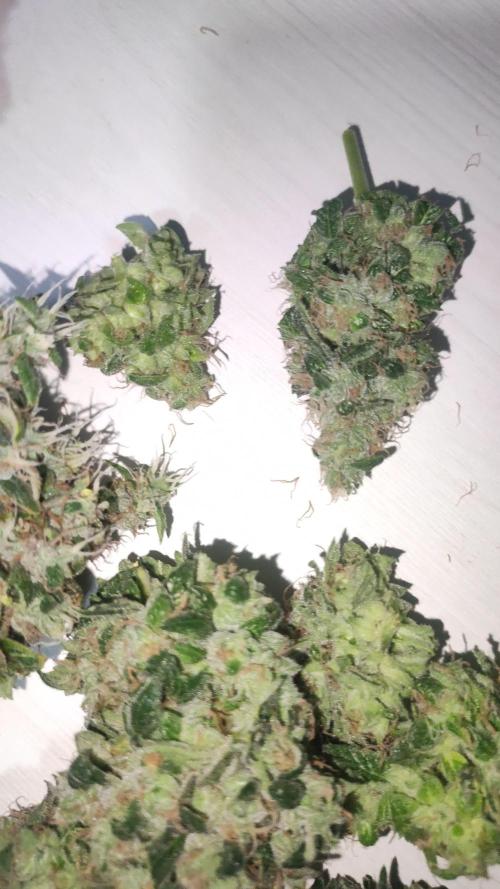
Great harvest, I was impressed with the quality of this strain. After the drying and curing process, I'll give my feedback! 💪
Likes
41
Share


@Growing88
Follow
Sono felicissimo,abituato alle hps e cmh e non riuscivo ad ottenere grandi risultati, con una hps 600 watt massimo 450 grammi,con un led 730 ho fatto 1500 grammi,waooo😍😍😍


Likes
7
Share


@StickyHands
Follow
After 7-8 weeks of flower she is ready to harvest. I give an update when she is dry and trimmt. I hope you enjoyed my little grow report. stay healthy

Processing
Likes
11
Share


Likes
9
Share


@MacBrGrow
Follow
this week I did the top pruning to increase the production of the lower shoots to serve as clones when they are put to flower


Likes
13
Share


@KaiserSouse
Follow
Nice and steady, some stretching but nothing too extreme only a few centimeters. Flowers are looking great.
Likes
24
Share


@OGOZHigh
Follow
Denn Ladys geht es bis jetzt hervorragend.
Die Buds werden jetzt so langsam dicker 🎊✌️
Likes
37
Share


@Reyden
Follow
Le 2 Fast Flowerg stanno crescendo bene e in salute, questa settimana ho dato solo acqua e zeolite per via fogliare, stanno rispondendo molto bene al super soil e alla luce, con internodi bassi e un ottima struttura..questi giorni vedrò se fare qualche potatura e settimana prossima qualche clone!