


Likes
Comments
Share


Likes
68
Share

@Ultraviolet
Follow
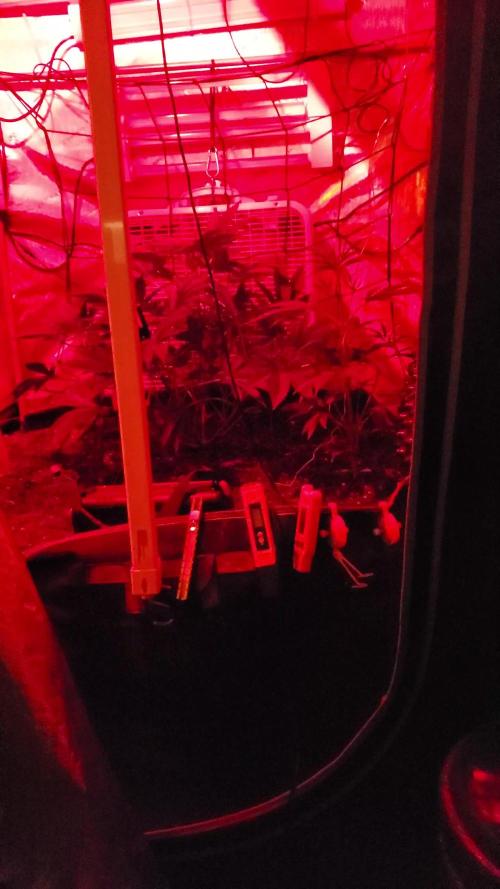
Removed autoflower and put her in her own pot outside the tent.
Foliars applied in strong blue 430nm with 4000Hz tone. 20-minute dose prior to application.
In essence, you're seeing a combination of the infrared light reflected by the plant, which the camera perceives as red, and any residual visible blue light the plant reflects, which results in a purple hue.
I was doing more stretching of the stems, adjusting weights, just a little too much, and it snapped almost clean. I got a little lucky in that it was still connected, wrapped her almost instantly while holding her in place with yoyo's. The core framework is now in place.
If your soil has a high pH, it's not ideal; you want a pH of 6.4, 6.5, or 6.6, which is ideal. If you are over a pH of 7, you have no hydrogen on the clay colloid. If you want your pH down, add Carbon. If you keep the pH below 7, you will unlock hydrogen, a whole host of new microbes become active and begin working, the plant will now be able to make more sugar because she has microbes giving off carbon dioxide, and the carbon you added hangs onto water. Everything has electricity in it. When you get the microbes eating carbon, breathing oxygen, giving off CO2, those aerobic soil microbes will carry about 0.5V of electricity that makes up the EC. The microorganisms will take a metal-based mineral and a non-metal-based mineral with about 1000 different combinations, and they will create an organic salt! That doesn't kill them, that the plant loves, that the plant enjoys. This creates an environment that is conducive to growing its own food.
Metal-based: Could include elements like iron, manganese, copper, or zinc, which are essential nutrients for plants but can exist in forms not readily accessible.
Non-metal-based: Examples like calcium carbonate, phosphate, or sulfur are also important for plant growth and potentially serve as building blocks for the organic salt.
Chelation in a plant medium is a chemical process where a chelating agent, a negatively charged organic compound, binds to positively charged metal ions, like iron, zinc, and manganese. This forms a stable, soluble complex that protects the micronutrient from becoming unavailable to the plant in the soil or solution. The chelate complex is then more easily absorbed by the plant's roots, preventing nutrient deficiency, improving nutrient uptake, and enhancing plant growth. Chelation is similar to how microorganisms create organic salts, as both involve using organic molecules to bind with metal ions, but chelation specifically forms ring-like structures, or chelates, while the "organic salts" of microorganisms primarily refer to metal-complexed low molecular weight organic acids like gluconic acid. Microorganisms use this process to solubilize soil phosphates by chelating cations such as iron (Fe) and calcium (Ca), increasing their availability.
Added sugars stimulate soil microbial activity, but directly applying sugar, especially in viscous form, can be tricky to dilute. Adding to the soil is generally not a beneficial practice for the plant itself and is not a substitute for fertilizer. While beneficial microbes can be encouraged by the sugar, harmful ones may also be stimulated, and the added sugar is a poor source of essential plant nutrients. Sugar in soil acts as a food source for microbes, but its effects on plants vary significantly with the sugar's form and concentration: simple sugars like glucose can quickly boost microbial activity and nutrient release. But scavenge A LOT of oxygen in the process, precious oxygen. Overly high concentrations of any sugar can attract pests, cause root rot by disrupting osmotic balance, and lead to detrimental fungal growth. If you are one who likes warm tropical high rh, dead already. Beneficial, absolutely, but only to those who don't run out of oxygen. Blackstrap is mostly glucose, iirc regular molasses is mostly sucrose. Sugars, especially sucrose, act as signaling molecules that interact with plant hormones and regulate gene expression, which are critical for triggering the floral transition. When sucrose is added to the growth medium significantly influences its effect on floral transition.
Probably wouldn't bother with blackstrap given its higher glucose content. Microbes in the soil consume the sugar and, in the process, draw nitrogen from the soil, which is the same nutrient the plant needs. Glucose is not an oxygen scavenger itself, but it acts as a substrate for the glucose oxidase (GOx) enzyme, effectively removing oxygen from a system. Regular molasses (powdered if you can), as soon as she flips to flower or a week before, the wrong form of sugar can delay flower, or worse. Wrong quantity, not great either. The timing of sucrose application is crucial. It was more complicated than I gave it credit for, that's for sure. When a medium's carbon-to-nitrogen (C:N) ratio reaches 24:1, it signifies an optimal balance for soil microbes to thrive, leading to efficient decomposition and nutrient cycling. At this ratio, soil microorganisms have enough nitrogen for their metabolic needs, allowing them to break down organic matter and release vital nutrients like phosphorus and zinc for plants. Exceeding this ratio results in slower decomposition and nitrogen immobilization, while a ratio below 24:1 leads to faster breakdown and excess nitrogen availability.
Carbon and nitrogen are two elements in soils and are required by most biology for energy. Carbon and nitrogen occur in the soil as both organic and inorganic forms. The inorganic carbon in the soil has minimal effect on soil biochemical activity, whereas the organic forms of carbon are essential for biological activity. Inorganic carbon in the soil is primarily present as carbonates, whereas organic carbon is present in many forms, including live and dead plant materials and microorganisms; some are more labile and therefore can be easily decomposed, such as sugars, amino acids, and root exudates, while others are more recalcitrant, such as lignin, humin, and humic acids. Soil nitrogen is mostly present in organic forms (usually more than 95 % of the total soil nitrogen), but also in inorganic forms, such as nitrate and ammonium. Soil biology prefers a certain ratio of carbon to nitrogen (C:N). Amino acids make up proteins and are one of the nitrogen-containing compounds in the soil that are essential for biological energy. The C:N ratio of soil microbes is about 10:1, whereas the preferred C:N ratio of their food is 24:1 (USDA Natural Resource Conservation Service 2011). Soil bacteria (3-10:1 C:N ratio) generally have a lower C:N ratio than soil fungi (4-18:1 C:N ratio) (Hoorman & Islam 2010; Zhang and Elser 2017). It is also important to mention that the ratio of carbon to other nutrients, such as sulfur (S) and phosphorous (P) also are relevant to determine net mineralization/immobilization. For example, plant material with C:S ratio smaller than 200:1 will promote mineralization of sulfate, while C:S ratio higher than 400:1 will promote immobilization (Scherer 2001).
In soil science and microbiology, the C:S ratio helps determine whether sulfur will be released (mineralized) or tied up (immobilized) by microorganisms.
A carbon-to-sulfur (C:S) ratio smaller than 200:1 promotes the mineralization of sulfate, when the C:S ratio is low, it indicates that the organic matter decomposing in the soil is rich in sulfur relative to carbon. Microorganisms require both carbon and sulfur for their metabolic processes. With an excess of sulfur, microbes take what they need and release the surplus sulfur into the soil as plant-available sulfate
A carbon-to-sulfur (C:S) ratio higher than 400:1 will promote the immobilization of sulfur from the soil. This occurs because when high-carbon, low-sulfur materials (like sawdust) are added to soil, microbes consume the carbon and pull sulfur from the soil to meet their nutritional needs, temporarily making it unavailable to plants.
200:1 C:S 400:1: In this range, both mineralization and immobilization can occur simultaneously, making the net availability of sulfur less predictable.
This dynamic is similar to how the carbon-to-nitrogen (C:N) ratio regulates the availability of nitrogen in soil. Just as microbes need a certain amount of nitrogen to process carbon, they also require a balanced amount of sulfur. Both mineralization and immobilization are driven by the metabolic needs of the soil's microbial population.
Sulfur is crucial for protein synthesis. A balanced ratio is particularly important in relation to nitrogen (N), as plants need adequate sulfur to efficiently use nitrogen. A severely imbalanced C:S ratio can hinder the efficient use of nitrogen, as seen in trials where adding nitrogen without balancing sulfur levels actually lowered crop yields.
Maintaining a balanced carbon-to-sulfur (C:S) ratio is highly beneficial for plant growth, but this happens indirectly by regulating soil microbial activity. Unlike the C:N ratio, which is widely discussed for its direct effect on nutrient availability, the C:S ratio determines whether sulfur in the soil's organic matter is released (mineralized) or temporarily locked up (immobilized).
Applied 3-day drought stress.
Glucose will hinder oxygenation more than sucrose in a solution because glucose is consumed faster and has a higher oxygen demand, leading to a more rapid decrease in oxygen levels. When cells respire, they use oxygen to break down glucose, and this process requires more oxygen for glucose than for sucrose because sucrose must first be broken down into glucose and fructose before it can be metabolized.
In a growth medium, glucose is a more immediate and universal signaling molecule for unicellular and multicellular organisms because it is directly used for energy and triggers a rapid gene expression response. In contrast, sucrose primarily acts as a signaling molecule in plants to regulate specific developmental processes by being transported or broken down, which can be a more complex and slower signaling process.
Critical stuff.
During wakefulness (DC electric current) life can not entangle electrons and protons. During the daytime, the light is sensed as multiple color frequencies in sunlight. Coherence requires monochromatic light. Therefore, at night, IR light dominates cell biology. This is another reason why the DC electric current disappears during the night. The coherence of water is maintained by using its density changes imparted by infrared light released from mitochondria in the absence of light. This density change can be examined by NMR analysis, and water is found to be in its icosahedral molecular form. This is the state that water should be in at night. This is when a light frequency is lowest and when the wave part of the photoelectric effect is in maximum use.
3600
Processing
Likes
29
Share


@UKLEEDSGROWER
Follow
So the girls are 4.5 weeks old there abouts. Happy with 4 of them (ish) seem to be transitioning to flower now so hopefully they get a nice stretch as there really short making me panic a little. Can see purple straight away.

Likes
5
Share


@Nemessis
Follow
I think the green is a bit very dark. I did not increase the dose of nutrients, I stay on the same doses. LST on my baby's. Another good week of growth and I'm going into flowering

Processing
Likes
7
Share


@Learntogrow818
Follow
Autos transferred to 1gl pots.. Looking good so far.. Going into 4 weeks and soon ready for LST. 🌱🎋


Likes
23
Share

@Wenz004
Follow
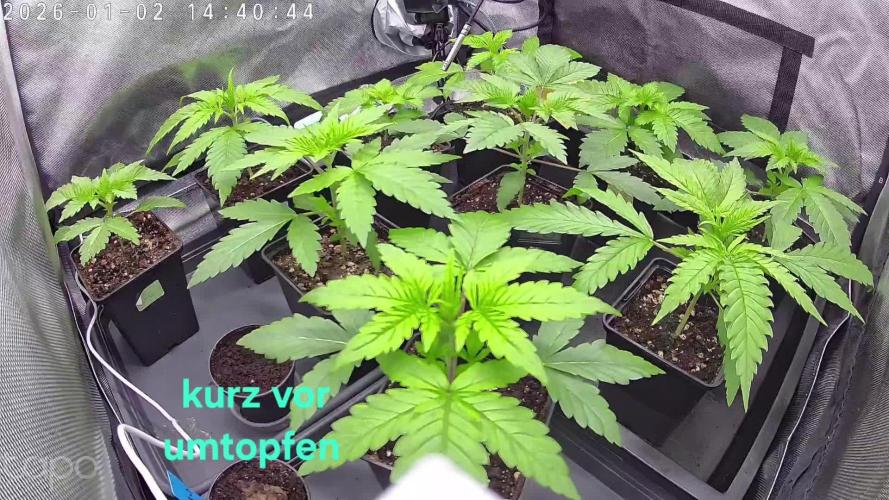
Alle 8 kämpfen um ihren Platz im 1.20 x 1.20 Zelt - und es wird sehr eng.
Um die Traspiration unter Kontrolle zu halten, braucht man Turbinen - um die zu ernähren, Leitung direkt zu den Wasserwerken.
So diese Woche folgende Ernährung
LW ec 0.6 zunächst mit osmose auf 0.3 strecken - dann + 0.2 grow drypart + 0.2 bloom drypart - also immer noch - weil KI das sagt - low level Strategie.
Scheint bisher zu funktionieren.
Mitte der Woche Erhöhung von PPFD moderat auf 550-650 (trop cookies kriegen das meiste ab da deutlich höher gewachsen)


Likes
2
Share


@DogDoctorOfficial
Follow
💜 Purple Haze by Zamnesia – Pheno A
Week 6 | The Legend Begins to Reveal Herself
Welcome back to another chapter of the 8×8 Adventure!
Every week these diaries become a little more exciting.
The differences between each phenotype become clearer.
Personalities emerge.
Growth patterns separate.
And some plants begin demanding your attention the moment you unzip the tent.
Purple Haze Pheno A has officially become one of those plants.
She isn't trying to be the loudest.
She simply stands there...
Elegant.
Confident.
Growing exactly the way a classic Haze should.
This week she reminded me why some genetics earn legendary status.
🌱 One Experiment... Countless Stories
If you're joining this diary for the first time, welcome!
This entire project is built around one simple idea:
What happens when every plant receives exactly the same opportunity?
Every seed in this room has been grown under the 12/12 From Seed technique.
No long vegetative period.
No separate flowering room.
No individual treatment.
Every phenotype receives:
• The same light schedule
• The same nutrients
• The same environment
• The same temperatures
• The same humidity
• The same care
The only variable...
...is genetics.
And Purple Haze continues proving just how powerful genetics truly are.
🌿 Grace in Every Direction
At approximately 88 cm tall, she has become one of the tallest ladies in the entire room.
Yet height alone doesn't tell her story.
What impresses me most is how balanced her structure has become.
The internodes have spaced beautifully.
Every branch has found its place.
The canopy remains open.
The airflow is excellent.
Light reaches deep into the plant without needing aggressive defoliation.
She almost seems to be building herself.
Every day she becomes a little more elegant.
A little more refined.
Classic Haze architecture is beginning to reveal itself, and it's beautiful to witness.
🌸 Flowers Everywhere You Look
This week marks the moment where there's no longer any doubt.
Purple Haze has fully entered flowering.
Every branch is producing flowers.
Every node carries fresh white pistils.
The tops continue stacking while secondary branches quickly catch up, creating dozens of future colas across the plant.
The stretch hasn't completely finished, but now another transformation begins.
The energy that once built stems is gradually shifting toward flower production.
Week by week the framework is disappearing beneath an ever-growing collection of buds.
And she's only getting started.
🍃 Healthy Leaves Tell an Important Story
One of my favourite things about this phenotype isn't actually the flowers.
It's the foliage.
The leaves are exactly what every grower hopes to see.
Large.
Rich green.
Flat.
Healthy.
Every fan leaf acts like a perfectly functioning solar panel, collecting energy that will eventually be transformed into dense, resin-covered flowers.
Rather than removing healthy foliage unnecessarily, I've continued relying mostly on leaf tucking to expose developing bud sites while allowing the plant to keep producing as much energy as possible.
Sometimes patience produces a better canopy than scissors ever could.
💧 Feeding the Next Chapter
As flowering progresses, the feeding program continues evolving alongside the plant.
This week's nutrient program includes:
• Terra Bloom
• Power Buds
• Green Sensation
• Sugar Royal
• Pure Zym
• Careful pH adjustment for maximum nutrient availability
Every adjustment is made gradually.
The objective isn't simply feeding bigger flowers.
It's supporting the plant while allowing her genetics to express their full potential without unnecessary stress.
So far...
She's responding beautifully.
🌡️ Stability Creates Great Plants
One lesson this project keeps reinforcing is just how important consistency can be.
Current environmental conditions remain stable:
• Day temperature: 29°C
• Night temperature: 25°C
• Relative humidity: 60%
• Solution temperature: 22°C
• Root zone temperature: 21°C
• CO₂ concentration: 639 ppm
When the environment remains consistent, plants can dedicate their energy to growing instead of constantly adapting.
That consistency allows every phenotype to show what it's truly capable of.
📷 This Week's Gallery
This week's photographs capture a plant beginning to reveal her future.
Close-ups highlight fresh clusters of bright white pistils emerging from every flowering site.
The wider shots showcase her beautiful Haze structure, with long, elegant branches carrying evenly spaced bud sites from top to bottom.
Several photographs focus on the healthy foliage surrounding the flowers, while others document the impressive overall symmetry that continues developing across the canopy.
Looking back at previous weeks, it's incredible to see how quickly she's transformed.
And somehow...
It still feels like she's only just getting warmed up.
🔮 Looking Ahead
Over the coming weeks I expect one of the most exciting stages of her journey to begin.
The stretch should gradually slow.
The flowers will begin swelling.
Bud sites that currently look delicate will merge together, forming the long, spear-shaped colas so many growers associate with classic Haze genetics.
If she continues following the path she's on today...
She has every opportunity to become one of the standout phenotypes of this entire 8×8 Adventure.
Not because she's the tallest.
Not because she's growing the fastest.
But because she's doing everything with remarkable balance.
Sometimes that's what truly exceptional genetics look like.
💚 Thank You
Thank you so much for following another chapter of this 8×8 Adventure.
Every week reminds me why documenting every individual phenotype has been one of the most rewarding projects I've ever undertaken.
Each diary tells a different story.
Each plant teaches a different lesson.
And Purple Haze Pheno A is reminding us that true elegance isn't measured by speed—it's measured by consistency.
A huge thank you to:
💚 GrowDiaries for providing a platform where growers from around the world can learn, share experiences, and inspire one another.
🌱 Zamnesia for providing the outstanding genetics behind this incredible phenotype hunt.
💜 Plagron for supplying the nutrition supporting every stage of this journey.
💡 Future of Grow LED for delivering the light that powers this entire project.
🌿 TrolMaster for helping maintain the stable environment that allows every phenotype to express its full potential.
And finally...
Thank you to everyone following these diaries, leaving comments, asking questions, and growing alongside me.
Every week this remarkable lady writes another chapter of her story.
And if this week is any indication...
I have a feeling we're watching something truly special unfold.
Growers Love... and Purple Haze Pheno A is only beginning to show us why legends are remembered. 💜🌿
Likes
Comments
Share


@GracelessGardens
Follow
This was day after transplant. They immediately started loving it outside. I gave the blood diamond OG to my neighbor for his yard, just to keep the count legal.
The lilac autoflower was showing signs of mutations early, I'm interested to see what it ends up looking like.
The mutation appears to be fasciation. I've upload a video of it, the upper main stem looks like it's 3 stems wide & semi flat. Gonna let it keep riding the wave lol
The garlic fever is having a great time in the sunshine, it's bigger than all the other plants.

Likes
14
Share

@Borberad
Follow
Woche 11
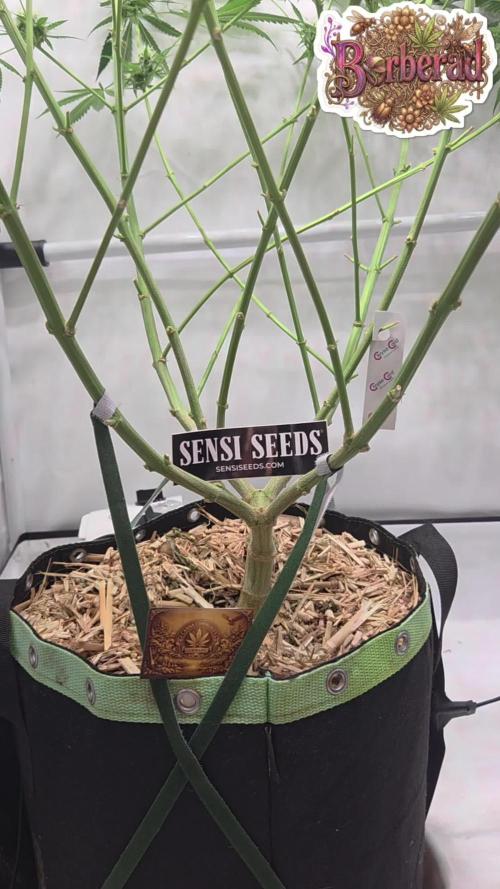
Unser Pflänzchen will uns dicke Buds liefern und dafür gibt sie aktuell noch alles. Cremige Blütenstempel die einen tollen Bubblegum Duft verströmen. Wäre ja ein spannender Pheno wenn uns die OG diesen Duft auch später geschmacklich offeriert.

Likes
9
Share


@ganjaq
Follow
Growing really fast and beautiful, off to a great start. I cant wait to see wedding cake auto flourish with buds. I hear great things about Barney's Farm so I am excited to grow these seeds out.

Likes
2
Share


@viggagrow
Follow
I started to feed him a little more Monster Bloom, which seemed pretty cool.
I continued to spray blizzard once a day for 1 week, and base water.


Likes
25
Share


@Gutismoke102
Follow
The girls are growing great a lot better than I expected so I guess that’s a good thing. Switching to flower in couple weeks this shall be exciting stay tuned

Likes
6
Share


@Hydro_sweetness
Follow
Hey welcome back in the 6th week of flowering with the Dutch Passion’s Glueberry OG.
Last week my fan broke down and I had to order some new bottles of nutrients because the CannaZym and CannaBoost/accelerator had gone empty, but yesterday I received the nutrients and a new fan!
Not to long anymore before harvest! I stopped giving the PK booster, from this week on I will decrease the nutrient values for the coming 2 weeks for the last week I will perform a flush (on most of them).
The Brooklyn Sunrise and the other 2 Colorado Cookies just need a week or 2 extra.
The Glueberry OG is also getting very frosty, you can really see the layers and layers of trichomes on the close ups. Also, you can see the purple glow creeping on the buds, I wonder how much more purple she will get.
It’s funny how you can see the 3 different pheno types of the same strain with the same characteristics only a different structure.
I noticed that the buds start to get a bit to heavy for the plant which is good, volume of the buds is very dense.
That’s it for now see you all next week!

Likes
16
Share


@Lol_You_Looked
Follow
Starting to see some more amber, but minimal amounts. Definitely seeing the trichomes turning milkier though. Might end up cutting the plant down in half, maybe a week and a half tops, she's been going for sooo damn long.
It's day 119 and we decided we're gonna take it down this weekend, the 19th of February will mark the 17th week since it first sprouted, so what better time to chop!
We're also going to go the fridge dry method and then cure in Grove bags, hoping for some real nice smelling buds after all this.
Processing
Likes
4
Share


@Hazeterpz
Follow
First week overall looking healthy and growing good besides 2 the wc wz bp and the oa mac


Likes
8
Share


@GuniGugu
Follow
- BioBizz Light Mix soil
- BioBizz Nutrients used according to their schedule
- stopped LST
Likes
6
Share


@High_And_Hydro
Follow
Sie sieht soweit gut aus, aber spargelt ein wenig. Vielleicht liegts daran, dass sie erst gegen 11 Uhr direkte Sonne bekommt.