


Likes
Comments
Share


@SmokeAndChill
Follow
Nun wurde die 2/3 Pflanzen geerntet, die Shiskaberry war an Blütetag 66 soweit und trocknet nun im Kühlschrank


Likes
27
Share


@RDWCGrowing
Follow
3/25/2023
Week 6- Day 1 of Veg (Day 52 overall)
Added my first between changes SILICA Top offs. Was worried that when you add it to pre mixed Nutes that it can make the whole thing turn into a gummy looking substance. I was ready to drain the system and start it over for the week if needed, but no issues adding it to the tank. the Silica going into the Res didn't gummy the system up, it did drop my PH by quit a bit causing me to have to bring it back in balance.
36 Gallons in the Tank
Silica
Add .5mil/Gal = 18Mil
I topped some that needed to be topped, I defoliated some that needs to be defoliated. Since I have moved into Week 6 I have increased the light intensity up to just over 500 maxing it out for Veg Cycle. Next increase will be Week 1 of Flower.
3/26/2023
Week 6- Day 2 of Veg (Day 53 overall)
All conditions looked great. Other than me not putting one of the humidifiers back right which means it didn't work last night so Humidity was lower than I like. But got the Humidifier back on it's stand correctly and it is now pumping away. With that I decided to give the plants a day off from any stresses, no topping, no FIMing, no Defoliation for today. Just some good old soaking up the light rays and the ability to get all the Nutes they would like..
3/27/2023
Week 6- Day 3 of Veg (Day 54 overall)
Looking kind of Bushy today, so I defoliated some, and topped some.
3/28/2023
Week 6- Day 4 of Veg (Day 55 overall)
PH was a little lower than I like 5.74 so I added a few Mil of PH UP and brought it back up to 5.94.
Not much else at this stage, just I topped a little and I defoliated a little.
3/29/2023
Week 6- Day 5 of Veg (Day 56 overall)
Topped a little, Defoliated a little Watched them grow!!
3/30/2023
Week 6- Day 6 of Veg (Day 57 Overall)
Main action today was breaking down my old tent and setting up a new tent and getting my second RDWC system setup and ready for clones. I Topped a little, I Defoliated some and started taking a good look at what I would like to take for clones in the coming days. I have a few bottom branches that look every promising for my clone material on each.
3/31/2023
Week 6- Day 7 of Veg (Day 58 overall)
#3 is at 16" Tall
#2 is at 13" Tall

Likes
8
Share


@Bigfudge
Follow
Big week, started to strap down the trees. Tied branches to main stem and stakes around the plants so as to open them up a bit and provide support in case of windy conditions. Only staked the pair and not the three in the back yet. This was a bit of a mistake as the big one in the back needed it sooner. Defoliation of note... need to keep defoliating these trees all the time. Pretty relaxing though...


Likes
8
Share

@GERGrowDesigns
Follow
Dear Growers ,
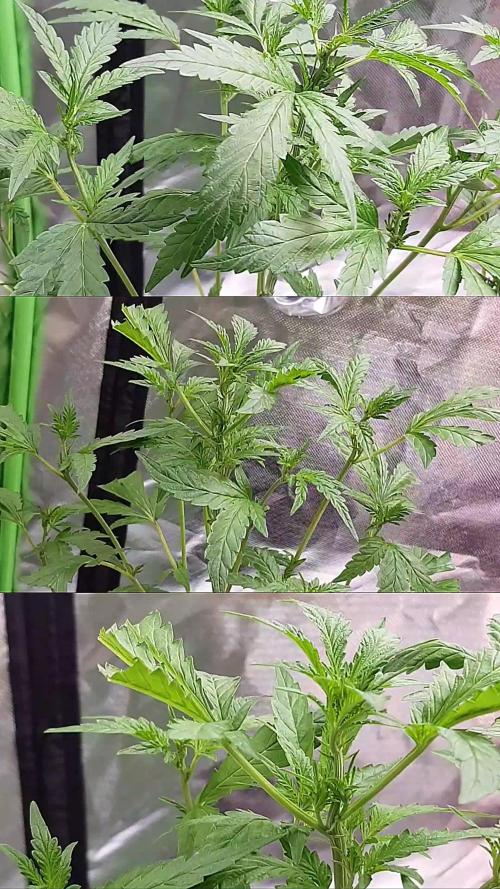
Over the next weeks, we’re excited to share a very special project with you: Sensi Seeds Berliner Automatic 2025 Release
With dedication, knowledge, and hands-on practice, we’ll guide you step by step through the journey—watch with us as growth, development, and small wonders unfold before your eyes.
Whether you're a beginner or an expert, you are warmly invited to join, ask questions, and share your own experiences along the way!
Project Setup & Conditions:
• Brand/Manufacturer: Sensi Seeds
• Tent: 120cmx60cmx80cm
• Light: 2x 200 Watt Full Spectrum
• Humidity: 50%
• Soil: Narcos Organix Mix
• Nutrients: Narcos Products
• pH Value: 6
A Special Thanks To
Sensi Seeds
for the amazing collaboration, trust, and generous support in making this project possible. Your contribution is truly appreciated!
Congratulations on Your Own Projects!
We celebrate your growth, your creativity, and the passion you bring to the table. It’s truly inspiring to witness at Each visit .
Stay curious and keep up Growing —we look forward to welcoming you back for the next chapter soon!


Likes
8
Share


@Hiroots420
Follow
26/05/2021 (Day 71)
Se realizo un nuevo cambio de nutrientes y las plantas vienen mas felices que nunca, no se observa ni una carencia en las hojas y los parámetros se encuentran muy controlados.
29/05/2021 (Day 74)
Se agregó 20L de solución, las plantas vienen muy bien comenzándo el engorde de una manera muy optima.
El espacio de cultivo está repleto 100% en conjunto con los 600W en 8 chips de Citizen que logran llegar a todos los puntos de la carpa.

Processing
Likes
2
Share


@Kalliseppel
Follow
Lowered the light a little to 50cm.
The humidifier works pretty good. In combination with the hygrostat, the humidity ist conctant between 68 and 70%.
Added 2ml/l alga grow and 1ml/l of power roots.
Watered only once until now
Likes
19
Share


@Tropicannibis_Todd
Follow
Alright Then
We just hit week 1 and all is well , have to admit she's ahead of all the others of same age , nice Growth in just 7 days😃 .......
Middle of week I decided to start a little training by pulling her over to the side 👌
Very little water given ,so far and rain water to be used entire growth
Lights being readjusted
👉I WISH GD HAD DISCORD SERVER SO GROWMIES COULD HAVE A PLACE TO HELP AND TALK THINGS RELATED TO GROWING .....👈
👉SO I CREATED ONE ALL YOU NEED IS TO JOIN THE GROWDIARIES DISCORD SERVER !!!!!!!!!!!👈
LINK IS 👉
https://discord.gg/zQmTHkbejs
AND SEE HOW IT PLAYS OUT !!!!!!!

Likes
27
Share


@Wicked_Stix
Follow
The end of week 1 has arrived. We all know how it goes. Just playing the waiting game. At this stage these girls are just working on building their root system. The roots should be hitting the reservoir in the bottom of the buckets soon then they should take off. Got the water pumping and the lights beaming 24 hours a day. Running a low dose of maxigro. Keeping the ph around 6. Will probably be topping them around day 12. Would be amazing if I can get them ready to switch to flower at the end of week 3. But for now I'm just going to check on them 420 times a day hoping they don't die. Might be back next week if they are alive. Happy growing!
Likes
8
Share


@TrueNorth
Follow
-Strain: Auto Gelato - Fast Buds
-Tent: 5x5 Gorilla Grow Tent
-Lights: Budget LED Grow Lights 2 x 250 Watt
LED Full Spec/Red Spec mixed boards
-Light Cycle: 18/6
-Soil: Fox Farm
-Air Circulation: AC Infinity Cloudline T6 Inline Duct Fan
WECLOME BACK GROWMIES! Week 12 here with our AUTO GELATO by Fast Buds!
February, 09, 2020 (DAY 78) - YOO GROWMIES! Welcome to week 12 of our AUTO GELATO! week 6 of flower to be exact! ISNT SHE FROSTY! holy moly look at this thing, can almost go skiing lol! nothing but frost, she is starting to thicken up on the buds, i havent defoliated too much on this one because there is just too much frost all over those leaves.
February 12, 2020 (DAY 81) - WHAT UPPPPP!!!! here we are folks another update. i didnt even know there were purples in the gelato auto to be honest, but the purples are getting so VIBRANT!!!!! think she is getting flushed starting this weekend. this will be the last feed then its onto that FLAWLESS FINISH by ADVANCED NUTRIENTS. hopefully im making the right choice......maybe another week wouldnt hurt....
Processing
Likes
8
Share


@GrownwithLED
Follow
The plants stopped growing in height and are now in FULL FLOWERING mode. Every day more and more flower clusters appear and start to build colas at the sidebranches now. The trichome production is also in full swing, the plants get stickier every day and smell DELICIOUS. The Barbarian (=AK-47 x Barbara Bud) plants have a sweet sandelwood-smell like the AK-47 but also with peach undertones from the Barbara Bud in it. I LOVE THE AROMA!
Likes
25
Share


@DudeGrowsWeed
Follow
This was a lot of fun. Looking forward to growing more like this one.
**Update**
Total dry weight was 2.6 oz (74g). The buds were a little airier than the Tangie'Matic, not as tight/dense. Placed dried buds in mason jars with Boveda 62rh packs. Will be opening the jars daily for the next couple of weeks to cure. So far it tastes nice, I can taste some mint, but mostly just nice tasting overall. Will update the taste again after further curing.
Likes
13
Share


@leapingsoil
Follow
Hello hello!
Cream cookies is getting her final flush today!
Lets see how she develops this final week. I will let her medium dry, then harvest. The buds are getting deep colors, are nice and big but could be a bit more dense.
I am eager to smoke her. Very inviting pungent cookie dough smell from her is filling the tent.
For her flush: 3ml L Flashclean until 20% runoff then 20L icewater and pot full of ice cubes.
Likes
Comments
Share

@_izZzi_
Follow
Been looking for a solid daytime strain for a long time, and I think I’ve finally found my zen.
And it’s insanely tasty!
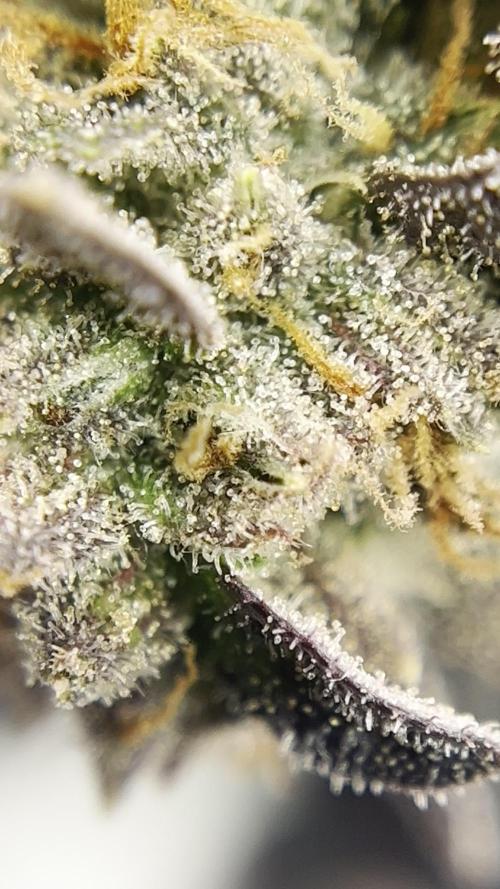
Flavor — cream, caramel, juicy citrus and fruit. Sweet and sour, thick, dense, full-on dessert bouquet.
Effect — euphoria, body lightness, nice tactile enhancement. Not even a hint of anxiety or paranoia 👍 Clear head and great productivity.
During the first tests, toward the end, I’d get heavy yawning and it would knock me out to sleep — which didn’t make me too happy, since I was looking for a proper daytime work stim without a siesta at the end of the trip 😁 But after several sessions, that sleepy effect fades, which is definitely good news.
Huge thanks to Сhef for such an amazing 10‑star Michelin dessert!

Likes
14
Share


@PREPPYPUNK
Follow
defoliation to expose bu d sights on left side plant at 7 weeks. leaves were and are not looking super healthy, seem to be drooping which can be over water most likely but i also noticed they start to droop same way when lights are too low so raised lights 3 inches and put material under right side 2 weeks younger plant to meet hight of other one. now letting it dry out for a couple days but bottom line, must keep plants healthy and must be patient for up to 11 weeks on bud developement as it tends to be slower than most auto flowers for critical purple. you can pull a bit off when its close to done and dry it out if you are a fiend or patiently wait this out and pray for big dense buds.


