


Likes
Comments
Share


@Glen1818
Follow
Its Week 9 , i flush them once with AN Flawless Finish, i will cut them when most trichomes are cloudy and a few amber , should be in 7-10 days ready

Likes
53
Share


@DogDoctorOfficial
Follow
Week 3 Flower Report: Blackberry Auto's Blossoming Brilliance!
Greetings, fellow cultivators! Week 3 of flowering unfolds with an aura of anticipation as my Blackberry Auto continues to dazzle with its blossoming brilliance. Let's delve into the verdant spectacle and marvel at the beauty unfolding before our eyes.
Burgeoning Buds and Floral Flourish: As the third week of flowering commences, Blackberry Auto's buds undergo a magnificent transformation, swelling with vigor and vitality. Each bud is a testament to nature's artistry, with velvety textures and glistening trichomes adorning the floral landscape.
Hydration Harmony and Nutrient Nirvana: The AutoPot Aquavalve maintains its steadfast rhythm, ensuring Blackberry Auto remains hydrated and nourished as she channels her energy into bud production. With a carefully curated nutrient regimen, the plant enters a state of nutrient nirvana, optimizing growth and resin production.
Aromatic Alchemy and Visual Enchantment: The air is suffused with an aromatic symphony as Blackberry Auto's buds exude tantalizing fragrances of sweetness and fruitiness. Meanwhile, the visual enchantment continues to captivate, with hues of purple and indigo intensifying amidst a backdrop of lush green foliage.
Tender Care and Gentle Guidance: Amidst the flowering fervor, I continue to provide tender care and gentle guidance to Blackberry Auto, ensuring she receives the support needed to flourish. Low-stress training techniques are employed to promote even canopy distribution and maximize light penetration, fostering optimal bud development.
Anticipation and Gratitude: With each passing day, anticipation builds for the imminent harvest, a culmination of months of dedication and care. I extend my heartfelt gratitude to @fastbuds_official for blessing us with this botanical masterpiece. To Aptus Holland, my main sponsor, your unwavering support fuels this green journey and enables the flourishing of Blackberry Auto's potential. Kudos to Grow Diaries for providing the platform to document and share this journey, and a shoutout to the community for the camaraderie and shared passion that enriches our collective cultivation experience.
As we embark on the third week of flowering, I invite you to join me in celebrating the resplendent beauty of Blackberry Auto in bloom. Together, let's revel in the magic of nature's creation.

Likes
23
Share


@RyukyuFarmer
Follow
She is going strong into flowering, lots of leaves fading fast, defoliated the far gone leaves but trying to keep stress to a minimum. Loving the purple colors she is putting out.
Likes
3
Share


@Rko41
Follow
La banner m’a l’air compacte elle a stretch de 8cm mais c’est bientôt la fin je pense les poils blancs se renforce bel progression

Likes
59
Share


@Rap_a_cap
Follow
Perfect tropical-like weather. No problems to report. Excellent growth. Still rearranging net tent as this bastard stretch a lot.
The one that should have the fastest flowering is, on the other hand, terribly late compared to het sisters. But how long does this beast still want to grow? Royal Queen Seeds officially claims Pineapple Kush is better suited indoors than outdoors, for now RQS is wrong.

Likes
54
Share


@BudXs
Follow
What makes an outdoor grow successful? Is it dodging a hurricane and pulling pounds? Is it avoiding the sticky fingwrs of AstroThieves? Is it looking wpm and botrysis in the eye and telling em they stand no chance? Is it defeating all cockshit fucker parasites? Is it finding solitude and happiness in making something work? Something thats yours and only yours? Is it distraction from reality? Is it trolling the GD platform as the current presidenr and not growing at all?
Dunno. See my solo

Likes
9
Share

@ThatsmyGrow
Follow
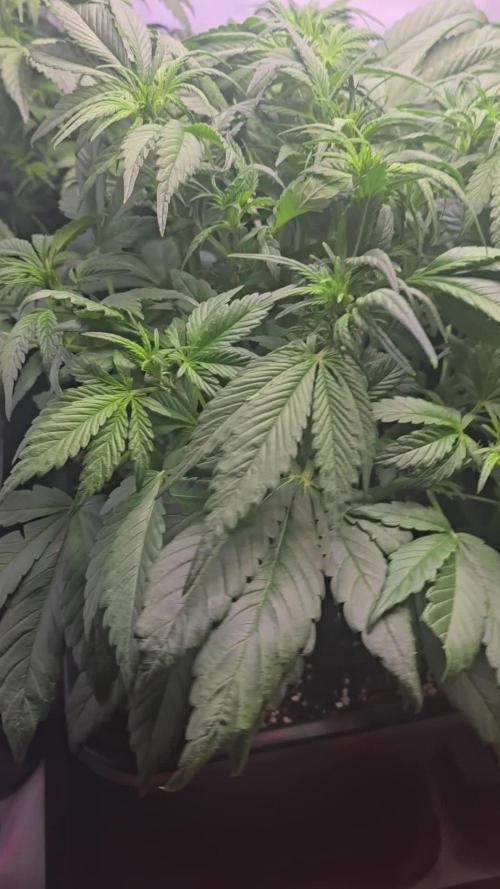
A very good start of the first week of flower, lets see how big they get.
Likes
51
Share


@Cannabeast40
Follow
Description
Autoflowering strain. This is the result of the cross between our most awarded strain, the original Cream Caramel®️ (SWS04), and an exotic purple flowered autoflowering strain, descending from Pakistani Kush ancestors.
This plant looks like an indica strain, with a short internodal distance, numerous small branches in the main stem, compact buds and a big main cola. This strain is a great resin producer.
The aroma of Black Cream Auto®️ (SWS37) is very sweet and fruity, with a background that features outstanding earthy tones inherited from our Cream Caramel®️.
Gender Feminised
Genes 95% Indica / 5% Sativa
Genetics Cream Caramel x Pakistani Kush (automatic)
Harvest 350 - 550 g/m²
Flowering 32 - 42 days
THC 15.0 - 18.0%
CBD 0.7 - 0.8%
Vegetation 21 - 36 days
Ruderalis 3%
Room Type Indoor
Room Type Outdoor
Room Type Greenhouse

Likes
4
Share


@InsideAz
Follow
Added a second scrog net for the taller plants last Friday. Constantly defoliating to increase light penetration but not trying to stress the plants. (Selective leaf picking)
Plants loved the tea I have them last week. Visual improvements in every plant 2 days later.
Top dressing later this week on 9/29:
5 tablespoons Gaia green 444
5 tablespoons Gaia Green 284
15 tablespoon Wiggle Worm Earth Worm Castings
*hard to get good pictures of this plant*
Light increased to 75%


Likes
24
Share


@Rit031
Follow
09/02/2022 - Everyday raining . No water and no fertilizer. She still look fine .
09/04/2022 - Transition from Vegetative to flowering
Fertilizer this week
1) General agricultural fertilizer{ (N-P-K) 21-21-21} 0.5 ml per liter of water.
2) Monopotassium phosphate (KH2PO4) 45.7 grams with 500 ml of water + Mono-ammonium phosphate (NH4H2PO4) 45 grams with 500 ml of water. Mix both together and use only 5 ml per liter of water.
3) General root stimulants 1 ml per liter of water.
4) 4 eggs mixed with 1 tablespoon brown sugar + 4 tablespoons curd. Mix together.then lived it for 1week .Then used 2.5 ml per 1 liter of water.
5) Calcium nitrate {Ca (NO3) 2} 3.5 grams, mixed with 1 liter of water, set aside. Prepare a mixture of 3.5 grams of magnesium sulfate and 3.5 grams of boric acid mixed in 1 liter of water. Then mix all 2 liters of liquid The ratio used to put plants is 3-5 ml per 1 liter of water.
6) EDTA chelate 1 ml per 1 liter of water.
7) 0.5 grams of amino acids per 1 liter of water.
8) Fish manure.
Likes
26
Share


@TheWeedaltor
Follow
3 girls of the same family, eating same food, sleeping under same roof but running at different speeds 💚💚💚

Likes
5
Share

@Bread_n_Buds
Follow
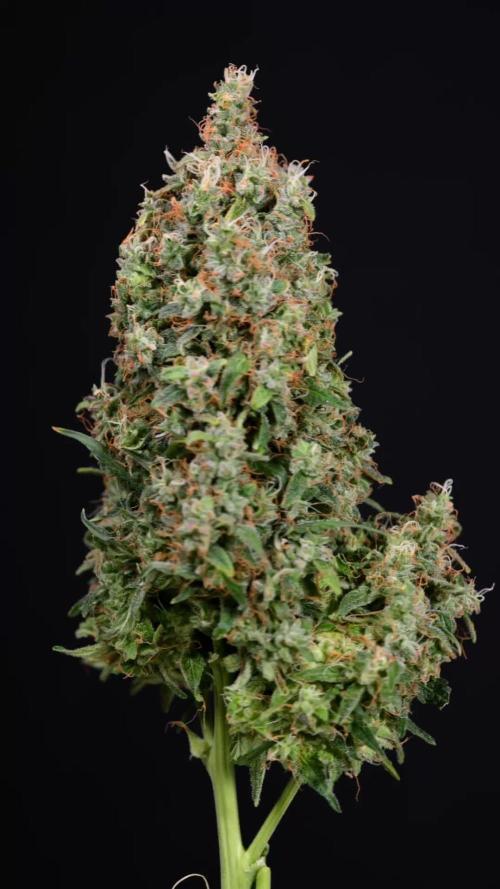
Our Critical Cheese Automatic #1 from Zamnesia Seeds is ready and is a pure spectacle of nature.
It's truly grown with love. I really liked how I cleaned up the lower parts of the plant, eliminating unnecessary growth but giving the top buds plenty of strength, which turned out really well, aligned, and very uniform. The main cola is truly large and majestic.
Maturity Levels - The resin content is excellent. The trichomes are mostly white and milky, with some clear and quite amber hues. Some very beautiful red-headed trichomes are quite common. The pistils are almost all red.
The overall shape of the plant is truly beautiful.
Techniques Chosen: As mentioned, here we only did pruning, lollipopping, and defoliation. Basically, we just cleaned up the lower parts, which, as mentioned, helps us achieve better results at the top. We have another plant processed using LST, which you can find in recent diaries.
We're 100% organic and 1000% Plagron, as always.
The soil we've chosen is the recently launched Plagron Bio LightMix, which will allow us to start with smoother and more reliable watering, without the sudden changes that liquid fertilizers can cause. A week's worth of soil is enough, so don't overdo it.
Choose your preferred style and calculate your results on the website:
www.plagron.com
Visit the new Growshop area on the Zamnesia website:
Z - https://www.zamnesia.io/it/531-growshop
A fantastic strain, not too tall but very bushy! Give it a try!
Z - https://www.zamnesia.io/en/3329-zamnesia-seeds-critical-automatic-feminized.html
Z - Not happy with what they already had in their hands, the expert breeders at Zamnesia Seeds wanted to embark on a journey into the world of autoflowering genetics, aiming to improve a great British classic... the Cheese cannabis strain. They crossed Critical with a high-quality Cheese specimen, enriched with a significant amount of Ruderalis. The result is an extremely potent, therapeutic, and easy-to-grow autoflowering version. This new improved strain has been named Critical Cheese Automatic. Critical Cheese Automatic embodies everything that made the original Cheese so famous, acclaimed, and beloved around the world. We're talking, of course, about the skunky flavors and pungent aromas this strain unleashes, not to mention the overwhelming effects it induces. Lovers of the original Cheese will surely appreciate this feminized reincarnation. Smoking Critical Cheese Automatic produces exceptionally powerful sensations for an autoflowering strain. Its effects are quite strong and highly physical, both in intensity and duration. With these properties (or "body") in mind, it's no wonder so many medical users are the first to want to get their hands on this "skunky" plant. Those suffering from chronic pain, inflammation, stress, anxiety, and migraines (to name just a few of the ailments it can alleviate) will notice their symptoms diminish, if not disappear completely, thanks to this strain's potency. With this autoflowering "upgrade" of Cheese, even novice growers can achieve excellent results. It's a vigorous plant, incredibly easy to grow, and requires little maintenance.
Commercial growers looking to generate income will appreciate Critical Cheese Automatic primarily for its life cycle: from germination to harvest in just 10 weeks. When grown correctly, it can produce harvests of 120-150g per plant. In addition to its excellent yields, Critical Cheese Automatic reaches a rather compact size (1 m), making it highly suitable for any type of grow. That said, Critical Cheese Automatic only thrives when grown outdoors in warm climates (like those of Spain or Italy).
So, in conclusion, whether you're a beginner, veteran, or commercial grower, Critical Cheese Automatic offers great satisfaction to everyone.
You know it, but I recommend it. You'll find so much beauty here, essentially "the best nature has to offer."
Z - www.zamnesia.com
Music // www.radionula.com
+ Feng Shui Music
+ Frequency 432Hz

Likes
15
Share


@pifflestikkz
Follow
Day 1
30/12/24 Monday evening.
Started the seed off in de-chlorinated tap water and calmag 3ml to 5L pH 6.4.
I will use this water for the rest of the week as sprays and transfer water.
Day. 2
31/12/24 Tuesday
Seed has sunk 🙌
Transferred now to paper towel, sprayed with same water. Covered. Left in cupboard 24hrs untill tap root emerges ✌️
Day 3 Wednesday
01/01/25 nothing yet so left for a further 24 hours.
Day 4
02/01/25 Thursday
Tap root just emerged! Seed only just cracked. Will leave a further 24hrs for a sustainable tap root.
Day 5
03/01/25 Friday
Tap root has reach 2/3cm and now been potted up in a 1L pot with cannaterra pro, added perlite, added cococoir, and dynomyco, all watered yesterday to dampen off. . Sprayed top soils today to settle in seeds.
Day 6
04/01/25 Saturday
Seed has emerged to top of soil level 😁
Moved all seedlings into the auto tent so they can catch the 600w dual hps.
Day 7
05/01/25 Sunday
The seedlings are here 🙌
She made it through the first week, onwards and upwards 🚀💚
Seed casing will pop tonight I think.
Light spray with de-chlorinated tap water and calmag. Covered with dome.
Picture update 📸💚
Likes
446
Share


@Metatronix
Follow
Hello and welcome to a fresh edition of the diary I really appreciate you guys visiting and all the likes 👋💪
The trichomes on the Killer Kush girls # 1, 2 and 3 are half way milky...I'm thinking about two weeks time till chop day for them or so. Killer Kush #4 is about a week or more behind her girlfriends with flowering.
I think i'm gonna chop the three girlfriends and give #4 a week more for flower buildup....she's the biggest girl it would be a shame for her not to reach her potential.
Here are the transcripts of how my week did go through:
29.08. I add:
Canna Cal Mag: 50ml.
PH: 6,1
EC: 3,6
31.09. The girls drink only like 4 liters of solution a day otherwise everything looks golden i decide though to change the solution for fresh maybe that will make them drink more
I add:
A: 50ml.
B: 150ml.
M: 100ml.
X: 50ml.
Ata Bloombastic: 60ml.
Canna Cal Mag: 135ml.
Hesi Powerzyme: 235ml.
Ata Bloombastic: 60ml.
Plagron Ph-: 55ml.
PH: 6,45
EC: 2,0
I let the Ph stay at 6,45 because I noticed that after the water settles the Ph tends to fall a bit.
01.09. I add:
Canna PK 13/14: 55ml.
Ph: 6,0
EC: 2,0
03,09, Plants look hungry and drink a lot... I add:
A: 25ml.
B: 72ml.
M: 47ml.
X: 25ml.
Canna Cal Mag: 77ml.
Ata Bloombastic: 30ml.
Ata Clean: 5ml.
Ph: 6,3
EC: 2,5
That's it for this week I hope everyone had as good a week as i did, hopefully see you next week ...all the best to you my friends and keep it growing 💪😎💪
Likes
23
Share


@Seandawgemous
Follow
So looking like it's getting very close to harvest going by breeders advice and others i've sen with this variety. Mostly orange hairs nw only a few whites and they're starting to receed into the buds so i wanna flush well for a week or so and see how it go's

Likes
Comments
Share


@Barzenegger
Follow
so far so good. struggling a bit with low humidity, waiting for some parts to repair an old humidifier.
Likes
45
Share


@PotCasso
Follow
Week 5 of Flower: HLG Diablo at 100% 15in from canopy.
Watered in at 900ml top dressed 2tbs bloom, 2tbs bloom2, 3 tbs barley, 2 tbs worm castings, last recharge day and a silica day.
Flower set, in bloom I feel like I should have thinned out the canopy more for better penetration but it’s the first run so let’s she how deep she gets in.


Likes
4
Share


@805homegrown
Follow
Apple fritter and wilson! Zero are 7 weeks from popping the seed's in ro water ph to 6.2 and mystery mix, Geist grow are 4 weeks from popping the seed's same process as above.
Blumat watering system
3x3 area for growing 4 plants in 4 10gallon fabric pots in living soil top feed with compost tea and foliage spray (LABS) lactic acid bacteria. 2 x TS1000 and I use pod tech to feed my worms with down to earth amendments.

Likes
3
Share


@Lf1190
Follow
Day 22–23 – Pre-flower kicking in 🌸
Day 22: Watered all plants with plain Lauretana water, no nutrients, alternating with last feed. They're drinking more now, a good sign the stretch is near. Royal Jack tops are showing pistils, and the Atlas girls have a few white hairs at the nodes too. The replacement is small but growing steadily.
Day 23: Topped up the pots with some fresh soil. The two Atlas are bushy and flat thanks to LST, deep green, with pistils popping at the nodes and no tip burn or yellowing. Royal Jack stays compact but healthy. The replacement now has true leaves and a nice colour.
Next step: a feed once the pots feel light again, starting the transition with a lower dose of Easy Grow and a half dose of Easy Bloom. The light goes up gradually we are now at 75%. LST wires stay, but no new bends from here on.
Day 25: Pre-flower is fully underway. Both Atlas girls are covered in white pistils on every top, and the LST has kept the canopy flat and even, so the stretch should start any day now. Leaves are deep green with clean tips, a sign the last feed was plenty. The Royal Jack is opening up at the top and showing its first hairs. It stays compact, but it looks healthy. The replacement is pushing out new serrated leaves and growing steadily.
No watering today, since the pots still had some weight after the plain-water round and the fresh topsoil. Next up is a transition feed set for tomorrow: low Easy Grow with a half dose of Easy Bloom. LST wires stay in place, with no more bending from here on. I crease the light to 80%.
I did a light defoliation. I removed a few small, shaded leaves and some tiny inner shoots from the lower part, so more air moves through and the plants put their energy into the tops
Likes
12
Share

@cdxxbuds
Follow
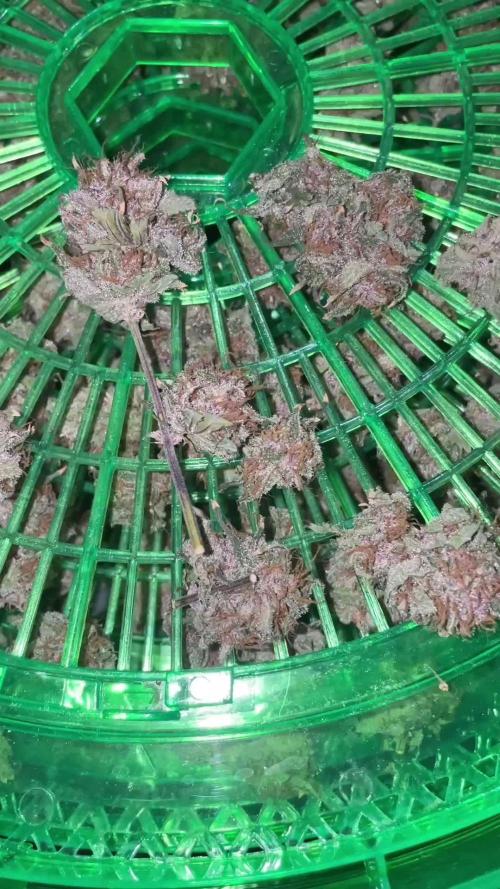
Fruity aroma all over. This run came out better than i expected even though she took some abuse.
Drying with herbnow dryer.