





@EZgrower
Volgen
Everything goes according to plan
22 oct 2019 - Day 19 - first small defoliation. cut 7-8 fan leaves.
23 oct - 20 day - 11 colas

shorts_status_processing


@Dunk_Junk
Volgen
She's growing well this week. Her flowers are fattening up nicely! I was a bit worried that they will be airy not dense, but I was being too impetuous 😬😅


@Roberts
Volgen
Blue Dream Xtreme has been growing good. She gets a fresh solution change about every 4 days. She is growing in a New Level Hydro bucket, under a Spider Farmer SE5000 light. Thank you New Level Hydro, Spider Farmer, and Amsterdam Marijuana Seeds. 💪❄️🌱
Http://amsterdammarijuanaseeds.com
Thank you grow diaries community for the 👇likes👇, follows, comments, and subscriptions on my YouTube channel👇. ❄️🌱🍻 Happy Growing 🌱🌱🌱
https://youtube.com/channel/UCAhN7yRzWLpcaRHhMIQ7X4g
SE5000
https://amzn.to/3qFpAML
Spider Farmer Official Website Links:
US&Worldwide: https://www.spider-farmer.com
UK: https://spiderfarmer.co.uk
CA: https://spiderfarmer.ca
EU: https://spiderfarmer.eu
AU: https://spiderfarmer.com.au
Coupon Code: saveurcash
Www.newlevelhydro.com
Www.hygrozyme.com


@DurbanPoison420
Volgen
May have been using too much nitrogen as there's still lots of leaf growth. Going to try reduce levels of N and increase the ratios of P and K and hope the plant starts focusing it's energy on budding!


@B4niTa
Volgen
She started to stack up, in week 10 I will give her Overdrive and keep Big Bud. I think to cut off few fan leaves before she start fattening up


@ConradThePeaceful
Volgen
11/6 Fed and watered. Each took a full gallon.
11/8 They are really drinking up the water. They were dry already so I watered each with a full gallon.
11/10 Watered each with a full gallon
11/13 Watered and fed each with a gallon.


@Lacremelabs
Volgen
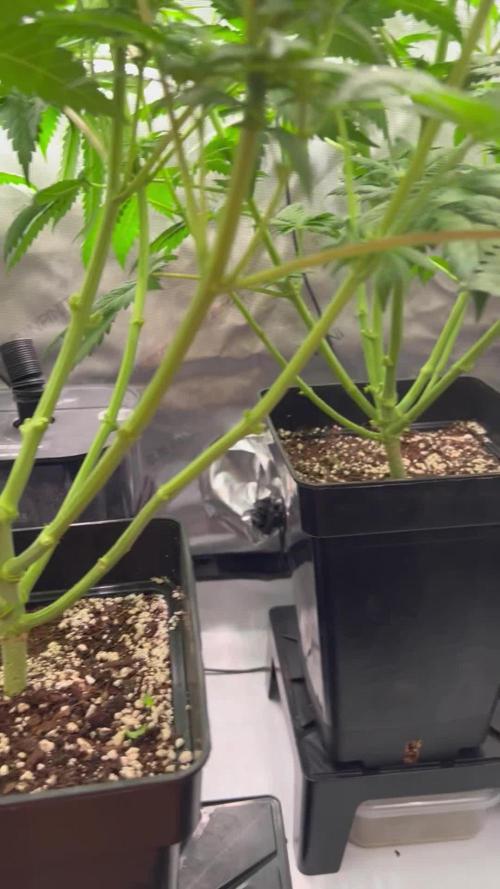
This week, I started defoliation and tying down. So far, no signs of pistils. The smell is beginning to emit. PPM remains at 1000, and the pH is 5.8.
While waiting for the harvest, I'm enjoying the last Rosin I made.


@Drehpaper
Volgen
Woche: 03 Blüte 15-21 / 43-49
27.07-02.08 / Licht 100/50
VPD: 1,0
Höhe: 63cm
PPFD: 768
DLI: 33,2
Temperatur Tag: 27,7
Temperatur Nacht: 23,8
Luftfeuchtigkeit: 62,4
Hatte die Woche bisl mit der Luftfeuchtigkeit zu kämpfen. Werd Anfang nächster Woche den Entfeuchter aufstellen. Ansonsten läuft alles ganz gut, war paar Tage weg und als ich wiederkam waren sie sehr sehr ausgetrocknet, nach 2 Liter Wasser und bisl warten war zum Glück alles wieder so wie es sein soll.
An Blütetag 21 wurde gelollipoppt, diesmal nicht ganz so viel wie beim letzten Grow. Zusätzlich gab es am Blüte Tag 21 noch Bio Tabs Bio PK 5-8 8ml pro Pflanze verdünnt auf 1 Liter Wasser.

shorts_status_processing


@Mrs_Larimar
Volgen
January 1st.
They were showing up very fast, Iam going for Day one today,,,
,,Because there are more vessels than only the " Ladyhead"
I planted 4 tealightholders in ametal Frame
I hope I can so some training on them
Until now Iam quite Happy , and we will see more soon
Thank you Silky_smooth for this Egghunt_Invitation----- i needed some Challenge for sure


@RoyColt
Volgen
Always R.O Water
Watering the plant 3 times for per week
1st Watering with nutriens.
2st Watering with nutriens.
3st Watering with only R.O water & CalMag
Yes it's time to move on to the FinalPart


@SwissKush
Volgen
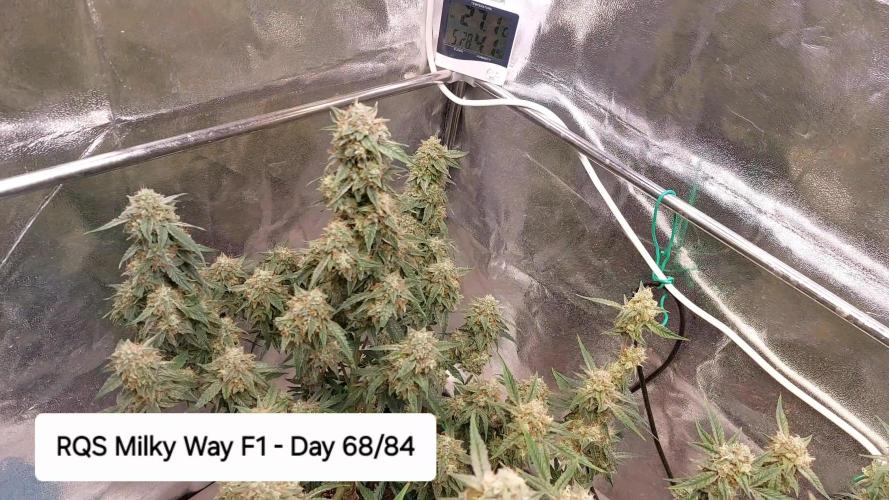
Week 12, flushing with Fresh Water, PHd to 6.0, we are at all milky white trichomes on the F1, about 80% on the Pineapple, we are going the long distance here for the narcotic medical effects. 84 days likely we will go for both these ladies.
@James the Milky Way F1 is really something special! My next grow will include Milky Way and Epsilon F1.
@Fast_Buds the Pineapple Express, like you guys, is also one of my favorites you have! I just got 10 seeds of it, and 10 of the blueberry, which is also incredible (see my last grow of Originals)

@Chucky324
Volgen
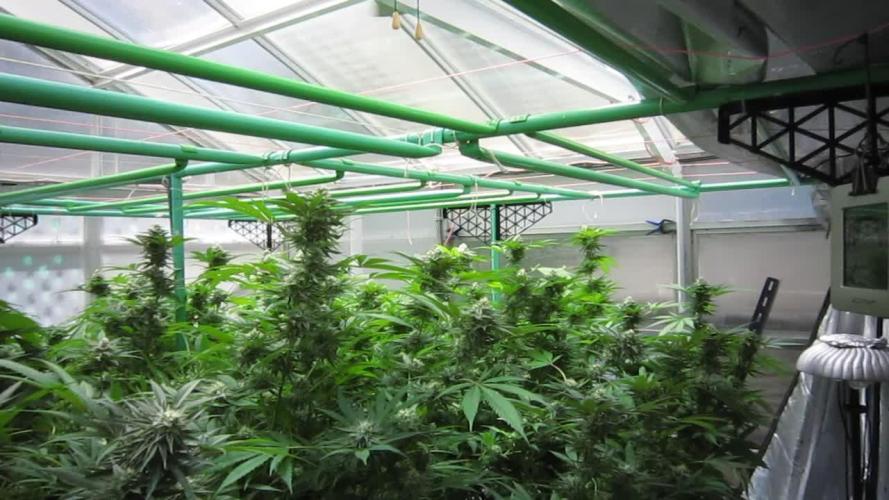
Hello. This is the end of week 5 and the beginning of week 6 of flowering.
The plants are bulking up. Getting some weight put on the buds.
I can see some branches starting to lean and wondering if I should raise my top net or leave it.... Hmm... Life's decision's...
It's been a coolish week here. I'm putting an extra floor fan on low in the tent at nights to ward off the evil... WPM.
Sometimes it just takes a bit more air flow and it won't bother you. Another good reason to trim some fan leaves in the middle for better air flow.
The stretch has stopped... some branches stopping 6 inches short of the roof.
Smells wonderful in here. An overall gelato type of smell with some sweet candy fruit smells.
Plant #5 is developing a funky sweet fruity cheezie type of smell. Funky.... The wife and I both said, Mmmm... when we smell it.
The garden is going good. Lots of zucchini flowers and tomato's started.
I didn't add any wood ash this year, it turns the soil alkaline and I have to guess the right amount of lime to add and get the ph lower, and I don't always get it right. Only added compost from my composter this year and just a sprinkle of lime. Plants love the wood ash but it takes handful's of lime to correct the balance.
OK. Have Fun.
Chuck.


@ProfDoty
Volgen
irs Day 84 right now probably gonna chop her down on day 90. I’ve learned a lot from this grow and so far satisfied (for now) the smoke from the black cream is smooth asf it’s still curing right now but it’s sure to be a delight. Great genetics by sweet seeds would definitely recommend and run them again stay tuned for final weigh


@Growbody
Volgen
Hallo und herzlich willkommen zu meinem Schlußbericht Outdoor 2025 mit den Sorten Power Flower Feminized, Royal Medic Feminized und Special Kush #1 Feminized, alle 3 von Royal Queen Seeds. Es ist das erste Mal, das ich Töpfe für den Outdoor grow verwendete, bisher waren alle Gorilla grows und direkt in die Erde gepflanzt.
Die URL der Power Flower Feminized: https://www.royalqueenseeds.de/feminisierte-hanfsamen/120-power-flower.html
Die Planung für den Grow war, die Samen in easyplug Anzuchtwürfeln keimen zu lassen und danach in 0,6L und 2,2L Plastiktöpfen, dann letztlich in die neuen komplett doppellagigen ROOTIES 15 Liter Wide Version Stofftöpfe umzutopfen. Sobald die Witterung es zuläßt, sollten die Pflanzen an die frische Luft.
Tag 249: Die Schlußernte der Power Flower feminized von Royal Queen Seeds steht an. Für die 103 Gramm Nass getrimmter Blüten hab ich von ~17:00 Uhr bis weit nach Mitternacht geschnibbelt. Die Buds haben eine schöne lila Farbe. Mit der ersten Ernte vom 12.10. macht das zusammen 360 Gramm Nass getrimmte Blüten. Die Blüten liegen zum trocknen in den DryFerm Bags im Keller bis sich das Gewicht an 3 aufeinanderfolgenden Tagen nicht mehr verändert. Dann ist die Restfeuchte bei ca. 60%. Das ist die schonendste Trocknung die ich kenne, kaum Geruch im Keller aber die volle Ladung Terpene, wenn man die Tüten öffnet. Absolut zu empfehlen.
Tag 251: Hab euch noch den Trocknungsplan fotografiert und meine DIY Pollenmaschine. Das Ergebnis der Siebung zeig ich euch, wenn's soweit ist. Auf dem Trocknungsplan kann man sehen, dass die Special Kush #1 fem. (SK#1 1) am Sonntag noch 125 Gramm auf die Waage brauchte und heute, 3 Tage später nur noch 74 Gramm. Alleine in dieser Tüte sind in der kurzen Zeit 51 Gramm Wasser verdunstet.
Tag 252: Die Blätter der Power Flower feminized sind fertig durchgesiebt, das Glässchen ist fast voll. Diese Art der Blattverwertung gefällt mir besser als Cannabutter zu kochen. Minimaler Energieeinsatz, keine Action. Jetzt schau ich Mal, wie ich den Pollen gebacken bekomme.
Wenn's dir gefallen hat, schau wieder vorbei ✌️😎


@CRiSPrGrow
Volgen
Week 13 :
This wraps up the last week of flush for the biotabs, they got 2.5 ml/L of humic acid each feed 3x 4 pints this week. These have a real funky smell to them, cant really put my finger on it, kinda plant musty, really strong smell, maybe skunky or something, main thing is they're getting the chop soon ! Clipped a fair few leaves but the idea is a dry trim and hanging the plants whole for 10-12 days of slow drying before the cure. Man i cant wait to wrap this grow up ! These kinda grew crowded, i can tell because the biotabs and mrB's have a few branches that are anemic, small, useless, so they're all gonna go into the bubble hash, let's see if i can extract anything from these beauties ! wish me luck 🚀


@Ultraviolet
Volgen
ANTHOCYANIN production is primarily controlled by the Cryptochrome (CR1) Photoreceptor ( !! UV and Blue Spectrums are primary drivers in the production of the pigment that replaces chlorophyll, isn't that awesome!
1. Diverse photoreceptors in plants
Many civilizations, including the sun god of ancient Egypt, thought that the blessings of sunlight were the source of life. In fact, the survival of all life, including humans, is supported by the photosynthesis of plants that capture solar energy. Plants that perform photosynthesis have no means of transportation except for some algae. Therefore, it is necessary to monitor various changes in the external environment and respond appropriately to the place to survive. Among various environmental information, light is especially important information for plants that perform photosynthesis.
In the process of evolution, plants acquired phytochrome, which mainly receives light in the red light region, and multiple blue light receptors, including his hytropin and phototropin, in order to sense the light environment. .. In addition to these, an ultraviolet light receptor named UVR8 was recently discovered. The latest image of the molecular structure and function of these various plant photoreceptors (Fig. 1), focusing on phytochrome and phototropin.
Figure 1
Ultraviolet-visible absorption spectra of phytochrome, cryptochrome, phototropin, and UVR8. The dashed line represents each bioactive absorption spectrum.
2. Phytochrome; red-far red photoreversible molecular switch
What is phytochrome?
Phytochrome is a photochromic photoreceptor, and has two absorption types, a red light absorption type Pr (absorption maximum wavelength of about 665 nm) and a far-red light absorption type Pfr (730 nm). Reversible light conversion between the two by red light and far-red light, respectively(Fig. 1A, solid line and broken line). In general, Pfr is the active form that causes a physiological response. With some exceptions, phytochrome can be said to function as a photoreversible molecular switch. The background of the discovery is as follows. There are some types of plants that require light for germination (light seed germination). From that study, it was found that germination was induced by red light, the effect was inhibited by subsequent far-red light irradiation, and this could be repeated, and the existence of photoreceptors that reversibly photoconvert was predicted. In 1959, its existence was confirmed by the absorption spectrum measurement of the yellow sprout tissue, and it was named phytochrome. Why does the plant have a sensor to distinguish between such red light and far-red light? There is no big difference between the red and far-red light regions in the open-field spectrum of sunlight, but the proportion of red light is greatly reduced due to the absorption of chloroplasts in the shade of plants. Similar changes in light quality occur in the evening sunlight. Plants perceive this difference in light quality as the ratio of Pr and Pfr, recognize the light environment, and respond to it.
Subsequent studies have revealed that it is responsible for various photomorphogenic reactions such as photoperiodic flowering induction, shade repellent, and deyellowing (greening). Furthermore, with the introduction of the model plant Arabidopsis thaliana (At) and the development of molecular biological analysis methods, research has progressed dramatically, and his five types of phytochromes (phyA-E) are present in Arabidopsis thaliana. all right. With the progress of the genome project, Fi’s tochrome-like photoreceptors were found in cyanobacteria, a photosynthetic prokaryotes other than plants. Furthermore, in non-photosynthetic bacteria, a homologue molecule called bacteriophytochrome photoreceptor (BphP) was found in Pseudomonas aeruginosa (Pa) and radiation-resistant bacteria (Deinococcus radiodurans, Dr).
Domain structure of phytochrome molecule
Phytochrome molecule can be roughly divided into N-terminal side and C-terminal side region. PAS (Per / Arndt / Sim: blue), GAF (cGMP phosphodiesterase / adenylyl cyclase / FhlA: green), PHY (phyto-chrome: purple) 3 in the N-terminal region of plant phytochrome (Fig. 2A) There are two domains and an N-terminal extension region (NTE: dark blue), and phytochromobilin (PΦB), which is one of the ring-opening tetrapyrroles, is thioether-bonded to the system stored in GAF as a chromophore. ing. PAS is a domain involved in the interaction between signal transduction-related proteins, and PHY is a phytochrome-specific domain. There are two PASs and her histidine kinase-related (HKR) domain (red) in the C-terminal region, but the histidine essential for kinase activity is not conserved.
3. Phototropin; photosynthetic efficiency optimized blue light receptor
What is phototropin?
Charles Darwin, who is famous for his theory of evolution, wrote in his book “The power of move-ment in plants” published in 1882 that plants bend toward blue light. Approximately 100 years later, the protein nph1 (nonphoto-tropic hypocotyl 1) encoded by one of the causative genes of Arabidopsis mutants causing phototropic abnormalities was identified as a blue photoreceptor. Later, another isotype npl1 was found and renamed phototropin 1 (phot1) and 2 (phot2), respectively. In addition to phototropism, phototropin is damaged by chloroplast photolocalization (chloroplasts move through the epidermal cells of the leaves and gather on the cell surface under appropriate light intensity for photosynthesis. As a photoreceptor for reactions such as escaping to the side of cells under dangerous strong light) and stomata (reactions that open stomata to optimize the uptake of carbon dioxide, which is the rate-determining process of photosynthetic reactions). It became clear that it worked. In this way, phototropin can be said to be a blue light receptor responsible for optimizing photosynthetic efficiency.
Domain structure and LOV photoreaction of phototropin molecule
Phototropin molecule has two photoreceptive domains (LOV1 and LOV2) called LOV (Light-Oxygen-Voltage sensing) on the N-terminal side, and serine / on the C-terminal side. It is a protein kinase that forms threonine kinase (STK) (Fig. 4Aa) and whose activity is regulated by light. LOV is one molecule as a chromophore, he binds FMN (flavin mononucleotide) non-covalently. The LOV forms an α/βfold, and the FMN is located on a β-sheet consisting of five antiparallel β-strands (Fig. 4B). The FMN in the ground state LOV shows the absorption spectrum of a typical oxidized flavin protein with a triplet oscillation structure and an absorption maximum wavelength of 450 nm, and is called D450 (Fig. 1C and Fig. 4E). After being excited to the singlet excited state by blue light, the FMN shifts to the triplet excited state (L660t *) due to intersystem crossing, and then the C4 (Fig. 4C) of the isoaroxazine ring of the FMN is conserved in the vicinity. It forms a transient accretionary prism with the tain (red part in Fig. 4B Eα) (S390I). When this cysteine is replaced with alanine (C / A substitution), the addition reaction does not occur. The effect of adduct formation propagates to the protein moiety, causing kinase activation (S390II). After that, the formed cysteine-flavin adduct spontaneously dissociates and returns to the original D450 (Fig. 4E, dark regression reaction).
Phototropin kinase activity control mechanism by LOV2
Why does phototropin have two LOVs? Atphot1 was found as a protein that is rapidly autophosphorylated when irradiated with blue light.
The effect of the above C / A substitution on this self-phosphorylation reaction and phototropism was investigated, and LOV2 is the main photomolecular switch in both self-phosphorylation and phototropism. It turns out that it functions as. After that, from experiments using artificial substrates, STK has a constitutive activity, LOV2 functions as an inhibitory domain of this activity, and the inhibition is eliminated by photoreaction, while LOV1 is kinase light. It was shown to modify the photosensitivity of the activation reaction. In addition to this, LOV1 was found to act as a dimerization site from the crystal structure and his SAXS. What kind of molecular mechanism does LOV2 use to photoregulate kinase activity? The following two modules play important roles in this intramolecular signal transduction.
Figure 4
(A) Domain structure of LOV photoreceptors. a: Phototropin b: Neochrome c: FKF1 family protein d: Aureochrome (B) Crystal structure of auto barley phot1 LOV2. (C) Structure of FMN isoaroxazine ring. (D) Schematic diagram of the functional domain and module of Arabidopsis thaliana phot1. L, A’α, and Jα represent linker, A’α helix, and Jα helix, respectively. (E) LOV photoreaction. (F) Molecular structure model (mesh) of the LOV2-STK sample (black line) containing A’α of phot2 obtained based on SAXS under dark (top) and under bright (bottom). The yellow, red, and green space-filled models represent the crystal structures of LOV2-Jα, protein kinase A N-lobe, and C-robe, respectively, and black represents FMN. See the text for details.
1) Jα. LOV2 C of oat phot1-to α immediately after the terminus
Rix (Jα) is present (Fig. 4D), which interacts with the β-sheet (Fig. 4B) that forms the FMN-bound scaffold of LOV2 in the dark, but unfolds and dissociates from the β-sheet with photoreaction. It was shown by NMR that it does. According to the crystal structure of LOV2-Jα, this Jα is located on the back surface of the β sheet and mainly has a hydrophobic interaction. The formation of S390II causes twisting of the isoaroxazine ring and protonation of N5 (Fig. 4C).
As a result, the glutamine side chain present on his Iβ strand (Fig. 4B) in the β-sheet rotates to form a hydrogen bond with this protonated N5. Jα interacts with this his Iβ strand, and these changes are thought to cause the unfold-ing of Jα and dissociation from the β-sheet described above. Experiments such as amino acid substitution of Iβ strands revealed that kinases exhibit constitutive activity when this interaction is eliminated, and that Jα plays an important role in photoactivation of kinases.
2) A’α / Aβ gap.
Recently, several results have been reported showing the involvement of amino acids near the A’α helix (Fig. 4D) located upstream of the N-terminal of LOV2 in kinase photoactivation. Therefore, he investigated the role of this A’α and its neighboring amino acids in kinase photoactivation, photoreaction, and Jα structural change for Atphot1. The LOV2-STK polypeptide (Fig. 4D, underlined in black) was used as a photocontrollable kinase for kinase activity analysis. As a result, it was found that the photoactivation of the kinase was abolished when amino acid substitution was introduced into the A’α / Aβ gap between A’α and Aβ of the LOV2 core. Interestingly, he had no effect on the structural changes in Jα examined on the peptide map due to the photoreaction of LOV2 or trypsin degradation. Therefore, the A’α / Aβ gap is considered to play an important role in intramolecular signal transduction after Jα.
Structural changes detected by SAXS
Structural changes of Jα have been detected by various biophysical methods other than NMR, but structural information on samples including up to STK is reported only by his results to his SAXS. Not. The SAXS measurement of the Atphot2 LOV2-STK polypeptide showed that the radius of inertia increased from 32.4 Å to 34.8 Å, and the molecular model (Fig. 4F) obtained by the ab initio modeling software GASBOR is that of LOV2 and STK. It was shown that the N lobes and C lobes lined up in tandem, and the relative position of LOV2 with respect to STK shifted by about 13 Å under light irradiation. The difference in the molecular model between the two is considered to reflect the structural changes that occur in the Jα and A’α / Aβ gaps mentioned above.
Two phototropins with different photosensitivity
In the phototropic reaction of Arabidopsis Arabidopsis, Arabidopsis responds to a very wide range of light intensities from 10–4 to 102 μmol photon / sec / m2. At that time, phot1 functions as an optical sensor in a wide range from low light to strong light, while phot2 reacts with light stronger than 1 μmol photon / sec / m2. What is the origin of these differences? As is well known, animal photoreceptors have a high photosensitivity due to the abundance of rhodopsin and the presence of biochemical amplification mechanisms. The exact abundance of phot1 and phot2 in vivo is unknown, but interesting results have been obtained in terms of amplification.
The light intensity dependence of the photoactivation of the LOV2-STK polypeptide used in the above kinase analysis was investigated.
It was found that phot1 was about 10 times more photosensitive than phot2. On the other hand, when the photochemical reactions of both were examined, it was found that the rate of the dark return reaction of phot1 was about 10 times slower than that of phot2. This result indicates that the longer the lifetime of S390II, which is in the kinase-activated state, the higher the photosensitivity of kinase activation. This correlation was further confirmed by extending the lifespan of her S390II with amino acid substitutions. This alone cannot explain the widespread differences in photosensitivity between phot1 and phot2, but it may explain some of them. Furthermore, it is necessary to investigate in detail protein modifications such as phosphorylation and the effects of phot interacting factors on photosensitivity.
Other LOV photoreceptors Among fern plants and green algae, phytochrome ɾphotosensory module (PSM) on the N-terminal side and chimera photoreceptor with full-length phototropin on the C-terminal side, neochrome (Fig. There are types with 4Ab). It has been reported that some neochromes play a role in chloroplast photolocalization as a red light receiver. It is considered that fern plants have such a chimera photoreceptor in order to survive in a habitat such as undergrowth in a jungle where only red light reaches.
In addition to this, plants have only one LOV domain, and three proteins involved in the degradation of photomorphogenesis-related proteins, FKF1 (Flavin-binding, Kelch repeat, F-box 1, ZTL (ZEITLUPE)), LKP2 ( There are LOV Kelch Protein2) (Fig. 4Ac) and aureochrome (Fig. 4Ad), which has a bZip domain on the N-terminal side of LOV and functions as a gene transcription factor.
4. Cryptochrome and UVR8
Cryptochrome is one of the blue photoreceptors and forms a superfamily with the DNA photoreceptor photolyase. It has FAD (flavin adenine dinucle-otide) as a chromophore and tetrahydrofolic acid, which is a condensing pigment. The ground state of FAD is considered to be the oxidized type, and the radical type (broken line in Fig. 1B) generated by blue light irradiation is considered to be the signaling state. The radical type also absorbs in the green to orange light region, and may widen the wavelength region of the plant morphogenesis reaction spectrum. Cryptochrome uses blue light to control physiological functions similar to phytochrome.
It was identified as a photoreceptor from one of the causative genes of UVR8 Arabidopsis thaliana, and the chromophore is absorbed in the UVB region by a Trp triad consisting of three tryptophans (Fig. 1D). It is involved in the biosynthesis of flavonoids and anthocyanins that function as UV scavengers in plants.
Conclusion
It is thought that plants have acquired various photoreceptors necessary for their survival during a long evolutionary process. The photoreceptors that cover the existing far-red light to UVB mentioned here are considered to be some of them. More and more diverse photoreceptor genes are conserved in cyanobacteria and marine plankton. By examining these, it is thought that the understanding of plant photoreceptors will be further deepened.


@DaddyPrime2
Volgen
9/22 topped them at 4th node. some of them are looking better for mainlining that others. some of them i may not mainline and others i left an extra node in case i want to keep clones around.
#1 is looking happy with the topping and looks really good.
#2 is the only one thats been praying and is the tallest and strongest looking all around.
#5 short and such tight internodal spacing that it makes it hard to see whats all there. just looks like a bunch of small leaves until they grow out. i may not mainline this one either be cause of it being so tightly packed it may make it
9/27/24
day 20 theyre growing quite well. #1 i ended up taking the bottom nodes. i was originally goi g to use them as clones later on but decided to just let her go with her 4 nodes. #5 is so tightly packed, she has like 8 mains all in such a small space, its hard to even make sense of it all.


@Adam420
Volgen
Advanced nutrient ph perfect grow
Focusing on beating last year. Transplanted to 5 gal pot
Next week will be top week. Should be successful due to healthy plants
Ly at this date: mar 28th
Have not started the grow yet


@AsNoriu
Volgen
Day 36. Still no feed....
Again, difference in size growing many autos is HUGE pain. One Northern Lights is smallest plant I ever grew, I doubt I would I achieved it with loads of LST ;))) Will try to lift that midget a bit ...
Some flower, some not, Diesels are still the only strain I would grew, but most probably not once ;)))
they look amazing !!! 10 out of 10 !
Green Crack still the obvious looser at the moment and is still mostly in veg ...
Next watering will be full of goodies for them !!!
Couple leaves off here and there, couple branches cropped or repositioned, still waiting for stretch to be over before installing some support.
Day 37. One more girl took SuperCroping like champ and at the moment has very even canopy.
All garden looks fine, hope feed won't spoil that joy ;)))
Day 40. Girls still on water, but during every two days, so it's again pain ... Whatever pot size I take - girls start to go faster, than my laziness wants :)))
Cleared bottoms of first row, next watering will clear other 5, just want to see are they ok. Some strains hates any job done to them and stops developing.... Would be stupid to slow them down in final stretch ...
Happy Growing !!!
