


Likes
Comments
Share


@Jungle_James_Grows
Follow
Pulled her a bit earlier than I would have liked, due to pest pressure

Processing
Likes
5
Share


@Mrg7667
Follow
Smells like Rubber bands coated in a berry sugar or berry sryup very interesting on the nose!
Harvested day 67 ish maybe a couple more hard ot tell outdoor Split the harvest into drying buds and some to made into fresh frozen hash. i can dry weigh the fresh frozen buds and put that weight in the wet section and i will put the to smoke buds in the dry weight section so total between the two will be the whole plant
Drying was a big mishap got condensation around day 10 of drying and it caused some mold 🤦♂️ right around the time i was going to cure!
Found a peroxide soak that ill post butt it seemed to take off all the mold without affecting tricomb heads! Had to re dry for another week afterward i feel like the re dry maybe messed with the terps because it definitely never got the smell back like i thought but who knows slmost 3 weeks into cure coukd get better but doubt it

Likes
5
Share


@Jankky
Follow
Had to use bricks to raise the height of the structure. Sapphire OG on the right. Candy Gas in the middle. And the second Sapphire OG and Candy Gas share the square on the left, the tallest of the zones.


Likes
Comments
Share

@AkatsukiVirtue
Follow
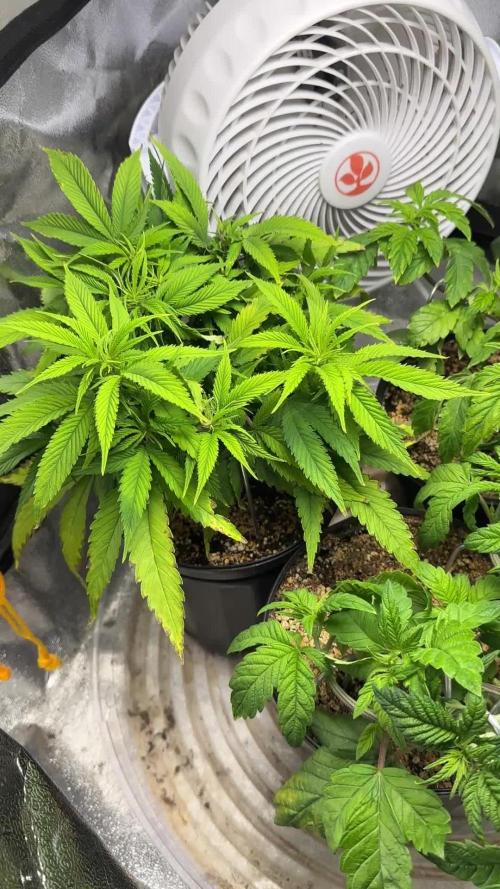
All plants are doing fine.
Chocolate Skunk - CSK is showing some signs of nutrient deficiency, however I plan to water with nutes next week same with the other strains.
Both GPA Cookies are doing really well. They seem to stretch quite a bit so I did some tie down to help spread the leaf base
Money Maker is doing excellent! Great foliage, deep green and lush. I FIMmed to slow it down a bit while the rest caught up.


Likes
11
Share


@BlaKX
Follow
Ajoooooo das ist bzw war mal ne lange check Liste..Gefällt mir definitiv:)
Die WW muss noch trocken habe sie Komplett Manikürt da vielen 30g Zucker Blätter nass ab und zu Butter verarbeitet
Schätze werden so 75g trocken.


Likes
45
Share


@Ultraviolet
Follow
My homework.
Rubisco regeneration is intrinsically linked to nitrogen supply because Rubisco is a major sink for nitrogen in plants, typically accounting for 15% to over 25% of total leaf nitrogen. The regeneration phase itself consumes nitrogen through the synthesis of the Rubisco enzyme and associated proteins (like Rubisco activase), and overall nitrogen status heavily influences the efficiency of RuBP regeneration.Structural Component: Nitrogen is an essential building block for all proteins, and the sheer abundance of the Rubisco protein makes it the single largest storage of nitrogen in the leaf.
Synthesis and Activity: Adequate nitrogen supply is crucial for the synthesis and maintenance of sufficient Rubisco enzyme and Rubisco activase (Rca), the regulatory protein responsible for maintaining Rubisco's active state. Nitrogen deficiency leads to a decrease in the content and activity of both Rubisco and Rca, which in turn limits the maximum carboxylation rate, Vmax, and the rate of RuBP regeneration Jmax, thus reducing overall photosynthetic capacity.
Nitrogen Storage and Remobilization: Rubisco can act as a temporary nitrogen storage protein, which is degraded to remobilize nitrogen to other growing parts of the plant, especially under conditions of nitrogen deficiency or senescence.
Nitrogen Use Efficiency (NUE): The allocation of nitrogen to Rubisco is a key determinant of a plant's photosynthetic nitrogen use efficiency (PNUE). In high-nitrogen conditions, plants may accumulate a surplus of Rubisco, which may not be fully activated, leading to a lower PNUE. Optimizing the amount and activity of Rubisco relative to nitrogen availability is a target for improving crop NUE.
Photorespiration and Nitrogen Metabolism: Nitrogen metabolism is also linked to the photorespiration pathway (which competes with carboxylation at the Rubisco active site), particularly in the reassimilation of ammonia released during the process.
To increase RuBisCO regeneration, which refers to the process of forming the CO2 acceptor molecule Ribulose-1,5-bisphosphate (RuBP) during photosynthesis, the primary methods involve optimizing the levels and activity of Rubisco activase (Rca) and enhancing the performance of other Calvin-Benson-Bassham (CBB) cycle enzymes.
Biochemical and Environmental Approaches:
Optimize Rubisco Activase (Rca) activity: Rca is a crucial chaperone protein that removes inhibitory sugar phosphates, such as CA1P (2-carboxy-D-arabinitol 1-phosphate), from the Rubisco active site, thus maintaining its catalytic competence.
•Ensure optimal light conditions: Rca is light-activated via the chloroplast's redox status. Adequate light intensity ensures Rca can effectively maintain Rubisco in its active, carbamylated state.
•Maintain optimal temperature: Rca is highly temperature-sensitive and can become unstable at moderately high temperatures (e.g., above 35°C/95F° in many C3 plants), which decreases its ability to activate Rubisco. Maintaining temperatures within the optimal range for a specific plant species is important.
•Optimize Mg2+ concentration: Mg2+ is a key cofactor for both Rubisco carbamylation and Rca activity. In the light, Mg2+ concentration in the chloroplast stroma increases, promoting activation.
•Manage ATP/ADP ratio: Rca activity depends on ATP hydrolysis and is inhibited by ADP. Conditions that maintain a high ATP/ADP ratio in the chloroplast stroma favor Rca activity.
Enhance Calvin-Benson-Bassham (CBB) cycle enzyme activity: The overall rate of RuBP regeneration can be limited by other enzymes in the cycle.
•Increase SBPase activity: Sedoheptulose-1,7-bisphosphatase (SBPase) is a key regulatory enzyme in the regeneration pathway, and increasing its activity can enhance RuBP regeneration and overall photosynthesis.
•Optimize other enzymes: Overexpression of other CBB cycle enzymes such as fructose-1,6-bisphosphate aldolase (FBA) and triose phosphate isomerase (TPI) can also help to balance the metabolic flux and improve RuBP regeneration capacity.
Magnesium ions, Mg2+, are specifically required for Rubisco activation because the cation plays a critical structural and chemical role in forming the active site: A specific lysine residue in the active site must be carbamylated by a CO2 molecule to activate the enzyme. The resulting negatively charged carbamyl group then facilitates the binding of the positively charged Mg2+ion. While other divalent metal ions like Mn2+ can bind to Rubisco, they alter the enzyme's substrate specificity and lead to dramatically lower activity or a higher rate of the non-productive oxygenation reaction compared to Mg2+, making them biologically unfavorable in the context of efficient carbon fixation. The concentration of Mg2+ in the chloroplast stroma naturally increases in the light due to ion potential balancing during ATP synthesis, providing a physiological mechanism to ensure the enzyme is activated when photosynthesis is possible. At the center of the porphyrin ring, nestled within its nitrogen atoms, is a Magnesium ion (Mg2+). This magnesium ion is crucial for the function of chlorophyll, and without it, the pigment cannot effectively capture and transfer light energy.
Mg acts as a cofactor: Mg2+ binds to Rubisco after an activator CO2 molecule, forming a catalytically competent complex (Enzyme-CO2-Mg2+). High light + CO2) increases demand: Under high light (60 DLI is a very high intensity, potentially saturating) and high CO2, the plant's capacity for photosynthesis is high, and thus the demand for activated Rubisco and the necessary Mg2+ cofactor increases. Mg deficiency becomes limiting: If Mg2+ is deficient under these conditions, the higher levels of Rubisco and Rubisco activase produced cannot be fully activated, leading to lower photosynthetic rates and potential photo-oxidative damage.
Optimal range: Studies show that adequate Mg2+ application can enhance Rubisco activation and stabilize net photosynthetic rates under stress conditions, but the required concentration is specific to the experimental setup.
Monitoring is key: The most effective approach in a controlled environment is to monitor the plant's physiological responses e.g., leaf Mg2+ concentration, photosynthetic rate, Rubisco activation state, and adjust the nutrient solution/fertilizer to maintain adequate levels, rather than supplementing a fixed "extra" amount.
In practice, this means ensuring that Mg2+ is not a limiting factor in the plant's standard nutrient solution when pushing the limits with high light and CO2.
Applying Mg2+ through foliar spray is beneficial to Rubisco regeneration, particularly in alleviating the negative effects of magnesium (Mg) deficiency and high-temperature stress (HTS). While Mg can be leached from soil, within the plant it is considered a mobile nutrient, particularly in the phloem. Foliar-applied Mg is quickly absorbed by the leaves and can be translocate to other plant parts, including new growth and sink organs.
Foliar application of: NATURES VERY OWN MgSO4 @ 15.0g L-1 in a spray bottle.
Foliar sprays are often recommended as a rapid rescue measure for existing deficiencies or as a supplement during critical growth stages, when demand for Mg is high. Application in the early morning or late evening can improve absorption and prevent leaf burn.
The starting point [of creativity] is curiosity: pondering why the default exists in the first place. We’re driven to question defaults when we experience vuja de, the opposite of déjà vu. Déjà vu occurs when we encounter something new, but it feels as if we’ve seen it before. Vuja de is the reverse—we face something familiar, but we see it with a fresh perspective that enables us to gain new insights into old problems.
Likes
16
Share


@nonick123
Follow
Día 22 (03/02) Se está desarrollando estupendamente!
El sustrato sigue húmedo, así que el suelo vivo siga haciendo su trabajo!
Día 23 (04/02) Riego con 500 ml H2O RO
Se muestra sedienta!
Día 24 (05/02) Un desarrollo espectacular en estos 24 días de vida! 😍
Día 25 (06/02) Riego con 500 ml H2O RO
Se ve radiante!
Día 26 (07/02) Riego con 150 ml
Día 27 (08/02) Riego con 350 ml
Día 28 (09/02) Flip to 12/12! 💥💨😁
FastBuds 15% DISCOUNT code "NONICK" 2fast4buds.com @fast_buds_official_ @fastbuds.official
💦 BioTabs 15% DISCOUNT code "GDBT420" biotabs.nl/en/shop/ @biotabs_official
🌱Substrate PRO-MIX HP BACILLUS + MYCORRHIZAE @promixmitch @promixgrowers_unfiltered
💡2 x Mars Hydro FC1500 EVO Led Grow Light (2024 NEW FC 1500-EVO Samsung LM301H 150W LED) - https://marshydro.eu/products/fc1500-evo-led-grow-lights/ - https://www.amazon.de/dp/B0CSSGN5D8?ref=myi_title_dp

Likes
15
Share


@DeadHeadChef420
Follow
Awesome harvest and very happy with the outcome. Starting another journal next week. Will be even more detailed and I won't miss any weeks. I uploaded some video of my drying room.



Likes
7
Share


@JandM
Follow
Well it's day 77 one looks ready and one looks like it could go a week or two but I dry in the same tent so if one goes down they both go down not sure what to do yet. But this will probably be the last post before harvest gonna give them a couple mare days I think. I got fast buds apple strudel seeds I'll be getting started as soon as this is done.
Processing
Likes
20
Share


@mikemobes
Follow
7/28/19
--Super happy to see the plants doing this well. Ive found that every other day feeding is the best for these specific plants. Im a big proponent of only watering the plant when it signals it is ready for watering. The least possible amount of induced stress for these plants is the goal for me. Cheese seemed to be totally unaware of the FIM that was done on it, as it showed not even 1 sign of stress post FIM. Cream cookies is another story, she's quite sensitive to absolutely everything--including watering. I am super happy to see that the last fan leave on the 5th node has 9 leaves--a really good sign that the plant is doing extremely well. The more leave nodes on each leave the healthier than plant. There are zero signs of nutrient burn at all. It was difficult at first to see if the slight bending of the leaves was due to nutrient burn, but I later figured out that the leaves were pressing against the side of their pot and as a result bending--wasnt nutrient burn. Ive been varying the pH widely each week--with the attempt to be as random as possible. I want to make as many nutrients available to the plant as absolutely possible.
I really am loving the Advanced Nutrients Sensi line. Im growing in coco but I bought the nutrient mix not designed for coco with the understanding there might be some potassium issues down the road. But otherwise as a chemist by profession, when I heard about the pH perfect line I was rightly skeptical. It will balance your solution to the correct pH range (5.6-6) IF you start with dead neutral pH 7.00±0.05 water with no dissolved salts (distilled water). the distilled water I've been buying (from Walmart) clocks in on the pH meter at around 7.6-8.6 which will cause the pH perfect technology to neutralize some of the dissolved ionic species and bring the pH well below safe range for cannabis. Ive found that if you pH the distilled water to 7.00--add your Ca/Mg/Fe, THEN add the pH perfect technology the range will be much more suitable. It was kind of annoying since my pH down is so much more concentrated than my pH up. Me problems I know but still annoying.
--One of my amazing collages at work is going to water both babies today with Week 4 nutrient solution even though we are technically in week 5. My vacation has prevented me from mixing the solution to feed.
--This vacation has brought so many new automation ideas to coco coir growing. Ive been developing a hypothesis that involves what I call the "level of droop age" and its correlation to plant thirst. It began when I was growing in soil and needed a better way of telling when to feed the plants instead of a fixed schedule, which seemed to be giving way too much water to the plants.
---Ive developed a "droop scale" which can be directly correlated to plant thirst. Ive also found that very happy plants that do not want water will go through a natural droop cycle as night approaches. I take this as the plants time to grow out its root system (happens at night). By the morning the leaves are pointing up in what I call "leaves up loving life"
---So the scale I've developed is kind of arbitrary but it does a really good job imo if you become very familiar with your plants.
---The scale ranges from -10 (the most droop in the leaves every observed) to +10 (the most extreme leaves up loving life ever observed). the scale is out of 10 not 20.
---lets say that you watered your plants today, and their leaves were at a -7/10 droop (what when I water my plants). If you water them you should observe no increase in droop--in other words after watering the droop should only improve not regress. If the droop increases after watering your plants wanted a little more time before their feed--so alter your droop scale until you find the level of droop that when feed causes only an increase in the droop. 6 hours after watering you plant droop should be >+1/10. The next day you should see your plants at least at +5/10 droop.
---Merging this scale with automation is going to be difficult as ill have to use an open source machine learning AI to learn when the plants droop is sufficient enough to justify a watering. I hope to set up the system to be automated or manually operated over the cloud.
---Using a Raspberry pi and an Arduino as well as a whole set of motor control boards and sensor boards I hope to put together an integrated system that can detect when the leave droop reaches critical levels using a camera, and feed accordingly. Ive been all over the internet and all automated grow projects rely on soil moisture sensors which only penetrate <4 inches into the substrate. This doesn't cut it for me as the root ball of the plant is way below that 4 inches of the sensor, yielding readings which only pertain to the top layer of soil, which just so happens to dry out the fastest.
---Im going to keep my grows at 2 plants each from no on--and I plan to make an automated system for both plants which can control watering to both plants individually. Im currently trying to figure out the best way to track volume of water dispensed. A flow meter with a know diameter tubing and a known diaphragm pump rate seems to introduce all sorts of inaccuracies into the mix. I think im going to design an automated measuring system that uses an ultrasonic distance sensor coupled with a camera and AI to fill up a the hopper to the desired volume of nutrient solution.
---I have all the hardware listed but im a complete dumbass when it comes to coding. My profession is chemistry, coding goes right over my head. I have an immense respect for coders as I honestly have no idea how you guys do it. Its like learning 15 different languages at once and using them all together. Blows my the ability of our society. The wide range of skills. Love it.
---If anybody would like to help me code this project it would be greatly appreciated.
7/30/19
-Cream Cookies is doing extremely well. FIM was a great idea. 4 new main cola sites came out of the FIM which im very happy about. The undergrowth also has caught up to the canopy. the canopy has a plethora of bud sites. Defoliation done to increase light to bottom branches. Largest fan leaves towards the canopy removed. FIM'ed leaves that opened up also trimmed, allowing more light to penetrate to those small bud sites.
--Ive counted sites where main colas can form. Very happy with this HST I decided to do.
--LST done and branches separated from each other so they can receive ample light. Thinking of adding supplementary 40W flowering bulbs for flowering.
-Cheese FIM didn't work as intended but it did break the symmetry of the plant. One of the first branches has grown higher than the canopy and I had to tie it down using LST. Did some defoliation and going to do some LST later.
--Some light stress spots on Cheese, makes sense since I wasn't physically at my apartment to raise the lamp. Before raising the lamp the plants were 14 inches from the light which is way too close. The closest it should be is 17 inches. Raised the lamp to 18 inches and spots are subsiding.
--Being overly cautious ive increased the dose of Ca/Mg/Fe to 4 mL/gal incase spots are actually a Ca/Mg/Fe deficiency from explosive growth.
7/31/19
-Cream Cookies is showing beautiful pre flowers. Still recovering from light stress. Looks very similar to nutrient burn but only present in tip most growth suggesting light burn. 14 inches was way too close-vacation problems lmfao
-defoliation done on both cheese and cream cookies to expose bud sites
-LST done on both cheese and cream cookies to bring bud sites into the light
-both plants fed 400 mL Week 5 nutrient solution-when I mix next weeks nutrient solution im going to reduce the concentration to 12mL/gal w/ 3mL/gal Ca/Mg/Fe.
--I want to precent any nutrient burn plus plants are slightly stressed from defoliation and light burn from my vacation.
-lamp raised to 19 inches to help aid in stress relief
-plants are responding in a weird way to the watering. Not in a bad way-but in a different way--larger lower leaves are not drooping like in the past its just the much newer growth is drooping. Makes sense since newer growth has less developed support system. Makes me feel much better about my watering schedule.
--Clawing which I suspected was due to light stress is getting better-especially after a feeding.
8/1/19
--Calcium deficiency just barely showing on midlevel fan leaves. Good thing calcium is a mobile nutrient. Going to readjust the nutrient solution ph to be 6.2-6.3. Been accidentally locking out calcium.
--Defoliation done on both plants to expose more bud sites and to thin out the thick canopy so light can penetrate below. The hope is to defoliate correctly. If done right I won't have to lollipop.
--Cheese has no preflowers yet--still in veg
--Cream cookies looks like it started flowering. 2 preflowers were spotted earlier in the week. Surprised to see how fast the plant moved into flowering. Going to be feeding it with flower nutrients starting week 6.
--Going to continue feeding cheese with veg solution until preflowers are observed.
Likes
226
Share


@Kitties_and_Colas
Follow
~_~_~_~_~_~_~_~_~_~_~_~_~_~_~_~_~_~_~_~_~_~_~_~_~_~_~_~_~_~_~_~_~_~_~_~_~_~_~_~_~_~_~_~_~_~_~_~_~_~_~_~_~_~_~_~_~_~_~_~_~_~_~_~_~_~_~_~_~_~_~_~_~_~_~_~_~_~_~_~_~_~_~
9/18/21
😺 Week 4 of flower!! Everyone is looking pretty good but the mainlined plant seems to be locking out calcium again (and they're clawing slightly, this is on me, I was pushing it lol)..its early but we've increased calcium supplements by 3ml, cut all grow solutions and PK feeds consistent ..we'll update on this again midweek.. thanks for reading grow family and happy harvests!💡🌱 😽💨
Week 4 on YouTube:
https://m.youtube.com/watch?v=EL-n5MUawFY
~_~_~_~_~_~_~_~_~_~_~_~_~_~_~_~_~_~_~_~_~_~_~_~_~_~_~_~_~_~_~_~_~_~_~_~_~_~_~_~_~_~_~_~_~_~_~_~_~_~_~_~_~_~_~_~_~_~_~_~_~_~_~_~_~_~_~_~_~_~_~_~_~_~_~_~_~_~_~_~_~_~_~

Likes
2
Share
@Chrisandweed
Follow
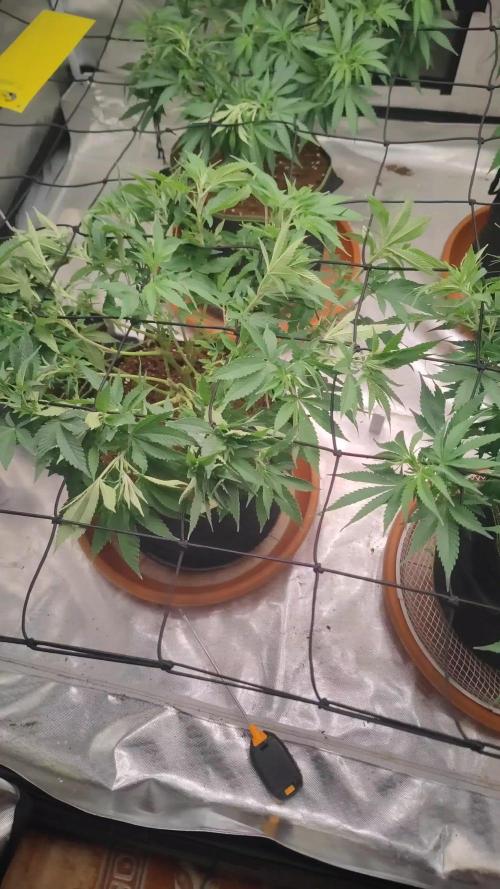
Puuuues bueno, si alguien me explica la remontada historica de esta planta? Jajajaja
ESTOY SEGURO DE QUE LOS BREEDERS QUE LA SACARON HICIERON UN TRABAJO INCREIBLE!
Cultivé Oreoz en su dia, le saque +de 100 puntas principales haciendole apical y main lining, y la planta dio la talla para todo! Tooodoo! No pude cosecharla porque en ese armario metí un esqueje de un colega, que traia viruses, plagases y mierdases jajajajaja fallo mio no haber hecho un pequeño plan de cuarentena para asegurar pero bueno, entró el esqueje al armario, y de 6 plantas, sobrevivieron 2 porque las cortaba en breve, las que les quedaba mas ni del palo y Oreoz fue una de ellas, pero en esta ocasion me voy a poder redimir bien, o eso espero.
Cada vez mas cerca del objetivo, van flying que te cagas! Jajajajajaja están creciendo muuy bien, se expanden muuuy bien y los abonos se controlan. Hubo una ligera sobrefertilización al hacer el trasplante pero ya lo solucione, la planta mas afectada de las 4 fue la "Critical" normal, pero a esa le meti 10L de riego con flush para arrastrar todas las sales y demás. A las otras 3 les hice lo mismo pero con 5L. Ahora que ya están casi secas, han tardado 3 dias en secarse mas hoy el dia entero 4, están maravillosas, todas con sus hojas fuuuertes y mirando al techo, la critical es un poco la que aun le queda un poquito, pero con el proximo riego yo creo que ya se recupera. Luego, voy a ver si en breve planto alguna auto y la meto al indoor unas 2 o 3 semanas y me la saco al exterior... Ya veré sinceramente que en mi exterior tengo ciertos problemas dificiles de controlar, entre otros, vecinos que no saben lo que significa la palabra intimidad 😅.
Aaahh lo olvidaba!! Se ven hojas manchadas, eso es porque les metí ayer una limpieza guapa guapa foliar por delante y por detras a todas las plantas con un producto de estos tipicos de jabón potasico + aceite de neem, ya junto, en plan los 2 en 1. De entre las cosas que he ido aprendiendo con los cultivos, es que es muy importante hacer estas aplicaciones y ya no estas a modo preventivas, sino agua sola ayuda mucho, especialmente pulverizarla lo mas fuerte posible A LOS TALLOS, a la totalidad de los tallos/ramas de las plantas. Es verdad que los bichos suelen irse a las hojas a comer peeeeeeeeeero en mi experiencia, su base las hacen en los tallos y ramas, si, en la parte mas cercana a las hojas, peeero en las ramas! Por lo que minimo una vez a la semana procuro pegarle una buena pasada como si de una Karcher se tratara y si que el armario es nuevo y procuro tener cuidado, pero de momento todo bien respecto a plagas.
Cada vez mas cerca del objetivo, van flying que te cagas! Jajajajajaja están creciendo muuy bien, se expanden muuuy bien y los abonos se controlan. Hubo una ligera sobrefertilización al hacer el trasplante pero ya lo solucione, la planta mas afectada de las 4 fue la "Critical" normal, pero a esa le meti 10L de riego con flush para arrastrar todas las sales y demás. A las otras 3 les hice lo mismo pero con 5L. Ahora que ya están casi secas, han tardado 3 dias en secarse mas hoy el dia entero 4, están maravillosas, todas con sus hojas fuuuertes y mirando al techo, la critical es un poco la que aun le queda un poquito, pero con el proximo riego yo creo que ya se recupera. Luego, voy a ver si en breve planto alguna auto y la meto al indoor unas 2 o 3 semanas y me la saco al exterior... Ya veré sinceramente que en mi exterior tengo ciertos problemas dificiles de controlar, entre otros, vecinos que no saben lo que significa la palabra intimidad 😅.
Aaahh lo olvidaba!! Se ven hojas manchadas, eso es porque les metí ayer una limpieza guapa guapa foliar por delante y por detras a todas las plantas con un producto de estos tipicos de jabón potasico + aceite de neem, ya junto, en plan los 2 en 1. De entre las cosas que he ido aprendiendo con los cultivos, es que es muy importante hacer estas aplicaciones y ya no estas a modo preventivas, sino agua sola ayuda mucho, especialmente pulverizarla lo mas fuerte posible A LOS TALLOS, a la totalidad de los tallos/ramas de las plantas. Es verdad que los bichos suelen irse a las hojas a comer peeeeeeeeeero en mi experiencia, su base las hacen en los tallos y ramas, si, en la parte mas cercana a las hojas, peeero en las ramas! Por lo que minimo una vez a la semana procuro pegarle una buena pasada como si de una Karcher se tratara y si que el armario es nuevo y procuro tener cuidado, pero de momento todo bien respecto a plagas.
Likes
23
Share


@cherokee
Follow
Привет всем.
Клоны растут очень хорошо и быстро вытягиваются в высоту.
На некоторых листах я заметил проблемы, надеюсь это голод а не болезнь.
Likes
1
Share


@2Stones1Bird
Follow
Start of week 7 - days 23 to 29 April
Week Temperature and RH:
Max - 28.9c - 68%
Min - 20.0c - 50%
25/4/2020 - After 7 days pot feeIs light gave her 1.5L RO water with:
GHE Terra Aquatics Cal -Mag - 40 PPM
Biobizz Acti-Vera - 40 PPM
Biobizz Heaven - 40 PPM
Biobizz Top-Max - 10 PPM
Biobizz Grow - 10 PPM
Biobizz Bloom - 10 PPM
Biobizz PH Up
RO Water - 4 PPM
About 162 PPM (exceded a bit 150)
PH 6.7

Likes
30
Share


@UnorthadoxDude
Follow
Week eight! I will be removing the mylar and whitewashing the walls instead. Hopefully this allows sufficient light.
Day 51 - photographed
Day 52 - fertigated 5l each. I am thinking about starting to train these girls now, so expect updates soon.
Day 54 - removed top few nodes and cut clones.
Dat 56 - Photographed.
If you don't already follow me on X, please join me over there, where you will find a bustling cannabis community.
Thanks to Super Sativa Seed Club and the Passion of the Dutch for the beans!

Likes
4
Share


@knnabisgrower
Follow
En la segunda semana de vegetación fertilizamos con un estimulante de crecimiento, aplicando 1.5ml / litro con p.h regulado en 5.8.

Likes
65
Share


@Jayvo
Follow
Buds look ready although going to give an extra week as I prefer more amber, very solid and smell is incredible


Likes
53
Share


@Mastr
Follow
Week 11 come along and she finished nicely I already flush her now i just feed her with water and bloombastic
and take off all fan leaves to bud recive more energy I will chop her down at day 75 so not long left
Today day 72 and guys she is ready but I don't wanna rush so let her 3 more days to get best results
Processing
Likes
20
Share


@Canadian
Follow
This girl has been growing very nice remove all the branches that were below 14 inches from the base of the pot to promote growth over the top only .this girl has continued to stretch and it's starting to smell like a typical of her kind hoping to see great things out of this girl that has developed a lot of sight branches.
thank you for reading I will continue to update have a happy grow.
