




Processing
Likes
7
Share


@x_grower
Follow
Very fast seedling process, seeds stayed soaking for 24h and in the water they were already showing the first white root hair, another 48h in the paper towel and the day I potted them up they showed cotyledons. They took around 11 days to reach third node and complete germination but honestly I belive it could be faster if in better enviroment, mainly the humidity which was low and I transplanted them a day late. From day 5 I started feeding them exact same nutrients and ratio from the first vegetative week but starting at 0.4EC and increasing by 0.1EC/day until 1.1EC


Likes
2
Share


@fabialien
Follow
Semana sel 9 al 14 de septiembre 2024.
Vemos un desarollo bastante vigoroso en todas, esto también se puede adjudicar el hecho de la nutrición que han estádo llevando esta tanda se fem y regulares, la mandarine qué nació con apical va bastante bien.


Likes
6
Share


@Sadhus
Follow
Semaine 3 - Phase Végétative : Journal de Culture pour la Dognabis Cup (Concours DogDoctor)Strain : Zamnesia Permanent Marker
Système de culture : Hydroponie Ebb & Flow sur billes d'argile expansé
Nutrition : Aptus (programme adapté à la phase végé, EC cible à 2.2 mS/cm)
Éclairage : 1000W full spectrum, contrôlé par Trolmaster Tent X (augmentation progressive de 10 PPFD par semaine)
Contrôle environnemental : Total via Trolmaster (climat, lumière, CO2, VPD)
Objectif global : Maximiser la structure buissonnante pour la floraison future, en visant des monstres... mais adaptation forcée au switch précoce ! Salut la team DogDoctor et la communauté Dognabis Cup ! Voici le récap de ma semaine 3 en végé pour ma Zamnesia Permanent Marker. Cette strain est une bête : elle pousse vite, dense et résineuse, mais comme vous le verrez, je dois déjà anticiper un switch en 12/12 plus tôt que prévu à cause de mes autres plantes en avance (qui stressent pour du temps extra en végé). Pas de monstres XXL cette fois, mais on optimise ce qu'on peut avec du LST/FIM et une gestion fine de l'hydro. Nutrition Aptus qui cartonne, et enfin, le pH s'est stabilisé après des débuts chaotiques – plus de corrections quotidiennes, ouf ! État des PlantesLes bébés Permanent Marker sont en pleine explosion : tiges solides, feuilles larges et dark green, avec une bonne ramification grâce au LST et FIM appliqués cette semaine. J'ai plié et attaché les tops pour une canopée uniforme (environ 4-5 nœuds principaux par plante), et topping sur les plus vigoureuses pour booster les côtés. Croissance verticale contrôlée à ~15-20 cm de hauteur moyenne, mais la densité racinaire est top dans les billes d'argile – pas de signes de stress oxygène. Malheureusement, les autres plantes du run (pas en concours) sont déjà en train de s'étirer et demandent du 12/12 ; je vais devoir les stresser (légèrement réduire les nutriments ou eau) pour grappiller 3-5 jours de végé extra ici. Objectif : ne pas dépasser 4 semaines total en végé pour synchroniser le tout. Pas l'idéal pour des colosses, mais la qualité prime pour la Cup ! Environnement et ContrôlesTout est verrouillé via Trolmaster : température stable autour de 24°C (cible), humidité à 70% (parfait pour la végé), CO2 à 900 PPM (maintien manuel pour booster la photosynthèse). VPD optimal à ~0.9 kPa, ce qui colle pile aux recos Aptus pour éviter transpiration excessive. Lumière augmentée de 10 PPFD comme prévu (maintenant à ~679 PPFD moyen en zone flo), et les graphs montrent une belle stabilité – pas de pics chaotiques. Pour l'hydro : marées réduites de 2 min (maintenant ~15-20 min par cycle) et 2 cycles en moins par jour (de 8 à 6), pour durcir les racines sans noyade. Solution à EC 2.2 (up de 0.2 cette semaine pour suivre la faim végé), pH enfin stable à 6.07 (après des ajustements quotidiens les 2 premières semaines – merci les tampons Aptus !). EC solution à 2.16 mS/cm, temp eau à 17.9°C (refroidisseur au top). Mousture moyenne à 90% – bien drainé, zéro anaérobie. Données Récapitulatives de la SemaineVoici un tableau synthétique des stats clés (moyennes sur Mon/Dim/Nuit pour les zones "Plantes" et "Chambre", basées sur les logs app). Tout est cohérent avec les graphs 24h qui montrent des courbes lisses, sans dérive majeure.Paramètre
Zone
Moyenne Mon (°C / % / kPa / PPFD)
Max Mon
Min Mon
Moyenne Dim (°C / % / kPa / PPFD)
Max Dim
Min Dim
Moyenne Nuit (°C / % / kPa / PPFD)
Max Nuit
Min Nuit
Cible / Notes
Température
Plantes
23.65°C
24.3°C
22.1°C
21.5°C
24.0°C
19.8°C
-
-
-
Cible 24°C ; stable, +0.5°C vs. S2
Chambre
23.7°C
24.5°C
19.8°C
19.8°C
22.4°C
19.0°C
-
-
-
Bonne ventilation nocturne
Humidité
Plantes
69.56%
71.9%
49.4%
63.78%
73.3%
52.3%
70.22% / 66.64%
74.1% / 72.3%
58.5% / 63.4%
Cible 70% ; pics max bien gérés
Chambre
-
-
-
-
-
-
-
-
-
-
VPD
Global
0.89 kPa
1.48 kPa
0.8 kPa
0.93 kPa
1.38 kPa
0.68 kPa
0.87 kPa / 0.77 kPa
1.06 kPa / 0.91 kPa
0.72 kPa / 0.7 kPa
Optimal 0.8-1.0 ; transpiration saine
PPFD (Lumière)
Plantes
671.9 PPFD
693 PPFD
431 PPFD
0.46 PPFD
5 PPFD
0 PPFD
674.5 PPFD
684 PPFD
292 PPFD
+10 PPFD vs. S2 ; full spectrum au top
CO2
Global
-
-
-
-
-
-
-
-
-
Maintenu à 900 PPM ; boost photosynthèse
Solution
pH / EC / Temp
6.07 / 2.16 mS/cm / 17.9°C
-
-
-
-
-
-
-
-
EC up à 2.2 ; pH stable enfin !
Notes sur les données : PPFD bas en "Dim" car cycles lumière éteints ; focus sur Mon/Nuit pour les moyennes actives. Graphs 24h confirment : Temp stable entre 22-24.5°C, Humidité 58-74%, VPD ~0.7-1.0 kPa, sans outage.Défis et AjustementspH instable résolu : Les 2 premières semaines, je corrigeais tous les jours (oscillations 5.8-6.5 dues à l'hydro neuf). Cette semaine, boom – stable à 6.07 grâce aux stabilisateurs Aptus et monitoring Trolmaster. Victoire !
Switch forcé : Les autres plantes en avance m'obligent à floraison précoce (semaine 4 max). J'aurais aimé 6 semaines pour des monstres, mais on priorise la synchro. Plan B : stresser les leaders (réduire EC de 0.1 sur elles) pour +2-3 jours végé ici.
LST/FIM : Appliqué mid-semaine – tops pliés, nœuds boostés. Pas de topping supplémentaire pour éviter stress avant switch.
Objectifs Semaine 4 (Transition Végé/Flo)Continuer l'augmentation lumière : +10 PPFD encore (cible ~750 PPFD pour fin végé).
Légère baisse EC (à 2.0) pour anticiper flo, sans choc.
Arrêter LST/FIM : Laisser repousser librement, focus sur récupération.
Tirer max de végé : Stresser les autres plantes (eau/nutriments light) pour retarder leur switch – grappiller du temps pour ces Permanent Marker.
Monitoring renforcé : VPD

Likes
13
Share


@eldruida_lamota
Follow
Que pasa familia, vamos con la cosecha de estas Tropicanna Poison F1 de Sweetseeds.
Esta variedad me resultó bastante sencilla de cultivar, y si no la maltratas crece sana a mi parecer, la flor se ve increíble, tiene una cantidad de resina considerable y unos tonos rojos muy peculiares, se ven muy apetecibles.
El olor que desprende es muy peculiar es muy dulce con toques terrosos, a mi parecer, no pinta nada mal, las flores están prietas.
También os comento que la variedad es muy fácil de cultivar y no da mayores problemas, el ciclo no es largo, cuiden con la altura ya que se desmadran un poco.
IMPORTANTE destacar: En las fotos comprobaréis que ya no hay botes de cristal con sobres de bóveda, ahora hay Grovebags.
Que son una especie de sobres o bolsas que retienen el peso, previene la aparición de moho y mantiene intacto el terpeno, para que el curado sea más óptimo.
Hasta aquí todo, Buenos humos 💨💨💨
Likes
5
Share

@Samsationalseeds
Follow
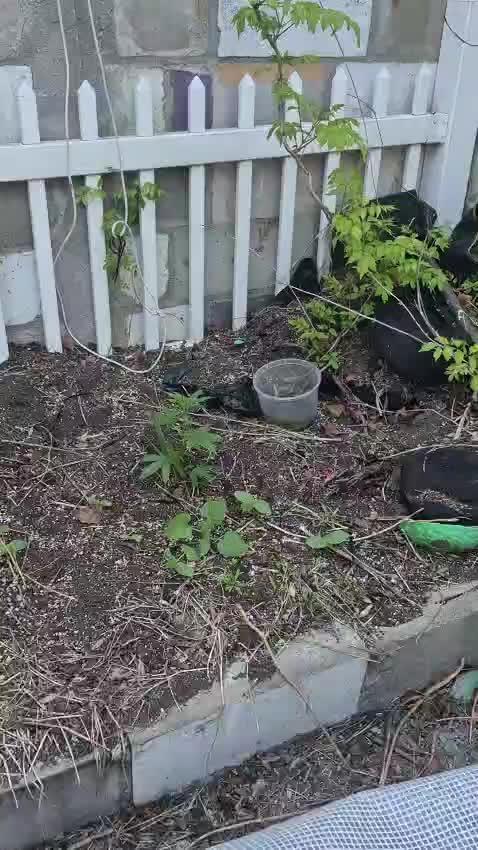
Yet again I am not trying to make my strains look low quality. But this is the truth that I reused. Soil for these and did not let it go through a hole cycle of worm processing. I just slapped nutrients into soil for my last run and hoped for the best.
If I had used fresh soil, these would fare better.
I'm calling an end to this diary because the other ones look ok, they're mainly going to yield small amounts.But I still get to randomly judge the first three strains I bred.
Processing
Likes
15
Share


@DUBDOLLASIGN100
Follow
Week 4 these girls have exceeded my expectations, there ready for the outdoor flower. Can't wait to see the outcome, I haven't had any deficiencies in my veg from being patient any letting nature take place.
Likes
Comments
Share


@SGCFarms
Follow
Not topped, only supercropped twice. Ridiculous growth with this phenohunted three kings allowing for me to lst into an invisible scrog maximizing tops. Pistils blooming at only 7 days in. Drinking about 1 gallon per day. Full res changes twice a week.
Likes
7
Share


@Huntress007
Follow
I am pretty happy for this being my 1st grow ever! Nice looking buds and lots of fun! I did expect the nugz to be bigger but I an happy with the experience!

Likes
17
Share

@eldruida_lamota
Follow
Vamos familia, que ya acabamos este proyecto, última semana de floración de estas Purple OG kush de Dutchfem.
Lleva un par de semana solo agua y un lavado de raíces , empezaron amarillear y a comer ya los pocos nutrientes que les van quedando.
Ya tengo muchas ganas de acabar con este proyecto.
Agrobeta:
https://www.agrobeta.com/agrobetatiendaonline/36-abonos-canamo
Mars hydro:
Code discount: EL420
https://www.mars-hydro.com/
Las maximas de temperatura no superan los 26 grados y las mínimas no bajan 20, así que no me puedo quejar.
Los niveles de humedad también son los correctos van entre 50%/55% de humedad relativa.
Por supuesto el Ph lo estamos dejando alrededor de 6.
Hasta aquí es todo, buenos humos 💨💨💨.

Likes
65
Share


@Dendegrow
Follow
Week 2 of the flowering phase flew by 🌱💨. Unfortunately, I may have overdone it with potassium or kept the water level too high – the classic signs of clawing leaves were evident. Thankfully, they seem to be recovering now and are back under control 💪🍃.
My IR night experiment is showing clear results 🌌: The plants exposed to infrared radiation at night stretched significantly more. This might be especially beneficial for this indica-dominant strain as it leads to better canopy distribution, improved airflow, and reduced risks of mold and disease. Plus, the light distribution is much more efficient now, which I’m excited to see pay off.
On the downside, my Orange Sherbert turned hermaphroditic 😔. It’s hard to pinpoint the cause – overfertilization seems unlikely since I’m using only organic nutrients. I suspect it might be linked to an E-field experiment I’ve been running. To confirm this theory, I’ll conduct a new grow with a similar strain next year to see if the electric field negatively impacts cannabis development.
Stay tuned for updates! Drop a like and follow along for more grow insights 🌿✨. See you next week!
Woche 2 der Blütephase ist wie im Flug vergangen 🌱💨. Leider habe ich wohl etwas zu viel Kalium gegeben oder den Wasserstand zu hoch gehalten – die typischen Anzeichen von Adlerkrallen waren sichtbar. Zum Glück scheinen sich diese jetzt zurückzubilden und sind wieder unter Kontrolle 💪🍃.
Mein IR-Nachtexperiment zeigt bereits deutliche Ergebnisse 🌌: Die Pflanzen, die nachts mit Infrarotstrahlung bestrahlt wurden, haben deutlich stärker gestretcht. Das ist besonders bei dieser indica-dominanten Sorte wahrscheinlich von Vorteil, da es zu einer besseren Verteilung des Blätterdachs führt. Dadurch verbessert sich die Luftzirkulation, das Risiko von Schimmel und Krankheiten wird minimiert, und die Lichtverteilung wird effizienter. Ich bin gespannt, wie sich das weiter auswirkt!
Leider hat meine Orange Sherbert gezwittert 😔. Woran das genau liegt, kann ich schwer sagen. Eine Überdüngung halte ich für unwahrscheinlich, da ich nur biologischen Dünger verwendet habe. Ich vermute, dass mein E-Feld-Experiment eine Rolle spielt. Um das zu bestätigen, werde ich nächstes Jahr einen neuen Durchlauf mit einer ähnlichen Sorte machen und prüfen, ob das elektrische Feld tatsächlich eine ungünstige Rückentwicklung der Pflanze verursacht.
Bleibt dran, lasst ein Like da und folgt mir für weitere Updates 🌿✨. Bis nächste Woche!


Likes
176
Share


@Herbalize
Follow
Hello everyone,
this week everything goes well ! the flowers begin to appear
I water the plants with 3 liters each, Ph 6.5 every 4 days
I was a little light with nutes in the beginning of stretch, the plants asked clearly but I think I corrected
I have done a lot of trimming these last two weeks, especially the suckers but I do not like to remove too much leaf
now the hardest is done, less work
it remains only to look at the flowers of this young lady and be patient
Follow, comment and like if you enjoy it 😍
Peace and Love guys

Likes
48
Share


@AsNoriu
Follow
Day 15. Girls got dried up again, but i transplanted them !!! Now in one day they stretched, happy and all will go as diamond ! Think i lost one week at the end of grow with all those hiccups ...
Pots 30 liters, were topped up with Biobizz All mix soil 80% and Biobizz Worm Castings 20% , each girl got 600 ml of water.
Big pots sorted low humidity too , now i have too high even, but exhaust is sorting excess..
Light is working well, but ... coverage for 3 plants is impossible, so for veg i still with help of pot rotation will manage, later ill plug one of my quantum boards as extra.
For two plants TS1000 would be perfect in veg, for flower still its one plants light.
Money wise its a huge grab ! Less than 100£ for 150W with dimmer ... Honestly impressed with it , maybe next week i wont mention it , but .... ;)))
Tent is doing her job too, perfect size for 2-3 plants, even 6 inch fan fitted perfectly !
Seedsman girl is very curly and kush type of leaf structure, i know she is ugly and all stressed, but i see how plant is developing , will be bushy , not a racer 4sure ;)
Happy Growing !!!

Likes
5
Share

@World_Breeders
Follow
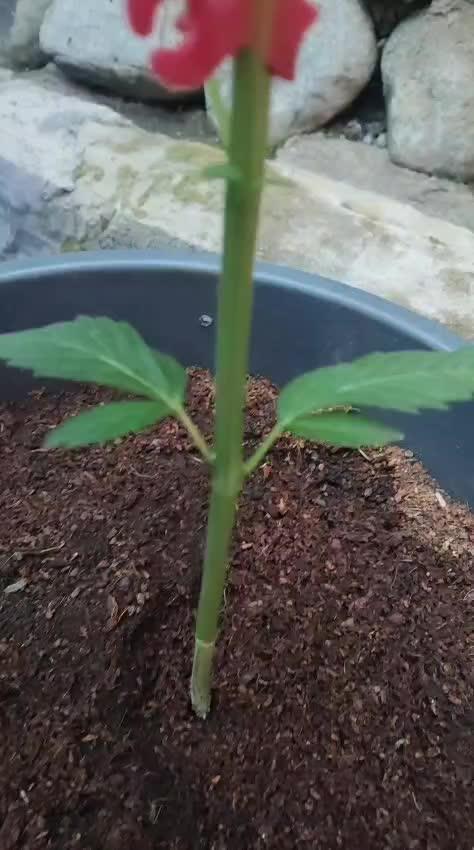
Pink Honey — Week 2
Pink Honey keeps moving forward into her second week of vegetation. She has gained noticeable height and is developing a more open structure, with good internodal spacing and fresh growth coming through at the top.
The leaves are showing a healthy green color and the plant is starting to establish her structure nicely. Still early in the journey, but she's already showing good vigor and steady development.
Seeds by World Breeders
Cultivated by Piperoots 🇲🇦 🌱🔥
Likes
4
Share


@Growstopher
Follow
5.27.25. 4th week of flower
What’s up growers so plant is doing pretty good after being way stressed out! She’s drinking every day and putting on bud quick! Still have 5-6 weeks of flower do hoping she finishes strong!!
Thanks for checking out my grow I appreciate it!


Likes
14
Share


@LordFluffyPants
Follow
Hey guy and gals,
So, I was going to prune the girls tomorrow, but a mate dropped a half over, got stoned and decide, Bugger It!, so we hooked in today.
I did take some after shots. Should have done 'before and after, but, I was STONED !'
The girls look happier, more sprightly, less 'HEAVY'. Saved the biggest and best fan leaf for a mate. He is amazed at the leaf size. Then earlier today, when he dropped in ;-) , he had a look and near dropped. Big Bud has so many nodes, he was shocked.
The FIMing/Topping, whichever I did has done amazing things.
On a side note, I haven't grown heaps before, so this grow is amazing me. Previous grows got small buds, small amount, only just covering the cost of my setup (Hydro at the time and tent). I now have a BIGGER tent, am using SOIL and they are thriving. Personally, I think the water is the major factor, but also my 'dedication'. I check the girls 2-3, maybe 5 times a day (viewing port). Regular PH, moisture and such checks. I even put a sticky fly strip in there, as a bloody fly got in.
This grow, besides the constant checking, I have Fim'd/Top'd, I have pruned them to promote growth. Basically, I have learned heaps, both from here and videos. I have re-read pretty much everything I read previously, tweaked a little and it seems to be working.
Northern Lights is still a week or a bit more away from a prune, I think, then we will give them a couple more weeks and turn them to flower. I am aiming for a Late May/Mid June harvest, then a month in jars to cure. All going well, I will have a heap of and great choice, for my birthday in July :-D
So, feel free to let me know how they look. Shoot through any advice. Hope you are enjoying my story :-)
Have just uploaded some more photos, showing the girls, after their beauty treatment :-) All are looking fantastic, Hope you like the images.
Just discovered Vipar Spectra have created a 1000W LED which uses a micro 100W to achieve this. The Vipar Spectra Pro Series P1000. I will be looking to buy myself one for my Birthday in July.

Likes
6
Share


@rvabudman
Follow
Graduated, and am off from work for a few weeks, so went overboard on photos. Plant is doing well, leaves are starting to turn yellow (strain trait).
Can't wait for the harvest and being able legally gift my xmas ornaments to my cousins during our "cousins walk" at our family xmas party.
