Check the winners The Grow Awards 2026 🏆
Likes
Comments
Share
Buenas a tod@s!!, bueno pasamos la segunda semana de floración de las lemon cookies kush, de momento no tengo problema excepto algunas hojas amarillas, le baje la dosis de los productos e intento mantener una temperatura y humedad y pH adecuado, hay días y días, de momento respondieron muy bien y están creciendo rápido y muy bien.. ya vamos viendo q tal desarrolla más adelante.... Buen finde para tod@s y buenos humos... 🇦🇷🤝🏻🇪🇦👍🏻💨💨💨
Likes
19
Share
@Wenz004
Follow
Trotz Fehler wird getrocknetes Material gut denke ich. Wird jetzt ca. 2 Wochen bei 60% RH und ca. 17 grad Celsius trocknen
Likes
65
Share
Day 57: Watered the plants 0.5L with nuts 796 ppm, 1693 us/cm, PH 6.4 Day 59: Watered the plants 0.5L with nuts 830 ppm, 1765 us/cm, PH 6.4 Did some defoliation Used neem oil to prevent any pest Day 62: Watered the plants 0.5L with nuts 769 ppm, 1629 us/cm, PH 6.4
Likes
26
Share
Tutto procede bene, ultima settimana per le ultime 2: gorilla skittles e gorilla punch. Ho tagliato la prima g. Skittles ed è a seccare, flush flush flush.
Likes
19
Share
Stretching has slowed right down , buds are growing . I'll pull fan leaves as I go to allow light through to the bud sites
Likes
7
Share
Greetings and salutations GD peeps. Let the peaceful transition of flower begin! It is the first week of flower and the scrog is filling out nicely. I had some issues with a GFI popping and my lights would miss a few hours in the 18/6 light shedule over the last week. Rather than stress them any more than they already have been with the mini blackouts I flipped them to flower this week. I also changed the circuit the Tent was on and it seems to be consistent. A massive feeding this week for early flower, I bumped the bloom by 2 ml/gal on top of the normal feeding chart. My rational is I have topped these ladies and there are far more bud sites than before, will see if it has any effect + or - I have also done some selective defoliation to promote light pentation to the lower bud sites that have branched out from the topping 2 weeks ago. I have a small number of LEDs on one of my lights that have stopped working. The light an older amazon Chinese cheap O has 85% of the lights working. My footprint of the tent to the w/sqft is with in range. I have read and heard 35-50 watts per square foot of area as a general rule is good. now you can get in to PAR and lumens etc. but that's a whole different conversation. The light might be why the GFI was popping? I will figure that out after the grow. for now its all about FLOWER POWER and the scrog fulfilling its destiny. peace ya'll be kind to your fellow humans and hybrids.
Likes
94
Share
Hey all ! Here we go again, with some super duper genetics (... and so f*ck*ng expensive 😱). If you have a Growing Lad and you past here , STOP ! I NEED YOU ☝️ I wanna a job in the Cannabis industry, just leave me in your Lab I will do the rest 🐞 The Jumanji will be powered by Cellmax Nutrients. [Day 99] Week 6 of flowering starting. As usual, my friends, I will be honest, peoples who knows me knows that when something sux I always say and same thing when something rox ☝️ Here is the true, I have to recognize that Cellmax nootz are f*ck*ng AWESOME 👏 The Flower Stimulator has accelerated the flowering opening stage, plants have finished the stage in just 4 and a half weeks from switching, they started the swell stage at beginning of week 5. And as you can see the Alga-Max (PK booster) have finalized the job by blowing up the buds, I still have 3 more weeks of swelling coming.... can’t wait to see pineapples everywhere in week 8. On top of this, after tweaking Cellmax feeding chart and doing personal readjustment, amounts of ppm’s / mS suits perfectly according to plants size and life cycle, meaning the plants are triggering senescence according to breeders flowering periods. The Super Skunks will be ready in time, as all the others plants ( T.H.Seeds Bubblegum has started senescence too ). Conclusion : I understand now why Dutch growers are breaking records with their super massive buds , CELLMAX you ROX 👍👌👏 [Day 100] - Water pH 6.5 (Cellmax pH Down Bloom) + Allzymes 1ml/1l + Flower Stimulator 2ml/1l + Earth Bloom Mix 4ml/1l + Alga-Max 2ml/1l : 1100ppm / 2.2mS GG Last max amount of nootz for the Gorilla Glue. - Water pH 6.5 (Cellmax pH Down Bloom) GSC [Day 102] - Water pH 6.5 (Cellmax pH Down Bloom) + Allzymes 1ml/1l + Flower Stimulator 2ml/1l + Alga-Max 2ml/1l + Earth Bloom Mix 2ml/1l : 900ppm / 1.8mS SS 1,2,3 WW 1,2,3 OG BBG T.H,SS [Day 104] - Water pH 6.5 (Cellmax pH Down Bloom) + Allzymes 1ml/1l + Flower Stimulator 2ml/1l + Alga-Max 1ml/1l + Earth Bloom Mix 2ml/1l : 900ppm / 1.8mS GSC - Water pH 6.5 (Cellmax pH Down Bloom) GG
Likes
2
Share
Pflanze ist inzwischen 1,70 groß und langsam wird’s eng aufm Balkon. Ebenso wird es langsam zeitlich knapp. Brauche dringend Hilfe Pflanze ist immer noch nicht in der Blüte obwohl wir schon Mitte august haben. Was denkt ihr abends früher reinstellen? Um die Blütephase einzuleiten? Letztes Jahr ging mein Experiment wesentlich früher in der Blüte ca Ende Juli, dieser unbekannte strain scheint länger zu brauchen.
Processing
Likes
57
Share
Hey all 🤗. This week they both continued to develop very well. The Small is sooooo good 😃. I Love Pheno 1 . Flowering day 35 Today the tent was cleaned, the humidifier refilled and both plants sprayed with Canna Cure :-). Flowering day 36 Both were poured today with 1.2 L per pot 🙂. Both were also checked for their health and pests 👍. Everything looks great 🙏🏻. Flowering day 37 Again the tent was cleaned and fresh osmosis water was filled into canisters. Flowering day 38 Today 1.5 l per pot was poured so that some drainage comes out again. therefor two days are not poured 😋. Flowering day 39 The tent was cleaned, the humidifier was filled, both plants were checked for vitality and the entire electronics were checked for functionality. Flowering day 40 Today both were sprayed again with Canna Cure and checked. Flowering day 41 We have reached the last day of this week and again 1.2 L were poured per pot and the tent was cleaned 👍. I hope you have a lot of fun with the new update, and let it grow 🍀🙏🏻 You can buy this Strain at : https://sweetseeds.es/de/red-mandarine-f1-fast-version/ Type: Red Mandarine F1 Fast Version ☝️🏼 Genetics: Red Poison Auto®️ (SWS39) X Tangie (California Orange x Hybrid Skunk) 👍 Vega lamp: 2 x Todogrow Led Quantum Board 100 W 💡 Bloom Lamp : 2 x Todogrow Led Cxb 3590 COB 3500 K 205W 💡💡☝️🏼 Soil : Canna Coco Professional + ☝️🏼 Fertilizer: Green House Powder Feeding ☝️🏼🌱 Water: Osmosis water mixed with normal water (24 hours stale that the chlorine evaporates) to 0.2 EC. Add Cal / Mag to 0.4 Ec Ph with Organic Ph - to 5.5 - 5.8 .
Likes
5
Share
@Ninjabuds
Follow
My Rainbow Saltz plant is branching out really nicely! It's about medium-sized compared to the others in the tent, but it looks super healthy and vigorous. I've got a good feeling about this one – it seems like it's going to be a strong grower. Can't wait to see how it develops! The weather has been absolutely gorgeous this past week! We've been hitting that sweet spot of 70 degrees during the day, perfect for getting outside and soaking up some sun. Then, it cools down to a comfy 50 degrees at night, which is ideal for sleeping with the windows open. I've been loving all the fresh air! I finally got around to building that little wooden planter for my windowsill. It was a fun project, and now my regular plants have a nice new home. It really brightens up the room, and I'm thinking of adding some herbs to it soon. Maybe I'll even try growing some basil!
Likes
5
Share
@84ruk
Follow
En la tercera semana de vegetación la planta fue trasplantada, los primeros días se vio estancado si crecimiento pero más adelante continuó su crecimiento normal.
Likes
1
Share
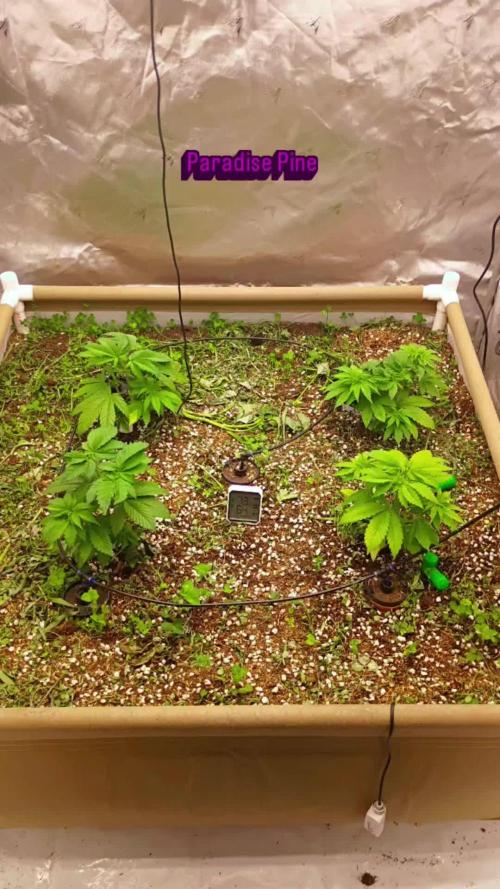
Turned off IR @ nights Red wigglers (Eisenia fetida) are highly beneficial. They are considered an ideal choice for "no-till" or container-based organic growing because they live in the upper layers of soil, feeding on organic mulch rather than the plant's root system. Red wigglers accelerate the breakdown of organic amendments and produce high-quality, nutrient-dense worm castings directly in the root zone. Clover is another exceptional component of an organic rhizosphere, offering a sustainable, self-sustaining alternative to synthetic nitrogen fertilizers produced via the energy-intensive Haber-Bosch process. By forming a symbiotic relationship with Rhizobia bacteria, clover converts atmospheric nitrogen N2 into ammonium NH4, providing a steady, slow-release nutrient source that enhances soil health and reduces environmental impacts. Red clover offers superior nitrogen fixation and biomass production compared to white or yellow clover, making it the premier choice for maximum soil vitality, particularly for improving soil structure and providing a high-volume nitrogen credit for subsequent crops. If it is fully functional and efficient soil, the rhizophagy cycle is far superior long-term than any synthetic delivery when it comes to preventing deficiencies, not because it's "better," per se. The medium will require a very high CEC to make it to harvest without re-fertilization. The rhizosphere acts as a dynamic, interactive exchange where plants and soil microbes trade resources based on immediate needs. When a plant lacks a specific nutrient, it changes its physiology and releases specialized chemical cocktails—root exudates—into the surrounding soil. These exudates, which include sugars, amino acids, and organic acids, serve as a "shopping list" to attract specific microorganisms, which in turn return higher levels of desired nutrients. There is nothing in comparison to synthetic delivery, which causes plants to stop producing exudates, effectively "starving" the beneficial soil life, over time turning the soil barren and void of microbial life. Responsible use, applying the right amount at the right time, can minimize these negative effects. Relying solely on synthetic fertilizers without replenishing organic matter is what typically leads to exhausted soil. The use of synthetic fertilizers can utilize the Cation Exchange Capacity (CEC) of the soil, but without a robust rhizosphere and active microorganisms, the efficiency of this process is significantly reduced. This makes synthetic growing more difficult to prevent deficiencies overall compared to an efficient organic living soil with a robust rhizophagy cycle, as there is no "one size, fits all" when it comes to different nutrient profiles of strains/genetics, making it trickier to "guess" and prevent creeping deficiencies. CEC does not contribute towards EC. Add more CEC using biochar, problem solved. If you keep pH between 6.3 and 6.7, hydrogen is exudated to cycle the medium's CEC for its needs. Keeping the pH between 6.3 and 6.7 creates an environment where plants release H+ to displace positively charged nutrients (like Ca2+, Mg2+, K+ held on soil particles or within artificial media this cycle through nutrients via the medium's Cation Exchange Capacity (CEC) Microorganisms generate a stable potential of approximately 0.5 V EC. The rhizosphere creates its own food, similarly to chelation, using 1000's of varying combinations to create its own food. Start to finish, just add water. Eventually, more materials will need to be added at the beginning of each new grow, but very attainable to go from seed to harvest without ever fertilizing, regenerative cultivation. ATP is king above all else when it comes to biomass accumulation. Cellular root respiration and cellular respiration are essentially the same biological process, the breakdown of glucose to create usable energy (ATP) in the presence of oxygen, just taking place in different parts of the plant. Synthetic (salt-based) grows have significantly lower levels of total rhizosphere respiration, often referred to as root-zone activity, compared to organic living soil grows. While the plant roots themselves may respire in both systems, the surrounding soil ecosystem in a living soil setup is vastly more active, teeming with bacteria, fungi, and beneficial microorganisms. 2 pools of ATP, it won't double in growth buuuut, but improving root respiration by ensuring high oxygen in the soil is crucial. Good aeration ensures roots can fully utilize glucose to generate the ATP necessary for nutrient uptake, leading to healthier and more productive plants, even if growth isn't exactly doubled. The ATP created using root respiration is dedicated to rootzone growth; the ATP created using regular cellular respiration in a synthetic system would have to dedicate a lot of ATP to the roots when there is little or no root respiration. It's true that there is less of an initial ATP cost in breakdown when nutrients are already in their final form (synthetic), but you lose a solid chunk of ATP when the entire plant is reliant on cellular respiration alone; a large portion of ATP is dedicated to root zones for "forced" (active) nutrient uptake. Making it overall less efficient, even if the initial cost of breakdown is higher. If that makes sense. Oxygen is of critical importance when growing in living soil compared to synthetic methods because it supports the metabolic needs of the microbial, fungal, and insect ecosystem, rather than just the root respiration required by the plant itself. While synthetic grows can survive in lower-oxygen environments with precise mineral feeding, living soil systems rely on aerobic microbes to decompose organic matter (microbial mineralization) to create plant-available nutrients, which is an oxygen-intensive process. While a specific fair percentage is difficult to guess, my experience points to a massive, compound difference between the two methods and the amount of oxygen required. All the ATP spared is used on more biomass, not only that, but the extra root respiration can achieve a much higher CO2 compensation point naturally than you could with synthetic and atmospheric CO2 alone. As a plant grows faster and increases in size, its demand for nutrients to support that growth increases, requiring a higher rate of nutrient uptake. As plants enter phases of rapid vegetative/floral growth, their metabolic demand for nutrients increases exponentially. Without a robust buffer zone—whether in the soil (cation exchange capacity) or in a hydroponic reservoir—deficiencies will occur rapidly because the instantaneous demand for specific nutrients can quickly exceed the rate of supply. A growing body of evidence suggests that organic living soil provides superior long-term soil health and environmental benefits compared to synthetic fertilizers, which are often criticized for promoting a cycle of dependency and degradation. While synthetic fertilizers offer short-term convenience and high yields, they often come at the expense of long-term soil health, sustainability, and increased corporate control over growers/ farmers. Organic living soil, while slower and requiring more care to establish, creates a sustainable, resilient, and, ultimately, more fertile environment. We don't grow; we facilitate energy conversions. Once all water is removed, approximately 95% to 97% of a plant’s dry matter consists of carbon, oxygen, and hydrogen. These three elements form the structural backbone of all plants. Corporate interest sells you the other 3-5% NPK & all the rest in RATIOS! Why not throw the 3-5% in a pot, and focus your energy on the other 95-97%? Indigenous Amazonians created, or at least significantly enhanced, the fertile, dark soil known as Terra Preta de Índio (Portuguese for "Indian Black Earth") by incorporating biochar and other organic materials into the soil. This anthropogenic (human-made) soil technique, which dates back roughly 2,500 to 8,000 years, allowed ancient civilizations to flourish in regions with naturally poor, acidic, and nutrient-poor tropical soils.
Likes
5
Share
This lady looks beautiful on her first week,she's a healthy seedling,hope she can develop properly,she's got everything she needs to do so. Peace ✌️ 💚 PD I had 2 but as I saw that after 5 days did not started to develop I took her off so I kept the healthy one. 😊
Likes
7
Share
@Trinidad
Follow
03.07.25. Day 64 Plants are looking good. Due to lack of space and other plants fulling out their relative tents I am going to take these ladies down soon. Even though they can go much longer. Also temperatures are high which is bad as this can lead to terpene being loss. I don't want to but I think it is necessary. Until next time. Peace!
Likes
11
Share
@NoLimitQ
Follow
27/03/21 убрал растение на сутки в темноту перед харвестом. 28/03/21 харвест
Likes
16
Share
Die dritte Woche der Blüte startet und die Ladies bekommen ihre Mischung aus Orgatrex und Bactrex. Auch hier deaktiviere ich rechtzeitig die Bewässerung, gebe erstmal die Hälfte der Nährstoffe und ein paar Tage später die andere Hälfte. (Die Red Mandarine bekommen die selbe Behandlung, nur eine Woche nach hinten versetzt.) Die Ladies haben einige Blätter verloren und ein zweites Netz bekommen - das Leben ist ein geben und nehmen. Die Lampe läuft auf ca 170w Leistung.
Likes
3
Share
Week 6 for Fuel D.OG by seedsman Shes still very happy in her 5L pot, Shes been getting fed every 2/3 days with some FPJ, Regulator, Enzym+ & Startboooster by @aptus_portugal just to give it an extra boost😇 I've topped her a few times now she reacts so well to being topped. She's at 14 tops ATM😍 Waiting for the lowest branch to catch up in height before i do any topping to it. Shes also ready to be transplanted into a 25L pot but unfortunately none available atm... have to wait for the autos outside to be done. She's in my top 5 for this season for sure. Cant put my finger on what she smells like exactly but there's definitely some funk to her stem rub😁
Likes
4
Share
Hola a todo el mundo!!!, haciéndose los días más cortos, tomo como la primer semana de floración 🍀🤪. Ha comenzado a desarrollar las tan ansiadas flores🙌😃. Ya noto algo débil, un olorcito🤩🙌. Esta semana he regado con tricomas de Namaste, y tambien con un poco de top bloom. El ph lo vengo manejando en 6.2....6.3 Debería de medir la EC, pero aun no lo hice😣 Creo que eso es todo amigos!.
Likes
31
Share
Week 13, Week 13 is the final week! Woohoo! I used some ClearEx at the start of the week to help the flushing process. I am beyond happy with the results. The buds are big and dense! Her flowers are nice and crystally and she has a nice strong sweet smell. Enjoy the little videos :D Let me know if you have any questions. Happy Growing Growmies!
Likes
10
Share
@Unnamed
Follow
Pictures are taken at the end of the week. Did not add KMPS for 2 days in the end, will begin again next week. Added Universol Yellow (High P) and Calcinit 1:1 to increase EC and root growth, no ml values, used the fertilizer to reach stated EC values. Roots are now clearly visible, turned of the sprayers for photos. Changed light hanging height to 50cm and intensity to 50% midweek. Turned off the exhaust at night to increase RH and Temp, at this stage this is great, later not so much. The Plant keeps rotating and this kinda worries me. Topping is planned for next week and in addition scroging, if the plant keeps spinning this could become a real problem. Otherwise the plant is thriving with good root growths and leafs, happy about that. Values are average of the day. DATE - °C - RH% (Tent Temp/RH) 20241014 23.6 60.1 20241015 23.9 54.9 20241016 23.8 59.6 20241017 23.9 61.1 20241018 23.1 64.3 20241019 24.0 64.0 20241020 23.6 61.5 DATE - PH 20241014 5.68 20241015 5.50 20241016 5.57 20241017 5.80 20241018 5.82 20241019 5.84 20241020 5.84 DATE - ORP (mV) 20241014 170 20241015 146 20241016 123 20241017 108 20241018 45 20241019 38 20241020 34 DATE - EC(us/cm) 20241014 1016 20241015 1043 20241016 1064 20241017 1136 20241018 1136 20241019 1136 20241020 1144 DATE - CF 20241014 10.16 20241015 10.43 20241016 10.64 20241017 11.36 20241018 11.36 20241019 11.36 20241020 11.44 DATE - °C (Reservoir) 20241014 21.9 20241015 22.0 20241016 21.9 20241017 21.9 20241018 21.6 20241019 21.3 20241020 21.5