


Likes
Comments
Share


@CeeJayy420
Follow
Woche 10
Day 64
BW: 5
4l water including:
3ml Bio Grow
3ml Sugar Royal
7ml Bio Bloom
4ml Power Buds
8ml Alga Bloom
3ml Green Sensation
3 ml CalMag

Likes
5
Share


@Easygrower
Follow
Hello growers day 82 and the bud is in the jar well it was an interesting grow from germination she played right up growing slow and deformed she had white leafs all over her but I let her go and she grow some nice little purple buds I gave her water for the first ten days then gave bio grow/bloom until I see first pistols then I gave grow/bloom/top max/bio heaven until day 61 then flushed until day 75 I clearly had a doggy pheno I will try again hopefully get a better one I had her on a 20/4 hour light cycle through out the grow well that’s all folks until next time be safe and happy growing 😡

Likes
24
Share


@3lementa1
Follow
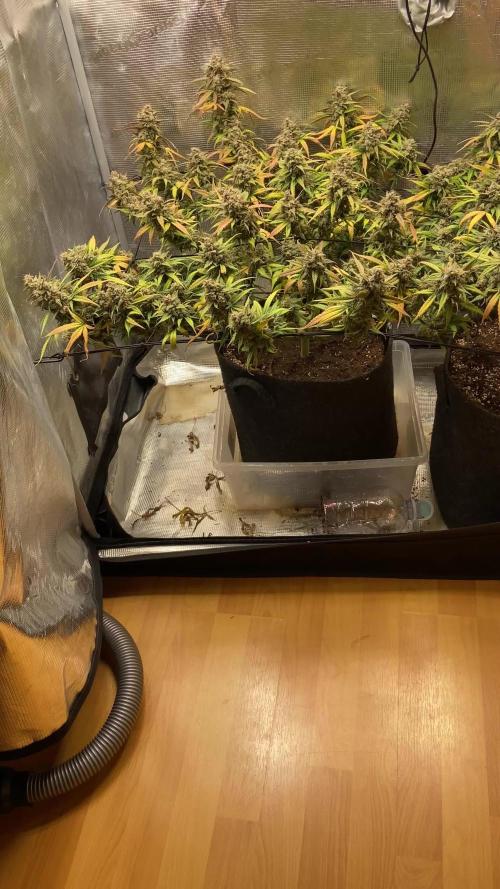
I had been feeding with a diluted solution and now after flushing with water last week I'm moving up to full strength.
The pistils of the plants on the ends seem healthier. The smaller plants in the middle seem a little more scraggly.
I'm making full use of the SCROG net. I also raised the light an inch or so and put it back to 100% from 75%. I'm going to see if I can keep it closer to 100 if I can balance the intake air temp.
Some of the leaves are damaged. I have a feeling it's from the cold nighttime air coming in the intake. I'm going to keep the intake fan off at night while it's this cold and damp outside. Hopefully not too much smell escapes. Maybe I should seal it at night.
Getting sticky now!

Likes
3
Share


@Organic473
Follow
This girl smells amazing...She was also pollinated a couple day ago with the SKUNK #1. I can't wait to grow those seeds. No complaints this week...It's rainy season here so I'm just working around that.

Likes
21
Share


@DreamIT
Follow
Sponsored by:
AMSTERDAM MARIJUANA SEEDS-💡VIPARSPECTRA💡-💐GREEN BUZZ LIQUIDS💐-🛠️WEDRYER🛠️
28/7 cut made, clone in rooting. Monday entry into bloom
2/8 reacted well to the cut and has already recovered well. I hope for a nice big plant
__________________________________________
Personal advertising (contains affiliate links)
__________________________________________
🦄 Professional site, exceptional genetics for over 25 years and a new and very nice mascot!
✅https: //bit.ly/Amsterdammarijuanaseeds
__________________________________________
Did you know that Green Buzz Liquids fertilizers are 100% vegan? A complete line of products ready to give the best to each of your plants! Visit the site and see my journals to see how they work 🦄
🤯 And with the code "dreami t" you will immediately receive a 15% discount on your purchases
✅https: //bit.ly/GreenBuzzLiquidsPro
__________________________________________
👀 Are you looking for a good lamp to start with? 👀
🌞Viparspectra has something more than the others, take a look at their site.
⏩ Use "GDVIP" for an extra discount or "DREAMIT3" for an extra 5 %% discount
👀 Search for it on Amazon
✅Amazon USA: https://amzn.to/30xSTVq
✅Amazon Canada: https://amzn.to/38udUVe
✅Viparspectra UE: bit.ly/ViparspectraUE
✅Viparspectra USA: bit.ly/ViparspectraUS
______________________________________________
🌈 Tired of blowing on your weed hoping it dries quickly? Check out the Wedryer website! You will find a well-made accessory that will help your weed dry in just 8-10 days without the annoying risk of finding mold or other annoyances! (no affiliate links)
✅https: //bit.ly/Wedryer_
______________________________________________
📷🥇Follow the best photos on Instagram 🥇📷
https://www.instagram.com/dreamit420/
Backup
https://www.instagram.com/dreamit4200/
🔻🔻Leave a comment with your opinion if you pass by here🔻🔻
🤟🦄💚 Thank you and good growth 💚🦄🤟

Likes
7
Share


Likes
8
Share

@eldruida_lamota
Follow
Que pasa familia, vamos con la novena semana de floración de estas Monster Maker feminizadas de Sweetseeds.
Vamos al lío, las plantas se trasplantaron a macetas de 7 litros.
El ph se controla en 6.5, la temperatura la tenemos entre 24/21 grados y la humedad ronda el 50%.
El ciclo de crecimiento puse 12h de luz, el foco está al 50% de potencia.
Me gustaría estar más encima este cultivo pero la salud me está impidiendo un poco este 100% con el proyecto.
- os dejo por aquí un CÓDIGO: Eldruida
Descuento para la tienda de MARS HYDRO.
https://www.mars-hydro.com
Hasta aquí todo, Buenos humos 💨💨💨

Likes
2
Share


@R_atata
Follow
Die Dos Si Dos sieht so unverschämt gut aus. Und das obwohl sie erst 8 Wochen alt ist. Der Geruch ist schon ausgeprägt. Bisher zeigt sie aber kein besonderes Terpenprofil. Die Lemon Haze zeigt eindrucksvoll ihre Sativa-Seite und legt ein starkes Längenwachstum hin. Es ist spannend zu sehen, wie sich die unterschiedlichen Genetiken bei gleichen Bedingungen verhalten.

Likes
39
Share


@King_Geedorah
Follow
Holy COW some serious growth this week especially out of the Mimosa she is easily 30 inches right now 12 over the Jaeger I'm going to have to figure out a way to even them out I'm thinking BUCKETS
Likes
7
Share

@TheDutchWizzards
Follow
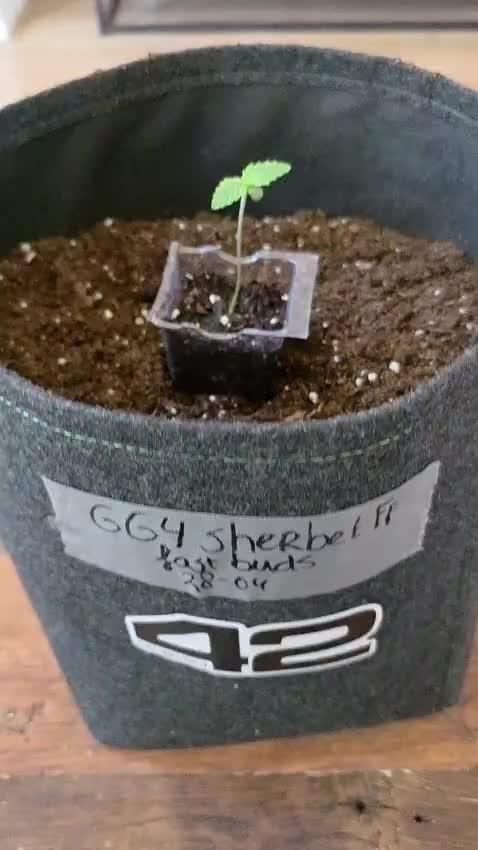
So lets gooo, i chosen to grow 1 of many lovely strains from @fast_buds 🙏🏻🌱🤙🏻 i popped one of this strain and she germanted great and looking very strong and stable 🌱🌱 So happy daysss
also check our instagram : https://www.instagram.com/thedutchwizzards?igsh=MTMzd2JuOWxpbWlxNQ%3D%3D&utm_source=qr
Big tnx for taking time to check it out 🌱🌱🤙🏻🙏🏻
Likes
30
Share


@MrJoint
Follow
✌️🎃 Thank you for checking my cultivation.
Unfortunately, seed #3 hasn't germinated and seedling #2 seem to have a problem. Let's move on because it's just the beginning.
🌰 31/05


Likes
16
Share


@420DeepGrow
Follow
Gracias al equipo de Sweet Seeds, Marshydro, XpertNutrients y Trolmaster, sin ellos esto no sería posible.
💐🍁: Big Devil Fast Version:
Atendiendo a las peticiones de nuestros amigos y clientes, presentamos la versión feminizada y fotodependiente de nuestra apreciada variedad Big Devil Auto (SWS15).
Para el desarrollo de esta variedad utilizamos nuestras mejores cepas seleccionadas de Big Devil Auto. Hemos eliminado el carácter autofloreciente de la Big Devil Auto hibridando estas cepas seleccionadas con un clon élite de características muy semejantes a la Big Devil Auto original.
El resultado es una planta muy vigorosa, de gran porte y de muy alta producción, con cogollos muy densos y repletos de resina. Desarrolla un fuerte tallo principal y largas ramas laterales. Conserva el aroma y sabor de nuestra Big Devil Auto original, muy dulce e inciensado.
💡TS-3000 + TS-1000: se usaran dos de las lámparas de la serie TS de Marshydro, para cubrir todas las necesidades de las plantas durante el ciclo de cultivo, uso las dos lámparas en floracion para llegar a toda la carpa de 1.50 x 1.50 x 1.80.
https://marshydro.eu/products/mars-hydro-ts-3000-led-grow-light/
🏠 : Marshydro 1.50 x 1.50 x 1.80, carpa 100% estanca con ventanas laterales para llegar a todos los lugares durante el grow
https://marshydro.eu/products/diy-150x150x200cm-grow-tent-kit
🌬️💨 Marshydro 6inch + filtro carbon para evitar olores indeseables.
https://marshydro.eu/products/ifresh-smart-6inch-filter-kits/
💻 Trolmaster Tent-X TCS-1 como controlador de luz, optimiza tu cultivo con la última tecnología del mercado, desde donde puedes controlar todos los parametros.
https://www.trolmaster.com/Products/Details/TCS-1
📆 Semana 2:
Fantástica semana, estan creciendo de una forma espectacular gracias a la ayuda de @marshydro, @xpertnutrients y @trolmaster.
Se puede apreciar un tercer nudo aunque la aplicación de cola de caballo y el estar en una maceta pequeña ha influido en el tamaño de ella, se recupera muy rápido 😁.
Esta semana espero trasplantar a la maceta definitiva.
Potencia de la lámpara: 50%
Likes
13
Share


@Canadian
Follow
Everything has been going very well and strong the stretch in flowering is quite impressive I will say that doubles their height and more for sure the flawer are very very large and to be ready they require probably three more weeks to become more dense and heavy but they're looking great and the smell is very strong as well.
Thank you for reading I will continue to update have a happy grow

Likes
9
Share


@Surge
Follow
The above nutes were mixed with 33.8 fl oz of non ph tested tap water an fed every other day of week 10. Getting some low temps at lights out notice the purp
Likes
6
Share


@DeepRootsGrowTrees
Follow
Week#11 Gnomo Auto By Kannabia
Week#11 Jan. 6th-13th
Gnomo Auto is a superb 👌 strain to grow for any grower. She is covered in trichomes and her buds are dense she has a nice aroma to her and she looks amazing 👏.


Likes
32
Share


@Bossman
Follow
Looks like I'm going to be satisfied with the autos and the photos their coming along fine very nicely. I super cropped the one outside and that's turning out fantastic
Likes
11
Share


@HappyWeedy
Follow
I used to watering with clean water for week now some rainies days coming 😏
Likes
Comments
Share


@FreeSmokegrows
Follow
Super Bad ass Plant, I feel like That part on the Movie Pineapple Express, where he's like we are the only guys in the city that have this!