


Likes
Comments
Share


@killerjoint
Follow
10-24-2024
ALL THE STRAIN RECOMMEND FLOWERING TIME IS 7-8 WEEKS
TRY TO FINISH WEEK 8
STILL HAS 19 MORE DAYS...
LAST FEED WITH NUTS .BURNED SOME OF TOP FAN LEAVES ......
BUT CHECK OUT QUEEN,DR SLEEP , WULFF ,POWER... CRAZY FROST TOE TO HEAD
SMELLS .............NEED TO RUN FANS WITH HIGHER SPEED FOR SMELL...
NO MORE NUTS....JUST WATER .....STAY IN THE COURSE...
STAY GREEN ....
10-27-2024
-HIT THEM WITH HUMBOLDT COUNTY NUTS
G10 -5ML PER GAL
SNOW STORM -5ML PER GAL
PURPLE MAXX-7ML PER GAL
EVERY TWO DAY NEED TO WATER....


Likes
6
Share

@majklsoft
Follow
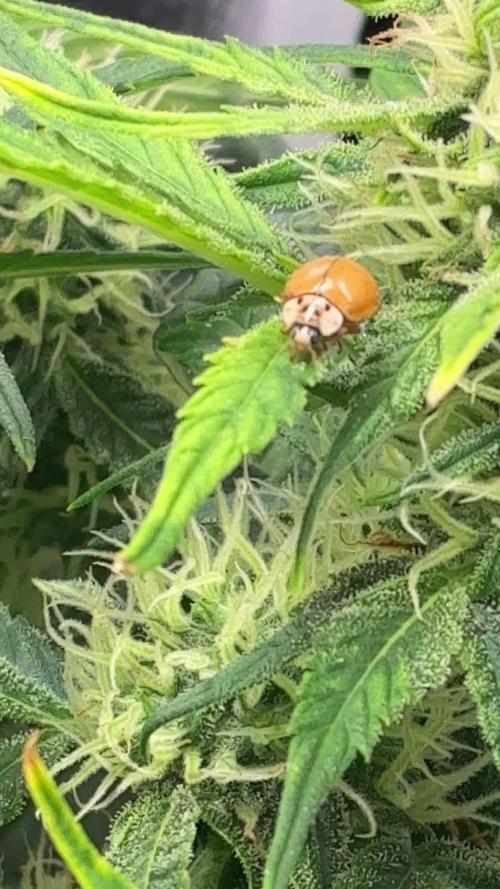
last week putting Ph down aside (this acid is poison haha) and watering with slightly higher Ph 6.7-7.0. Runoff shows 6.6 and it seems that the leaf issues are stabilised or at least I want to believe that 😎🌼
Buds are still nicely stacking but still 4-5 weeks to go - wish her a luck! 🍀 ladybug guest feels the same! 🐞

Likes
41
Share


@TerpTurtle
Follow
_Eyeing up trichomes clusters and buds as they ripen to determine a harvest day
-Plant still drinking heavy..
-Bud flops, any motion and the branches are ready to lay. Heavy buds
-Flipping Slurricane #7
-Day 69 harvest on BCS seed

Processing
Likes
61
Share


@Verlido
Follow
Week 12 - Day 1 : Restday, Watered my plants 4 Liters per plant with nutrients, added Big Bud.
Week 12 - Day 2 : Pinches branches of subject 1,2 and 3.
Week 12 - Day 3 : Restday.
Week 12 - Day 4 : Restday, Watered my plants 4 Liters per plant.
Week 12 - Day 5 : Supercropped subjects 1,2 and 3. In my opinion, the canopy of 1,2, and 3 were growing vertically again so I wanted to make it more even, I tied them down to 2 nodes lower after bending the mainstem in a 90-degree angle.
Week 12 - Day 6 : Unknown information
Week 12 - Day 7 : Unknown information
Note : * = Changed watering schedule to giving 4 Liters per plant per day since day 3 during week 12, currently giving 6 liters a day per plant due to extreme temperature change. Might drop back to 5 Liters per plant per day depending on weather conditions.
Note : Haven't been giving nutrients to my plants since the beginning of week 12, will be giving nutrients again at the end of week 14. The plants are having 2 weeks of flushing and seeing if they are in need of nutrients or not.
Week 13 - Day 1 : Upscaled watering *
Week 13 - Day 2 : Unknown information
Week 13 - Day 3 : Water check, pinched lower branches
Week 13 - Day 4 : Unknown information
Week 13 - Day 5 : Temperature check, humidity check, pinched branches of subjects 1,2 and 3
Week 13 - Day 6 : Restday
Week 13 - Day 7 : Pinched branches from subjects 1,2 and 3.

Likes
16
Share


@bigbootybotanist
Follow
Finally coming to an end this week, didn’t get to properly flush the nutrients out to see the leaves begin to fade but next grow i will pay more attention to this. Definitely needed to hold the plant up using chopsticks but hey it worked

Likes
11
Share


@Chubbs
Follow
420 Fastbuds
Amnesia Haze Auto
Week 7
This week has been awesome. Definitely starting to show her beautiful colors as she's fully into flower. I still spray once a week of 50ml per gallon of PureCrop 1 as a preventive maintenance and I have yet to see any signs of pest. It's still been super hot with Temps into the high 90's but overall with the 2 liters of water daily they seem to be ok.
All in all Happy Growing


Likes
11
Share

@Bunterbiber
Follow
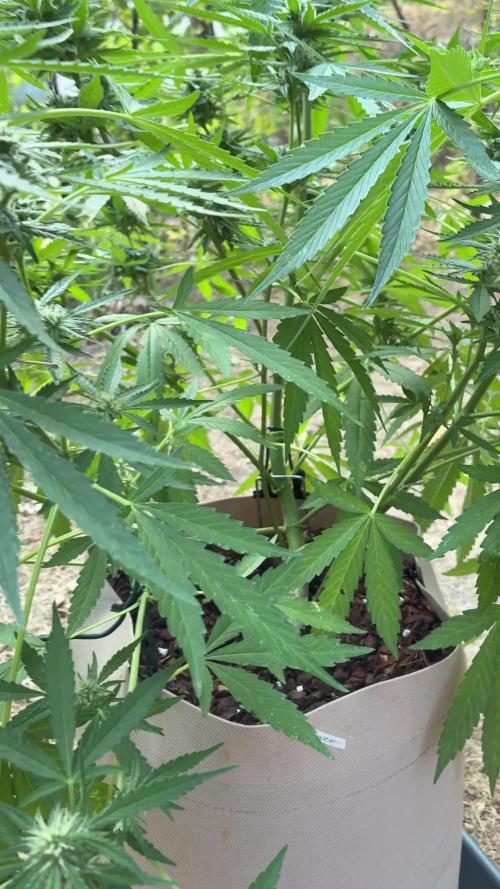
We just pushed through another absolute beast of a week, and the first half of it was pure survival mode. The temperatures peaked at a jaw-dropping 39°C, and even the nights offered zero relief, staying at a sticky 26°C minimum. It’s been an intense endurance test for an outdoor grow!
The Daily Hydration & Feeding Strategy: 💧
To keep them from turning into crisp, dry twigs, I had to switch to a strict every-single-day watering schedule. Missing even one day in that kind of heat wave would have been catastrophic.
Amazingly, the ladies are showing incredible resilience—they haven’t displayed any noticeable signs of distress or major issues so far. Development is moving along beautifully, though I'm keeping my fingers crossed that there won't be any delayed fallout from the extreme heat stress. Nutrient-wise I'm feeding them at about 75% of the recommended dosing plan to keep them happy without overdoing it in this heat.
The Strain Breakdown: 🌿
Lemon Cherry Cookies Auto: This girl is absolutely crushing the game right now. She is already stacking up some seriously decent, chunky buds, and the aroma is getting beautifully pronounced and loud! Every breeze brings a sweet whiff of what's to come. 😉
Amnesia Haze Auto: She has turned into an absolute monster! She’s gotten incredibly big and wide, taking full advantage of her outdoor space. You can definitely see that Sativa heritage shining through—judging by her progress, she’s definitely going to take a bit longer to cross the finish line compared to the quicker, Indica-dominant ladies like the Lemon Cherry Cookies.
Bruce Banner Auto & Banana Purple Punch Auto: These are the two shorter ladies of the group, but what they lack in raw height, they make up for in sheer health. Size aside, they are doing exceptionally well, looking super vibrant, healthy, and stacking their own flowers nicely.
All in all, I’m incredibly proud of how these genetics are handling a brutal summer. Now that the worst of the heatwave seems to be behind us, I can’t wait to watch these buds really start to swell!


Likes
121
Share


@NuggetPawn
Follow
So she was chopped (wet trimmed) yesterday (F74) and is now hanging up to dry at 55% RH and temps between 15 and 18ºc.
I made fresh frozen dry ice hash today using a 160 micron bubble bag, a flat surface, 8kg of dry ice and a couple 5 gal buckets. I already have the weights for that, which far exceeded my expectations. Those figures I will post once she is dried and in 1 quart screw top glass jars.
People suppose dry ice hash is inferior quality vs bubble hash. I am not experienced enough to comment on that but must say it is extremely easy to make hash with dry ice, it took 40 mins to process 995g of trim which included sugar leaves, some stems and popcorn buds. I then pressed it into 3.5g briquettes for storage using a pollen press. As you can see from videos, this stuff is all blonde - and after already trying some today with some friends, it knocked our boots off!
Will be back in 5-7 days with harvest figures, smoke analysis and other details!
Happy growing all!
P.s I ticked defoliation this week - the only week I intentionally cut any leaves off for the entire grow 😉


Processing
Likes
8
Share


@gothboiclique
Follow
Me costó adaptarme a la cantidad de agua que necesitaba, prácticamente 1.5 litros todos los días. Temperatura 23-25 centígrados, HR 45%.
Me pueden contactar por ig @federicocabreraf , por si quieren saber mas detalles o algún comentario que me quieran hacer, paz.

Likes
17
Share


@JonnyKush
Follow
hey growmies I decided to switch to flowering, I am using ADV nutes with the dosage recommended by them and they seem to me in great shape, tonight I will do a defoliation in order to breathe better and get as much light as possible. I'll keep you up-to-date. good growth and happy day 💚🌳
Likes
5
Share

@Lavaground
Follow
:)
Day 72 ~2.25L per plant
- 56ml Sensi Bloom A / 56ml Sensi Bloom B / 28ml B-52 / 28ml Bud Candy / 28ml Overdrive - 14L Mix ~ 2.25L per plant
Day 75 ~2.5L per plant
- 56ml Sensi Bloom A / 56ml Sensi Bloom B / 28ml B-52 / 28ml Bud Candy / 28ml Overdrive - 15L Mix ~ 2.25L per plant
Likes
21
Share


@ImAGrowerNotAShower
Follow
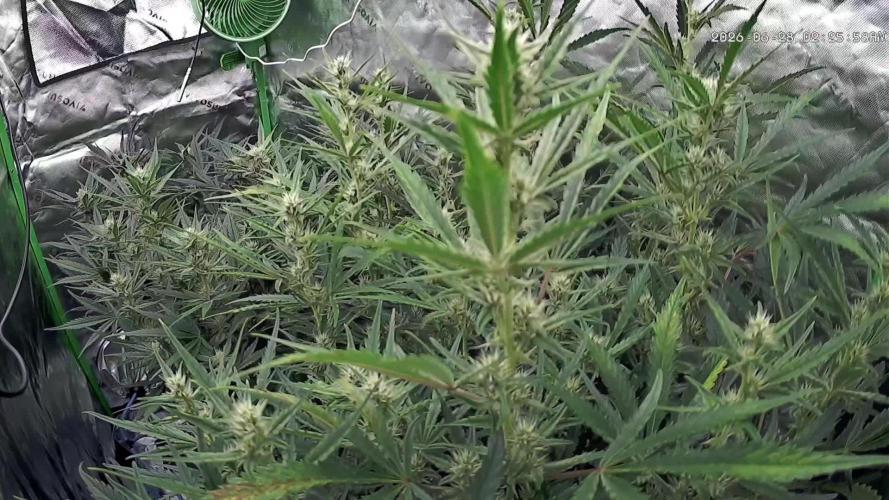
At the beginning of the week I found many leaves with spots on them. I think I might have had some mites. I removed almost all of the leaves and sprayed the ladies twice with CannaCure.
Now everthing looks ok again at it should be only a few days until the first ones will come down. Checking trichomes everyday.



Likes
1
Share

@PhinolaGreen
Follow
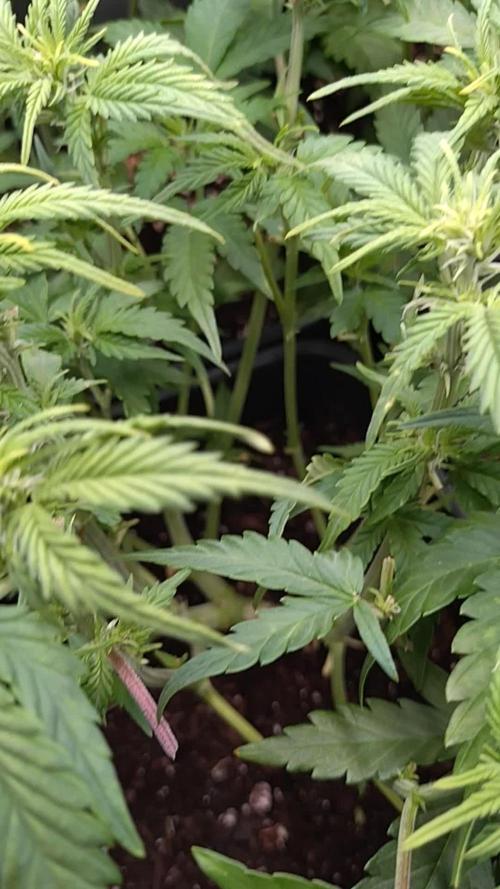
7. Woche Sie befindet sich mitten in der Bloom. Letzte Woche hatte sie Probleme mit Calmag und dann hab ich bisschen gegengesteuert. Soweit sehen die Ladys gut aus 😃 👍🏻

Likes
10
Share


@Fonzo412
Follow
This week will be day 56 on a very good grow. The girls seems to be happy in their environment .
Both plant are growing at a fast rate . But the Power plant fem have been growing taller with no real pistol showing .
The strawberry banana auto seems to grow wider. And is in an early flowering stage
Still have some small amount of yellowing of leaf 🍁 tips on both plants nothing major .
The strawberry 🍓 banana 🍌 auto has a glorious smell coming from it now mmhmm it’s also not the same smell twice 🤷♂️ but it smells great .
No major issue so far the girls seem to be going strong 💪 .
Also been doing some light defoliating of fan leaves I may top the power plant she’s getting to tall
. May need to do more defoliating on the strawberry 🍓 banana 🍌 auto since the buds are coming in a lot more rapidly.

Likes
18
Share


@Sonic_Y
Follow
Day 85 / Flip 46 / 24.3
Flushed them again with EC 0,0 water.
EC Drain is now on 0,0.
The next step is to let them dry out.
Nutrients will get soaked out of the leafs now, which will make them turn yellow.
Letting the plant die now with full light power.
I'm planning to harvest in 1 week.
Grow is running nice,.
Plants look super frosty and will even get more in the drying stage now..
yayyy.....:)
Day 91 / Day 52 / 30.03
Additional stress with a 48 hours no light stage.
harvest will be at 1. APRIL
HARVEST!!!!
1. APRIL 1. APRIL 1. APRIL 1. APRIL 1. APRIL 1. APRIL 1. APRIL 1. APRIL 1. APRIL
HARVEST!!!!
1. APRIL 1. APRIL 1. APRIL 1. APRIL 1. APRIL 1. APRIL 1. APRIL 1. APRIL 1. APRIL
HARVEST!!!!
1. APRIL 1. APRIL 1. APRIL 1. APRIL 1. APRIL 1. APRIL 1. APRIL 1. APRIL 1. APRIL
HARVEST!!!!
1. APRIL 1. APRIL 1. APRIL 1. APRIL 1. APRIL 1. APRIL 1. APRIL 1. APRIL 1. APRIL
Likes
5
Share


@Evilzdyuk
Follow
Сорт однозначно рекомендую к выращиванию, стойкий и сильный, растет без проблем 😉 Дальше хочу попробовать вырастить два куста этого сорта в горшках по 3 литра, один будет расти без всяких вмешательств, второй будет с LST
Всем спасибо и удачи 🍀 ✊