


Likes
Comments
Share


@TheBulldozerSicily
Follow
Risultato finale inaspettato! Questa è la prima volta in outdoor, e pensare che le volevo regalare perché non me la sentivo di farle crescere a casa perché troppi vicini di casa, poi mi sono affezionato ed eccole qua, le più grandi piante mai riuscite!! Sono molto contento!!

Likes
21
Share


@Jays_Not_Here_Man
Follow
A-Day 53 (into week 8) B&C-Day 49 (end of week 7)
A - She is stacking well, and feeling greasy! The smell is coming on stronger everyday, frost is just starting to build up. There is a distinct transition as the leaves go through veg to early flower to late flower. Uniform all around, not very tall, but she is hardy and thiccc!
B- Full flower now, so many tops! She has shown to be a slower flower developer than A, but the flowers she are developing are almost completely uniform all across the 🌱! I assume because there are so many they will be a little slower. I put her ties back on, and the middle shoots exploded with new stretch and growth, so she is still in that stretch/flower stage.
C- what can I say, patience is a virtue. She is looking lush and vigorous. With this being a slightly longer to finish auto strain, she has had time to recover from a) being a runt, B) having slow growth, c) having almost no training and lighter nutrient feeds her whole existence. This is also my control for Topping, she was not, A and B were. This strain is clearly hardy and able to withstand multiple techniques, we’ll see what the end the result is compared to her sisters.
All three plants received a full nutrient feed x2 this week. That was: 3 gallons dechlorinated water mixed with 12 ml Micro, 12 ml Bud, 20 ml Grow, and 6 ml Sensi Extra CalMag, PH’d to 6.2. And another very low feeding of 1/3 that mixture mixed into 3 gallons of water. Ive heard many growers who instead of just watering, they will do a much lower strength of nutrients included in their watering, and ultimately never not feed their plants nutrients until flush. Thoughts?



Likes
14
Share


@nonick123
Follow
Día 15 (27/01) Ha reaccionado bien al trasplante. A ver como se desarrolla en los siguientes días!
Día 16 (28/01) Muestra un buen desarrollo con las primeras ramas formándose
Día 17 (29/01) Subo a DLI 40
Muestra un color verde estupendo 😍
Día 18 (30/01) Tras subir el DLI la temperatura en el indoor ha subido a de 22ºC a 26 ºC, de modo que va a acelerar las necesidades hídricas
Se sigue desarrollando estupendamente 😁
Día 19 (31/01) Seguimos a buen ritmo
Creo que debería haber regado este día... (Visto como estaba de seca al día siguiente...)
Día 20 (01/02) Elimino las ramas más inferiores (1er nudo) que siempre suelen quedar débiles en el stretch
Riego con 350 ml H2O RO
Día 21 (02/02) Empieza a estirarse! 😍
Está sedienta! Riego con 350 ml H2O
En una semana a floración!
Khalifa Genetics - https://khalifagenetics.com/product/lemon-blanco-v3/
💦 BioTabs 15% DISCOUNT code "GDBT420" biotabs.nl/en/shop/ @biotabs_official
🌱Substrate PRO-MIX HP BACILLUS + MYCORRHIZAE @promixmitch @promixgrowers_unfiltered
💡2 x Mars Hydro FC1500 EVO Led Grow Light (2024 NEW FC 1500-EVO Samsung LM301H 150W LED) - https://marshydro.eu/products/fc1500-evo-led-grow-lights/ - https://www.amazon.de/dp/B0CSSGN5D8?ref=myi_title_dp

Likes
12
Share


@Tootiehobgoblin
Follow
Might be heading for trouble, cut to half dose…. Looking through some other grow diaries and seeing most people feeding at about half or less of the recommended AN feed schedule. Other than a small cal mag def early, which was fixed very easily with 2 foliar sprays, this plant has done pretty good with full recommended dose, until this week!! Flushed 3 litres through at 1/4 dose nutes full 2ml/L-cal/mag then started a half dose week 3 flower sched. If probelms persist then I will flush again and try 1/4 dose.
Added humidifier back into room to keep humidity at 55
Removed net and defoliated, moved her room mate to my closet to give her light and space for the final weeks coming up.
Further investigation and troubleshooting has me thinking she may actually be into a potassium deficiency, the odd thing about that is the AN nutes I am running suggest using “big bud” as an enhancer supplement. The strange part is that my lowered nute concentration still included a full dose of both “big bud” and “bud candy”. I was not willing to forfeit the benefits of those two supplements over the base nutes in this recipe. So. This week I will feed at %50 base nutes and full supplements of cal/mag and Bud Candy but will up my Big Bud a smidge and maybe another smidge more if combined efforts of revised nutes and extra space/air/light dont achieve desired results. I am also planning a fairly heavy defoliation, maybe end of week if she bounces back enough.
A generous amount of frost starting to show, I will pull the microlense out for some trichome development pictures this week.
Limping into the finish line it looks like. But She will be harvested. Heading into coast mode for now, just gonna ride her out and see what happens. There will be some bud there to be proud of.
Likes
2
Share


@MoMedicalAlchemist
Follow
Transplanted from 3 gallon to 5 gallon...i will let recover and probably put them into flower next week

Likes
55
Share


@Ultraviolet
Follow
What's in the soil? What's not in the soil would be an easier question to answer. 16-18 DLI @ the minute. +++ as she grows.
Probably not recommended, but to get to where it needs to be, I need to start now.
Vegetative @1400ppm 0.8–1.2 kPa 80–86°F (26.7–30°C) 65–75%, LST Day 10, Fim'd Day 11
CEC (Cation Exchange Capacity):
This is a measure of a soil's ability to hold and exchange positively charged nutrients, like calcium, magnesium, and potassium. Soils with high CEC (more clay and organic matter) have more negative charges that attract and hold these essential nutrients, preventing them from leaching away.
Biochar is highly efficient at increasing cation exchange capacity (CEC) compared to many other amendments. Biochar's high CEC potential stems from its negatively charged functional groups, and studies show it can increase CEC by over 90%. Amendments like compost also increase CEC but are often more prone to rapid biodegradation, which can make biochar's effect more long-lasting. biochar acts as a long-lasting Cation Exchange Capacity (CEC) enhancer because its porous, carbon-rich structure provides sites for nutrients to bind to, effectively improving nutrient retention in soil without relying on the short-term benefits of fresh organic matter like compost or manure. Biochar's stability means these benefits last much longer than those from traditional organic amendments, making it a sustainable way to improve soil fertility, water retention, and structure over time. Needs to be charged first, similar to Coco, or it will immobilize cations, but at a much higher ratio.
a high cation exchange capacity (CEC) results in a high buffer protection, meaning the soil can better resist changes in pH and nutrient availability. This is because a high CEC soil has more negatively charged sites to hold onto essential positively charged nutrients, like calcium and magnesium, and to buffer against acid ions, such as hydrogen.
EC (Electrical Conductivity):
This measures the amount of soluble salts in the soil. High EC levels indicate a high concentration of dissolved salts and can be a sign of potential salinity issues that can harm plants.
The stored cations associated with a medium's cation exchange capacity (CEC) do not directly contribute to a real-time electrical conductivity (EC) reading. A real-time EC measurement reflects only the concentration of free, dissolved salt ions in the water solution within the medium.
98% of a plants nutrients comes directly from the water solution.
2% come directly from soil particles.
CEC is a mediums storage capacity for cations. These stored cations do not contribute to a mediums EC directly.
Electrical Conductivity (EC) does not measure salt ions adsorbed (stored) onto a Cation Exchange Capacity (CEC) site, as EC measures the conductivity of ions in solution within a soil or water sample, not those held on soil particles.
A medium releases stored cations to water by ion exchange, where a new, more desirable ion from the water solution temporarily displaces the stored cation from the medium's surface, a process also seen in plants absorbing nutrients via mass flow. For example, in water softeners, sodium ions are released from resin beads to bond with the medium's surface, displacing calcium and magnesium ions which then enter the water. This same principle applies when plants take up nutrients from the soil solution: the cations are released from the soil particles into the water in response to a concentration equilibrium, and then moved to the root surface via mass flow.
An example of ion exchange within the context of Cation Exchange Capacity (CEC) is a soil particle with a negative charge attracting and holding positively charged nutrient ions, like potassium (K+) or calcium (Ca2+), and then exchanging them for other positive ions present in the soil solution. For instance, a negatively charged clay particle in soil can hold a K+ ion and later release it to a plant's roots when a different cation, such as calcium (Ca2+), is abundant and replaces the potassium. This process of holding and swapping positively charged ions is fundamental to soil fertility, as it provides plants with essential nutrients.
Negative charges on soil particles: Soil particles, particularly clay and organic matter, have negatively charged surfaces due to their chemical structure.
Attraction of cations: These negative charges attract and hold positively charged ions, or cations, such as:
Potassium (K+)
Calcium (Ca2+)
Magnesium (Mg2+)
Sodium (Na+)
Ammonium (NH4+)
Plant roots excrete hydrogen ions (H+) through the action of proton pumps embedded in the root cell membranes, which use ATP (energy) to actively transport H+ ions from inside the root cell into the surrounding soil. This process lowers the pH of the soil, which helps to make certain mineral nutrients, such as iron, more available for uptake by the plant.
Mechanism of H+ Excretion
Proton Pumps: Root cells contain specialized proteins called proton pumps (H+-ATPases) in their cell membranes.
Active Transport: These proton pumps use energy from ATP to actively move H+ ions from the cytoplasm of the root cell into the soil, against their concentration gradient.
Role in pH Regulation: This active excretion of H+ is a major way plants regulate their internal cytoplasmic pH.
Nutrient Availability: The resulting decrease in soil pH makes certain essential mineral nutrients, like iron, more soluble and available for the root cells to absorb.
Ion Exchange: The H+ ions also displace positively charged mineral cations from the soil particles, making them available for uptake.
Iron Uptake: In response to iron deficiency stress, plants enhance H+ excretion and reductant release to lower the pH and convert Fe3+ to the more available form Fe2+. The altered pH can influence the activity and composition of beneficial microbes in the soil. The H+ gradient created by the proton pumps can also be used for other vital cell functions, such as ATP synthesis and the transport of other solutes. The hydrogen ions (H+) excreted during photosynthesis come from the splitting of water molecules. This splitting, called photolysis, occurs in Photosystem II to replace the electrons used in the light-dependent reactions. The released hydrogen ions are then pumped into the thylakoid lumen, creating a proton gradient that drives ATP synthesis.
Plants release hydrogen ions (H+) from their roots into the soil, a process that occurs in conjunction with nutrient uptake and photosynthesis. These H+ ions compete with mineral cations for the negatively charged sites on soil particles, a phenomenon known as cation exchange. By displacing beneficial mineral cations, the excreted H+ ions make these nutrients available for the plant to absorb, which can also lower the soil pH and indirectly affect its Cation Exchange Capacity (CEC) by altering the pool of exchangeable cations in the soil solution.
Plants use proton (H+) exudation, driven by the H+-ATPase enzyme, to release H+ ions into the soil, creating a more acidic rhizosphere, which enhances nutrient availability and influences nutrient cycling processes. This acidification mobilizes insoluble nutrients like iron (Fe) by breaking them down, while also facilitating the activity of beneficial microbes involved in the nutrient cycle. Therefore, H+ exudation is a critical plant strategy for nutrient acquisition and management, allowing plants to improve their access to essential elements from the soil.
A lack of water splitting during photosynthesis can affect iron uptake because the resulting energy imbalance disrupts the plant's ability to produce ATP and NADPH, which are crucial for overall photosynthetic energy conversion and can trigger a deficiency in iron homeostasis pathways. While photosynthesis uses hydrogen ions produced from water splitting for the Calvin cycle, not to create a hydrogen gas deficiency, the overall process is sensitive to nutrient availability, and iron is essential for chloroplast function.
In photosynthesis, water is split to provide electrons to replace those lost in Photosystem II, which is triggered by light absorption. These electrons then travel along a transport chain to generate ATP (energy currency) and NADPH (reducing power). Carbon Fixation: The generated ATP and NADPH are then used to convert carbon dioxide into carbohydrates in the Calvin cycle. Impaired water splitting (via water in or out) breaks the chain reaction of photosynthesis. This leads to an imbalance in ATP and NADPH levels, which disrupts the Calvin cycle and overall energy production in the plant. Plants require a sufficient supply of essential mineral elements like iron for photosynthesis. Iron is vital for chlorophyll formation and plays a crucial role in electron transport within the chloroplasts. The complex relationship between nutrient status and photosynthesis is evident when iron deficiency can be reverted by depleting other micronutrients like manganese. This highlights how nutrient homeostasis influences photosynthetic function. A lack of adequate energy and reducing power from photosynthesis, which is directly linked to water splitting, can trigger complex adaptive responses in the plant's iron uptake and distribution systems.
Plants possess receptors called transceptors that can directly detect specific nutrient concentrations in the soil or within the plant's tissues. These receptors trigger signaling pathways, sometimes involving calcium influx or changes in protein complex activity, that then influence nutrient uptake by the roots. Plants use this information to make long-term adjustments, such as Increasing root biomass to explore more soil for nutrients. Modifying metabolic pathways to make better use of available resources. Adjusting the rate of nutrient transport into the roots. That's why I keep a high EC. Abundance resonates Abundance.


Likes
13
Share


@Youngbuds1
Follow
So as you can see I now have four flowering which I guess were the autos and I have one gelato that is still vegging and is doing damn good. There are two that have lighter color leaves, I’m trying to focus on on these and see if I can get better production. As for the tall GG in the back, leaves are waxy and have resin production starting. A lot better, overall I’m learning more and more every week!
Hope everyone is enjoying my grow and stick around, ask questions. Happy New Year!

Likes
9
Share


@rolling_stoned
Follow
I completely changed the water and nutrients this week and added some Canna PK13/14. I have also added another MARS Hydro TW2000 light to the tent to try and get more light to the lower buds. Gave both plants a trim also for the same reason. I was concerned they were still not ready to harvest, but expert advice from FastBuds420 told me they probably needed a further 4 weeks. And I will give them an update and the information they requested. I think it's probably because I had the lights turned down to 25% during the veg stage and only at 50% for the early flowering stage; it was not till recently, about 3 weeks, I think the lights got turned up to 100%.
Processing
Likes
2
Share


@Firepharmer
Follow
Day 43 ,
6 and a half weeks . She started to cloud up and has a few amber trichomes . Buds as starting to really full out now


Likes
18
Share


@Gropadawan
Follow
Day 106, Flower Day 50.
Looked at Trichomes this morning. GSC still showing some glassy/milky look. Bubba is pretty milky colored. Still needs at least a week.
Went on vacation last week. Had somebody else water. They closed the door, so not as good air circulation. Bubba showed powdery mildew. Not yet severe, so I took the plant outside, trimmed off some fan leaves that showed mildew. Then I sprayed the entire plant with a 25% milk solution (whole milk) and let it dry. Back in the tent. Cranked up the inline fans and added a small fan to the Bubba tent. Just need a couple more weeks.


Likes
20
Share


@Naujas
Follow
it still holds :) I was very afraid that I could do it, but the further I go, the more I start to believe it :)

Likes
24
Share


@Hawkbo
Follow
This is probably the final week of the full tent shots, these were taken a few days ago and at this point there is only 8 plants that have not yet been harvested. I learned a lot this run, tried some new shit, grew out my own crosses, dialed things in by getting rid of the light leaks and adding the heater so it was a success. The new lights out performed my expectation and the leaf strip might become a staple in my garden. The leaf strip made me nervous I wasn't sure how it would turn out but all of my buds are noticeably larger, the lowers are filled out and as dense as the tops and it saved space, water and nutrients. The lights could have contriuted to the larger buds but the other things made it well worth it. I have been vegging out the next run for a while trying to keep them from growing too much in 1/2 gal bags so there should be some interesting plants there stay tuned.
* My 2 MC1 X;s have been harvested and are in the dry tent now, one came out pretty ugly but smells unbelievablely strong of citrus. The black leafed one is a looker but doesn't have the yield factor. I thought I took cuts of these but turns out I did not so these 2 will be one and done, maybe down the road I will dip back into them but going forward I will be hitting any cuts that stand out to me with my reversed MC2 pollen and maybe give some away. But that won't be for a while.
REMEMBER , IF YOUR SHOPPING FOR GEAR YOU CAN USE THE CODE “BANGDANG” FOR 10% OFF YOUR ENTIRE PURCHASE FROM ANY OF THE FOLLOWING COMPANIES.
@greenbuzzliquids
@rainscience_growbags
@gorilla_grow_tent
@growlightscience.led
NEW* @Rocbudinc Seeds on his website *
*****Gorilla grow tent discounts extend to all companies affiliated with grow strong industries which include..*****
@super.closet
Lotus Nutrients
Kind LED grow lights
Likes
16
Share


@Biggy2k20
Follow
Strong dense buds hybrid strain. Excellent appearance and has reacted to all grow cycles really well. I shall update when cured
Update after a smoke: extremely potent with a euphoric lift and immense relaxation. I would definitely recommend the wedding cheesecake. Full dry weight is 15g.
Likes
14
Share


@Patillac31
Follow
58 days in the books. Scheduled for knee surgery on the 10th so harvest on this girl may be coming sooner than I had hoped. My next diary will be 1 Big Bud and 1 Agent orange who have both been vegging the last 3+months. Gave them a lollipop hair cut 1 week ago. Both are recovering nicely. Anywho, happy gardening 🌱🙏🤘🖖✌️
¤ With the help of my amazing lady friend the grow goes on. She will be aiding me in the 3 waterings (flush) to get this girl to the 10 week mark! Resin and trichomes are progressing from clear milky to milky amber.

Likes
31
Share


@Reaper
Follow
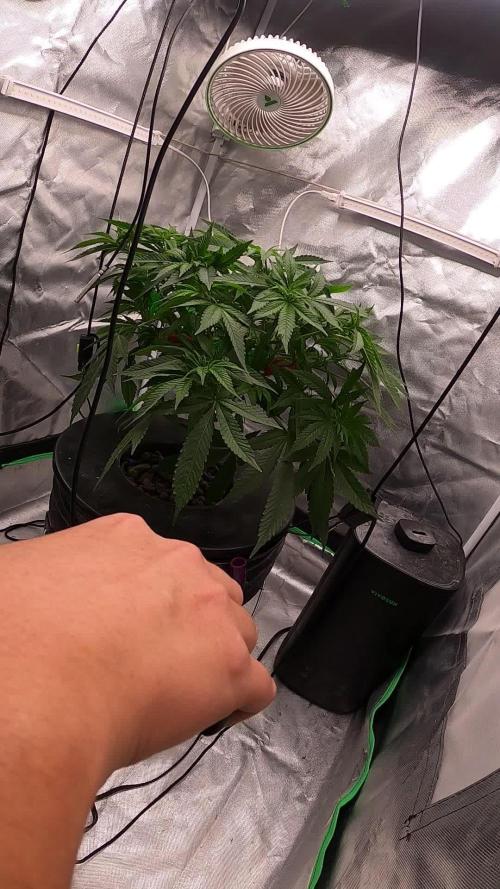
week 3 veg
doing some lst, branches should grow a bit more instead of the middle stem so far its going well