


Likes
Comments
Share


@pifflestikkz
Follow
Day 172
21/10/24 Monday
I had 1.5 Litres of feed left, and she was top dry this morning so she finished that off today.
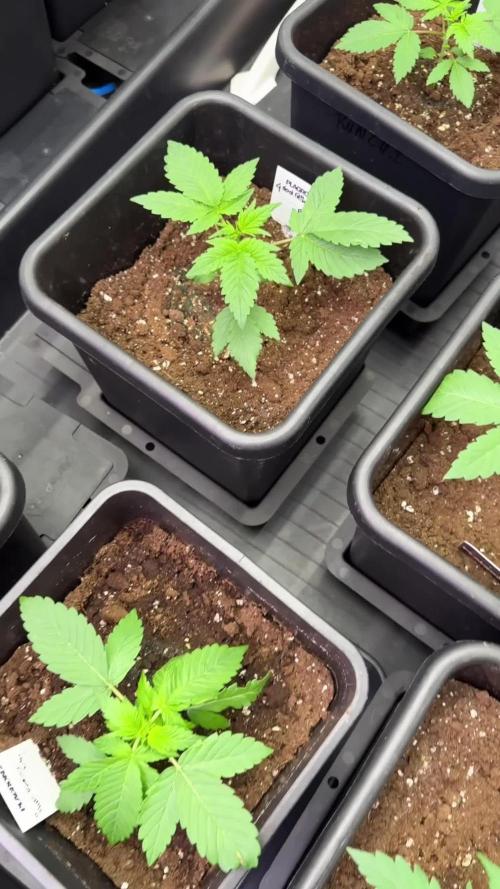
Picture update 😎💚
I'll get one later with lights off 🙌
Day 174
23/10/24 Wednesday
De-chlorinated tap water pH 6 only today.
Finally update pictures and videos 📸 💚
She is developing awsome colours, and buds are now starting to stack weight 💪🙌
Day 177
26/10/24 Saturday
De-chlorinated tap water pH 6 only today, noticed a few tips burning.
She is stacking !! This week she has developed a really floral aroma is sweet and tantalising like a perfume almost.
She is glistening with trichomes, and buds are taking the dark 🌑 colour with purple/pink calyx tips.
Super duper sticky!!

Likes
Comments
Share

@DogDoctorOfficial
Follow
Blueberry Muffin – Pheno B | Week 3
The Beautiful Oddball
Welcome back to another week of the 8×8 Adventure, where twelve cultivars are being documented individually under a 12/12-from-seed schedule. Every phenotype receives its own dedicated diary, allowing us to follow each plant’s journey independently and observe how unique expressions emerge even between sisters sharing the same genetics.
This week brought one of the largest environmental adjustments of the entire project so far.
The lighting intensity was increased significantly, moving from approximately 370 µmol/m²/s PPFD to 700 µmol/m²/s PPFD at canopy level. Alongside the increase in light, nutrient strength and water consumption also rose to support the accelerating growth rate.
The response throughout the room has been overwhelmingly positive.
Growth has accelerated, internodes remain compact, and the plants appear eager for more.
⸻
Week 3 Environment
🌡️ Temperature: 27.4°C
💧 Relative Humidity: 55%
💡 PPFD: ~700 µmol/m²/s
🌱 Medium: Plagron Lightmix
? Growing Method: 12/12 From Seed
💦 Water Consumption: ~0.9–1.2L per day
Feeding Schedule
Days 18
* EC 1.0
* pH 5.99–6.0
* Approximately 1L
Days 21
* EC 1.3
* pH 6.0
* Approximately 1.2L
As always, consistency remains the goal. Stable environmental conditions allow the genetics to tell their story without unnecessary interference.
⸻
Blueberry Muffin Pheno B
While her sister has spent the last week showing near textbook development, Pheno B continues to be the plant that makes me stop, smile, and ask questions.
Not because she is perfect.
Because she isn’t.
And that is exactly why I like her.
From the beginning this phenotype has carried a slightly unusual appearance. Certain leaves developed differently, growth patterns occasionally looked a little unconventional, and she never quite followed the same path as her sister.
Yet despite all those quirks, she continues moving forward.
Week after week.
Healthy.
Steady.
Determined.
Looking at her now, it is clear that she is gradually growing out of many of those early abnormalities. New growth is arriving cleaner, stronger, and more structured than before. The center of the plant is becoming increasingly organized, with fresh leaves stacking tightly around the apical growth tip.
She remains slightly smaller than Pheno A, but she is far from struggling.
In fact, she appears to be finding her rhythm.
The canopy has expanded noticeably during the week, internodal spacing remains compact, and the plant is beginning to develop a stronger framework that should support future growth.
One of the most interesting observations is how the newer leaves continue to improve with every passing node. The plant seems to be correcting itself naturally, producing increasingly normal foliage as it matures.
It’s almost as if she needed a little extra time to figure out who she wanted to become.
And honestly, those are often the plants that end up teaching us the most.
While Pheno A currently wins the beauty contest, Pheno B wins the curiosity contest.
Every time I look at her, I want to see what she does next.
⸻
Measuring Light: Why We Use a Quantum Sensor
One of the biggest changes this week involved increasing PPFD levels throughout the room, so this feels like a good opportunity to talk about one of the most useful tools available to modern growers.
The Dr. Meter Quantum Sensor
To monitor light levels, I use the Dr. Meter Quantum Sensor, a tool designed specifically to measure Photosynthetic Photon Flux Density (PPFD).
Rather than measuring brightness the way our eyes perceive it, a quantum sensor measures the photons that plants can actually use for photosynthesis.
This is an important distinction.
Plants don’t care how bright a light looks to us.
They care about how many usable photons are reaching the leaf surface.
A quantum sensor allows growers to measure exactly that.
Instead of guessing whether a plant is receiving too little or too much light, we can collect real data and make informed decisions.
Why PPFD Matters
PPFD tells us how many photosynthetically active photons reach a square meter every second.
Measured in:
µmol/m²/s
This information helps answer important questions:
* Is the plant receiving enough light to maximize growth?
* Is the light intensity limiting development?
* Are we approaching levels that could cause stress?
* Can nutrient levels be increased safely alongside higher light intensity?
This week, measurements showed the plants were capable of handling significantly more light than they were receiving previously.
That gave us confidence to increase intensity from approximately 370 PPFD to 700 PPFD, while simultaneously increasing nutrient strength.
The plants responded immediately with stronger growth and improved vigor.
This is one of the biggest advantages of using a quantum sensor.
Instead of guessing.
We measure.
Then we adjust.
And finally we observe how the plant responds.
⸻
Looking Ahead
The coming week should reveal even more about Pheno B’s personality.
Key areas of interest include:
* Continued normalization of new growth
* Branch development
* Structural differences compared to Pheno A
* Response to increased PPFD
* Overall vigor and growth rate
She may not be the largest plant in the room.
She may not be the prettiest.
But she is quickly becoming one of the most interesting.
And sometimes the plants that don’t follow the script end up writing the best chapters.
⸻
Thank You
A huge thank you to everyone following this adventure and supporting these diaries.
Thank you to the entire GrowDiaries community for creating a space where growers can learn, experiment, and share knowledge together.
Thank you to Plagron for providing the nutrition and cultivation support behind this project.
Thank you to Zamnesia for the genetics, equipment, and opportunity to document these cultivars from seed to harvest.
And thank you to every grower, reader, supporter, and fellow plant enthusiast who takes a moment to stop by, leave a comment, ask a question, or simply follow along.
The journey continues.
🌱💚?
Growers Love and see you next week, little oddball. I can’t wait to see what you do next.


Likes
9
Share

@BioGrowBayer
Follow
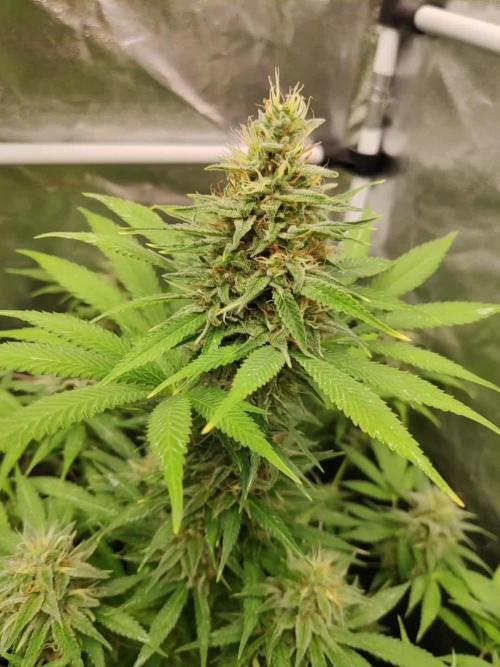
Blütewoche 6 verläuft ohne Probleme. Die Pflanzen sind gesund, Buds werden dicker, Trichome entwickeln sich gut. Kein Mangel, alles im grünen Bereich. Leichte Entlaubung für bessere Luftzirkulation, Gießen wie im Schema. Bin sehr zufrieden – weiter so!

Likes
16
Share


@GirlGoneWeed
Follow
Recovery at its finest, that's what you will see on week 4 around here! Guess who's loving the CO2 with high temperature? Thats right, all plants are!
The comparison of last week with this week have such a difference, on day 24 I introduced a DIY CO2 bottle, the recipe consist in:
-CO2-
2 cups of sugar
1 tablespoon of yeast
1 tablespoon of baking soda
1 later of warm water
Mix all ingredients on a bottle, make a nail hole on the cap shake a little (when shaking put your finger on the nail hole, you should hear a hissssss when you release the hole) use it when lights are on, increase temperature to 30-35C, watch for high levels of humidity, and voila!
I haven't started any LST yet, I am waiting for a bit more growth to start bending, I have to make sure all 5 plants will have enough space inside this 2x4 tent.
All suggestions are welcomed :)
Thats is for now, Stay Lit folks!

Likes
3
Share


@julian100614
Follow
Empezamos su 5 semana de vegetación y lo hacemos a lo grande 💪
Hemos cambiado a esta pequeña de casa, pasando de una maceta de 7L a una de 18L para que termine su crecimiento en ella.
Aplicamos tambien la malla de scrog para empezar a entrenarlas y no tener problemas 👌

Likes
1
Share


@El_gordito99
Follow
- VEGETATIVA -
•Prima settimana•
Passati i 7 giorni di germinazione procediamo con il conteggio delle settimane di vegetativa.
Le piante reagiscono bene, tenere sotto controllo con analisi visiva le foglie e il terreno, controllare ed essere precisi con il PH dell’acqua a 6.5 (solo dopo abbiamo scoperto l’importanza) inizialmente fino alla 4 settimana di vegetativa non l’abbiamo controllato e infatti più avanti noterete delle piccole carenze, tutto molto risolvibile comunque.
Mantenere un’irrigazione costante, solitamente ogni 3/4 giorni circa 2/300 ml.
Ovviamente sta a voi capire quanta ne serve, sempre meglio aspettare un giorno in più (foglie cadenti) piuttosto che irrigare troppo spesso (causerebbe problemi maggiori l’irrigazione eccessiva).

Processing
Likes
12
Share


Likes
2
Share


@Wuutownwarrior
Follow
Terrible weeks weather again so I brought my plants in and bought some cfls woke up in the morning and one had fell off cabinet and burnt one plant to a crisp !! Lesson learnt


Likes
7
Share


@Mr_nugs_lover_David
Follow
Looking very good, this ladies are breaking the shield within 48hs since planted as I was expecting, let's see how my beautiful queens develop on this "little run" on a 2x4! Growing with a tsl2000 by mars hydro! 👨🌾💯✌️ Stay tuned guys.

Likes
4
Share

@safegrowing
Follow
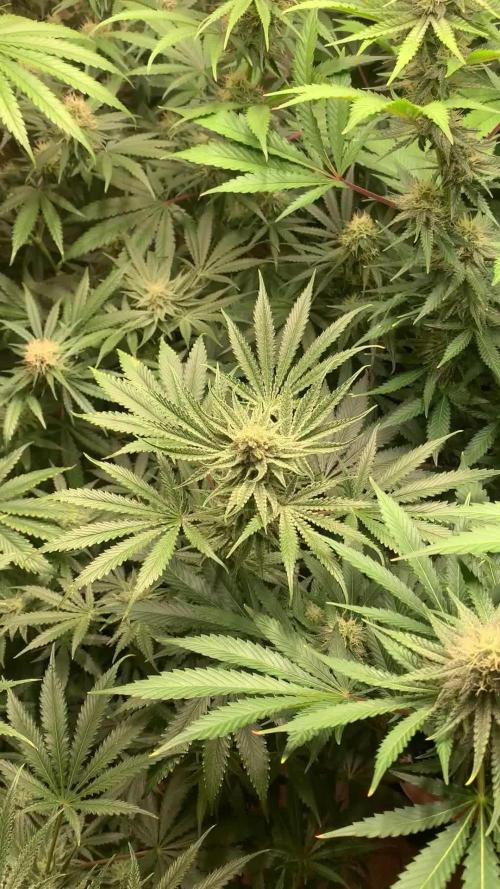
Início da nossa sexta semana de floração, solo segue úmido, tudo ok ( 22/09 )
Rega efetuada hj, tudo ok ( 23/09 )
Rega efetuada hoje também , as plantas estão precisando de água todo dia aparentemente. ( 24/09 )
Solo segue úmido, sem regas até o momento ( 25/09 )
Rega efetuada hj, tudo ok, estamos nas retas finais ( 26/09 )
Solo segue úmido, sem rega ( 27/09 )
Rega efetuada hj, último dia da sexta semana, tudo em perfeitas condições ( 28/09 )


Likes
36
Share


@volcanic
Follow
I'm amazed how my first grow ended up, I'm excited to see my improvements on future grow!
Will update Harvest details once the drying is done!
Likes
2
Share


@Jelemond
Follow
This is my first grow and it’s all organic as well 👌🏽.I didn’t experience any deficiencies and besides the fact that they are pretty small I have to say I’m pleased. We will see what my total harvest will be I’m guessing around a quarter pound 4 ounces maybe little less 🤷♂️🏽

Likes
63
Share


@AsNoriu
Follow
Day 114. Gorilla Max is totally ready, maybe she would bulk up, but last white pistil went brown at least a week ago. Time to trim. Bud not solid, but kinda hard, bottom all airy and small, but she smells and sticky like hell, so fruity ...
Had to chop her, because got tiered of seeds everywhere, so cleaned my draws and fridge, from 45 found bag seeds started new diary, had to make space for them. Want to try out 12/12 from start and even if i would leave them under natural sun , they would stretch too much in first stage of grow and would repeat that grow patern indoors.
Scissors hash was nice, super soft, hard to roll, all stays on hands.
On this plant found two seeds, maybe some hidden in colas, but its not even close to bad that i was imagining at the beginning.
My watering damage is obvious, Gorilla Max and Bunny were best plants, now - they are smallest... Last weeks very important, till week 5 of flower and that incident they were leaders, overdrying don't work . Hope i will learn this lesson.
Day 120. Last 3 girls are down.
Gorilla Max - 88 g. Of dry bud. Think she and Bunny will be smallest of them all. Buds are airy, but very sticky and all calaxies went pink. So in spliff it looks really funky.
Needed to lolitop them higher, maybe overall look and cola structure would be better then.
Lanky Gorilla is a champ, no doubt. Think this girl should beat 4 ounces easy.
Day 126. So total of all 4 plants is 401. A bit less than was hoping, but target achieved.
Update will follow.

Likes
5
Share


@BigLamar
Follow
Week 1 now complete since we flipped the switch.
Pistols are are creeping out slowly but surely.
Decent.
See what happens….

Likes
9
Share


@MenaceFantome971
Follow
Nous sommes proche de la semaine 2, il reste 3 jours !
Les filles se développent plutôt bien à mon goût, uniquement de l’eau et le programme luminaire respecté. On peut remarquer 2 phénotypes, l’une un peu plus claire en terme de couleur des feuilles et l’autre plus foncée.
Évidement je suppose que la qualité des Leds compte.. j’ai observé par rapport à d’autre journal que la plante ne s’étire pas comme d’autre mais elles sont en bonne santé c’est l’essentiel ! À très bientôt pour la semaine 3 !
Likes
4
Share


@BADINFLUENCER
Follow
Esta semana me doy cuenta de la rapidez y buena calidad de la cepa. 🤩 Paso de los cubos de lana de roca a los slabs del mismo material. Empiezo floración modo horario pero pre-floracion con liquidos hasta que salga la primera flor. Riego automatico 3” al encender las luzes y 3” media hora antes de apagarlas.
Likes
2
Share


@Ultraviolet_
Follow
18 hours in seconds, 60x60x18 = 64,800 seconds, now multiply by the 833μMol/s reading off the PAR metre. μMol/s (micromol) is the unit in which P.A.R. is expressed.
64,800x833=53,784,000μMol
53,784,000μMol = 54 Mol
54 DLI @ 800ppm, powerful combination. Pushing photosynthesis to peak capacity, accelerated growth and increased biomass. Applied net, stretching her around for a week. Maintaining a minimum air velocity of 0.3m/s within the inner canopy.
E=MC2 looks like a simple multiplication problem; it describes a fundamental physical truth: mass and energy are the same thing. The equation doesn't just calculate a value; it reveals that mass is effectively "congealed" energy. Energy is just numbers. Energy isn't a physical "substance" you can hold or touch. It is essentially an abstract, calculated number that we assign to a system to predict how it will change, interact, or move. A numerical label we attach to matter to track how it behaves. Because the universe runs on laws of symmetry (specifically, that the laws of physics don't change over time), a single global number must be conserved. We call that number "energy".
How well a seedling grows is down to how much knowledge one can acquire to increase the level of conversion to occur. Applying knowledge effectively requires intuition, which comes from hands-on experience. A seasoned stoner learns to read subtle signs—like a slight change in leaf turgor (stiffness), subtle color shifts, or the specific texture of the soil—before a textbook diagnosis can be made. Ultimately, growing is the application of botanical science blended with active observation. Knowledge dictates your potential, but adaptability and attentiveness to the plant's immediate environment determine your results. The human eye is capable of distinguishing more shades of green than any other color in the visible spectrum.
1.618
Nature mathematically optimizes quantum energy transfer and light absorption efficiency within the photosynthetic machinery, as it naturally dictates energy scaling hierarchies and resonance dynamics. External vibration or electromagnetic wave that perfectly matches a plant's natural frequency directly influences plant growth. Low-frequency sound waves and targeted electromagnetic fields stimulate cellular processes and boost photosynthetic efficiency. An angular frequency aligned with the Golden Ratio is often used in wave mechanics and quantum physics to optimize energy transfer.
Alignment with what already exists.
Law of nature, not my opinion: Constructive interference occurs when two or more overlapping waves meet in phase, meaning their crests and troughs perfectly align. Their amplitudes add together, creating a new, amplified wave with greater intensity than the individual components.
Constructive interference is the foundational mechanism that establishes a resonance hierarchy across physical, structural, and acoustic systems.
"Frequencies utilizing this ratio naturally minimize resistance (or impedance) and allow for highly efficient resonance, which can facilitate an increase in Electron Transfer Reactions (ETR) or energy pathways in molecular structures."
Quantum coherence in photosynthesis occurs when a photon of sunlight strikes a leaf; the energy it carries must travel to a reaction center to be converted into chemical energy. This process operates at nearly 100% efficiency. If the energy moved in a traditional "bunching" or random hopping manner, a large portion of it would be lost as heat. Instead, plants utilize quantum superposition. The energy particle (exciton) doesn't just take one path; it exists in a wave state and explores multiple pathways simultaneously. It essentially "chooses" the most efficient route to the reaction center simultaneously.
Research shows that molecular vibrations and the specific network arrangements of chlorophyll molecules (like the naturally evolved Chlorophyll A & B ratios) actively protect against energy overflow, optimizing light capture across different light intensities. Enzymes are the biological catalysts that speed up chemical reactions within a plant's cells, allowing them to grow, metabolize, and repair. Rather than relying solely on the classical kinetic energy of molecules colliding, plants use quantum tunneling. Subatomic particles like electrons and protons (hydrogen ions) can literally "teleport" through energy barriers that they normally wouldn’t have the energy to climb over. This makes vital metabolic reactions happen far faster than classical physics could ever explain!
Effective quantum efficiency of photosystem II, often denoted as ΦPSII, represents the proportion of light absorbed by Photosystem II (ΦPSII) that is actually used in photosynthetic electron transport. It is a key indicator of how efficiently a plant is using light for photosynthesis, as opposed to losing it as heat or fluorescence. ΦPSII (effective quantum yield of photosystem II) functions primarily as a "multiplier" (a coefficient of efficiency) rather than an additive factor when estimating the overall photosynthetic electron transport rate (ETR). Multipliers are considered far more beneficial than additions because they generate exponential growth, leverage existing resources to their full potential, and create sustainable, self-multiplying capacity, rather than just incremental, linear increases. This fascinating observation is rooted in the intersection of subatomic geometry, fractal scaling, and quantum dynamics. In specific molecular arrangements—such as in conjugated polymer networks or biomolecular architectures—the Golden Ratio (PHI) naturally dictates energy scaling hierarchies and resonance dynamics. Mathematically tied to the fine-structure constant, which defines the strength of the electromagnetic interaction. The Golden Ratio can be mapped geometrically as the Golden Angle (137.5 degrees) in atomic structures, linking the charge of the electron to fundamental quantum constants like Planck's constant.
An electromagnetic wave is neither electric nor magnetic, but a combination of both. 137.5
The Golden Angle (137.5) This angle is derived from the Golden Ratio (1.618). It is the smaller of two angles created when a circle is divided such that the ratio of the arcs equals the Golden Ratio.
In quantum physics, Alpha (Α/α) is the approximate denominator of the fine-structure constant (often represented by the Greek letter Alpha (Α/α). It is a fundamental, dimensionless number that dictates how strongly charged particles (like electrons) interact with the electromagnetic field. Its value has puzzled physicists for over a century, as it bridges quantum mechanics, electromagnetism, and relativity.
In quantum mechanics, Omega (Ω/ω) usually represents angular frequency. When applied to "quantum coherence"—the ability of particles to exist in overlapping states without immediately degrading—is key to calculating how long these states last.
The Golden Angle, the value 137.5° is the geometric Golden Angle. It is derived from the Golden Ratio (1.618) and is famously responsible for the beautiful, mathematically optimized spiral patterns found in nature (such as sunflower seeds, pinecones, and leaf arrangements). Because of this, theoretical physicists and mathematicians have long speculated about why nature relies so heavily on the number 137 and the golden angle to govern everything from subatomic light interactions to the macroscopic geometry of the universe.
Likes
15
Share


@Bread_n_Buds
Follow
Our Wurlz F1 hybrids are very, very beautiful, they were as fast as light, in fact it's an understatement to say as fast as light, here we are well below the average in terms of times and above the average in terms of quality, does that seem like little to you? Do some calculations...
In 12 months you could do 6 cycles, unlike normal autoflowering plants which take 3 months on average, i.e. 4 cycles per year, knowing how to do 12 divided by 2 and 12 divided by three, right? Here it is... and it's not the only quality of these plants: maintained stability and hermaphroditism will now be a distant memory.
Our Wurlz are colourful, full of resin and are about two weeks away from being two months old. Have you ever seen autoflowering plants so advanced at 1 and a half months or so after birth?
Beautiful, beautiful, beautiful, big congratulations to Zammi.
https://www.zamnesia.io/it/10669-zamnesia-seeds-wurlz-f1-automatic.html
Video Reel Coming soon on Sunday
Food by Plagron https://plagron.com/en
Light www.viparspectra.com/
Tent & Air www.secretjardin.com
Music of the week www.radionula.com
+++ 432 hz frequencies to keep in line my Girls to Gaia.
Site Description
ZAMNESIA SEEDS - WURLZ F1 HYBRID AUTOMATIC: EFFECTS TO LEAVE YOUR HEAD IN A WHIRL!
As the end product of combining Runtz with Watermelon Candy, Wurlz F1 hybrid Automatic showcases a reliable, uniform, and, above all, easy growing experience. The resulting buds offer mind-blowing flavors and soothing effects, making Wurlz F1 Automatic more than worthy of being on your radar.
GROWING WURLZ F1 HYBRID AUTOMATIC
As an autoflowering strain, it takes just 9–10 weeks for Wurlz F1 Automatic to move from germination to harvest. Fortunately, there's very little required other than a bit of maintenance along the way. This is partly due to the F1 genetics that make this strain robust and uniform, resulting in plants that reach a similar height and provide a similar (large) yield. Moreover, Wurlz F1 Automatic is highly resistant to disease, pests, and other ailments.
Reaching heights of about 65–80cm, Wurlz F1 Automatic is not an overbearing plant and can fit into smaller spaces with zero fuss. Once ready to yield, growers have the potential to see a return in the region of 450–500g/m² indoors and 50–150g/plant outdoors.
AROMAS, FLAVORS, AND EFFECTS OF WURLZ F1 HYBRID AUTOMATIC
After Wurlz F1 Hybrid Automatic wows you with its easygoing growing experience, the best is yet to come: the smoke test. Teeming with terpenes, this cultivar offers a fruity and candy-like flavor tinged with just a little bit of pine for good measure. In terms of effects, Wurlz F1 Automatic is bolstered by 24% THC and a finely tuned array of cannabinoids, making for a soothing, physically relaxing, and, in larger amounts, couch-locking high. So settle in with some of your favorite friends, snacks, and movies; this is relaxation at its finest.
www.zamnesia.io