


Likes
Comments
Share


@pifflestikkz
Follow
Day 113
21/10/24 Monday
Last Flush today using de-chlorinated tap water and flawless finish at pH 6.
300ml again.
Seeing leaves fade and trichomes really popping out now 😋
Picture and video update 📸✌️💚
Day 114
22/10/24 Tuesday
Decided to run one last flush through using de-chlorinated tap water and flawless finish at pH 6.
The Orange Bud and Melonade Runtz will enter 24 hours dark 🌑 tomorrow with the other 2 litres in my other micro diary ✌️💚


Likes
13
Share


@ButterfliesLittleFarm
Follow
Hello Diary,
Titan F1 is definitely the most mature of all three plants on the Farm, and I think he will be the first to be ready in a few days.
Looking under the microscope, the trichomes are mostly milky, so I'll let it go for a few more days.
The flowers are hard and compact, very sticky to the touch and spread a wonderful sweet fragrance.
The leaves are still a healthy dark green color, only a few leaves have turned yellow in the past three weeks, so I removed them.
Still watering every three days.
As of this week, I have stopped adding supplements, I only water with clean water that I lowered the pH value.
The conditions on the farm are still good (unchanged), the temperature is around 28 degrees while the humidity is around 45%.
Here's what it looked like last week.
18/06/2023 - Day 50.
Watering.
I prepared the usual 7 liters of water, lowered the p.H. at 6.0 I watered all three plants evenly with the hundredth amount.
21/06/2023 - Day 53.
Watering.
I repeated the same procedure as three days earlier.
24/06/2023 - Day 56.
Photography for the end of the 8th week and after that I watered the plants.
That's all for this week, see you soon.



Likes
23
Share

@MyLittleGarden
Follow
Vegetationswoche 18 - 07.08. – 14.08.2026
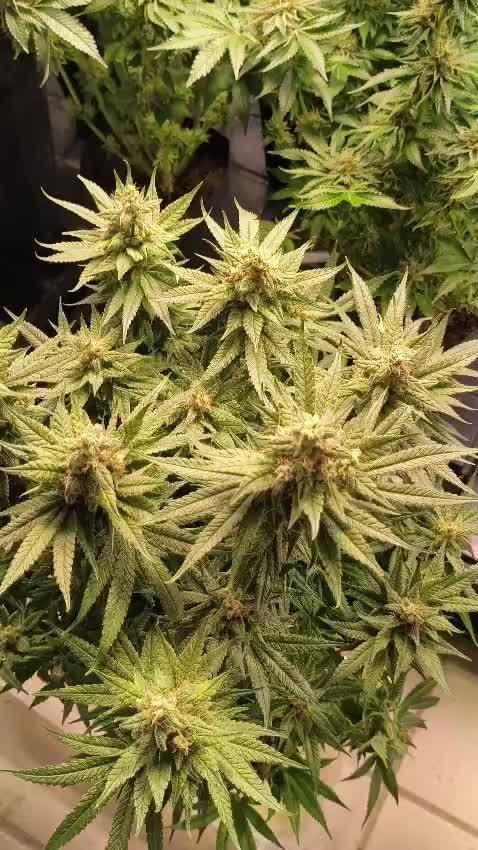
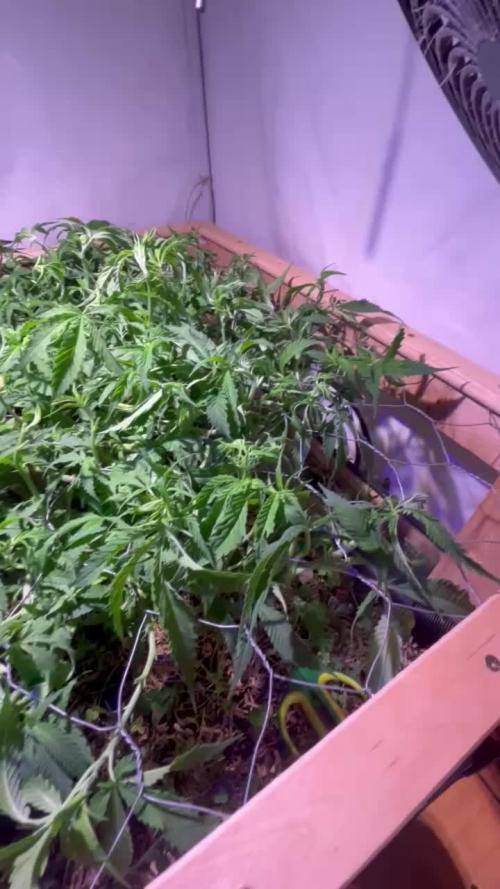
Diese Woche gab es nur eine größere Aktion. Ich habe sie einmal großzügig entlaubt, damit wieder mehr Licht und Luft an die Pflanze kommt.
Ansonsten habe ich sie einfach weiter wachsen lassen. Der Grow läuft weiterhin ruhig und sie entwickelt sich sehr gut.


Likes
9
Share


@Rock_n_Roll_Randy
Follow
THERE IS 4 PHOTOPERIODS LEFT IN THE 5X5 TENT. I WILL BE MOVING ALL OF THE PHOTOPERIODS INTO THE 8X8 TENT ONCE ALL THE AUTOFLOWERS ARE DONE, THEN I WILL SWITH THE LIGHTS TO 12/12
FOR EVERYTHING MARS HYDRO VISIT:
www.mars-hydro.com
www.marshydroled.ca
PROMO CODE: rocknroll
VISIT THE ALIEXPRESS STORE:
@marshydro_aliexpress
Instagram: @marshydropenny
Thanks for taking the time to read and check out my diary🤜🤛
TS3000 FEATURES:
WIDEBAND SUNLIGHT FULL SPECTRUM LED GROW, Infinite close to natural sun light, suit for all plants whole stages indoor growing, rapid plant response from seed to flower, achieve maximum quality and quantity, much better than traditional HPS grow systems.
HIGH REFLECTIVE & NOISE FREE-Fanless LIGHT BOARDS design will make your growing life easy and quiet, quickly heat dispersing material aluminum reducing light lost to aisles and walls, increase the light intensity up to 20%, allowing your plants receive more energy and without burning your plants for maximum headroom.
HIGH EFFICIENCY ENERGY SAVING PLANT LIGHT, high-power NEW LED grow, Compares to traditional 3000 watt HPS lamp and other brand led grow light while only 450 watts true output with 1016 LEDs, more scientifically and energy-efficient! Perfect for 5' x 5' veg stage, 4' x 4' bloom stage, higher intensity in a MARS HYDRO grow tent, reflective area, or by crossing over using multiple TS3000.
BOOM YIELD LARGE GROW LIGHT, NEWEST SMD LED technology provide highest PAR/LUMEN output(1095.6umol/), makes you get 30% higher yield compare OLD led lights, can get max yield at 2.5g/watt, less pay but get more yield, bring a amazing grow trip to any home grower as it beams huge amounts of light energy to plants below.
COMMERCIAL LED GROW LIGHT, Updated easy dimming & daisy chain function, main light controlled, especially come with two waterproof and dimmable Mean Well Drivers, auto sensing power supply works on both 120VAC and 240VAC and 277VAC, suit for Large Rooms and Commercial Setups.
Low Energy-Consuming LED Grow Light: Consuming 300w and also mounted with 1016 chips, TS3000 has the ability to replace a 450w HPS light while reducing 40% power intake.
High Efficiency LED Grow Light: With overall light output PPF 343umol/S as well as amazing PPE 2.3 umol/j, it's 50% even more photon efficient and can assure a 30% more return than the old HPS/MH lights.
Patent Highly-Reflective Hood Shape: The reflector design on TS3000 is patented, which can effectively gather the light dispersed in all directions to enhance its light intensity as well as assist plants in absorbing more light.
Full Spectrum Plants Favorite Spectra: By the unique mix of spectra that makes most light in the 400-700nm waveband, incredibly conducive to plant photosynthesis. Adequate IR(730-740nm) is additionally consisted of in the range to generate larger buds.
Dimming And Daisy Chain Feature Available: Upon an independent dimming button on the external driver, backing 0-100% settings adaptation and up to 30 LEDs daisy-chained in a group, it supplies different light levels for various plant stages meanwhile saving energy.
Safety Certifications And Service Warranty: CE, ETL, RoHS, UKCA security certifications accepted, 50,000 hours durability, 5-year service warranty, and local after-sales repair
5x5 GROW TENT:
LOCK ALL LIGHT INSIDE MARS HYDRO Indoor Grow Tent interior is made of diamond mylar which is highly reflective. (Other brand's mylar and reflective rate is as low as 50%, won't provide efficient light. )MARS HYDRO 1680D canvas, being double stitched, it is tear proof and has perfect light locking. Mars Hydro's grow tent keeps 100% lighting beams inside and helps your plant absorb more lights. EXTRA-THICK --No light leaks or rips at all
DURABILITY GROW TENT Stable metal corner adapters and poles are the trustful supporters of the tent, standing sturdy, neither rusting nor paint-falling, quick easy tool-free installation. Mars Hydro's heavy-duty metal zippers, with double layer black lining, are the best on the market which create a light-proof seal
EASY OBSERVATION FOR YOUR PLANTS. Special observation windows are made by double layers of cloth. Observe the growing conditions of your plants without opening the tent and avoid disturbing plants. The observation window also serves to dissipate heat and ventilate air
AUTOMATIC 6 INCH EXHAUST FAN KIT W/ CONTROLLER:
Mars Hydro 6'' Inline Fan uses a mixed-flow design to maintain peak performance in a high static pressure environment.
GROW TENT FAN: MARS HYDRO inline fans are designed to ventilate hydroponic grow rooms, transfer heating/cooling, cool AV closets, and exhaust odors.
EFFECTIVE VENTILATION: Variable speed controller for easy fan speed adjustment. Optimal ventilation for your planting.
LOW NOISE LEVEL: Durable plastic fan housing and blades for extremely low noise(32dB-A); create a truly quiet growth environment.
EASY INSTALLATION: Removable duct ends with locking tabs for quick removal and easy maintenance and a cord length of 4.9 feet for hassle-free setup. This grows tent fan with a controller for easy fan speed adjustment.
BASIC PARAMETERS: Ventilation exhaust fan size: 6” | Dimensions: 315mm*225mm*210mm. | Weight: 2.7. | Airflow: 402CFM | Noise: 32dB-A | Bearings: Dual Ball.

Likes
125
Share


@LegacyMarketFarm
Follow
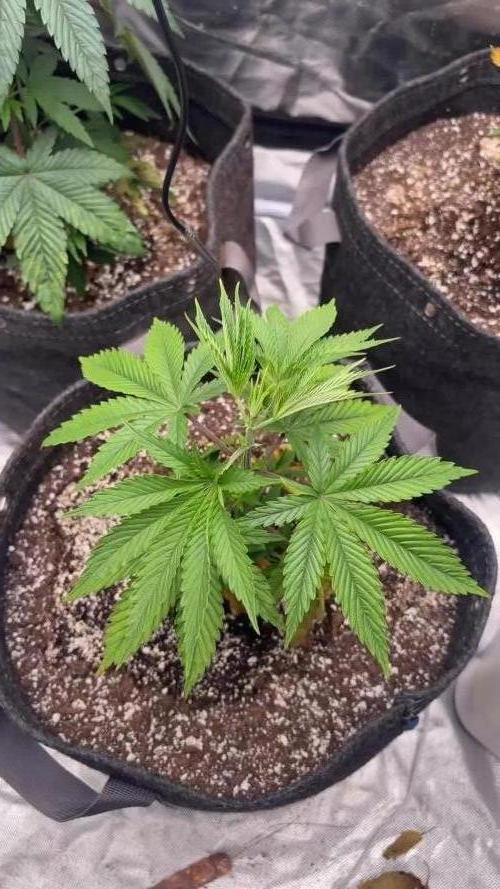
MAY 20TH - TODAY is the first day the plants wake up from their 18/6 cycle down from 2 weeks at 20/4. They got their first SCHWAZZE and shaping at this stage getting them ready to grow into the beautiful sea of green each of these beds are to become. The uniformity of the clones reminds me how much of this has become muscle memory to me, From doing thousands of plants per grow this has become second nature for me. The ladies are 100% organic at this point and our feed I am considering releasing it for anybody who is interested as a way to fund raise at the same time !
If anybody is interested in the recipe let me know in the comments, If we get enough interest I will put up a site that will constantly update with each weekly feed & steps done on the plants.
ANNOUNCEMENT :
** It has taken me 20 re trys & double the amount of ERROR codes to get this update LIVE. I will be staying on this website until the end of this grow year, Then I will be setting up a Patreon & migrating over to Patreon and Twitter ( X ) I am completely done with GROW DIARIES.**
SUPPORT OUR SPONSORS !!!
PROMO CODE GREEN PLANET : LEGACY
PROMO CODE MARS HYDRO : LEGACY
PROMO CODE SEEDSMAN : LEGACY10
MAY 22ND 2024 - SCHWAZZE COMPLETED YESTERDAY. These photos where taken DIRECTLY after their SCHWAZZE. NOW 2-3 WEEKS of 18/6 then another SCHWAZZE, Top DRESSING of Mineralized Phosphate, Power Bloom and Glacial Rock Dust and swap to 14/10. We will be using 14/10 for 3 weeks then going to 12/12 to flower these beauties out.
MAKE SURE TO FOLLOW OUR SOCIALS & JOIN OUR GREAT COMMUNITIES !
TWITTER : https://x.com/LegacyMrketFarm
YOUTUBE : www.youtube.com/channel/UCR89iF2Iqy3zlHZhFfU2MMg
YOUTUBE GAMING : www.youtube.com/channel/UCw8-qCFg-PUf00waTO5JOGw


Likes
33
Share


@cheetah844
Follow
Sadly OG Kush didn't survive the kitty attack ⚰️
I did put in an extra REG Blueberry OG when I first started all of the seeds so I will replace this journal & updates with that 2nd Blueberry OG. I'll update with that starting next week, it is the same age as all these other plants.
I just have a feeling it's going to be a male though, it's running for the sky very early on versus the other Blueberry OG.
Likes
195
Share


@StarLorr
Follow
Hello 👋🏻 Readers,
The triplets are coming along very nicely😀
I've been keeping the RH roughly around 34% in day time and 45-48% at night.
Last Sunday night(march 26th) upon one of my visit into the grow room to check the RH % i was received by and strong pungent berry/skunk mix odour...
It almost brought tears to my eyes😁
So i have been using the intake fan since and also it helps keeping the Humidity down to the proper flowering appropriate range, also i still keeping the room's window cracked open during daytime with some fresh cold Canadian CO2(air) coming in and that way the temperature doesn't rises to high in the grow tent.
To help allege the numerous trips into the grow room to verify the Humidity and Temperature I ordered online a WiFi humidity/temperature control sensor system, which at first is for mainly being able to verify to humidity and temperature levels with the app on my phone😅
order is out for delivery as i am writing this weekly update😁
News from the clones, they're out of the grow tent as of Friday, potted them in coco and perlite for now and trying to get them to back at VEG as them tiny buggers flipped and have tiny pistils on and top leaf turned black, since I don't have a back up tent nor a grow light i am switching them from the kitchen in the morning and dining room on afternoon....😂😅
Hopefully they'll restart VEG🤞🏻
That all said ... thanks for stopping by and hope you enjoy the pictures and the video.
Feel free to leave a comment and hit the like button and wish you all a great week and keep on growing!!
👊🏻😃

Likes
23
Share


@eldruida_lamota
Follow
Buenas noches familia, os prometo que os deje lo mejor para el final, esta semana podéis ir despidiéndoos, ya que me parece que va a ser la última semana ✂️.
Cambie de teléfono y las fotos son increíbles.
El olor de nuestra indica es BRUTAL, huele muy fuerte a cítrico , tiene una pintada terrible, estoy deseando tener estas flores secas.
Los cogollos brillan a la vista por una capa de tricomas... se nota sus 18% de Thc.
Es una cepa que es 100% válida para proyectos SOG.
Genética cruzada con Chemdawg x Lemon Thai x Pakistani Kush.
-realizamos un estrés hídrico:
Lo cual es regar las últimas semanas en el mismo periodo de tiempo, pero reduciendo las cantidades de riego progresivamente.
Zambeza a hecho un gran trabajo con esta cepa y no hay más que verla... 👏

Likes
1
Share

@avan1garde
Follow
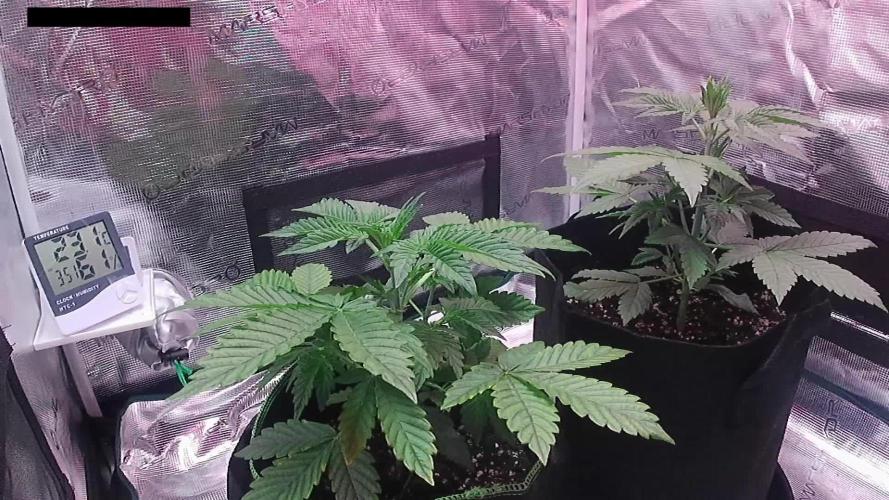
Very bushy grow, gonna have the net up soon to spread the leaves out a bit.

Likes
1
Share

@TrickzCutz
Follow
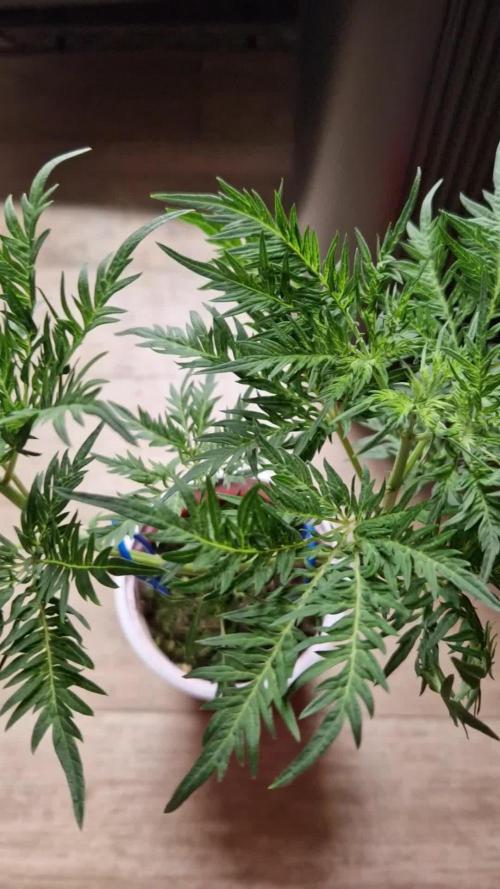
Servus Moin!
Die MDC #2 macht sich ganz gut. Ich kann mich nur über die unteren Triebe ein wenig beschweren. Sie wachsen leider nicht so stark mit.

Likes
151
Share


@PapaNugs
Follow
A good week in the bag. The girls seem to be doing well this round. They look healthy. They are getting water twice a week at this point. Everything's on track.
There is one girl that has three leaves per node. Can't remember what that's called but it'll be fun to grow out

Processing
Likes
12
Share


@Homegrown_Meds
Follow
This week I found a hermaphrodite amongst the ladies. I got rid of it but not before it dropped a little pollen 😭.. I,ve got my fingers crossed 🤞
Likes
35
Share


@madlangs
Follow
All going very well. No problems. All growing strong. It’s so much easier with autos indoors than it is outdoors temps went down to 28c in room. Apart from two days at 30c
19.5.21
Dg 6.2. 2.5L week 2 half strength
Wc 8.0. 1L week 2 half strength
Gb 8.0 1L week 2 half strength
Chem 8.3 1L week 2 half strength
Hubba 8.8 1L week 2 half strength
Cream 8.2 1L week 2 half strength
Gave all recharge. Mammoth p and 1ml silica
Used fish instead of grow ph6.4. Ec 800
22.9.21
Dg 3L
Gb 1L
Week 2 half strength gave fish instead of grow ph6.4
23.9.21 white crack got its first pre flower
24.9.21
Dg 4L
Wc 2L
Gb 2L
Gave all half strength veg, fish instead of grow. Recharge. Mammoth p and 0.5mlL silica ph6.4 ec800
24.9.21 Gave dg a good defoliation
25.9.21
Dg 35cm
Wc 19cm
Gb 23cm
Chem 14cm
Hubba 8cm
Cream. 13cm
Orange 1 5cm
0range 2 6cm


Likes
19
Share


@GoldenWeedGrower
Follow
Legend
Timestamp: 📅
EC - pH: ⚗️
Temp - Hum: 🌡️
Water: 🌊
Food: 🍗
pH Correction: 💧
Actions: 💼
Thoughts: 🧠
Events: 🚀
Media: 🎬
D: DAY, G: GERMINATION, V: VEGETATIVE, B: BLOOMING, R: RIPENING, D: DRYING, C: CURING
________________________________
📅 D84/B22 - 07/02/24
⚗️ EC: 1 pH: 5.0
🌡️ T: 19-26 °C H: 55-65 %
🌊 8L
🍗 CalMag - Bloom A-B - B52 - Bud Candy - Big Bud
💧
💼
🧠 The VPD rate was stable on the right value for all the day ! Great, and many thanks to TrolMaster Tent-X !
🚀
🎬 Added Timelapse video and screenshots
________________________________
📅 D85/B23 - 08/02/24
⚗️ EC: 0.8 pH: 5.2
🌡️ T: 19- 24 °C H: 45-80 %
🌊 2L
🍗
💧
💼
🧠 I'm lowering down the EC as I see signs of burns on tips
🚀 Humidity went out of control for about 2h
🎬 I made a photoset with "Garlic Puppy" enjoy the pictures 😋. Added Timelapse video and screenshots
________________________________
📅 D86/B24 - 09/02/24
⚗️ EC: 0.8 pH: 5.2
🌡️ T: 20-26 °C H: 50-70 %
🌊
🍗
💧
💼 Little defolation
🧠
🚀
🎬 Added Timelapse video and screenshots
________________________________
📅 D87/B25 - 10/02/24
⚗️ EC: 0.8 pH: 5.2
🌡️ T: 22-24 °C H: 55-65 %
🌊
🍗
💧
💼 Little Defolation
🧠 The buds are forming
🚀 Today VPD was very stable
🎬 Added Timelapse video
________________________________
📅 D88/B26 - 11/02/24
⚗️ EC: 0.7 pH: 5.2
🌡️ T: 20-25 °C H: 50-77 %
🌊
🍗
💧
💼 Little Defolation
🧠
🚀 Humidity went out of control for about 2h
🎬 Added 8 pics of Nicole, the timelapse video and the screenshots
________________________________
📅 D89/B27 - 12/02/24
⚗️ EC: 0.7 pH: 5.5
🌡️ T: 19-25 °C H: 50-70 %
🌊 4L
🍗 CalMag - Bloom A-B - B52 - Bud Candy - Big Bud
💧
💼
🧠
🚀
🎬 Added timelapse video and screenshots
________________________________
📅 D90/B28 - 13/02/24
⚗️ EC: 0.9 pH: 5.8
🌡️ T: 19-25 °C H: 50-70 %
🌊 4L
🍗 CalMag - Bloom A-B - B52 - Bud Candy - Big Bud
💧
💼
🧠
🚀
🎬 Added timelapse video and screenshots


Likes
2
Share


@Boomdrawfyah
Follow
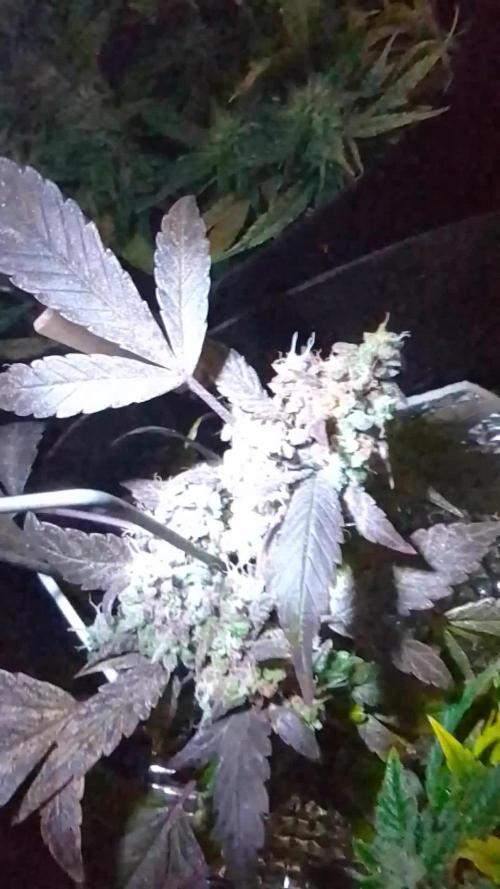
Dia 91 la 4 semana de floración , la 1051 va mucho mas avanzada que las demás, hay algun problema con la mosca blanca aunque ya hemos pedido depredadores para combatir con ella de manera biologica, la Glow Starz y la White Noise van mucho mas atrasadas aunque se ven mucho mejor
Processing
Likes
19
Share


@UKLEEDSGROWER
Follow
4th day in flower here, plants have doubled in size since a week or so ago. Once again very nice healthy colour to the girls really impressed so far, not a hint of stress shown from the plants at all, very hungry the soil is becoming dry everyday they just take everything I give them.
