Likes
Comments
Share
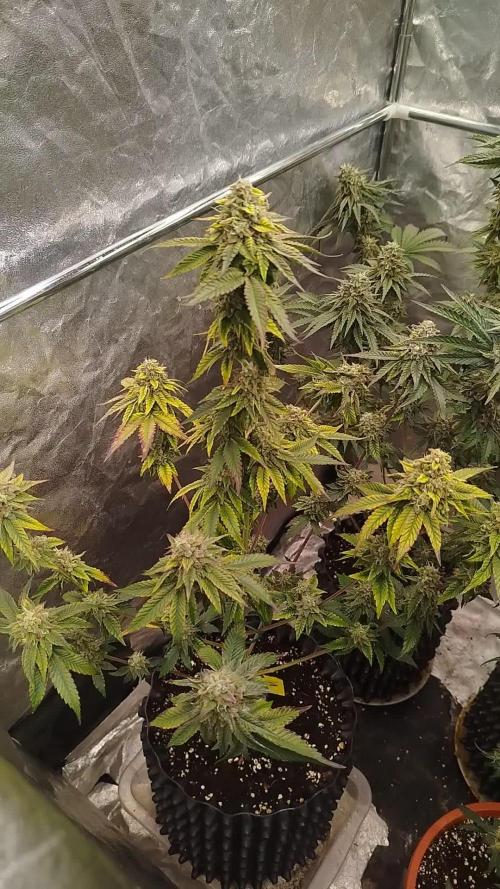
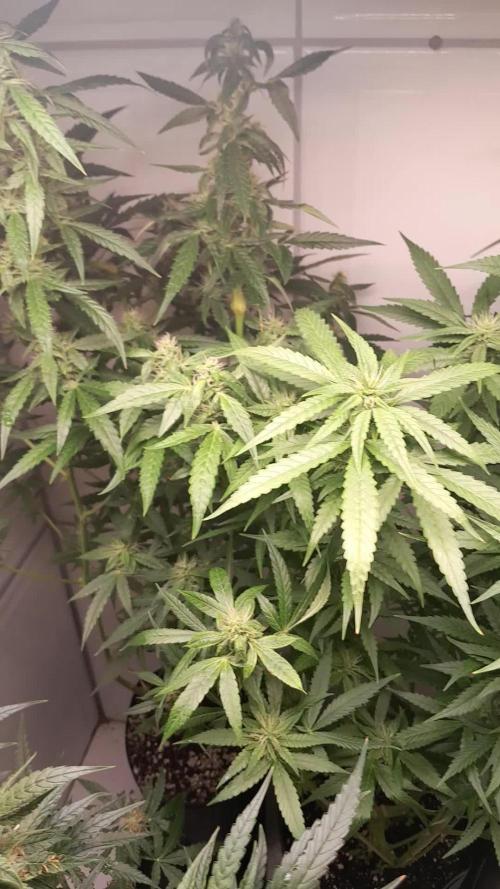
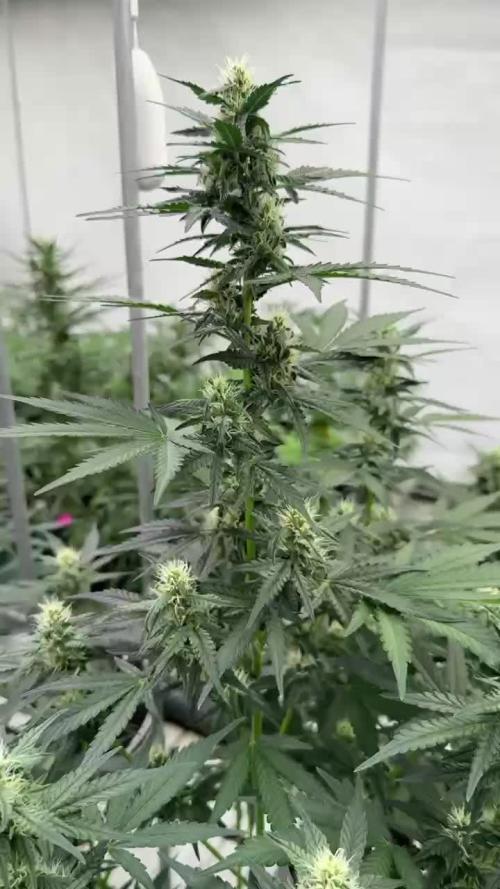
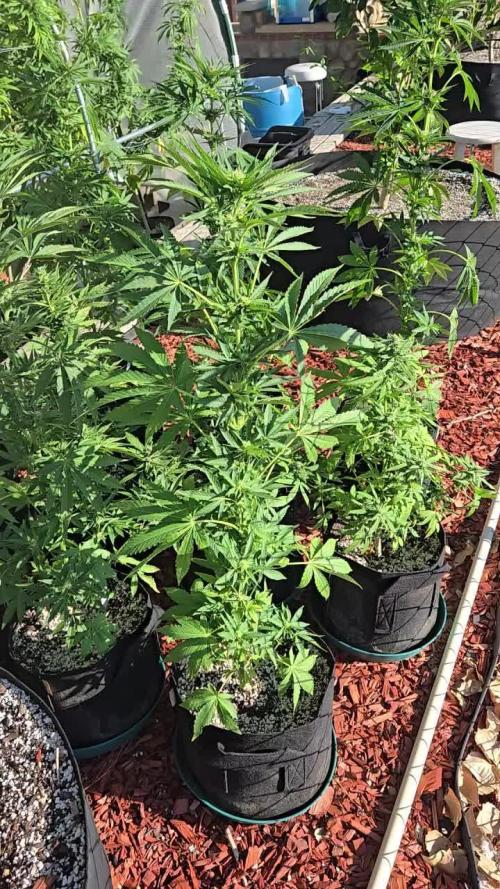
Week 8 10-14 Water, both drinking around 750 ml a day! Pretty much just fun with pictures from here. Kosher still seems a bit hungry, but doing awesome! Ztrawberriez is just nasty! Cant seem to get good enough pictures! Lol 10-17 Water and Guy was up to no good! đŸ˜» 10-15 Guy stopped in to pose today! 10-19 Flushed both today. I thought they should be low on food, but I over loaded again, I guess. K ppm starting was 1200, now 440 Z 1050 now 310 Sheesh! One day I may Not over feed. đŸ€Ł I even thought 2 tbs was light. đŸ€Ł .
Likes
5
Share
@Bryankush
Follow
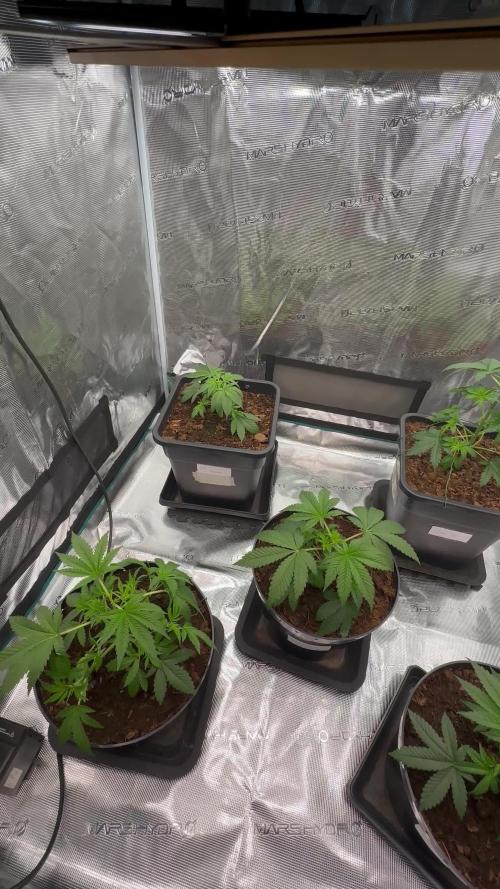
Molto bene le ragazze si stanno ingrassando rapidamente e mangiano bene😈, sono congelate😁 Giorno 2 annaffiata con 2L di acqua Giorno 6 in un qualche modo sono riuscito a guadagnare quei 10 cm di altezza sulla lampada per crescere bene la cima centrale😅😁
Likes
3
Share
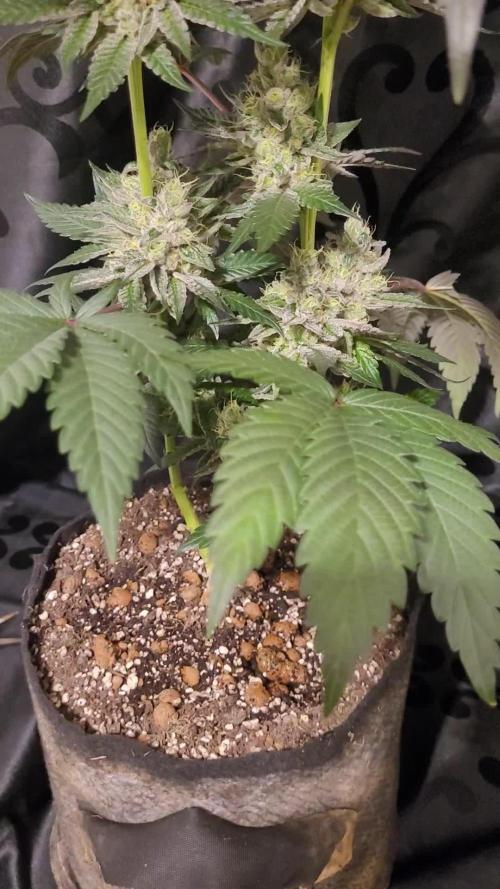
Hi all, End of week 6 flowering, this week I noticed some of the plants seemed to have nutrient burn from overfeeding even though I had lowered the EC from previous run. So all the plants got flushed with 6.2 pure RO water and the run off measured 1.2 EC with 5.9 PH so I will give them a second flush in the coming week. Also the plants are becoming unstable due to the nicely forming dense fat nuggs so need to keep humidity under control to avoid bud rot and tie them up for support.. Happy growing, 💧 Watering: Every fith feed đŸŒĄïž Temp: 24–28.5°C 💩 Humidity: 57% RH 📈 VPD: ~1.2 kPa 💡 Light: ~850 PPFD 💹 C02 900 ppm Ttfn Skuuly
Processing
Likes
29
Share
@Grey_Wolf
Follow
Ginger Nut Cookies & Aussie Music Videos Week 16 Harvest 17 th April 2020 This Entire feminised seed making and growing project was a very good learning experience for me. Right from the very start, when I successfully got a Cutting ,taken from a Barneys Farm Red diesel female plant to produce feminised pollen after treating it with a silver thiosulfate solution. I then used it to pollinate a Fastbuds Girl scout cookies auto plant and let it grow to maturity. This only produced 3 viable seeds one of which is the subject of this Diary. I made up the name "Ginger nut cookies" after a variety of cookies we have here in Australia that are made with ginger. They are the same colour as the distinct red hairs on the red diesel buds. And would you believe those same vivid red hairs were passed on to this plant so I wasn't too far off the mark with the strain name. Her flavour however is nothing like red diesel or girl scout cookies and infact as taken on a smell and aroma all of it's own. She has a lovely tropical fruit like taste and the smell is a bit like fruit yoghurt. It has an unreal after taste on the exhale and the lingering second hand smoke smells very sweet and enticing. She has a pretty well balanced high too not as potent as the GSC nor as energenic as the red diesel but just a pleasant mix of the two. It was a very easy to grow and undemanding plant that didn't seem to require a lot of extra feeding other than the 100% organic nutrients that were within the soil and a few things like compost teas etc. The other element of this diary was of course the weekly Aussie music videos That I provided the links for and put up a little video clip preview of each Artists song. Week 1 Dance Monkey Week 2 Gotye Week 3 AC/DC Week 4 INXS Week 5 Dire straits Week 6 Yothu yindi and Midnight oil Week 7 Divinyls Week 8 Was Request week where I asked growers to pick and because only 3 growers put in a request I decided to choose all three which were Kylie Minogue , Flume & Airbourne Week 9 Paul Kelly Week 10 Daddy Cool Week 11 Cold chisel Week 12 Jimmy Barnes Week 13 The Angels Week 14 Crowded House Hoodoo gurus Mental as Anything Week 15 Empire of the sun Big Pig , Silverchair , Peking duk Grinspoon , Hilltop hoods and the White stripes And Finally for the last lot of music videos I have chosen another multi list bonanza of Aussie Music with the artist/s name and Youtube link below. So in no particular order here are my last choices for this Diary its been a fun grow with a steep learning curve. John Williamson True Blue https://youtu.be/ceWKrsJX9N4 Nick Cave and Kylie Minogue Where the wild roses grow https://youtu.be/lDpnjE1LUvE John Farnham Your the Voice https://www.youtube.com/watch?v=tbkOZTSvrHs Powderfinger Pick you up https://youtu.be/4Ha-dtNXTM8 Slim Dusty Pub with no beer https://www.youtube.com/watch?v=8E0aZ387M_I Men At Work Down Under https://www.youtube.com/watch?v=XfR9iY5y94s Icehouse Great southern land https://www.youtube.com/watch?v=3mkidP2OUCk Before I go I'd like to thank all of you who read & like my diary updateseach week you are all awesome!! This is a great platform full of great growers and great people : 1: The End.......
Likes
9
Share
A planta segue bem parou de crescer na Ășltima semana e começou a engordar as flores.
Likes
13
Share
Recette du tco pour 20 litres. (Grammes : gr) 50gr biochar 250gr zĂ©olite 3gr granulĂ© Micro-Organisme IT45 10gr pollen d’abeilles 10gr levure de biĂšre 3gr endomychorize 10gr consoude 20gr vers de farine 10gr cendre coque de ricin 12gr ortie microniser 15gr Kelp 10gr spiruline 10gr de cbd living soil 20ml de miel liquide 30ml de mĂ©lasse 20ml d’acide humiques et fluvic Mettre tous les ingrĂ©dients (sauf la mĂ©lasse ,l’acide h/f et le miel) dans un filtre 400micron, le placer dans un seau avec de l’eau (10litres). Rajoutez le miel et 10ml de mĂ©lasse Y mettre un micro bulleur alimenter sur une pompe Ă  air et faire oxygĂ©nĂ© le mĂ©lange pendant 24h. Rajout de 10ml de mĂ©lasse aprĂšs 12h le dĂ©but de la mise en route de la pompe. A la fin des 24h rajoutez le restant de mĂ©lasse et d’acide h/f, mettez y en plus 10litres d’eau au mĂ©lange. Reste plus qu’à arroser! j’y ai incorporĂ© 7litre de mĂ©lange La veille j’ai prĂ©parĂ© le pot Ă  l’arrosage avec 500ml d’eau et 2gr de Bacillus IT35 Amyloliquefaciens X5 Bacillus Amyloliquefaciens : rhyzosphĂšre, probiotiques. Aspersion et arrosage. Utilisable pour toutes cultures. La bactĂ©rie Bacillus Amyloliquefaciens se fixe dans la rhizosphĂšre en se nourrissant des exsudats racinaires. En contrepartie, elle stimule la croissance racinaire en sĂ©crĂ©tant des mĂ©tabolites de croissance et solubilise le phosphore en sĂ©crĂ©tant des phytases (enzymes). Effet probiotique consistant en l’utilisation de micro-organismes bĂ©nĂ©fiques pour la nutrition et la santĂ© des plantes. La spiruline, le plus riche et le plus complet des amendements organiques La Spiruline est une algue aquatique connue comme complĂ©ment alimentaire, la Spiruline est aussi un amendement organique et Ă©cologique trĂšs complet. D'une grande qualitĂ© nutritive, elle apporte Ă  vos plantes une quantitĂ© de nutriments, dont l'azote, phosphore, potassium, minĂ©raux, acides aminĂ©s, vitamines, chlorophylle et protĂ©ine. Le charbon vĂ©gĂ©tal actif est capable d’absorber jusqu’à cinq fois son poids propre en eau ainsi que les Ă©lĂ©ments nutritifs qui s’y trouvent. Il joue ainsi le rĂŽle de catalyseur et d'amplificateur pour les fertilisants traditionnels, qu'ils soient d'origine organique ou minĂ©rale. Ce pourquoi il est idĂ©al pour activer un sol et pour les thĂ©s de compost oxygĂ©nĂ©s. Le charbon vĂ©gĂ©tal amĂ©liore la diffusion et la disponibilitĂ© des Ă©lĂ©ments nutritifs dans le sol et offre des conditions propices au dĂ©veloppement des micro-organismes. Le Biochar peut ĂȘtre introduit dans une grande variĂ©tĂ© de sols. Il est particuliĂšrement efficace dans les sols pauvres, difficiles et acides. Pour faire agir rapidement et efficacement sa capacitĂ© d’amendement, le charbon vĂ©gĂ©tal est enrichi et biologiquement activĂ© avec des micro-organismes. Le Biochar se comporte ainsi comme un structurateur et un activateur dans le but de valoriser les sols. Composition : ‱ Charbon vĂ©gĂ©tal actif 31%‹‱ MatiĂšre organique 33%‹‱ MatiĂšre sĂšche 75%‹‱ C/N : 17‹‱ PH : 7,2‹‱ Azote (N) : 2,1 % dont 1,2 % azote organique‹‱ Phosphore (P205) : 0,74%‹‱ Potassium (K20) : 1,18%‹‱ Calcium (Ca) : 6,8%‹‱ MagnĂ©sium (MgO) : 0,65% Le pollen est l'ingrĂ©dient de base de la fabrication du miel par les abeilles. Riche en vitamines et minĂ©raux, il est qualifiĂ© « d'aliment parfait », y compris pour les plantes ! Les zĂ©olithes sont des roches cristallines, prĂ©sentant des capacitĂ©s d'adsorption particuliĂšrement importantes vis Ă  vis des polluants que l'on rencontre dans l'eau et dans certains liquides, ainsi que dans l'air et les gaz. Elles sont extrĂȘmement poreuses comme les charbons activĂ©s et elles peuvent ĂȘtre chargĂ©es Ă©lectriquement pour opĂ©rer comme des Ă©changeurs d'ions. La zĂ©olithe est un produit naturel qui respecte notre environnement. UtilisĂ© dans le milieu industriel depuis de longues annĂ©es dĂ©jĂ , ce minerai aux propriĂ©tĂ©s filtrantes particuliĂšres commence Ă  se vulgariser dans le domaine de la piscine privĂ©e, de l'aquariophilie, des bassins d'agrĂ©ment, de la rĂ©cupĂ©ration des eaux de pluie, ou encore de la culture des bonsaĂŻs et autres plantations diverses par exemple... 4 points techniques majeurs : - GrĂące Ă  leur propriĂ©tĂ© hydrophile, les zĂ©olithes peuvent adsorber l'eau jusqu'Ă  30% de leur poids total et sans aucune variation de volume : pas de gonflement en prĂ©sence d'eau ni de craquement en cas de dĂ©shydratation comme certaines argiles. Les zĂ©olithes sont d'ailleurs de puissants agents anti-mottant (anti-agglomĂ©rant). Cette propriĂ©tĂ© est trĂšs apprĂ©ciĂ©e dans le cas des terrains de golf et autres aires de jeux. - Les zĂ©olithes ne captent pas l'eau de façon irrĂ©versible, elles se comportent comme une rĂ©serve au voisinage des racines. Celles-ci peuvent capter l'eau en fonction de leur besoin. Les zĂ©olithes permettent ainsi de rĂ©duire les besoins d'arrosage jusqu'Ă  35 %. - Une zĂ©olithe se comporte comme une "Zone de Stockage" qui retient l'azote et les Ă©lĂ©ments minĂ©raux nutritifs au voisinage des racines et les relĂąche lentement en fonction des besoins de la plante. Cela se traduit par une croissance harmonieuse mais rapide du vĂ©gĂ©tal. - La capacitĂ© d'adsorption et l'Ă©norme rapport surface/volume des zĂ©olithes, vont permettre Ă  la fois la rĂ©tention de la solution du sol et une bonne oxygĂ©nation au voisinage du systĂšme racinaire. Les zĂ©olithes favorisent donc l'organisation biologique des sols en contribuant au dĂ©veloppement de la micropopulation. L'apport en nutriments (N, P, K) est rĂ©duit de 20 Ă  25 %. Ces derniers, adsorbĂ©s par la zĂ©olithe, sont beaucoup moins sensibles au lessivage et Ă  l'Ă©vaporation. Composition minĂ©ralogique : * Chabasite 70 % * Phillipsite 2 % * Feldspath 5 % * Augite 3 % * Illite - Mica 2% Analyse atomique: * Sio2 52 % * AL2o3 17 % * CaO 5,7 % * K2O 6,1 % * MgO 2 %, * Na2O 0,6 % * Fe2O3 3,6 % Amendement calcaire, dolomie et gypse avec prĂ©paration microbienne Ă  base de Bacillus Amyloliquefaciens IT45 et Saccharomyces cerevisiae LYCC6420 Formulation : micro granulĂ©s (1 – 1,6 mm) Ă  base de rhizobactĂ©ries favorisant la croissance des plantes qui se multiplient et colonisent rapidement la zone des racines, et de levures Saccharomyces cerevisiae souche LYCC ayant un effet probiotique. Les PGPR produisent des enzymes qui solubilisent le phosphore Ă  partir de complexes inorganiques et organiques dans le sol et stimulent la croissance des racines efficaces augmentant ainsi la zone d'interception des Ă©lĂ©ments nutritifs. Les levures LYCC permettent une occupation de la rhizosphĂšre par une flore bĂ©nĂ©fique. Composition :‹‱ MatiĂšre sĂšche : 96,8%‹‱ MatiĂšre organique : 91,5%‹‱ N total : 6,6% dont N soluble dans l'eau 0,17%‹‱ P total : 2%‹‱ K total : 1,7% Micro-granulĂ©s : ‹‱ Oxyde de calcium (CaO) total : 30%‹‱ Oxyde de magnesium (MgO) total : 7%‹‱ Anhydride sulfurique (SO3) : 13% La levure de biĂšre est une matiĂšre vivante qui permet un meilleur fermentation pour les thĂ©s de compost oxygĂ©nĂ©s notamment conseillĂ© pour accompagner les croissances ou apporter un gros coup de pousse pendant la floraisons. La levure stimule la vie des sols Ă©galement Ă  l'arrosage direct en apportant tout aussi bien que dans le TCO sa population l'espĂšce micro-bactĂ©rienne positive pour votre sols ainsi que des oligo-Ă©lĂ©ments et diverse vitamines. Composition : ‱ 2,8% (N) total dont 1% (Norg), ‱ 2,3% (P205) ‱ 1,6% (K20) ‱ 35% de MO ‱ C/N : 8. PH : 8,4. Sous forme de poudre mouillable. Il contient des spores du champignon mycorhizien Rhizophagus Irregularis MUCL57891 avec des levures inactivĂ©es spĂ©cifiques. 2000 spores/gramme d’endomycorhize Rhizophagus Irregularis MUCL57891 et Saccharomyces Cerevisiae LYC6420 inactivĂ©e. Se connecte efficacement au systĂšme racinaire et forme un vaste rĂ©seau souterrain de filaments, qui agissent comme des extensions pour atteindre les nutriments et l’eau au-delĂ  de la rhizosphĂšre Composition : ‱ Poudre contenant 2000 spores/g. d’endomycorhizes Rhizophagus irregularis La Consoude (Symphytum Officinale) est une plante prĂ©sentant de nombreuses propriĂ©tĂ©s. ParticuliĂšrement riche en Potassium (K) organique, la consoude est une alliĂ©e idĂ©ale pour les pĂ©riodes de floraison. La consoude a tout pour plaire : riche en vitamine B12, elle agira Ă©galement comme stimulateur racinaire, mais aussi comme biostimulant cellulaire, grĂące aux alcaloĂŻdes, aux allantoĂŻnes et jusqu'Ă  30% de protĂ©ine ! 100% dĂ©jection de vers de tĂ©nĂ©brions.‹TrĂšs riche en microorganismes, le guano de vers de farine est une matiĂšre directement compostĂ© par les vers. En effet, c'est bien la digestion de matiĂšres vĂ©gĂ©tales par des larves, insectes ou autres arthropodes qui valident le processus de compostage, que ce soit en zone de production de cultures d'insectes, pour le compost maison ou la dĂ©gradation de litiĂšre forestiĂšre. Les bactĂ©ries et autres champignons obtenus grĂące au systĂšme digestif de nos vers, permettent la dĂ©gradation accĂ©lĂ©rĂ©e des Ă©lĂ©ments nutritifs dans vos supersoils, et les symbioses permettant l'assimilation des Ă©lĂ©ments nutritifs. Cette bio-activation intense mettra dans vos sols, Ă  la disposition de vos plantes, un panel tellement variĂ© de nutriments frais qu'il nous est aujourd'hui technologiquement impossible de pouvoir tous les nommer et de les compter. Le guano de vers de farine fournit une grande polyvalence. TrĂšs Ă©quilibrĂ©, il s'utilise en entretien ou en apport ciblĂ© seul ou en complĂ©ment de d'autres amendements ou fertilisants organiques. Il agit comme un puissant activateur de sol et/ou de substrat. Cendre coque de ricin NPK 0,1-18,6-16,5. 0,1% (N-Azote), 18,6% (P205-Phosphore), 16,5% (K2O-Potasse), 11,7%(Ca0), 9,1 (Mg0) - Origine : Inde ACTION SOL ‱ rend rapidement accessible au sol Phosphore, Potasse, MagnĂ©sium et Calcium. ACTION PLANTE ‱ Apport aux stades agronomiques propices. ‱ Produit riche en Ă©lĂ©ments fertilisants : combinaison NPK 35%. ‱ RĂ©gularitĂ© de l’apport, milieu et fin de floraison. . Favorise la sĂ©nescence. Analyse chimique : ‱ NPK 0,1-18,6-16,5 ‱ N-Azote 0.1% ‱ P205-Phosphore 18,6% ‱ K2O-Potasse 16,5% ‱ CaO-Calcium 11,7% ‱ MgO-MagnĂ©sium 9,1% Ortie bio micronisĂ©e Stimule la vie du sol et la vĂ©gĂ©tation. Composition : ‱ 2,8% (N) total dont 1% (Norg), ‱ 2,3% (P205) ‱ 1,6% (K20) ‱ 35% de MO ‱ C/N : 8. PH : 8,4 KELP poudre‹ascophyllum nodosum‹- amendement sol Croissance et floraison - Meilleure germination - Meilleur dĂ©veloppement racinaire Meilleure assimilation - RĂ©sistance aux stress osmotiques - Augmente la production de chlorophylle = plantes plus vertes = lumiĂšre mieux captĂ©e - Lutte contre le stress osmotique - DĂ©veloppement des Micro-Organismes dans le sol – Riche en vitamines, fer, iode, oligo-Ă©lĂ©ments, hormones de croissance auxines et cytokinines - IdĂ©al en Ă©pandage et pour les thĂ©s de compost oxygĂ©nĂ©s. Important : notre Kelp est un goĂ©mon noir mais il n'est pas le varech bien moins fertile de la mĂȘme famille qui est l'algue qui pullule et pollue la Bretagne, notre algue pousse uniquement Ă  plus de 50 mĂštres de fond dans les grands courants froids au large de la NorvĂšge.
Likes
7
Share
Day 70. Gorgeous plant. Leaves are changing color exactly how the advertisement looks. Fastbuds is dope.
Likes
17
Share
----------------------------------------------------- ~SWEET SEEDS JACK 47 STRAIN DESCRIPTION~ ----------------------------------------------------- A 3rd generation Autoflowering strain, this hybrid is the result of a cross between an Autoflowering Jack Herer from the Sweet SeedsÂźïž R&D Department and our elite clone of AK 47. Probably the most potent Autoflowering strain available in the market. This is a very productive Autoflowering plant with abundant, compact and very resinous buds. The aromas and tastes of this strain are sweet, fresh, lemony and with hints of incense. Variety: Sweet Seeds Jack 47 Auto #SWS31 Indica: 20% Sativa: 76.9% Ruderalis: 3.1% THC: 18-21% CBD: 1.1% Indoor Yield: 450-600 g/mÂČ Outdoor Yield: 50-200 g/plant Harvest Indoor / Outdoor: 9 weeks from germination Height: 50-120 cm Effects: Creativity, Psychoactive, Stimulating Taste: Citrus, Lemon, Incense, Cool, Sweet __________________________________________________________________________________________________________________________________________________________________________________________________________________________________________________________________________________________________________________________________________________________________________________________________________________________________________________ MY SETUP: ~Planted into Jiffy Peat Pellets that were hydrated with de-chlorinated water with SuperThrive added then ph'd to 6.0 @ 80℉ ~Grown 100% organic in 10g fabric pots with Mother Earth 70/30 Coco/Perlite medium amended with 2tbs/g of Down To Earth 4-4-4 / 2 cups/g of Earthworm Castings / 1tbs/g of Dr. Earth Flower Girl 3-9-4, 1tbs/g of Dr. Earth Bat Guano, 3/4 cup of Down To Earth Azomite and 1 tsp/g Down To Earth Fish Bone Meal. ~24hr light cycle during Germination / 19/5 light cycle for Vegetation and 12/12 for Flower ~Straight water ph'd @ 6.2-6.8 when needed and weekly Compost Tea's. ____________________________________________________________________________________________________________________________________________________________________________________________________________________________________________________________________________________________________________________________________________________________________________________________________________________________________________________ This was my first time cultivating this strain, also my first introduction to Sweet Seeds and let me tell you I was quite impressed with my first attempt! The Jack47XL Auto was germinated in a Peat Pellet which took seven days for her to break ground. Within two days there were roots popping out of the bottom of the Peat Pellet. After she sprouted it was ON! By week two she had three set of leaves and she went into a 5g fabric pot to live out the remainder of her life. She started out short with tight node spacing and I was thinking she would be a fairly squat plant. But once she started to flower at around Day 30 +/- she absolutely took off on the stretch from hell! As she stretched her node spacing widened allowing plenty of light penetration through her canopy and her foliage never got super bushy requiring removing leaves. All in all she was a growers dream! I let her run for 10 full weeks and after her last Top Dressing at Week Seven she received only straight water that was ph'd to 6.7-6.8. After checking her trichomes daily during Week Ten and determining that she was where I wanted her, I placed her in the dark for 60 hours @ 64℉ and a RH of 45%. When I removed her from the dark I cur her off at her base and hung her whole in my Drying Room where she spent nine days drying @ 64-66℉ with the RH running at 50% for the first 24 hours, then raised to 60% for the remainder of the drying time. Being predominately sativa in her lineage, she grew fairly tall and maxed at 32". In addition to her height her really wide node spacing, which made defoliation or leaf tucking completely unnecessary, was so nice to deal with (or actually to NOT have to deal with!) and because of her structure and the way she grew, I decided not to do any LST other than gently bending a couple of her branches during Week Four when she was still short and bushy. After she was dried I trimmed her up and placed the flowers in two large Mason jars to cure. The flower is currently at 68% RH and I'm 'burping' the jars three times a day until it drops to around 62%. I did do a 'Test Press' with 7g of the flower and saw almost a 28% return of super light colored, almost clear, rosin that is some of the best I've pressed lately! đŸ”„ When you crack the jars your hit in the face with the sweetest aroma you've ever had the pleasure to smell...smell nothing like cannabis, more like a jar full of sugary sweet candy! 😍 Needless to say, I'm hooked on Sweet Seeds and head over heels for their Jack47XL autoflower and can't wait to run her again soon! Go get some of this strain and see if you don't agree! Thank you so very much for following along on my journey, it's all a labor of love for the plant, and I can't express my gratitude enough for all the positive feedback I receive. Stay Blessed and lifted! 😎🙏
Likes
6
Share
@Naujas
Follow
The girl is fantastic :) she looks strong, healthy and happy :) next week, I will defoliate her to give energy to the flowers, and at the same time improve air circulation closer to the stem :) everything is going smoothly and well :).
Likes
1
Share
@Sjake72
Follow
All pics are from the 1st day of each week I upped the nutes considerably this week saw some weird spots forming on several of the plants just figured it was nute lock so i drained a gallon of water from the affected plant and replaced with basic ro ph balanced water to dilute was this the rt thing to do? Will be doing only 50% nutes from here on
Processing
Likes
15
Share
Big Seedbank had delivered some great genetics.. She is going the best out of all the plants... really long branches but a lot of pulp flowers already... She still has easy a month to go and already she looks amazing... Feeding as planned.. fingers crossed 🙏
Likes
11
Share
Final stage approaching. Flush is underway. The plants look healthy and resinous, with a very strong, sweet mango aromađŸ€™
Likes
15
Share
Today pretty much 9 of them had green agae was able to catch it before got deeper cleaned out the top and put new soil any recommendations when I should transplant comment please y'all be safe and blessed âœŒïžâ˜źïž
Likes
33
Share
@Grower0
Follow
Thank you to everyone for following this journey! The results were nuts. Honestly, I would've been happy with 40g dry as this is my first grow. I DEFINITELY did not expect this outcome which is insane. This gives me so much confidence in my future grows and appreciation for the companies whose products I used. So, now to the point - Dry weight - Top class buds - 176g, smaller buds - 32g, larf/leaves/scissor hash - 26g. To sum up - 208g of product you can smoke and 26g that'll go to edibles. First grow, 2x2 tent, 100w light, three-part fertilizer and cal mag - that's insane, especially because I was expecting nothing more than 60g and like I mentioned, I would've been happy with 40g. I even thought my scale was broken or something went wrong, I still can't believe I pulled 208g of bud. It took 117 days from seed to smoke - that's disregarding the cure. Seed to flower in 42 days. Flower to harvest in 61 days. 14 days drying. Thank you to FastBuds, I've sent them an email about the grow with some questions and got a speedy reply with some pointers towards the end of the flower. Also, I don't have anything to compare this grow with but I had 0 issues with pests which I was really happy about. I didn't have to spray anything on the plants, didn't have a single bug inside the tent. They mention on the website that NL is a very resilient strain so that might've been because of this specific strain. Spiderfarmer light did amazing too - 208g of bud from 100w light!. General Hydroponics did way better than I expected - there's so many companies with multiple bottles of nutrients that expect you to spend ridiculous amounts of money on their products while I got crazy results with just 3 basic bottles. Cal and Mag by Canna worked with no complaints. Takeaways - seems like the runoff pH doesn't matter in coco - I could be wrong but I struggled with coco pH from the very beginning. Regardless, the outcome speaks for itself. Maybe the harvest would've been even better with an optimal pH but in this particular grow, I don't think it mattered much. Before starting this grow I've done A LOT of research and it looks like it most definitely paid off! I was panicking at first because of the slow growth. The plant also had some leaf deformities and the color wasn't as green as I've expected it to be. It was stressful at first, I think especially because I was constantly comparing my grow to someone else's. This specific LST method where I kept rotating the main stem clockwise every day or two paid off as well. The canopy was relatively even and new tops grew crazy fast. The only thing left to do is to cure the bud. I had two 1.5L containers ready for cure/storing since I didn't expect to pull much but had to go acquire a few more "big boys" to fit all the product in, which is a good problem to have. I don't think that I'll be updating the cure here but the plan is to burp 2x/day for 15-30min each time for the first week and 1x/day for 15-30min the second week. After the first couple of weeks I won't be timing the burps. As of now, I've placed boveda 62% packs inside the containers to maintain a RH of at least 58% in the jars. About the Northern Lights strain - the smell hasn't fully returned yet post trim, but it smells like sweet fruits with a hint of black pepper. You can still smell a bit of pine/grass but I think that'll be gone after the cure. Buds are covered with trichomes, they shine like diamonds when you take a better look. Also, the buds look a little airy but are still really dense when pressed. The smoke - It's a tasty, relaxing high. I get why people describe it as night time smoke but for me personally, it grounds me a bit and I can enjoy it anytime. Also, it burns white ash :)) P.S. This is a lengthy diary but I hope that people can learn some stuff from my notes shall they read them! Thanks to everyone that followed the journey, showed support or just browsed through. Happy Growing everyone!
Likes
4
Share
Durban Poison are flowering beautifully. This Sativa strain is also putting out a few new shoots, even here in week 17. Either I accidentally let some light in during the day a couple of times, or—more likely—I trimmed away some small lower branches that were dying from light deprivation, and that triggered a minor burst of growth at the tips. Otherwise, they are flowering beautifully; the colas are bulking up, though they haven't really started to densify yet. A powerful aroma has emerged, and a sticky resin residue is starting to linger slightly on my hands. There is almost no visible "sugar" (trichome frosting) on ​​the leaves. They are drinking about 1–2 liters each per day. For the most part, I’ve been feeding them just water supplemented with Cal-Mag and acidifiers throughout the week. Occasionally, I add 2 ml/L of Simplex Aroma Punch. I’m hoping to harvest a decent yield this time around; the main stems are certainly robust enough. Seventeen weeks is an insanely long grow cycle. In the future, I’ll be switching to "Fast Flowering" strains (40-day cycles) or varieties with ultra-short flowering periods—something like Jelly Donutz from this same seed bank.
Likes
27
Share
Likes
8
Share
@Fuzzel
Follow
Dialed back the nutrients (every second feeding still is water+Lemonjuice only) after seeing some limegreen/burnt leavetips on plant #2. The tips on #3 we're also getting brighter and its serrations we're standing up from the leaves all over the plant (sawtoothing I think its called). Since the sawtoothing is not limited to the upper growth I think its something related to nutrients and not light/wind-burn. The trellisnetting allowed me to keep plant #2 at 50cm while #3 catched up to over 45cm with the tops of the 4 upper flowers. In the process #2's tops got stretched over the full width of the tent, almost mainlined. I try my best at curving them inwards again to mitigate some of the stretch right now, but at some point the only way will be up.👆 Learning a lot about how pliable the plant is. In retrospect I could have topped #2 two or even three times instead of once. #3 is really going into flower this week, while #2 hasnt gotten the memo yet. After 12 days of 12/12 there are no white pistils, except some really tiny ones in the pre-flower bracts at the nodes.
Likes
9
Share
@Franco123
Follow
the plant has developed a lot this week but I notice a slight yellowing which I think is due to the fact that it has not yet received nourishment but that tonight it will receive and we will see what happens and if it settles in place, I will see what to do
Likes
1
Share
Vamos sĂșper las veo sanas y sin problema e pegado una poda a la que me faltaba y que sigan creciendo