


Likes
Comments
Share


@kissrubb
Follow
continuamos la semana apunto ya del final del ciclo de estas maravillosas geneticas, ya hemos cortado una fruit gum y esperamos a que se seque para hacer una cata

Likes
1
Share

@psychonaut420
Follow
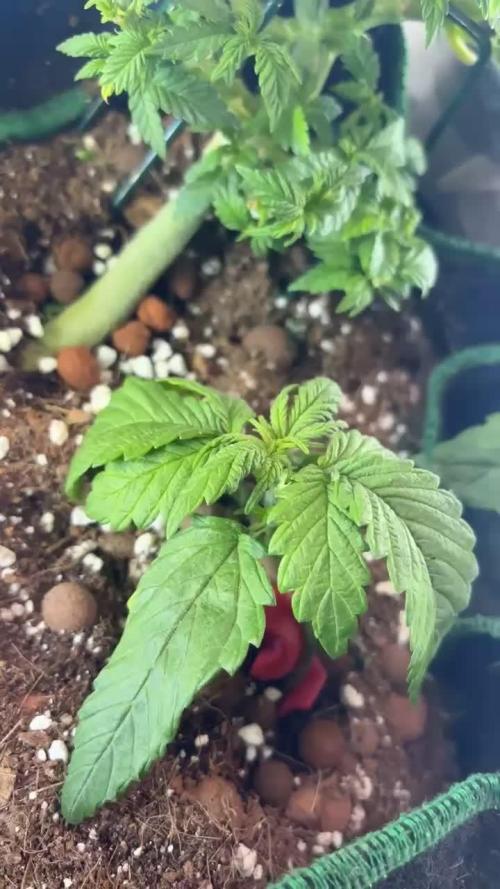
Been lightly LSTing the stem for resilience have noticed more development and more than original thought would be thers the development of the 3rd-4th set of leafs with the development of the first 2 side branches on each autoflowers (first 2 on vid is lemon cherry cookies and last 1 on vid is frozen face) started lst to shape there structures I’ve defoliated the single set of leafs where first set of side branches are developing and stretching nicely


Likes
29
Share


@DreamIT
Follow
Sponsored by:
ORIGINAL SENSIBLE SEEDS-💡VIPARSPECTRA💡-💐GREEN BUZZ LIQUIDS💐-🛠️WEDRYER🛠️
4/9 I'm back with updates! This delight already smells very orange, I can't wait to try it! today water and fertilizer. yeah!
__________________________________________
Personal advertising (contains affiliate links)
__________________________________________
🦄Highest quality seeds since 1992, a real guarantee! (no affiliate link)
✅https://bit.ly/Originalsensibleseeds
__________________________________________
Did you know that Green Buzz Liquids fertilizers are 100% vegan? A complete line of products ready to give the best to each of your plants! Visit the site and see my journals to see how they work 🦄
🤯 And with the code "dreami t" you will immediately receive a 15% discount on your purchases
✅https: //bit.ly/GreenBuzzLiquidsPro
__________________________________________
👀 Are you looking for a good lamp to start with? 👀
🌞Viparspectra has something more than the others, take a look at their site.
⏩ Use "GDVIP" for an extra discount or "DREAMIT3" for an extra 5 %% discount
👀 Search for it on Amazon
✅Amazon USA: https://amzn.to/30xSTVq
✅Amazon Canada: https://amzn.to/38udUVe
✅Viparspectra UE: bit.ly/ViparspectraUE
✅Viparspectra USA: bit.ly/ViparspectraUS
______________________________________________
🌈 Tired of blowing on your weed hoping it dries quickly? Check out the Wedryer website! You will find a well-made accessory that will help your weed dry in just 8-10 days without the annoying risk of finding mold or other annoyances! (no affiliate links)
✅https: //bit.ly/Wedryer_
______________________________________________
📷🥇Follow the best photos on Instagram 🥇📷
https://www.instagram.com/dreamit420/
Backup
https://www.instagram.com/dreamit4200/
🔻🔻Leave a comment with your opinion if you pass by here🔻🔻
🤟🦄💚 Thank you and good growth 💚🦄🤟

Likes
6
Share


@FumateAlgoo
Follow
¡Ah, bueno! ¡Una nueva semanita! Empecé a agregar CalMag porque ya se notaba una pequeña carencia: las puntitas de las primeras hojas estaban secas y las nuevas empezaban a ponerse un poco amarillas en los bordes. También, en estos riegos, bajé un poco el pH agregando la solución con agua más ácida para regularlo. Así que calculo que ahora debe estar en un 6.4, que sigue siendo un buen rango.

Likes
8
Share

@BushDoctor740
Follow
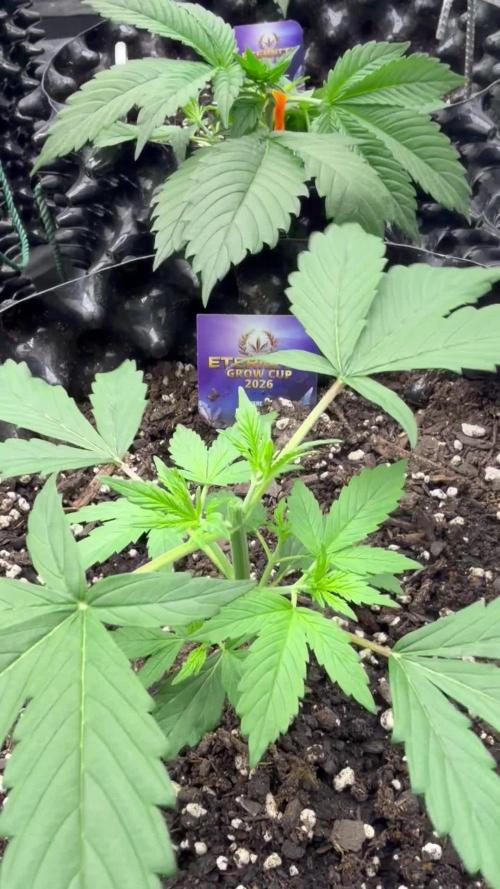
Ok so at day 21 all 3 ladies look amazing so did some training on 2 of them.I will let the smaller one of the 3 grow a bit.Im using the same amount of nutrients since the first feeding I will increase the advanced nutrients to 2 ml per gallon this week.When I water these ladies I judge by lifting the pots and I just know when they are thirsty :).I have also increased the light intensity to 50 percent power and they are taking it well.Day 23 I decided to top one that I didn’t bend over I rubbed some cloning gel on her cut so she will get better soon.At this point I’m doing a lot of leaf tucking but they are looking very healthy.


Likes
4
Share


@603grower
Follow
These two girls grew in the back of my town with very minimal attention. I only had them in 3 gallon pots. I got about 2 ounces off each plant of top shelf didn’t even trim the larf there wasn’t much. I would definitely recommend Captain Redbeard’s genetics.


Likes
30
Share


@VanTheMan
Follow
Start of week Height = 50cm
She has reached a total height of 50cm so far and have grown almost 20 cm in a week, her flowers are starting to grow all over, she really enjoys being under the Qboard.
13/02-2024 - Day 43 - Watered 2.8L
15/02-2024 - Day 45 - She is really growing and has reached 55 cm height, her flowers are starting to gain size aswell.
17/02-2024 - Day 47 - Watered 2,1L, my baby has reached 57 cm and damned she has ALOT of buds im really excited about this cutie 😍
19/02-2024 - Day 49 - End of week
I had considered trying out defoliation on her, as i think she has grown very bushy and might spend energy on branches that wont produce any good yeild.
i reconsidered due to the advices i got from my question.
i will continue without defoliation and keep gently bending fanleaves so they dont block light.
She has been growing a lil less taller this week than the previous, but her buds are starting to look nice, and they are ALL OVER her 😍 the first trichs are appearing.
Height = 61cm
Likes
55
Share


@XII_XII_EarlyRaver
Follow
They reacting perfectly oh the lst 🌞🙏🏻🙌🏻 So I gave them a little stress the past week and deflating them so the lower buds getting a lot more light so happy days my friend👌🏻🙌🏻🙏🏻So the Big women I made this the best plant in my opioin so I cloned here and she is flowering with the rest now


Likes
12
Share


@MicroHidroGrow
Follow
Esta por empezar el engorde final. Ya las flores estan casi formadas. La altura está al límite total. Uno o dos centímetros más y estaría en problemas de verdad. El engorde de muchas flores ya es notorio, pero creo que el uso de un bioestimulante que no es de primera línea, ha reducido el potencial de las plantas. De todos modos hasta no tener el resultado final no puedo afirmar nada.
La solución de esta semana fue cargada con más pk booster para ver cómo funciona la linea de greenhouse en esta etapa. Suelo usar pk 13/15 de canna. Pero esta vez puse el que tenía. Seguiré actualizando.
Día 31. Se nota mucho el engorde. Las hojas muestran pequeños signos de sobre fertilización, pero nada grave que no haya visto antes. Me suele pasar en esta semana en todos los cultivos en hidroponia. Pero las veces que ko me pasó, no tuve el engorde deseado. Por eso manejo mediciones de PPM superiores 1000. Se empieza a ver cuáles van a ser los cogollos más grandes, pero sigo con incertidumbre sobre cuanto más van a engordar. Estoy bastante conforme al momento. Hoy tuve contacto con plantas macho, pero me cambié toda la ropa antes de acercarme al indoor y le lavé. Además no sé si sumará, pero me rocío en alcohol cada vez que entro a casa, así que espero no tener problemas. Ya voy a ir preparando los esquejes para la próxima siembra. Quizá no logre sacar 10 de las madres que tengo. Pero quizá ponga menos y los haga crecer más tiempo y con bastante LST. Pero será en otro protecto. Por ahora espero que siga el engorde.
Día 33. Ya el engorde es un hecho. Por el momento estoy bastante satisfecho. La solución se concentró demasiado así que tuve que agregar agua. Pero más allá de algunos signos de sobre fertilización mínimos y pasajeros en las hojas, la plantas se muestran saludables y firmes. Todavía sigo buscando la posibilidad de agregar overdrive la semana que viene. Todo está por verse. Ya puedo asegurar que va a haber una séptima semana de floración, sino debería empezar el lavado en 2 días, cosa que a la vista, sería muy apresurado. Así que seguiré esperando a ver las flores con los pistilos más secos. Entre tanto los tricomas ya están formados, pero recién van a empezar la maduración en unos días. No saco foto porque el celular no hace buen foco con la lupa, pero ya intentaré mas adelante.
Día 35. Cierra la semana con una buena idea de lo que van a ser los cogollos. Según el calendario de la planta, debería empezar el lavado esta semana, ya que sería la última. Pero por la madurez de los tricomas, todavía le faltan entre 10 días y 2 semanas más. Así que se viene otra semana de sobrecarga de PK y voy a aumentar la dosis para aprovechar a medir el nivel de tolerancia de la planta a altos niveles producto. Al ser hidroponia y trabajar con el ambiente bastante controlado, confío en que voy a poder aplicar correctivos a tiempo, si empiezo a notar defasajes bruscos.


Likes
4
Share


@MasterKush714
Follow
06/10/2024 Roots roots Rootz!!!!
Had to take out a few that weren't moving along!!!
06/14/2024
They going in lfg!!!!

Processing
Likes
7
Share


@BigBudWolf
Follow
FastBerry (FastBuds)
14 days from sprout.
Started a light nutrient feed this week. About quarter strength of what is recommended. Also added neem oil to soil drench as I noticed a couple of gnats in the air and don't want that to become an issue.
Likes
11
Share


@TherealNICOGREEN
Follow
Nu prøver jeg lige at lave topping. Så hvor let det er på cannacrips på yt. Håber virkelig hun vil være med til dette hun er en MEGET GOD STABIL DAME allerede, tyk stamme smukke blade med rødlig stængler:) . Jeg er meget STOLT OVER kannabia vil lade mig prøve kræfter med deres nye strains min hydro er også blevet en Amnisia lemon auto fra kannabia!;-) . Udover det hele er blevet flyttet pga varmen fra politiet! Så går det rigtig fint!! Det bliver spændende og følge med så der kommer styr på tingene igen! Kom nu bare med en legalisering i danmark vi burde være ens i eu lande ! Hvorfor skal jeg flytte til tyskland for ikke være kriminel pga en UKRUDT PLANTE! Jeg skal i retten for et telt 3 lamper , blæsere i ogsv, ca150gram skunk , og 5gram hash! Det så latterligt! Forsættes i næste uge:


Likes
55
Share


@Max1973
Follow
Well, this was a interesting first journey.... the buds finished drying today, 5 days drying, added pics and vids.
Just curing to go.... ah nice buds :)
Edit: i forgot to mention i went over the buds when i harvested them, and checked / removed any impurities, like
gnats caught in the sticky bud.... picked em clean with tweezers... 👍
Edit: needed to air/dry out the buds abit more, and get some Boveda Humidipak for curing.... it's looking good...
i'll update with some pics of trimmed, cured buds 😎
The buds turned out beautiful, pungent, pine, berry, citrusy, daytime, medical..... this has theoretical 1:1 - 21% THC, 19% CBD, so it's not going to give u a knockout high.... its medical grade 1:1 ....... side effects - happy, relaxed.
haha :)
I weighed it dry and came up with about 123.32g (4.35oz) ... i used abit of guesswork in the weight, not to concerned with weight, as to
quality.... (that weight is with the test buds added in, +-15g.) .... you can guess the weight from the pics and vids, haha
I really enjoyed growing this.... i found the website by looking up the seeds, decided to start a grow diary,
it's my first grow, i made alot of mistakes and growdiaries really helped alot, joined a chat group with some other really good growers.
Edit - Day 111 - added vid/pic, Been curing for a week, burp and roll em abit twice a day....... smell and taste nicer each day, 👍
Edit - Day 112 - added good vid of trimmed up test bud, beautiful ......
I hope You enjoyed the Diary..... Good Buds 😎
Likes
32
Share


@MadeInGermany
Follow
Info :
Unfortunately, I had to find out that my account is used for fake pages in social media.
I am only active here on growdiaries.
I am not on facebook instagram twitter etc All accounts except this one are fake.
Flowering day 63
since time change
to 12/12 h.
Hey guys :-)
We arrived in the last week before the harvest :-).
The trichomes are 70% milky, 20% clear and 10% amber.
As always, it comes to the darkroom 48 hours before harvest.
This week it was poured twice with 1.3 l each.
Otherwise everything was checked again and checked for health.
Have fun and stay healthy 🙏🏻
You can buy this Strain at :
www.Zamnesia.com
Type:
Runtz
☝️🏼
Genetics:
Zkittlez x Gelato
👍
Vega lamp: 2 x Todogrow Led
Quantum Board 100 W
💡
Bloom Lamp : 2 x Todogrow Led
Cxb 3590 COB 3500 K 205 W
💡💡☝️🏼
Soil : Bio Bizz Coco
☝️🏼
Nutrients : Green House Seeds Company Powder Feeding Bio
☝️🏼🌱
Water: Osmosis water mixed with normal water (24 hours stale that the chlorine evaporates) to 0.2 EC. Add Cal / Mag to 0.4 Ec Ph with Organic Ph - to 5.8
Likes
4
Share


@HowtoBubatz
Follow
My Strawberry Gorilla Automatic from Fast Buds is now in its third week of flowering, and I couldn’t be happier with how she’s progressing.
She looks incredibly healthy, with vibrant green leaves and strong branches. The stretch phase is nearly over, and she has developed a solid structure with a well-defined main cola.🌱
One of the most exciting changes this week is the first appearance of trichomes on the main bud. Under the light, they’re starting to sparkle, hinting at the resin production that’s about to take off.
The buds are forming nicely, and I can already smell a faint but promising aroma developing.
So far, she’s responding well to the nutrients and environment, with no signs of deficiencies or stress. If she keeps going at this pace, she’s going to be a real beast by harvest time.😊