


Likes
Comments
Share


@SkunkyDog420
Follow
Hallo zusammen 🤙.
Sie wächst sehr schön und macht keine Probleme.
Heute ist der letzte Tag draußen in der Sonne ☀️ heute Abend kommt sie ins Zelt.

Likes
10
Share


@Biglegs_Cupboard
Follow
Week 3: Vegetative Stage – Training, Defoliation, and Entering Full Flower
The Apricot Autos have really taken off this week. I’ve been doing a little defoliation here and there, but over the course of training and tucking, I sometimes get a little heavy-handed and manage to break the odd leaf. Even with these occasional slips (you can see it in the pics), the plants are still shaping up nicely and getting huge, though not as much as my previous grow, which was also Fast Buds autos.
By the end of the week, the plants have started to noticeably stretch, which I’m happy about since it makes them easier to train. At this stage, I like to train using mental pegs, gardening wire, and leaf tucking. I rarely remove any leaves until I have a clearer idea of the plant’s final shape, which did evolve quickly this week, prompting me to take action.
On day 27, one of the plants is entering full flower, while the one with the misshapen leaf is a couple of days behind. The difference between the two is becoming less noticeable, although one is still bigger.
Current Setup:
Medium: 70/30 coco/perlite mix with Great White Mycorrhizae added during transplant
Lights: DLI set to 22
Nutrients: Big Plant Science (introduced midweek)
Despite breaking a leaf or two during training, both plants are progressing well, with flowering now fully underway.

Likes
8
Share


@TakinTopsDaiily
Follow
What’s growing on everybody?!?! Exciting week in my Banana punch grow! The plants are really growing quickly now. Got the light cycle switched over to 12/12, got my first layer of trellis screen put up so I can start weaving branches through. I also started the bloom feed today, which just substitutes the grow for the bloom as far as my botanicare line goes, I like to use a small about of MOAB to really get my plants to start flowering. I’ll have more boosters coming on in the later weeks of flower. I will continue with my IPM regiment of spraying Athena IPM twice a week until the third week of flowering, which at that point I will cut off all sprays. I plan on running this strain until my planned harvest date which is 3/13-3/20. I vegged until my plants were telling me they were ready to go to bloom, I let the shape and hardiness of my plants dictate when to flip them, I wasn’t rushing them. I’m excited to see how everything looks in the coming weeks! Thanks for looking, As always, Happy Growing everyone!
Likes
12
Share


@Crimm
Follow
Today is the last day before chop day. I didn't end up doing any flushing as I couldn't find much evidence that it makes any real difference. Starting to get some fade/LED bleaching here and there. Really excited to see how much bud is hanging out under all those fan leaves. The one plant that got an accidental topping is still behind the others in getting ripe but not so much that I am wanting to keep it growing. Seeing just a few amber trichomes here and there and I am not a fan of couch-lock so now is perfect time to harvest. I will end up hanging the whole plant to dry. Thanks everyone who gave me help and tips for my first grow! I will likely post the dry weight and harvest pictures in a few weeks once they are dry. Maybe add a few pictures of rosin I plan on making. Happy Jul!
Likes
21
Share


@DudeGrowsWeed
Follow
Gave the big girls some HST this week. Pics and video were taken 2 days after the bending. I bent the main stalk on all of the big girls, except one of the Cherry CBD plants. One Cherry CBD plant seemed to have been overwatered and bent over by its self at the base of the stem 😮. I put more soil in that pot and supported the stem so its standing upright again. I think the stem should heal itself in the new dirt and may possibly create new roots.
In the veg tent its a bit of a jungle. Since the pics and video were taken I have moved 6 plants into the flowering room (its getting crowded in there). 7 of the clones seemed to have survived, 6 Cherry CBD and 1 DinaMed CBD+, they have been transplanted into 5.5" square pots also since the pics were taken.
Sorry I'm a little late getting this weeks post up, I'll try to get next weeks update up quicker.


Likes
10
Share


@byte_me
Follow
Overall happy with the grow, I will try this strain again outdoors when I get the opportunity.
A very good all day smoke that doesn't get boring 😁


Likes
18
Share


@VI_Cannabis
Follow
June 28 - They are doing great, We switched to the recommended amount of nutrients for flowering, Also 2 air stones I ordered have come in so now those are on 24/7 with the nutrient water in a 5 gallon bucket.
June 29 - Still just growing away, I am still feeding roughly 3L per plant of nutrient water every 24-36hr depending on how dry they feel.
June 30 - Totally forgot to take pictures/videos today. I gave them there daily watering and they are still just growing away. They are in flower now I believe!
July 1 - Awesome to see this amount of progression. Tons of hairs and a decently even canopy. There is a small smell coming from in the room!
July 2 - Again I forgot to take pictures, But as always they are still just growing away. so far so good!
July 3 - Tons of growth and they are starting to become uneven. I don't have a ton of time so I think I will leave them for another week before doing some LST or HST. Tons of colas forming, lots of hairs and they are starting to have a heavier smell! So far so good!
July 4 - Same thing as yesterday, still growing away, Ive turned the lights up to 100% now and I have removed the SF-1000 as I needed it for another project! (be sure to check out my other diary's which I will be uploading today!
Likes
40
Share


@BudXs
Follow
Bruce Banner is turning into the Hulk!!!!!!!!! Holy shit, what a strain. This will be a massive harvest on some very large buds. The frost is here and the bloom booster is in the daily fertigation regiment. Looking for these things to really fatten this week. Smell is strong and earthy so far, just the way I like it.
Check out Med in Tropic growing the fast version of this strain outdoors in the Amazon

Likes
7
Share

@RockoCalenberg
Follow
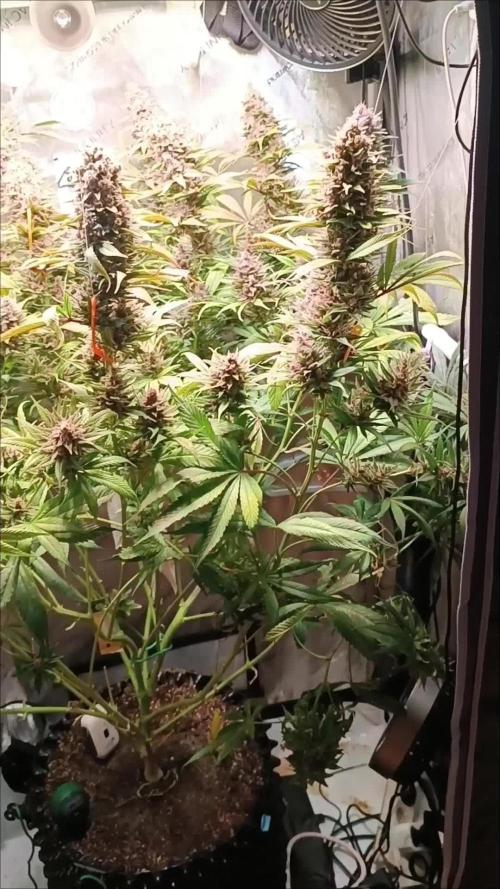
Dann braucht sie wohl doch 9 Wochen oder mehr... 😁
Der Nachwuchs drängelt schon aber die Dame lässt sich nicht hetzen.
Sie ist mir leider noch nicht trüb genug, aber es wird so langsam.
Sie saugt auch alles aus den Blättern in die Blüte
Also so richtig Fast Flower finde ich meine Lady aber trotzdem nicht 🐌
Likes
3
Share


@HighOhioAn
Follow
She is growing vigorous every day. Seems like she has new growth. Super stoked to see how she turns out first time using Athena.🤞🤞🤞🔥💯
Likes
27
Share


@valiotoro
Follow
Pheno 1 dark purple : On the nose, it reveals a sharp burst of fresh lemon, layered with a powerful eucalyptus aroma that’s both invigorating and camphorous. A truly refreshing and vibrant terpene profile😈🍋
Pheno 2 Green : this one is a real surprise! If I close my eyes, it’s like Nutella! It’s as if you’ve just walked into a kitchen where hazelnuts have been freshly roasted 🤤🌰
Pheno 3 light purple : It’s a mix of the first two with a hint of amarena cherry at the end🍒🍧
Likes
33
Share


@Rap_a_cap
Follow
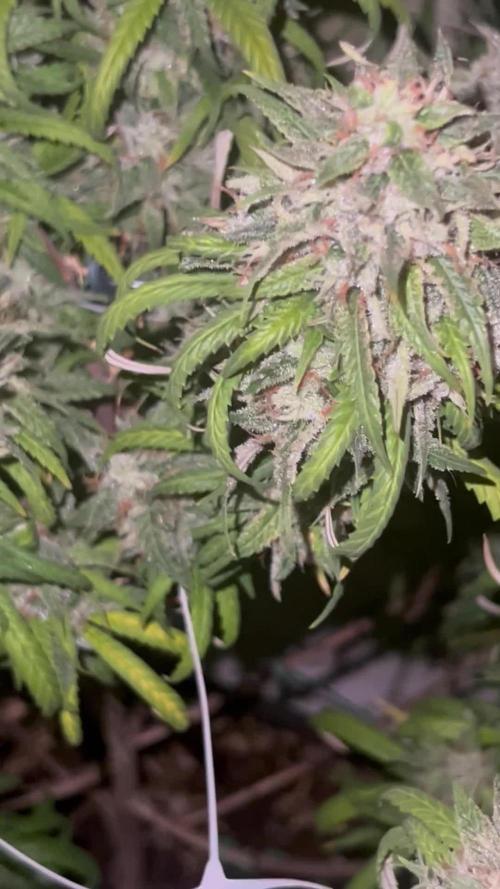
Pre-flowering stage, stretching phase.
Today exactly 14.41 hours of light.
Average week's temperatures 80°F
High humidity, some stormy days, hew heat wave is coming.
Afghan is a massive plant and is almost ready to flower. Branches are very thick and sticky. Great smell. Starting to defoliate the bottom canopy.
No issues, no pests, no need 4 food.

Likes
Comments
Share


Likes
35
Share


@eldruida_lamota
Follow
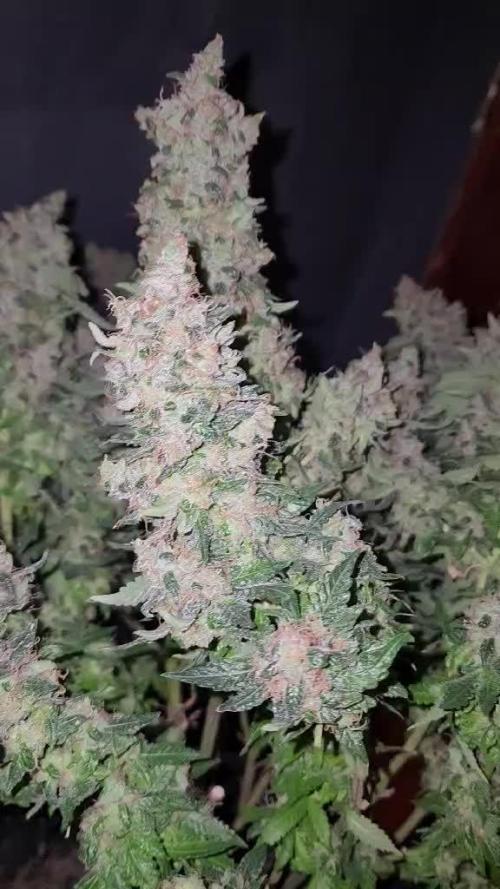
Red hot cookies, no me digáis que no suena bien? Menuda variedad que sacaron los de sweetseeds este 2020, veremos que tal se comporta como crece y que cualidades nos saca, según etiqueta es un híbrido potente con posibilidad de sacar flores rojas.
Pues las germine y las 4 han salido sin problemas, las coloqué en macetas de 0,4l y dejaremos que crezcan un poco.
.
La humedad al ser la primera semana la mantenemos entre 70/80% , la temperatura está entre 22/24 que no está nada mal, y el ph en cada riego lo mantenemos en 5.8.
.
Gama agrobeta.
0,5 ml x L Piramid , vía radicular.
0,5 ml x L Growth black line , vía radicular.
0,1 gr x L Cancerbero , vía radicular.
0,1 ml x L Tucán , vía radicular.
0.1 ml x L Flash Root , vía radicular.
0,4 ml x L Great Green , vía foliar.
.
Nos vemos la semana que viene, saludos fumetillas 💨💨💨



Likes
11
Share


@BudBeezy
Follow
Welcome to week 6 of my first Grow diary. The weather is disappointing me again this year. Normally we should have better weather in June. It's been quite windy and wet this week. Apart from that, everything is going well. The yellow spots on the leaves have become less and less every day. I readjusted the plant anchors every day to ensure that the plant gets plenty of sun when it shines. I had to cut off a few leaves because they were in the way and would otherwise have touched the soil.
The daytime temperatures have fluctuated between 17 and 22 degrees this week. Fortunately, it is now getting warmer at night.
Hopefully see you next week ✌️
Processing
Likes
18
Share


@Dunk_Junk
Follow
Wow she continued to grow this week!
I've bent her main cola over twice this week 😂 She really wanted to reach for the sky!
Check out the timelapse..... she's the tallest plant 😂 😍
Pretty much on autopilot, she's doing her thing.


