


Likes
Comments
Share


@ChefJimbo420
Follow
8/12/24 - 8/18/24
Start of Flower - 1st Full Week
Saw a potential for Nitrogen Toxcitiy. Dark green, almost black tips, downward pointed. #1 was 35 cm @ 8pm-ish.
#1 was 40 cm @ 8pm-ish.
#1 was 45 cm @ 8pm-ish.
"2:30 am-ish - Going for a ""flushing"" watering. Hoping to slightly lower the suspected nitrogen levels. Warning Watch: Runoff was 5.6 pH, EC 3.2, 1650 ppm500, 2250 ppm700 at the end. Might be high but another flushing watering will calm it. #1 was 51 cm @ 10pm-ish."
They looked great throughout the day.
"1:00am ManBear (friend's name) became the proud surragote father for #4. She became his to manage the way he sees fit. #1, #3, and #4 have not been watered since Day #20. I suspect they will need it soon. #1 in now 60cm at 1am-ish.
6:30pm: Flush watering of #1
#1 was 65"

Likes
2
Share


@Solocultivo
Follow
Rikos olores frutales y florales
Falto parte de. La. Vegeta fue. Largan1mes1/2 deje que fuéra asi son regulares deje que se. Expresara sexo para asegurarme de los rasgos femininos, solo se. Expreso pre flora 1 macho considerado hembra resto 90 se. Mantuvieron femeninas, primer canopy ny a. Mejorar la. Tecnica
Receta propia de super suelo
Processing
Likes
16
Share


@Max1973
Follow
one tank, the left side, went bad water... some kind of
something in the water... some kinda growth or thingie....
so .... i went after the bad water tank hard... pulled it out... scrubbed the tank... scrubbed it all...
the funny thing about this is.... these plants are both 50 days old.... haha....
i put em into a type of suspended animation .... lol
they are just now starting to hook onto the solutions and are now both feeding....
the growth rate will increase exponentially over a short amount of time,
now that they have both hooked onto the neut water and are growin roots thru the clay balls.......
(look close at them, notice the first stage 3 leafs ? so u know what stage of growth, 3 leaf and 5 leaf and 7 leaf.... etc... so 50 days and u can clearly see the first stage 3 leafs... lol)
(this probably has some major implications for growing food in space)
👍😎
Likes
8
Share


@Lazuli
Follow
Start flower: june 6 2023
The nutrients are
1ml/L calmag
1.3 grams/L drypart bloom
Both from T.A.
Ph around 6-6.4

Likes
58
Share


@GreenHouseLab
Follow
Results are starting to come in now, going to be Cake all the way to the end. Time to grab your popcorn and stay tuned in 🤡🎪
Short Phenos is Pure Michigan lean, obvious now with the purple starting to form from bud sites. Tall girl is Sugar Cane Pheno what a stake, huh!?
GHL out 🚀
Likes
Comments
Share


@spastagia
Follow
Hey all!
She has finally started to flower! To see the transition, its nothing but magical! I fed her Green Rush Bloom nutrients (1tsp/1L) with 1 L of water at pH 6. She has began to really stretch now. The light is lowered down at 16 inches.
Will feed her Cal-Mag, and seaweed extract this week.
Maintaining the RH between 55 to 65.
Removing the fan leaves that blocks the lower buds.
Likes
25
Share


@BudHaks
Follow
She is now putting on weight - and still going tall! She looks like she has a while to go before harvest but she is doing magnificently. Little to no deficiencies!

Likes
4
Share

@HUUDUUH
Follow
Well.. done!
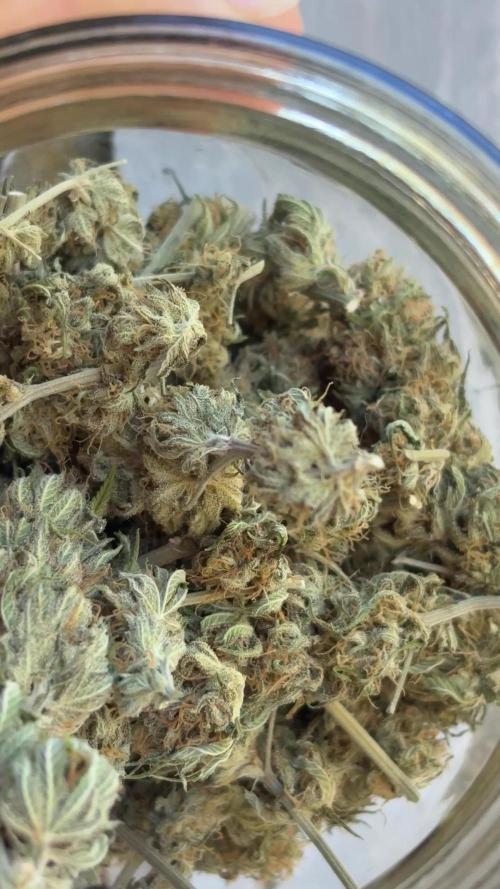
45 grams of dry flowers after trim.
Im glad and proud. That was a long way, my first oficial controled grow. Cool.
It was 14 days of dry, l have cured it, it smells so good , but that flavor they say.. not yet. The first hit is nice tho. No cof cof, the smoke is so smooth and the effects.. Its not my favorite thing, but at morning works fine.
Not the best seeds bank, but was worthy.
Likes
41
Share


@Ganjagrandaddy
Follow
DAY 28 flowering: Hi all
Hope we are all fine and dandy in the grow diaries world this week.
It has been a steady week this week with the ladies now focusing purely on bud site development . The only lady not really thriving is the smaller Mexican airline #1. It does seem she will be all plant and very little yield at this point but we will see it through. She isn't poor by any means but I do think she will have a inferiority complex within these beauties. Heehee
Thankfully the other five ladies are powering on and producing some potential big bud sites. The stars of the grow are the Strawberry pie girls. These plants are huge and very, very productive . The lowers are developing some nice bud sites that in themselves look like beasts developing. They have really dense looking flowers that will no doubt become thick and possibly need some support on the side growth but seeing the stem strengths , they may be ahead of that issue themselves already. A perfect strain for an outside run for sure and with no training beside the tip spreading , they have easily now reached approx 4ft tall. The buds start really low on each limb with some node spacing initially large but the growing tips and main stem have a more stacked up bud appearance forming. I think they could possibly top my personal best for the autos at this rate. Both have about the same structure and bud building so I would hazard the same phenotype too. This is the second time I have grown this strain and the last one was very similar too. Very stable and should give some top notch nugs out.
Six Shooter #1 is only slightly smaller than the Strawberry pie and has just as many productive side branches that want to show off too. Her sibling #2 was grown a lot flatter after the tip spreading and seems lost down low in the canopy now. She has a lot of buds tucked away but could easily be overgrown by the mexican#2 and Strawberry Pie #2 , if I am not pro active with her progress.
As mentioned earlier, the Mexican airlines are both healthy and happy but the #2 is far more productive than the #1 . I do expect that the #1 will harvest a little after the others and that she may come through in the end. Overall these strains are genetic perfection this run . They have done their own thing with only the tip spreading being my intervention initially , and they have produced 6 perfect looking plants that are clearly different strains . From past experiences with these 3 strains , "The best is yet to come " with the development of their unique looking buds. Here comes some down and dirty bud porn only viewable to the faithful.!!!
Be lucky all , catch you soon


Likes
19
Share


@GermGrowFox
Follow
29. März.
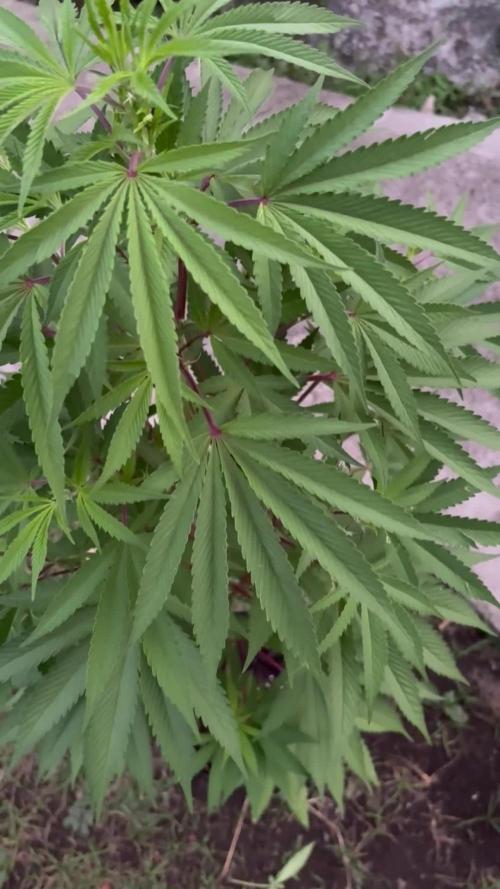
7 Tag sind nun rum seit dem ich die Samen zum keimen gelegt habe.
Alle drei Pflanzen sind nun aus der Erde geschlüpft. Die erste Spargelt ein bisschen.
Die living Soil sieht Mega eklig aus, wie als würde die Erde schimmeln. Zum Glück wissen wir es besser :)
31. März
Jaaaaaaapp. Es wird Spargel.




Likes
22
Share


@NSCanna
Follow
Lots of nice growth this week, though not as much as the Skunk. Added another 2l bottle of sugar/water/brewers yeast to hang over her, like I did with the Skunk. Hopefully it's enough extra C02 to fatten her up a bit. Very sticky but not quiet as loud smelling as the Skunk, also no signs of senescence on her yet but some of the thinner branches are buckling so I had to tie them up. Mites are going ape shit in the soil, video is above. If you grow organic and see these in your soil, it's a good thing as they eat baddies and help to break down nutrients. Fungus gnats are very much under control, I see a few every now and again but the soil microbes/mites keep them at bay.

Likes
10
Share


@L1lium
Follow
Es ist soweit! Am Freitag habe ich die fünf Easy Buds nach knapp 11 1/2 Wochen abgeschnitten und geerntet.
Leider musste ich feststellen, dass eine Pflanze ziemlich stark befallen war. Ich vermute eine Milbenart oder möglicherweise Fliegeneier. Unterhalb der Blätter waren etliche dunkelgelbe und dunkelbraune Eier, die man auf den ersten Blick kaum erkennen konnte. Bei genauerem Hinsehen sieht man jedoch, dass sich der Befall auf die ganze Pflanze ausgeweitet hatte.
Glücklicherweise blieben die vier anderen Pflanzen verschont. Aus diesem Grund trockne ich die Pflanzen auch getrennt voneinander. Die befallene Pflanze wollte ich nicht direkt wegwerfen, sondern erstmal trocknen lassen. Im Nachhinein werde ich schauen, wie ich mögliche Schadensbegrenzung betreiben kann.
Die vier gesunden Pflanzen werden in einem geschlossenen Zelt in einem Trocknungsbeutel getrocknet.
Die befallene Pflanze habe ich in dem Folienzelt aufgehängt und mit einer Plane abgedeckt. Nach wenigen Tagen der Trocknung sieht soweit eigentlich alles gut aus. Die Eier scheinen nicht mehr zu schlüpfen, sondern fallen von der Blüte ab oder verschrumpeln zu Kompost. Ich hoffe, dass es dabei bleibt.
Der Geruch hat sich nach dem Abschneiden deutlich verändert. Schon nach der kurzen Trocknungszeit kann ich einen intensiveren Geruch feststellen, der sich noch nicht so richtig beschreiben lässt. Die Blüten waren stark mit den sogenannten "Sugar Leaves" verwachsen, weshalb ich sie grob getrimmt habe, um sie zum Trocknen aufzuhängen. Nachdem die Blüten vollständig getrocknet sind, werde ich die Buds noch einmal einzeln trimmen und durch meine Trimm-Maschine von Vevor jagen.
Der Ernteprozess hat zu zweit circa eine Stunde gedauert. Die Pflanzen waren zum Zeitpunkt der Ernte noch sehr gesund und kräftig. Die Verwurzelung war trotz des geschlossenen Topfes sehr gut.
Die schönste Bud hat definitiv die zentrale Pflanze, Greta, ergeben. Nass hätte ich den Bud auf mindestens 12 g geschätzt.
Ein Gesamtgewicht des nassen Pflanzenmaterials habe ich nicht ermittelt. Sobald alles trocken und fertig beschnitten ist, werde ich das Tagebuch um den trockenen Betrag ergänzen. Stand jetzt würde ich schätzen, dass der Ertrag aller Pflanzen bei circa 40-50 g liegt, was mich für meinen ersten Grow ziemlich zufrieden stellt, besonders in Anbetracht dieser wirklich sehr simplen Strain.
Mehr Infos und Fotos folgen in Kürze, wenn das Curing beginnt.
Bis bald! :)


Likes
14
Share

@GREENPHOENIX6262
Follow
03/22 - (M) - She is perfectly - Her numbers are spot on and the feeding schedule seems to be dialed in perfectly - I will increase her carbohydrate feeds with the Raw Cane Molasse to increase terpene production.
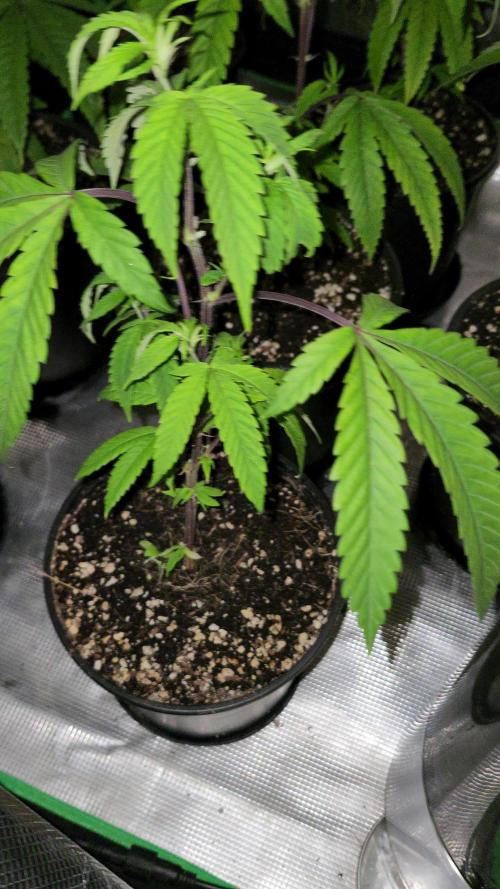
03/22 - (C) - Hit a little snag with the babies last week and through off their PH/EC/PPM's - Gave them a hard flush yesterday (Only distilled water) to stabilize the numbers and got all of them down to optimal levels. Did some defoliation on the yellowing leaves. I will upload both night and day shots for this week for the babies
03/23 -(C) - Flushed them out hard last night and in less then 24hrs WHABAMMMM!!! they are already bouncing back - Will stick to just clean water feeds for now - They will begin a low-dosage nutrient feed (Micro-dosing) in about a week.😎😎😎😎😎😎😎

Likes
5
Share


