


Likes
Comments
Share


@Itashish
Follow
Recette du tco pour 20 litres. (Grammes : gr)
50gr biochar
250gr zéolite
3gr granulé Micro-Organisme IT45
10gr pollen d’abeilles
10gr levure de bière
3gr endomychorize
10gr consoude
20gr vers de farine
10gr cendre coque de ricin
12gr ortie microniser
15gr Kelp
10gr spiruline
10gr de cbd living soil
20ml de miel liquide
30ml de mélasse
20ml d’acide humiques et fluvic
Mettre tous les ingrédients (sauf la mélasse ,l’acide h/f et le miel) dans un filtre 400micron, le placer dans un seau avec de l’eau (10litres). Rajoutez le miel et 10ml de mélasse
Y mettre un micro bulleur alimenter sur une pompe à air et faire oxygéné le mélange pendant 24h. Rajout de 10ml de mélasse après 12h le début de la mise en route de la pompe.
A la fin des 24h rajoutez le restant de mélasse et d’acide h/f, mettez y en plus 10litres d’eau au mélange.
Reste plus qu’à arroser!
j’y ai incorporé 7litre de mélange
La veille j’ai préparé le pot à l’arrosage avec 500ml d’eau et 2gr de Bacillus IT35 Amyloliquefaciens X5
Bacillus Amyloliquefaciens : rhyzosphère, probiotiques. Aspersion et arrosage. Utilisable pour toutes cultures.
La bactérie Bacillus Amyloliquefaciens se fixe dans la rhizosphère en se nourrissant des exsudats racinaires. En contrepartie, elle stimule la croissance racinaire en sécrétant des métabolites de croissance et solubilise le phosphore en sécrétant des phytases (enzymes).
Effet probiotique consistant en l’utilisation de micro-organismes bénéfiques pour la nutrition et la santé des plantes.
La spiruline, le plus riche et le plus complet des amendements organiques
La Spiruline est une algue aquatique connue comme complément alimentaire, la Spiruline est aussi un amendement organique et écologique très complet.
D'une grande qualité nutritive, elle apporte à vos plantes une quantité de nutriments, dont l'azote, phosphore, potassium, minéraux, acides aminés, vitamines, chlorophylle et protéine.
Le charbon végétal actif est capable d’absorber jusqu’à cinq fois son poids propre en eau ainsi que les éléments nutritifs qui s’y trouvent. Il joue ainsi le rôle de catalyseur et d'amplificateur pour les fertilisants traditionnels, qu'ils soient d'origine organique ou minérale. Ce pourquoi il est idéal pour activer un sol et pour les thés de compost oxygénés.
Le charbon végétal améliore la diffusion et la disponibilité des éléments nutritifs dans le sol et offre des conditions propices au développement des micro-organismes.
Le Biochar peut être introduit dans une grande variété de sols. Il est particulièrement efficace dans les sols pauvres, difficiles et acides.
Pour faire agir rapidement et efficacement sa capacité d’amendement, le charbon végétal est enrichi et biologiquement activé avec des micro-organismes. Le Biochar se comporte ainsi comme un structurateur et un activateur dans le but de valoriser les sols.
Composition :
• Charbon végétal actif 31%
• Matière organique 33%
• Matière sèche 75%
• C/N : 17
• PH : 7,2
• Azote (N) : 2,1 % dont 1,2 % azote organique
• Phosphore (P205) : 0,74%
• Potassium (K20) : 1,18%
• Calcium (Ca) : 6,8%
• Magnésium (MgO) : 0,65%
Le pollen est l'ingrédient de base de la fabrication du miel par les abeilles. Riche en vitamines et minéraux, il est qualifié « d'aliment parfait », y compris pour les plantes !
Les zéolithes sont des roches cristallines, présentant des capacités d'adsorption particulièrement importantes vis à vis des polluants que l'on rencontre dans l'eau et dans certains liquides, ainsi que dans l'air et les gaz. Elles sont extrêmement poreuses comme les charbons activés et elles peuvent être chargées électriquement pour opérer comme des échangeurs d'ions.
La zéolithe est un produit naturel qui respecte notre environnement. Utilisé dans le milieu industriel depuis de longues années déjà, ce minerai aux propriétés filtrantes particulières commence à se vulgariser dans le domaine de la piscine privée, de l'aquariophilie, des bassins d'agrément, de la récupération des eaux de pluie, ou encore de la culture des bonsaïs et autres plantations diverses par exemple...
4 points techniques majeurs :
- Grâce à leur propriété hydrophile, les zéolithes peuvent adsorber l'eau jusqu'à 30% de leur poids total et sans aucune variation de volume : pas de gonflement en présence d'eau ni de craquement en cas de déshydratation comme certaines argiles. Les zéolithes sont d'ailleurs de puissants agents anti-mottant (anti-agglomérant). Cette propriété est très appréciée dans le cas des terrains de golf et autres aires de jeux.
- Les zéolithes ne captent pas l'eau de façon irréversible, elles se comportent comme une réserve au voisinage des racines. Celles-ci peuvent capter l'eau en fonction de leur besoin. Les zéolithes permettent ainsi de réduire les besoins d'arrosage jusqu'à 35 %.
- Une zéolithe se comporte comme une "Zone de Stockage" qui retient l'azote et les éléments minéraux nutritifs au voisinage des racines et les relâche lentement en fonction des besoins de la plante. Cela se traduit par une croissance harmonieuse mais rapide du végétal.
- La capacité d'adsorption et l'énorme rapport surface/volume des zéolithes, vont permettre à la fois la rétention de la solution du sol et une bonne oxygénation au voisinage du système racinaire. Les zéolithes favorisent donc l'organisation biologique des sols en contribuant au développement de la micropopulation. L'apport en nutriments (N, P, K) est réduit de 20 à 25 %. Ces derniers, adsorbés par la zéolithe, sont beaucoup moins sensibles au lessivage et à l'évaporation.
Composition minéralogique :
* Chabasite 70 %
* Phillipsite 2 %
* Feldspath 5 %
* Augite 3 %
* Illite - Mica 2%
Analyse atomique:
* Sio2 52 %
* AL2o3 17 %
* CaO 5,7 %
* K2O 6,1 %
* MgO 2 %,
* Na2O 0,6 %
* Fe2O3 3,6 %
Amendement calcaire, dolomie et gypse avec préparation microbienne à base de Bacillus Amyloliquefaciens IT45 et Saccharomyces cerevisiae LYCC6420
Formulation : micro granulés (1 – 1,6 mm) à base de rhizobactéries favorisant la croissance des plantes qui se multiplient et colonisent rapidement la zone des racines, et de levures Saccharomyces cerevisiae souche LYCC ayant un effet probiotique.
Les PGPR produisent des enzymes qui solubilisent le phosphore à partir de complexes inorganiques et organiques dans le sol et stimulent la croissance des racines efficaces augmentant ainsi la zone d'interception des éléments nutritifs. Les levures LYCC permettent une occupation de la rhizosphère par une flore bénéfique.
Composition :
• Matière sèche : 96,8%
• Matière organique : 91,5%
• N total : 6,6% dont N soluble dans l'eau 0,17%
• P total : 2%
• K total : 1,7%
Micro-granulés :
• Oxyde de calcium (CaO) total : 30%
• Oxyde de magnesium (MgO) total : 7%
• Anhydride sulfurique (SO3) : 13%
La levure de bière est une matière vivante qui permet un meilleur fermentation pour les thés de compost oxygénés notamment conseillé pour accompagner les croissances ou apporter un gros coup de pousse pendant la floraisons.
La levure stimule la vie des sols également à l'arrosage direct en apportant tout aussi bien que dans le TCO sa population l'espèce micro-bactérienne positive pour votre sols ainsi que des oligo-éléments et diverse vitamines.
Composition :
• 2,8% (N) total dont 1% (Norg),
• 2,3% (P205)
• 1,6% (K20)
• 35% de MO
• C/N : 8. PH : 8,4.
Sous forme de poudre mouillable. Il contient des spores du champignon mycorhizien Rhizophagus Irregularis MUCL57891 avec des levures inactivées spécifiques. 2000 spores/gramme d’endomycorhize Rhizophagus Irregularis MUCL57891 et Saccharomyces Cerevisiae LYC6420 inactivée. Se connecte efficacement au système racinaire et forme un vaste réseau souterrain de filaments, qui agissent comme des extensions pour atteindre les nutriments et l’eau au-delà de la rhizosphère
Composition :
• Poudre contenant 2000 spores/g. d’endomycorhizes Rhizophagus irregularis
La Consoude (Symphytum Officinale) est une plante présentant de nombreuses propriétés.
Particulièrement riche en Potassium (K) organique, la consoude est une alliée idéale pour les périodes de floraison. La consoude a tout pour plaire : riche en vitamine B12, elle agira également comme stimulateur racinaire, mais aussi comme biostimulant cellulaire, grâce aux alcaloïdes, aux allantoïnes et jusqu'à 30% de protéine !
100% déjection de vers de ténébrions.
Très riche en microorganismes, le guano de vers de farine est une matière directement composté par les vers. En effet, c'est bien la digestion de matières végétales par des larves, insectes ou autres arthropodes qui valident le processus de compostage, que ce soit en zone de production de cultures d'insectes, pour le compost maison ou la dégradation de litière forestière.
Les bactéries et autres champignons obtenus grâce au système digestif de nos vers, permettent la dégradation accélérée des éléments nutritifs dans vos supersoils, et les symbioses permettant l'assimilation des éléments nutritifs.
Cette bio-activation intense mettra dans vos sols, à la disposition de vos plantes, un panel tellement varié de nutriments frais qu'il nous est aujourd'hui technologiquement impossible de pouvoir tous les nommer et de les compter.
Le guano de vers de farine fournit une grande polyvalence. Très équilibré, il s'utilise en entretien ou en apport ciblé seul ou en complément de d'autres amendements ou fertilisants organiques.
Il agit comme un puissant activateur de sol et/ou de substrat.
Cendre coque de ricin NPK 0,1-18,6-16,5. 0,1% (N-Azote), 18,6% (P205-Phosphore), 16,5% (K2O-Potasse), 11,7%(Ca0), 9,1 (Mg0) - Origine : Inde
ACTION SOL • rend rapidement accessible au sol Phosphore, Potasse, Magnésium et Calcium.
ACTION PLANTE • Apport aux stades agronomiques propices. • Produit riche en éléments fertilisants : combinaison NPK 35%. • Régularité de l’apport, milieu et fin de floraison. . Favorise la sénescence.
Analyse chimique :
• NPK 0,1-18,6-16,5
• N-Azote 0.1%
• P205-Phosphore 18,6%
• K2O-Potasse 16,5%
• CaO-Calcium 11,7%
• MgO-Magnésium 9,1%
Ortie bio micronisée Stimule la vie du sol et la végétation.
Composition :
• 2,8% (N) total dont 1% (Norg),
• 2,3% (P205)
• 1,6% (K20)
• 35% de MO
• C/N : 8. PH : 8,4
KELP poudre
ascophyllum nodosum
- amendement sol
Croissance et floraison - Meilleure germination - Meilleur développement racinaire Meilleure assimilation - Résistance aux stress osmotiques - Augmente la production de chlorophylle = plantes plus vertes = lumière mieux captée - Lutte contre le stress osmotique - Développement des Micro-Organismes dans le sol – Riche en vitamines, fer, iode, oligo-éléments, hormones de croissance auxines et cytokinines - Idéal en épandage et pour les thés de compost oxygénés.
Important : notre Kelp est un goémon noir mais il n'est pas le varech bien moins fertile de la même famille qui est l'algue qui pullule et pollue la Bretagne, notre algue pousse uniquement à plus de 50 mètres de fond dans les grands courants froids au large de la Norvège.


Likes
3
Share


@OrganicPower
Follow
Week 8 flower, watering until the end. No more top dressing or fish shit. Just the same de chlorinated tap water, not ph’d or filtered that I’ve been using since the beginning. Comes out the tap with a ph of 7 and less than 15ppm tds. The soil takes care of everything.
Likes
22
Share


@gottagrowsometime
Follow
Well, I really didn't have to do much with this Gal. She is very low maintenance. Very fruity, smelly and is full bodied.
She lost some of her hardness after a 48hr dark rest, it has made her really sticky, and I was expecting this to happen as the leaf to calyx ratio is high in this pheno. But she makes up for it in smell, let's hope it tastes as nice. I'm not too worried About it not been, as the other 3 GFS I harvested were good, even if I marked 1 wrong.
Have hung dry this gal whole, I let it dry out in the coco and took it apart (the pot) and broke away the substrate to leave the roots and let it dry as natural as I can with no stress. This my 1st time doing this, have done it on all 3, so let's hope wasn't a bad idea, will update on smoke report as soon as she's dry.

Likes
7
Share


@SouthernUKgrower
Follow
One of the girls had to be chopped as she was ready and extremely deficient. The others are maturing nicely and really starting to swell at the bud sites. The smells are a bit better but apart from the one pheno nothing too crazy. Should be easy to chop at some point next week.

Likes
9
Share


@Rastaluna
Follow
Planties are getting bushier :3
This week we focused on LST, providing as much light so smaller tops could reach the size of bigger ones.
We raised the light cause NL started showing signs it didnt like being close to the light, but also saw some other issues, tips of canna leafs started to yellow, about a week and a half ago we fed them some nutrience, home made organic and also a mix. So now im not really sure from what caused the yellowing tips. Nutriante deficiancy? Nutrient burn? Light?
Taking now a closer look, to see upcoming signs that would make this situation clearer.
Apart from yellowing leafs, the smell(rrrlll goood) becomes more noticable, its nice coming to the tent, feels like youre high from growing nature :=)
We topped speedy chille and took of yellowing leafs, she really liked it and is now growing 4 tops

Likes
43
Share


@Indica_Jones
Follow
Anfang der woche wurden die Babys mit 10 Liter Wasser ohne Dünger gegossen der PH betrug 6,5 und sie haben direkt angefangen zu mängeln ! habe draufhin mit der vollen Dosis Hesi Chema gedüngt und sie haben sich rasch erholt ! heute (Samstag) habe ich das Licht auf 12/12 umgestellt mal sehen wie sie sich in der Vorblüte machen :) ich jedenfalls bin gespannt und wirklich Stolz dass ich wieder mein ganzes ScrOGnetz mit Trieben füllen konnte.

Likes
Comments
Share

@WalachianGrowinDiary
Follow
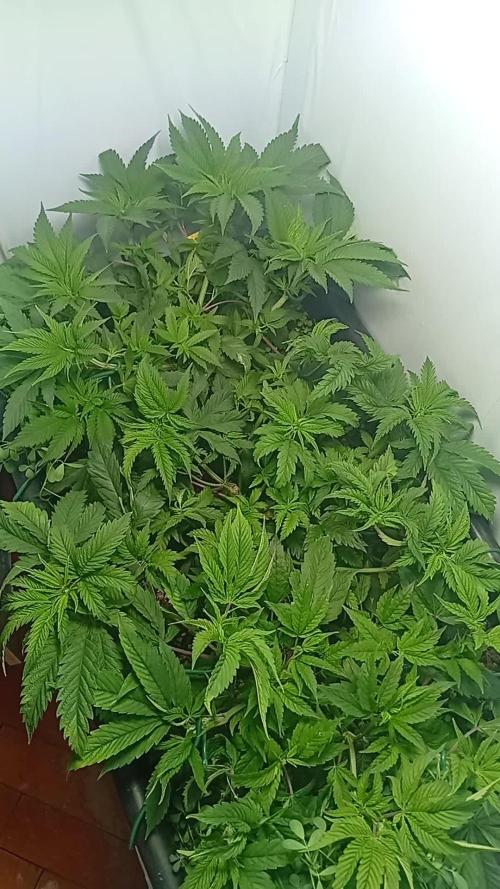
Mised week 2 And 3 after transplanting to final pot with 2 other 24k golds wich later i removed And let just pineaple Pucker info 120x60 secret jardin box
Likes
54
Share


@Hou_Stone
Follow
I cleaned the roots this week with lots of tap water. The PPM drain was at 1100 and I lowered it to 550. Then I gave 1L of fertilized water at 850PPM to each plant. Then let it dry for 5 days
Green house Mineral fertilizers: : 0.5g booster PK+,0.5g Hybrids and 0.3g Calcium per liter
Lamp power of the week: 400w
--------------------------------------------------------
Grow Room: trafika urban hydroponics 100x100x200 cm
Lamp: kit trafika urban hydroponics ballast & lampe HPS : 250-600w
Extractor & carbon filter : Mars hydro 6 inch 402 CFM ( power 3/10 )
Soil : 20% perlite, 20% vermiculite, 60% universal soil
Average daily temperature & humidity : 24-30°C 40-60%
Average nigth temperature & humidity : 17-22°C & 50-70 %

Likes
6
Share


@Skinnytalls420
Follow
Day 29-23/08/22 so I got back yesterday after being away for 3 days!!! I watered them straight away as they were starving!!! So far so good they have gotten so big since last time I checked on them before going away!!!


Likes
8
Share


@Mennowitsch93
Follow
Blüte Woche 8 es wird gespült bei 4 Ladys seit 2 Tagen und und die anderen zwei vom gleichen Schwung sind die Tage dran.
Likes
3
Share

@PhinolaGreen
Follow
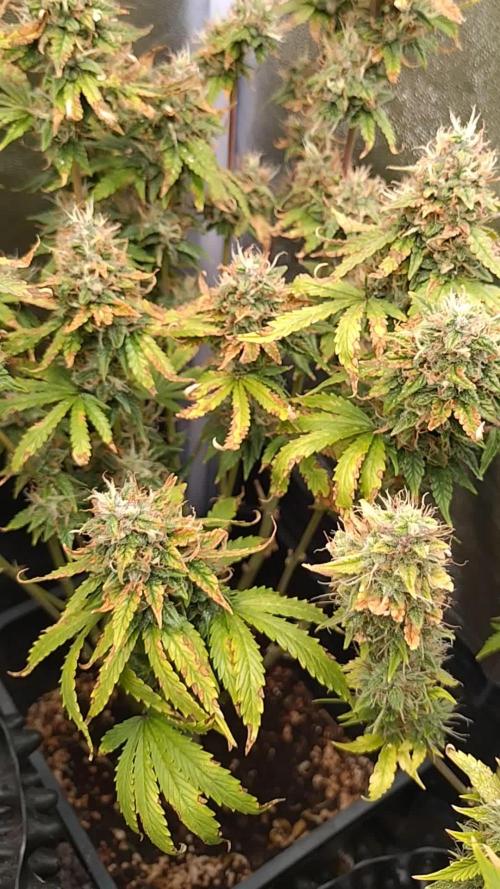
9. Woche
Pink Runtz entwickelt sich trotz der Probleme mit dem Dünger gar nicht so schlecht. Denke sie braucht noch ein bisschen Zeit 😊
Likes
17
Share

@masterofsmeagol
Follow
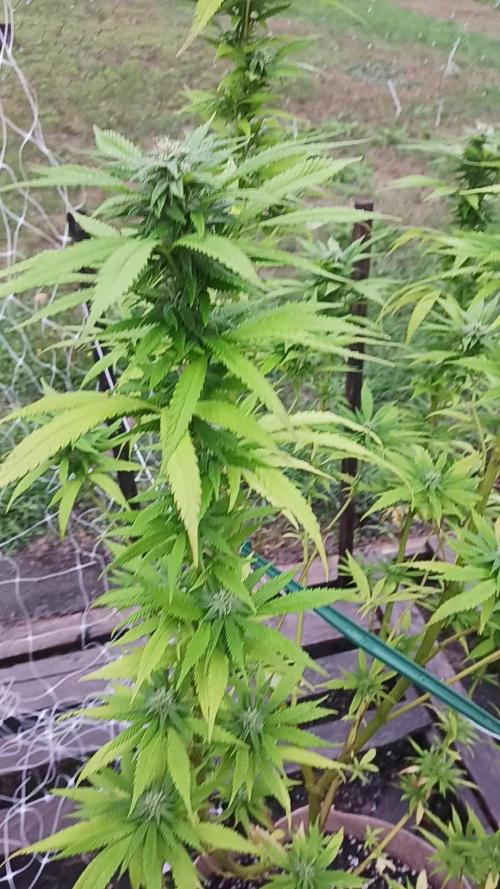
9/6 Didn't do a video this morning. Went over again around noon and defoliated what needed it. I noticed what looked like stem mold on the special kush that those locusts have STRIPPED and saw what looked like mold but I left it and assumed it was just a bite out because it wad right at a node. I removed a major branch the other day. When I got back around noon the spot had tripled in size and was 100% mold. I cut that branch off too. It was a large main limb. The plant IS frosty but it's not ready. You cant see it but the calyx is pink. There are some branches that are completely stripped. They like the special kush for some reason and seem to target that. I should go over at night and see what I can see. Pink kush is flowering fairly aggressive. Not as much as the natural mk ultra though. I cant believe how fast those are exploding. As long as weather permits the pink kush will finish. I tried the special kush #1 which I'm almost done trimming and it wad amazing. Really eases anxiety and hits me square in the eyes. Very sedative happy strain. Tastes like pine, skunk and something I can't quite identify. Maybe the forest? I'm incredibly happy with the outcome.
9/7 Holy shit. It's STILL raining. Just for the ones that didn't hear it in the back, 'I' am so glad I harvested that plant when I did!" I got super lucky. I hate having to cut off limbs or come in the morning to find a branch eaten. Next year I'm 100% getting floating row covers. That will fix most problems. Buds are exploding in size. On everything. We've had some pretty high winds as well. The natural mk ultra continues to surprise me. It seems like the flowers get noticeable bigger day to day. Finally the pink kush has some small buds. This is an October strain though. I had already popped them or I would've been running more 10th planet or mk ultra. Hey maybe this strain will make it through the fall and give me some crazy quality nugs. It's an exciting time to be a cannabis grower. I processed and jarred that Special Kush #1. I trimmed almost everything. I have a jar of "smalls" buds that didn't come off a cola and another jar that is "trimmed" but needs to be "manicured" like the rest. I'll finish today and continue the curing process. It's always great to get an early phenome. Especially when it does what you want. Oh, I noticed a couple spots on leaves that COULD be septoria showing again. With all the rain I'm really not worried. I haven't been giving the preventative dose of Plant Doctor but I might do so when I need to water next. If I have a little while before harvest. That would help with budrot or any kind of fungal issue. I don't want to water when it's saturated. I'll wait until next water and even then I may not apply it. We shall see.
EDIT: Stopped raining around 1 but it's been off and on. I shook everything off and found a pillar in one of the special kush plants. The one I had to cut to major limbs off. I got the moth larvae and removed all the debris inside. Did that with the other special kush and it was fine. I'm going over after dark to see what is munching on plants so fast. While I was removing the pillar a bird flew behind my head and grabbed something on the plant behind me. This morning a little feather was resting on a leaf. After the dive bomb I turned and found another. I can't help but smile. Nature can take her claim. It usually isn't much and I'm fine with that. The birds however are on my side. We've got a synergistic relationship.
9/8 Finally the rain ended. Didn't have time to take a video and everything was soaking wet. I'm noticing that things are getting a lot more frosty. I found my loupe so it will be easier to look at the trichs. The special kush that ive had to take two main limbs off (because they were totally stripped) is losing more. Long stalks with all the nodes eaten off with just the cola at the top. I'm not going to get much off this plant but I don't want to lose everything. The calyxes are pink and starting to retract. I'll take a look at it with my loupe when I get home. We are supposed to have a pretty good week. The natural mk ultra's buds are exploding in size! For the most part EVERYTHING is. It's going to be a good year.


Likes
25
Share


@Le_Duc_Du_Bud
Follow
Salut amis cultivateurs ✌️✂️🌿
Aujourd'hui je pose la nouvelle semaine 🗓️
Comment vous dire que je suis impressionnée ❗
Les plante ce développement a merveille voyait par vous même 🙏
Elles ont fortement grandi, je suis monter a 1.5L par plante, elle consomme la totalité des nutriments et me le montre très très bien 😍🤗
Merci Kannabia 🙏 encore des variétés merveilleuses 😊
J'espère que dame nature sera me récompense 🌿🍁
Pour plus d'informations par rapport à ces génétique, je vous laisse cliquer ici : https://www.kannabia.com/fr

Likes
5
Share

@ThatsmyGrow
Follow
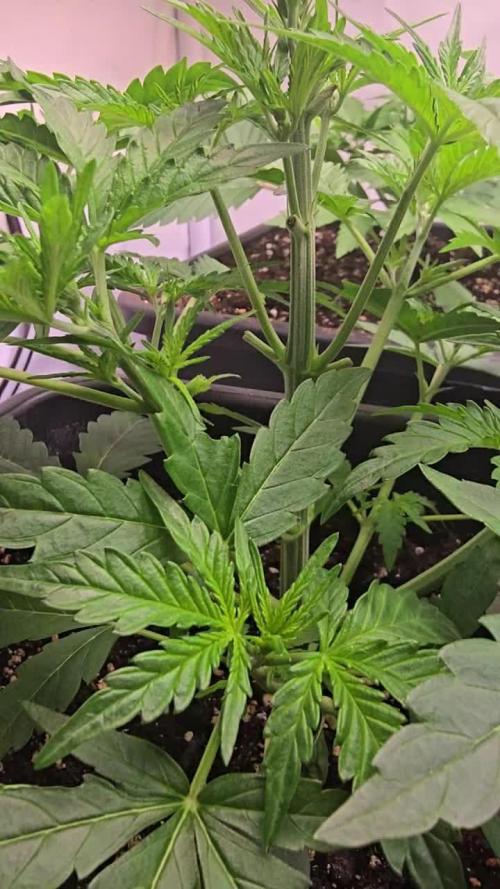
🌱 Week 3 – Gorilla Cookies Auto Pheno Hunt
Another week down and the differences between the phenos are becoming more obvious every day 👀🔥
The environment stayed very stable this week with temperatures, humidity, and VPD remaining consistent. Because all plants are growing under the exact same conditions, it’s really interesting to see how differently each phenotype develops genetically.
📈 Current observations:
Several phenos are already reaching close to 30 cm in height
Meanwhile, some smaller phenos — especially Pheno #6 — are still around 13 cm
Leaf structure and overall plant shape continue to vary a lot between phenos
Growth vigor is clearly different from plant to plant now
💧 Feeding & maintenance:
This week the plants received their first proper feeding with around 4 liters of nutrient water.
Some phenos seem to react more sensitively to the nutrients, as a few plants are starting to show slight brown leaf tips, so I’ll keep a close eye on them over the next days 👀
I also removed more large fan leaves to improve light penetration and allow the lower branches to develop more evenly.
📊 Current environment:
Temperature stable around 26°C
Humidity staying between 63–65%
VPD maintained around 1.3 kPa
Light intensity remaining at 35%
Now I’m really curious to see when the first flowering signs will appear 🌸🔥
💬 Which pheno would you pick so far?
Likes
70
Share


@Kid_Colombia
Follow
Finally back to the garden after 4 weeks away.
They were really in need of love by the time I got back to take care of the garden.
BIG NEWS! Now running a California Lightworks Solarxtreme 500 as my main light.
Will add a second SX500 light into the room once I start flower.
Hit the LST on the again and just making sure they are getting fed and lots of love.
Will have to push back my starting flower by another few weeks. See how the recover

Likes
4
Share


@Luke_Lee
Follow
-06.04.2025
Today is the day.
After a thorough examination of the trichomes, I decided to harvest the two Blueberry Automatics.
After a total of eleven weeks.
The wet weight of the flowers of Blueberry#1 = 77 grams,
Blueberry#2 = 74 grams.
The flowers are now hung out to dry and will be weighed again in 7days.
-11.04.2025
After 6 days the Blueberry Automatics are dry. The branches broke directly when bent with a nice cracking sound.
The dry weight of both plants together is 34g.
The flowers were stored in jars for curing with a humidity packet from IntegraTM and a hydrometer.
Total Time: 1879,36h
Total Energy: 326,30kWh
1kWh: 0,30€
Energy Cost total: 97,89€
💚

Likes
3
Share

Likes
16
Share


@Mrg7667
Follow
Day 74 and there getting chopped today! I thought the harvest was going to be broken into two separate weeks considering the times on the Choco was listed about 7-10 days sooner then the DD (wich was listed at 70 days for flowering)
However looking at the tricombs on the Chocolate Marshmallow most pheno didnt start getting amber untill the DDs did as well! A couple DD pheno could have maybe gone a couple more days but we will see!
Going for reveg on all the pheno, since i didnt get to take any clones. We will see how it goes!

Likes
10
Share


@Sators
Follow
Day 88 – Botanical Simplicity, Natural Strength 🌿🌞
The journey of this plant continues to unfold as a true outdoor minimalist grow. With nothing but sun, air, and a single black fabric pot nested in a white bucket, she has proven the power of natural light and biological momentum.
After thriving through the UK’s recent heat wave and absorbing up to 2000 μmol/m²/s of sunlight, her structure has matured into a strong, well-formed canopy with vigorous apical dominance and defined lateral colas.
Her lush green leaves show excellent health overall, though some lower yellowing is now visible — an expected and natural sign as she redirects energy into flower production.
The Bat Guano top-dressing from 08.06 seems to have fueled the transition into mid-flower with solid nitrogen-phosphorus support. Bud development is now advancing daily with visibly expanding calyx clusters and well-stacked nodes.
This diary is not about chasing perfection — it’s a living testament to how far you can get by trusting the rhythm of the elements.
No boosters, no artificial lighting, no stress. Just patience, observation, and a little care.
Nature grows. We observe. 🌱📓
Likes
2
Share


@Saintvicious
Follow
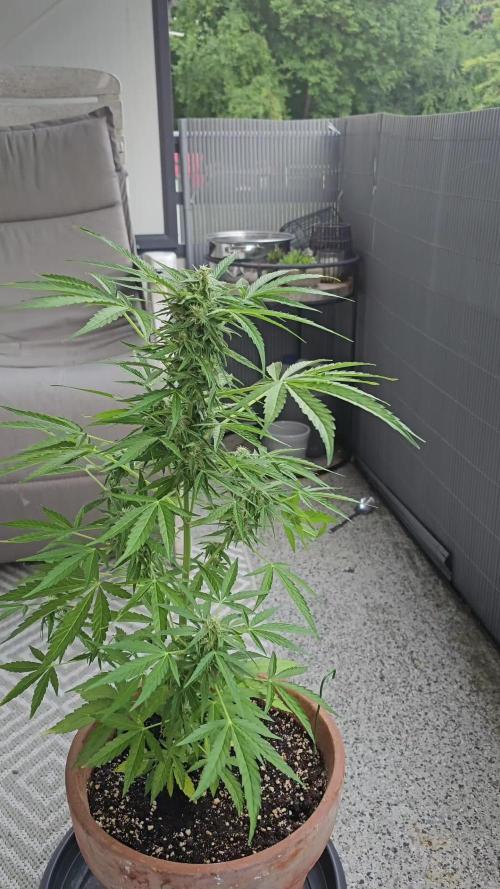
Looks like a lot of top sights. Afraid stretching too much. Hopefully it fills in.