


Likes
Comments
Share


@EaRtH
Follow
13.9. - Flush week started 😎
16.9. - Watered 💧
19.9. - Watered 💧
13.9. - 19.9.2024

Likes
3
Share


@PalmaGrow
Follow
Excelente genética excelentes olores y aromas un terreno delicioso, productora al 100% tiene una muy buena capacidad de producir cogollos robustos y compactos
26/10/2024 fecha de la cosecha.
Likes
10
Share


@Stanp
Follow
Looks all good. The Fruit Spirit is growing big time. Unfortunately the Legendary OG is very slow, I believe it’s because i plant it in a very big pot and is getting focused on the roots for now. It does look healthy anyways. The Blue cheese automatic is growing really quick.
Unfortunately in week 3 the Legendary OG has died. I found out that i was giving nutrients to early so I kinda burnt it. Feeling sad about it.
I’m doing another seed now. Northern Light Automatic.
This week I added chamomile flowers to the soil.
I baked in the oven egg shells which I added to the soil as a natural Calcium.

Likes
25
Share


@UnkleSkunk
Follow
undeterred continues to grow ... very slowly surely the growth will be 'longer than normal, but given the forecasts is a pleasure to wait
The plant remains very dense with leaves and flowers the dimensions are from XXL, I have not done many plants until now but this is the most particular
I have great expectations ....

Likes
19
Share


@Ketamine
Follow
Lots of defoliating underneath for improved airflow. Lights running 100%. Plants have good bud set. Looking great so far I cannot complain.
Co2 1500ppm,Humidity 60%,Temp 75-78f.
Likes
11
Share


@SkunkyDog420
Follow
Hallo zusammen 🤙.
Das war es für sie wir sehen uns in 3 Wochen wieder.
Bis dann


Likes
35
Share


@Reyden
Follow
Lst e ML continuano è la bimba inizia a crescere di prepotenza!!!
Da oggi nuove foto e qualità alta con macro e nuovi filtri 👽😼



Likes
2
Share

@Elron_mc_Bong
Follow
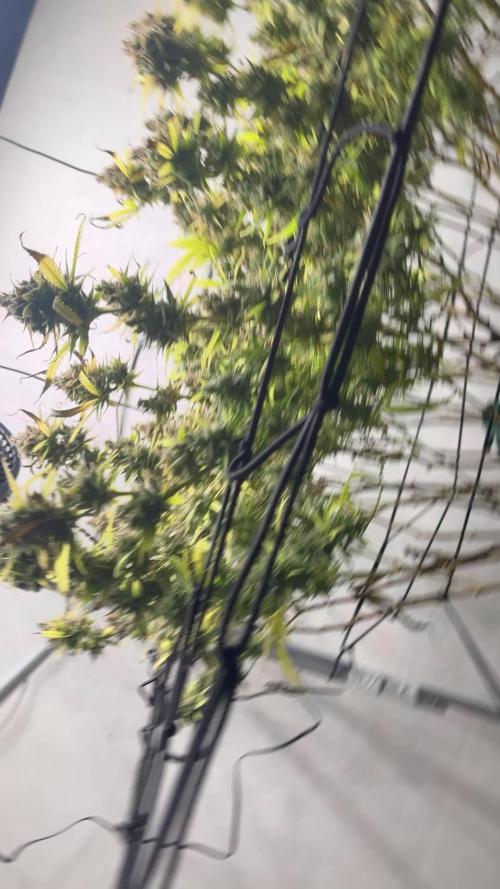
Blütetag 77 – Geduld zahlt sich aus
Drei Wochen über Herstellerangabe – und genau deshalb fühlt sich dieser Zeitpunkt richtig an.
Ich habe mich bewusst entschieden, nicht nach Kalender, sondern nach Reifegrad zu gehen. Ziel ist ein stark körperbetontes, sedierendes Endergebnis – also Geduld statt Eile.
Der Fade ist deutlich, die Blätter verlieren an Kraft, während die Buds dicht, harzig und vollständig ausgereift wirken. Jetzt geht es nicht mehr um Masse, sondern um Feinreife.
Die finale Woche beginnt.
🌿 Abschlussbericht – Franco’s Lemon Cheese 🍋🧀 | Tag 80 – Ernte
Tag 80. Heute ist der Tag, auf den ich die ganze Zeit hingearbeitet habe: Erntezeit.
Nach geduldigem Warten ist der Amber-Anteil jetzt genau da, wo ich ihn haben wollte – und damit ist für mich der perfekte Punkt erreicht, um die Schere anzusetzen.
Dieser Run war für mich vor allem eins: Kontrolle, Geduld und Feintuning. Ich hab bewusst nicht überhastet reagiert, sondern die Pflanze sauber bis zum Ende geführt. Die letzten Tage waren nochmal pures Beobachten: Trichome checken, Reife bewerten, Bauchgefühl + Lupe zusammenführen – und heute hat’s einfach „klick“ gemacht.
Was ich mitnehme aus diesem Grow
• Timing schlägt Stress: Das bisschen extra warten hat sich gelohnt – genau diese letzten Prozent machen am Ende den Unterschied.
• Reife vor Optik: Nicht nur nach „sieht fertig aus“ gehen, sondern nach dem, was die Trichome wirklich sagen.
• Stabil bis zum Schluss: Gerade die Endphase entscheidet, ob man mit einem guten Ergebnis endet oder mit einem „hätte ich mal…“.
Jetzt startet Phase 2
Ab jetzt geht’s nicht mehr um Wachstum, sondern um Qualität sichern:
Trocknung, Klima, Geduld – und dann Curing, bis die Franco’s Lemon Cheese genau das wird, was sie sein soll: hart, aromatisch, sauber, fertig.
Ich halte euch auf dem Laufenden mit den nächsten Updates zu:
• Wet Trim / Dry Trim
• Trocknungsdauer & Klima
• Erster Smoke-/Vape-Test
• Curing-Woche 1–4
Bis hierhin: Run sauber durchgezogen.
Heute wird geerntet. 🍋🧀✂️
Trocknung ist gestartet und läuft kontrolliert über den Controller:
• 60% rF
• 2% Totzone
• 16–18°C
Jetzt heißt’s: Ruhe bewahren, Klima stabil halten und langsam trocknen, damit Terps und Qualität sauber erhalten bleiben. Nächster Step: Dry-Check & Trim, sobald die Äste anfangen leicht zu “snappen”.


Likes
17
Share


@RDWCGrowing
Follow
Week 3 Day 1 8/26/2023
Water Change Day!!
Added:
36 gallons of Water
TPS SILICA GOLD-.5mil/Gal
Root Drip- 1mil/Gal
CALMag- .5mil/Gal
GH FLoraMicro-4.2mil/Gal
GH FlroaGro-3.8mil/Gal
GH FLroaBloom-3.0Mil/Gal
ORCA-.5mil/Gal
She continues to be my Mutant!
Week 3 Day 2 8/27/2023
Topped her a little and took a little from the bottom. The PH was just a little high so I added 4mil PH down to get it to 5.86.
Week 3 Day 3 8/28/2023
Topped her a little and just enjoyed her individuality.
Week 3 Day 4 8/29/2023
Topped her a little, and started cleaning up the lower 1/3, I am starting with the fan leaves that are touching the clay and some of the lower, lower portion but leaving the stems for when I take clones.
Week 3 Day 5 8/30/2023
The temp has been getting to 79-80 the last few days and I don't like it that high. I lowered the light to 29 inches and decreased intensity to reach the 350ppfd for the plants. By dropping the light it should also drop the temperature.
I took a few bottom leaves as I start my clean up, leaving the lower stems for clone material for now.
Week 3 Day 6 8/31/2023
Found out why the temp had been getting so high in my tent and my grow room, the controller for my other light for my other tent was malfunctioning and overheating. I guess this was the unknown contributing factor to the sudden increase in temp, how am I sure about this, because the light no work no more. I am working with Spider-Farmer Warranty since the light was under a year old, very sad day yesterday was to replace my SE 7000 on my breeding plant which was in week 9 of flower with a VS2000 I am thinking I am going to have to cut my losses.
On a good note she looks Amazing full on Growth Spurt happening, I adjusted the PH up slightly to get it from 5.81, to 5.89.
Tomorrow Measurements incoming.
Week 3 Day 7 9/1/2023
She is looking Mutanty this morning! I took off some lower leaves cleaning up the bottom 1/3.


Likes
4
Share


@GrowingGiant
Follow
Can’t wait to try another strain by short stuff seeds. Easy to grow and very high quality product if grown correctly

Likes
5
Share


@Ninjabuds
Follow
7 archive seeds are legit super dense tricomb production like nothing I've seen b4. I would NEVER BUY SEEDS FROM ARCHIVESEEDBANK.COM.... they have great genetics but there customer service is garbage. This summer I spent 50 on these 3 seeds and 125 on a 12 pack of reg seeds of a diff strain the reg seeds didn't grow at all and archive never responded they sold me old ass seeds and stole my 125$ I'm happy I already got 32 seeds from the crappy plant of the 3 that I already cut down. I'm letting the last 2 finish up completely

Likes
41
Share

@Oyziphar
Follow
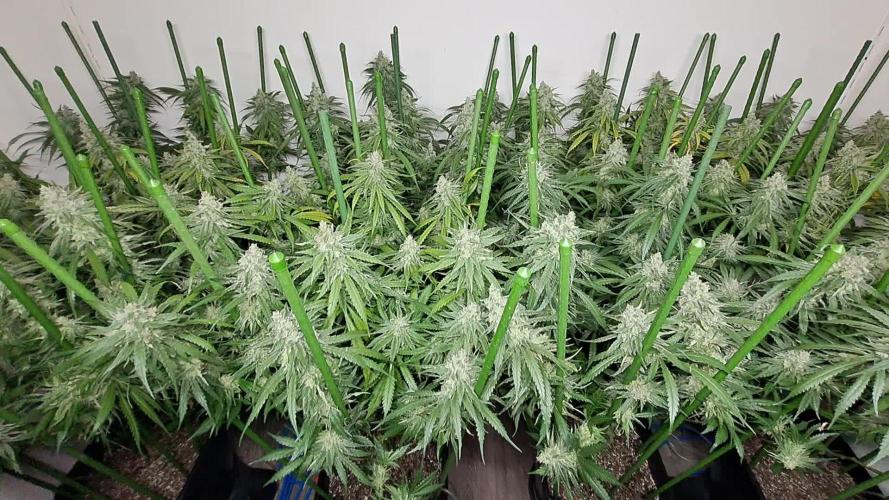
No work this week 😎 Just enjoying and waiting for the buds to become heavier each day 😍
9 weeks of flowering, so the plants are at the end of their finale stage 🏁 Buds start to swell like popcorn🍿 Leaves are turning yellow 🍂
Daily checking ✔️✔️✔️ for the ideal harvest time 👌
Biotabs Webshop 👉 biotabs.nl/en/shop 👉 Code: GDBT420 → 15% OFF
If you love organic growing like I do, feel free to vote for BIOTABS in the category Best Organic Cannabis Nutrients! 👉 growdiaries.com/awards/2026

Likes
128
Share


@PapaNugs
Follow
Has been a good week for the girls. They really exploded this week. I can't keep up with the ties. They got too big to have a level canopy. Will have to adjust later this week after defoliation and lollipopping. Will be a huge week and the girls will look different next time you see them!

Likes
22
Share


@herbalistssword
Follow
Great week, harvested the Candy Kushs and the remaining girls are doing really well.
I've stopped feeding them and just giving water now as I am away for a few weeks and wanted to keep it simple for my partner who is looking after them while I am away.
The fastberry can probably be harvested already but decided to leave her longer and hopefully give buds more time to fatten up.
The Bubble Kush is looking amazing and the buds are growing and gaps between buds getting smaller, she looks like she can do with a few more weeks, so she'll be perfect when I am back hopefully.
This will be my last update until then probably.


Likes
1
Share

@Zucca
Follow
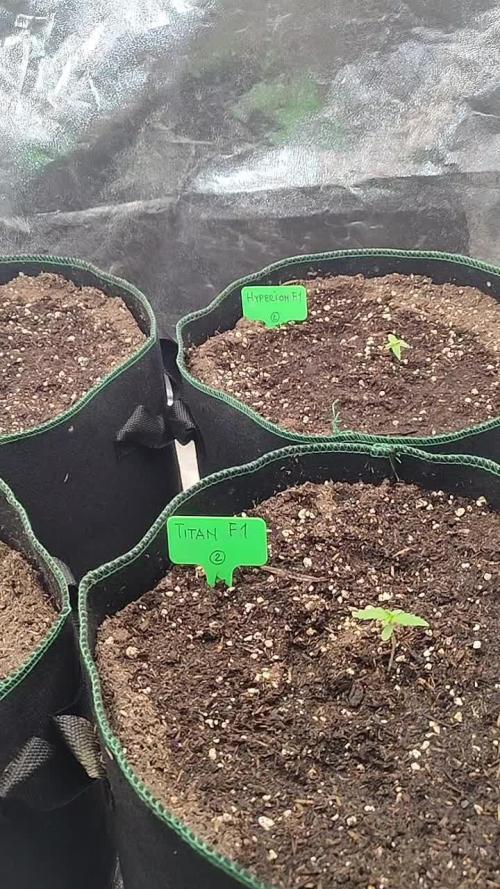
Altought the completely succesful germination (100% of the seeds) the first vegetation week wasn't completely satisfying. In fact one of the two Titan, after was buried in its pot, didn't pop up and I'm afraid it will never do. Instead the other three plants looks to be in good health
Likes
73
Share


@Rwein93
Follow
Ciao ragazzi e bentornati qui con me e le sorelle Mimorange🍊😉
Ragazzi! Mai visto niente del genere!!!
La pianta numero 2 e la numero 3 hanno letteralmente raddoppiato la loro circonferenza.💪
Per non parlare dei colori, i pistilli iniziano a diventare arancioni e con il giallo e le varie tonalità di verde dei buds la rendono molto affascinante.😍
L odore ormai ha preso il sopravvento nella tenda, e sta cambiando in meglio. Note dolci di caramella si mischiano all intenso profumo di Arancia.🤤
Eh niente ragazzi! La più bella pianta che ho mai fatto..... forse lo dico ogni nuova corsa🤣😂🤣 ..... ma questa volta è davvero strabiliante la grassezza di queste cole!🔝
Grazie a tutti per aver guardato e restate sintonizzati per nuovi aggiornamenti.🙏
Buona settimana e felice crescita 🌱 🌱 🌱
