Likes
Comments
Share
@Roberts
Follow
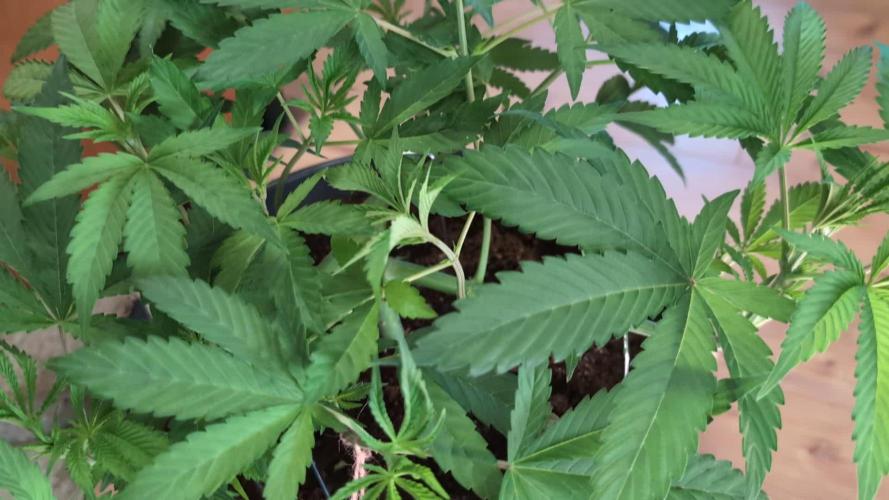
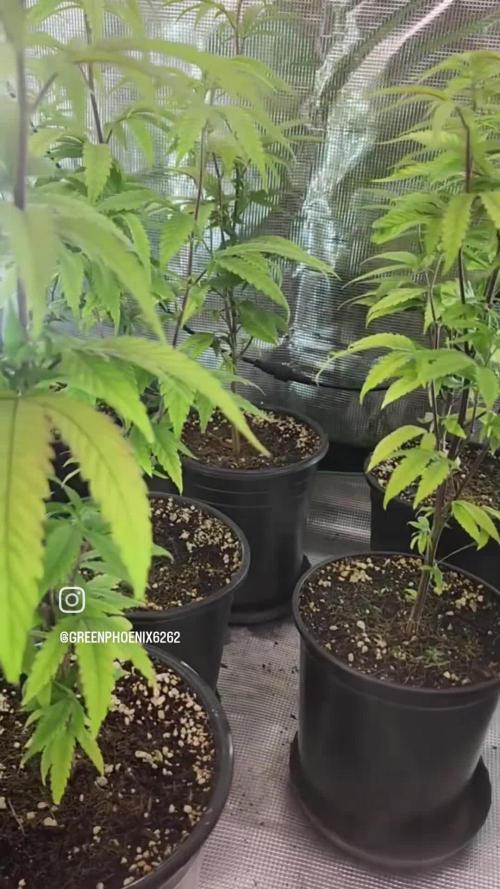
The salt build up finally caught up to me. I gave her a good soaking watering then followed with fresh feed. I will repeat this once she dries put if there is no ill effects. It should help clear up the issue. Her run off ph was 5.8 which was a sign of the build up. It should be on the right path now. 🤞🏻 next update she is back to healthy, and u can switch her to flowering before she gets too big. Thank you Divine Seeds, and Spider Farmer. 🤜🏻🤛🏻🌱🌱🌱 Thank you grow diaries community for the 👇likes👇, follows, comments, and subscriptions on my YouTube channel👇. ❄️🌱🍻 Happy Growing 🌱🌱🌱 https://youtube.com/channel/UCAhN7yRzWLpcaRHhMIQ7X4g
Likes
33
Share
@Damonkey
Follow
All plants are ready to come down now will be harvested in the next couple of days. As it ends in the tent there’s one Banana one 10th and the skunk Hero in joint position for best looking flowers, I really couldn’t pick between them so I guess all have lots to offer across phenotypes and it really is mostly good. The other banana and -0th are by no means bad oh they’re really nice too. The Genetics surely do pass the test for me. If you want to be sure what you grow will be of decent quality Ethos really are worth a try. Harvest this month will be bountiful, beautiful, aromatic and will fuck you up😉😂 all three had phenos that grew really nice dense flowers, the ones that’ll light up your eyes as you open up your stash pot.
Likes
11
Share
Man what a busy week. I left for a small vacation with the family and left the plants in the care of someone and luckly everything is still alive lol. Then today I almost forgot to post my weekly diary because I was busy build my new grow office and moving all the equipment in. The room I built is where all the plants well eventually end up ones my coco and perlite arrive. The runtz themselves are both doing really good and haven't slowed down much after topping them. Roots are starting to reach the bottom of the 1 gal pots so hopefully I can transplant them I to the autopot system soon. Well happy growing!!!
Likes
1
Share
Nice and frosty next to no effort was put into tbis plnt just let her do her thing and she turned out a beauty really easy to grow and no problems so far
Likes
17
Share
8 week We have 12 strong plants and one skinny one. They start drinking more then 1.5 l with one application of water. Smells really sweetly and fruity. I really love it!
Likes
9
Share
Da oltre venti anni che coltivo e sono sempre più felice della qualità proposta da queste magnifiche banche semi! Complimenti di cuore a chi ha selezionato e creato queste varietà autofiorenti. Crescono rapidamente,resistono agli afidi e alcune sfiorano il metro di altezza, tutte insieme sembrano una mini foresta! Iniziano a fiorire gradualmente ed essendo molto diramate tutte è spettacolare nel vederle! Appare la prima resina e sono in ottima salute. Sono felice fino ad adesso perché se guardate foto e video vi rendete conto che qui nel centro Italia in outdoor biologico abbiamo il migliore clima che si possa desiderare anche se questo 2023 fino a metà maggio ha piovuto tantissimo e ci sono stati sbalzi di temperatura, ciò non è stato un problema per queste varietà così forti e abbondanti! Adesso la magia è iniziata, il caldo è arrivato e non vedo l'ora di vederle piene di infiorescenze tutte! Si procede felicemente, un abbraccio a tutti!
Likes
2
Share
Remember that, however you are played, or by whom, your soul is in your keeping alone. Even though those who presume to play you be kings or men of power, when you stand before God, you cannot say, 'But I was told by others to do thus,' or that virtue was not convenient at the time. This will not suffice. Remember that. Day:18 84°F and 65% RH (VPD) for the vegetative stage. Approximately 1.15kPa(assuming leaf temperature is about 2°F cooler than the air), which falls right into the ideal vegetative sweet spot (0.8kPa to 1.2kPa). At 1.15kPa, plants can draw water and nutrients efficiently without risking stress or wilting. It keeps the leaf pores (stomata) open, allowing for ideal carbon dioxide intake and maximizing vegetative growth. VPD is determined by the leaf's temperature, not just the ambient air. Because leaves usually run 1° to 3°F cooler than room air under bright grow lights, my actual VPD will be slightly lower, closer to the 1.0kPa mark. As she transitions from vegetative growth to flowering, one can gradually lower the humidity (to around 45–60%) and drop temperatures slightly to prevent disease from settling inside dense buds when they appear. Night:6 At 70°F and 60% relative humidity, Vapor Pressure Deficit (VPD) is 0.86 kPa. This is right on the cusp of whats optimal for the vegetative stage. During the nighttime, plants generally close their stomata and undergo cellular respiration rather than photosynthesis. Transpiration slows to a near stop, making VPD less critical at night than during the day. However, maintaining a nighttime VPD between 0.8 and 1.0 kPa is highly beneficial in that it ensures the air is dry enough to prevent powdery mildew or bud rot, but moist enough to keep the plant from undergoing unnecessary stress. This range keeps the environment comfortable for cellular processes and prevents large atmospheric swings. Keeping it all flowing. (Not pushing them yet, these are photoperiods) The optimal soil (root zone) temperature for cellular root respiration and nutrient uptake in cannabis is between 68F & 72F This narrow range balances biological energy production (cellular respiration) with the dissolved oxygen levels in the soil, maximizing plant growth and health. Warmer soils hold significantly less dissolved oxygen. When soil temperature exceeds 74F oxygen depletion occurs, inhibiting cellular respiration almost entirely, At 68-72F root cells generate optimal adenosine triphosphate (ATP) via respiration to power root-tip elongation and the active transport of water and nutrients. Too Hot (Above 78F) Root respiration increases, demanding more oxygen, while the water's oxygen-carrying capacity drops. This creates a prime environment for anaerobic pathogens and Pythium (root rot). Too Cold (Below 60F) Root metabolism and cellular respiration slow to a crawl. This severely impairs nutrient and water absorption, leading to yellowing, wilting, and phosphorus deficiencies. A lot depends on whether it's automatic or photoperiod; with photoperiod, there is not as much of a need to push "hard" as the real countdown only begins once the flower is initiated. Automatics, on the other hand, the chronological "clock" begins ticking the moment the seed germinates. It is of critical importance that the seedling growth gets off to the races, understanding that early growth is like compound interest, which will pay off come harvest. This reality is why getting autoflowers "off to the races" early on yields such exponential benefits. The "compound interest" is directly related to the surface area of the leaves. Larger, faster-growing seedlings process more light and build bigger root networks early on, which translates into an explosion of vertical and lateral growth during their short vegetative window. The margins for error are so thin with autoflowers; this early-stage momentum depends on several critical practices. Seedlings exposed to increased atmospheric CO2 levels early in life will develop at an increased rate. To effectively "extend" or optimize the capacity of Photosystem II (PSII) for increased photosynthetic efficiency. In standard oxygenic photosynthesis, Photosystem II (PSII) is naturally limited to the red-light spectrum, peaking at 680nm. Extending its light-harvesting capacity past 700nm into the far-red region requires bypassing the natural limits of standard chlorophyll a. Adding 730 nm (far-red) LEDs alongside standard red/blue lights has been shown to increase canopy photosynthesis by 20–30% in several crops by acting synergistically with shorter wavelengths. However, the limitation is that excessive, pure IR/Far-red light (without accompanying red light) can trigger the "shade avoidance response," causing plants to grow tall, weak, and spindly rather than robust. Utilizing infrared light (specifically the 700-750 nm far-red range) is a viable method to boost photosynthetic efficiency. It acts as a bridge to allow PSII to utilize a broader spectrum of light, breaking the traditional 700 nm barrier. UVR8-mediated signaling (often in conjunction with CRY proteins) triggers protective mechanisms that maintain the stability of the photosynthetic apparatus (including LHCII and reaction center proteins), thus ensuring that the efficiency of Photosystem II remains higher in UV-B-exposed plants compared to plants lacking this receptor. ΦPSII indictates the rate of electron transfer from water to plastoquinone, which drives the production of ATP and NADPH. There is a close link between ΦPSII and the true rate of CO2 fixation (Φ*co2). ETR stands for Electron Transport Rate. It measures the speed at which electrons are moved through the thylakoid membranes in a plant's chloroplasts during the light-dependent reactions of photosynthesis. Infrared light (particularly Near-Infrared or NIR) improves cellular energy by interacting directly with the electron transport chain (ETC) in mitochondria. This process boosts adenosine triphosphate production, which acts as a metabolic coefficient multiplier by accelerating enzyme activity dramatically. Extend then multiply. Far-Red photons interact with plant photoreceptors to accelerate the plant’s biological "clock" or trigger a shade-avoidance response. Autoflowers don't use the plant's biological clock, although the IR will initiate a shade avoidance and make them stretchy. You can just add equal measures of 660nm-680nm to negate the shade avoidance effect. Replacing nights' "darkness" with a combination of IR+ and 660nm. Because autoflowers don't require a dark period to flower, many growers just blast them with light. 18/6 24/0. However, this ignores the plant's metabolic rhythms, where daytime photosynthesis (light reactions) must be perfectly balanced with nighttime carbon fixation and assimilation (Calvin cycle) to avoid bottlenecking plant development. Cellular respiration is a 24/7 process, but it can only function while the plant has the free oxidative capacity to do so. A 100% photosynthetically active leaf cannot perform cellular respiration. The viral trend of defoliation of every leaf that isn't "getting enough light" is of great detriment overall, putting 100% of the cellular respiratory "workload" and responsibility on the 0/4/6 hours of darkness in sub-optimal conditions for enzymatic activity. Photosynthesis captures nearly 100% of the initial energy as carbon, while cellular respiration is the process that unlocks 90% of that captured energy into usable ATP so the plant can use it. Respiration is considered only roughly 30% to 40% efficient. It captures enough of the potential energy in glucose to synthesize around 30 to 38 ATP molecules per glucose molecule. The remaining 60% to 70% of the energy in the sugar is not captured in ATP; instead, it naturally escapes into the environment as heat, which helps regulate plant temperature. In plants, the primary enzymes of the Electron Transport Chain (ETC) and the ATP synthase complexes are typically adapted to function optimally in warmer temperatures (roughly 77°F to 95°F, depending on the specific plant strain). As temperatures rise within this physiological range, molecular collisions increase, speeding up respiration and ATP production. The cannabis plant has a branched respiratory pathway. During heat or cold stress, plants activate Alternative Oxidase (AOX). AOX burns sugars to dissipate energy as heat rather than coupling it to ATP production. This pathway actually functions optimally at elevated temperatures to help protect the cell from the damaging build-up of Reactive Oxygen Species (ROS) during heat stress. Enzyme activity generally scales with heat; there is a strict biological limit. If canopy temperatures in a grow room exceed 104°F, the enzymes and their supporting lipid membranes lose stability. Not saying you need to go crazy, just optimize nights the same as we optimize days. Phosphorus is the driving force behind early seedling development. It acts as the "energy hub" of the plant, directly driving cell division, robust root growth, and the creation of DNA. Without an adequate, easily accessible supply early on, the plant's overall growth potential and final yield can suffer permanently.
Likes
10
Share
June 7: Lemon Cream Kush is looking good a day or two after being topped. June 9: going good. Video is a tip to moisten plant leaves a couple times a day when growing in dry air. It makes up for the low humidity. June 10: wildfire smoke has reappeared but not as bad as 2023 (here at least (so far)). She is not stretching out like my other plants but still growing. June 13: oops, i broke a main stem while trying to do LST. Patched with floral tape. it didnt fully break so the tape might work.
Likes
8
Share
@Ninjabuds
Follow
Code ; NINJABUDS for a discount on ELUFAH lights The spectrum from ELUFAH is really making the plants grow really well My papa Payton I have growing under the ELUFAH uap-1500 along with the ELUFAH Saturn ring under canopy light. I recently put the plant back in a 2x2 I did have 2 plants but the other plant needed up being male. No need for the larger tent still.
Likes
2
Share
@Bandit600
Follow
Wachstum ist gut 👍. Wie immer bei zamnesia bin noch nicht enttäuscht worden. Danke
Likes
4
Share
It's a lot of stretching going on in here...
Likes
5
Share
I've defoliated a little as I go. One of the watermelon candy has a flat stem (Fasciation) I've been trimming the leaves as they are growing in abundance on the affected branches. The black orchid smells so good it's very pungent and captivating, I'm really looking forward to trying it now.
Likes
10
Share
@VovaFarms
Follow
Flowering week 9 report: -------------------------------- Okay guys i am on the final stretch! I have carefully examined pistils and noticed that all of the plants have more than 70% darkened and curled pistils. Also, i did some microscope check on the trichomes are they are all milk and cloudy. This week i will administer nutrients for the last time, then i will do 5-7 days flush with plain ph-ed water. That being said, i guess i will be harvesting these beauties in no more than 10 days from now on. During the day the HPS and the strong ventilation are drying the air good enough, and during the night i turn on dehumidifier, so the RH stays low 24/7.
Likes
19
Share
harvest time 💚💚💚💚🍀
Likes
19
Share
Started 12/12 light cycle. Normal week. watering up to 1.5 L a day. co2 PPM @ 1250. Defoliated due to massive growth and to bring light to the tops.
Likes
21
Share
@DogterB
Follow
Week 9 Day 57 (9/11) Things are going well, or so it seems. She looks like she is starting to bulk up at her bud sites. Her pistils are everywhere and I'm hoping to see the buds forming soon. Being a first timer, I have no idea what I'm looking for, but it's still exciting! Temps and humidity have been holding fairly steady. I think I'm to to point of bumping the humidity back some, keeping it below the 60% range. I have a couple VPD charts I'm trying to go by and they give me a range I am trying to keep the temp/humidity in. I fed her last night and she seems happy. Haven't noticed any of the discoloring or anything continuing, so that's good. I added some Alaska Fish Fertilizer to the mix just because I got it for free and wanted to give her a little nitrogen boost because her youngest leaves are kind of pale. I've heard that it's hard to overdo it with it, so figured it was safe enough. It has an NPK of 5-1-1, so I thought the P & K boost might be good too. Day 58 (9/12) Humidity keeps getting a little high, so I busted out a dehumidifier. There is some yellowing on some newer leave serrations, but idk if it is new or I'm just thinking it's new. Day 59 (9/13) Yesterday got a little rough for her! I kicked on the dehumidifier I have before I left for the day, and good thing the wifey was home to check in! Apparently that dehumidifier pumps out some heat! Within a few hours, the tent temp was almost 93F and humidity was nearly below 40%. She was quick to turn it off, crank the exhaust fan, and get the window opened to cool it off. When I turn it on in the future, I'll have to be sure to keep an eye on the room temp. I feel like she is a long way off from being ready, really doubt she will be anywhere near the 70-77 day grow time. That's fine with me, as long as she's happy and filling out, she'll get there eventually. Most other journals I've seen, they don't chop until week 12 or so. I also felt up one of the forming buds a bit, and the smell she left on my fingers is maddeningly delicious, about knocked my socks off. Day 60 (9/14) Pulled her out last night and tried tucking in a bunch of leaves to get more light to some of the lower bud sites. It's wild how many she has. She probably could have used some defoliation, but being an auto (and my first time growing) I held off. Maybe in future grows I'll give it a shot. Doing a better job at LST would probably have helped as well. She's still trucking, starting to see some start of frostiness. Day 61 (9/15) She seems fairly light in the pot, I'll probably try to feed her tonight or tomorrow morning, it just depends on when I get outta school today. I have surgery today, so I'll be here until late so will more than likely just get it mixed up tonight for in the morning. Day 62 (9/16) I mixed her up some feed last night. She's been having some yellowing on her tips and serrations, likely from phosphorus deficiency. Hoping what I mixed up is plenty to stave that off. I mixed it last night and gave it to her this morning after lights on. Her smell has really kicked in, I'm glad I got a filter and exhaust fan or the house would smell amazingly illegal. I was running late this morning and didn't even remember to get a pic of her this morning. I'll try to get one tonight before she goes to bed. Day 63 (9/17) Some of her lower leaves are starting to yellow between veins, showing magnesium deficiency. I almost put some cal-mag in yesterday with her feeding, now I wish I did. I'll wait it out and get her some next time she gets watered, or sooner if she's gotten worse since last night. I feel like she is just gobbling through her food, but honestly idk. I may be just keeping her right at the edge of deficiencies.
Likes
2
Share
@Palermo91
Follow
👍👍 keep grow let see what happens next week
Likes
13
Share
@SgtDoofy
Follow
Mar 14 Looking good. Fed 3/4 gallon of RAW GROW 6 days ago. Seems to have taken it well. Getting close to needing another drink.