




Likes
9
Share


@Skinnytalls420
Follow
Day 39-02/09/22 should be back on track with the diary now 5 of the plants all looking good some taller than others but that’s to do with the position of the plants under the light but all looking good this is when things get exciting

Likes
4
Share

@Yamamoto420
Follow
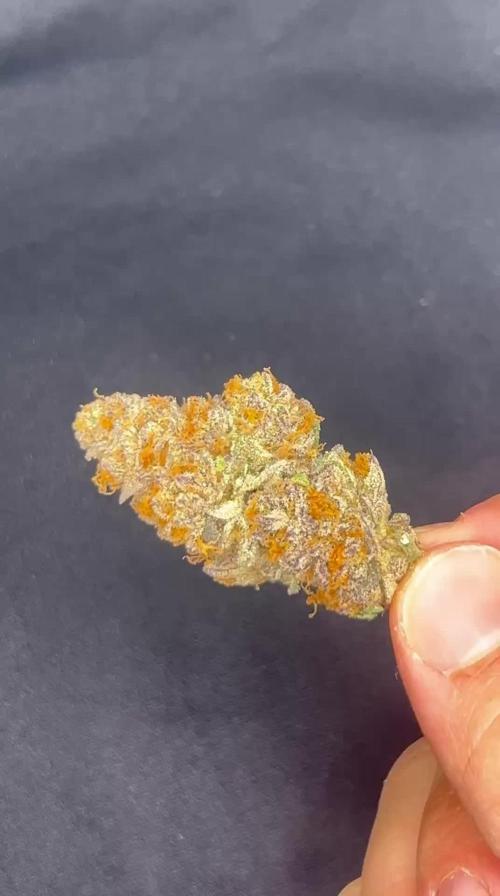
I chopped them after 63 flowering days hang them upside down for two weeks, trim them hand trimming then after that cured them inside jar glass 58 humidity and 20 Celsius, after curing this is what the most head banger strain from all of them it’s definitely indica dominant with very unique taste and long lasting high, I would grow it again definitely!


Likes
14
Share


@BushDoctor740
Follow
Last of the 5 Papaya Cookies still going strong.Ive given her just plain water when the pot is dry.She is still showing some signs of new growth and has more time to develop.cut the last Papaya down trichomes were cloudy. I’m going to dry her a little differently than the rest.Im going to hang in small branches on hangers as I’m trying to avoid any molding on the big center cola.Drying at 67 degree and 62 percent humidity and she smells amazing.
Likes
92
Share


@DogDoctorOfficial
Follow
Week 7 Flower Report – The Masterpiece Garden Unfolds
🌱 Introduction
Welcome back to the most thrilling chapter of our journey yet! Week 7 of flower is here, and the garden has transformed into a paradise of unique beauty and diversity. Every plant has its own personality, showcasing the results of all the hard work, dedication, and love poured into this run. Let’s dive into the details and celebrate these girls like never before—because they deserve it!
🌸 Plant-by-Plant Breakdown
Papaya Zoap
The rebel queen of the garden, aiming for the stars with her towering structure. Her dense, frosty white nugs sparkle like diamonds, and her leaves are fading to a stunning yellow hue—a clear sign she’s ready to shine. Her aroma is captivating, leaving no doubt she’s going to be a showstopper.
Gorilla Melon
Standing tall as the second in command, this beauty is all strength and vigor. Her vibrant green foliage cradles thick, frosty buds that exude a fragrance worthy of her name. A true contender for the title of MVP.
RS11
This one’s a frost factory! Long, elegant buds dripping in trichomes, with leaves gracefully fading to yellow as she transitions toward the finish line. Her balanced stature and impeccable structure make her a dream to cultivate.
Green Papaya
The frostiest of them all, her sugar leaves are curling under the weight of so much resin. Every glance reveals a shimmering coat of trichomes that’s hard to believe. If frost were a competition, she’d already have the gold medal!
Mandarin Squeeze
Dark and mysterious, this beauty stands out with her rich, deep green tones and impressively dense buds. Her flowers feel like rocks, and her aroma hints at a citrusy explosion waiting to happen.
Punch Pie
What can we say about this heavyweight? Her large, dense buds are jaw-dropping, and her presence in the tent is commanding. She’s proving to be a genetic masterpiece, delivering beyond expectations.
🌞 Environmental Mastery
This week, we’ve begun the slow decline of PPFD to 750, keeping reds and UVs strong while easing back on whites—a calculated move to guide these girls into the final stages. The room’s stats speak volumes:
• Temps: 27.8°C with RH at 64.8%.
• CO2: 800 ppm for consistent growth energy.
• Reservoir: PH 6.16, TDS 791, temp 21°C.
• Soil Stats: TDS 669, temp 22°C.
Even the fun facts are worth noting: leaf temps are ranging between 26.6°C and 24.2°C, while the LED bars are holding steady at 38°C, and the ICL-300 at 35.6°C. Aero Fan at 23°C and the filter output at 24.7°C highlight the precision and control in this room, all thanks to the incredible TrolMaster ecosystem.
💧 Feeding and Nutrient Update
Our transition from organic minerals to a solo mineral approach has been a game-changer. These girls are thriving! Here’s the recipe this week:
• System Clean: 0.25 ml/L.
• RO Water Conditioner: 0.8 ml/L.
• All-in-One Liquid: 1.75 ml/L.
• K-Boost: 0.5 ml/L.
• Regulator: 0.15 ml/L.
This blend is bringing out the best in each plant, delivering unparalleled frost, density, and aroma. The stability of the pH, thanks to minerals, has made life simpler while pushing the plants toward peak performance.
🌟 Reflecting on Progress
It’s a joy to walk into this room and witness the results of months of effort. Each plant is delivering on its promise, and the smells, colors, and trichome production are truly next-level. The journey has been demanding, but the rewards are sweeter than ever. The curiosity to see how they finish is at an all-time high!
💬 Shoutouts and Community Love
As always, massive gratitude to the sponsors that make this possible:
• TrolMaster for precise environmental control.
• Aptus Holland for top-tier nutrients.
• Cannakan for their unwavering support.
• Pro-Mix Soil for a robust foundation.
• Seed Banks for the incredible genetics.
To the Grow Diaries community, our followers, lovers, haters, and everyone in between—thank you for being part of this journey. Your engagement fuels the passion to keep growing, learning, and sharing.
📣 Call to Action
If you haven’t already, check out our YouTube and Instagram for exclusive content and updates. Don’t forget to hit that like button, subscribe, and ring the bell so you never miss a beat. Join us for the next episode, where we’ll dive into super-cropping and give the room another round of defoliation as these girls keep reaching for the finish line.
Let’s keep growing, learning, and celebrating this beautiful process. 🌱✨
Growers Love,
Your Grateful Gardener
Discount Codes so you can save big on your next check out 💚💚💚
Kannabia - DOGDOCTOR 30% off
SeedsmanSeeds - DOGDOCTOR 10% off
CannaKan- DOGDOCTOR 15% off
terpyz.eu - DOCTOR 15% off
The Neutralizer - PORKIT5-DOG 15% off
Fast Buds - DOGDOCT 15% off
As always thank you all for stopping by, for the love and for it all , this journey of mine wold just not be the same without you guys, the love and support is very much appreciated and i fell honored and so joyful with you all in my life 🙏
With true love comes happiness 💚🙏 Always believe in your self and always do things expecting nothing and with an open heart , be a giver and the universe will give back to you in ways you could not even imagine so 💚
Friendly reminder all you see here is pure research and for educational purposes only
Growers Love to you all 💚💚💚


Processing
Likes
23
Share


@SativaSteve88
Follow
Another week down few more to go can't wait!! First ever attempt of growing my own so really impatient to see the final results now and get to the finish line, that said all has went well upto now other than the size they reached haha, really started putting on weight now it seems and they smell lovely, excited to see the buds fatten and progress over these last few weeks up until harvest now, started 5 liberty haze also they are just coming upto 3 weeks now so check that diary out to, any comments info tips for the final stages appreciated
Likes
16
Share


@Gulliver
Follow
Эти девушки очень много сахара произвели за неделю и плотность бетоном очень увеличиваеться!
Прекрасный рост.
Likes
2
Share


@Jotagrower420
Follow
Segundo teste de sementes.
Foram 5 dias de germinação no papel toalha sendo 12h na água com PH 5.8.


Likes
22
Share


@High_And_Hydro
Follow
Über die letzten Tage habe ich die einzelnen Nährstoffe aus der NL gerechnet und in 3 Schritten "ausgeschlichen".
1: Tag 56
Zuerst habe ich den Phosphor rausgenommen, indem ich das PK13/14 gegen Mono-Kalium getauscht habe. EC von 3,3 auf 3,0 gesenkt.
2: Tag 66
Etwa 10 Tage später habe ich das Kalium weggelassen und bin auf das normale Schema ohne PK13/14 zurück gewechselt. Zusätzlich habe ich das Magnesium rausgenommen, indem ich den Calmag-Agent durch Mono-Calcium getauscht habe. EC von 3,0 auf 2,8 gesenkt.
3: Tag 70
4 Tage später habe ich dann den Stickstoff rausgenommen und das Calcium minimal reduziert, um die Verhältnisse aufeinander abzustimmen. Ec von 2,8 auf 2,0 gesenkt.
Außerdem trinkt die OG Kush den Tank ja in einem Tag leer, also gebe ich ihr am Morgen kein zusätzliches Wasser mehr. Sie leidet also am Abend ein wenig an Trockenstress, bevor sie neue NL bekommt.
Die Chemdawg schafft das nicht, also lasse ich sie "normal" laufen als kleinen Vergleich. Sie bekommt alle 3 Tage neue NL, da sie höchstens 1 Liter am Tag trinkt.
Für den anfallenden Trim hab ich mich schonmal mit einer Waschmaschine vorbereitet, da mir die letzten Male von Hand rühren oder in der Box schütteln zu anstrengend und zeitaufwändig war.
Ich werde nur 2 Siebungen machen und zwar 160er micron und 45er micron, da mein Anspruch da nicht übertrieben hoch ist, was die einzelnen Stufen angeht. Alles von 45 bis 120 war immer ok für mich.
Die ersten Übungen mach ich mit den Resten aus dem Outdoor-Run, das ist eh nicht gerade der Hit und kann deshalb für sowas gut herhalten.
Likes
8
Share


@Spliffi
Follow
Heya👍🤙👍🌱
Off to a good start. Welcome to your new home ladies.
Check out my Facebook profile:
https://www.facebook.com/share/v/H6PnoahTHrEzm63U/?mibextid=oFDknk
Big BIG BIG thank you to Sebastien, Heather from Fastbuds420. You guys are the best. Can't wait for the next live.
Even Bigger shout out to Hydroponic.co.za. My local Hydro Shop and Sponsor. Thank you Sir.
👍🤙👍🌱


Likes
31
Share


@The_Doctor_Green
Follow
En la semana 11 de floracion solo hemos regado con agua ,sin nutrientes,para bajar la EC del sustrato.
El tamaño de los cogollos empiezan a ser importantes, al simple tacto se puede notar que los cogollos están bien compactos.
Estas semanas que quedan se van a hacer eternas, ya quiero cortarla 😅😅. El aroma te inspira a hacerlo👺👺🚀🚀

Likes
37
Share

@DogDoctorOfficial
Follow
🌿 Week 7 Veg Report: Terpyz Mutant Mentha de Croco 🌿
Hello, Grow Fam! We’re now into Week 7 of this exciting adventure with my Terpyz Mutant Mentha de Croco ladies, and what a week it’s been! The theme for this week? Patience and appreciation. These girls continue to grow at their own pace, each one showcasing their unique traits and incredible beauty.
Week Recap: Slow and Steady Wins the Race
The girls are still on the slower side in terms of growth, but that’s part of their charm. Each leaf is a masterpiece, more intricate and stunning than the last. Their prayer posture remains consistent—a true testament to their health and contentment in their environment. They may be taking their time, but their vitality and uniqueness shine through every step of the way.
Environmental Conditions: Keeping Things Balanced
This week has been about maintaining a steady environment despite the natural slowdown in growth due to cooler temperatures.
• Temps: Daytime 18–20°C, nighttime 14–16°C. It’s a bit chillier than usual, but these resilient ladies are adapting beautifully.
• Humidity: Stable at 65%, ensuring the girls remain hydrated and comfortable.
• Airflow: Gentle but constant to keep the space fresh and prevent any stagnant air pockets.
Feeding Program: Aptus Holland Perfection
Feeding remains consistent, and the girls are loving the organic-mineral lineup from Aptus Holland. Here’s what’s in their mix this week:
• Regulator: 0.15 ml/L – To strengthen cell walls and increase stress resistance.
• CalMag Boost: 0.25 ml/L – For robust development and prevention of deficiencies.
• StartBooster: 0.25 ml/L – Enhances early vegetative growth and root systems.
The switch to All-in-One Pellets last week has eliminated the need for liquid All-in-One, and the girls seem to be thriving with this natural, slow-release food source.
Watering: A Gnat-Free Approach
This week, I continued with bottom watering. Filling the trays and letting the soil absorb the water has been a game-changer—not just for healthy root development but also as a part of the war against gnats. Paired with yellow sticky traps, this strategy has kept pests in check while ensuring the roots get all the hydration they need.
Growth Observations: Slow but Stunning
• Structure: The slow growth might test patience, but the payoff is worth it. The compact, vibrant structure of each plant is breathtaking.
• Leaves: Dark green, uniquely shaped, and full of character. Each girl is like an artist’s brushstroke—no two alike.
• Praying Posture: Their leaves reach for the skies like they’re soaking up every ounce of light.
Still no cloning or flipping to 12/12 yet, as I want them to grow a bit more before making any big moves. Next week, I’ll decide whether to flip them for a brief period to determine sex or wait until cloning is feasible.
Photography Spotlight: Capturing the Details
This week, I took some time to immortalize their beauty with my Sony A6000 and Nikon DSLR cameras. The intricate details of their leaves, captured through different lenses, reveal their individuality.
📸 Photography Tip:
• Cameras like my Sony and Nikon bring out fine details you’d never see with a phone camera. The larger sensors, interchangeable lenses, and manual controls allow for stunning clarity and depth.
• Macro lenses, in particular, are fantastic for close-ups, like capturing water droplets or vein details in leaves. The difference between these and even the best phone cameras (like the latest iPhone) is night and day when it comes to quality and creative control.
Looking Ahead: What’s Next?
As we move into Week 8, I’m hoping for an uptick in growth speed, but I’m perfectly content to let these beauties take their time. The journey is just as rewarding as the destination, and these girls are proof of that.
Shout Outs & Gratitude
A massive thank you to:
• Terpyz Genetics for these exceptional mutant seeds.
• Aptus Holland for their top-tier nutrient lineup.
• Future of Grow (FOG) for lighting that keeps these ladies praying.
• Pro-Mix Soil for providing the perfect growing medium.
• TrolMaster for environmental controls that make my life so much easier.
• Grow Diaries for the platform to share this incredible journey.
• And, of course, all of YOU—followers, supporters, and even the haters—for being part of this adventure. Your feedback, encouragement, and interaction mean the world to me.
🌟 If you’re curious about the journey, feel free to check out my Instagram and YouTube for behind-the-scenes content, photos, and more!
Until next week, stay positive, stay curious, and as always: Growers Love! 💚
Genetics - Mentha De Croco
https://terpyz.eu/products/menta-de-croco-fern-type?_pos=1&_sid=e9237cbcb&_ss=r
DogDoctorOfficial Discount Codes @ terpyz.eu - DOCTOR 15% off
Nutrition - @aptusholland
https://aptus-holland.com/
Led Power @ F.O.G. Future Of Grow
https://www.thefuturofgrow.com/en/online-store/BLACK-SERIES-600-p489093171
Controls @ TrolMaster
https://www.trolmaster.eu/tent-x
As always thank you all for stopping by, for the love and for it all , this journey of mine wold just not be the same without you guys, the love and support is very much appreciloved and i fell honored with you all in my life
With true love comes happiness Always believe in your self and always do things expecting nothing and with an open heart , be a giver and the universe will give back to you in ways you could not even imagine so
As always, this is shared for educational purposes, aiming to spread understanding and appreciation for this plant. The journey with nature is one of discovery, creativity, and respect. Let’s celebrate it responsibly and continue to learn and grow together!
Growers Love To you All 💚
Likes
13
Share


@Popothamio
Follow
Ya empecé esta semana regando con un litro un día si y un día no y alternando también los fertilizantes un riego con ellos y otro sin. Al poner le el led a la carpa pequeña para el final de la floración ha subido mucho la temperatura pero espero que aguanten.. creo que esta será la última semana que eche fertilizantes como lo veis?
Likes
9
Share


@DaddyPrime2
Follow
9/22 topped them at 4th node. some of them are looking better for mainlining that others. some of them i may not mainline and others i left an extra node in case i want to keep clones around.
#1 is looking happy with the topping and looks really good.
#2 is the only one thats been praying and is the tallest and strongest looking all around.
#5 short and such tight internodal spacing that it makes it hard to see whats all there. just looks like a bunch of small leaves until they grow out. i may not mainline this one either be cause of it being so tightly packed it may make it
9/27/24
day 20 theyre growing quite well. #1 i ended up taking the bottom nodes. i was originally goi g to use them as clones later on but decided to just let her go with her 4 nodes. #5 is so tightly packed, she has like 8 mains all in such a small space, its hard to even make sense of it all.

Likes
12
Share


@HerbalBlazer
Follow
Starting to form shape to get the first layer of netting, I made my own trellis using pvc pipe


Likes
Comments
Share


@Chamed33
Follow
This is for educational purposes only
04/08/24
Germination trough glass water and paper towel method
04/10/24
Started seedling
Likes
19
Share


@valiotoro
Follow
Hello everyone week 1 has passed for this Banana Purple Punch auto from Fast Buds 😎
this plant is doing very well growing at fast pace and with a beautiful green colour on the leaves.
Mars Hydro SP-6500 50%
wish you all happy growing!