Likes
Comments
Share
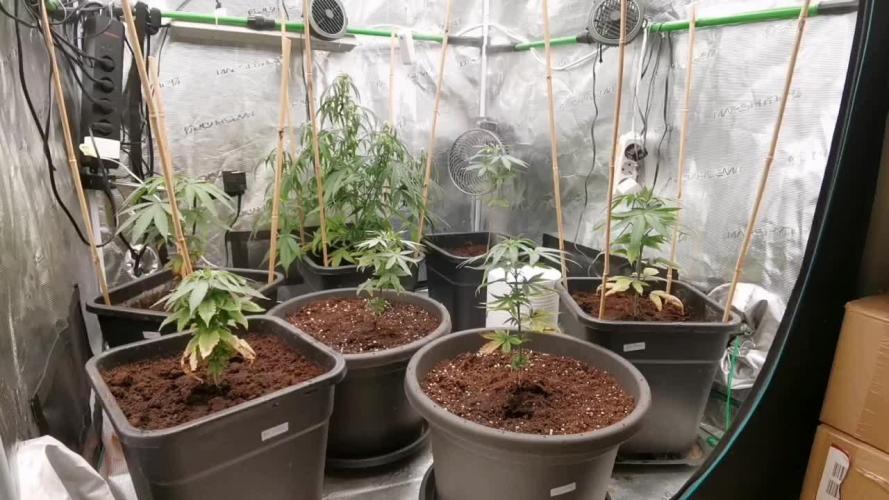
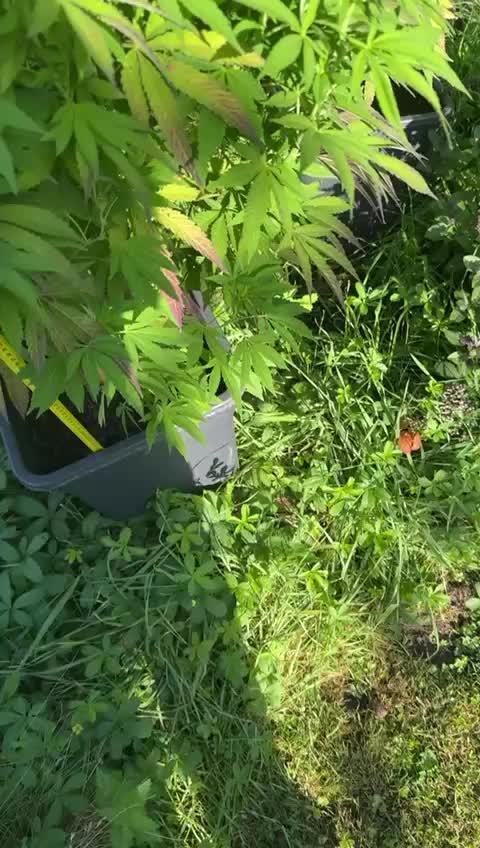
Semana sel 2 de septiembre al 8 de septiembre 8 de septiembre, fotos del dia Jueves 5 de septiembre 2024. Se regaron con Floralicius plus adicionado con Hidrol-pez + vitaminas.
Likes
25
Share
Both phenos are doing super. They've more or less flipped exactly together but being 2 completely different strains. The auto Kabul being a little denser and has more of a pungent scent to it. Both plants are around 60-63cm. They've been ripening from day 56 until today day 63-64. Now it's time for them to have a few hours in dark and I'll chop both & hang whole upside down. Easily get 25-30g per plant. From 1 9L pot. And how they both grew with little LST, Just kept em apart. 100% will be doing these type of auto grows. 2 different strains for the room 1 auto would have taken. Helped both strains took the conditions pretty good. Auto Kabul being more resistant. Auto opium has its own merits to. All the bud is super nice on her. And also in a 9L both both autos in such a tight spot. Amazing genetics. Really top autos for gap fillers. Or go big and do a big pot grow. You'd 100% get big phenos if I got these 2 from 9l pot. Little more than 4L of substrate each. For the last week the light was highered from the main tops and cut its hours down to 11/13 on/off. Nutrients were also lowered to help a more natural ripening process. Plsnts picked up some fade. But most notable was their improvements in smell. Normal ph (average of 6.5-7) feeds. Whether it be water or lower EC feeds Helped i had Xpert Nutrients. They made it easy for multiple grows to get everything needed from 1 substrate. Showing me. They've got a good even balance and given right you'd be hard pressed to find a common issue. Top nutrients. Top genetics. Have already started new autos and fems & running Xpert Nutrients full time. And nothing else. + Divine seeds makes up at least 30% of my current winter crop
Likes
6
Share
Likes
4
Share
She is a monster almost 90cm high and covered in buds
Likes
7
Share
@Dunk_Junk
Follow
Wow she over doubled her height this week. Grew 15cm! Now she's 25cm tall.
Likes
3
Share
Finalmente corté. La verdad que sl estar sin stock siento que me corrió más el tiempo. La próxima camada será con otra disposición.
Likes
3
Share
Dear Growers , Over the next weeks, we’re excited to share a very special project with you: Sensi Seeds Supreme Jack F1 Automatic 2025 Release With dedication, knowledge, and hands-on practice, we’ll guide you step by step through the journey—watch with us as growth, development, and small wonders unfold before your eyes. Whether you're a beginner or an expert, you are warmly invited to join, ask questions, and share your own experiences along the way! Project Setup & Conditions: • Brand/Manufacturer: Sensi Seeds • Tent: 120cmx60cmx80cm • Light: 2x 200 Watt Full Spectrum • Humidity: 90% • Soil: Narcos Organix Mix • Nutrients: Narcos Products • pH Value: 6 A Special Thanks To Sensi Seeds for the amazing collaboration, trust, and generous support in making this project possible. Your contribution is truly appreciated! Congratulations on Your Own Projects! We celebrate your growth, your creativity, and the passion you bring to the table. It’s truly inspiring to witness at Each visit . Stay curious and keep up Growing —we look forward to welcoming you back for the next chapter soon!
Likes
20
Share
Harvest Sticky Broccoli Auto von Zamnesia für den Cup ist rdy to Cut. Hab mich Heute für die Harvest entschieden und finde sie wirklich sehr gelungen 😌 Sie hat ein sehr gutes Blüte zu Blattverhältnis, die Budstruktur ist wirklich sehr Sticky, wie der Name vermuten lässt. Bin gespannt, wie die Wirkung ist. Hoffentlich nicht zu Couch-Lock mäßig aber wenn, ist auch nicht schlimm. Freut mich die Dame auf ihrem Weg begleitet haben zu dürfen 😊
Likes
371
Share
D64. We're at the start of the fourth week of flower, and today was a busy day. First, I had to remove the old lights before swapping in the light from my auto tent. All while trying to avoid trashing the plants in the way too full tent. Not an easy task. The entire mission, with changing the light in the auto tent as well, took a couple of hours. I wish I could keep the Greenception lights in the tent as they're high-quality lights, but the Kingbrite has a much lower profile and thus takes up much less space. Space that I desperately need considering how insanely much these girls stretched. One of the tops on the second girl has unfortunately already been bunt by being too close to the light, and I'm sure I will run into light bleaching and probably foxtailing as the grow progress, but I hope I will be able to pull it off with the Kingbrite light. I also added some wire support to the branches that I super-cropped, as they looked somewhat sad after all the abuse to the canopy while swapping the lights. ------------------------------ D66. It looks like the girls have FINALLY stopped stretching. Phew! Yesterday, I gave each girl 2.5 liters of water @ pH 6.2 with humic acid and EM-1. Today, the green lacewing larvae (Chrysoperla Carnea) arrived, and I dispersed them in the tent to deal with the thrips. ------------------------------ D68. All is well in the tent, but now when the thrips are (hopefully) under control, it's time to address the VPD. It has gotten seriously out of wack due to dropping temps, plus I increased the humidity to make the environment more inhospitable for the thrips. The temps were low due to the light change as the new one is running a lot cooler, but the temps have also dropped outside. The heating in the lungroom has been off until now, so I turned that on and lowered the humidity threshold on my exhaust fan. Finally, I put my small humidifier in the tent, generating extra heat and decreasing the humidity. So far, the VPD has increased from a terrible 0.4-0.5 to an acceptable 0.9, and I'm hoping it will increase further as the ambient RH drops as we move into winter. ------------------------------ D70. We're at the end of the fourth week of flower, and all is well in the tent. The VPD has gone up to 1.0, which is a nice improvement to what it was only a couple of days ago. I haven't scouted yet for thrips, but I will give the lacewings a couple of days to do their thing and then look closer. However, I went to WAR against the spider mites we have in our ornamental plants in the apartment. I sprayed all plants with my homemade pesticide (capsaicin, alcohol, horticultural soap.) since I had it at hand. If that fails to knock the spider mites back, I'll bring out the neem oil instead. The infestations aren't bad (yet), but it would suck to get mites into my tents, so better to be proactive. ------------------------------
Likes
13
Share
@SkunkyDog
Follow
Hallo zusammen 🤙. Sie wächst immer weiter so eine Dehnung hatte ich lange nicht. Das ist das letzte mal ohne Training 🤙😠🤪. Habe die Lampe nur auf 50% laufen hoffe das das gut geht. Trotzdem geile Pflanze 🤤
Likes
52
Share
Lacewings seemed to have mostly killed themselves by flying into hot light fixtures. I may have left the UV on which was smart of me :) Done very little to combat if anything but make a sea of carcasses, on the bright side its good nutrition for the soil. Made a concoction of ethanol 70%, equal parts water, and cayenne pepper with a couple of squirts of dish soap. Took around an hour of good scrubbing the entire canopy. Worked a lot more effectively and way cheaper. Scorched earth right now, but it seems to have wiped them out almost entirely very pleased. Attempted a "Fudge I Missed" for the topping. So just time to wait and see how it goes. Question? If I attached a plant to two separate pots but it was connected by rootzone, one has a pH of 7.5 ish the other has 4.5. Would the Intelligence of the plant able to dictate each pot separately to uptake the nutrients best suited to pH or would it still try to draw nitrogen from a pot with a pH where nitrogen struggles to uptake? Food for stoner thought experiments! Another was on my mind. What happens when a plant gets too much light? Well, it burns and curls up leaves. That's the heat radiation, let's remove excess heat, now what? I've always read it's just bad, or not good, but when I look for an explanation on a deeper level it's just bad and you shouldn't do it. So I did. How much can a cannabis plant absorb, 40 moles in a day, ok I'll give it 60 moles. 80 nothing bad ever happened. The answer, finally. Oh great........more questions........ Reactive oxygen species (ROS) are molecules capable of independent existence, containing at least one oxygen atom and one or more unpaired electrons. "Sunlight is the essential source of energy for most photosynthetic organisms, yet sunlight in excess of the organism’s photosynthetic capacity can generate reactive oxygen species (ROS) that lead to cellular damage. To avoid damage, plants respond to high light (HL) by activating photophysical pathways that safely convert excess energy to heat, which is known as nonphotochemical quenching (NPQ) (Rochaix, 2014). While NPQ allows for healthy growth, it also limits the overall photosynthetic efficiency under many conditions. If NPQ were optimized for biomass, yields would improve dramatically, potentially by up to 30% (Kromdijk et al., 2016; Zhu et al., 2010). However, critical information to guide optimization is still lacking, including the molecular origin of NPQ and the mechanism of regulation." What I found most interesting was research pointing out that pH is linked to this defense mechanism. The organism can better facilitate "quenching" when oversaturated with light in a low pH. Now I Know during photosynthesis plants naturally produce exudates (chemicals that are secreted through their roots). Do they have the ability to alter pH themselves using these excretions? Or is that done by the beneficial bacteria? If I can prevent reactive oxygen species from causing damage by "too much light". The extra water needed to keep this level of burn cooled though, I must learn to crawl before I can run. Reactive oxygen species (ROS) are key signaling molecules that enable cells to rapidly respond to different stimuli. In plants, ROS plays a crucial role in abiotic and biotic stress sensing, integration of different environmental signals, and activation of stress-response networks, thus contributing to the establishment of defense mechanisms and plant resilience. Recent advances in the study of ROS signaling in plants include the identification of ROS receptors and key regulatory hubs that connect ROS signaling with other important stress-response signal transduction pathways and hormones, as well as new roles for ROS in organelle-to-organelle and cell-to-cell signaling. Our understanding of how ROS are regulated in cells by balancing production, scavenging, and transport has also increased. In this Review, we discuss these promising developments and how they might be used to increase plant resilience to environmental stress. Temperature stress is one of the major abiotic stresses that adversely affect agricultural productivity worldwide. Temperatures beyond a plant's physiological optimum can trigger significant physiological and biochemical perturbations, reducing plant growth and tolerance to stress. Improving a plant's tolerance to these temperature fluctuations requires a deep understanding of its responses to environmental change. To adapt to temperature fluctuations, plants tailor their acclimatory signal transduction events, specifically, cellular redox state, that are governed by plant hormones, reactive oxygen species (ROS) regulatory systems, and other molecular components. The role of ROS in plants as important signaling molecules during stress acclimation has recently been established. Here, hormone-triggered ROS produced by NADPH oxidases, feedback regulation, and integrated signaling events during temperature stress activate stress-response pathways and induce acclimation or defense mechanisms. At the other extreme, excess ROS accumulation, following temperature-induced oxidative stress, can have negative consequences on plant growth and stress acclimation. The excessive ROS is regulated by the ROS scavenging system, which subsequently promotes plant tolerance. All these signaling events, including crosstalk between hormones and ROS, modify the plant's transcriptomic, metabolomic, and biochemical states and promote plant acclimation, tolerance, and survival. Here, we provide a comprehensive review of the ROS, hormones, and their joint role in shaping a plant's responses to high and low temperatures, and we conclude by outlining hormone/ROS-regulated plant-responsive strategies for developing stress-tolerant crops to combat temperature changes. Onward upward for now. Next! Adenosine triphosphate (ATP) is an energy-carrying molecule known as "the energy currency of life" or "the fuel of life," because it's the universal energy source for all living cells.1 Every living organism consists of cells that rely on ATP for their energy needs. ATP is made by converting the food we eat into energy. It's an essential building block for all life forms. Without ATP, cells wouldn't have the fuel or power to perform functions necessary to stay alive, and they would eventually die. All forms of life rely on ATP to do the things they must do to survive.2 ATP is made of a nitrogen base (adenine) and a sugar molecule (ribose), which create adenosine, plus three phosphate molecules. If adenosine only has one phosphate molecule, it’s called adenosine monophosphate (AMP). If it has two phosphates, it’s called adenosine diphosphate (ADP). Although adenosine is a fundamental part of ATP, when it comes to providing energy to a cell and fueling cellular processes, the phosphate molecules are what really matter. The most energy-loaded composition for adenosine is ATP, which has three phosphates.3 ATP was first discovered in the 1920s. In 1929, Karl Lohmann—a German chemist studying muscle contractions—isolated what we now call adenosine triphosphate in a laboratory. At the time, Lohmann called ATP by a different name. It wasn't until a decade later, in 1939, that Nobel Prize–-winner Fritz Lipmann established that ATP is the universal carrier of energy in all living cells and coined the term "energy-rich phosphate bonds."45 Lipmann focused on phosphate bonds as the key to ATP being the universal energy source for all living cells, because adenosine triphosphate releases energy when one of its three phosphate bonds breaks off to form ADP. ATP is a high-energy molecule with three phosphate bonds; ADP is low-energy with only two phosphate bonds. The Twos and Threes of ATP and ADP Adenosine triphosphate (ATP) becomes adenosine diphosphate (ADP) when one of its three phosphate molecules breaks free and releases energy (“tri” means “three,” while “di” means “two”). Conversely, ADP becomes ATP when a phosphate molecule is added. As part of an ongoing energy cycle, ADP is constantly recycled back into ATP.3 Much like a rechargeable battery with a fluctuating state of charge, ATP represents a fully charged battery, and ADP represents a "low-power mode." Every time a fully charged ATP molecule loses a phosphate bond, it becomes ADP; energy is released via the process of ATP becoming ADP. On the flip side, when a phosphate bond is added, ADP becomes ATP. When ADP becomes ATP, what was previously a low-charged energy adenosine molecule (ADP) becomes fully charged ATP. This energy-creation and energy-depletion cycle happens time and time again, much like your smartphone battery can be recharged countless times during its lifespan. The human body uses molecules held in the fats, proteins, and carbohydrates we eat or drink as sources of energy to make ATP. This happens through a process called hydrolysis . After food is digested, it's synthesized into glucose, which is a form of sugar. Glucose is the main source of fuel that our cells' mitochondria use to convert caloric energy from food into ATP, which is an energy form that can be used by cells. ATP is made via a process called cellular respiration that occurs in the mitochondria of a cell. Mitochondria are tiny subunits within a cell that specialize in extracting energy from the foods we eat and converting it into ATP. Mitochondria can convert glucose into ATP via two different types of cellular respiration: Aerobic (with oxygen) Anaerobic (without oxygen) Aerobic cellular respiration transforms glucose into ATP in a three-step process, as follows: Step 1: Glycolysis Step 2: The Krebs cycle (also called the citric acid cycle) Step 3: Electron transport chain During glycolysis, glucose (i.e., sugar) from food sources is broken down into pyruvate molecules. This is followed by the Krebs cycle, which is an aerobic process that uses oxygen to finish breaking down sugar and harnesses energy into electron carriers that fuel the synthesis of ATP. Lastly, the electron transport chain (ETC) pumps positively charged protons that drive ATP production throughout the mitochondria’s inner membrane.2 ATP can also be produced without oxygen (i.e., anaerobic), which is something plants, algae, and some bacteria do by converting the energy held in sunlight into energy that can be used by a cell via photosynthesis. Anaerobic exercise means that your body is working out "without oxygen." Anaerobic glycolysis occurs in human cells when there isn't enough oxygen available during an anaerobic workout. If no oxygen is present during cellular respiration, pyruvate can't enter the Krebs cycle and is oxidized into lactic acid. In the absence of oxygen, lactic acid fermentation makes ATP anaerobically. The burning sensation you feel in your muscles when you're huffing and puffing during anaerobic high-intensity interval training (HIIT) that maxes out your aerobic capacity or during a strenuous weight-lifting workout is lactic acid, which is used to make ATP via anaerobic glycolysis. During aerobic exercise, mitochondria have enough oxygen to make ATP aerobically. However, when you're out of breath and your cells don’t have enough oxygen to perform cellular respiration aerobically, the process can still happen anaerobically, but it creates a temporary burning sensation in your skeletal muscles. Why ATP Is So Important? ATP is essential for life and makes it possible for us to do the things we do. Without ATP, cells wouldn't be able to use the energy held in food to fuel cellular processes, and an organism couldn't stay alive. As a real-world example, when a car runs out of gas and is parked on the side of the road, the only thing that will make the car drivable again is putting some gasoline back in the tank. For all living cells, ATP is like the gas in a car's fuel tank. Without ATP, cells wouldn't have a source of usable energy, and the organism would die. Eating a well-balanced diet and staying hydrated should give your body all the resources it needs to produce plenty of ATP. Although some athletes may slightly improve their performance by taking supplements or ergonomic aids designed to increase ATP production, it's debatable that oral adenosine triphosphate supplementation actually increases energy. An average cell in the human body uses about 10 million ATP molecules per second and can recycle all of its ATP in less than a minute. Over 24 hours, the human body turns over its weight in ATP. You can last weeks without food. You can last days without water. You can last minutes without oxygen. You can last 16 seconds at most without ATP. Food amounts to one-third of ATP production within the human body.
Likes
24
Share
@EBxAH
Follow
Germination started on 4/2 and they finally sprouted out the dirt on 4/12. I'll update this every Tuesday. Obviously going to be a long one but hopefully yall follow every step! I'm really fucking excited to grow these! And at the end I will make hot sauce with them, put it in a big ol bottle and the first 50 dollars takes it 😎 Happy Growing Everyone ✌️❤️😁🍀🎶👽 EB
Likes
8
Share
Apricot Auto has really started to throw the trikes and frost up! She’s gonna start putting on the chunk really soon. She’s smelling absolutely amazing and when you squeeze her your fingers will stick together🔥🔥.
Likes
2
Share
@Mik21
Follow
7 weeks! from what sweet seeds says now I should just wait another week or two and then I could cut it easily, but I don't know. If anyone can advise me on automatic plants I would be grateful! in summary the question is: with automatics only 5/6 weeks of flowering are needed? 🌱
Likes
4
Share
@Bud_vista
Follow
At day 18 i topped her. I’m really curious how she’s handle the stress. In the next few days I will bend her down a little and installing a net to hold the plant small. We are ending week 3 shortly! She handled the topping very good. No signs of slowing down her grow or any deficiency. I did some LST after topping but one of the main branches snapped half through. She damaged side still performs exactly like the intact one. I try to be patient and careful with the bending of this branch. I taped the location and try to not bend it hardly anymore.
Likes
34
Share
Both ladies growing very well and receive defoliation and now will be stretching so far very happy with genetic 👍🙂
Likes
11
Share
Week 5 - 08/27 Seedsman - Critical + 2.0 Blimburn - Apple Fritter All running smoothly, Introduced the exhale C02 bag last week thus far no issues or signs of deficiencies. Light defo - Heavy feed to start the week (Nutes) *Mid-Week Update* Week 1 -Early Flower* 08/30 Both have grown significantly since last update, Flowering has begun. Introduced Raw NPK (Potash/Phosphorus) *End of week recap* 09/02 39-40 inches in height Week 1 of flower went smoothly Introduced Raw NPK Phosphorus and Potassium