


Likes
Comments
Share


@Tropicannibis_Todd
Follow
👉Alrighty Then👈
This plant finished out just around 90 days from seed
👉Puffed a bunch of it , and its fire , very sweet and fruity or berry mixed with a little earthy undertone 👈 the buds are tight and smoothered in resin 👌
Would definitely grow this one again and would recommend 👌
👉FINAL THOUGHTS👈
#1 👏Full Gas from Greenhousesee👏 Unbelievable Stanky Terps 👉Truly A Surprise
#2👏Persian Pie from Greenhouseseeds👏Found The Terps I've Been Looking For 👉 Killer
#3👏Purple Oreoz F1 From Seedsman👏Unbelievable Grape Kandy Terps 👉 Killer
#4👏Babba Kush from Greenhouseseeds👏Amazing Bazzoka Joe Gum Terps 👉 Killer
#5👏Weddingcheesecake FF From Fastbuds👏I Love the Terps on this one 👉 Killer
#6👏Rainbow Melon from Fastbuds👏Shes incredibly sweet 👉 Not too Shabby
#7👏Slurricane From Premium Cultivars👏Another Sweet and tasty 👉 Not too Shabby
#8👏Papaya Sherbet from Fastbuds👏Nice Terps fruity 👉 it's OK
Soil by Promix
Nutrients by Cronks
This was a crap ton of fun 🙃
Thanks to all my growmies out there for stopping by its much appreciated 👈
👉Happy Growing👈👉


Likes
181
Share


@Anonymous_2022
Follow
Thanks for stopping by.. Please hit the like button if you like what you see and ill be sure to check you out too Growmies 🌱
🌟🌟🌟🌟🌟🌟Mars Hydro TS1000🌟🌟🌟🌟🌟🌟
TS1000 is the best novice LED grow light, serving adequate light to 2-4 plants. Its reasonable price, marked yield improvement, and variable output control make it friendly to new growers.
Wattage – 150w
Veg Coverage – 2.5×2.5 ft
Flower Coverage – 2×2 ft
Full Spectrum LED Grow Lights: Thanks to the unique combination of spectra, most light in the PAR (400-700nm) waveband is extremely conducive to plant photosynthesis. Good IR (730-740nm) is also used in the spectra to produce larger buds.
Daisy Chain Dimming Feature: With an independent dimming button on the external power supply, and 0-100% brightness settings adaptation, the Mars Hydro TS1000 provides different light levels for various plant stages while saving lots of energy. And up to 30 TS1000 LED grow lights can be daisy-chained in a group to be controlled by a master light.
🌟🌟🌟🌟🌟🌟🌟🌟🌟🌟🌟🌟🌟🌟🌟🌟🌟🌟🌟
🌿Mimosa Auto from Royal Queen Seeds 🌿
Hope you all have had a great Christmas and got what you wanted from santa 🎄🎅 🎄
Week 10 from seed and shes in a 12l fabric pot under the Mars Hydro TS1000 💯
Week 5 Flower and shes received nothing but PH water for the last few days .. she’s fattened up nicely for a small girl and i must say shes grew fast though out 💯
Trichomes are cloudy and starting to go Amber so she will be coming down in thr next few days ✂️✂️✂️
Temps around 18 - 25 ✅
Humidity around 45-50 ✅
Thanks for the love guys will be back in a few days for the chop 😎💚

Likes
10
Share


@caliEskimo5
Follow
Busted out a new soil analyzer, used it on another plants pot that has been having issues, 7PH. Last weeks transplant and used of PHd 7 water worked and cleared my calcium/magnesium lockout but now causing autoflowers and bagseed to grow a bit more slowly. As far as this SD plant, it's still seeing 6.0-.6.15 steady and that's why this plant is bangin' through early vegetation quickly. I've also caught this problem early with this plant and have gone way down on ferts and water amounts. Each afternoon when this plants fan leaves start to look a bit drab, one full cup of straight RO with a quarter tsp. Maxigrow, let that dissolve, fizzle the water and turn pp yellow, 1.5mL Sweet Raw and 2mL Hydrogurad, stir and add by feeder syringe.
I'm pretty sure soil is fine too as bot lh my soil readers show 6 and 7 respectively on all pots(should be, same soil, same nutes) but you can literally see plants that I've overfed, this SD plantbis not one of them so soil is well buffered. I'm also scrambling to raise the lights to get all 5 plants good top coverage but the more I raise the lights, the more I see nodes and lateral braching stretch. Definitely not an auto or Indica Dominant.
Bought some #2 2.6Gal pots today, will sterilize and coat with copper sulfate and mix up some Ocean Forest with a bit of silica sand, tiny bit of Oak wood ash and also new, Dr. Earths Blood Meal with whats left of my Tree and Nut dry amendments from same company. Have had alot of good results with these mix in or too dress fertilizers, buds are much more dank than when using chemical ferts! I will most likely cut out the maxigro, start using Brier Rabbit Blackstrap Molasses, keep using Floralicious Plus and the Botanicaire line and back with the Alaska Fish Fertilizer, all just in much lighter amounts!! Blood Meal will make this plant HUGE and FAT...just remember...be super skimpy on the amounts used!
Likes
115
Share


@DogDoctorOfficial
Follow
Harvesting the Bounty of Cherry Cola Auto
Dear fellow cultivators, we've reached the triumphant culmination of Cherry Cola's journey as we delve into Week 13 – Harvest Time! Join me in celebrating the fruition of our labor and the bountiful rewards awaiting us as we harvest the radiant buds of Cherry Cola Auto.
As the sun sets on Week 13, the air is filled with anticipation and excitement. Harvest season has dawned upon us, marking the culmination of Cherry Cola's remarkable journey from seed to harvest-ready beauty.
In the heart of the garden, Cherry Cola stands tall, her branches heavy with the weight of abundant buds. Each bud is a testament to her resilience, her vigor, and the care and dedication invested in her growth.
With meticulous care and precision, the time has come to harvest Cherry Cola's radiant buds. Each cut is made with reverence, ensuring that only the finest, most pristine flowers make their way into our stash.
As the buds are trimmed and cured, an aromatic symphony is unleashed, filling the air with the tantalizing scent of Cherry Cola's terpene-rich profile. It's a sensory experience like no other, a celebration of nature's bounty.
As we gather the fruits of our labor, let us take a moment to reflect on the journey that has brought us here. It's been a labor of love, a testament to patience, perseverance, and the boundless wonders of nature.
In conclusion, let us raise a toast to Cherry Cola Auto – a true champion of the garden, a symbol of resilience, and a source of boundless joy. May her harvest be plentiful, her flavors unforgettable, and her legacy enduring. Until next time, happy harvesting, fellow enthusiasts! #CherryColaHarvest #BountifulBuds #GrowersPride
Nutrition: @aptusholland @aptus_world @aptus_
Love, Care, and Attention: @dogdoctorofficial
As always, thank you all for joining me on this journey, for your love, and for it all. My horticultural odyssey would never be the same without you. Your love and support are cherished, and I feel both honored and blessed to have you in my life
Friendly reminder all you see here is pure research and for educational purposes only
Growers Love To you All 💚 💚 💚
Likes
26
Share


@GrowGuy97
Follow
Day 42 - Ladies are growing great, some are growing a little faster than others but all in all very happy with this run so far! Thanks for following & happy growing friends!✌️🏼🌱
Day 43 - All of these ladies expect for 1 white widow & 1 orange sherbet keep having problems, yellowing leaves, rust spots, not sure if it’s me or what the issue is considering 2 of them are doing great😬😬
Day 44 - Watered the ladies today, going to give them some calmag next watering when my new PH meter gets here!
Day 47 - Buds are starting to get much bigger on a few of the ladies & a lot more frosty!😍

Likes
67
Share


@Hashy
Follow
Grow diary 11 Stage 2
Days 11-20
The light schedule was altered to 19/5 on day 11 and the 6 inch distance was maintained until she went into the main tent. Lights on 7pm off 2pm
Day 12 was the 1st time she was watered/fed since day 6 when it was soaked for transplant. After day 12 she was fed 300ml every day and the run off checked to make sure everything was in range.
Day 18 she was topped after the 2nd set of nodes. She wasn't quite ready yesterday when i did the other 3 strains, and i forgot to take picture's. I'm thinking of removing the lowest set of nodes in a few days and doing a small mainlining project, She was moved into my new main tent (gorilla shorty gt225). The light is my mars hydro TS1000 set at 50% power 20 inch above the canopy. The wilma system is just hydroton/clay balls, and the feeds are on at 8pm for 15mins and on at 12.30pm for 15mins.
Day 20 she seems to be adjusting to the topping and the transplant.
I'm happy with how the last 9/10 days have gone, its still been mega hot and i have managed to battle the heat quite well so the plants haven't suffered.
At the moment all 4 strains are at about the same point in growth.
Temp
Max 27.8c
Avg 23.8c
Min 19.4c
Humid
Max 69.5%
Avg 55.7%
Min 45.4%
VPD
Max 1.98
Avg 1.32
Min 0.71
Hope to be back in 10 days without hitting any problems.
Likes
37
Share

@DogDoctorOfficial
Follow
🌱 Germination Journey with Terpyz Mutant Mentha de Croco 🌱
Hey Grow Fam! Today kicks off an exciting adventure with Terpyz Mutant Mentha de Croco genetics. I’ve got 10 regular seeds ready to sprout, and I’m looking forward to discovering some beautiful female phenotypes—and maybe even a standout male for potential future breeding. It’s been a while since I’ve worked with regular seeds, so I’m thrilled to dive in!
Germination Process Overview:
Here’s a step-by-step rundown of the germination setup and process, with a special focus on the equipment and nutrients that are helping these seeds thrive right from the start.
Step 1: TheCannaKan Germination Pod 🌱
For germination, I rely on TheCannaKan—a device I’ve come to love and trust. It’s designed to create the perfect microclimate for seed germination, and within just 24 hours, the seeds started showing signs of life. By the 32-hour mark, they were all ready to be transferred to the next stage! I can’t recommend this gadget enough for anyone serious about getting strong, early growth from their seeds.
• Why TheCannaKan?
• Humidity Control: Ensures seeds stay hydrated without oversaturation.
• Stable Temperature: Maintains an even temperature around the seeds, so there’s no shock or stalling.
• Enhanced Oxygenation: Keeps fresh air circulating, helping prevent mold and ensuring seeds don’t suffocate.
Step 2: Transfer to Root Riots & Aptus Holland Supplements 💧
Once the seeds were sprouted, I transferred them into Root Riots, known for their excellent water retention and structure that encourages strong root growth. Root Riots also have a pH-balanced, spongy texture that makes it easy for roots to penetrate, promoting sturdy, healthy root systems.
At this stage, I started using Aptus Holland’s Regulator and Startbooster at 1ml/L each. Here’s why I chose these products for early growth:
• Aptus Regulator (1ml/L): Helps strengthen the plants against environmental stresses by supporting cell wall structure. It’s a fantastic choice for giving young seedlings an early boost in resilience.
• Aptus Startbooster (1ml/L): This product provides essential microbes and nutrients that stimulate root growth and early plant vigor. Especially for regular seeds, the early root development makes a noticeable difference in later growth stages.
Step 3: Lighting with Future of Grow (FOG) LED at 200 PPFD 💡
For lighting, I’m using a Future of Grow (FOG) 600W LED. For the germination stage, I’ve dimmed it to around 200 PPFD (photosynthetic photon flux density), which provides just enough light for healthy, strong seedling growth without overwhelming them.
• Why Low Intensity?
• 200 PPFD ensures that young plants aren’t exposed to too much light, which could cause stress or stunting. This level of intensity is perfect for encouraging healthy development without risking “stretching.”
• The FOG LED provides a balanced spectrum tailored to plant growth, setting up these young sprouts for success as they grow.
Step 4: Environmental Control with TrolMaster Tent X Controller 📲
For monitoring and control, I’m using the TrolMaster Tent X Controller, which lets me dial in every aspect of the environment to make sure these little ones have the perfect conditions for germination and early growth.
• TrolMaster Benefits:
• Precision Control: Adjust temperature, humidity, and lighting all in one place.
• Notifications: Sends updates in real-time to my device, so I can make adjustments as needed without being physically present.
• Consistency: Maintains stable conditions around the clock, reducing stress on seedlings and ensuring they’re thriving.
Grow Tips & Reflections:
Germination is one of the most crucial stages in a plant’s lifecycle. Starting with strong genetics like Terpyz Mutant Mentha de Croco, combined with a solid germination setup and the right nutrients, creates the foundation for a successful grow.
💡 Quick Tips for Fellow Growers:
• Hydration Balance: Don’t oversaturate! Moisture levels should be high enough for the seeds to sprout but not so wet that they drown.
• Light Management: A low PPFD for young seedlings prevents stretch and keeps nodes tight, preparing them for a healthy vegetative phase.
• Environment Consistency: Use a reliable controller like the TrolMaster Tent X to manage your settings, and consider monitoring tools for real-time adjustments.
Shout Outs to the Community:
Big thanks to Terpyz Genetics for these incredible seeds, Aptus Holland for their top-notch nutrients, Future of Grow for the stellar LED lights, and TrolMaster for the amazing controller. Also, shout out to all of you in the growing community—you make this journey exciting and filled with endless learning. Let’s keep growing and sharing together!
That’s it for the germination update! Next up, I’ll be monitoring growth closely to identify strong females (and maybe a standout male for breeding). Stay tuned for updates on our Mutant Mentha de Croco adventure—this is just the beginning!
Genetics - Mentha De Croco
https://terpyz.eu/products/menta-de-croco-fern-type?_pos=1&_sid=e9237cbcb&_ss=r
DogDoctorOfficial Discount Codes @ terpyz.eu - DOCTOR 15% off
Nutrition - @aptusholland
https://aptus-holland.com/
Led Power @ F.O.G. Future Of Grow
https://www.thefuturofgrow.com/en/online-store/BLACK-SERIES-600-p489093171
Controls @ TrolMaster
https://www.trolmaster.eu/tent-x
As always thank you all for stopping by, for the love and for it all , this journey of mine wold just not be the same without you guys, the love and support is very much appreciloved and i fell honored with you all in my life
With true love comes happiness Always believe in your self and always do things expecting nothing and with an open heart , be a giver and the universe will give back to you in ways you could not even imagine so
Growers Love To you All 💚

Likes
98
Share


@OrganicNature420
Follow
Germination date 🌱 28/11/2021
Day 70 09/02/2022
Strain 🍁 Solfire Gardens Bahama Bussdown
(Runtz x Bahama Mama)
THC% • Unknown
💡 Mars Hydro FC-E6500
• Power draw 650W + 5%
• Max coverage 5 x 5
• LED 3978 pcs high quality chips
• Max Yield 2.5g / watt
• Noise level 0 DB
• Removable Driver & Light bars
• Daisy chain
• Fast cool system
https://marshydroled.co.uk/ 🇬🇧
PROMO CODE • (organicnature420) DISCOUNT
https://www.mars-hydro.com/ 🇺🇲
PROMO CODE • (ORG420) DISCOUNT 👍🏻
⛺ Mars Hydro 150 x 150 x 200cm
📤📥 AC infinity 6inch
💧 10lt dehumidifier
❄️ 3.1kw air con system
💉 Nutrients GreenBuzzLiquids 🇩🇪
⭐⭐⭐⭐⭐
Organic Grow Liquid • 1-4ml until 2wk flower
Organic Bloom Liquid • 2-4ml flower stage
Organic More PK • 2-4ml +wk3 of flower
Organic Calmag • 1-2ml/lt whole grow
Fast Plants Spray • first 2wks at night lights off
More Roots • 2-5ml veg +2wks flower
Fast Buds • 5ml 12days before flower until wk1
Humic Acid Plus • 2-5ml whole grow
Growzyme • 2-5ml whole grow
Big Fruits • 2-5ml flower stage
Clean Fruits • 5ml flush 1wk
Ph powder
Root Gel
Living Organics
https://greenbuzzliquids.com/
PROMO CODE • organicnature420 15% off ✌️🏼
🥥 Growing Media • Coco Coir
💡 65%
Notes 📝
Looking super frosty and some lovely purple colours coming through. All 3 Bahama Bussdown are looking 🔥 .. look forward to the next couple of weeks. Light upto %80
✌️🏼 if your thinking of changing nutrient company's please think of GreenBuzzLiquids. They honestly are a game changer and you can thank me later 😉
Discount codes in bio for Mars and GreenBuzzLiquids 👍🏻

Likes
40
Share


@Ganjagrandaddy
Follow
Day 70: These ladies are still going for it with new pistils making them look even chubbier. #1 In the LOS is beautiful and thick . There are so many leaves swallowed whole by her buds that she will be a nightmare to trim the.mout of.lol
#2 Is so ready to come out unlike her sisters. She is so damn frosty and demonic looking now. I cannot wait to sample these girls. They smell so pungent of sweet varnish that hit your nose with a kick. I expect a cure will lose some of the varnish terp a bit. They all feel so gritty , greasy too. my fingers get a sticky residue after playing with them. #2 is being put intonthe dark for 36 hours to encourage her to push oils out a little before the trim and dry.
#3 Is getting quite big and even though she looks like a totally different plant , she smells identicle to the other 2. She looks like she will go a couple more weeks at least so a staggered harvest for the Lsd-25 which helps with trim jail.
roll on smoking this star of the show , even if fast buds screwed me over with early photo comp withdrawal!!!!!!!!


Likes
21
Share


@MG2009
Follow
01/01/2022
Potting up and amending with
5-2-4 to give a little kick before mid flower
#6 is first girl to show herself, also got two different males and only difference is that one is lighter green and other darker green
(also dark green one seems to drink more than lighter green) 💚. Other than that structure is very similar I wonder which is a better breeding male? I guess I might pollinate and LABEL TWO BRANCHES ON each female one for each male. and find out.🙏🏻
01/06/2022
#3 showed today, reppoted and into flowering closet, along with#6,who showed earlier this week lights at 14-10 see how they respond to that schedule, which should help use up the 5-2-4 going into week 3 should help with her stretch. Which isn't really that much I believe maybe double her current height, which I will check at lights on.Week ,#3 if I think of it I'll give a good fungal dominant tea.
Likes
Comments
Share

@Antarctic
Follow
Week 7 update (start of flowering):
The autos have officially entered early flower – pistils are popping everywhere, and the stretch is slowing down. The canopy is already pretty filled, so I’m focusing now on feeding for bloom.
Nutrients this week:
• Terra Aquatica Grow A + Grow B → lowered slightly as plants shift into flower (~650–750 ppm).
• PK booster added for the first time to support early bud development.
• CalMag still at 1 ml/L to keep leaves healthy and prevent deficiencies.
• Silic Rock 1 ml/L for stronger stems.
• Microbes (Great White + Trikologic) to keep roots active.
Training:
• Final round of LST to open budsites before flowers set fully.
• Light defoliation on big fan leaves shading potential bud areas.
• No more heavy stress training – from now on just guiding.
Observations:
• Runtz is clearly leading with stronger bud formation, pistils are already stacking.
• Amnesia autos are slightly slower but catching up.
• Mike Tyson is still behind (due to earlier overfeeding) but slowly recovering.
• Plants are smelling more day by day – fruity and sweet terps are starting to come out.
Plan:
• Keep PK booster in rotation.
• Watch EC/PPM carefully (don’t push too hard – better to underfeed than burn at this stage).
• Prepare for rapid bud growth in weeks 8–9.
Likes
5
Share


@TheGreenDisciple
Follow
Day 73 ~ Plant 1 is looking great and hopefully will be ready to harvest by the end of the week. Been checking the trichomes and while most are getting milky white, there are still a couple sites on the plant where I find clear trichomes.
Plant 2 seems to be about a week or two behind the first plant...I will give plant 2 their final Nutes tmrw and then begin to flush.
From reading about this strain it seems like it should take around 90 days from seed to harvest. So I would think plant 1 is running a little ahead of schedule and plant 2 is right on time.
Day 75 ~ Both plants looking and smelling amazing! I was hoping to be harvesting the first plant by this weekend, but she is still growing and her trichomes are still not all milky and I haven't yet to find an amber one. So it might be another week or so before I can start drying her out.


Processing
Likes
1
Share


@Mr_Maes
Follow
Next week should have a huge explosion of growth. This lady is loving life


Likes
12
Share


@russrahl
Follow
Started their flush this week, hairs are starting to go almost all red on 2 of the 4, 3rd one is starting to turn as well but the 4th largest one that seems to be behind the others is still way behind. I think she got stressed at the wrong time when I broke one of her main branches at the beginning of flowering. But the other 3 are packing it on and really starting to fatten up. Lots of bud sites now with decent nugs. Tricombs are still a week at least out from being full cloudy I believe, but we will see. Guessing we gonna get a 1.5-2 week flush maybe before there ready. Should really ripen up these buds. Still thinking we are gonna push them 60 days at least. Well that’s about it for this week, Cheers! 💨

Likes
19
Share


@GermGrowFox
Follow
Hello 👋
Im Sinne der Nachhaltigkeit werden etwas ältere Samen als frühes Outdoorprojekt auf dem Balkon gestartet. Genutzt wird ein gebrauchtes Hochbeet, dass ich für einen feuchten Händedruck über Ebay Kleinanzeigen erworben habe. 50l biobizz lightmix + der Rest meines älteren flo Düngers haben dort drinnen Platz gefunden. Den Boden habe ich mit tonkugeln ausgestattet. Nematoden. wurden dem Boden hinzugefügt.
Ist ein früher Start, und ich bin gespannt ob die Samen überhaupt kommen. Alternativ hab ich immer noch eine crit (da weiß ich dass sie klein bleibt) und die Baby Boom von kannabia. Der Wunsch ist, dass die Pflanzen nicht höher als 50-60 cm werden.
Bin gespannt ob mir das mit 50l Substrat gelingt. Die Genetik sollte allerdings auch etwas kleiner bleiben. Das Lernen steht dieses Mal wieder erneut im Fokus und nicht das Ergebnis.
24. März
Ein Samen hat ordentlich gekeimt. Habe in direkt in das Substrat gesetzt.
Ein Samen hat nur eine Miniwurzel entwickelt. Habe sie dennoch eingepflanzt. Kann sein dass es zu früh war but we will see.
Der dritte Samen blieb unverändert und er bleibt in der Tüte. Er bekommt noch ein paar Tage, notfalls wird er ersetzt.
Weiteres kleines Update: habe das eBay-Kleinanzeigen setup um wasserdichte led streifen für 10€ von Amazon erweitert. Damit sollte ich verhindern können dass mir die Sämlinge gailen falls die Sonne nicht wie gewüncht mitmacht. Na dann halt lila 😅Aber jetzt erstmal hoffen das zumindestens 2/3 kommen.
26. März
trotz entspannten 9 grad nachts in der Box hat es die erste creamatic an die Oberfläche geschafft.
Die zweite lässt noch auf sich warten, der dritte Samen ist nun minimalistisch in der Tüte aufgegangen. Hab das Hochbeet am Abend reingeholt und ziehe die kleinen.doch am Fenster vor.
28. März
Zwei von drei sind as der Erde geschlüpft :). Das Wunschziel wurde damit erreicht trotz des „hohen Alters“ der Samen. Hoffe. Wir dennoch mal auf nr. Drei
Likes
2
Share


Likes
7
Share


@cwgrows
Follow
Going off what other people say about 2x-3x growth during the preflower stretch I decided it's time to flip!


Likes
17
Share

@AestheticGenetix
Follow
Chopped on 9/11/25
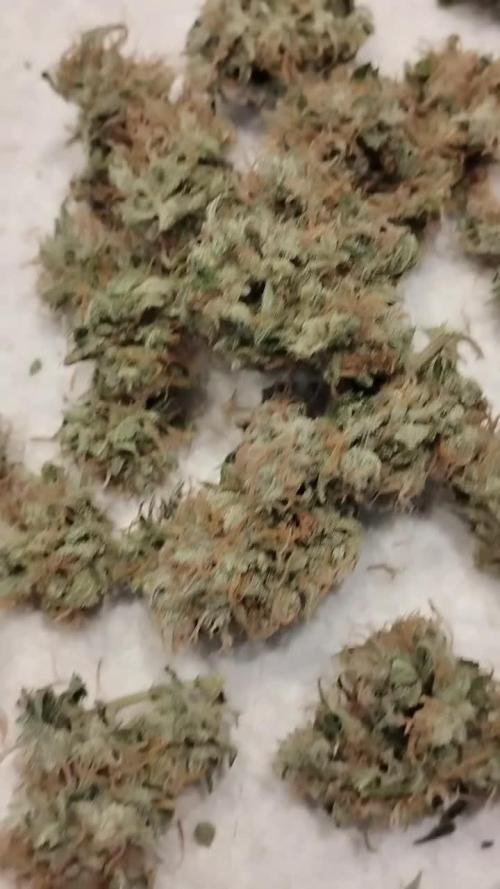
Has a fruity sweet smell to it. These buds are giant and just long connected braided cola with very uniform and chunky buds throughout the whole plant
