




Likes
58
Share


@Mr_und_Ms_Lue_Roots
Follow
Hallo und willkommen in unseren weiteren Vegetationsphase
Viel gibt es nicht zu berichten, die Purple auf dem Balkon stagniert iab jetzt. Bis hierhin haben wir sie vom Düngeverhalten weit runtergefahren. Sie wird diese in kommender Zeit nicht mehr richtig verarbeiten können. Und tiefdunkelgrüne Blätter sehen nicht wirklich ansprechend aus 😉
Im Garten wächst alles ruhig vor sich hin. Ab und zu bekommen die Damen ehrlicher weise einen Schluck zu viel Regenwasser. Liegt aber daran, das der Dünger an der Haupt Arbeitsstelle sich befindet.
Ansonsten keine Auffälligkeiten außer das es Zeit wird, die Purple im Zelt umzutopfen. Das wird jetzt demnächst geschehen. Da wir mit ihr noch ein Transport Vorhaben, sollte sie erst mal klein bleiben. Passt soweit bis hierher 👍
Vielen Dank fürs vorbeischauen und wir wünschen allen eine angenehme und erfolgreiche Woche!
Vielen Dank auch im voraus, für das verfolgen der wöchentlichen Update's ggf. Kommentare und likes!
VG ✌️


Likes
14
Share

@MetropGrower
Follow
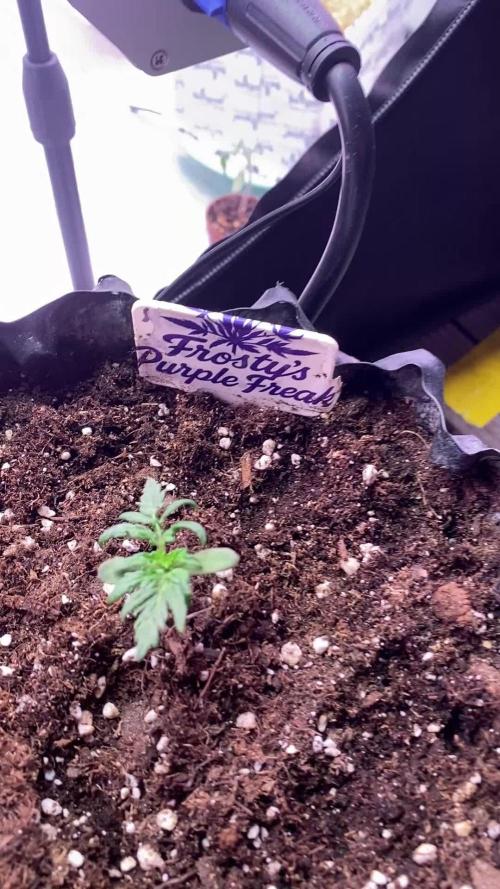
Week 2 is here
8 Days old is this little cute beast
Slowly vegetation of course but let’s see 😎

Likes
5
Share


@cookingwithninja
Follow
This is week 8 day 4 video. I have tried about 30g in testers rapid 1:05 dry. I’m waiting on seeds to finish. Plants are 7ft tall super cropped 3x on some branches and monsters just pop up. I highly don’t recommend super ripping or manipulating breaking stems. You will have jungles and delicious harvest. Some tops were touching doides so lights were raised to maximum tent ceiling. Every day is 2tbsp soluble pk into 5 gal water, 1/2-1tbsp folvic acid, sometimes humid acid, sometimes fishsh!t, sometimes microbial mass. 2 times only I added 1tbsp of magnesium phosphate into5gal. Every watering in 5gal has 2tbsp of carbs, I don’t use black molasses but it’s bluesky organic booster. Buds smell sweet, 2 and 3 are where the terps are but no1 is frosty af. 2 is og. As numbers left to right. Split between the middle bar. Running about 840w. 640is my reg along with 5x 20w blurples and my friends 100w “lm301h” but I beg to differ. My 640w is lm301h. I wish I had more light but I am not a facility. I just have a 4x8x7h. I’m very happy with this grow. Everything is to the max been flushing last week and it’s burning my plants lol. Just 1tbsp ph down. I have not been using ph down in my entire flower because the soluble pk 1-1.5 tbsp per 5gal water is enough to lower and make things happy. Every day is watering and every plant gets 1gal water daily. They could do a lot more but I don’t have the space as you can see ❤️

Likes
45
Share

@JaramnieJazz
Follow
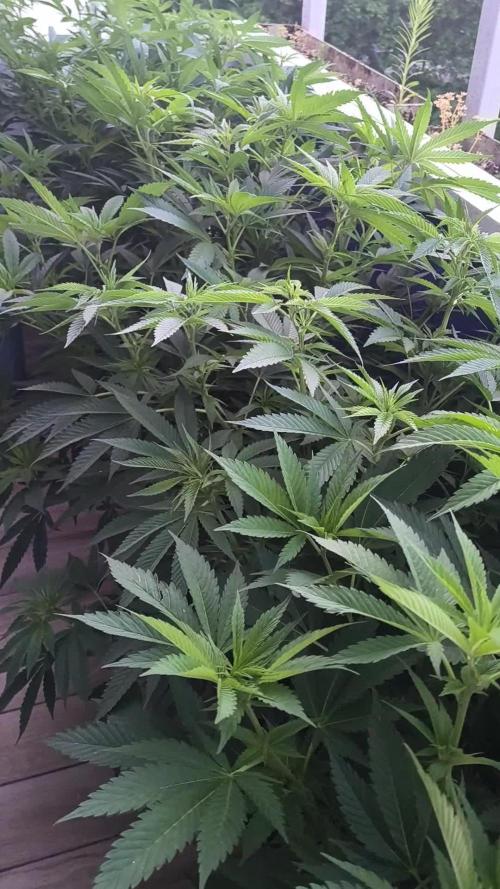
17.06.26 So Woche 21 Veg startet alles sieht top aus
Die Dünger gabe gestern und heute hat echt was gebracht sind sofort dunkler geworden mit mineralischen Dünger geht das fix mit bio Dünger würde das min 1 Woche dauern bis man eine Verbesserung feststellt
18.06.26 Top nur das verfluchte Wetter
19.06.26 Regen und die Dünger gabe hat was gebracht sehen jetzt noch besser aus als vorher


Likes
5
Share


@negyhusztv
Follow
Always the happiest period we starting to switch the lights to flowering stage, Also we incrase the ventilation and starting to manipulate huminidy also. The plants now needs every day around a 2 x 9 l osmo water and i boos it with 2 x 0,9 ml / l TA NovaMax Grow and Bloom.

Likes
18
Share


@ChitownCannaChica
Follow
Alright! Now she’s starting to show. Picking up speed— little transplant shock, but moving along. They are sitting in fox farms soil— not what I use normally, but they ran out of Mendo mix so it will be a bit until I put them in their final pot. Playing the nutes by ear because of the soil situation. ✌️🏻💚

Likes
21
Share


@MadeInGermany
Follow
Flowering day 76
since time switch
to 12/12 h.
Hey guys :-)
Finally the time has come .
The lady was harvested and hung upside down in the dry tent 😍.
Before that, she stood in the drying tent in complete darkness for 2 days and the large leaves were removed.
The small leaves stay attached during the drying process so that they protect the buds and allow them to dry more slowly and evenly :-) .
In the dry tent, the temperature is 18-19.5 degrees and the humidity is 54-58% 👍.
In this environment they are now allowed to hang for 10-14 days before they are fine-tuned and trimmed clean by hand.
then after trimming they come to ferment for 6-12 weeks in dark jars with bobeda packs 62% to keep the perfect humidity.
After a few weeks, the Boveda packs 58% are used so that they can slowly dry out :-) .
Of course there is one last update after trimming.
Until then, I wish you a lot of fun with the update.
Stay healthy and let it grow 💚🙏🏻
👇🏼👇🏼👇🏼👇🏼👇🏼👇🏼👇🏼👇🏼👇🏼👇🏼👇🏼👇🏼
You can buy this Nutrients at :
https://greenbuzzliquids.com/en/shop/
With the discount code: Made_in_Germany you get a discount of 15% on all products from an order value of 100 euros.
👇🏼👇🏼👇🏼👇🏼👇🏼👇🏼👇🏼👇🏼👇🏼👇🏼👇🏼👇🏼
You can buy this strain at :
Clearwater Seeds
Water 💧 💧💧
Osmosis water mixed with normal water (24 hours stale that the chlorine evaporates) to 0.2 EC. Add Cal / Mag to 0.4 Ec Ph with Organic Ph - to 5.8 - 6.5
MadeInGermany

Likes
8
Share

@Chubbs
Follow
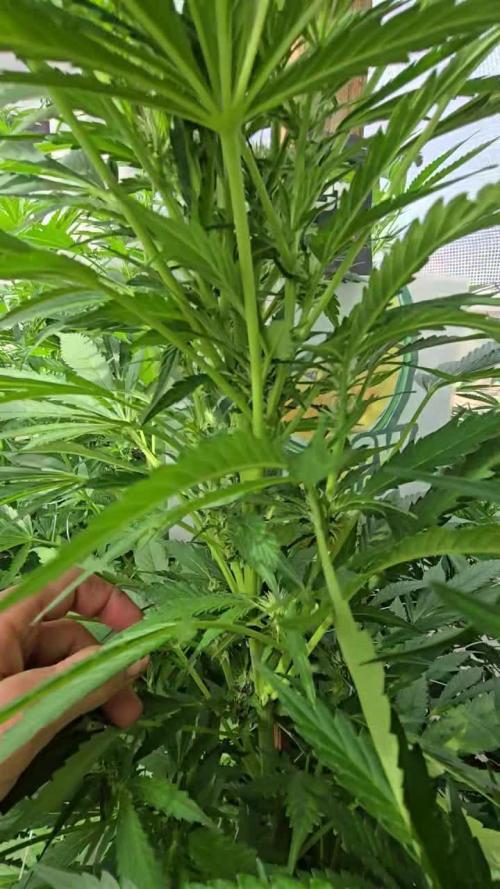
Weekly update for these lovely ladies. They've grown and grown since the last update so much I had to raise the greenhouse. Cinder blocks under the frame gave me an extra 16in. They're growing probably a foot of week and still reaching for the stars. I did switch to Athena's Bloom A & B and P&K booster this week giving 5-10ml per gallon. I really couldn't be happier with how they've grown up to this point.
All in all Happy Growing.


Processing
Likes
14
Share


@OilyEliteOrganics
Follow
Smells sweet and robust.
A birch bender at the sight of the crown.
Growing heavy and dense .
Smeels like strawberry with a dab hint of coffee .


Likes
13
Share


@MrPott
Follow
Been hitting her with the Bio Bizz nutes and looking good so far. However, she IS turning purple and it's a bit concerning to me. The purple is nice tho, not gonna lie. Can't wait to see how fat she's going to be in the next few weeks.
Likes
Comments
Share

@GREENPHOENIX6262
Follow
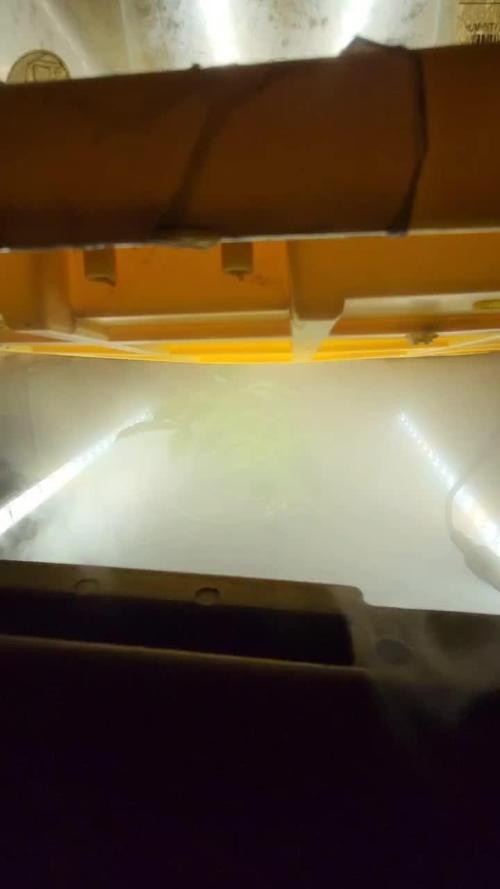
11/03 - Mother moved into her own 17 gallon tote - running lights on dome and in tote - super topped - running high humidity and high temps - nute feeds are the same - tied down all 4 coles thus far.

Processing
Likes
29
Share


@Grey_Wolf
Follow
GINGER NUT Cookies Week 2 of Life 9th Jan 2020
Hi folks well my Creation is doing well and has her first set of true leaves , plus a new set is just showing thru now .
Hopefully I get a few answers for the Grow question I posted as I'd love to hear from experienced Growers , their thoughts.
Last week I posted the first song from my List of Great Aussie music Videos , it Was Tones and I performing Dance Monkey and I hope you enjoyed it.
This week it's Gotye with somebody that i used to know ........Enjoy the tunes I'll be back next week
https://www.youtube.com/watch?v=8UVNT4wvIGY
Likes
1
Share

@Michijardinero
Follow
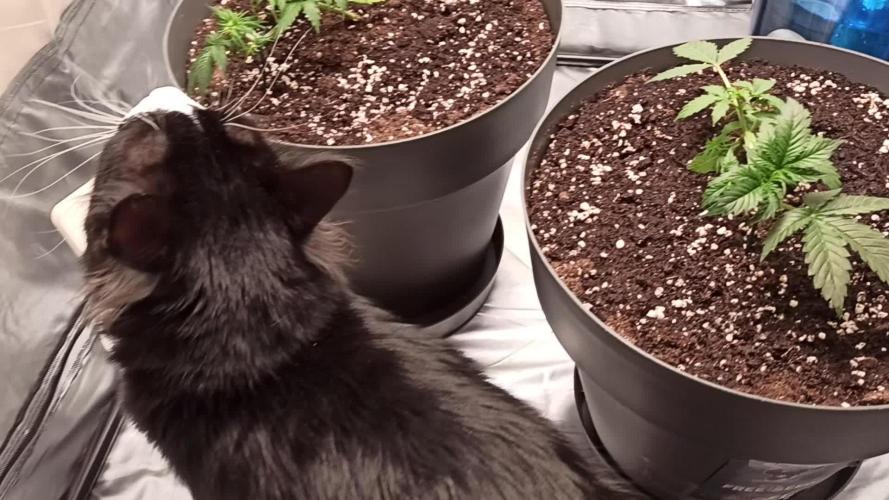
Muy buenas familia perdón por aver tardado pero he Estado un poco ocupado en estas nenas les estoy haciendo LST aunque no se sitúa sido buena idea por que son auto florecientes aver como sale la cosa las he pasado a una maceta de 13 litros en una semanita les cuento como va la cosa un saludo familia buenos humos
Likes
43
Share


@Regenwurm
Follow
Diese Woche nichts außergewöhnliches! Ich habe heute die Leistung auf 550 Watt erhöht. Klima passt perfekt, Entwicklung gesamt auch okay … die Ladies haben Durst und vertragen nicht mehr Dünger… die Indicas sind interessanterweise anfälliger für zu viel Dünger…. Für einen gleichen Start ist die Entwicklung sehr unterschiedlich! Immer wieder etwas Entlaubung da zu viele Blätter bei den Orange Sherbert…. Bis nächste Woche ✌️🏾
Likes
12
Share


@Daviz_42
Follow
Como podemos ver ya todas están para el corte o casi, en algunas tendré que seleccionar el pheno, ya que hay alguna que me gusto más que la otra, en general un terpeno muy diferente en cada variedad y también la calidad de la resina, en general mucha resina, pero por ejemplo he podido observas que los tricomas de la Gorilla Melon son más grandes y se oxidan de una manera más lenta, ideal para hacer extracciones, en cambio, la Reinbow Melon .... ese terpeno dulce intenso tanto que es hasta abrumador...me muero de ganas ya de probarla... la Lemon Mandarín es exagerado el olor que tiene a mandarina si cierras los ojos y ueles fuere parece que te vayas a comer una buena mandarina y la Paya Sherbet tiene un olor dulce y muy agradable, pero nada que aún pueda relacionad del todo..... un saludo y buenos humos fam.