


Likes
Comments
Share



Likes
11
Share


@Jays_Not_Here_Man
Follow
She was super easy to grow. After figuring out she loved to feed, I began mixing her own nutrients separately and within a week had any deficiencies in check. She kept to a regular cycle of regular feed, light feed, then straight ph’d water. This kept her healthy all throughout. No signs of disease or pests, she performed
Like a champ and ended up giving me a little over 6 oz of dense gassy buds. She took a full 10 weeks, and I probably could have given her a few more days, but she is already a very potent smoke, something that is great in the day time for me. For the price of these beans, $45 for 5 feminized seeds, I would highly recommend the 34 street seed Pink Kush strain 🇨🇦👊❤️

Likes
11
Share


@Bncgrower
Follow
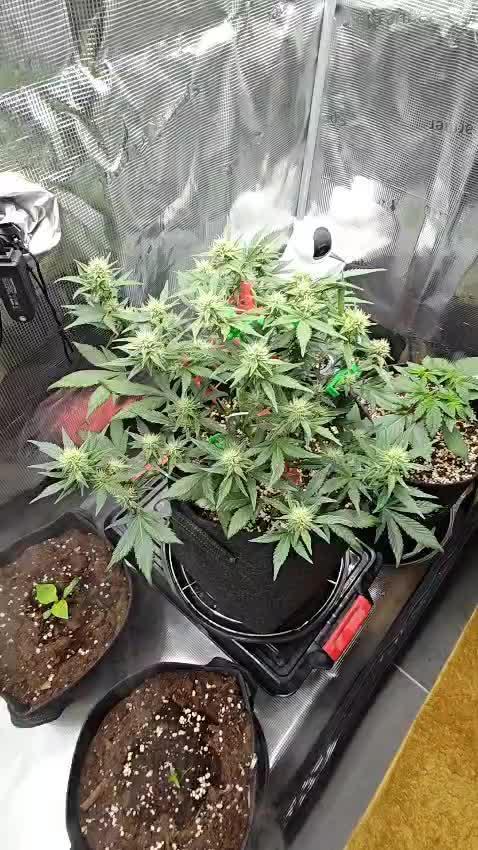
Another week almost finished, we are on the final phase and tomorrow I will start watering it only with water, to harvest this little girl later.. See you next week.. 🌱🌱
Likes
15
Share

@ChubbyBudBros
Follow
-
Day 45
Time to water again. I used 2.2 liters of water @ 6.4ph containing silica force, calmag, bio-grow, bio-bloom, top-max, alg-a-mic, acti-vera & bio-heaven.
Not much to report otherwise. I am mainly just trying to keep the top of that main branch in check and growing horizontally.
Day 47
I raised the light a bit down to 44cm high, wanted to increase PPFD a bit, she is getting ~810 PPFD at the top now. Those buds are getting a lot thicker already than my previous grow at this stage.
Day 48
Watering day used 2.2 liters again @ 6.4ph, containing bio-grow, bio-bloom, top-max, alg-a-mic & bio-heaven.
Day 49
The buds are really starting to fatten up now, and it's smelling great 😊.
Day 51
Watered again today she is drinking A LOT right now. Gave her 2.3L @ 6.4 ph, containing bio-grow, bio-bloom, top-max, bio-heaven, alg-a-mic & acti-vera.

Likes
129
Share


@StarLorr
Follow
Welcome to my Cherry Cola🍒diary.
In this Diary:
Seeds: [420 Fast Buds]from my growmie Tropicannibis_Todd 👊🏻😎
Media: Pro~Mix HP Open Top Grow Bag, Connect.
Nutrients: Green Planet Nutrients,
2 Part Dual Fuel starter kit.
RealGrowers: Recharge.
Diablo nutrients: Ripping.
Advanced Nutrients: Flawless Finish.
___________________________
Feeding :
Mon 01Apr: 3L Monster K pH'd 6.5
Fri 05Apr: 2L Flawless Finish pH'd 6.5
___________________________
Today Monday 08-Apr-24 is 83 Days from seed or 79 Days from Sprout🌱and
the trichomes are just about right.
Tomorrow morning the chopping will happen.😁
___________________________
Thanks for stopping by, likes and comments are appreciated.👊🏻😎
Keep on growin!
Keep on tokin!!!
😙💨💨💨💨💨

Likes
1
Share

@SpliffDoc
Follow
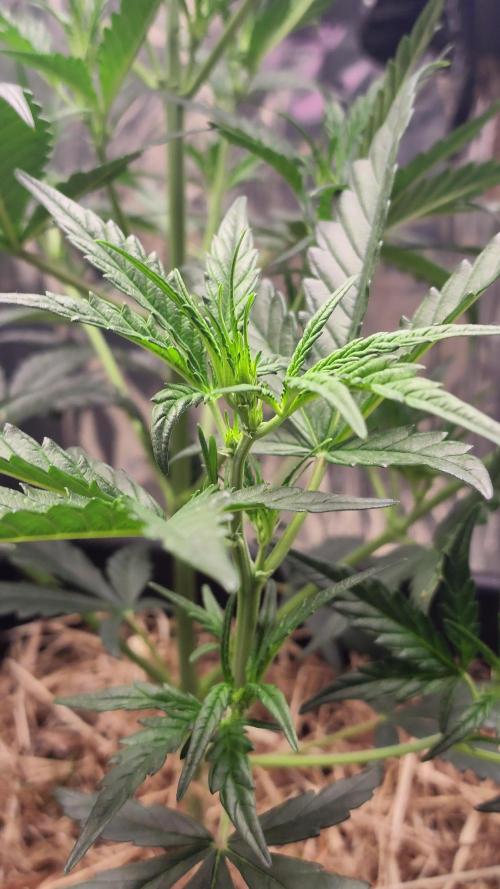
Day 29 - What an absolute beauty she is. No need to defoliate or train this plant she does everything herself, she is growing at an incredible rate. Couldn't be happier with it.
Day 31- received 2-8-10 top dress. She's ready to take on the 🌎 now, can't wait for this one😋
Update Day 33-This beautiful girl is getting big. Love the way shes growing, not one single dot of a problem. Bud sites are forming, soon the buttons will appear. ✌️
Likes
6
Share


@SAC87
Follow
Hey Growers.
These girls are just flying along on cruise control. Growing like mad and beefing up nicely. I’ve got the second carbon filter going to tame the smell that was pumping out all my windows 😆
All I’m doing is too dressing with Gaia Green 284 and watering with a bit of monster bloom, a little goes a long way!! These girls are loving it. I’ve dimmed the SF4000 down 5% as I’m trying to imitate fall and I find the terps are stronger when they aren’t cooked off by intense light in late “fall”.
Happy Growing 🌱


Likes
4
Share

@RooftopFarmer
Follow
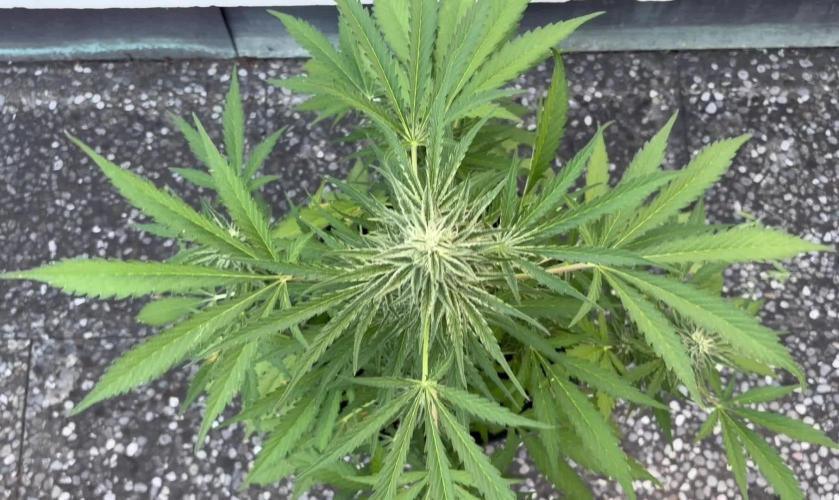
Guava Runtz – Week 9 (Fast Buds Outdoor 2026)
Weather was okay. Guava Runtz is receiving stronger nutrients following the schedule and continues to look good.
She is now around 52 cm tall with plenty of leaves and is fully in the flowering stage. A light sunflower like scent is noticeable and getting stronger. The trichomes are still mainly glassy with a few starting to turn milky. Steady progress.
Likes
Comments
Share

@DogDoctorOfficial
Follow
👑 Godfather OG – Pheno B
Week 9 | Just Let Me Grow
Welcome back to another chapter of the 8×8 Adventure! 💚🌱
Some plants ask for attention.
Some plants demand it.
And then there are plants that simply look at you and say:
“I'm good. Just let me grow.” 😂
Godfather OG Pheno B is definitely one of those girls.
This week, she's happy.
She's growing.
She's adapting.
She's building flowers.
She's beautifully green.
And she's asking for absolutely nothing.
So what am I doing?
Exactly what she wants.
I'm letting her grow. 🌱
🌿 The Happy Girl in the Room
There is something incredibly satisfying about walking into a room full of more than twenty plants and finding one that simply looks completely comfortable in her surroundings.
Godfather OG Pheno B is giving me exactly that feeling.
She's not complaining.
She's not demanding anything.
She's not asking for a special intervention.
She's just continuing to do what she has been doing from the beginning:
growing beautifully.
And honestly, I love it.
At around 160 cm, she's among the taller plants in the room.
But I want to make something clear.
This run isn't about producing gigantic plants.
We haven't been chasing enormous heights.
And that's something I'm actually very happy about.
The plants are growing into what I would consider a beautiful, manageable size, while still creating strong structures and plenty of flowering sites.
For me, that's a win.
👑 A Different Queen From Her Sister
And once again, her relationship with Godfather OG Pheno A makes the phenotype hunt even more interesting.
Same genetics.
Same room.
Same lighting.
Same irrigation.
Same reservoir.
Same general treatment.
Yet two very different personalities.
Her sister has been one of the demanding girls in the room.
Pheno B?
She's basically:
“Don't touch me. I've got this.” 😂
And I respect that.
That's exactly why I don't want to force every plant into the same behaviour.
The whole point of this experiment is to give the genetics the opportunity to express themselves.
And Godfather OG Pheno B is expressing herself beautifully.
🍃 That Lush Green
One of the first things I notice about her is the colour.
She's lush.
That beautiful, healthy green is still running throughout the plant, and it gives her a very strong visual presence.
The foliage looks happy.
The structure looks balanced.
The plant is carrying herself confidently.
And when I compare her to some of the more demanding phenotypes in the room, the contrast is fascinating.
She's not screaming for anything.
She's simply using what we're providing and turning it into growth.
That's the kind of response every grower loves to see.
🌸 The Buds Are Coming From Everywhere
And this week, the flowers are really beginning to take over the story.
The bud development is becoming much more obvious, and the structure is starting to show exactly where this plant is heading.
What I particularly love is the consistency of the flower formation from bottom to top.
We're not just seeing beautiful development at the highest points.
We're seeing flowering sites developing throughout the plant.
And this is where the lighting strategy becomes especially interesting.
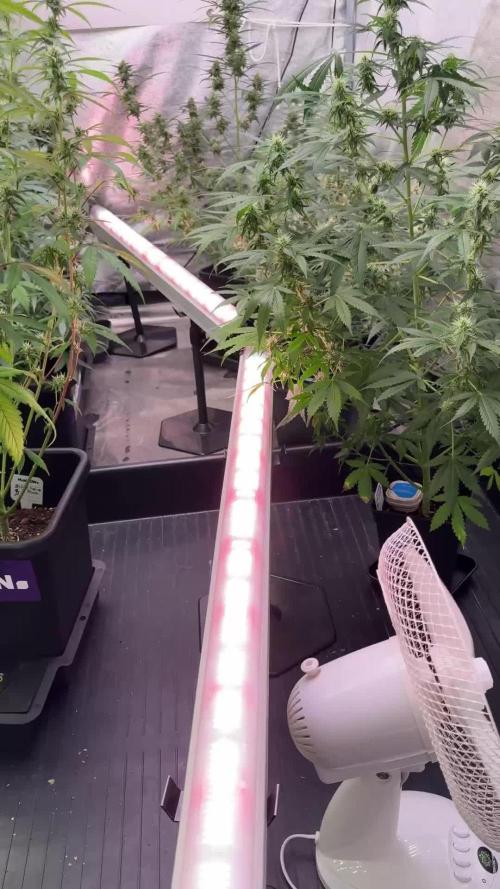
The combination of the overhead lighting with the inner-canopy and under-canopy lighting is doing an outstanding job.
Light is reaching much deeper into the structure.
And we're getting flower development throughout that vertical space.
That makes me very curious about how these lower flowers will continue to develop as we move deeper into flowering.
💡 Above, Inside & Below
This is something I've been particularly happy with during this run.
The Future of Grow LED Black Series provides the main overhead light.
But we're not asking the top light to do absolutely everything.
The inner-canopy lighting and the LumiFlora under-canopy lighting are helping bring photons into areas that traditionally receive much less direct light.
And when you look at Godfather OG Pheno B...
you can see why that matters.
She's tall.
She's open.
She's got flowering sites distributed throughout her structure.
And now we're seeing that flower development progressing from the upper canopy down toward the lower areas.
That's exactly the kind of structure I wanted to see.
Not one giant flower-covered ceiling with forgotten branches underneath.
Instead:
light → leaves → flowers
from top to bottom.
And so far, it's looking beautiful.
🌱 No Need to Interfere
This week there was no reason for me to make major changes.
No dramatic training.
No unnecessary defoliation.
No attempt to reshape her.
No trying to make her behave differently.
She's already giving us exactly what we want.
So I'm following one of my favourite cultivation rules:
If it isn't broken, don't fix it.
Sometimes growers feel like they need to be doing something constantly.
But plants don't need our hands on them every day.
Sometimes the best thing you can do is observe.
Look.
Listen.
And leave the plant alone.
Godfather OG Pheno B is making that lesson very easy this week.
Twelve Genetics. One Ecosystem.
This is where the 8×8 Adventure continues to become more interesting every week.
We're running twelve different genetics and more than twenty plants in the same overall ecosystem.
They all have access to the same environmental conditions.
They share the same feeding strategy.
They share the same lighting philosophy.
And yet every plant finds its own way.
Some demand more.
Some demand less.
Some stay darker.
Some become lighter.
Some stretch aggressively.
Some stay compact.
Some become extremely aromatic.
And some...
just quietly get on with the job.
Godfather OG Pheno B belongs to that last group.
She's adapting.
She's comfortable.
And she's building.
🍽️ Feeding
The room continues with the shared flowering nutrition strategy:
🌱 Plagron Terra Bloom – 2.2 ml/L
🌱 Power Buds – 1 ml/L
🌱 Green Sensation – 1 ml/L
🌱 Sugar Royal – 1 ml/L
⚗️ Lemon Kick / pH Plus as required
The important part isn't simply the recipe.
It's the response.
And her response has been very clear:
She's happy.
She's growing.
She's flowering.
She's maintaining that beautiful green.
She's not asking us to change anything.
So we're not going to create changes just to feel like we're doing something.
Consistency remains the strategy.
🌡️ The Environment
The room continues running under stable conditions:
🌡️ Day temperature: 29°C
🌙 Night temperature: 25°C
💧 Relative humidity: 60%
⚗️ pH: 6.0
⚡ EC/TDS: approximately 2.0 mS/cm
💦 Solution temperature: 25°C
🌱 Substrate temperature: 26°C
💨 CO₂: 639 ppm
💡 Light schedule: 12/12
? Pot size: 15 L
💧 Watering: approximately 1.3 L/plant/24h
Again, the environment stays consistent.
And Pheno B is showing us that she likes it.
📸 Behind the Lens
This girl is becoming a photographer's pleasure.
The full-plant photographs show that elegant vertical structure.
The closer shots reveal the flowers developing throughout the plant.
And the foliage...
That green.
That beautiful, healthy green.
It's one of those plants where the longer you look, the more you notice.
First you see the overall structure.
Then the flowering sites.
Then the individual flowers.
Then the pistils.
Then the early resin development.
And suddenly you're standing there staring at one little flower for five minutes. 😂
That's the danger of growing.
You start with:
"I'll just check the plants."
And twenty minutes later you're photographing a single flower from seventeen different angles.
We've all been there. 😂📸
🌸 The Structure Is Speaking
One thing I really like about this phenotype is the overall structure.
She's tall without feeling awkward.
She's open without looking sparse.
She's producing flowering sites throughout the plant.
And she's maintaining enough foliage to support that development.
This is one of those plants where I don't feel the need to impose my own vision on her.
Her structure already makes sense.
She's doing her thing.
And she's doing it well.
That's what I mean when I say that the plants are telling us their own stories.
We just have to be patient enough to listen.
🔍 What I'm Watching Now
At this stage, my curiosity is shifting.
The question isn't really:
"Will she flower?"
We already know the answer.
She is.
The question now becomes:
How much will these flowers build?
How much density will they develop?
How much resin will accumulate?
How will those lower flowering sites respond as we move deeper into the cycle?
And what will this beautiful green plant look like when the flowering structure really starts to mature?
Those are the questions I'm interested in now.
And fortunately...
I don't need to do anything to answer them.
I just need to wait.
👑 Let Her Shine
There's something particularly satisfying about this phenotype.
She's not trying to be the biggest.
She's not trying to be the loudest.
She's not asking for special treatment.
She's simply doing her job.
Growing.
Adapting.
Flowering.
And looking beautiful while doing it.
She's around 160 cm, making her one of the taller ladies in the room, but that's exactly what I like about this run.
We haven't created a jungle of enormous plants.
We've created plants with beautiful proportions and beautiful structures.
And Godfather OG Pheno B fits into that picture perfectly.
💚 The Beauty of Doing Nothing
Sometimes cultivation is about knowing when to act.
And sometimes...
it's about knowing when not to.
This week, Godfather OG Pheno B doesn't need intervention.
She doesn't need correcting.
She doesn't need reshaping.
She doesn't need me trying to improve what is already working.
She needs time.
And I'm more than happy to give it to her.
Because every week, she's showing a little more of what she's capable of.
A little more flower.
A little more structure.
A little more resin.
A little more personality.
And now we're reaching the point where those little changes are starting to become very obvious.
🔮 Looking Ahead
Next week, I expect the flowers to continue building and becoming more defined.
The stretch should gradually become less important as the plant shifts more of her energy toward flower development.
I'm particularly interested in watching those lower and inner-canopy flowers.
With the combination of the overhead, inner-canopy and under-canopy lighting, we're giving those areas a much better opportunity to develop.
And so far...
they're responding beautifully.
So the plan?
Keep the environment stable.
Keep the reservoir consistent.
Keep observing.
Keep photographing.
And most importantly...
don't get in her way. 😂🌱
👑 Godfather OG Pheno B — Week 9
So here we are.
Another week.
Another chapter.
Another little piece of the phenotype story revealed.
She's around 160 cm.
She's among the taller plants in the room.
She's lush.
She's green.
She's healthy-looking.
Her flowers are developing beautifully.
Her structure is exactly the kind of structure I enjoy seeing.
And she's asking for nothing.
She's simply growing.
And perhaps that's the most beautiful thing about her right now.
She's comfortable enough in her environment that she doesn't need us constantly trying to intervene.
She's found her rhythm.
And now we're watching that rhythm turn into flowers.
🙏 Thank You
A huge thank you to everyone following the 8×8 Adventure.
This project keeps reminding me why growing multiple phenotypes together is so fascinating.
We can give them the same room.
The same light.
The same irrigation.
The same nutrition.
The same environmental conditions.
And they still find completely different ways to express themselves.
Godfather OG Pheno B is showing us the peaceful version of that story.
Her sister is asking questions.
This girl is answering them with flowers. 😂👑🌸
Thank you to GrowDiaries for providing the space where we can document, compare, learn and share these journeys.
Thank you to Zamnesia for the Godfather OG genetics.
Thank you to Plagron for the nutrition supporting the garden.
Thank you to Future of Grow LED for the powerful overhead lighting.
Thank you to LumiFlora for helping bring light into the lower canopy.
Thank you to TrolMaster for helping maintain environmental stability.
And finally...
thank you to everyone following along.
Every comment.
Every question.
Every observation.
Every person who stops by simply to watch these plants develop.
It means a lot.
This isn't just about reaching the finish line.
It's about seeing what happens along the way.
And Godfather OG Pheno B is giving us one of the most enjoyable stories in the room right now.
She's happy.
She's adapting.
She's beautiful.
She's building flowers from top to bottom.
She's getting more interesting every week.
And she has only one thing to say:
“Don't worry about me. I've got this.” 😂🌱👑
And you know what?
I believe her.
Growers Love, my friends, and I'll see you next week! 💚👑🌱
Likes
12
Share


@Nientjexo
Follow
Hello there!
This is my first time trying to grow Fruit spirit.
I am beyond excited to try out this strain from RQS.
I have learned a lot from previous grows so I hope this girl will turn out beautifull.
Happy growing
Xo- Nientje
Likes
2
Share


@RoccosForest
Follow
Plants growing slowly, having a problem with mold and I went and got hydrogen peroxide and that seems to control the area of it when sprayed.

Likes
2
Share

@Growingbuds
Follow
Week 8 23-29 Sept
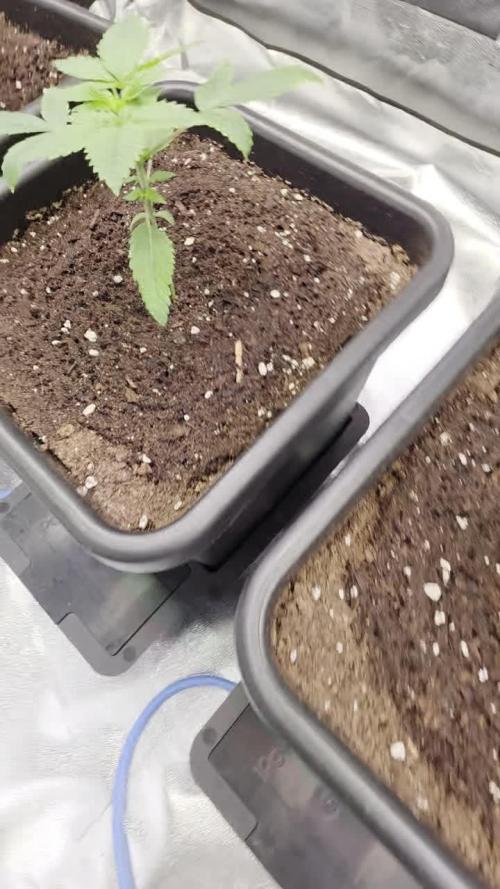
A lot of heat to end summer but I try everything to minimize stress , defoliate large leafs , reduce light 1 hour , changed darkness to hours of more heat and we are trying get something cool of this , next strain going to be gelato of FasTBuds , i'm very curious about to see ,cause always watching videos about good harvests at FB seeds


Likes
15
Share

@GrowBro1981
Follow
Hallo liebe Growfreunde 💞
Diese Woche kamen die ersten Problemchen ?!
Mein pH Messgerät hat falsch angezeigt und ich habe es erst nach dem 2. Gießen bemerkt. (Deshalb ganz wichtig: "IMMER WIEDER KONTROLLIEREN UND KALIBRIEREN"!!!) Blatt Nekrosen wurden bei einigen sichtbar, da der pH bei 5.5 war, konnten die Pflanzen die Nährstoffe aus der Erde nicht verarbeiten, deshalb wirkt es wie eine Überdüngung, aber ich dünge nicht, deshalb weiß ich dass es ein kleiner pH Lockout ist.
Glücklicherweise haben sich 4 von 6 sehr gut davon erholt💪🤗. Bei einer Gorilla Zkittlez und einer Special Kush wird sich kommende Woche zeigen ob sie bleiben dürfen oder nicht. Evtl. Steht auch das Topping an ,wenn die Pflanzen wieder fit sind.
In diesem Sinne wünsche ich euch einen schönen Sonntag und eine erfolgreiche Grow Woche ??💪. Bis nächste woche meine lieben 💞💞💞


Likes
13
Share


@Mrs_Larimar
Follow
2022-10-30
The Seed was gifted to me by my Growmie @Oimrausch
thy Buddy!
She was growing from beginning very well
Turned out to a strong well structured Plant
Buds are dense and Thick, she smells super
This Run was one of my Best, I feel iam reaching good Levels in the Growingconditions
VPD, Wind, and Fertiliser helped the Genetics to show
what they got!----
Especially to mention are the Hyphotonflux HPF-4000.
All Plants responded very well to the Lightspectrum

Likes
96
Share


@1Right_Angle
Follow
Sept 25th a.m.
- fed ea. Congo and Natural Mystic 1/2 volume H2o/ Molasses mix; C 2.75L / NM 2.5L
- fresh LST where needed
- light survey showed an imbalance with taller autoflower in the mix. It was LST’d into a lower profile and moved deeper into the corner.
Light distance for the Congo etc is now dialed-in after a bit of a shuffle.
*** reminder Oct 8 is Lights-Out *** 36 hrs of darkness
26th
- followed-up on yesterdays LST and put some actual direction on the Nat Mystic Branches. Its a tightly spaced unit but the branches are getting into some open air now. Look-out for what happens next
27th,
- everything looks great this morning. Big feeds tonight if soil allows; 6.5L congo / 6L NM
** topping observation **
In an effort to produce a 16 cola plant using Topping methods, i am in the middle of a side by side topping experiment, and it does look like one method, Does has an advantage over the other!
Waiting for each branch to grow past its first Node, and then produce a second Node, this will be the place to top, once the plant grows Past this 2nd node, on each branch.
What results is that you only snip each branch Once, after the original Topping. 5 snips will produce 16 Tops. Allow each branch to grow past the 2nd node, then Top. It will produce 4 nodes naturally on each branch. Better overall spacing/symmetry
The other significant feature of this response, is that the Durban Poison was a full week behind the Congo & N.M., and it has caught-up and Passed the progress of the natural mystic.
Both of these plants (congo/nm) used the extra topping on the upper branch, and its required longer periods for the 4 bud-sites to develop per branch and extend away from the plant.
It required more delicate fiddling than the (d)Urban Poison. ****
- short video of the Tent uploaded this morning
- no feed tonight, too moist
29th a.m.
- soil said Go this morning; 6.5L h2o/nutes for the congo & 6L for the natural mystic
- Collected details from N.M. & Congo run-off
- pulled Northern Light express auto from the tent and replaced her with a 3.5 week old Green Mountain Grape. Move was done to help acclimatize to the cmh lite, ahead of Flower
BONUS, you can actually see a bit of a droop on the Congo leaves… this mornings feed was 2 days overdue; the pot was actually lite & confirmed for me the condition of the soil is OK and not waterlogged.
Pushed her a little bit towards a Drier Bottom since her last feed. Nice to see that as I crank it up
- GMG has been super-cropped on the 28th, to help establish an even canopy
- Slip, Snap, lost a Cola. Even though it was the runt, its gonna be missed
30th
- OK, did a little homework last nite and the timing could not be better for me, with regards to Flushing 3 plants, ahead of the move into Flower.
This stems from capturing some of the run-off after a bigger feed. What resulted is I found a high EC value on the Natural Mystic (3200) that indicates a build-up of Salts in the soil. The Volume 33% says its a bit much… i have been aggressive in my nutrient values but its been incremental. Regardless N.M. gets a quick bath to flush out this bit o History.
Congo had less liquid come through but was still an elevated value (EC 2300) and will receive a Flush as well.
((d)URBAN POISON barely had any liquid come out. It will be flushed as well. Call it a tune-up, I’m in.
* should anybody see something from those results that I’m missing or misinterpreted… Id be happy to hear about it. Please & Thanks
pH probably has something to do with it too, but I don't care right now
Effluent details:
-Nat Myst released 2L out the bottom after being fed 6L : I’m going to reduce the volume of Water & Nutes fed, targeting 15% run-off. (5L next feed)
-Congo released 600ml after 6.5L was fed; Which is a reasonable amount in active use; close to 10%
- with height a constant issue in a tent, in my basement… i’m super happy with how low this whole grow has stayed through Veg. Kinda shocked actually… pic #23
- flushed Natural Mystic w/ 20 gallons water
- (the little kids pool that I inflate, to flush-in… of course, sprouted a whole shitload of leaks in the Bottom when I was about 18 gallons in. And Yeh, the discharge hose on my electric pump DID COME OUT OF THE SINK DRAIN, 2x.
I had water everywhere lol. Actually out in the garage taking care of things right now)
Oct 1
- last day week 7
- re-applied the pins holding Nat Mystic in place. She is damp, Healthier & Hungry soon; target = 2 Meals b4 Lights-out. With Congo flush 100% happening… both Meal volumes tbd
- been a busy week & things are about to change again. Learnings impact all the different grows. I’ve never flushed Mid-grow; and I’m liking-it !

Likes
5
Share


@alafmalaf
Follow
first day after a 12h night cycle, still have a big gnat problem. gonna go buy new bacteria, stickies and DT Earth. the grow shop just let me know that they got it back in stock but i haven't been able to find nematóides. doesn't seem to be a common practice here. i haven't watered them in a few days. the top soil is bone dry but the plants don't look like they're requesting water just yet so i think it's a good time to lay down the new dt earth and new yellow traps to see if we can kill the remainder. gonna grab some flowering ferts too while I'm at it.
Update:
got a bigger pot and some supergrow soil, only had time to transplant one of them today. but I decided to after them one more cycle before i do the DT earth.
update:
dt earth added, seems to be alright but not quite dry enough
Likes
24
Share


@nonick123
Follow
Día 94 (02/09) Aplico Insect Frass como Top Dress para ver si revierto un poco el amarilleamiento que muestran algunas hojas, ya que empieza a ascender por la planta
Riego con 500 ml H2O pH 6,5
Día 95 (03/09) Dia nublado y de temperaturas entorno a 24 ºC. NO es necesario regar!
Día 96 (04/09) Llueve que te llueve! 🌧️. Temperatura 21 ºC. Días de humedad alta por aquí!
Riego con 500 / 1000 ml H2O pH 6,5
Día 97 (05/09) Floración en progreso. No veo ni una sola oruga con el bacillus thuringiensis y espero que siga así! 🤞
Dia muy nublado. No hace falta riego
Día 98 (06/09) Riego con 500 / 1000 ml H2O pH 6,5 + 4 ml/L de BioGrow de Biobizz para tratar de parar el amarilleamiento que asciende por la planta
Día 99 (07/09) Riego con 500 / 1000 ml H2O pH 6,5 + 4 ml/L de BioGrow de Biobizz para tratar de parar el amarilleamiento que asciende por la planta
Día 100 (08/09) Riego con 1 Litro de Té Floración de Lurpe Solutions. Preparación: 24 horas con bomba de aire (oxigenación) con ingredientes:
Healthy Harvest 8 ml/L + Insect Frass 16 ml/L + Hummus Lombriz 8 ml/L + Melaza 1 ml/L + Kelp Hidrolizado 0,25 g/L
Aplico de nuevo Insect Frass como Top Dress
💦Nutrients by Lurpe Solutions - www.lurpenaturalsolutions.com
🌱Substrate PRO-MIX HP BACILLUS + MYCORRHIZAE - www.pthorticulture.com/en/products/pro-mix-hp-biostimulant-plus-mycorrhizae

Likes
72
Share


@BodyByVio
Follow
This week I had to Lollipop again (I know is very late and I hope I didn’t stressed the plant to much).
My canopy is so tick and so many overlapping leaves and buds in the center of the plant that don’t receive enough light or any at all , n combination with the RH swings that I got going on (45 and 63 RH), I’m very afraid of mold. I should have did a better job at Lollipoping from day 21. I’m inexperienced grower and I didn’t knew better.
I decided is better to risk to shock the plant a little bit risking a reduction in yield then get mold or pests and lose it all.
My 30 pin dehumidifier works great with the AC but sometimes when the AC( compressor) stops my RH jump at 62% -63%, witch I don’t like . I’m trying to keep the humidity around 50% but in such a small room between the AC and Dehumidifier I got big swings in temp ( 75-82) and RH ( 45%-63%) witch is not ideal but is nothing that I can do. I played with the AC and Dehumidifier setting a lot trying to keep humidity around 50% and temp around 80 degrees and that’s the best I can. My AC is set at 82 degrees and my Dehumidifier is set at 45% RH.
Also during the lights off (day time) is very hard to keep the temperature In control when outside is 110-115 degrees with my portable AC (1400BTU) in the 4x 6 closet. Is crazy but I do my best to keep temp under control.
This is another rocky mistake I made is trying growing weed DWC in the middle of summer where temps are 105-115 degrees constant in a closet without centralized AC port and at second level in the building. LOL
Also I think I underfed her (630 PPM TDS, PH 5.8-5.9) ) and I got a Ca deficiency witch I think is the reason my flowers developed slower then I anticipated.
Hopefully I’m wrong and everything will be good.
P.S. I got a little bit of calcium deficiency caused by salt buildup (to much PK boost) despite my earlier belief that is underfed.
I increased the PPM from week 4 (630-640TDS) to 680 TDS) on week 5 while I kept the PK booster at 3+ml l per gallon. Slightly my PPM’s was rising in my reservoir for few days until I decided that my plant can’t take that much nutrients (PK). 2-3 days after I increased the TDS I’ve noticed more spots on the lower leaves with tip burns on top ( first signs of PK toxicity). One day later found spots and yellowing of the leaves on top of the plant that indicates Ca deficiency caused by salt buildup ( PK toxicity) and reversed osmosis (hope I’m not wrong). Going into week 6 I lowered the PK boost at 1.5ml / gallon and total TDS to 640 PPM. Seems like leaves damage to stop and my PPM to stay stabile at 630-640. Trying to keep PH at 5.8 max 5.9.
I will post pictures of my Ca deficiency/ PK toxicity.
If you guys have any suggestions please leave me a comment.