Likes
Comments
Share
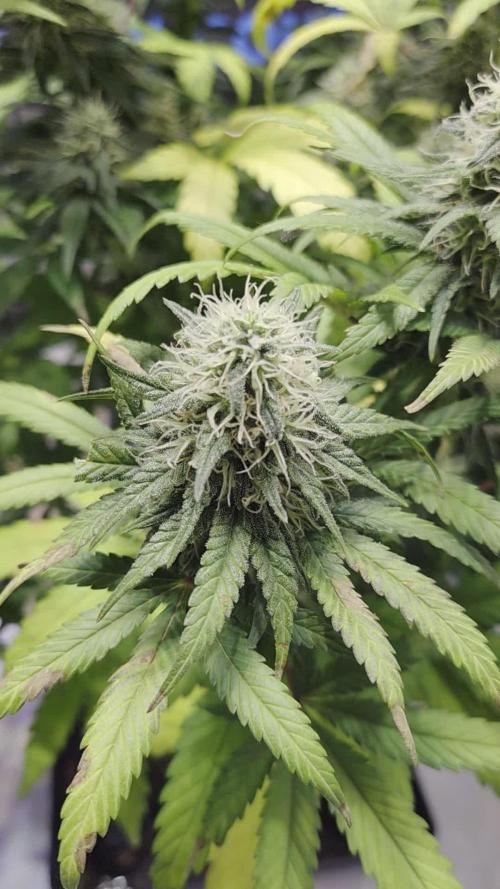
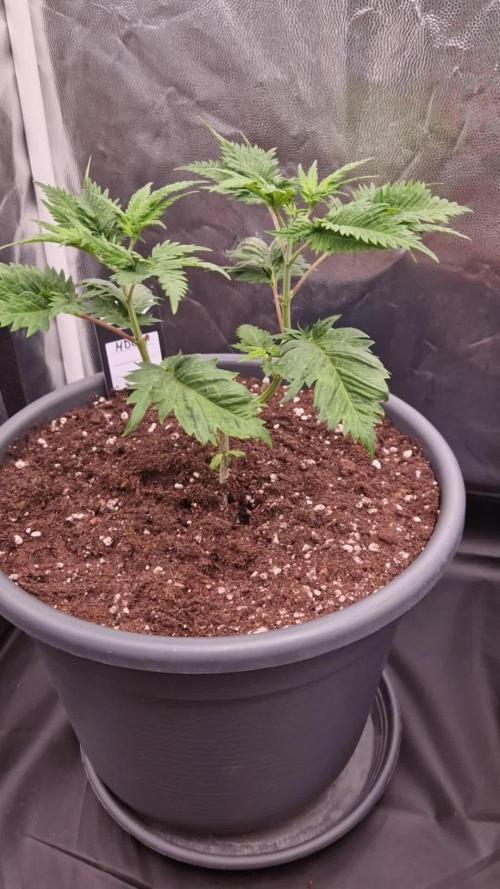
Day 45 17/08/24 Saturday Another watering today using de-chlorinated tap water pH 6 only. Lemon skittles and XXL ammo are tall, bud nice and smelly plants! The Kabul is more of a dense compact build, I'm excited to see what they grow into 😍 Picture and video update ✌️ 💚 Day 48 20/08/24 Tuesday Feed today using de-chlorinated tap water pH 6. With Plagron PK13-14 and power buds. Noticing the stretch stop, and now packing out there bud sites 💪💚 Vid + pic update ✌️💚
Likes
10
Share
@Smog2012
Follow
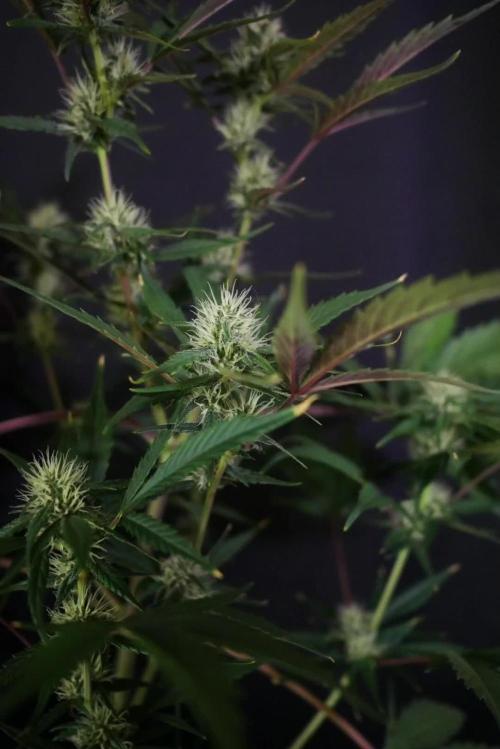
From today I started washing with clean water without fertilizers. Hopefully purple will become even sharper. It smells strong, but it dissolves easily with a carbon filter. Without any problems, it grew very well.
Likes
4
Share
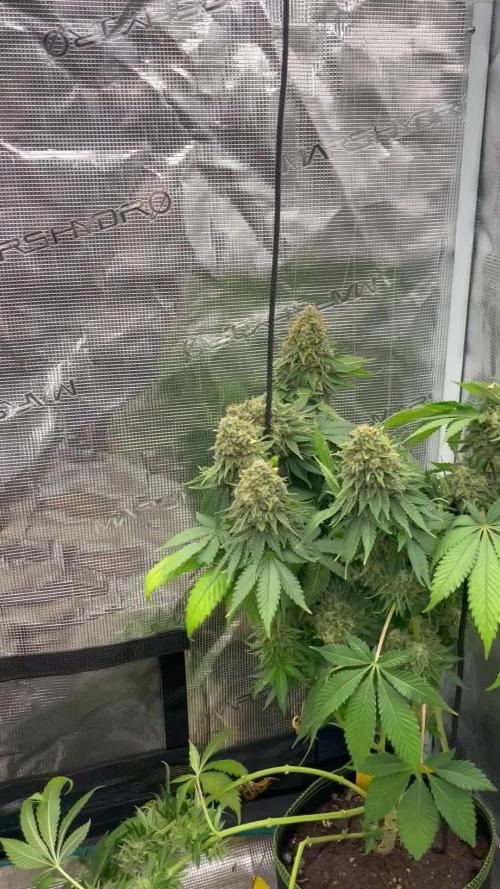
Day 42 Just trying to pull through till harvest. Got a couple more weeks to go.
Likes
9
Share
Day 42 to 49 We are getting closer to an end. Is the second time I’m growing purple genetics and I can say that somehow look to be faster to finish their life cycle; I think the next week will be the beginning of flushing, so I will just give water at PH 6.5, without any fertilizers, till the end which I believe will be around day 65. Let me know what’s your experience with purple genetics and of course if you have some tips! Cheers 🍻
Processing
Likes
9
Share
@4F1M6
Follow
I started germination of 1 orange sherbert bean on 29/12/2020. I pre moistened my rockwool cubes with ph balanced water to 6.4. Made sure the plug was just damp and not soaked. Using a small wooden dowel I increased the size of the plugs pre made hole. Than I sowed my bean into the hole. Ripped off a small piece of rockwool and mulched it up. Lightly filled the hole in with the mulched rockwool. Than stuck the plug into a misted humidity dome, to complete germination. Shouldn't take anymore than 4-5 days to see a sprout. Once I see some cotlydon leaves bursting to the surface. I will get the plug planted into some 1 gallon pots. Plus get this lady situated into her home. Cant wait! Some Background information on history with Orange Sherbert. I have grown orange sherbert out 3 times and all times had the same result. A shorter extremely branchy robust plant. That dominated the room. Loves training and really ups yeilds doing so. She produces an amazing canopy... just a sea of daggers. Her huge chunky colas pack and amazing orange tangy aroma and just taste like heavenly candy! Barneys Farm hit the nail on the head with this variety! She tends to have a little higher demand for potassium mid flower than most varieties. So a bit heavier on the pk booster and she will be mighty happy! Just a fabulous strain to work with.
Likes
Comments
Share
Likes
19
Share
ladies and gentlemen Welcome to peaky house gardens We are in the running with yet another strawberri....yes guys....we love it too much...I would like a whole tree of it 😄
Likes
6
Share
@BLAZED
Follow
Week 9 (24-3 to 30-3) 24-3 Temps: 19.2 to 23.3 degrees Humidity: 58% to 66% 25-3 Temps: 19.3 to 23.8 degrees Humidity: 52% to 65% 26-3 Temps: 20 to 23.9 degrees Humidity: 50% to 62% Watering: Both 1000 ml. Timer set to 12/12! 27-3 Temps: 19.1 to 23 degrees Humidity: 55% to 65% Watering: Both 1000 ml. 28-3 Temps: 19.1 to 23 degrees Humidity: 55% to 67% Watering: Both 1000 ml. Defoliated both plants, and did some LST. I removed the tape on the stems, they are healing nicely! Also found some odd grow behaviour on the #1, looks cool tho 😁 29-3 Temps: 19.8 to 22.9 degrees Humidity: 58% to 67% Watering: Both 1000 ml. 30-3 Temps: 19.2 to 22.8 degrees Humidity: 58% to 67% Watering: Both 1000 ml.
Likes
4
Share
@HawksGrow
Follow
We're on week 10 and trichomes have just started going cloudy at a good rate 3 days ago, so its now time for the 10-20 day flush until harvest. The smell is getting super strong, its a very weird citrus, with a slight lemon hint(you can tell theres some diesel genetics in there), It almost stings your nose abit. Overall its not a bad smell just not as pleasant as some other strains but unique in a good way. Im not sure how im going to harvest this plant but most likely I will harvest some when all trichs are cloudy and some once a decent amount have gone amber, im gonna be growing some dank strains in future so this will be my more medical strain. I will be totalling all the yield numbers at the end, yield may be affected abit but I also want to see first hand how cloudy vs cloudy/amber trichs smokes.
Likes
12
Share
@WoEsWar
Follow
11/18-11/25 The buds are very dense and covered in trichomes. The sweet berry smell I mentioned a couple weeks ago has mostly gone away. It smells different now. I dried and vaped a sample bud. Very potent. As of now, the trichomes still aren't showing they're ready for harvest. Some clear, mostly cloudy, no amber. Tent temps are averaging around 75-77 in the daytime, which is higher than I'd like. The humidity is good at around 45 average. 11/22: After putting the trichomes under the microscope, I'm making the call. Harvest day will be 11/24. This morning I turned the lights off and am going to give them 48 hrs of darkness prior to harvest to increase terpene production. I've never done that before, and suspect it's a myth. 11/24 will be 69 days of flower.
Likes
49
Share
Hey guys :-) . I did not do radical LST again this week :-) I will now make radical topping this week :-) The only reason is that they are otherwise too high for me, because I only have about 40 days in the flower tent 😂. Don't be shocked next week 😅 it will look fatal 😂👍. Typ: Sour Diesel (Zamnesia) ☝️ Genetik: Diesel x Northern Lights 👍 Vega Lampe: 2 x Todogrow Led Quantum Board 100 W 💡 Flower lampe: 2 x Todogrow Led Cxb 3590 COB 3500 K 220 W 💡 ☝️ Erde: Canna Terra Professional + ☝️ Dünger: Canna Termittel Vegra Vega, Canna Terra Flores, Rizotonic, Cannazym, CANNA Boost, Pk 13/14, Canna Cal/Mag, Canna Ph - Grow, Canna Ph - Flores ☝️ 🌱 Wasser: Osmosewasser mit normalem Wasser gemischt (24 Stunden abgestanden, dass das Chlor verdunstet) auf 0,2 EG. Fügen Sie Cal/Mag zu 0.4 Ec Ph mit Organic Ph - zu 6.0 💦 💧
Likes
16
Share
2000 ml alle 2 Tage PH-Wert: 6,2 EC-Wert: 2.1 Temperatur: 22ºC Luftfeuchtigkeit 62% Schädlingsbekämpfung: Nematoden PPFD: 510 µmol/m²/s DLI: 33 Düngemittel: Mineralischer Dünger 3,5-6-6 Besonderheiten: Wurden direkt in die erde gepflanzt in einer Kokos-Quelltabletten. -Tag 65 Heute haben wir sie mit 2000 ml Wasser gegossen, versetzt mit 1,5 ml Calmag, 5 ml Canna PK 13/14, 1 ml Plagron Green Sensation und 1 ml Plagron Power Buds. Der EC-Wert lag bei 1.460 mS/cm und der pH-Wert bei 6,2 -Tag 67 Heute haben wir sie mit 2000 ml Wasser gegossen, angereichert mit 1,5 ml Calmag, 6,5 ml Canna PK 13/14, 1 ml HY-PRO Epic Blast sowie 0,32 ml HY-PRO Generator. Der EC-Wert betrug 1.510 mS/cm und der pH-Wert lag bei 6,2 😍 -Tag 69 Heute haben wir den PH wert des Runoff Kontrolliert und er ist leicht zu hoch mit 6,6. Der EC-Wert lag bei 230. Wir haben ihr angepasstes Wasser mit Mikroorganismen gegeben.
Likes
2
Share
Wakíŋyaŋ, I am who I am, the salt of the earth. Thunderbird is an allegory; his conflicts with other forces in nature are then an attempt to allegorize relationships observed in the natural order, such as the changing of the weather. He is essentially an attempt to represent the patterns of activity of a powerful, mysterious force in a way that can be understood simply and easily – sort of the way in which a weather map functions today. Moving from18x60x60 = 64,800 seconds in 18 hours. 64800x860(ppfd) = 55,728,000 umol per daylight. Into Flower 12x60x60 = 43,200 seconds in 12 hours. 43200x1145(ppfd) = 49,464,000 umol per daylight. It's asking a lot of Rubisco regeneration to maintain 50 DLI in the 12 instead of 18. Raised the ambient CO2 to 1200 to 1500 ppm to achieve efficient gas exchange. I don't recommend. Adding sugar to an indoor growing medium is a highly effective way to stimulate microbial activity, which rapidly breaks down the sugars and releases CO2 through cellular respiration. You can safely capture this CO2 to fertilize indoor crops and boost photosynthesis. While this process works, the setup requires precise management to avoid common indoor growing hazards. The plant Carbon to Nitrogen C:N ratio defines the balance between structural carbon (sugars/cellulose) and nitrogen (proteins/enzymes). It acts as a master regulator of plant health, growth, and metabolism. Rubisco (Ribulose-1,5-bisphosphate carboxylase/oxygenase) is the engine of photosynthesis responsible for fixing atmospheric CO2 into sugars. It is intimately tied to the C:N ratio for three primary reasons. It is the Plant’s Biggest Nitrogen Sink, Drives the Carbon Side, and it is the Nitrogen Control Knob. Understanding this relationship allows you to predict how plants respond to environmental stress or fertilizer. Rubisco acts as the primary storage sink for leaf nitrogen, accounting for up to 30% to 50% of a C3 plant's soluble protein. Deep Green Leaves signal a rich abundance of both chlorophyll and Rubisco proteins. The plant possesses the heavy enzymatic machinery required to handle 1145 PPFD. Pale or yellowing leaves indicate a nitrogen deficiency. The plant is actively breaking down its own Rubisco to salvage nitrogen for newer growth, drastically reducing its light-tolerance threshold. Subtle difference, but understanding is important in order to be able to judge when to dial light intensity up and light intensity down, when to push, and when to back off. An extra dose of magnesium is vital if a plant is going to push through the growing pains of high-intensity lighting. Foliar application of magnesium is an excellent and rapid way to assist with Rubisco regeneration within a plant, so long as it is applied correctly. Spray strictly in the early morning or late evening, mixing your magnesium with a little fulvic acid or chelator, but only when she gets a little limey on top. This, for me, is the experience of growing, akin to "riding the surf" maintaining efficient Rubisco regeneration through visual identification of the shade of green. Surf a razor-thin wave when balancing light intensity, nutrient availability, and transpiration to maximize Rubisco enzyme efficiency. Keeping the Calvin cycle fully charged without tipping into nutrient toxicity, light stress, or the dreaded chlorosis requires paying close attention to the visual cues the plant provides. By monitoring these subtle shifts in color, turgor pressure, and leaf posture, you adjust your environmental controls and surf that exact razor-thin wave. Nute recycling acts as the vital execution mechanism for autophagy, which defines senescence. Natural senescence is a genetically programmed developmental stage aimed at nutrient recycling, whereas triggered autophagy is a rapid survival response activated by environmental stress. While both processes utilize the vacuole to break down cellular material, their triggers, selectivity, and overall goals are entirely different. Cannabis plant senescence is not separate from nutrient recycling protocols; rather, nutrient recycling is the primary physiological purpose of senescence, and autophagy serves as the core switch mechanism executing both processes. Takes about 24 to 48 hours to notice visible changes once the signals have initiated the autophagic response. Not too late at all. A little bit of fade from senescence 2 weeks from harvest is normal and genetically expected. Send the C:N 32:1 signal 1 week from harvest for the best effect in your organic grow. Understanding what makes leaves fade is not always senescence, but also strongly linked to Rubisco regeneration. That's a whole other subject. Vital to understand the differences if you want a correct diagnosis and to transition from hobby grower to master stoner, differentiating between a true genetic fade and a decline in photosynthetic proteins. Nitrate is nitrate, whether it oxidizes or not is not up for debate. If it's not sunk by the plant you are smoking some if not all of, it's regardless of what your feelings are on the matter. Senescence is highly critical. It is the natural end-of-life stage where the plant redirects energy to ripen flowers. Properly managed, it breaks down harsh chlorophyll, allowing the terpenes (which provide taste and aroma) to peak. Harvesting outside this window leads to an "unripe" or degraded flavor comparable to going without. To initiate the response you seek, you can trigger it multiple ways, when growing synthetically its triggered by nutrient starvation, generally when the entire medium is flushed. This is more to do with N starvation than being entirely empty. Nonetheless. PK boosters are N starvation through maximizing P and K. (Generally only works for synthetic grows) Because you are using organic nutes and you want to maintain the rhizosphere, what you want to do is add carbon in the form of sugars (powdered molasses). It's almost impossible to empty a medium enough when microorganisms are constantly releasing nutrients into the direct EC. Very difficult to initiate starvation responses with ammoniacal nitrogen. Manipulating the C:N ratio is the key to triggering an autophagic response and resulting nutrient recycling in the last days using organic nutes and without having to flush. Generally not recommended for new growers. So do what you want. But if you don't trigger the plant to dump its nitrates into root zones, you will smoke nitrates as NO3- does not oxidize during the dry and cure no matter what you do or how long you dry or cure. Doesn't matter what anyone "feels" about it, how many grows they had with no fade. "Clover steals valuable nutrients." Crop and drop the clover come flipping to flower, its benefit comes from creating an airy and porous rootzone. I don't need to crop and drop once the plant fills the canopy, she blotches out the light, and the clovers die. This is the nitrogen the microorganisms use to convert carbon for respiration throughout the flowering stage.
Likes
12
Share
@ciansta
Follow
So the Northern Lights free seed from RQS ended up out living all 3 of the Dosidos’ “USA Premium” seeds that all died within the first week of sprouting, hopefully an explanation will be found for this as I have not been able to come to any conclusion as to what happened. Long live the lights amiright
Likes
4
Share
@Ninjabuds
Follow
My nine Week 7 flowers are thriving under the new GrowPro Solutions under-canopy lights. The lights have really brought out some amazing colors in the buds. It's so cool to see how much they've changed in just a day! I'm excited to see how they develop even more in the coming weeks
Likes
6
Share
@RBG
Follow
Absolute godsend of a start, just have to keep it up, seems like the perm bluez is loving the alien system. No water change needed yet, holding strong. E.c 1.1-1.2. Continue to let her bring herself up to 1.3-1.4 and keep her around there. Ph 5.8-6 Light will be going up to 60%! Will be topping her but won't be doing too much else and just let her do her thing 10/2/26 Doing lovely, let her keep going, topped at 5th node 13/2/26 Defoilation, shes compact as. Risen light to 80/90cm, on 60% now. Hopefully stretch her up a bit, week 3 day 6 is before and after. Leaves as big as my hand! Nice nice
Likes
31
Share
well we are through the stretch and fully into the flower now. They look really nice, I hope I have enough P and K in the soil, I may need a Banana tea halfway through but only time will tell.
Likes
4
Share
Likes
2
Share
@Romobo16
Follow
For week 2 I did couple of changes: Water change in order to add TPS Silica Lower the light to 16 inches / 30% light / I’m getting a PPFD of 300/400 Both genetics are wronging super fast, the only thing is the COCO FRESH when there is no light the leafs kind of go down, once they get light they go back up again, wondering is that’s how they are or if there is a problem, I will ask around here, if anyone knows why I will appreciate all the info. This week I should be able to switch the light from the G8600W to the G1000W, I’m moving the 8600 to a 4x4 with another genetic. I will also get the T7 AC humidifier and I will change also the in line fan to AC, I want to control everything with my phone (AC infinity app)