


Likes
82
Share


@Harukisan
Follow
Hello fellow growers, I am pleased to start this new journey with you.
I am also particularly excited since I am going to grow a Mephisto Genetics strain for the very first time, the famous Double Grape.
I know you shouldn't believe the hype, as Public Enemy used to say, but it's hard to ignore the dithyrambic reviews when it comes to Mephisto.
I sowed the seed directly in the substrate and it was popping out 3 days later.
Right now the seedling is under my Mars Hydro TS1000, brightness set at 25%, lights are 80cm away.
During my last grows I set it up to the max at all stages of growth, this time I decided to proceed differently and increase gradually. Please let me know in the comments if you think I should just push it to the max right away.
I would like to thank HESI nutrients team for sending me a great Starter Pack! Shout out to Hesi_Official, can't wait to test your products!
Thanks for reading and stay tuned for weekly updates! 😎


Likes
2
Share

@Earthsower
Follow
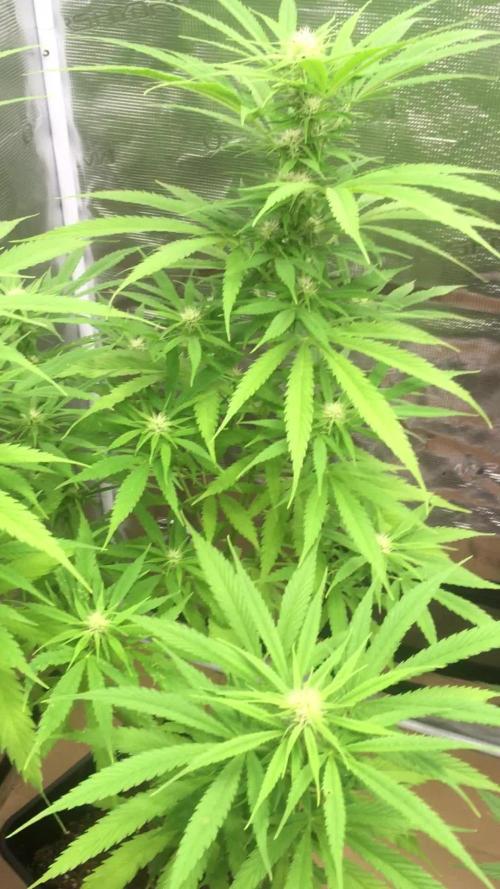
The Blue dream is doing well with the stigmas filling all the gaps. The lady has grown approximately 10cm in the last two weeks. She has had a slight defoliant and will be fed as required. She stands at 90cm tall.


Likes
13
Share


@Erratico
Follow
Día 35: Se ven fuertes y creciendo bien, aparecen algunas hojas amarillas, especialmente las más grandes y las cercanas a la base de la planta. Se riega con 1.7 Lt. de agua, día por medio.
Día 39: Se trasplantan a maceta definitiva de 11 Lts. No se ve un gran desarrollo radicular, se agregan micorrizas de Great White en forma espolvoreada y vía riego. Se utiliza sustrato All Mix para este último trasplante, el cual fue activado hace unos días y se le agrego micorrizas granulares de Great White.

Likes
2
Share


@GuniGugu
Follow
- slowly increasing nutrient doses toward prescripted BioBizz chart quantities, but still, every second and a half watering is pure water :)

Likes
101
Share


@SlowpokeFuegobud
Follow
💜 🌧️ 👊💜 🌧️ 👊💜 🌧️ 👊💜 🌧️ 👊💜 🌧️ 👊💜 🌧️ 👊💜 🌧️ 👊
Welcome to week 9, dear friends!! 😘
She is a small girl, but the trichomes smell so good! 🍒 Can't wait to try!! 😍
DAY 57
Watered with 1ml A+B + 1,5ml C4 + 2ml PK + 2ml calmag 💧
DAY 59
Watered with 2ml A+B + 1ml C4 + 2ml PK + vitalize + enzym+ 💧
DAY 61
Watered with 3ml A+B + 1ml C4 + 2ml PK + vitalize💧
Thanks, everybody for visiting!! 💚 💚 💚 Grower love!!! 😘🙏 🌱
_________________________________________________________________________________
Strain Description:
This is a giant autoflower that reaches 150cm and produces massive yields of up to 600gr/m2, a modern Cali strain that offers what a top-quality Indica-dominant hybrid should; nugs capped in resin with the density you would expect from Indica-dominant strains and that bag appeal that will surprise even the most experienced growers. Expect beautiful purple and magenta hues that come along with a sweet almost pastry-like taste and, thanks to the 24% THC, a very pleasant and potent effect that surprisingly starts as a motivating high and in no time relaxes you completely, taking a bit of the energetic edge off.
Bud description
Purple Punch Auto develops rounded compact buds with fat calyxes and bright orange or sometimes bright yellow hairs, with copious amounts of trichomes that give the buds that beautiful frosty look that all growers seek for. The light-green buds can exhibit subtle purple or lime-green tones that give them a charming and attractive look and complement them magnificently, while the mouth-watering mix of earthy cherries and blueberry muffins with a spicy touch will win you over even before you can see the buds.
Smoke report
Due to the high THC levels, you’ll experience a powerful effect that will completely relax your whole body and gradually start feeling like all your muscles are melting before you can count to three. Despite the strong Indica effect, you won’t be couch-locked thanks to the slight Sativa genes that incorporate a pleasant creative head-buzz and leaves you mellow and clear-headed in a peaceful state of mind. The perfect effect to go through a busy day stress-free, alleviating sore muscles after a long workout routine or just chill and have fun on a night out with friends.
Plant appearance
Due to the Indica dominancy, this strain remains relatively compact despite its height and grows wide and thick fan leaves typical of Indica-dominant varieties. You can expect a thick tall main cola and a few shorter side branches with spaced-out internodes where the incredibly frostbitten flowers develop and end up looking like buds on steroids by the end of the flowering stage.
Grow tips
This strain offers unique flavors and charming colors so we recommend flushing thoroughly to allow it to show its full potential and end up with the beautiful reddish-purple and/or lime-green hues on the buds and surrounding foliage. Due to the Indica genes, the buds grow denser than usual so it’s essential you tie the branches slightly so there is enough airflow in between the buds to prevent mold and bugs. This variety doesn’t require a lot of maintenance or anything extra but remember to feed her properly and with good-quality nutrients, this way you guarantee the buds fatten up properly and that your plant doesn’t suffer any kind of nutrient deficiencies.
Flavor
Thanks to the high-quality genetics, this strain offers a distinguishable taste of fresh blueberries and earthy cherries with spicy undertones and a pinch of sugary tart. The sweet smoke overpowers your throat with a sweet blueberry muffin-like taste as you inhale and, as you exhale, leaves a delicious coat of sweetness in your mouth that leaves you feeling like you’ve just eaten a dessert.
______________________________________________________________________
SETUP:
80x80x180 cm Zelsius
240W Full Spectrum LED IR UV dimmable
DW240H-A6-HS
Heatsink color red
LED Chips:
512pcs SAMSUNG LM301H + 24pcs Osram 660nm + 8pcs Osram IR 730nm + 8pcs UV 385nm
Color mix: 2700K + 4000K
2,8umol/J
Driver HLG-240H-C2100B
Coverage: veg 5x3ft / flower 4x2ft
Product size: 628x205x68mm
° 2x 5W Fans
° custom 320/270 cm³/h exhaust fan & Carbon Active Granulate 240cm³/h
° Mills Nutrients, Green Buzz Nutrients
Shouts go out to my sponsors @GreenBuzzNutrients, thanks so much for your support! ❤️
If anyone would like to try their amazing organic products, use code GD42025 for generous 25% discount (for orders of minimum 75€) ✨
https://greenbuzznutrients.com/
° tap water EC 0,26uS upgraded to EC 0,5 with PlantMagic MagneCal - pH 8, nutrient solution downgraded to pH 6,5 with Advanced Hydroponics Minus Bloom
° from week 4 in the same container Aptus Enzym+ once a week
° Biobizz Lightmix
💜 🌧️ 👊💜 🌧️ 👊💜 🌧️ 👊💜 🌧️ 👊💜 🌧️ 👊💜 🌧️ 👊💜 🌧️ 👊
Likes
47
Share


@FreddyGrows
Follow
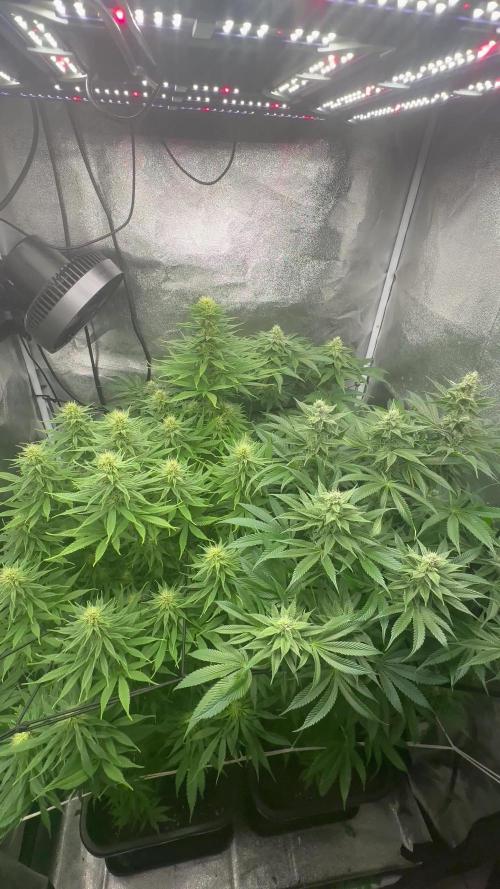
Third week of visible flowering.
Growing out nice cant wait for the buds to grow fat and big.
While they grow i give them a bit more nutrient every feeding so now im @ EC 1.6
Im thinking of maybe going up to an EC1.8 if anyone has any tips for this??
Thanks for reading again and untill next time



Likes
121
Share


@ctm_dzagi
Follow
We continue to bloom and gain weight
Consumption is not quite stable, it falls after defoliation and is gaining momentum again after a couple of days, after the start of adding pk to the compote, the drainage ph began to fall
As it was already said earlier, I turn over the pot every day, alternating the side of the blower, another remedy for mold will work for another week (disintegration period 14 days)
Barrel (silicon) from Simplex in the diet should also increase mold maintenance

Likes
14
Share


@CannaTrope
Follow
I was selected to test some of Fastbuds new genetics. Seeds germinated in 48hrs and 5 days later it broke ground and hasent slowed down.
This grow is in my 4x4ft grow space located in an uninsulated shed. Each plant has a dedicated 150-200w LED from Viparspectra or Mars. Winter Temps in my area spike to -15C or more in Jan and Feb, so this will be an interesting and challenging grow. The grow room is 20-30C above ambient temperature, so there is a little manual and auto manipulation of grow Temps. See my video
Lights 50-75%, 30 inches, 75-120w per plant
Soil temp: 21-25C
Light cycle: 5:1
Air temp: 18-27C
Likes
332
Share


@OrganicNature420
Follow
Germination date 🌰 10/03/2021
Day 78 🌱 01/06/2021
Strain 🍁
Purple Matcha, Humboldt seed bank
Nutrients 💉
Advanced nutrients
PH perfect sensi grow A+B (veg)
PH perfect sensi bloom A+b (flower)
B-52 (through veg until week2 of flower)
Voodoo juice (🖕🏻)
Tarantula (🖕🏻)
Piranha (🖕🏻)
Sensizym (all the way through)
Rhino skin (🖕🏻) add first leave for an hour
Big bud coco (week2+ of flower
Bud xfactor (🖕🏻)
Nirvana (🖕🏻)
Bud igniter (first 2weeks of flower)
Overdrive (last 2weeks of flower)
Flawless finish (flush week)
RockHoldings Rockresinator(week2+ of flower)
Vitalink calmag
Set Up
⛺ amazon special 1.2m x1.2m
💡 spiderfarmer sf4000
📤📥 AC infinity 6inch
💧 10lt dehumidifier
Notes🗒️✏️
Smells amazing looks amazing.. going to run this what Humboldt say to, 9/10weeks so last week of nutrients this week and will use the Advanved nutrients flush following week. Can't see this being a huge yielder but I can only imagine the buds will taste amazing and hopefully a heavy high.
Stay turned and happy growing fam ❤️🍁🌱👍🏻
Likes
46
Share


@Wastent91
Follow
Ohhh finalmente è arrivata ragazzi!!! Ringrazio MARS HYDRO per la nuova lampada FC 3000 ! Davvero stupenda ! Un prodotto fantastico che andrò a provare nei miei prossimi diari! Ringrazio Mars hydro per credere nel mio lavoro ,che è la mia passione, la mia ragione di vita!! La ragazza è ormai quasi pronta x essere raccolta ! Le cime sono dense e bubbose piene di cristalli e sode come uva! Non mi aspettavo un risultato del genere da un vaso così piccolino! (6.5l) è probabile che gli darò ancora qualche giorno di vita prima di eseguire la cerimonia del raccolto! Ragazzi vi amo tutti! Ci ha vediamo nelle prossime settimane ! Grazie Mars hydro e FastBuds che hanno reso possibile questo miracolo! Buon 420 a tutti!
Likes
7
Share


@Naujas
Follow
When I photograph her in the dark with a flash, the leaves look a lot more yellow than they really are :) The girl looks pretty good :) I'm happy :)

Processing
Likes
11
Share


@ganjaman24
Follow
It’s bern roughly two months these guys have been growing! Lst’d Both but untied the gg because I wasn’t sure she was benefiting from it so I’m going to do it over. These ladies (I hope) will start their flower journey next week when I revive my new flower tent 😎..stay tuned for some epic buds..I hope!!

Likes
16
Share


@Boomdrawfyah
Follow
Dia 108 en el proyecto A la semana 15 ha sido pasada por agua y tormentas, han aguantado como unas campeonas, aunque he visto dos orugas y eso me preocupa, cuando paró de llover la rocie con xentari un producto agricola que lleva bacilus, esperemos que no vaya a más, y se terminen estos dias de lluvia para poder terminar bien el cultivo
Likes
20
Share


@SecretTreasures
Follow
All the plants are healthy and happy. The leaves are now starting to turn deciduous. Miracle Gushers and Banana Creamz are purple, the Hardcore Zoap are yellow to purple. Also, all the flowers are now full of trichomes and the smell when opening the tent is very strong.

Likes
14
Share


@SkunkyDog
Follow
Hallo zusammen 🤙. Sie wächst nicht so gut aber egal , schicke sie jetzt in die Blüte
Likes
12
Share


@PedroAndHisPlants
Follow
Day 64: Second Grow
We’re now in the fifth week of the flowering stage, and the buds are getting thicker by the day. We’ve decided to order a microscope to keep a closer eye on the trichome development. Additionally, we’re considering ordering CANNAZYM, a nutrient that could help our buds grow even bigger and healthier.
Here’s to another week of growth and progress!!