


Likes
Comments
Share


Likes
5
Share

@DerEkstaseHase
Follow
Diese Woche gab es ein paar Probleme, sowohl Salzaufbau im Substrat sowie Stress durch zu viel Licht.
Der EC im Drain lag bei 3,0 mS und der Ph bei 7,5, dadurch ist die Kaliumaufnahme blockiert.
Um da dagegen zu steuern habe ich ein Mal 6l Wasser mit CalMag und Ph 5,7 gegossen, um die Salzablagerung abzubauen.
Außerdem habe ich das Licht wieder auf 75% gedimmt.
Salzablagerungen sind zu diesem Zeitpunkt der Blüte relativ häufig, in Coco!

Likes
110
Share


@SlowpokeFuegobud
Follow
💜 💚 😍🥤💜💜 💚 😍🥤💜💜 💚 😍🥤💜💜 💚 😍🥤💜💜 💚 😍🥤💜
Dear growmies, welcome to week 10!! ❤️
Lalalalaaa singing all day... 💜 look at my festive purple lemonurple! 😍 I'm wondering what she's up to now.. does she want more food? or maybe champagne?? 😁
DAY 64
Watered with 1ml PK + 3ml bloom + 4ml growzyme + humics + big fruits + 2ml Calmag + epsom + Living Organics 💧
DAY 66
Watered with 2ml pk +4ml bloom + 4ml growzyme + humics + big fruits 💧
DAY 68
Watered with 2ml pk + 4ml bloom + 3ml growzyme + humics + big fruits 💧
DAY 70
Watered with 1ml pk + 2ml bloom + 3ml growzyme + humics + big fruits 💧
Thanks @Fast_Buds for your awesome genetics, growing Fastbuds is always a bit like riding a ferris wheel! Woohooo!! 😜 🙏 💚
Thanks to my sponsors @Green_Buzz_Nutrients, their nutes never ever let me down!! Check out my diaries on how well they work! 💚 😘 In case you want to give them a try, you can find a generous discount code in the setup description further down the road ⬇️
You can find more brand hot updates on my IG, where I share real time events from my growroom, don't miss this! 😝
_______________________________________________________________________
Purple Lemonade FF
As refreshing as cold lemonade on a hot Summer day. 🌞
• Quench your thirst. Just as good as lemonade on a hot Summer day.
• The gentle giant. Up to 550 g/m2 of gorgeous pinkish-purple buds.
• Refreshing for the mind and body. The ideal all-day strain with a perfectly balanced effect.
• Sweet n’ sour terps. Mouth-puckering lemon flavors that’ll hypnotize your taste buds.
• Properly purple. The perfect choice for purple hash and extractions. As refreshing as cold lemonade on a hot Summer day.
Arising from a cross between purple and citrus Cali genetics, Purple Lemonade FF (Fast Flowering) offers a complex high made up of perfectly balanced cerebral and body effects that are ideal for daytime use. Expect an extremely enjoyable high that boosts your mood while deeply relaxing your whole body and getting
rid of muscle pain. This meticulous cross produces up to 550 g/m2 of some of the most beautiful purple buds, with pinkish and reddish hues that will catch everyone’s attention. The beautiful purple buds are ready for harvest in 7-8 weeks and come hand-in-hand with unbelievably sugary citrus terps that are just as refreshing as a cold lemonade on a hot Summer day. It’s the ideal variety for the sweet-tooth stoner seeking strains that deliver both in quality and quantity of resin.
Bud Description 🦔
Purple Lemonade FF grows chunky, spade-shaped buds that boast a whole range of pinkish-purple hues with rich, dark orange pistils shooting out of every direction. This variety stands out for the, oftentimes, lilac trichomes that give them a gorgeous pink tint and make for outstanding purple concentrates. The buds give off a delicious tart lemon aroma that reveals a sweeter, more fruity scent as you break the buds open. Definitely a must for flavor chasers and those looking for pungent terpene profiles.
Smoke Reports 💨
Purple Lemonade FF offers an effect that’s just as unique as the flavor. Expect a potent uplifting high that gives you that energy boost you need to get things done while 100% happy and stress-free. The effect gradually transforms into a wave that works its way along the limbs and through the muscles, deeply relaxing your body and putting you in the right mindset to go through a busy day with a huge smile on your face. This is an excellent all-day smoke as it not only increases energy but can also help combat chronic pain, migraine and stress.
Plant Appearance 💄
This feminized photoperiod variety develops a thick and strong structure, growing a medium-sized main cola with multiple shorter side branches, typical of hybrid strains. Purple Lemonade FF develops fairly short internodal spacing with gorgeous purple buds growing stacked on top of each other, making it the perfect choice for growers of all levels looking to get lots and lots of top-shelf purple weed, as this variety can produce up to 550 g/m2 in a 7-8 week flower cycle.
Grow Tips 🤓
This is a super fast feminized photoperiod version that takes approximately 7-8 weeks to flower with a 5-week vegetation cycle,, this means you can have faster harvests by shortening the veg cycle or have a longer veg cycle for bigger yields. Purple Lemonade FF (Fast Flowering) makes for a great candidate for growers of all levels as it’s a vigorous strain that will thrive with basic maintenance both indoors and outdoors. This is a resin powerhouse so make sure to have your trim bin close by as all the resinous sugar leaves will make for the most mouth- watering hash and extracts.
Flavor 😋
Expect a long-lasting citrus zest that taste just like it smells. Purple Lemonade FF reeks of a delicious blend of sweet fruits and tart citrus that’ll make your mouth water. On the inhale, expect sour flavors that taste just like lemon candy with hints of orange and a really subtle earthy background. And on the exhale, the citrus flavors open up, giving place to a more sugary berry fruitiness that leaves your whole mouth tasting like an extremely sweet weed-infused lemonade.
https://2fast4buds.com/seeds/purple-lemonade-fast-flowering
_______________________________________________________________
Setup:
140x70x200 cm Spiderfarmer tent
2x Monkey 16W fans (not oscillating)
1x Secret Jardin 30W
1x box fan 50W oscillating (on lowest level)
LED
Full Spectrum 320W AGLEX AGL-320W-MA
5,6 kg
foldable, dimmable
864 pieces Samsung LH301H
864umol/s
2,7umol/J
full spectrum white + RED 660nm + IR 740nm
wavelength range 380-780nm
covering 3x4ft
Green Buzz Nutrients https://greenbuzzliquids.com/
❗ Use code GD42025 for generous 25% discount (for orders of minimum 75€)
Biobizz Lightmix + coco + wormcastings + perlite
Carbon Active Granulate Filter 125/360 cm³/h
PrimaKlima exhaust EC 125-400/240 cm³/h

Likes
80
Share


@Mrs_Larimar
Follow
May, 8th
OMG, those Stawberry Cough
As you can see In the Video they are still Bulkng up the Flowers
On the one Pheno the Buds are Fistsized... they are loosing fluffyness and getting dense
The other Pheno showing Cotton Caandylike Flowers
Pistils are getting darker, and Trichomes are already Milky/ with some Amber
Plant is discloring
That means all Signs for Harvesting soon
If I open thee Tent i have a strong Scent of pine and fruits......
Stay tuned

Likes
11
Share


@Krisis
Follow
01/27/25. Welcome to the start of week 4.
I was hoping for a better week with this girl and I got it. Woohoo. She was paling and starting to look a bit sad and droopy.
Her first true leaves have yellowed quite a bit, but I upped her food and the rest of her has darkened up, and she’s perky and not sad :). Shes beautiful. 😻😻
I think slightly warmer temperatures have also pleased her as well. She grown quite a bit since last update. She’s now one of the biggest girls.
Shes currently at 4 nodes and I will top her when she hits 5.
She was just watered yesterday, slowly, until a bit of run off. I’ve upped her food to 2.5 across 3 parts, as well as upped calmag (1) and silica (2).
I pulled a dip shit move and left my measuring tape in the flower tent and it’s lights off, so I’ll have to come back tomorrow to update that. I doubt she’s much different than last measurement though honestly.
Update: 01/29/25- updated measurement and watered with food.
01/31/25- topped and added picture/video. Soils still a bit moist, anticipate plain watering tomorrow.
Thanks for lookin. ✌️


Likes
17
Share


@NoLimitQ
Follow
09.04.22 Снял скрог и немного перераспределил ветки, фиксируя их проволокой к земле. Растение подходит к завершению своего цикла. Осталось примерно две-три недели. Буду проливать раствором рипена через день по 1 литру. 2 последних раза пролью отстоянной талой водой и дальше будет сушка и пролечка. Полив 1 л воды + 4 мл рипен, pH=6, ppm=700
11.04.22 Полив 1 л воды + 4 мл рипен, pH=6, ppm=700
12.04.22 Завершена 12я неделя. Растение больше не растет вверх - теперь только набухают бошки. Лью рипеном через день. Нижние маленькие бошечки потихоньку покуриваю =) они прут неплохо.
Likes
137
Share


@Roberts
Follow
Well she has ripened and I missed my flush time. So she has been on just water for about 5 days. Will likely put into darkness then harvest in days. Thanks again AMS🤜🤛
Thank you grow diaries community for the likes, follows, and subscriptions on my YouTube channel. I greatly appreciate the support. Happy growing 🌱🌱🌱


Processing
Likes
7
Share


@pmiig
Follow
Inizia la fioritura, porto la luce a 12/12 ed aumento la concentrazione del fertilizzante.
La temperatura aumenta leggermente ma resta bassa rispetto alla stagione; l'odore inizia a diventare deciso.
-
Flowering begins, I increase the nutrient concentration. Daylight 12/12
The temperature increases slightly but remains low compared to the season; the smell starts to be strong.

Likes
Comments
Share

@Albinius
Follow
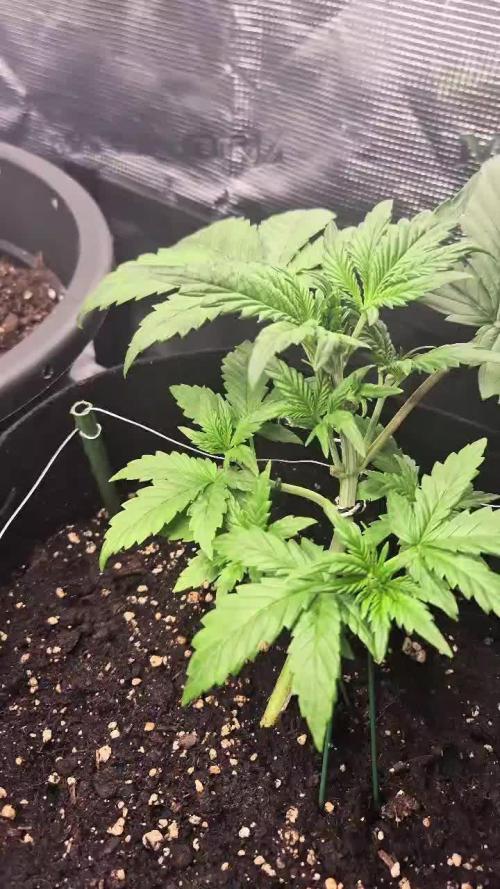
🌱 GROW LOG: Gorilla Cookies Auto (x3)
╭────────────────────────────────────╮
🗓️ MONDAY 11/08/25 - DAY 19
╰────────────────────────────────────╯
→ All stats in range, no attention needed
🌡️Temp (Day/Night): 24°C / 23°C
💦 Humidity (RH): 63%
🔁 VPD (Vapor Pressure Deficit):1.1
⚡ Soil EC mS/cm: 0.3
💧 Soil Water Content (WC): 21%
💡 Light: 40% @ 25cm from canopy
🔆 PPFD (μmol/m²/s): 490
🌬️ CO₂ (ppm): 580
╭────────────────────────────────────╮
🗓️ TUESDAY 12/08/25 - 💧BATCH & WATERING - DAY 20
╰────────────────────────────────────╯
→ WC Dropped to 20%
→ Prepared batch 10L (3L Deminiralized + 7L tap feeding: 1.2 EC / 590PPM / 6.6 PH / 24C
→ Stats within range
→ Fed plant with fabric pot 3L: Runoff: 4.2 EC / 2140 PPM / 6.0 PH -- High Again
→ 2 plastic pot plants WC still in range, no watering
→ 2 plants in fabric pot seem a bit behind
🌡️Temp (Day/Night): 27°C / 25°C
💦 Humidity (RH): 68%
🔁 VPD (Vapor Pressure Deficit):1.2
⚡ Soil EC mS/cm: 0.5
💧 Soil Water Content (WC): 25%
💡 Light: 45% @ 30cm from canopy
🔆 PPFD (μmol/m²/s): 480
🌬️ CO₂ (ppm): 700
╭────────────────────────────────────╮
🗓️ WEDNESDAY 13/08/25 - DAY 21
╰────────────────────────────────────╯
→ 2 Other plants WC still in range, no watering
→ Again some leaf removal and LST
🌡️Temp (Day/Night): 27°C / 26°C
💦 Humidity (RH): 68%
🔁 VPD (Vapor Pressure Deficit):1.2
⚡ Soil EC mS/cm: 0.3
💧 Soil Water Content (WC): 20%
💡 Light: 50% @ 30cm from canopy
🔆 PPFD (μmol/m²/s): 480
🌬️ CO₂ (ppm): 650
╭────────────────────────────────────╮
🗓️ THURSDAY 14/08/25 - 💧FLUSH - DAY 22
╰────────────────────────────────────╯
→ More minimal LST and leaf removal
→ Flushing the plants till an average 700PPM - 1.1 EC - 6.0 PH runnoff with deminiralized water since last watering was over the treshhold
🌡️ Temp (Day/Night): 27°C / 26°C
💦 Humidity (RH): 68%
🔁 VPD (Vapor Pressure Deficit):1.2
⚡ Soil EC mS/cm: 0.3
💧 Soil Water Content (WC): 20%
💡 Light: 50% @ 30cm from canopy
🔆 PPFD (μmol/m²/s): 480
🌬️ CO₂ (ppm): 550
╭────────────────────────────────────╮
🗓️ FRIDAY 15/08/25 - DAY 23
╰────────────────────────────────────╯
→ Waiting with feeding till plants recover from flush
🌡️ Temp (Day/Night): 25°C / 24°C
💦 Humidity (RH): 60%
🔁 VPD (Vapor Pressure Deficit): 1.1
⚡ Soil EC mS/cm: 0.3
💧 Soil Water Content (WC): 20%
💡 Light: 55% @ 30cm from canopy
🔆 PPFD (μmol/m²/s): 480
🌬️ CO₂ (ppm): 600
╭────────────────────────────────────╮
🗓️ SATURDAY 16/08/25 - DAY 24
╰────────────────────────────────────╯
→ No feeding
→ Stats Stable
🌡️ Temp (Day/Night): 25°C / 24°C
💦 Humidity (RH): 60%
🔁 VPD (Vapor Pressure Deficit): 1.1
⚡ Soil EC mS/cm: 0.3
💧 Soil Water Content (WC): 20%
💡 Light: 55% @ 30cm from canopy
🔆 PPFD (μmol/m²/s): 480
🌬️ CO₂ (ppm): 600
╭────────────────────────────────────╮
🗓️ SUNDAY 17/08/25 - DAY 25
╰────────────────────────────────────╯
→ No feeding
→ Stats Stable
🌡️ Temp (Day/Night): 25°C / 24°C
💦 Humidity (RH): 60%
🔁 VPD (Vapor Pressure Deficit): 1.1
⚡ Soil EC mS/cm: 0.3
💧 Soil Water Content (WC): 20%
💡 Light: 55% @ 30cm from canopy
🔆 PPFD (μmol/m²/s): 480
🌬️ CO₂ (ppm): 600
╭────────────────────────────────────╮
🌿 OVERVIEW
╰────────────────────────────────────╯
Gorilla Cookies Auto trio had a hiccup but bounced back! 🌿 Monday was chill, but Tuesday’s 3L feed (fabric pot, 1.2 EC) spiked runoff to 4.2 EC / 2140 PPM—oops, too spicy! 🔥 Plastic pots stayed fine, no water. Fabric pot plants lagged a bit. Thursday’s flush fixed runoff to 1.1 EC / 700 PPM. LST and leaf trimming kept things tidy. Temps (24–27°C day, 23–26°C night), humidity (60–68%), VPD (1.1–1.2) were solid. Lights climbed to 55% @ 30cm (480–490 PPFD), CO₂ 550–700 ppm. 😎
Lessons:
→ Nutrient Overload: High runoff means cut back on feed strength for autos. Go lighter next time!
→ Flush Fast: Thursday’s flush saved the day. Act quick when EC spikes. 🚿
→ LST FTW: Gentle LST helped growth—keep it up for even canopies. 🌱
→ Fabric Pot Lag: Fabric pots dry faster, monitor closer to match plastic pots’ pace. 👀
Takeaway: Overfeeding glitch fixed with a flush. Stay vigilant with nutrients and keep LST going! 🚀😉
Likes
60
Share


@420DeepGrow
Follow
Día 15: 🔹 Primer riego con toda la gama de productos BioBizz, una EC ajustada a 900 y pH a 6.2. Le agrego Rootbastic para una mejora de las raíces.
🔹Sigo pulverizando las plantas con una EC de 400ml, con acti-vera y Rootbastic. Van de miedo, sin quemaduras ni signos de alguna carencia.
🔹Le pongo un higrostrato conectado al extractor y un humificador para mejorar las condiciones del cultivo.
Día 16: 🔹Pulverizo las plantas 2,3 veces al día con Rootbastic a 0,1ml/ y Acti-vera BioBizz a 1ml/l
Día 17: 🔹Riego según la tabla de nutrientes con una EC de 1000ms y pulverizo las plantas cuando se despiertan con el enraizante.
Día 18: 🔹 Aplico foliarmente 2/3 veces al día una solución de Rootbastic a 0,1ml x litro.
Día 19: 🔹Trasplante a maceta definitiva de 11 litros
🔹Aplico Special THC Plus foliarmente en base mínima establecida por el fabricante, ya que en unos 10 días aprox. la pasaré a floración.
🔹Riego con una solución suave de abonos EC de 900 y un pH de 6.2
Día 20: 🔹Aplico foliarmente 2 veces al día una solución de Rootbastic a 0,2ml x litro.
🔹Aplicación tierra de diatomeas en las nuevas macetas para evitar futuras plagas. Comentar que es la primera vez que la utilizo y ha sentado genial al cultivo.
espolvoreo una cucharada sopera por cada maceta por encima del sustrato.
Día 21: 🔹Descanso. Comentar que el trasplante las ha sentado genial.
Likes
Comments
Share

@Vet_J
Follow
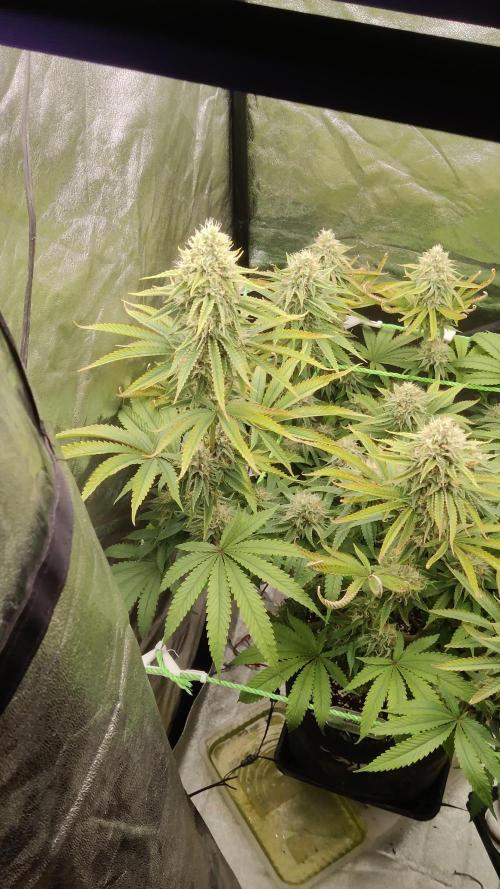
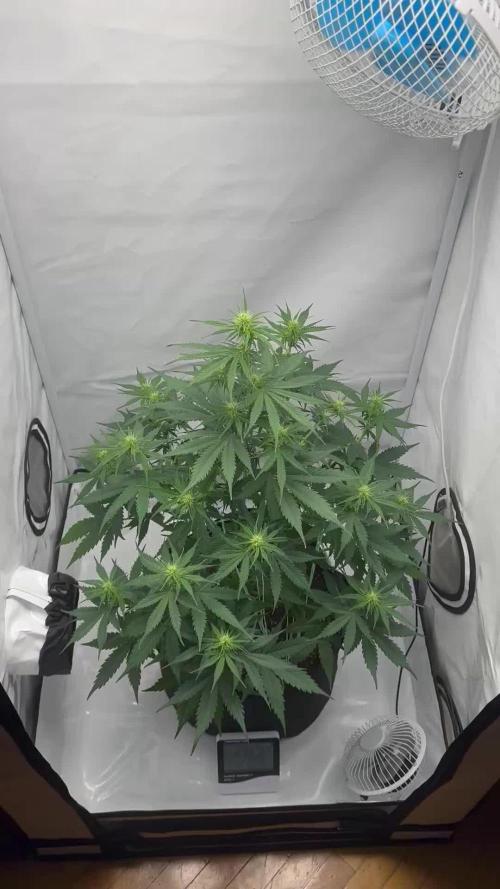
The flowering stage is progressing really well and I’m genuinely happy with how she’s coming along at week 7. The first brown pistils have already started showing on two of the branches, which confirms she’s deep into her flowering cycle now — right on schedule for Glue Gelato Auto.
Next week I’m planning to significantly increase the flowering nutrients — particularly Big One and Top Candy, which should really push bud size and resin production from here on. Around the middle of the week I’ll also do a proper defoliation, clearing out the fan leaves that are blocking light from reaching the lower bud sites. The canopy has filled in nicely but it needs opening up to let those buds really fatten up.
Water intake has increased quite a bit — I’ve stepped up from one liter to two, and even then the soil is nearly bone dry by early morning. That kind of uptake is a good sign — the roots are clearly healthy and the plant is working hard to fuel bud development. I’ll be watching closely to see if she needs even more as things progress.
I’ve also been doing regular branch adjustments, gently repositioning the roped branches to keep the canopy level and make sure every top is getting its share of light. Nothing too aggressive at this point — just keeping things tidy.
Week 7 feels like a critical stage now. Pushing the flowering nutrients harder from here should make a real difference in final bud size and density.

Likes
14
Share


@CampaCavallo
Follow
9ª Settimana di Fioritura 💐💐💐💐💐💐💐💐💐
Com'è cresciuta la nostra bella RUNTZ 💓😍.... Grazie di cuore a ZAMNESIA 💙🗿 ed a PLAGRON 💜✅ per questa bella esperienza cannabica 🔝

Likes
19
Share

@38PLAN
Follow
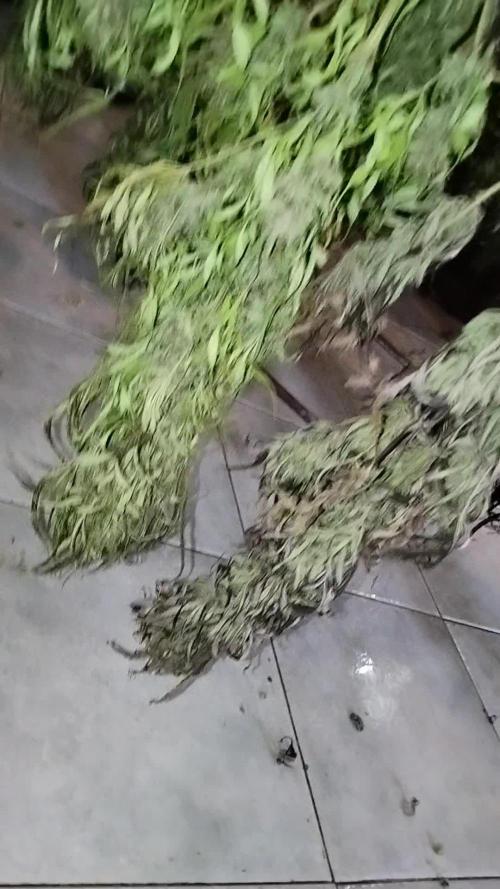
Pianta estremamente difficile da coltivare outdoor,ma ne vale la pena ragazzi,questa pianta con soli 500 g per pianta da scheda tecnica in realtà è un vero lupo travestito da agnello,la sua produttività è ben più alta di quello che si dice royal Queen devi aggiornare il catalogo,i suoi profumi sono eccelsi,il suo sapore é eccelso,la definirei la pianta perfetta,purché gli siano date le giuste attenzioni,ho amici che la stanno fumando che dicono che è devastante,rilassante e buonissima,non so sinceramente quanto possono aver fatto per pianta,nel video vedete la zillions impacchettata sottovuoto,il resto è SHERBERT,posso tranquillamente dire di aver superato 1,5 kg per pianta,secondo me un paio sono arrivate anche a 2,5 kg,l'unica pecca è che solo per coltivatori esperti,perché la sua dolcezza attira i parassiti,cimici e fottuti bruchi,non gli manca la bellezza,come vedete un esemplare si è colorato di rosso,È veramente la REGINA,non sottovalutatela,vuole comandare,le foto che vedete sono le cime che ancora mi rimangono da raccogliere,e quelle dentro casa sono quelle che ho già raccolto,mi sta sommergendo

Processing
Likes
14
Share


@Okie4
Follow
Good week so far !! On to my last strength of nutrients !! Then the flush begins. Girls are starting to bulk up. Had to purchase a dehumidifier to keep the humidity down this week. Wish I knew exactly how long this strain went.. any idea ?
Likes
6
Share


@Lowkeynotbad
Follow
Currently at 2,722 grams with stems and untrimmed. Hoping to get around 800 grams dried. Prior to harvest I run lights for 48hrs
Likes
12
Share


@PickleRick
Follow
Finally got some videos up (I think)! One shows the canopy, the other gives an idea of the training under the screen.
Shes finally showing signs of female and pistils are popping out like crazy. Decided to not tuck the final days of the stretch so the buds won’t start in the screen and start right above it, seems like I’d be easier come harvest time


Likes
4
Share
@420DeepGrow
Follow
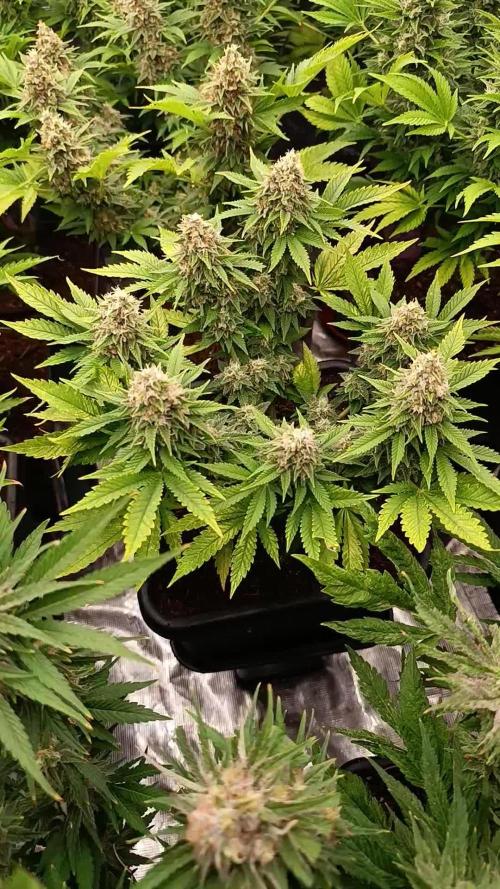
📆 Semana 8
El cultivo está terminando de engordar y entrando en fase de maduración, con la planta centrando toda su energía en rematar las flores.
Los cogollos alcanzan una gran compactación y peso, mientras la resina cubre intensamente flores y hojas cercanas.
El aroma del armario se vuelve más profundo y marcado, con notas dulces y cremosas bien definidas.
Seguimos creciendo fuerte 💪!


