


Likes
Comments
Share


@fabialien071
Follow
Comenzamos esta aventura el dia 1 Agosto 2024.
Hidratare por 24 hrs en vaso de agua con agua oxigenada, posteriormente pasaremos a servilleta y dejaremos se 24 a 48 hrs para pasar a maceta.
Lunes 5 de Agosto hacemos trasplante a maceta definitiva.

Likes
6
Share


@Spearfish
Follow
Water change day 51.
Too close to lights day 52. Used dimmer, prolly gunna buy a taller tent or modify this one.
Day 54. Dimming helped, glad i caught it early.


Likes
7
Share


@BullyPonics
Follow
Well haven’t been giving her too much camera attention. I think I’m also gonna need more space too, I have too much I want to do at one time lmao. But pineapple definitely still popping off. She’s kinda just been growing flowers and defoliating herself lmao. I’m probably gonna turn her and the blueberry on soon, due to my space limitations. Maybe in another two weeks, idk 🤷♂️🏾 STAY TUNED

Likes
133
Share


@Qutro
Follow
Hi Growmies,
So let me introduce you this 4 little gorilla gals who survived the first week of their life in the wild. As I mentioned last week, we needed 4 healthy individual to populate the future forest and it’s succeeded. The one who struggled is also starting to catch up to her sisters.🌱
They got a bit lanky as I was way too careful with the light. One needed help because she fell on the pot. So slowly raised the light intensity first to 220 ppfd and at the end of the week we finished at 350. They seem to like it so will leave it for a few days. The sf1000 is running on 55% at the moment.🌞
Watered twice this week. First with 150ml each and 3 days later with 220ml. No macronutrients have been given to them yet.💦
I’m happy how they look 14 days after the start of germination.
See you next week!🙌

Likes
77
Share


@DogDoctorOfficial
Follow
Week 10 Flower — The Beauty Before the Finish
This week marks a very special chapter in the Eternity Grow Cup. As we approach harvest, the garden is simply glowing with beauty. Every corner, every canopy, every branch tells a story — and this week, I’ve taken the time to slow down and capture that story as best I can through the lens of my camera.
All the photos you’ll see in this update were taken with care and intention. I use my Sony camera in full manual focus mode, and I don’t just snap and go — I spend time with each plant, each angle, waiting for that perfect moment when everything aligns. These are not just photos to document — they’re my attempt to reflect the feeling of the room, the energy of the grow, and the soul of each plant.
Just like with the videos, I don’t shoot randomly and decide later. I record what matters, and what I record, I use. It keeps me focused, organized, and deeply connected to the process — and I believe it helps me tell the story more clearly, whether through stills or moving pictures.
All five Runtz phenos are finishing beautifully. Each one expressing unique traits, but all carrying the same stunning quality — dense, clean, colorful, resin-rich flowers that fill the room with pride. This garden is finishing spotless, and I couldn’t be happier.
This week’s YouTube episode will reflect that beauty. If you’re seeing this here on GrowDiaries, I highly recommend checking it out in full 4K once it’s live — there are moments that simply can’t be translated in photos alone, even though I try my best. But for those who love the details, the full spread of pictures is right here, as always.
t this point in flower, the girls are not eating — they’re just drinking clean water with nothing but System Clean in the reservoir, at a rate of 0.25 ml per liter. This is part of a gentle, prolonged flush phase I like to implement, giving the plants a chance to metabolize and fade naturally. The goal is to promote clean, vibrant flowers that finish with optimal expression, without rushing the process. No forced flush, just time and care.
Lighting-wise, the spectrum has been tuned with precision — we’re currently running 40% on the whites, with reds and UVs at 100% to drive trichome development, resin production, and color expression in these final days. The plants are loving it — they’re soaking in the deeper wavelengths that signal the end of their life cycle and responding with a final push of energy.
And yes — we’ve been running 11 hours of light and 13 hours of darkness from the very start of flower. It’s not the usual 12/12, and it comes with its pros and cons. On the upside, it helps speed up ripening slightly, encourages more compact flower formation, and mimics the natural seasonal decline in daylight. On the flip side, it slightly reduces the overall DLI (daily light integral), so you need to ensure your PPFD and spectrum are dialed in just right to avoid sacrificing yield. For me, the trade-off is worth it — the plants are expressing themselves beautifully, finishing strong, and packing on the final magic.
Now it’s your turn — I’d love to hear from you. Which phenotype is standing out the most to you in this garden? Which one is catching your eye with its colors, its fade, its structure, or just that vibe that speaks to your soul? Is it the frost? The density? The posture? Each of these girls has her own personality, and I know many of you have been following closely — so drop a comment, let me know: which one is your favorite? Which one would you take home?
This run has officially earned the Dog Doctor Official Wax-Sealed Stamp of Approval. These genetics are beautiful — expressive, vibrant, clean. It’s been a joy to grow them, and an even greater joy to share this journey with all of you. Of course, we still have the final word coming after harvest, drying, and curing — that’s when the full picture reveals itself. But until then, based on everything we’ve seen and lived in this grow… this is the real deal.
To everyone following the journey — thank you. To the sponsors, the community, the silent observers, the passionate growers, the haters, the lovers — I see you all, and I appreciate every bit of energy you send.
This cup has been about more than just growing. It’s been about sharing. Connecting. Creating something beautiful together. And we’re almost there.
Next stop: harvest? provably yes lets see !
Growers love always 🌿❤️
DD
Genetics - Runtz https://www.zamnesia.com/6000-zamnesia-seeds-runtz-feminized.html
Nutrients - Plagron https://plagron.com/en/hobby
- Aptus Holland https://aptus-holland.com/
Controls - Trol Master https://www.trolmaster.eu/
LED - https://www.futureofgrow.com/en
LED - https://www.thinkgrowled.com
Soil - https://www.promixgardening.com/en
Germination - Cannakan https://cannakan.com/?srsltid=AfmBOopXr-inLXajXu3QFgKXCXXos4F1oEvScjMKIB5MR5dk8-GJ-F49
DOGDOCTOR 15% off
Smoking Papers - https://ziggioriginal.com/
Terpene saver - https://grovebags.com/
As always thank you all for stopping by, for the love and for it all , this journey of mine wold just not be the same without you guys, the love and support is very much appreciloved and i fell honored with you all in my life
With true love comes happiness Always believe in your self and always do things expecting nothing and with an open heart , be a giver and the universe will give back to you in ways you could not even imagine so
As always, this is shared for educational purposes, aiming to spread understanding and appreciation for this plant. The journey with nature is one of discovery, creativity, and respect. Let’s celebrate it responsibly and continue to learn and grow together!
Growers Love To you All 💚
#EternityGrowCup #RuntzHunt #GrowersLove #CannabisCommunity #AptusHolland #ProMixSoil #TrolMaster #Zamnesia #Plagron #ZiggiPapers #Grovebags


Likes
19
Share


@Bakeryguy420
Follow
Almost at the end of week 3 and the blow up is real. So much new growth everyday. Looking si damn healthy. Weird brown spots near the edges of leaves. Maybe ph maybe something else not sure but doesnt seem to be affecting the growth so I'll monitor the runoff next watering for ph . See were we are at other then that off to a geeat start;)
Update on day 23. The ph is dailed in. so the spots are most likely me over watering the plant happens sometimes on day 22 I bent her completely over using soft plant tie :) this will help aid the lowers with light. I'm going keep it light this for the next 5 days then she start stretching off :)
Another update on day 25 can see what lst training done right how the results looks :) I say less then 10 days she should start flowing and really start to stretch :) cant wait to see what this girl going look like soon enough

Likes
12
Share


@Aceboogie441
Follow
Transplanted all in to final 3G fabric pots. First feeding of monkey nutrients( testing out sent directly from company, UK based company )
19/12/2020 update - topped and slight LST on all Zkittz berry-ade. Everything is looking healthy. Turned the light up to 50%. Temps a bit low turned off the circulating fan.
End to week 1. Plants loving the monkey nutrients.
Likes
13
Share


@TiiipsyTerpz
Follow
Had a slight deficiency and corrected it with a banana and molasses tea. Continuing to water with 6.0-6.5 pH distilled water. Check hour Mars Hydro and use code CGD2021 for a discount.

Likes
7
Share


@ROY4L_GU4RD
Follow
Day 53 of flower today. I filled the reservoir from empty and stopped using the macro. I replaced it with General hydroponics Ripen at 5ml a gallon. Everything is frosty and smells good. As far looks I like the RC the best and the PE the least. I'm going to end up with a sheet ton of it out of the 3 so I hope I'm wrong! 😆
I'm going to do a lower defoliation mid week to get more air flowing. RH is stable but I just want to be careful 🧐 being this close to the finish line. This is definitely one of the easiest runs I've had. It seems PE is pretty maxed when it comes to nutrition but LMC and RC could take a bit more. My PE phenotype is super stretchy compared to them as well.


Likes
30
Share


@cheetah844
Follow
They're really starting to bush out, I think I'm liking the topping of all tops on the whole plant 1 time. Makes it easy to train as well. We'll see how they compare in harvest amount to my LST long veg plants.


Likes
4
Share

@discopriest379
Follow
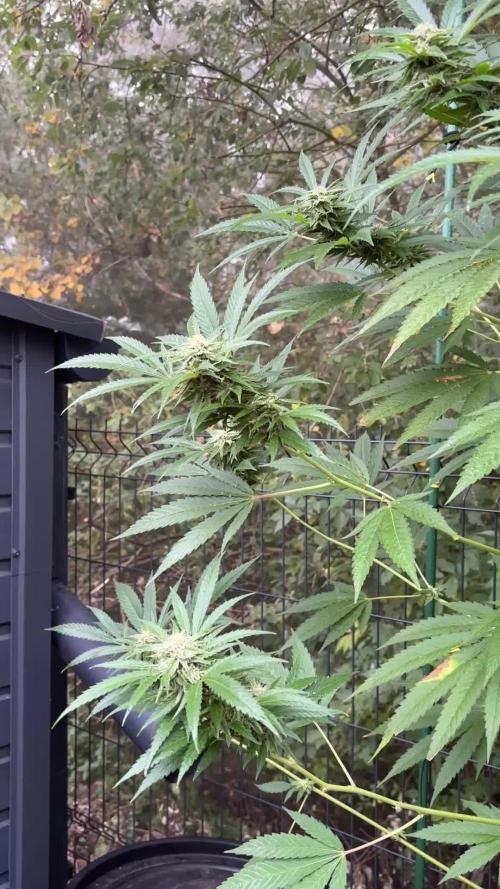
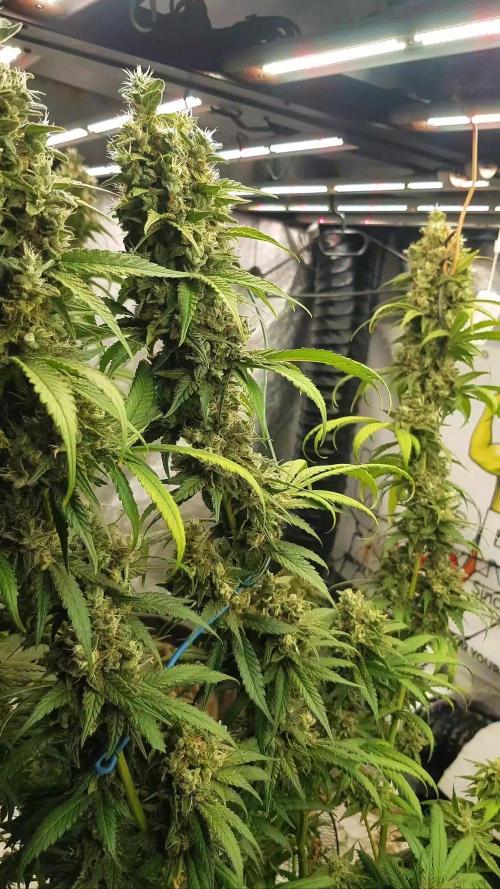
FINALE! YEEEHAW! 😄🌸✂️ Croptober is here! 🎃🌿
This week was absolutely fantastic — the weather was beautiful, and honestly, what more could a growmie ask for? ☀️🌿 The only thing that has started to appear are morning fogs, like today — you can see it in the video.
***
I watered them twice this week, with the last watering yesterday (Sunday) 💧.
***
And since the weather is supposed to take a serious turn for the worse from Thursday onwards, I’m not going to risk it. The HARVEST WINDOW is officially open! 🤠🌸✂️
I’ll leave the overall evaluation for next week, once everything is harvested and I can properly look back at the whole run.
-------------------------------------------------------------------------------------------------
Wishing everyone plenty of sunny days, a Happy Croptober & Ghostober! 🎃👻☀️🌸
-------------------------------------------------------------------------------------------------



Likes
11
Share


@DuckeedWizard
Follow
Patience is in fact a virtue.
I tought she was near, but to my surprise, she had a growth explosion, a lot of new calyxes!
I'll wait another week, keeping a close eye.
Likes
8
Share


@LieutenantKushman
Follow
I’ve been a little busy with school and haven’t been able to update the grow. this video is from day 39 in flower. The smell is amazing and very pungent. My whole place would reek if I didn’t have the carbon filter

Likes
18
Share

@TrickzGrowz
Follow
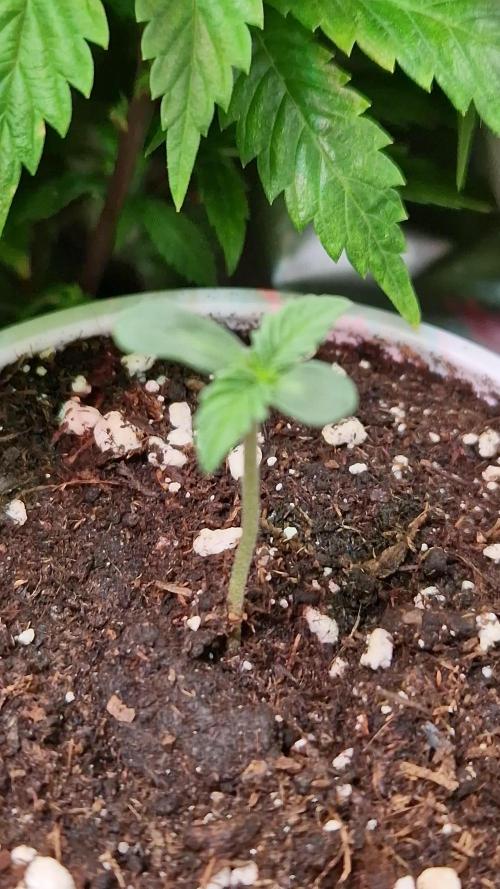
Die kleine Dame ist geschlüpft und es geht in die erste Woche. Sie bekommt nun einen "Topf" und kann sich erstmal darin ausleben.
Likes
170
Share


@Master_weeda
Follow
Bonjour à tous les padawans et maîtres jedis
Quel plaisir mes amis tout y est dans ce diarie !
À par le rendement 😁 mais bon ce n'était vraiment pas le but car je me suis rendu la tâche encore plus difficile en tentant l'expérience solo cup challenge avec main-lining sur une autofloraison.
Merci pour tout vos compliment votre soutient et votre gentillesse.
Je me suis vraiment amusé et j'ai pris beaucoup de plaisir avec ce diarie, mais j'ai surtout beaucoup appris. Que la force soit avec vous 💪
Likes
56
Share

@Master_weeda
Follow
Merci à tous les padawans et maîtres jedis qui m'ont apportés force conseil et gentillesse pour ce diarie 🙏 @philosopherseeds
@Williamsii @Castafunk @greenhousefeeding
