


Likes
Comments
Share


Likes
5
Share

@lasonda
Follow
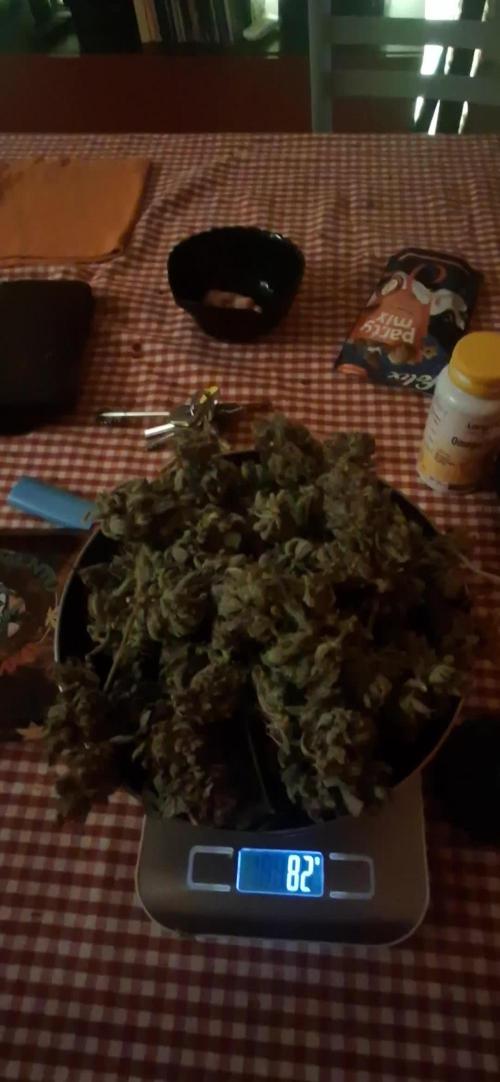
Harvest day! I think it could have been harvested a week earlier, but I preferred to wait. In my opinion, the fertilization plan I used could have been improved; maybe next time, however, the yield was excellent. As soon as the drying phase is complete, I'll post the weight of the dry buds.


Likes
2
Share


@GreenEldritchGardens
Follow
Growing again this amazing strain! I love la bomba and those Dope seeds from the breeder Antonio are fire 🔥, also they seem to be in cooperation with Green Connection, one of my favorite YouTube channels ou there.
48h in the glass of water then directly to the soil. 4 days later she appears.
Likes
7
Share


@Eddjack
Follow
Sta esplodendo si iniziano a definire le prime cimette. Inizia a emanare anche un buon profumo molto fruttato, per fortuna esistono i filtri ai carboni attivi. Ora sta solo ad aspettare dopo le carenze iniziali si e ripresa alla grande vedremo in futuro che succederà.
Dajeforte growes

Likes
2
Share


@All_about_420
Follow
Das dritte und finale Topping sowie das letzte in-Form-bringen hat stattgefunden
und die Gute ist in der letzten Phase vor der Umstellung auf 12/12.
Ich habe nun endgültig alles so geschnitten und gebogen,
um eine gute Grundlage für den bevorstehenden Stretch zu bieten.
Die letzten Tage zum erholen, bevor sie dann kräftig in die Höhe schießen kann...
Likes
136
Share


@Kitties_and_Colas
Follow
~_~_~_~_~_~_~_~_~_~_~_~_~_~_~_~_~_~_~_~_~_~_~_~_~_~_~_~_~_~_~_~_~_~_~_~_~_~_~_~_~_~_~_~_~_~_~_~_~_~_~_~_~_~_~_~_~_~_~_~_~_~_~_~_~_~_~_~_~_~_~_~_~_~_~_~_~_~_~_~_~_~_~_
02/19/22
First week of flower at last!! We didnt feel like waiting another 2-3 weeks for the next tent to clear so we setup a temporary 18hr space for moms and clones, both tents are officially 12hrs now (we just ordered a 3rd tent)..the Bangers have been in flower for 2 days now and they were definitely ready, they've already grown a few inches since Wednesday...we started bloom nutrients last week and cut grow solution this week..they couldn't look happier atm..I think we're in for a fantastic yield (i just hope we don't outgrow the space )..we also have 10 Solo cups tucked behind these of our own cross all flowering at once... We intend to lower the MarsHydro around week 3 of flower...we only grabbed 1 cutting of the Bangers so I'm REALLY hoping it takes because having mom of this wouldn't suck.. thanks for dropping by and reading my novel if you chose to do so lol, happy harvests friends!!
❤️💡🌱😽💨
⚡Mars Hydro/SP-3000⚡ Specifications ⚙️:
Diodes: Samsung LM301B / Osram 660nm (960 total!)
Driver: Meanwell 300watt 🔌 (300W±5% @AC120V-277V)
PPF: 824umol/S ☢️
PPE: 2.8 µmol/j 〰️〰️
Lifespan: 50k+ hrs ⌛
Weight: 10.1 lbs (4.6kg)
Veg Coverage: 3 x 5 ft 🌱
Flowering Coverage: 2 x 4 ft 🌼
-The SP-3000 uses an aluminum heatsink (no fan) and the driver can be placed outside the tent 🌡️⬇️
-IP65 waterproof ratings, tolerant to high humidity grow environments 💦 ..
-Up to 15 can be daisy-chained together and all controlled from a single light! 💡~💡~💡~💡~💡
~_~_~_~_~_~_~_~_~_~_~_~_~_~_~_~_~_~_~_~_~_~_~_~_~_~_~_~_~_~_~_~_~_~_~_~_~_~_~_~_~_~_~_~_~_~_~_~_~_~_~_~_~_~_~_~_~_~_~_~_~_~_~_~_~_~_~_~_~_~_~_~_~_~_~_~_~_~_~_~_~_~_~_
2/22/22
🐱👌 Bangers have grown a few inches in the last couple of days and our home cross is growing fast at 12/12 from seed ❤️🌱
~_~_~_~_~_~_~_~_~_~_~_~_~_~_~_~_~_~_~_~_~_~_~_~_~_~_~_~_~_~_~_~_~_~_~_~_~_~_~_~_~_~_~_~_~_~_~_~_~_~_~_~_~_~_~_~_~_~_~_~_~_~_~_~_~_~_~_~_~_~_~_~_~_~_~_~_~_~_~_~_~_~_~

Likes
39
Share


@AestheticGenetics
Follow
4/15/25 Things are progressing nicely. Some plants dont seem to be doing too much but 3 of them or so that are really standing out.
Im curious if some of these are going to be longer flowering time than anticipated with the very obvious sativa dominant plants.

Likes
12
Share


@TgOgFaRms
Follow
Week 5 Update: Challenges and Optimism! 🌿💪✨
Hey there, fellow growers! 👋🌱 As we dive into the fifth week of this thrilling journey, I must admit that I've encountered a few obstacles along the way. But fear not, for challenges are merely opportunities in disguise! 🌱🚀
Currently, three of my plants are still looking a bit droopy, a consequence of my underfeeding mishap. 😔 However, I've taken decisive action to rectify the situation. I've increased their water intake from 0.5 liters each to a generous 1 liter each, provided every two days. Hydration is key! 💧💦
Let's talk environmental conditions. The temperature within the grow space ranges between 20°C and 22°C, maintaining a comfortable and optimal range for our leafy companions. The humidity levels hover around 60% to 68%, thanks to the diligent work of my trusty dehumidifier. Kudos to technology! 🌡️💨💨
In light of the recent droopiness, I've temporarily adjusted the LED power to 75%. It's a careful balancing act to ensure the plants receive the right amount of light without overwhelming them. We're all about finding that sweet spot! 💡🌿✨
Interestingly, I've noticed a similar issue with droopiness during my previous grow with sour stompers. Could it be a recurring pattern? 🤔 Moreover, upon activating the dehumidifier, I made an intriguing discovery. The CO2 levels have soared over 900ppm! It seems I've stumbled upon an unexpected correlation. I'll certainly be investigating this further to unravel the mystery. Science at work! 🔬🌿🔍
Well, my fellow enthusiasts, that wraps up the highlights for this week. Let's remain optimistic as we eagerly await our plants' recovery and resurgence. I have faith that they will bounce back stronger than ever, for nature has a remarkable ability to rejuvenate. 🌿🌱💚
Remember, challenges are but stepping stones on the path to growth. Embrace them, learn from them, and continue nurturing your green wonders with love and care. Together, we shall conquer any hurdle that comes our way! 😜💪🌿🌟
Wishing you all an incredible week of growth and exploration. Happy growing, lads! 🌱🌿✨😄

Likes
7
Share


@StonedandSteady
Follow
Magical and Magnificent #divineseeds #divineseedssquad #divineseedsbreedingcompany see you Guys next week! Let's Grow!!! Cheers Famz!!! Much Props and Much Topz!💯

Processing
Likes
19
Share


@CBD_Sweden
Follow
2018-03-13 Week 11 Day 1
As I mentioned last week, the girls are growing like crazy since I changed to 600W HPS,and even though they haven't grown so much higher, they are definetly wider because of LST.
My growroom is only about 1.8m2, so now the girls are so wide that there's not enough space for them to get wider, so now I will let them stretch.
Nr 1 is 44 cm
Nr 2 is 39 cm
2018-03-14 Day 2
I LST'd the girls one last time and also defoliated them mildly so all the tops get as much light as possible,hopefully increasing the yield in the end.
I also turn the girls 1/4 lap every day to ensure that all sides of them get as much exposure to light as possible, it would've been great to have some kind of turntable that turns the girls 1 lap in 12 hours,, but until I find out a device that does just that,I'll keep on doing ti manually.
Added some videos for you to enjoy.
------------------------------------------------------------------------------------------------------------------------------------
Strain information
Genetics for the famous Power Plant were captured by a group of Dutch growers on a trip to South Africa, back in the 90’s. They managed to breed a strain that was soon a popular choice in coffee shops of the Netherlands, most likely due to the soaring and intense Sativa high. Zambeza Seeds thought that the productiveness of Power Plant should never be forgotten and created an updated version, to bring the legend back to live.
Power Plant XL yields up to 600-750g/m² in a flowering period of approximately 55 days! The efficiency and productiveness of Power Plant XL fears no comparison with many recently bred cannabis strains. Indoor heights of 80-110cm make this sativa-dominant variety relatively easy to grow, but outdoor growers need to be aware of the power that is being released under the sun. Outdoor plants can easily reach heights of 150-200cm, and yields of 500-600g per plant.
The taste of Power Plant XL can be described as a delightful blend of sweet and sour flavours, with subtle hints of pine tree in the background. Smokers who appreciate a very strong and uplifting Sativa high will be more than satisfied with the effects. One will experience feelings of euphoria that are definitely intense and uplifting, typical for a South African Sativa like this. The up-high can also evolve into being more relaxed, especially when larger quantities are being consumed.
Some people suspect Power Plant to be grown in large commercial operations around the world. It doesn’t really matter if these assumptions are the truth or myths, but Zambeza’s breeders are very proud to bring this highly productive legend back to live. The updated version of it, Power Plant XL, is the most efficient Dutch "bud factory" money can buy.
------------------------------------------------------------------------------------------------

Likes
1
Share


@Jardineiro_Br
Follow
Voltaram para a estufa e estão na floração, essas plantas estou usando a linha Remo Nutrients, na próxima fertilização cadastro as quantidades .
Likes
26
Share


@Dunk_Junk
Follow
She has grown another 10cm/4" this week!
Flowers developing quite slowly compared to her tent-mates. I'm hoping this is a sativa dominant phenotype??? Can anyone shed some light on that please?
I left the tape measure visible in the video for scale. Good? Helpful?


Likes
14
Share


@Surfettuccini
Follow
Last week I went away for a while and I had to leave my babies alone. Temperatures dropped so also maturation slowed down. When I arrived home this is what I found! She got darker and colas got even bigger and more sticky. She smells like pine but the odor is not very strong. It is also a little bit cheesy and mouthwatering. My dog was really attracted and tried to eat some. She is amazing! Tomorrow I will upload some better photos I took with my reflex.
Likes
23
Share


@555ABKY555
Follow
planted in July it started to grow uniformly with very fragrant leaves of Sicilian lemon peel you can smell the citrus notes in the pre-flowering leaves I enjoyed its very fresh zkitty phenotype which tended between the sour green apple and the gaseous lemon the variety is particularly susceptible at high temperatures and is the only one that on the fourth day without water this summer literally twisted its leaves on itself variety that had some problems with leaf problems but the yield was excellent with rock hard buds! THE AMAZING TERPENES
THE BEST IN THE WHOLE GARDEN.
GROWING SCENTS: green apple organic citrus peel
TERPENES: THOSE WHO SMOKE THEM ARE STUNNING.🙌🙌😍 the complexity and flavor of zsrawberry begins with a very deep hit of hearty heavy spicy smoke which soon reveals itself as a fresh lemon zest surrounded by nutmeg spice followed immediately by the sweetness and fruit of zkitty swallowed the smoke closes with a note of completeness of the three perfectly balanced flavors that tends towards diesel, strawberry spice and a dream of blackberries and redcurrant fruit salad, lemon peel with an acid finish and a round spice of aged jam😵😭😭😍


Likes
Comments
Share


@BruWeed
Follow
01/11 - Comenzo su octava semana en etapa de floracion.
Se encuentra muy potente, fuerte y sobre todo muy resinosa.
Su olor es fuerte y dulce.
Ya empece con el lavado de raiz, estoy utilizando de la marca Advance Nutrients el fertilizante Flawless Finish, para poder barrer un poco mas rápido.
Voy a estar lavando sus raices durante 1 semana aprox.
Por el momento viene bien.
En estos dias estaré publicando mas imagenes de como viene.
Podes seguirme en instagram como @bruweed_arg

Likes
27
Share


@adam_pawloski87
Follow
Let’s go day 43!!!! Week went real well , girls started preflower so sometime this week I will be switching up the nutrients for flowering! We are stable and looking super healthy! Can’t wait to see what these ladies do this week! Hope you all enjoy !
Likes
Comments
Share

@Space_kydebt
Follow
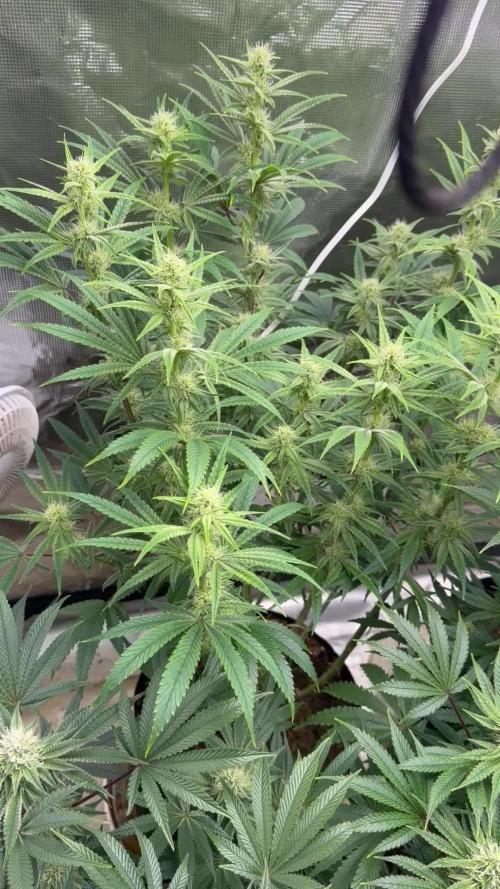
This plant has should me that it never stop growing buds site it super explosive in flower it just doing great one is doing it sativa thing which is not bad at all again not going to able to harvest all at once . It crazy but these plants are actually my favorites cause they all show different types and phenos lol which is great cause they all will smoke some what different. Great plant and great genetics for not a arm and a leg