


Likes
Comments
Share


@Hologram
Follow
Dosidos has grown a lot this week 👍 and is already showing some pistils (i saw yesterday)
so good times are coming!
happy growing for all✊

Likes
10
Share


@asstonmartian
Follow
First week of flower! After the 48 hour dark period, the budsites turned bright green. This faded a bit over the next week to become green like the rest of the plants. I'm starting to see repro signs and looks like I've a few males so I'll be keeping a close eye on them! A few days later I decided to quarantine the males so I chucked them outside on my back porch to decide if i wanted to chop completely or maybe finish growing on my roof? My concern was that pollen would float fro mthe roof right into my windows, making its way into the tent and pollinating the ladies...
By the end of the week the largest plant was showing it would be overpowering the others, heightwise, so I decided to supercrop it, despite being in the beginning of stretch, now was the time to.
Water ph'd to roughly 6, no additional nutes added at this time.
Likes
24
Share


@Weedzoks
Follow
La plante est passé en 12/12 pour lancer la floraison des féminisées
Flo 8: Arrosage engrais complets et taille secondaires
Flo 12: Arrosage eau

Likes
36
Share


@MadeInGermany
Follow
Unfortunately, I had to find out that my account is being used for fake social media sites.
I am only active on growdiaries here.
I'm not on Facebook Instagram Twitter etc.
All accounts except this one are fake.
Have fun with the update.
Hey everyone 😀.
The plant develops as it should 😍.
It grows very well and very beautifully. She also coped with the topping very well, so I will top it a few more times before it finally goes to the flower tent 😃.
Until then, I wish eucb a lot of fun until the next update.
Stay healthy and let it grow 🙏🏻
You can buy this Strain at :
https://originalsensible.com/original-sensible-seeds-zkittlez~20503
Type:
Zkittlez
☝️🏼
Genetics:
Afghan Kush Indica x Grandaddy Purple x Grapefruit hybrid
👍
Vega lamp:
2 x Todogrow Led
Quantum Board 100 W
💡
Bloom Lamp :
2 x Todogrow Led
Cxb 3590 COB 3500 K 205W
💡💡☝️🏼
Soil :
Canna Coco Professional +
☝️🏼
Fertilizer:
Green House Powder Feeding
☝️🏼🌱
Water:
Osmosis water mixed with normal water (24 hours stale that the chlorine evaporates) to 0.2 EC. Add Cal / Mag to 0.4 Ec Ph with Organic Ph - to 5.5 - 5.8 .

Likes
51
Share


@DogDoctorOfficial
Follow
And this girl is ready for her transplant and final home destination in the autopot system, she is growing great and showing her hybrid side, or so it looks, not at all the tallest form the 4 testers but for sure an amazing one <3 <3 <3
Haded some mycorrhizae and NPK Pellets to the soil and also liquid NPK for the first few waterings, just for the pellets to start breacking and become available for my girl <3 <3 <3
Lets se how they grow this week but at this pass they all are aiming to the moon <3 <3 <3
Praying happy to the goods, she loved the new home <3 <3 <3
Noticing some funky leafs on number 8, apart from that she still is growing great i will have to keep close attention on this one and see if it keeps coming with the new grow, for now i sprayed her with nutipray , this will for sure help , lets see
As always thank you all for stoping by and for supporting me on this journey, i am super passion about growing and fell blessed to have you all with me on this new journey <3 <3 <3
She keeps growing funky but growing great, started her leaf bend training today lets see how she reacts <3 <3 <3
Genetics - Fast Buds Tester 08 09 10 11
Ligth - LUMATEK ZEUS 465 COMPACT PRO
Food - APTUS HOLLAND
#aptus #aptusplanttech #aptusgang #aptusfamily #aptustrueplantscience #inbalancewithnature #trueplantscience #fastbuds #dogdoctorofficial #growerslove
With true love comes happiness <3 <3 <3 Always believe in your self and always do things expecting nothing and with an open heart , be a giver and the universe will give back to you in ways you could not even imagine so <3 <3 <3
All info and full product details can be find in can find @
https://2fast4buds.com/ wen released
https://aptus-holland.com/
https://autopot.co.uk/
https://lumatek-lighting.com/
<3 <3 <3 Growers love to you all <3 <3 <3

Likes
43
Share


@PEAKYPLANTERS
Follow
Very good friends .... we are ready to fill these solid goblets of huge white pistils and this wonderful girl!
a greeting to all farmers friends and I hope your crops are vigorous and abundant
best regards

Likes
38
Share


@LittleBigTrees
Follow
The tallest pheno is ready and being flushed for a couple of days now, rhe others are close but still consuming nutrients at a strong rate , I think they will take at least 1 more week.
They smell very much like gelato as a group but are all very different from one another .

Likes
22
Share


@EelGrows
Follow
Week 10: This will be the final update before Harvest: I will update post harvest after the dry and weigh.
Day 64-66: Decided I would continue feeding them until I harvest since they could go 7 days longer. Albeit with a half dose of Calmg and Boost(micro). All White Cracks seem to be doing good. I realized a few days ago the outer plants underneath the blurple LEDs seemed to be showing slight signs of light stress(the leaves were bending away from the light instead of toward it). I lowered the Blurples a few days earlier so I raised them back up. These are some FROSTY plants...
Day 67-70: Going good, plants under the blurples responded postively to raising the lights. Seems I was wrong last week about these smelling stronger than the 4AM, it's actually the other way around lmao. But these are still some great smelling plants! Can't wait to dry and weigh that thicc double bud and main cola from WC#1! Hope it's not too airy, they look like pretty dense buds! Really bummed that I have to harvest this weekend, I would have liked to let #2 and #3 go for another week, but it's all good! Next time! Still this will probably the dankest shit I've smoked in a very long time 😂😎 #1 is probably the most mature at this point with about 90% cloudy and a 5-10% amber. #2 and #3 are the same with about 70-80% cloudy and a few amber.
This has been an awesome learning experience and I'm already thinking about ways to improve my next grow! These White Cracks have been quite resistant to my newbiness! Awesome plants to grow! Much easier to hanlde than the 4AM!

Likes
8
Share


@SkunkyDog
Follow
Hallo zusammen 🤙. Sie wächst sehr schön und fängt langsam an zu riechen.


Likes
1
Share


@Ultraviolet_
Follow
Turned off IR @ nights
Red wigglers (Eisenia fetida) are highly beneficial. They are considered an ideal choice for "no-till" or container-based organic growing because they live in the upper layers of soil, feeding on organic mulch rather than the plant's root system. Red wigglers accelerate the breakdown of organic amendments and produce high-quality, nutrient-dense worm castings directly in the root zone. Clover is another exceptional component of an organic rhizosphere, offering a sustainable, self-sustaining alternative to synthetic nitrogen fertilizers produced via the energy-intensive Haber-Bosch process. By forming a symbiotic relationship with Rhizobia bacteria, clover converts atmospheric nitrogen N2 into ammonium NH4, providing a steady, slow-release nutrient source that enhances soil health and reduces environmental impacts. Red clover offers superior nitrogen fixation and biomass production compared to white or yellow clover, making it the premier choice for maximum soil vitality, particularly for improving soil structure and providing a high-volume nitrogen credit for subsequent crops.
If it is fully functional and efficient soil, the rhizophagy cycle is far superior long-term than any synthetic delivery when it comes to preventing deficiencies, not because it's "better," per se. The medium will require a very high CEC to make it to harvest without re-fertilization. The rhizosphere acts as a dynamic, interactive exchange where plants and soil microbes trade resources based on immediate needs. When a plant lacks a specific nutrient, it changes its physiology and releases specialized chemical cocktails—root exudates—into the surrounding soil. These exudates, which include sugars, amino acids, and organic acids, serve as a "shopping list" to attract specific microorganisms, which in turn return higher levels of desired nutrients. There is nothing in comparison to synthetic delivery, which causes plants to stop producing exudates, effectively "starving" the beneficial soil life, over time turning the soil barren and void of microbial life. Responsible use, applying the right amount at the right time, can minimize these negative effects. Relying solely on synthetic fertilizers without replenishing organic matter is what typically leads to exhausted soil. The use of synthetic fertilizers can utilize the Cation Exchange Capacity (CEC) of the soil, but without a robust rhizosphere and active microorganisms, the efficiency of this process is significantly reduced. This makes synthetic growing more difficult to prevent deficiencies overall compared to an efficient organic living soil with a robust rhizophagy cycle, as there is no "one size, fits all" when it comes to different nutrient profiles of strains/genetics, making it trickier to "guess" and prevent creeping deficiencies.
CEC does not contribute towards EC. Add more CEC using biochar, problem solved. If you keep pH between 6.3 and 6.7, hydrogen is exudated to cycle the medium's CEC for its needs. Keeping the pH between 6.3 and 6.7 creates an environment where plants release H+ to displace positively charged nutrients (like Ca2+, Mg2+, K+ held on soil particles or within artificial media this cycle through nutrients via the medium's Cation Exchange Capacity (CEC)
Microorganisms generate a stable potential of approximately 0.5 V EC. The rhizosphere creates its own food, similarly to chelation, using 1000's of varying combinations to create its own food.
Start to finish, just add water. Eventually, more materials will need to be added at the beginning of each new grow, but very attainable to go from seed to harvest without ever fertilizing, regenerative cultivation.
ATP is king above all else when it comes to biomass accumulation. Cellular root respiration and cellular respiration are essentially the same biological process, the breakdown of glucose to create usable energy (ATP) in the presence of oxygen, just taking place in different parts of the plant. Synthetic (salt-based) grows have significantly lower levels of total rhizosphere respiration, often referred to as root-zone activity, compared to organic living soil grows. While the plant roots themselves may respire in both systems, the surrounding soil ecosystem in a living soil setup is vastly more active, teeming with bacteria, fungi, and beneficial microorganisms.
2 pools of ATP, it won't double in growth buuuut, but improving root respiration by ensuring high oxygen in the soil is crucial. Good aeration ensures roots can fully utilize glucose to generate the ATP necessary for nutrient uptake, leading to healthier and more productive plants, even if growth isn't exactly doubled. The ATP created using root respiration is dedicated to rootzone growth; the ATP created using regular cellular respiration in a synthetic system would have to dedicate a lot of ATP to the roots when there is little or no root respiration. It's true that there is less of an initial ATP cost in breakdown when nutrients are already in their final form (synthetic), but you lose a solid chunk of ATP when the entire plant is reliant on cellular respiration alone; a large portion of ATP is dedicated to root zones for "forced" (active) nutrient uptake. Making it overall less efficient, even if the initial cost of breakdown is higher. If that makes sense. Oxygen is of critical importance when growing in living soil compared to synthetic methods because it supports the metabolic needs of the microbial, fungal, and insect ecosystem, rather than just the root respiration required by the plant itself. While synthetic grows can survive in lower-oxygen environments with precise mineral feeding, living soil systems rely on aerobic microbes to decompose organic matter (microbial mineralization) to create plant-available nutrients, which is an oxygen-intensive process. While a specific fair percentage is difficult to guess, my experience points to a massive, compound difference between the two methods and the amount of oxygen required. All the ATP spared is used on more biomass, not only that, but the extra root respiration can achieve a much higher CO2 compensation point naturally than you could with synthetic and atmospheric CO2 alone.
As a plant grows faster and increases in size, its demand for nutrients to support that growth increases, requiring a higher rate of nutrient uptake. As plants enter phases of rapid vegetative/floral growth, their metabolic demand for nutrients increases exponentially. Without a robust buffer zone—whether in the soil (cation exchange capacity) or in a hydroponic reservoir—deficiencies will occur rapidly because the instantaneous demand for specific nutrients can quickly exceed the rate of supply.
A growing body of evidence suggests that organic living soil provides superior long-term soil health and environmental benefits compared to synthetic fertilizers, which are often criticized for promoting a cycle of dependency and degradation. While synthetic fertilizers offer short-term convenience and high yields, they often come at the expense of long-term soil health, sustainability, and increased corporate control over growers/ farmers. Organic living soil, while slower and requiring more care to establish, creates a sustainable, resilient, and, ultimately, more fertile environment.
We don't grow; we facilitate energy conversions.
Once all water is removed, approximately 95% to 97% of a plant’s dry matter consists of carbon, oxygen, and hydrogen. These three elements form the structural backbone of all plants. Corporate interest sells you the other 3-5% NPK & all the rest in RATIOS! Why not throw the 3-5% in a pot, and focus your energy on the other 95-97%?
Indigenous Amazonians created, or at least significantly enhanced, the fertile, dark soil known as Terra Preta de Índio (Portuguese for "Indian Black Earth") by incorporating biochar and other organic materials into the soil. This anthropogenic (human-made) soil technique, which dates back roughly 2,500 to 8,000 years, allowed ancient civilizations to flourish in regions with naturally poor, acidic, and nutrient-poor tropical soils.

Likes
16
Share


@BlackForestGrower
Follow
I have now trimmed and hung the plant after 9 weeks of flowering
Likes
6
Share


@santos45
Follow
I have been given them Athena Balance and Cleanse
I think this will be the last week of Veg.
Likes
39
Share


@MOSS_FIGURE
Follow
70-76
Day 73 Flushing a plant until the ppm value is equal to the water used.
(Hope you like and enjoy my diary)
Thank you so much for checking out my grows. Feel free to leave a comment, push the like or give the follow.
Likes
136
Share


@CocoTheClown
Follow
Week 5 / Day 35 Flower began today - 15/12/2021.
Plants have definitely started packing on some buds compared to last week. Can’t wait to see how they turn out over the next 4 weeks.
EC is currently a little high, both at 1.6EC, however I believe that it is due to the top layer of the coco drying out leaving salts behind. I think this because there is no symptoms of burn or deficiency, so it can’t be the over nuting, plus I’m using 1/2 of what mills suggest in terms of Base Nutes so I believe it’s the drying out. I will be keeping the EC around 1.4 once it’s stable and only upping the base nutes if they start to seem hungry.
It has been less is more the whole run so I’m gonna keep with it.
To get the EC stable again, and keep the coco wet, I have began multifeeding 3 x per day during lights on. 2 litres at a time per plant every 24hrs - 6l a day. I have read good things about multifeeding so want to carry on doing it as I’m so far impressed with the results.
The string for the “LST” has been left on, but I don’t think it’s necessary at all. I will probably cut them off in time or just leave them on if they don’t harm the plant at all.
Due to starting the C4 a week early, I did not want to use it for an extra week again this week, so I have began using the Mills Ultimate PK a week early at 2ml per litre. This can be used for the last 2-4 weeks of flower, so hopefully it all works out.
Still haven’t been any nute burn or anything this run which I’m happy about, the girls seem to be coming along nicely and just developing without issues. *touch wood*
I am just defoliating a couple of leaves per girl at a time to reduce stress, and only if they are beginning to shade or cover lower bud sites.
Can’t wait to see this week compared to the next too! 😁🤙🏻🙏🏻💚
Likes
16
Share


@Philhsy
Follow
My biggest harvest yet, 385g dry oh my god. Never thought hydro could yield sp much so fast. And fastbuds genetics helping me achieve that. The strain is so potent we smoked a joint 4 people and had to put it out bwcause everyone got so stoned. Wonderful. But curing now so im looking forward to those terpz and maybe a little else you never know what surprises beholds. Hsy out!
Likes
Comments
Share

@smoking_hills9
Follow
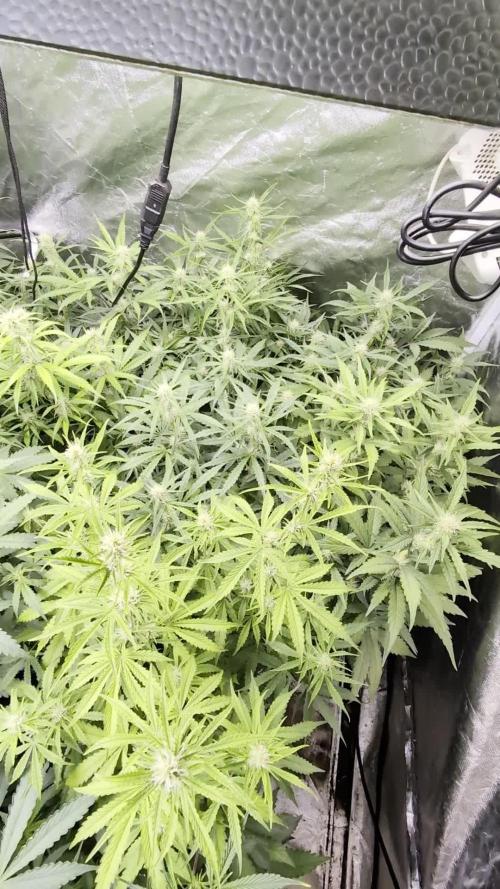
Plants still stretching. I cleaned the bottoms from small branches and leaves, to give more energy to main buds.
Likes
4
Share


@HowtoBubatz
Follow
The second week of vegetation is going well! This time, I’ve decided to try the Green House Feeding BioEnhancer instead of BioBizz Root-Juice.
I’ve had issues with the shelf life of Root-Juice in the past, so I’m curious to see how BioEnhancer performs.
The plant is looking healthy now, but it had a bit of a rough start. I initially planted it in soil that was too heavily pre-fertilized, which caused the first leaves to turn yellow.😔
Thankfully, it recovered quickly and seems to be thriving now. 💪
To keep the plant as stress-free as possible during vegetation, I’ve decided not to train it for now.
I want it to focus on strong, natural growth without any added strain.
I’m excited to see how it progresses over the next few weeks—things are looking promising!🌱😊


Likes
6
Share

@Growbody
Follow
Herzlich Willkommen zu meinem Growbericht der Black Runtz Automatic von Zamnesia Seeds.
Die URL für den Strain findet Ihr hier:
https://www.zamnesia.com/de/11159-zamnesia-seeds-black-runtz.html
Für den Grow verwende ich die 9 Liter doppellagigen Stofftöpfe von ROOTIES. Sie haben sich bei meinem letzten Grow gut bewährt.
Auch die Smart Start Plugs von Zamnesia werden wieder verwendet, dieses Mal ohne den Samen vorher einzuweichen.
Und die Erde und der Dünger von BioBizz findet wieder Verwendung.
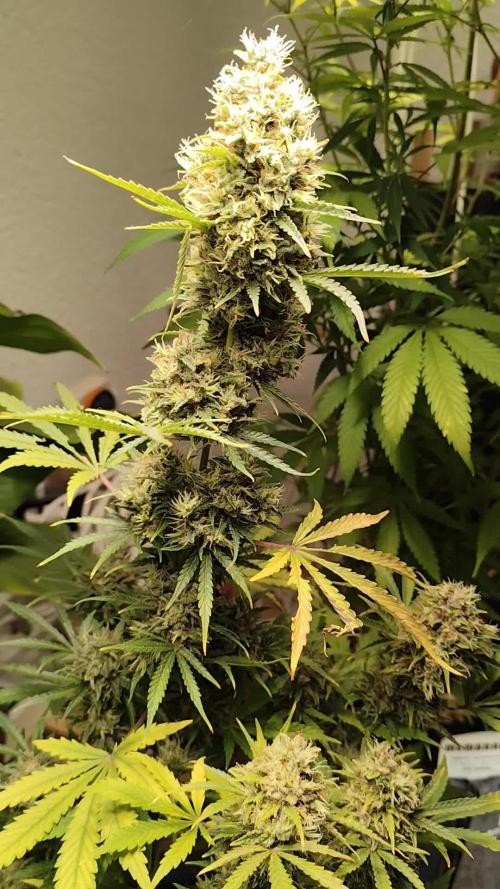
Tag 101: Die Black Runtz von Zamnesia Seeds bekommt ab jetzt nur noch reines Brunnenwasser. Nächste Woche wird sie geerntet, obwohl sie noch soviele frische Blüten hat. Sie ist wunderschön anzuschauen.
Schön, dass du dir mein Tagebuch angesehen hast. Schau gerne wieder rein✋😎

