




Likes
6
Share


@ButterfliesLittleFarm
Follow
Hello Diary,
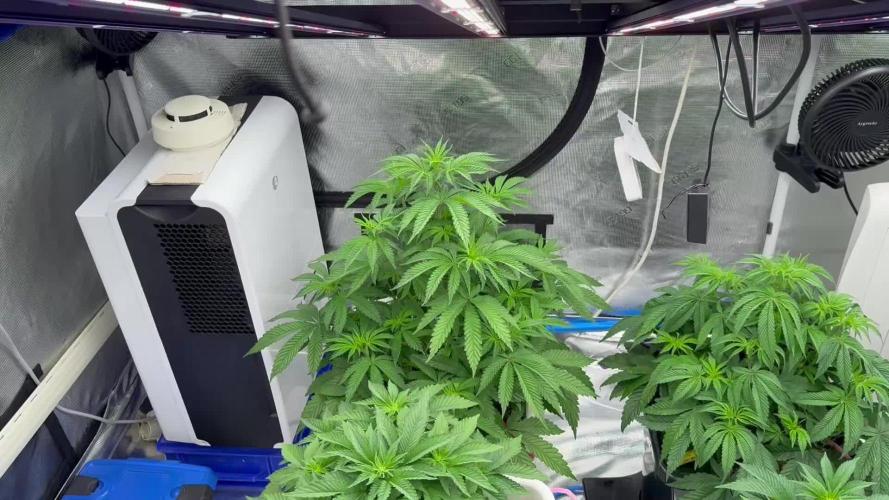
White Widow has completed the third week of vegetation and is entering the flowering stage.
This week the White Widow grew 15 cm, got a bunch of new leaves and started to form flowers.
The leaves are a nice green color and generally White Widow looks healthy.
It is really developing very nicely, which makes me super happy.
The summer heat is still present which affects the temperature in the grow box,
this week the average was 29 degrees although sometimes the temperature rises to over 31 degrees.
But I don't notice that it is harming them, I make sure to water them regularly,
so that the soil does not remain too dry although that sometimes happens.
Every week, as the plants grow, I increase the amount of water when watering.
I continue to add Bio Grow Fertilizer and CalMg with each watering. pH I drop to 6.0 with Plagron's Lemon Kick.
At the end of the week, more precisely after taking photos for day 21, I increased the power of the led lights to 80%.
Here is a quick overview of the week:
10/08/2024 - Day 17.
Watering.
I prepared 8 liters of water, added Bio Grow Fertilizer and CalMg.
With that amount I evenly watered all three plants on the farm.
13/08/2024 - Day 20.
Watering.
I repeated the same procedure as the three days before.
14/08/2024 - Day 21.
Photographing and measuring the height of the plants.
Official end of the vegetation phase.
White Widow - Day 21. - 29. cm
That's all from me for this week, thanks to everyone for the comments and see you soon.

Likes
22
Share

@GermanGrow182
Follow
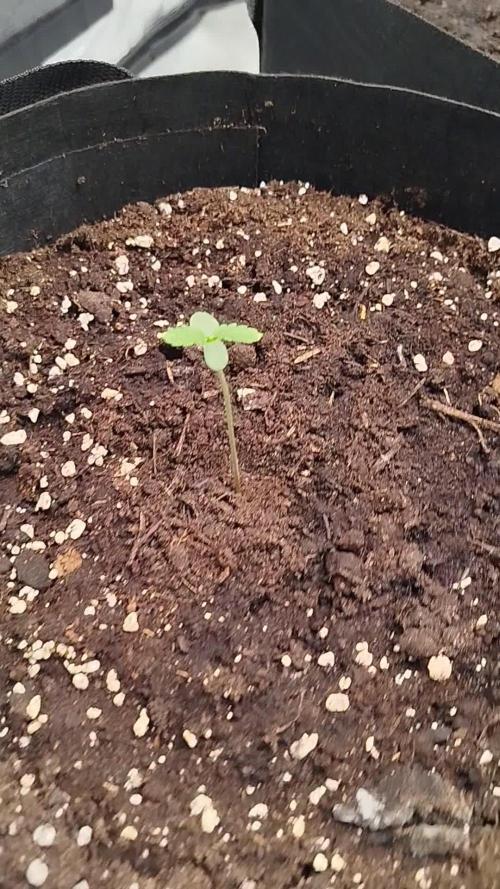
Die erste Woche ist gut überstanden. Alles i.O.
Noch ohne Düngung. Da die Erde leicht vorgedüngt ist, nur Wasser aus der Leitung.

Likes
3
Share

@RockoCalenberg
Follow
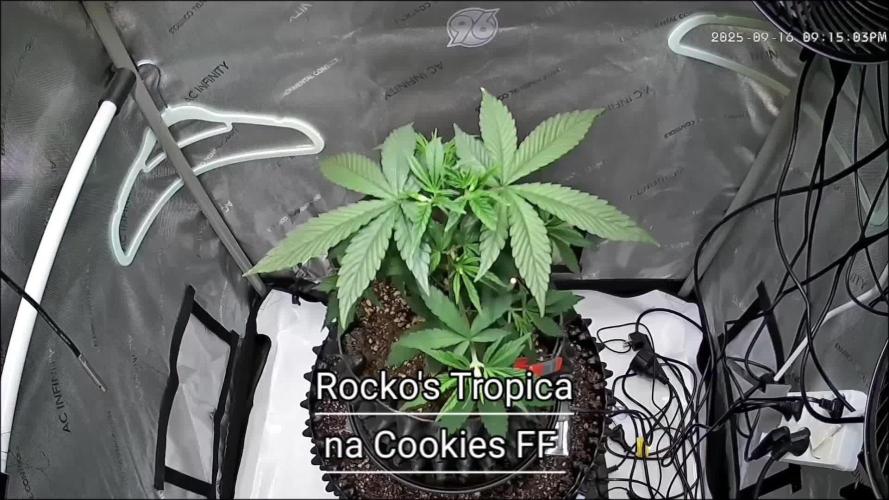
Stretch hat sich verlangsamt und die Blütenbildung schreitet rasant voran. Sie fängt auch an zu duften und zu funkeln und wird täglich schöner 😍
Likes
7
Share


@kapai
Follow
Everything looking nominal. One girl is looking a little weak but that may have been my doing. All others look more or less the same.
Nutrient schedule the same. Did a res clean and replace.
Using reverse osmosis water. PPM’s hovering around 280-300. Water temp 20ish °c

Likes
15
Share

@jellyjelly
Follow
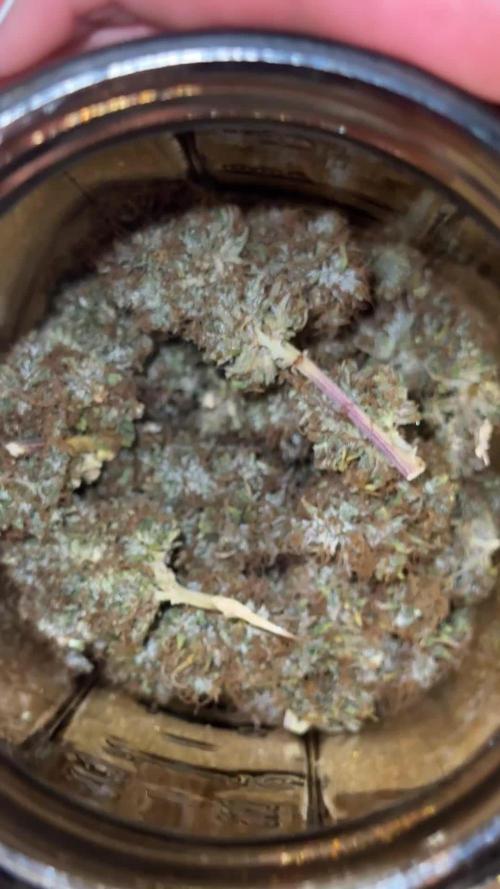
Each one has such a unique smell and flower structure. I really neglected the hell our most of these plants given the tiny 3 gallon container and arid conditions - however these plants were resilient.
Crystal Light x Pelee Sword stands out as gassy pungent strain covered in trichomes.
(Purple Haze x Malawi) x pelee sword was also very note worthy. Very citrusy/floral notes, airy bud structure but surprisingly very resinous.
Super stoked and thanks again DaDankSeed bank for the genetics and pointers!
Likes
21
Share

@Bncgrower
Follow
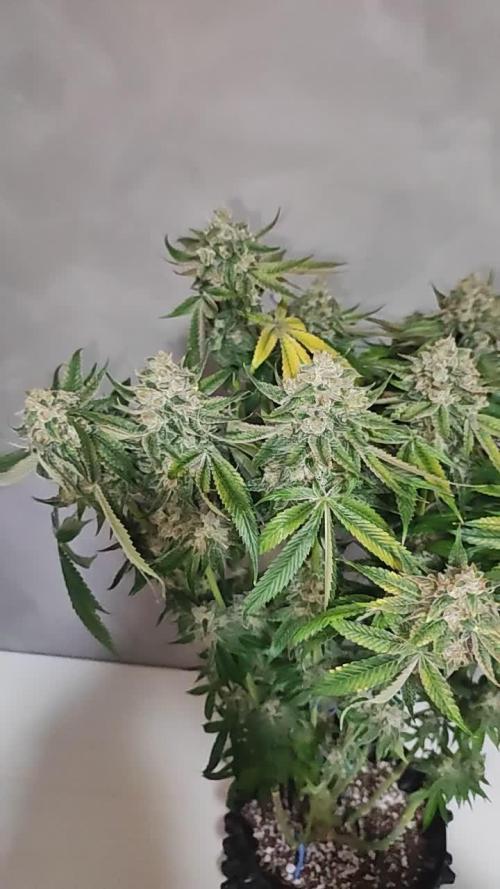
We've reached the end of this journey, the result was good, a very good strain to cultivate, a little sensitive at first, but then it reacted very well. The buds had a very good aroma, dense and resinous, now just wait for the drying and curing process to complete the cycle.. ✌️✌️✌️

Likes
33
Share


@Sweetie420
Follow
So we start flowering. I used Remo Nutrients and we gonna see hows going. I'm curious. I hope flowers grow bigger and bigger because for now they are really Small 😪
I have also A regular plant and she also show her flowers. Everything going wel, i think 😊 If I made something wrong please correct me 🙏
Wish You Best 💯💣🍭


Likes
27
Share


@Bluemels
Follow
Die Woche war anstrengend, die Luftfeuchtigkeit ist stark gefallen so bin ich froh rechtzeitig wieder einen Befeuchter reingestellt zu haben.
Zum Gießen muss ich aber immer alles ausbauen 😑
Die Arme der Pflanzen sind recht dünn und biegen sich jetzt schon enorm. Durch hochschieben des Netzes versuche ich mehr Stabilität herzustellen.
Die Blüten sehen trotz allem sehr gut aus, und duften sehr süß, sind voll mit Harzdrüsen 😍
Likes
1
Share


@Hydroponicfarm7
Follow
Subimos la temperatura de la sala y vaya si se noto, las plantas crecieron más en 2 semanas que en un mes, una pena no haber podido aclimatar antes la sala

Likes
67
Share


@CommanderCannabis
Follow
Organization was the word for the week. I organized the leaves on Daphni by cutting some old fan leaves and low level leaves. I organized my CO2 injection procedure. CO2 tank to REGULATOR thru SOLENOID connected to TIMER every two hours with lights on. I also organized the power strip in the back with cable ties and sleeves. Finally I had to organize my way out of a FUBAR situation when the oxigenating device in the RainForest 66 Reservoir stopped working. I will have some words to say to Katie in customer service for sure. I got a standard oxiginator and a disk shaped air stone and use that now to keep the water healthy. Daphni is staring to bud more on the lower nodes and the progress so far looks good. Knock on wood. Since i turn the exhaust fan off when CO2 is injected i dont really need the heater so I took it out. Have a great week.

Likes
7
Share


@Onlygrow99
Follow
Bien pues ya tenemos en marcha el 2º seguimiento del perfil...
Son 6 white truffles, 6 Apple&Bazzokies de GBSTRAINS y 5 GG4 de GBSEEDS que se empezaron a germinar el 15 de mayo por la tarde sobre las 19:00
Todas nutridas con BOOM nutrients jejeje
Todas las semanas iremos viendo los cambios y la evolución, los riegos y las flores que vendrán :)
El 16 de mayo del 23 sobre las 07:00 de la mañana pase las semillas del vaso con agua, a los tapers con servilleta. Ahí estuvieron 24 horas mas haciendo un total de 36 horas germinando para después,
pasarlas a las macetas de 1 litro.
22/05/23 actualizado, meto unas fotos mas de como van las semillas después de 7 días desde que se empezaron a germinar en el vaso de agua.
A día 22/05/23 llevamos 7 días desde que se empezaron a germinar.
ACTUALIZACION DE ESTADO:
30/05/23 Subo unas fotos después de 8 días.
Llevamos 15 días desde que se empezó a germinar las semillas en vaso de agua.
A partir de aquí, empiezo a contar semanas de crecimiento.
Trasplantaremos a maceta definitivas de 7L dentro de una semana o 2.

Likes
16
Share


@Comfrey
Follow
The plant doing well. She have a good smell but it‘s not really intense yet. The flowers look healthy and it‘s already possible to see how she produce the purple berry colors in trichomes. I have an eye on nitrogen. This was too much and I‘m thinking about a flush, which already helped my first cannabis plant Tropicana. So Blackberry Kush is not ready yet. I think we‘ll end in the middle of July or later. I like to vape my cannabis cause I‘m a medical user. And for this it‘s good to have a fully ripe flower. I need to water in the mornings and late afternoons.

Likes
39
Share


@GrowWiththeBro
Follow
Start of week 3.
Feeding a little more consistently. 1gal of the above every 3 days.


Likes
10
Share


@IslandTerps
Follow
Strain: Fast Buds Mixed Auto
Grow Type: Outdoor
Pot Size: 5 Gallon
Medium: Coco Coir & Perlite
Nutrient Line: Athena
Harvest Update
This Mixed Auto exceeded my expectations super frosty and dense, especially for an outdoor grow. After a full dry and cure, the buds turned out beautifully. The smell is rich, and the trichome coverage is impressive. The smoke was flavorful and smooth, making it a very satisfying experience overall. I didn’t get a chance to take much footage, but for an outdoor run, she really delivered easily one of the highlights of this grow.
Drying Climate Conditions
Temperature: 20–22°C
Humidity: 50–55%
Until the next one stay lifted, and remember to use my code ISLANDT for 15% off your next order at Fast Buds!
Processing
Likes
6
Share


@Flydope21
Follow
Week 2 veg. Starting some LST this week. Pretty new to this so hopefully all goes well!

Likes
3
Share

@madlangs
Follow
9.1.25
Ppfd 950
Bubba kush 52
Gelato 24 37
black cherry gusher
36
Lemon cherry 47
super boof 37
bubba Kush 37
amnesia 23 & 37
Likes
2
Share

@GERGrowDesigns
Follow
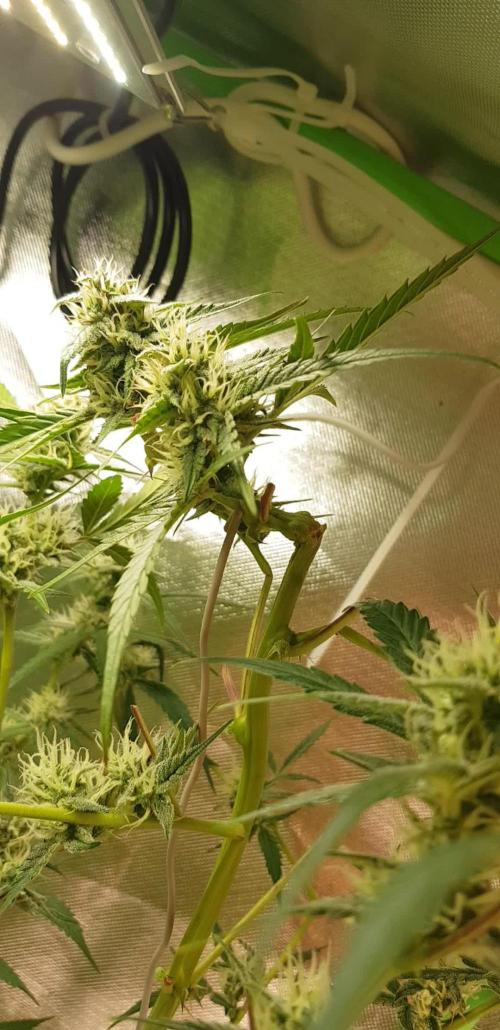
Welcome to Flower Week 4-5 of Divine Seeds Auto 77 Days
I'm excited to share my grow journey with you all as part of the Divine Seeds Autoflowering Competition 2025. It's going to be an incredible ride, full of learning, growing, and connecting with fellow growers from all around the world!
For this competition, I’ve chosen the Feminized Automatic strain: Auto 77 Days
Here’s what I’m working with:
• 🌱 Tent: 120x60x80
• 🧑🌾 Breeder Company: Divine Seeds
• 💧 Humidity Range: 60
• ⏳ Flowering Time: 56 Days
• Strain Info: 21%THC
• 🌡️ Temperature: 26
• 🍵 Pot Size: 0.5l
• Nutrient Brand: Narcos
• ⚡ Lights : 200W x 2
A huge thank you to Divine Seeds for allowing me to be a part of this amazing competition and Sponsoring the Strains. Big thanks for supporting the grower community worldwide! Your genetics and passion speak for themselves!
I would truly appreciate every bit of feedback, help, questions, or discussions – and of course, your likes and interactions mean the world to me as I try to stand out in this exciting competition!
Let’s grow together – and don’t forget to stop by again to see the latest updates!
Happy growing!
Stay lifted and stay curious!
Peace & Buds!

Processing
Likes
2
Share


@eldruida_lamota
Follow
Que hay familia, yo aquí entre humos actualizo las misty gorilla auto, seamos sinceros, yo estoy algo decepcionado con el tamaño de la flor, no con el ejemplar ni la calidad solo la cantidad, y es que ahora pienso yo, las autos realmente merece la pena a sabiendo que si ciclo es parecido al de una feminizadas? 4 semanas crecimiento 8/9 floración?
No no merecen la pena seamos realistas si queremos cultivar en interior lo mejor que podemos hacer es comprar semillas feminizadas y asegurar tu cultivo.
Y dejar solo las autos para gente que no se puede permitir un indoor y tenga que cultivarlo en terraza y así cultivar todo el año .
Ph regulado ya quite alimentación y limpie raíces, las e sacado a la terraza, desmontó Indoor me mudo y ampliamos zona de comfort.
Hasta aquí es todo gente un saludo y muy buenos humos 💨💨💨
