


Likes
Comments
Share


@Silky_smooth
Follow
Last week flush week
Overall very pleased with the result did not have a bump in the road at all and she was very easy to grow and very forgiving when it came to her training
The cup grow was a succes she stands only 13,5cm tall and from 1 tip of the mainbud to the other she is 30.6cm long and 21cm wide and packed with nugs and the smells fills up the entire growbox with a sweet bubblegumish smells like the pink bubbalicious chewing gum so nice so i only can imagon what complexity her taste is going to be like❤️❤️❤️❤️
So this week is going to be hell for her i’m going to split her completly tru to about 1.5 cm above the soil put toothpicks between her and bind her back together so the split stay open(about 1.5-2mm) so the flow is even more disrupted this tricks the girl into even more overproducing thc and flavours and she has to fight even harder in her last day’s for her survival and eventually begs for mercy🖤🖤😈😈🖤🖤
She is finishing up nicely her little nugs are packed with cristals


Likes
Comments
Share

@jeffbudger
Follow
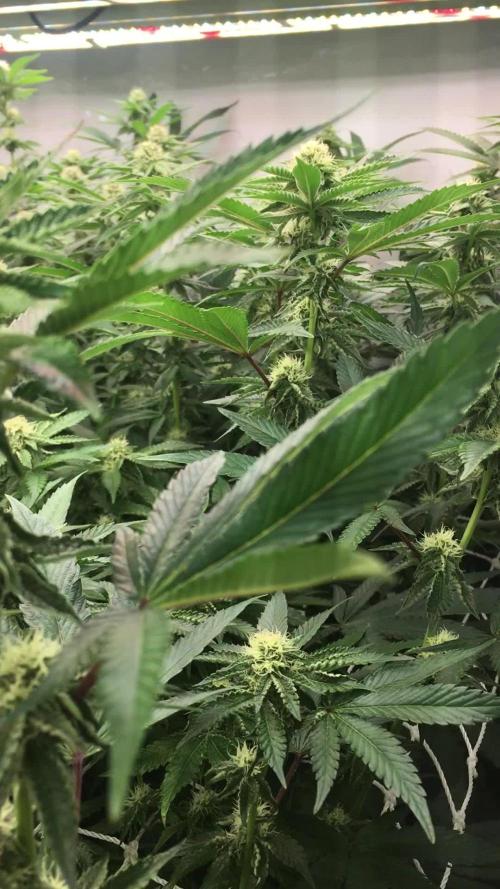
left the tent door 1/4 opened by accident on week 3 day 5 hoping for the best for my girls 😩

Likes
11
Share


@40Plug
Follow
Wow. Look at these beauties! Really nice buds. Nice grading from green to purple. Smell is insane.

Likes
2
Share


@CalGonJim
Follow
7/28 2:34AM EC 1070. Ph 6, Brain broken, from mildly retarded to moderatly retarded now....too bad.
PPDF was too much!!!!! dialed back watts and lowered lights. now at about 300. PPDF should be 200 - 300
7/29 10:04AM I found this channel on Rumble but pot stuff scares people...so dont be a dick, I try really hard not to be... sometimes i am but its my favorite channel now.... SeigeOutdoors

Likes
6
Share


@MG2009
Follow
1/31/2019
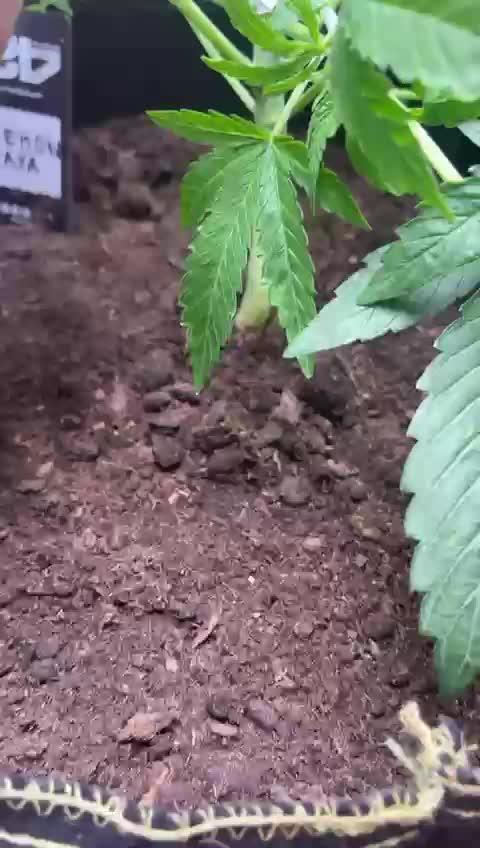
This is one of my 4 clone mom's from my original star cookies grow, just Repotted from four inch almost root bound pot, added plant success 3-1-2 with Myco and tied down branches to form a sort of manifold. Gonna try only 4-5 tops, and more micro- clones (small)
For future, people love this stuff perfect 50/50/ hybrid
IMO😎
Now I have to beat my last harvest of 40 grams
(dried and cured). But I have a bench Mark now to go by , and know my peak harvest date for my preference. Please like and follow 👍
I GOT THIS!🙏

Likes
41
Share

@GoodTimesOrganics
Follow
Hi liebe Community und Welcome Back! 💚
🍹🌱🍰Slush Mint Cake von Dutch Passion!
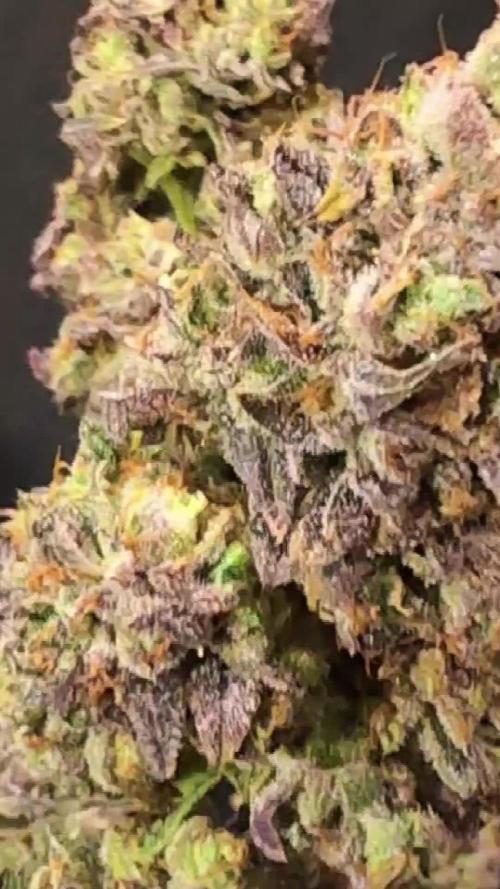
Die neunte Blütewoche ist vorbei und heute war es Zeit für die Ernte!
Super klebrig, super dufte!
Sie sieht einfach genau so aus, wie auf dem Produktbild von Dutch Passion 🤤 Das ist promising!
Die Trichomabdeckung ist wunderschön ausgereift und schön deckend!
Ihr Aroma ist der Wahnsinn: Süß, fruchtig (Traube Gummibärchen) aber auch etwas tief und schwer.
Sie hat eine wunderschöne und homogene Wuchsform geliefert.
Das bin ich von Dutch Passion echt gewohnt. Tolle Strains!
Die Bedingungen im Growschrank waren bis zum Schluss ok!
—————
🌞 Temp: 26
🌚 Temp: 18°C bis 19°C
💨 RH: 58%
VPD: 1,03 kPa
💡 ppfd: 830 mpm
—————
Grüne Grüße 💚🌱

Likes
14
Share



Likes
9
Share

@KurtThePlantGuru
Follow
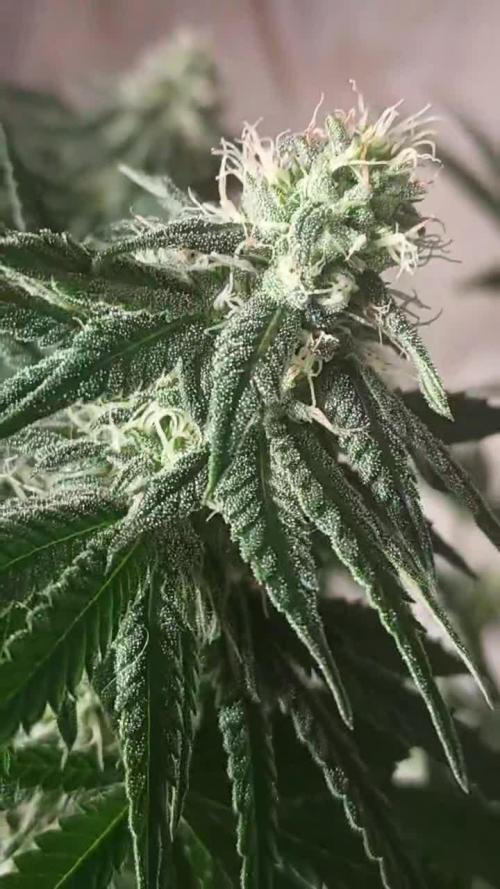
Buds are flowering up super nice! Had a tiny issue where I thought it was much worse then it was (I got sum water on the leaves and it burnt circle shaped burns on them) I worried it was a fungal disease or something. I removed the leaves in a panic, and since haven't had any issues!
Anyway the smell is amazing already I'm getting notes I really didn't expect to smell on a Superboof cross! Almost remiscent of Creature Feature or Acapulco Gold with a bit more gas! It is only week 4, so ideally the Terps should transform. I am loving it so far
The bud structure is looking amazing, the top nugs are almost spear shaped which is really cool, some of the buttom bugs are almost spear shaped as well but more circle/fat. Standard nug look. It's beginning to stack some frost on as well! I have a good idea the nugs are going to have a nice lumpy - spear shaped buds. Almost looks as if the tops are foxtailing which would be really cool too!
Amazing genetics. Every issue I've encountered has been so quickly corrected and bounced back. No herms, definently high grade genetics and I'm happy to be working with Homegrown Genetics to be able to post this seed to harvest and share with everyone!


Likes
5
Share


@BasedBuds_89
Follow
Had a great week, this baby is almost ready to chop. Two weeks at the most.

Likes
49
Share


@masterofsmeagol
Follow
IVE MADE MORE VIDEOS BUT THEY JUST DON'T SEEM TO UPLOAD AND IT'S FAR TO SLOW TO DO IT FROM HOME
6/27 Made last week a five day week to get back on track. It's still overcast and rainy. It's not raining a lot bit it's consistent. Despite the weather the plants are doing phenomenal. I'll update later. It's 1pm. It's been raining consistently since 11. Just a sprinkle but it's steady. I'm going to begun uploading the weeks weather on my diary. I may start a new diary for the plants I light depped as they are flowering pretty good. Rain stopped and it's just overcast for now. I looked at some videos and did a comparison of videos one week ago and videos today and HOLY SHIT! WHAT A DIFFERENCE. Especially the light depped 10th planet. Well everything but that was the most significant difference. I'm astonished at the health and growth despite the crummy weather. Continued to rain. Just got harder. Plants are taking it but it's flooding underneath the pallets a little but it will be fine. The light dep however has me concerned. The 10th planet is looking spectacular. The bigger purple punch I'd looking good too. The smaller one though looks to have a pollen sack coming off one of the branches. Considering its not on the otherside I assume it's not just a swollen calyx. I don't mind chucking it especially if that means I don't hurt my other girls so I want to make sure. I sent videos to a few other growers and I'll add a question on here. Those three plants have been isolated from the rest for a few days due to rain. I have the suspect isolated alone until I can confirm. It sucks cause the light Depp was going good and the6ve all got little flowers.
6/28 Well that fucking sucks. ALL THREE plants I tried to light depp hermed on me. I could see male flowers. Luckily I had been keeping a really good eye on them and it was preflowers mostly. At least I caught it. One or two stamines on each plant. Would've been really easy to miss. Only one had STARTED to elongate into a stem so I think I caught it early enough. Plus since all this rain they've been kept in a different location then my big girls. Glad I did that now. Boy the roots looked good on those plants. I just grabbed the stalk and lifted and it came right out of the pot. I held it there admiring it for a minute. This sucks. At least the real plants are doing good. As far as I know. No male preflowers that's for sure. I've got some feedback from other growers and the videos are a little blurry but I had found a light leak and I'm certain these plants hermed. I know I could've tried to save them but I didn't want to risk it. I compared what I was seeing with Google photos and other websites. Aside from the larger ball with its stem, there were also several little bumps besides developed calyxes that were weaving into little buds. Trust me that I wouldn't cut down my plants if I wasn't 110% sure. I might've been able to "save them" but to me it's just not worth the risk.
6/29 I was second guessing myself pretty hard last night due to some responses I got on my light dep and messages I got from other growets. Made my anxiety horrible but I looked on several video's I'd taken again and I know what I saw. I felt better after that. This was after I researched and waited THREE days until I saw the ball on the stem and the groupings of small nubs under a fresh yellow flower. These plants were flowering good and it sucks to lose them. One MAY have been ok but one was a runt and had all the characteristics of a true hermaphrodite. They were only in 3's and I couldn't risk my harvest for an experiment. Still sucks. Oh well. Sun is starting to come out. Plants seem to be doing fantastic. I have one spot on a leaf that looks like a pillar munched on a leaf so I'll probably get the bt out soon as I have a dry day that I can apply it. I'll have to check the weather. I need to start a nute regiment but the plants aren't telling me they need anything yet.
6/30 I fucked up dates or dodnt do it yesterday or it didnt save right so I'm leaving this blank today is the 1st.
7/1 I have still only watered s couple times and I haven't had to feed. This week I'm going to start nutes. I had some external ersonal situations that have kept me from my plants. I'm hoping to get back on track. I noticed some pillar damage so I'll need to dig out the BT. This morning I saw this giant ground hog by my cage. Hated too but had to get rid of him. Of course some of the blowback landed on the leaves of one of my plants. I tried to clean it as best I could. Better than that fat bastard eating everything in one night. I broke a branch either falling around it or bulling through when I was pissed or I LST it the wrong way and the wind broke it against the tomato cage. Nice big branch too on top. I tried to fix it with duct tape but we'll see. The plants need me to spend sometime with them. I need to clean them up. Apply bt and give them their first feeding. I'll update as I go. They don't seem nutrient deficient by any means but I don't think it would hurt to start the nutes.
7/2 Bags were lighter today and if it wasn't going to rain tonight and tomorrow I'd he watering. Plants look great so soil isn't depleted yet I guess. They're growing rather rapidly. The branch I broke didnt make it. Had an idea it wouldn't but I had to try. I waited on the BT on account of the rain. I may go back over and change my mind and water with silica or a mild nute solution or maybe apply the BT. Depends what time I get back. I have some work I need to do over there. There's a few that I need to clean up the bottoms on. Pest damage is minor and limited to one or two plants and a leaf or two only.
7/3 More rain. It was supposed to rain this morning too but it didn't. We got .33in yesterday and through last night so I thought that was ok. Looking back on my previous diaries I'm doing things significantly different than before. I had used a lot more nutes earlier on. This morning I mixed two gallons of 2tsp of big bloom and fed it to the 9 plants in smart pots leaving the container plants as they have much more water in them. Looking back at other diaries I previously had, WPM and septoria by this time not to mention a shit ton of other pests I was fighting by this time. Since I poisoned where the cagexwas multiple times and sprayed the cage before it was moved I luckily don't have that problem yet knock on wood. I'm planning to apply BT tonight to deal with the moth larvae if there are any. I'm looking at plants around this area and im seeimg SOME septoria and pm on raspberry bushes and burdock so it is around. I made sure my cage is not by any other vegetation this year and is sitting on asphalt with the bags on raised pallets. Good thing I did or I guarantee they'd be flooded by now. I've been seeing multiple complaints from maine growers online (AND THEY HAVE HEALTHY PLANTS!) saying this is the worst year ever. Maybe they need a dose of fusarium oxysporum to keep them humble. This is maine. If you don't like the weather just wait five minutes. Meanwhile I'll be doing my sun dance hoping for sun. "Hard to grow cannabis with no sunlight" said another grower on my forum.


Likes
9
Share

@GERGrowDesigns
Follow
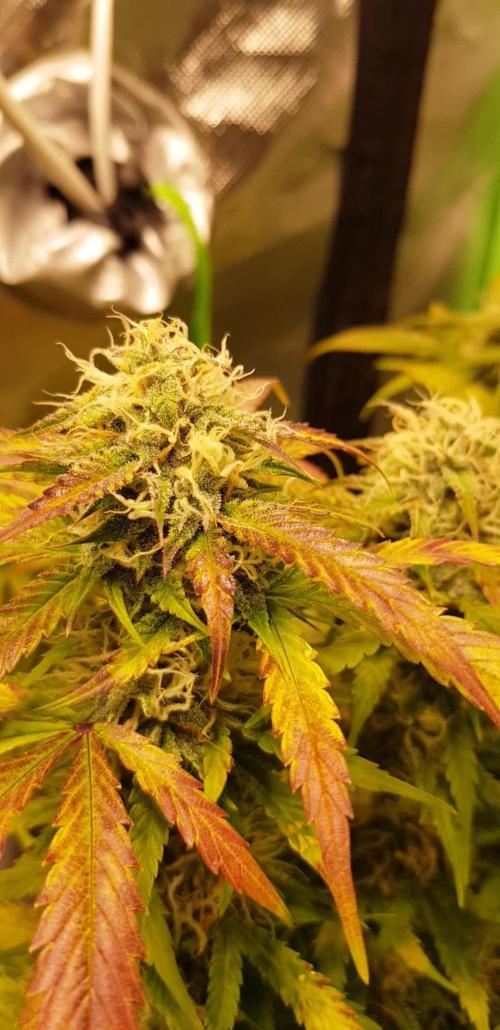
Welcome to Flower Week 5-6 of Divine Seeds Auto Fractal
I'm excited to share my grow journey with you all as part of the Divine Seeds Autoflowering Competition 2025. It's going to be an incredible ride, full of learning, growing, and connecting with fellow growers from all around the world!
For this competition, I’ve chosen the Feminized Automatic strain: Auto Fractal
Here’s what I’m working with:
• 🌱 Tent: 120x60x80
• 🧑🌾 Breeder Company: Divine Seeds
• 💧 Humidity Range: 50
• ⏳ Flowering Time: 60 Days
• Strain Info: 23%THC
• 🌡️ Temperature: 26
• 🍵 Pot Size: 0.5l
• Nutrient Brand: Narcos
• ⚡ Lights : 200W x 2
A huge thank you to Divine Seeds for allowing me to be a part of this amazing competition and Sponsoring the Strains. Big thanks for supporting the grower community worldwide! Your genetics and passion speak for themselves!
I would truly appreciate every bit of feedback, help, questions, or discussions – and of course, your likes and interactions mean the world to me as I try to stand out in this exciting competition!
Let’s grow together – and don’t forget to stop by again to see the latest updates!
Happy growing!
Stay lifted and stay curious!
Peace & Buds!


Likes
13
Share


@NoVC01
Follow
Moochie's Garden 7/7/2025 (Learning curve producing videos.)
Big bluster - "Miracle-Gro/10 gallon, no ph, right out of the well" Wife said phuck Fox farm we are using NPK RAW, using ph watering cans to feed @ 4 gallons each and 5-gallon buckets of ph. watering. Once a week per feed/water. Following NPK feeding schedule.
AzaMax soil drench .4%, 2 gallons each plant. Still spraying neem. Next, mixing Azamax for foliar spray. If I had not taken steps to prevent pests initially, I'd be completely overwhelmed.
Likes
19
Share


@Mission420
Follow
I switched the "spice girls" into bloom this week changing both the schedule to 12 - 12 and turning on the bloom switch on my Mars Reflector 192. As you can see in a couple of the close ups, stigmas are starting to show. They are also starting to grow taller and fill out, and I have had to raise the light up.

Likes
201
Share


@MagnoliaFrost
Follow
10/5
Day 28 - LED lamp now on 24h
-
Water: Both plants got 1L of water with nutes.
Summary for the day:
I still do some LST but truing to do less and focusing on spreading the tops. LED in 40cm full effect. Did some defoliation today but not sure if I'm doing right.
-
12/5
Day 30 - LED lamp now on 24h
-
Water: Both plants got 1L of water with nutes increased to 1.5ml because it's been 10 days since I started with giving them 1ml each time they got water.
Now I started to see they drink much more. Last time it was 3 days between watering. This time it was only 1 day since they got 1L water. Maybe increase 1L to 1.5L next time.
Summary for the day:
I still do some LST but truing to do less and focusing on spreading the tops. LED in 40cm full effect. Did some defoliation today as well.
-
14/5
Day 32 - LED lamp now on 24h
-
Water: Nothing
Maybe increase 1L to 1.5L next time.
Summary for the day:
I still do some LST but truing to do less and focusing on spreading the tops. LED in 40cm full effect. Did some defoliation today as well.
-
15/5
Day 33 - LED lamp now on 24h
-
Water: Both plants got 1L of water with 1.5ml nutes x2 (A+B)

Likes
4
Share

@Bobaloo
Follow
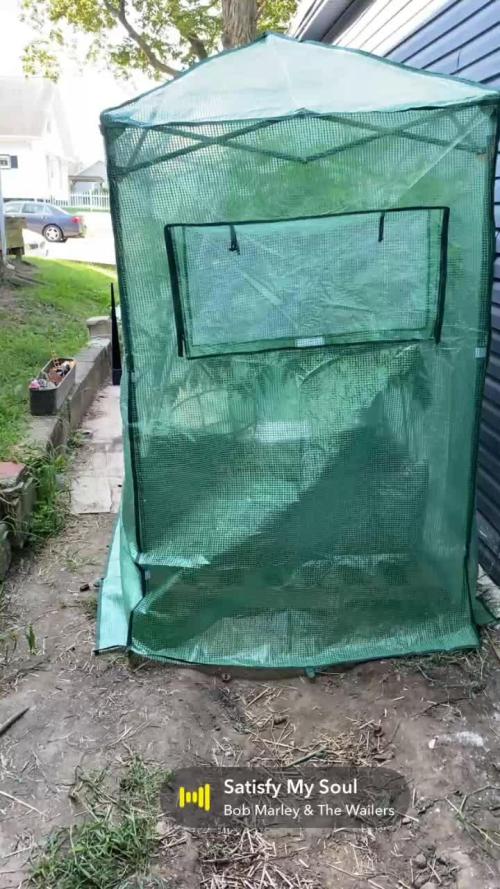
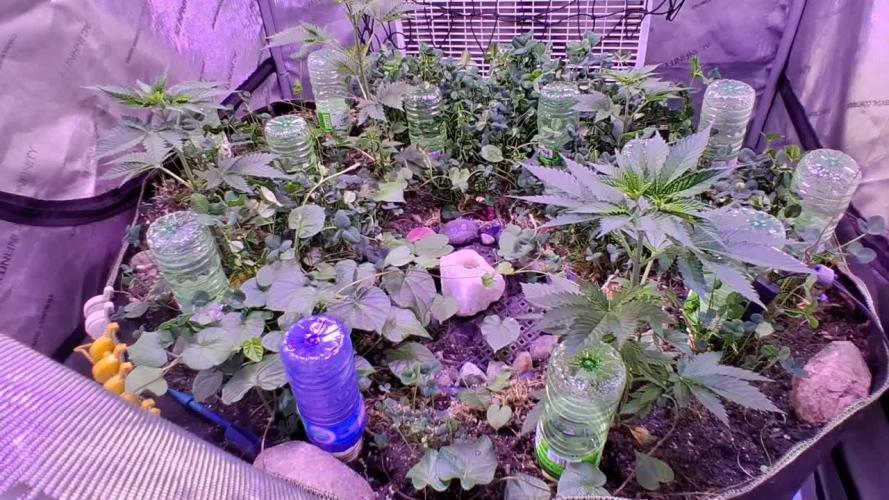
Put them in a greenhouse and moved them to get better sun but I know I shocked them moving them and I broke a support in my container but I rigged it up


Likes
15
Share


@Korinthius
Follow
3/4/2021 3rd Node Appearing
3/7/2021 3rd Node Complete
3/10/2021 4th Node Spreading its leaves
3/13/2021 5th Node Spreading its leaves
Plant seems to be loving the Mars Hydro TS1000. I raised the light a few inches as this is a very stout plant and I wanted a little more stretch between nodes before topping. Otherwise, we should be topping this plant middle of next week.