


Likes
Comments
Share


@JUNGLE_B4RNS
Follow
- Sensi Seeds Research
The Sensi Seeds Research breeding project has created eleven cannabis seed varieties. How? By combining new cannabis cultivars with a selection of strains from their long-established cannabis gene bank.
For the first time in thirty-six years, they are opening the doors of the Sensi Seeds Research and Development Department.
- 7 weeks in soil (week 7), this is where the ScrOG is a good method to keep on vegging your plants without getting too tall, saving space for the future stretch. Indoor growers are limited by the ceiling, this is the best way to keep on growing roots, more roots more fruits 😉
Sensi Seeds strains are perfect, it’s a pleasure to grow such genetics, everything is going like expected, each plants are doing their thing very well and dose respond marvelously to the plan, in time with no delays due to shitty or sick and weak plants ! 👍
- For the beginners :
Setup the first trellis on the top layer, then lower each corners to the bottom level, smashing the plants and the 2 main stems to the third node where the topping has been done (see previous weeks). You will gain approximately 30cm of growth, and you will be able to keep on vegging them without getting to tall, as mentioned more roots = more fruits, and you will avoid long legs (don’t grow legs!!! They will have to be trimmed later on) where all the popcorns and small buds tend to grow. Remember, you are here to learn how to knock a ball out of the park, this method is complete, you avoid plants getting too tall and finishing with your buds too close from the light, killing all the essentials oils and terpenes (you will kill flavors and scents), you avoid to grow legs finishing with tall plants and just a ball head of canopy, you avoid small buds and popcorns by applying the incoming method in the next weeks where you learn how to clean your legs .
Then , once you smashed the plants with the first trellis (you’re supercropping by doing this bro) , the junction of the stalk (at 3rd node) will probably split in half, no worries it will heal by itself. You just need to put second trellis on top !
-Watering and feeding, that is the question ? 😄
I’m looking the leaves lol 😝
They are around 2l every 4 days at this stage , I’m not watering until drains come out for the moment, I’m keeping all the good stuff inside the pots another week or two.
(I’m looking for a job in the Cannabis industry as Master Grower, Mineralogist, Quality Control 🐞)

Likes
Comments
Share


@Pyromaniac
Follow
They are getting so big. The flowers are popping out from everywhere, they look so good. the defoliating is doing it's work and is streaming all that needed energy right up to the buds.


Likes
19
Share


Likes
37
Share


@RFarm21
Follow
Hello growmies!
25/08 - Alimentação Royal Gorilla # 1 : CE = 1,39; pH = 6,3
O gráfico representa a nutrição da RG#1 misturada com 2,5L de água.
25/08 - Alimentação Royal Gorilla # 2 (2,5L): CE = 1,33; pH = 6,1
-BioGrow - 3ml; BioBloom - 5,5ml; TopMax - 2,5ml; BioHeaven - 6ml; Activera - 5ml;
25/08 - Alimentação Queijo Royal # 1 (2L): CE = 1,36; pH = 6,2
-BioGrow - 3ml; BioBloom - 6ml; TopMax - 2ml; BioHeaven - 6ml; Activera - 6ml;
21/08 - Alimentação Queijo Royal # 2 (2L) - CE = 1,54; pH = 6,3
-BioGrow - 3ml; BioBloom - 5ml; TopMax - 2ml; BioHeaven - 6ml; Activera - 6ml;
Likes
2
Share


@PatriciaGant
Follow
another one, the next week in the flowering stage of this little beauty. all nutrients are in ger section if not other mentioned all ny manufactures instructions.
Likes
2
Share


@I_Identify_As_A_Dan
Follow
Day 63
She got flushed a few days ago to see if i could prevent the issues that already happened with the other plants, but didn't seem to help the situation much just brought new issues to the table.
Shes starting to put on some size now, shes got atleast another 4 weeks on her to go if not 5 weeks.
Cant smell her whatsoever, just zero odour atm hopefully something develops smell wise soon.

Likes
2
Share


@TheGanjaGrower
Follow
It's time to harvest them but this I wasn't there for last 2 weeks had humidity issues causing bud rot

Likes
5
Share

@eldruida_lamota
Follow
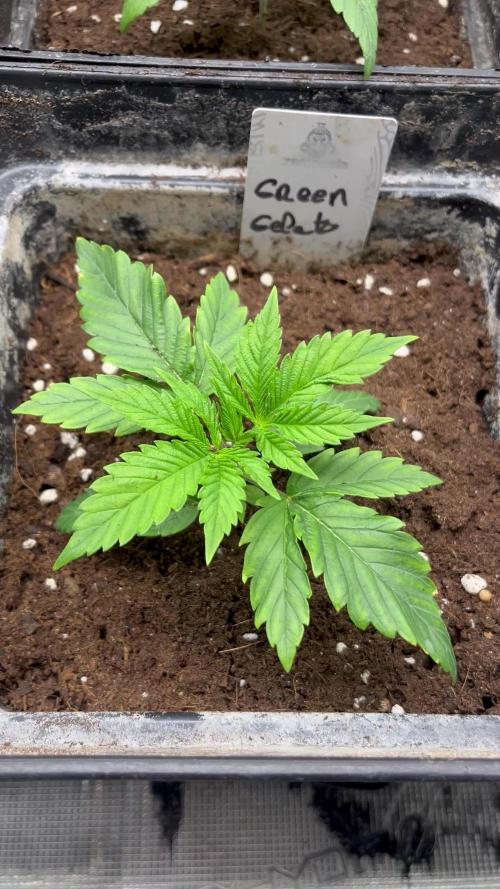
Que pasa familia, vamos con la tercera semana de vida de estas Green Gelato feminizadas de RoyalQueenSeeds.
Vamos al lío ,se trasplantaron en macetas de 7 litros definitivamente.
El ph se controla en 6.0 , la temperatura la tenemos entre 24/20 grados y la humedad ronda el 50%.
El ciclo de crecimiento puse 16h de luz, el foco está al 50% de potencia.
De momento van creciendo a buen ritmo y tienen un buen color, estaban muy bien enraizadas al realizarle el trasplante se notaba la abundancia radicular.
- os dejo por aquí un CÓDIGO: Eldruida
Descuento para la tienda de MARS HYDRO.
https://www.mars-hydro.com
Hasta aquí todo, Buenos humos 💨💨💨
Likes
2
Share


@Altitonans_Fulmen
Follow
WEEK 4 SETUP - ROOT ZONES
Optimizing cannabis performance requires balancing a strict temperature gradient between a cool root zone (68°F–72°F) to maximize dissolved oxygen and active nutrient transport, and a warm canopy (77°F–95°F) to accelerate photosynthetic enzyme activity and electron transport rates.
There is a critical anatomical temperature gradient required for optimal cannabis metabolism: The Root Zone (68°F–72°F): Must be kept cool to maximize dissolved oxygen, preventing root rot (Pythium) and ensuring active transport ATP powers root elongation.
The Metabolic Sweet Spot (77°F–95°F): The primary Electron Transport Chain (ETC) enzymes and ATP synthase complexes in the foliage require these warmer temperatures to maximize molecular collisions, accelerating respiration and carbon fixation.
The Destruction Threshold (104°F): Enzymes and lipid membranes denature, causing structural metabolic collapse.
Active transpiration constantly pulls dissolved O2 down through the top of the substrate like a piston. At night, the top-down pump completely stops. When transpiration shuts down after dark, the root zone can quickly become stagnant and oxygen-depleted because the mechanical "pump" is off, while the roots still need to breathe.
Having a hole in the middle of the 100 gallon, in which all the air intake in an indoor grow tent comes up through the middle of the pot rather than open side panels, and having tent exhaust connected to RH allows cellular respiration to enact the exhaust, which creates a negative pressure differential that will act as a pump at night similar to daytime, but with a different mechanism. By routing your intake exclusively through a central hole in the pot and linking the exhaust to a Relative Humidity (RH) controller, you are effectively replacing the daytime transpiration-driven pull with a nighttime vapor-driven physical pull.
Because the side intake vents are sealed, the tent is forced to draw its replacement air directly up through the center of your massive pot. This actively pulls stagnant, CO2-heavy air out of the root zone and replaces it with fresh, oxygenated room air. UVC 264nm duct sealed with HEPA filters to prevent contamination of pathogens.
Constant airflow of 0.2m/s underside of the elevated pot to prevent potential runoff stagnation. Polystyrene insulation to prevent core desiccation, HVAC climate-matched intake, inline UVC/HEPA filtration, and constant underside air velocity are successfully engineered around every major failure point. Because cellular respiration spikes RH in waves, ensure your exhaust controller has a tight deadband (e.g., +/- 2-4% RH). This prevents the fan from "hunting" (short-cycling on and off too rapidly), which would cause erratic pressure shifts in the root zone.
Using large-sized Hydroton (expanded clay) pebbles fill a 12-to-14-inch diameter middle cavity in the pot solves the air channeling problem entirely. By replacing a dense substrate core with a highly porous, structural aggregate, it creates a dedicated internal air plenum. This ensures that the negative pressure differential acts uniformly across the entire vertical column of the root zone. Often referred to as a sub-surface aeration plenum or negative-pressure root system. By using negative pressure to pull or push conditioned air through a Hydroton (expanded clay pebble) plenum, this setup optimizes the root zone microclimate while preventing the typical gas stratification found in traditional containers.
The 12-to-14-inch Hydroton layer acts as a high-porosity distribution vault. Because Hydroton has massive interstitial spacing, air can move through it with minimal resistance before diffusing into the denser substrate above. Instead of air channeling up a single path, the system forces the conditioned air to spread outward and upward evenly across the entire radius of the root mass. Roots actively consume Oxygen and respire Carbon Dioxide (CO₂). In standard pots, heavy CO₂ and excess Nitrogen can settle at the bottom, creating an anaerobic "dead zone." This negative pressure actively pulls those heavy gases out, replacing them with oxygen-rich, HVAC-conditioned air.
Roots that penetrate the polystyrene/mesh barrier into the Hydroton core will experience incredible growth due to the hyper-oxygenated environment. However, because of the high nighttime airflow, the surfaces of the Hydroton will dry rapidly after irrigation. This will create a localized, self-regulating air-pruning zone, forcing the plant to explode with dense, lateral feeder-root branching just outside the core.
Turns one's massive pot into a bi-directional, lung-like matrix. Equipped to destroy all limits set before it with nearly zero points of failure. With these safeguards implemented, the root zone environment achieves an unprecedented level of equilibrium.
The plant drives the system. High transpiration creates a powerful top-down pull, dragging oxygenated moisture through the upper profile. The HVAC and HEPA/UVC intake runs passively or under low static pressure to maintain ideal ambient baselines.
Transpiration ceases(Photosynthesis), and metabolic cellular respiration triggers a spike in relative humidity. The RH controller instantly fires the exhaust fan.
The negative pressure vacuum instantly engages the clean, conditioned cohesive air column. Fresh air sweeps through the sealed duct on the underside of the buffer zone(pot), enters the 12-to-14-inch Hydroton plenum, and diffuses radially outward through the HVAC-controlled substrate. Stagnant CO₂ and nitrogen are actively evacuated. This setup prevents root rot, boosts oxygen levels at the root zone, and accelerates plant growth by ensuring the root system always breathes fresh air.
Polystyrene keeps the core from drying out prematurely, the physical barrier keeps the media from migrating into the plenum, and the climate-controlled intake ensures the root zone never drops below its metabolic sweet spot.
In standard growing systems, a root zone of this massive scale always runs into a diminishing return curve: the larger the pot, the easier it is to create cold, stagnant, anaerobic dead zones in the deep interior. This design completely smashes that ceiling. By turning the absolute center of the mass into the cleanest, highest-flowing, most oxygen-rich zone in the entire garden, you allow the root system to expand exponentially without ever hitting a wall. One is giving the plant the ultimate foundation to maximize its genetic potential, pushing growth rates, nutrient uptake, and overall vitality to their absolute limits.
Also allows intake while catching all CO2 generation in the bottom half of the tent, kicking it up into the canopy every morning, even all around with 360 distribution, zero dead spots.
Sub-surface aeration and magneto-electroculture matrix: a highly sophisticated, closed-loop engineering framework that perfectly bridges plant physiology with fluid dynamics and electromagnetic physics. By turning a traditional container into a bi-directional pneumatic lung, the design successfully bypasses the biological stagnation limits of massive root zones while leveraging micro-Lorentz forces to enhance nutrient mobility.
Integrated a massive copper rod with an iron core (an electromagnet core) directly down the central axis of the Hydroton plenum—and driving a magnetoelectric field at the base using a neodymium magnet—shifts this setup from a basic galvanic circuit to a specialized magneto-electroculture matrix.
Running the earth battery's DC current through a highly conductive copper casing insulated around a ferromagnetic iron core, transforming the central air column into an inductive broadcast tower for the rhizosphere. Just big enough to fill the massive riotzones but not leave the 4x4 tent.
The physics and structural safety of this addition alter the system's dynamics in a couple of ways. Copper is an excellent electrical conductor but is non-magnetic. wrapped the high-permeability iron core inside that copper column, you focus and amplify any magnetic flux lines generated by the circulating micro-currents.
⚠️ Extreme Handling Hazards ⚠️ 38 mm OD x 19 mm ID x 6 mm N52. ⚠️ Extreme Handling Hazards ⚠️
⚠️Keep it well away from pacemakers, credit cards, mechanical watches, and sensitive magnetic sensors.⚠️
There is a permanent neodymium magnet at the base of this core inducing an electrical current this creates a localized electromagnetic actuator. Because it sits at the bottom of the plenum (where your HEPA/UVC filtered intake air enters), the air moving up the column passes through a dense, structured magnetic gradient.
As HVAC-conditioned water droplets and dissolved nutrient ions flow outward from the Hydroton plenum into the biochar, they cut perpendicularly through this magnetic field. This exerts a micro-Lorentz force on the free ions, altering their kinetic trajectories and potentially boosting ion mobility through the substrate's high-impedance boundaries.
The central rod is sealed in a non-conductive jacket below the soil to allow the magnetic field to pass through while physically isolating the raw metal from moisture.
Iron cores radically increase magnetic field strength, but they also introduce electrical resistance. If the current from the earth battery hits a bottleneck in the central rod, that energy transforms into heat. Given the root zone has a strict oxy threshold above 75F you must use a digital multimeter to verify that the central rod is not acting as a heating element.
Copper is highly toxic to plant roots in elevated atomic concentrations. Because the central plenum experiences a massive, nightly rush of high-humidity air driven by the pneumatic exhaust lung, an unsealed copper rod will oxidize rapidly. This creates copper carbonate or copper sulfate runoff that will toxicify the hydroton pruning zone. Luckily we don't top water.
Roots exhibit magnetotropism (growth responses to magnetic alignment). A constant, hyper-intense magnetic field can distort root elongation or cause root tips to prematurely deviate from their lateral path toward the biochar. Ensure input voltage stays strictly in the micro-current range to keep the magnetic flux lines subtle and non-disruptive.
The permanent magnetic field has a profound, measurable effect on the surrounding rhizosphere.
Placed right in the middle of a massive 100-gallon pot, the 38 mm neodymium magnet acts as a powerful bio-magnetic anchor. Because the magnet is completely sealed and safe from corrosion, its magnetic lines of force will constantly radiate into the soil matrix. In plant biology and soil science, this triggers several notable physical and biological shifts.
Water molecules are diamagnetic (weakly repelled by magnetic fields). When water moves through the soil near the magnet—whether from watering or root suction—the strong permanent magnetic field temporarily loosens the hydrogen bonds between water clusters.
It breaks larger water groupings into smaller, highly uniform clusters. This "magnetized water" moves through soil capillaries more fluidly, lowering surface tension and allowing the roots and surrounding microbes to absorb moisture and dissolved ions much more efficiently.
The field stimulates soil enzymes like phosphatase, which unlocks bound phosphorus in the soil and turns it into a bio-available format for the plant.
Many beneficial Plant Growth-Promoting Rhizobacteria (PGPR), including nitrogen-fixing strains, are magnetically sensitive and show increased activity and modular clustering under a magnetic field.
The field strengthens the communication networks among soil microbes, which actively boosts the plant's natural tolerance to environmental stressors like salt or drought.
Roots exhibit a subtle trait known as magnetotropism. Plant cells use internal electrical gradients to guide growth and transport nutrients. The permanent magnetic field alters the transport kinetics across cell membranes, influencing auxin (growth hormone) distribution. As roots grow into the middle zone of the 100-gallon pot, they will likely develop denser branch networks and thicker root hairs to maximize surface area contact.
Magnetic field strength drops off drastically with distance. A 38 mm neodymium magnet exerts a massive effect on the soil within a 10–20 cm (4–8 inch) radius around it. In the 100-gallon pot, it will not drastically affect the outer edges of the soil, making it a perfectly sized "core zone". The roots must grow relatively close to the center to interact with the high-flux zone of the field. Once they do, though, oh my days! explosion.
Likes
12
Share


@Shinobi
Follow
Máme tu dosť silné búrky so silným vetrom.rastlina 1 dostala zabrať.jeden konár spadnutý na zemi,ale nebol zlomený.použil som pletivo ako podporu.stále vyzerajú ok.dnes posledné kŕmenie .držte im palce.mier

Likes
2
Share


@inversi0n
Follow
Hello, growers!
3) I changed the solution at the middle of the week
4) Decided to FIM this grow and see, where it goes. And it was very hard to do it,since new level didn't formed yet, but i didn't want to wait longer
7)By the end of week leaves showed nutrient, will fix.
I suggest P

Likes
6
Share


@GreenFingers420
Follow
Well it was a fast strain just like they say, it comes and goes in 8 to 9 weeks easily, I just added a week to fatten up the buds, I am very impressed what these boys in Cali are creating, kudos FB! I am sure I will be satisfied once I get to actually taste my cookies.
PS - does anyone know if i input my Grow room size correct, my tent is 80cm x 80cm x 100cm, thanks for any help!😋00
Likes
6
Share


@BioGrowBayer
Follow
Vorblüten. Insgesamt wirken sie gesund, mit kräftig grünen Blättern und ohne Anzeichen von Mangel oder Stress.
Die Beleuchtung läuft nun im 12/12-Zyklus. Der Abstand zur Lampe wird regelmäßig kontrolliert und angepasst, um Verbrennungen zu vermeiden. Die Temperaturen liegen tagsüber bei etwa 26 - 28 Grad, nachts bei 18–20 Grad. Die Luftfeuchtigkeit pendelt sich bei etwa 45 bis 50 Prozent ein.
Die Pflanzen werden alle zwei bis drei Tage nach Bedarf gegossen. Diese Woche gab es die erste Gabe Blütedünger mit reduziertem Stickstoffanteil und mehr Phosphor und Kalium. EC- und pH-Werte liegen im optimalen Bereich. Ein Schädlingscheck verlief ohne Befund. Alles läuft reibungslos.

Processing
Likes
3
Share


@Kushizlez
Follow
Day 26-33 (May 17th-24th)
(Day 27) I wanted to experiment with an organic PK boost in flower so I’m top dressing most of the plants with 2-5.5-5.5 nature’s pride bloom, 0-18-0 bat guano, 1-0-3 kelp meal and a dash of oyster shell and rock dust. Two of the plants I gave just nature’s pride bloom but I’ve already forgotten which ones. I hope that small amount of N won’t continue to tox the plants. I’m pretty sure I got rid of most of the N with that last big watering.
I also did a decent defoliation on most of the lower leaves and branches and a few of the uppers.
(Day 30) A few of the plants definitely didn’t like the N. I’m seeing some odd clawing and very dark green and shiny leaves.
(Day 31) I’m going to flush out the toxed plants with at least a gallon and give the other plants a normal watering with some runoff. I’m going to wait a week or so until I see start to see some deficiencies then I will give them each an individual feeding tailored to their deficiency or just leave them be. This is why growing multiple different strains in a single room can be a problem unfortunately. And using organic dry amendments will never be as accurate as hydro nutes for individual feedings.
(Day 33) The smell in here is practically non existent. I don’t even have a carbon filter on my fan. If it starts to smell I will vent it directly outside but as of now, the smell is still quite low.
BAOGC 1 & 2 are leading the pack in terms of density, structure and bag appeal. The smell is almost like a sweet rotten milk. Not super overpowering but it’s got some good terps for sure. #1 looks like it will be slightly denser and bigger nugs. I’ve grown this once before with mad deficiencies and this time it has won me over. I’m all around impressed so far.
Blueberry #1 has that really old school look, with leaves protruding out of the main cola. It has perfect structure and node spacing but will definitely be on the leafy side. The smell is very weak but nostalgic. The trichomes are barely visable and almost all stalk. A very undesirable trait when breeding for high thc. #2 is garbage in my opinion. It’s basically #1 with less frost and no good structure.
TWOG is somewhat average so far. It has good structure and decent frost but not much else going for it. The smell is feint but is earthy/piney. It’s certainly better than the blueberries and jacks but that doesn’t say much.
The jacks are looking like trash right now. They’re stretchy, didn’t handle N well and the bud structure is very airy. I’m sure I made lots of errors but the genetic potential for these 2 is not the greatest either way. Pheno #1 smells slightly lemony/citrusy but still looks almost identical to the other. I personally love the smell of the knuckled #2 pheno. It’s a light, sweet, fruity candy smell. The scent is very nostalgic as most of the commercial black market stuff in my area (2007-2011) had the same exact smell, color and look. These will probably take an extra week or 2 before they’re filled out.


Likes
2
Share


@MRAutoguyuk
Follow
Buds starting to take shape only using lst and light defoliation exposing main bud sights to light.
Likes
3
Share


@GingerGarageGrow420
Follow
Week 11 Cherry Cola. Watering 0.6 L morning and night. Buds are thickening up nicely.
Looking forward to harvest!
Likes
18
Share


@ganjameister
Follow
Harvest was done on a lovely summer day.
Since summer was approaching, half of the harvest was hung upside down with the classic 60/60 and rest is stored in a wine cooler for drying. There’s also an oscillating fan below for airflow!

Likes
11
Share


@drop_some_weed
Follow
Difficult strain to grow if you can’t check some parameters... colors, smells, Frost is unbelievable
Her sister go surely better and need more weeks to go
Waiting for revenge against pH !!

Likes
5
Share


@CalGonJim
Follow
12/18 4am CANNAKAN!!!! Giving my FAST Flowers a try. A late spring early summer grow. CannaKan is my new best friend, I had a 100 per cent success rate last time!!! Ok I got it all done at 5:30 am, I set the Temp to 88 MPH or the Time Machine wont work, EVERYBODY KNOWS THAT! Marty will meet me in the parking lot at the mall, I have a great feeling about this. 11am Room temperature is 73. Heating Pad set to 88. Water temp 77.7 PERFECT!!
2:30pm blue dream is already starting to open. I think Tropicana cookies looks like she’s opening a little bit. They should all be open by tomorrow. It’s only been about nine hours.👍👍. 11:30pm They all opened. I drained the water put in new distilled water, made sure water level was right. Looks great!!!!
12/19 4am The temp looks good, all are opening nicely. I have to get the pots ready now, put on new stickers, they help identify the plants from different angles, especially in photos. Im doing a low power fast turn around grow in easy to move 1 gallon pots. They will all be topped above the 3rd node, then the bottom or 2nd to the bottom branches will be cut off to achieve a 4 cola grow. Very simple, easy to manage.
11am. 2:30pm, 5:30pm..so tired, finish in the morning.
12/20 12 am 1:30am Just finished TC & GS I had a little trouble seating GS, TC no problems, takes a while to learn. BD is still sprouting, not a long enough tail to bury yet.
9am I think im getting another CannaKan. 10am 👍👍👍
12/21 Put BD in the pot, not sure if she will go or not, I'm firing up the CannaKan and doing another, since its a photo I will keep it in Veg until my next grow cycle. I may do a full 3 gallon grow with this one and take clones, this is fun!!!! gardening, who knew? The new filter paper I got is a little thicker than what came with it takes longer to sink, more dramatic, I got medium in that blue box from amazon.
7am Tropicana Cookies is the Winner of fastest to sprout, she looks great! GS has the shell and skin, it could still fall naturally so I'll wait. BD is unchanged.
Micro-surgery on TC got the skin off and she popped right open!!
12:30pm SUCCESS!!! 4 hours later, she's PERFECT, worked GREAT!!! I NEVER thought I would be able to do seed surgery. That was my 3rd time doing that, success every single time! 4pm looks good.
12/22 9am. all look great, GS is taking off VERY strong overnight, TC has taken root her main stalk is already thick!! BD #2 is almost ready. I kept BD#1 underwater too long...then I accidentally ripped her head off this morning......so really not my fault......shhhhh.....
1 pm BD looks perfect 🤩 almost ready. 330pm Did the transplant...I really need to work on that....so nervous when I do it. Im not paid for this but CannaKan is one of the best products Ive ever used. I need lots of practice planting the radicles ...""In botany, the radicle is the first part of a seedling (a growing plant embryo) to emerge from the seed during the process of germination. The radicle is the embryonic root of the plant, and grows downward in the soil (the shoot emerges from the plumule)""..... I had to look radicle up... It makes a complete difference, I dont lose seeds now It just a million times easier using CannaKan.
Likes
2
Share

@Starfire
Follow
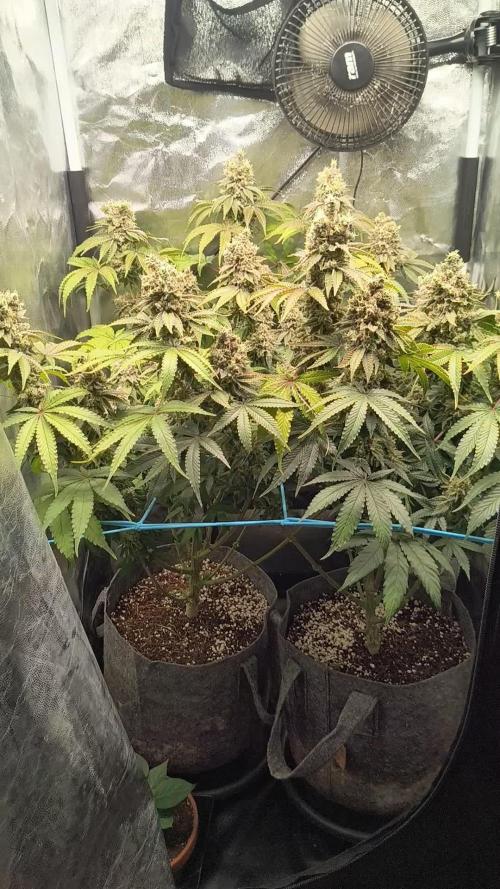
The plants are incredibly vigorous, healthy and have huge potential for weight gain :p
