Check the winners The Grow Awards 2026 🏆
Likes
57
Share
@Roberts
Follow
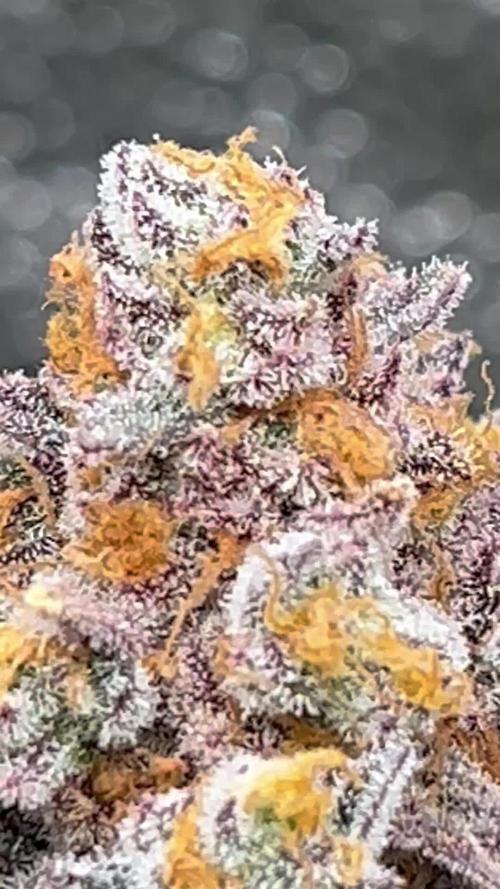
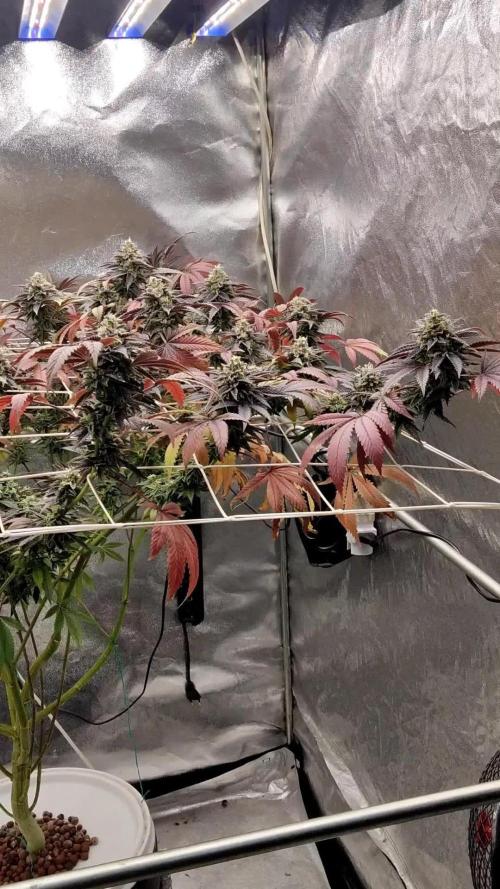
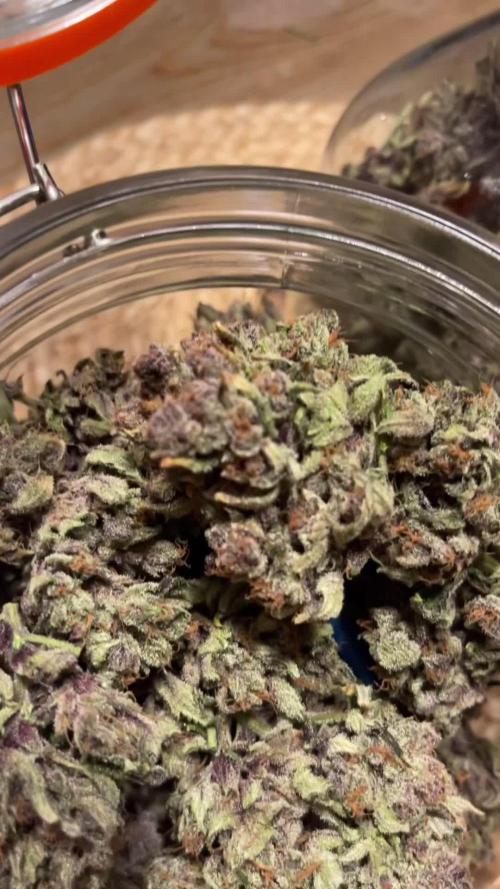
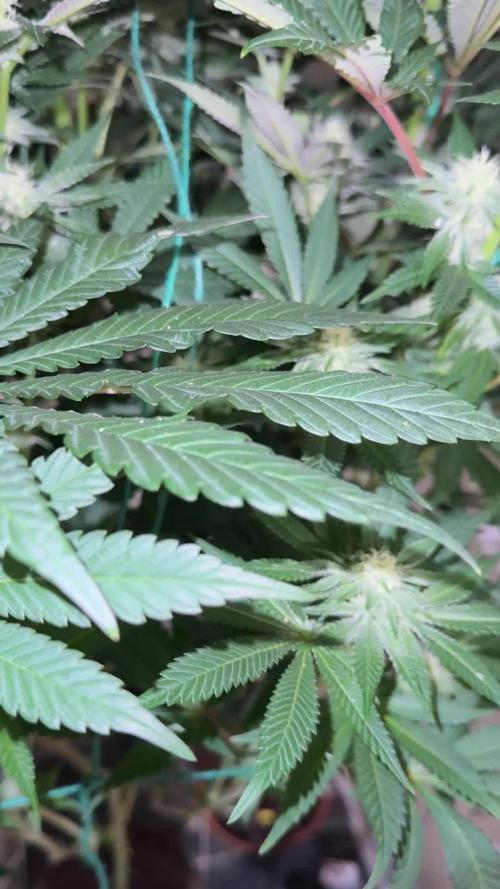
Pablo Escobar is coming to a end. She has some nice frosty colas on her. She has a fruity smell with a pine undertone. Her feed was pretty strong and it probably effected my final yield. She will still provide several ounces once she is processed. I have not has a good sativa in some time. She smells very good. Thank you Spider Farmer, and Divine Seeds. 🤜🏻🤛🏻🌱❄️ Thank you grow diaries community for the 👇likes👇, follows, comments, and subscriptions on my YouTube channel👇. Thank you Happy Growing 🌱🌱🌱 https://youtube.com/channel/UCAhN7yRzWLpcaRHhMIQ7X4g.
Likes
5
Share
Que pasa familia, vamos con la sexta semana de floración de estas Papaya Zoap F1 de Sweetseeds. Vamos al lío, me quede con 3 por espacio, siempre pongo alguna semilla de más por si no abriese alguna por no perder ese hueco del indoor. También se trasplantaron a su maceta definitiva, en este caso de 7 litros. Y también superaron el shock por el trasplante se recuperaron 100%. El ph se controla en 6.2 , la temperatura la tenemos entre 20/22 grados y la humedad ronda el 50%. El fotoperiodo esta a 12/12 para floración. Las jodidas estiraron bastante, y es algo que no me gusta de todas las F1, que cultive hasta ahora. El olor que desprende es muy peculiar es muy dulce y empalagoso, a mi parecer, no pinta nada mal. Hasta aquí todo, Buenos humos 💨💨💨
Likes
40
Share
Week 9 of flowering! Franky is faaaading....faaading....faaading.(Shoutouts to Toro y Moi) Uhm....I think we at the end now. I've only been giving water and picking yellow dead leafs. Most strains look really really ripe, and I don't like overripe stuff. So even if a few might look like they could go longer, Imma end this with the next upload in a few days. Having this grafting project was a blast. Thx everyone for tuning in and watching this grow. If anyone has any questions on grafting just hmu with a comment or pm. Ps: I haven't seen blue runtz in two months but it was there all along too...oh and the permanent marker as well :D. Very fun to watch things uncover now.
Likes
16
Share
@TAXFR33
Follow
Now that all plants are in the ground we have started to train the plants by topping and lst, nearly all my autos are transitioning into flower, the semi autos are grow massive will get some close ups on the weekend
Processing
Likes
23
Share
-En primer lugar dar las gracias a zambeza por creer en mi en todo momento,y por darme a conocer esta gran pagina y familia, espero que sea para largo esta colaboración. •Hemos germinado 9 semillas, 3 de cada raza, lemon , power plant xl, northern light xl, y que pasadas 48h fueron colocadas en maceteros pequeños, los cuales iluminaremos con un bajo consumo las primeras semanas. •Esperemos que este seguimiento sea más completo y más extenso que el anterior , (que lo edite todo en una noche,aún que me llevase casi 4 meses el jodido proyecto).
Likes
14
Share
@NuttyYeti
Follow
This is my second Big Bud grow but my first outdoor grow. The buds aren't as dense and the indoor with my CO2 bag. The bud is still very potent though.
Likes
6
Share
🌱 GMO Cookies — Week 3 VEG Report (12/12 from seed | Autoflower behaving in sync with photoperiods) General Overview Week 3 of vegetative growth comes to a close with GMO Cookies performing exceptionally well. Just like the other autoflowers in the room, she continues to behave in a way that closely mirrors the photoperiod plants — steady, structured, and rhythmically aligned with the rest of the genetics in the tent. Despite the diversity of cultivars running side by side, all plants are maintaining very similar height, pace, and development, each expressing itself slightly differently but moving forward together. This consistency speaks volumes about both the genetics and the stability of the environment. Growth & Structure • Vegetative stage: Ongoing • Flowering signs: None observed • Node count: 6 nodes • Growth habit: Compact, controlled, well-balanced • Leaf expression: • Lush, deep green • Broad, healthy leaflets • Excellent turgor and texture Growth this week can only be described as spectacular. Internodal spacing remains tight, structure is clean, and the plant shows no signs of stress, deficiency, or imbalance. Autoflower vs Photoperiod Behavior Even though GMO Cookies is an autoflower and has been run 12/12 from seed, she continues to challenge expectations. At this point, it’s still difficult to clearly distinguish behavioral differences between autos and photoperiods in this room. Everything is moving: • At the same rhythm • At the same pace • Under the same conditions This reinforces an important observation: environmental consistency often outweighs genetic labels, especially early on. ⸻ 📸 Photo Session & Documentation This week, GMO Cookies was briefly removed for a dedicated photo session using an improvised studio setup. Photography setup highlights: • Sony A6700 camera • iPad used as a remote control and live viewer • Controlled backlighting for leaf detail and depth • Full camera control (aperture, ISO, settings) without touching the camera This approach eliminates camera shake and allows for precise adjustments on the fly — crucial for capturing clean, sharp images, especially when documenting fine leaf texture and color. Since these images are being shared publicly, it felt important to be transparent about the process behind them. ⸻ Environment — Room Conditions (Week 3) • Photoperiod: 12/12 from seed • Day temperature: ~26 °C • Night temperature: ~18 °C • Relative Humidity: 60–65% • Airflow: Gentle, constant, non-stressful • Solution temperature: ~21 °C • Substrate temperature: ~21 °C Everything remains stable and dialed in, allowing the plants to focus fully on root and vegetative development. ⸻ 💡 Lighting • PPFD: ~600–700 (adjusted to plant size) • Plants continue to grow into the light naturally, with no stretch or light stress observed. • Incremental increases are proving effective and well-tolerated. ⸻ 💧 Watering & Nutrition • pH: 6.0 • EC: 1.0 Nutrient program: • Plagron Terra Grow • Power Roots • Pure Zym • Sugar Royal Foliar: • Vita Race • Applied selectively and intentionally, not on a rigid schedule This combination continues to support strong root activity, clean metabolism, and vibrant vegetative growth. ⸻ 🔍 What to Expect / What Not to Expect (Week 4) What to expect: • Continued vegetative expansion • Further node stacking • Increasing leaf mass and photosynthetic capacity What not to expect (yet): • No flowering initiation • No sudden stretch • No need to push inputs or change rhythm Patience remains key. The plant is clearly still building its foundation. ⸻ Final Thoughts Week 3 confirms that GMO Cookies is happy, stable, and well-adapted to this setup. There is no rush, no force, and no correction needed — just observation and consistency. Same rhythm. Same environment. Same respect for the process. FOR DISCOUNT CODES AND MORE JUST FOLLOW THE LINK https://website.beacons.ai/dogdoctorofficial 📲 Don’t forget to Subscribe and follow me on Instagram and YouTube @DogDoctorOfficial for exclusive content, real-time updates, and behind-the-scenes magic. We’ve got so much more coming, including transplanting and all the amazing techniques that go along with it. You won’t want to miss it. GrowDiaries Journal: https://growdiaries.com/grower/dogdoctorofficial Instagram: https://www.instagram.com/dogdoctorofficial/ YouTube: https://www.youtube.com/@dogdoctorofficial ⸻ Explore the Gear that Powers My Grow If you’re curious about the tech I’m using, check out these links: 🔆 Lighting & Environmental Control • Future of Grow — Advanced LED lighting technology https://www.futureofgrow.com/ DISCOUNT CODE: DOG20 • Lumiflora — Under-canopy LED lighting https://lumiflorade.com/ • TrollMaster — Environmental controllers and automation gear (past collaboration) ⸻ Genetics • Zamnesia Seeds — Genetics used in this project https://www.zamnesia.com/ ⸻ 🌱 Soil, Substrates, Boosters & Root Support • Plagron — Substrates, bio mixes, and supportive products https://plagron.com/en/ ⸻ 🎒 Storage, Curing & Preservation • Grove Bags — Curing and storage solutions https://grovebags.com/ ⸻ 📸 Photography Equipment & Tools (Not sponsors, but part of my creative toolkit) • Sony A6700 • Sony full-frame macro lens + few more • Stacking photography workflow - learning • iPhone (for behind-the-scenes shots) We’ve got much more coming as we move through the grow cycles. Trust me, you won’t want to miss the next steps, let’s push the boundaries of indoor horticulture together! As always, this is shared for educational purposes, aiming to spread understanding and appreciation for this plant. Let’s celebrate it responsibly and continue to learn and grow together. With true love comes happiness. Always believe in yourself, and always do things expecting nothing and with an open heart. Be a giver, and the universe will give back in ways you could never imagine. 💚 Growers love to all 💚 📸 P.S. – The Eye Behind the Lens All photos in this diary (for now — except for the ones showing the camera, which I took with an iPhone) are taken with a Sony A6700 paired with a Sony full-frame macro lens and a few more. Photography is part of the story — it’s how we share the fine textures, the glow, and the quiet details that words can’t always capture. I’ve also started experimenting with photo stacking — a technique where multiple images, each taken at a slightly different focus point, are layered together to create one perfectly sharp image from front to back. It’s not digital enhancement or AI; it’s pure photography — a way to reveal the plant’s beauty in microscopic depth, from trichome to petal. You’ll even see a few shots of "ghost me" capturing the shots — camera, lens, setup — because every grow deserves not just to be cultivated, but documented like art. FOR DISCOUNT CODES AND MORE JUST FOLLOW THE LINK https://website.beacons.ai/dogdoctorofficial NEW DISCORD - Official Server Invite Link : https://discord.gg/ksjAkA5T74
Likes
51
Share
Info: Unfortunately, I had to find out that my account is used for fake pages in social media. I am only active here on growdiaries. I am not on facebook instagram twitter etc All accounts except this one are fake. Hey guys :-) . Week after week goes by and the lady is developing great :-). The training has ended because she will be in the flower tent in the next 10 days :-). It has become very bushy and I am very curious to see how it will develop again in bloom. It was poured twice this week with 1.2 l each. (See table above for nutrient addition). It was cleaned and the plant health checked. Stay healthy 🙏🏻 You can buy this Nutrients at : https://greenbuzzliquids.com/en/shop/ With the discount code: Made_in_Germany you get a discount of 15% on all products from an order value of 100 euros. You can buy this Strain at : https://www.exoticseed.eu/ Type: Herz Og ☝️🏼 Genetics: Larry OG X Kosher Kush Indica 60 % / Sativa 40 % 👍 Vega lamp: 2 x Todogrow Led Quantum Board 100 W 💡 Bloom Lamp : 2 x Todogrow Led Cxb 3590 COB 3500 K 205W 💡💡☝️🏼 Soil : Canna Coco Professional + ☝️🏼 Nutrients : Green Buzz Liquids : Organic Grow Liquid Organic Bloom Liquid Organic more PK More Roots Fast Buds Humic Acid Plus Growzyme Big Fruits Clean Fruits Cal / Mag Organic Ph - Pulver ☝️🏼🌱 Water: Osmosis water mixed with normal water (24 hours stale that the chlorine evaporates) to 0.2 EC. Add Cal / Mag to 0.4 Ec Ph with Organic Ph - to 5.8
Likes
36
Share
Here we go 😊 Planning & germination 👍 I´m really looking forward to this run, the SpectrumX from Medicgrow with build in PPFD, 4 spectrums V1, F1, VS, FS and 880 Watt is definitely serious business 👊 Trying out a new soil in this grow. The plant mulch is an exclusive mixture of harped mulch, nutrient-rich natural fertiliser, hill sand and long-term matured compost. The mixture provides a porous and airy structure, which ensures that both water and nutrients are easily accessible to the plant's roots. Stay tuned and Keep it green 😎
Processing
Likes
20
Share
They are growing really well. Added a humidifier at day 9. I have a seedling in rockwool still it is growing super slow. Root still not sticking out even tho it have been in the cube for 7 days now. Im feeding very light 40% strenght. I see how light green the leafs are and thats what im going for. I will up the strenght abit the following days. I been watering almost everyday. Started the first week with 0.1 liter now upped it to 0.2 liters per plant. I had the HPS light just a bit too close to the plants so i have some very slight curling on a few of the leafs. No problem i just move the light up 5cm. So far im very pleased with the growth rate
Likes
36
Share
Day 63 - Watered PH'd water to 6.18 - Spun under light for even tan - Sampled a piece of the Wiz Stash Remix under the microscope 😳 - Vibe: 😏 Day 64 - Gummi Bears looks VASTLY different. I'm hoping for hefty buds. Lifted this plant up closer to the light for the sake of the larger buds 2x4 placed underneath pan. - Six Stash Remix is gorgeous cannot get enough of her beauty - Both are VERY thirsty - Gorilla Cookies not as thirsty - but also not really getting fat - Check out the cool Timelapse - Vibe: 😎 Day 43 - 3 Bears OG x Samsquanch - LST is going GREAT - Very healthy and happy - I broke a main cola off the top - Praying my tape will help her heal. - Vibe:😰 Day 66 - Buds are fattening - White hairs are substantial - Scent is strong - Very sticky - Vibe: 😎 - Readings -- Lights 18/6 - Level 10 -- Temp: 70 (ideal) | 72.2 (avg) -- Humidity: 55% | 55.5% -- VPD: 1.2 | 1.2 kPa - Vibe: 😇 "Show up, show up, show up, and after a while the muse shows up, too." — Isabel Allende
Likes
127
Share
@DreamIT
Follow
🎃👹👽MONSTERCROPPING RED MANDARINE 👽👹🎃 ____________________________________________________________________________________ 💀 19.3 ... 💀 20.3 ... 💀 21.3 ... 💀 22.3 ... 💀 23.3 ... 💀 24.3 ... 💀 25.3 i'm holding on to her but i want more amber trichomes for this teaching, i will mature and concise it well before trying it: p ____________________________________________________________________________________________ 📜👀 A look at the details of what I'm growing 👀📜 🍊💚 Red Mandarine F1 🍊💚 by 🌱🍭 Sweet Seeds 🍭🌱 📋 Details ⚧ Gender ▪️ Feminised ➰ Genes ▪️ 55% Indica / 45% Sativa 🎄 Genetics ▪️ Red Poison Auto (SWS39) хCalifornia Orange x Skunk hybrid) 🚜Harvest ▪️ 400 - 500 g / m² 🌷Flowering ▪️ 49 - 63 days ✨THC ▪️ 16% ✅CBD ▪️ 0,2% 🏡Room Type ▪️ Indoor 🌄Room Type ▪️ Outdoor 🕋Room Type ▪️ N/D 🎂Release Year ▪️ 2019 __________________________________________________________________________ 👀📷🥇 Follow the best photos on Instagram 🥇📷👀 https://www.instagram.com/dreamit420/ 🔻🔻🔻Leave a comment with your opinions if you pass by here🔻🔻🔻 🤟🤗💚Thanks and Enjoy growth 💚🤗🤟
Likes
10
Share
Likes
33
Share
Sep 2: still going. Colas are starting to weigh heavily on the Scrog net which is good to see. Sep 7: late season hailstorm did some minor damage.
Processing
Likes
4
Share
She's an organic beauty haha,I'm giving her all my love man I love this lady,she looks super healthy and strong,very green thanks to the lactobacillus liquid and all the bacteria and fulvic and humic acids of the bat guano and also the mycorrizae that contains florians living organics,she's a happy girl 😍 I suppercroped her so I could uncover a few young branches let's she how she keeps developing,hope you like my work guys peace ✌️ 💚 ❤️ 💛
Likes
55
Share
What's in the soil? What's not in the soil would be an easier question to answer. 16-18 DLI @ the minute. +++ as she grows. Probably not recommended, but to get to where it needs to be, I need to start now. Vegetative @1400ppm 0.8–1.2 kPa 80–86°F (26.7–30°C) 65–75%, LST Day 10, Fim'd Day 11 CEC (Cation Exchange Capacity): This is a measure of a soil's ability to hold and exchange positively charged nutrients, like calcium, magnesium, and potassium. Soils with high CEC (more clay and organic matter) have more negative charges that attract and hold these essential nutrients, preventing them from leaching away. Biochar is highly efficient at increasing cation exchange capacity (CEC) compared to many other amendments. Biochar's high CEC potential stems from its negatively charged functional groups, and studies show it can increase CEC by over 90%. Amendments like compost also increase CEC but are often more prone to rapid biodegradation, which can make biochar's effect more long-lasting. biochar acts as a long-lasting Cation Exchange Capacity (CEC) enhancer because its porous, carbon-rich structure provides sites for nutrients to bind to, effectively improving nutrient retention in soil without relying on the short-term benefits of fresh organic matter like compost or manure. Biochar's stability means these benefits last much longer than those from traditional organic amendments, making it a sustainable way to improve soil fertility, water retention, and structure over time. Needs to be charged first, similar to Coco, or it will immobilize cations, but at a much higher ratio. a high cation exchange capacity (CEC) results in a high buffer protection, meaning the soil can better resist changes in pH and nutrient availability. This is because a high CEC soil has more negatively charged sites to hold onto essential positively charged nutrients, like calcium and magnesium, and to buffer against acid ions, such as hydrogen. EC (Electrical Conductivity): This measures the amount of soluble salts in the soil. High EC levels indicate a high concentration of dissolved salts and can be a sign of potential salinity issues that can harm plants. The stored cations associated with a medium's cation exchange capacity (CEC) do not directly contribute to a real-time electrical conductivity (EC) reading. A real-time EC measurement reflects only the concentration of free, dissolved salt ions in the water solution within the medium. 98% of a plants nutrients comes directly from the water solution. 2% come directly from soil particles. CEC is a mediums storage capacity for cations. These stored cations do not contribute to a mediums EC directly. Electrical Conductivity (EC) does not measure salt ions adsorbed (stored) onto a Cation Exchange Capacity (CEC) site, as EC measures the conductivity of ions in solution within a soil or water sample, not those held on soil particles. A medium releases stored cations to water by ion exchange, where a new, more desirable ion from the water solution temporarily displaces the stored cation from the medium's surface, a process also seen in plants absorbing nutrients via mass flow. For example, in water softeners, sodium ions are released from resin beads to bond with the medium's surface, displacing calcium and magnesium ions which then enter the water. This same principle applies when plants take up nutrients from the soil solution: the cations are released from the soil particles into the water in response to a concentration equilibrium, and then moved to the root surface via mass flow. An example of ion exchange within the context of Cation Exchange Capacity (CEC) is a soil particle with a negative charge attracting and holding positively charged nutrient ions, like potassium (K+) or calcium (Ca2+), and then exchanging them for other positive ions present in the soil solution. For instance, a negatively charged clay particle in soil can hold a K+ ion and later release it to a plant's roots when a different cation, such as calcium (Ca2+), is abundant and replaces the potassium. This process of holding and swapping positively charged ions is fundamental to soil fertility, as it provides plants with essential nutrients. Negative charges on soil particles: Soil particles, particularly clay and organic matter, have negatively charged surfaces due to their chemical structure. Attraction of cations: These negative charges attract and hold positively charged ions, or cations, such as: Potassium (K+) Calcium (Ca2+) Magnesium (Mg2+) Sodium (Na+) Ammonium (NH4+) Plant roots excrete hydrogen ions (H+) through the action of proton pumps embedded in the root cell membranes, which use ATP (energy) to actively transport H+ ions from inside the root cell into the surrounding soil. This process lowers the pH of the soil, which helps to make certain mineral nutrients, such as iron, more available for uptake by the plant. Mechanism of H+ Excretion Proton Pumps: Root cells contain specialized proteins called proton pumps (H+-ATPases) in their cell membranes. Active Transport: These proton pumps use energy from ATP to actively move H+ ions from the cytoplasm of the root cell into the soil, against their concentration gradient. Role in pH Regulation: This active excretion of H+ is a major way plants regulate their internal cytoplasmic pH. Nutrient Availability: The resulting decrease in soil pH makes certain essential mineral nutrients, like iron, more soluble and available for the root cells to absorb. Ion Exchange: The H+ ions also displace positively charged mineral cations from the soil particles, making them available for uptake. Iron Uptake: In response to iron deficiency stress, plants enhance H+ excretion and reductant release to lower the pH and convert Fe3+ to the more available form Fe2+. The altered pH can influence the activity and composition of beneficial microbes in the soil. The H+ gradient created by the proton pumps can also be used for other vital cell functions, such as ATP synthesis and the transport of other solutes. The hydrogen ions (H+) excreted during photosynthesis come from the splitting of water molecules. This splitting, called photolysis, occurs in Photosystem II to replace the electrons used in the light-dependent reactions. The released hydrogen ions are then pumped into the thylakoid lumen, creating a proton gradient that drives ATP synthesis. Plants release hydrogen ions (H+) from their roots into the soil, a process that occurs in conjunction with nutrient uptake and photosynthesis. These H+ ions compete with mineral cations for the negatively charged sites on soil particles, a phenomenon known as cation exchange. By displacing beneficial mineral cations, the excreted H+ ions make these nutrients available for the plant to absorb, which can also lower the soil pH and indirectly affect its Cation Exchange Capacity (CEC) by altering the pool of exchangeable cations in the soil solution. Plants use proton (H+) exudation, driven by the H+-ATPase enzyme, to release H+ ions into the soil, creating a more acidic rhizosphere, which enhances nutrient availability and influences nutrient cycling processes. This acidification mobilizes insoluble nutrients like iron (Fe) by breaking them down, while also facilitating the activity of beneficial microbes involved in the nutrient cycle. Therefore, H+ exudation is a critical plant strategy for nutrient acquisition and management, allowing plants to improve their access to essential elements from the soil. A lack of water splitting during photosynthesis can affect iron uptake because the resulting energy imbalance disrupts the plant's ability to produce ATP and NADPH, which are crucial for overall photosynthetic energy conversion and can trigger a deficiency in iron homeostasis pathways. While photosynthesis uses hydrogen ions produced from water splitting for the Calvin cycle, not to create a hydrogen gas deficiency, the overall process is sensitive to nutrient availability, and iron is essential for chloroplast function. In photosynthesis, water is split to provide electrons to replace those lost in Photosystem II, which is triggered by light absorption. These electrons then travel along a transport chain to generate ATP (energy currency) and NADPH (reducing power). Carbon Fixation: The generated ATP and NADPH are then used to convert carbon dioxide into carbohydrates in the Calvin cycle. Impaired water splitting (via water in or out) breaks the chain reaction of photosynthesis. This leads to an imbalance in ATP and NADPH levels, which disrupts the Calvin cycle and overall energy production in the plant. Plants require a sufficient supply of essential mineral elements like iron for photosynthesis. Iron is vital for chlorophyll formation and plays a crucial role in electron transport within the chloroplasts. The complex relationship between nutrient status and photosynthesis is evident when iron deficiency can be reverted by depleting other micronutrients like manganese. This highlights how nutrient homeostasis influences photosynthetic function. A lack of adequate energy and reducing power from photosynthesis, which is directly linked to water splitting, can trigger complex adaptive responses in the plant's iron uptake and distribution systems. Plants possess receptors called transceptors that can directly detect specific nutrient concentrations in the soil or within the plant's tissues. These receptors trigger signaling pathways, sometimes involving calcium influx or changes in protein complex activity, that then influence nutrient uptake by the roots. Plants use this information to make long-term adjustments, such as Increasing root biomass to explore more soil for nutrients. Modifying metabolic pathways to make better use of available resources. Adjusting the rate of nutrient transport into the roots. That's why I keep a high EC. Abundance resonates Abundance.
Likes
6
Share
Processing
Likes
4
Share
Sadly, this week might be the end of this grow. We had a water pipe break. Flooding in the house. Releasing mold and allergens in the air that are making me have to leave the home. Made worse by floor dryers. Post cancer, my immune system is still weak. I’m bringing in an environmental inspector. I need to find out if the plants are affected. Or, if they would have ill effects on me. 11/28 - I’m going to keep going for at least the experience. I’m not quitting. We will have anything harvested checked. Or, I’ll just dispose of it. I haven’t decided. I can’t find a clear answer on safety issues. Let’s see what happens!