


Likes
Comments
Share


@modmyplants
Follow
Very happy overall, just concerned about the weather, cant keep the humidity constant under 60%. Its simply raining too much.
Lights sponsored by gottagrowsometime, thanks bro.
https://viparspectra-eu.com/?ref=3521324
Use Code MMP at Viparspectra for discount!🙏

Likes
Comments
Share


Likes
22
Share


@MonsieurDeLaRuche
Follow
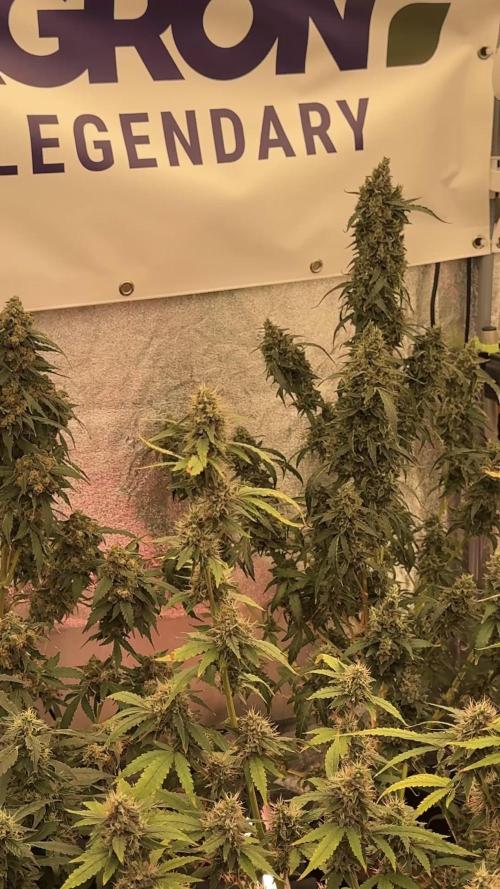
D83 F36: Hello everyone! I apologize for the quality of the photos, I really have a shitty phone! Apart from that everything is going well! The plants are growing very well, still no signs of deficiency.
I started cooling the box at night 2 days ago and the colors are already appearing!
I upgraded my LED panel to 600w F33, I was sure I was correct with 400 but I noticed that the flowers were not developing correctly
The smells are really incredible, more and more marked! I have a little crush on the code red #1, a smell of strawberry candy, cream and syrup.
the white runtz x Hollywood is very very special too! a very runtz smell, with a very marked smell of marinated ginger and lemongrass! very special, it's also the one that makes the biggest heads, incredible
I did a big defoliation (schwazzing) a few days ago and they recovered very well.
I moved the plants again, I'll put the locations below.
I will apply tco F40
in my flowering TCO, I put:
- kelp hydrolysate
- epsom salt
- bat guano
- mealworm guana
- castor bean shell ash
- palm ash
- vermicompost
- blackstrap molasses
- elycitor
-Yeasts Saccharomyces Cerevisiae
Bottom right: Papaya Bang Bang #1
Bottom middle: LA Vanilla cake #2
Bottom left: Papaya bang bang #2
middle right: cherry gar see ya #4 clone
middle: white runtz x Hollywood
middle left: code red #2
Top right: Code red #1
Top middle: B-45
Top left: LA Vanilla Cake #1


Likes
6
Share

@DogDoctorOfficial
Follow
🚂 8×8 Adventure – Week 12
🌿 Cash Express – Pheno B
🚨 When Trouble Knocks: Bud Rot, Staying Calm & Learning From It
Hello everyone, and welcome back to another chapter of the 8×8 Adventure! 🌱💚
And this week...
Well...
Trouble ate the house.
😂🚨
But before anyone starts panicking...
NO.
That's not how we're going to handle this.
Because in a room with this many different cultivars and phenotypes, sometimes something happens.
And this time...
Cash Express Pheno B gave us a little lesson.
We found bud rot.
😬🌸
Am I happy about it?
Absolutely not.
Did I panic?
Absolutely not.
And that's Rule Number One.
────────────────────────
🚨 Rule Number One: Don't Panic
When you discover something like bud rot in a flowering room, the first reaction can very easily be:
"Oh shit."
😂
And yes...
that's a completely understandable reaction.
But panic doesn't help.
You need to stop.
Look carefully.
Confirm what you're actually seeing.
And then act.
That's exactly what happened here.
This was not immediately obvious from the outside.
It was hiding.
The flower looked perfectly capable of blending into the rest of the plant.
But after looking...
and looking...
and looking again...
something didn't feel right.
And eventually, experience kicked in.
Maybe it's because I've seen enough plants by now.
Maybe my eye has become trained.
Maybe I'm simply getting better at noticing the little things.
Whatever it was...
I noticed it.
And once I knew something was wrong?
There was no hesitation.
────────────────────────
✂️ Rule Number Two: Get It Out
The affected cola was removed.
Straight away.
I didn't stand there wondering what might happen.
I didn't leave it for another day.
I didn't say:
"Let's see what it looks like tomorrow."
Nope.
Out it came.
🚨✂️🌸
The goal at that moment was simple:
Remove the affected material and prevent the problem from becoming a bigger problem.
And once it was removed, I opened it up.
That's when the real lesson began.
Because from the outside...
it wasn't nearly as obvious as it became once the flower was opened.
And that's exactly why I wanted to document this.
Not because bud rot is fun.
It isn't.
But because if we're going to document the 8×8 Adventure honestly, we have to document the bad moments too.
Not just the beautiful frost.
Not just the giant flowers.
Not just the perfect photographs.
Sometimes...
we show the ugly stuff.
Because that's where people can learn.
────────────────────────
🔍 What Is Bud Rot?
Bud rot is commonly associated with the fungal pathogen Botrytis cinerea.
It can develop in dense flowering structures, particularly when moisture becomes trapped inside areas where airflow and drying are limited.
And here's the important part:
You don't necessarily need to look at your room and think:
"Wow, it's extremely humid."
for this to happen.
A room can have relatively controlled environmental conditions while a dense flower creates its own little microclimate.
Inside a thick flower...
things can be very different from what your room sensor is telling you.
That's why the plant itself still needs to be inspected.
The room sensor tells you about the room.
The flower tells you about the flower.
And sometimes...
those are two very different stories.
────────────────────────
🌸 What Did I See?
This is where I really want to use the photographs from this week.
Because the first thing you might notice from the outside isn't necessarily some huge obvious patch of mould.
Sometimes the warning signs can be subtle.
In this case, there were brownish/discoloured areas that didn't look quite right.
The flower wasn't simply progressing uniformly.
There was something different happening within the structure.
And that is one of the things I want everyone following this diary to take away:
LOOK.
Actually look at your flowers.
Don't just look at the whole plant from three metres away.
Don't just look at the beautiful tops.
Don't just look at the trichomes.
Get your eyes into the structure.
Look between flowers.
Look at areas that are unusually discoloured.
Look for tissue that doesn't seem to fit with the normal progression of the plant.
Look for anything that makes you think:
"That's not how the rest of this flower looks."
That little thought can be important.
────────────────────────
👀 The Outside Doesn't Always Tell The Whole Story
This was probably the most interesting part for me.
From the outside, this problem was surprisingly well disguised.
The flower still looked like a flower.
It still had its normal structure.
It still had all the visual complexity that makes these plants so beautiful.
But something was happening inside.
Once I opened it...
the story became much clearer.
And that's why I decided to photograph it.
I want people to see both sides.
What you might notice with the naked eye...
and what you can discover when you investigate further.
Because bud rot doesn't always arrive with a giant flashing sign saying:
"HELLO, I'M MOULD."
😂
Sometimes it whispers.
And that's why observation matters.
────────────────────────
🔬 Let's Go Deeper
Once the affected cola was opened, the difference became much easier to understand.
Healthy flower tissue has a certain consistency and appearance.
Rotten tissue doesn't.
You may see brown or greyish areas, damaged-looking plant material, unusual discoloration, tissue that appears to be breaking down, or fungal growth associated with the damaged area.
And sometimes you'll see something that simply doesn't look like healthy flower anymore.
That's the important part.
You don't need to become a laboratory scientist.
You need to learn what YOUR healthy plants normally look like.
Because once you know normal...
abnormal becomes much easier to spot.
That's something experience teaches you.
You look at hundreds of flowers.
You photograph them.
You handle them.
You inspect them.
And eventually your brain starts saying:
"Wait..."
That's what happened here.
────────────────────────
❌ What Bud Rot Is NOT
This is also extremely important.
Not every brown pistil is bud rot.
Not every colour change is mould.
Not every damaged leaf means there's an infection.
Not every flower that looks different is automatically rotten.
Flowers naturally change as they mature.
Pistils change colour.
Leaves age.
Plant tissue can become damaged.
Flowers can become darker.
Some cultivars naturally develop unusual colours and structures.
And photographs can make perfectly normal things look much more dramatic than they really are.
So...
don't panic at the first brown hair you see.
😂
Look at the whole structure.
Compare it with the rest of the flower.
Look for tissue damage.
Look for unusual discoloration.
Look for signs that don't fit the normal maturation pattern.
And if you're genuinely unsure?
Investigate carefully rather than immediately assuming the worst.
────────────────────────
🚨 But When You KNOW It's Rot...
That's when we stop debating.
Once I was confident that this was a genuine problem...
out it came.
✂️🌸
No emotional attachment.
No:
"But it's such a beautiful cola."
No:
"Maybe she'll recover."
Nope.
She's gone.
Because once a flower is affected, keeping it attached simply because we don't want to lose it isn't a sensible trade.
One damaged cola is frustrating.
A larger problem spreading through the room is much worse.
So the decision was easy.
Remove.
Remove carefully.
Remove immediately.
And then inspect what was around it.
────────────────────────
After Removal — Don't Forget The Basics
Once the affected material is removed, cleanliness matters.
Tools should be cleaned appropriately.
Hands should be clean.
The removed material shouldn't be left sitting around in the grow space.
And the affected material?
That's waste.
Not medicine.
Not something to save.
Not something to experiment with.
If plant material is visibly affected by mould or rot, it isn't something I would consider suitable for consumption.
That's an important line.
We can be relaxed about a lot of things in this hobby.
Mould isn't one of them.
🚫🌸
────────────────────────
🌬️ How Can Bud Rot Happen In A "Good" Room?
This is where things get particularly interesting for the 8×8 Adventure.
Because this room is not some uncontrolled jungle.
We're monitoring temperature.
We're monitoring humidity.
We're managing airflow.
We're managing lighting.
We're watching the plants.
And we're still pushing the environment toward strong flowering conditions.
But the room environment is not the same thing as the microenvironment inside a giant flower.
A dense flower can contain tiny spaces where air movement is lower.
Moisture can linger.
Plant material can be packed tightly together.
And the interior can behave differently from the surrounding room.
That's why even growers who monitor their environment carefully can still encounter bud rot.
It doesn't automatically mean:
"Everything was done wrong."
Sometimes biology simply finds an opportunity.
And this is exactly why inspection remains important.
────────────────────────
🌡️ The Current Room
The room this week is sitting around:
🌡️ Day temperature: ~27°C
🌙 Night temperature: ~25°C
💧 Relative humidity: ~60%
⚗️ pH: ~6.04
⚡ EC: ~2.05 mS/cm
🌡️ Solution temperature: ~25.2°C
🌱 Substrate temperature: ~26°C
🌬️ CO₂: ~693 ppm
💡 Light schedule: 12/12
💦 Irrigation: ~1.4 L/plant/24h
🌱 Pot size: 15 L
We're also continuing with the upgraded Future of Grow lighting setup.
Two additional Black Series 600W fixtures are now part of the experiment, currently being controlled at approximately 59% power from the plug.
The upper canopy is around the ~1,500 PPFD range.
And this is important:
I'm not saying these numbers "caused" the problem.
I'm saying that even in a carefully managed room, problems can still happen.
That's the reality of growing living organisms.
────────────────────────
💨 VPD, Humidity & Reality
This is another area where I think it's important not to oversimplify things.
We can talk about VPD.
We can talk about relative humidity.
We can talk about temperature.
We can monitor everything.
And we absolutely should.
But no environmental number guarantees that a dense flower will never develop a problem.
The inside of the flower can have a different microclimate.
That's why I don't believe in saying:
"My humidity is X, therefore bud rot is impossible."
Nothing is impossible.
Especially when you're growing dense flowers.
The bigger and tighter the flower structure becomes, the more important physical inspection becomes.
And that's a lesson I'm happy to repeat.
────────────────────────
👁️ Prevention Starts With Observation
For me, one of the biggest prevention tools is simply knowing your plants.
Look at them regularly.
Learn what healthy flowers look like.
Learn how your particular genetics develop.
Know what normal pistil colour changes look like.
Know what normal late-flowering leaf changes look like.
And then pay attention when something doesn't match.
Because prevention isn't only about numbers on a controller.
It's also about your eyes.
Your nose.
Your experience.
Your photographs.
Your memory.
And your willingness to investigate.
The more familiar you become with your plants, the easier it becomes to notice when something doesn't belong.
────────────────────────
🌬️ Airflow Still Matters
Dense flowers benefit from good airflow around the plant and through the room.
Not because airflow magically makes plants immune to fungal problems...
but because stagnant, damp microclimates are exactly the sort of conditions we don't want around dense flowers.
So we keep paying attention to airflow.
We keep the room moving.
We avoid unnecessarily wet conditions around the flowers.
We monitor environmental changes.
And we inspect.
That's the combination.
Not one magic trick.
Not one number.
Not one piece of equipment.
A whole system.
────────────────────────
🧠 Don't Turn One Problem Into Ten Problems
This is another important lesson.
When something goes wrong, don't suddenly change everything.
One cola has a problem?
Don't immediately decide the entire room is failing.
Don't panic and start changing five environmental variables at once.
Don't start throwing random solutions at the plants.
Stop.
Identify the problem.
Remove the affected material.
Inspect the surrounding area.
Clean up properly.
Then continue monitoring.
That's what I did here.
One problem.
One response.
And then back to watching the room.
Because the other eleven girls don't suddenly become guilty just because one flower had a problem.
😂
────────────────────────
🌿 And What About Cash Express Pheno B?
Well...
this is where we have to give this girl a little respect.
Because despite this little incident...
she is still beautiful.
She's still developing.
She's still flowering.
She's still doing what Cash Express Pheno B has been doing throughout this entire journey.
Growing tall.
Building flowers.
Occupying her space.
Doing things her own way.
And yes...
she gave me one little headache.
😂🚨
But one affected cola doesn't erase everything else this plant has done.
This is still a beautiful phenotype.
And now she's also taught us something.
That's part of the adventure.
────────────────────────
🌸 One Cola Doesn't Define The Plant
I think this is important to say.
When you see photographs of the affected flower, it can be easy to let that become the entire story.
But it isn't.
The 8×8 Adventure isn't about pretending everything is perfect.
It's about documenting reality.
And reality contains both:
😍 Beautiful flowers
and
😬 Problems.
That's growing.
Sometimes you get incredible frost.
Sometimes you get a plant that surprises you.
Sometimes you get a beautiful phenotype.
And sometimes...
bud rot decides to pay you a visit.
You deal with it.
You learn from it.
And you keep going.
────────────────────────
📸 Why I Took These Photos
I deliberately photographed this because I think it's valuable education.
Not to scare anyone.
Not to create drama.
And certainly not to say:
"Look how bad things can get!"
No.
Quite the opposite.
I want someone looking at this diary six months from now to see these photographs and think:
"Okay... THAT is the kind of thing I should be looking for."
That's useful.
The beautiful photographs are inspiring.
But the ugly photographs can be educational.
And sometimes...
the ugly ones are the ones people remember.
────────────────────────
🔬 The 8×8 Adventure Isn't A Perfect-Grow Competition
This is not a showroom.
It's a living room full of living plants.
Twelve individual phenotypes.
Different genetics.
Different flower structures.
Different densities.
Different responses.
And sometimes...
different problems.
That's why I'm not embarrassed to show this.
If anything, I think it's important.
Because if we only show perfect plants, people can get the impression that experienced growers never have problems.
That's simply not reality.
Experienced growers have problems too.
The difference is often how quickly they recognize them...
and how calmly they respond.
────────────────────────
🚨 What To Do If You Find It
My approach here was simple:
1️⃣ Stay calm.
2️⃣ Confirm that what you're seeing is actually abnormal.
3️⃣ Inspect the flower carefully.
4️⃣ Remove the affected material promptly.
5️⃣ Keep affected material out of the grow space.
6️⃣ Clean the tools and anything that contacted the affected material.
7️⃣ Inspect nearby flowers and dense areas carefully.
8️⃣ Continue monitoring the room and the plants closely.
9️⃣ Don't panic and start changing everything at once.
🔟 Keep documenting.
That's what this diary is for.
We're learning as we go.
────────────────────────
💚 The Rest Of The Room Keeps Moving
And this is the important part.
The rest of the 8×8 is still doing what the 8×8 does.
Growing.
Flowering.
Developing.
Different girls are moving at different speeds.
Some are faster.
Some are slower.
Some are compact.
Some are huge.
And now we've had our reminder that even a beautiful flowering room can throw you a curveball.
That's okay.
We deal with it.
And we continue.
Because the adventure doesn't stop because one cola decided to misbehave.
😂🚂🌿
────────────────────────
💡 The Photons Keep Coming
The Future of Grow Black Series lighting continues providing the artificial sun for this room.
We're still working with the additional two 600W fixtures.
We're still controlling their output rather than simply running everything flat out.
We're still watching how the different plants respond.
And we're still using Lumiflora to add another layer of light deeper into the canopy.
Nothing about one affected cola changes the larger experiment.
If anything...
it gives us another variable to observe.
That's what real grows are.
Not controlled laboratory experiments where nothing unexpected ever happens.
Real plants.
Real rooms.
Real environmental changes.
Real genetics.
Real problems.
Real learning.
────────────────────────
🌸 And Yes... We're Still Going To Make Her Shine
Absolutely.
Because this girl deserves it.
Even with the little bit of trouble she gave us.
😂💚
Cash Express Pheno B is still beautiful.
She's still tall.
She's still developing.
She's still building flowers.
She's still showing us her own expression.
And now she's also given us an opportunity to talk about something that every flowering grower should understand:
Sometimes things go wrong.
The important part is what you do next.
So I'm not going to hide the ugly side.
I'm going to put it right here beside the beautiful side.
This is the plant.
This is the journey.
This is growing.
────────────────────────
🔮 Looking Ahead
From here...
we continue.
We'll keep watching Cash Express Pheno B closely.
We'll keep inspecting the flowers.
We'll keep monitoring the environment.
We'll keep paying attention to the dense areas.
We'll keep providing stable conditions.
And we'll see where the rest of her flowers take us.
The affected cola is gone.
The lesson remains.
And the plant?
She's still here.
Still growing.
Still flowering.
Still beautiful.
So let's see what she does next.
────────────────────────
❤️ Final Thoughts – A Lesson Hidden Inside The Flower
This week wasn't the update I expected to write.
😂
But honestly?
I'm glad I can write it.
Because this is the part of growing that doesn't always make it into the pretty photographs.
Bud rot can happen.
Even in a room where you're monitoring your environment.
Even when the plants look beautiful.
Even when you're doing everything you can to keep the room stable.
Dense flowers can create their own little microclimates.
And sometimes...
fungal problems find an opportunity.
The important thing is not to panic.
That's Rule Number One.
Rule Number Two?
Get it out.
✂️🚨
That's what we did.
I noticed something that didn't look right.
I investigated.
I found the problem.
I removed the affected cola.
I opened it.
I photographed it.
And now we're using that experience to help educate everyone following along.
What does it look like?
What should you pay attention to?
What is normal?
What isn't?
And what should you do when you find it?
That's the value of documenting the entire journey.
Not just the wins.
Not just the frost.
Not just the beautiful macro shots.
Everything.
And Cash Express Pheno B?
She's still shining.
One bad cola doesn't define a beautiful plant.
It simply gives us one more lesson from her story.
🚂🌸💚
So...
no panic.
No drama.
No hiding.
Just learn.
Observe.
Act when necessary.
And keep going.
That's growing.
And that's the 8×8 Adventure.
────────────────────────
🙏 Thank You
A huge thank you to Zamnesia for giving us these genetics and allowing us to follow these individual phenotypes throughout this entire adventure.
Thank you to Plagron for supporting the room with the nutrition we're using throughout flowering.
A massive thank you to Future of Grow for providing the Black Series lighting and especially the two additional 600W fixtures we're now testing in the 8×8 Adventure.
Thank you to Lumiflora for helping us bring additional light deeper into the canopy.
Thank you to TrolMaster for helping us monitor and manage the environment behind the scenes.
And thank you to everyone following this crazy experiment here on GrowDiaries.
This week, you're getting something a little different.
Not just beautiful flowers.
Not just frost.
Not just another perfect macro photograph.
You're getting a lesson.
You're getting the reality of growing.
Because sometimes...
Trouble eats the house.
😂🚨
But we don't burn the house down.
We stay calm.
We find the problem.
We deal with it.
We learn.
And we keep growing.
Cash Express Pheno B is still here.
She's still beautiful.
She's still developing.
And she's still writing her story.
One cola gave us a headache.
The rest of the plant?
Still shining.
🚂🌸💚
And if there is one thing I hope people take from this week's report:
Don't be afraid of problems.
Respect them.
Learn to recognize them.
Act quickly when you need to.
And never let one problem convince you that the whole grow is lost.
Growing is not about never having problems.
It's about learning how to deal with them.
And this week...
Cash Express Pheno B taught us exactly that.
Until next week...
Keep your eyes open.
Keep your plants close.
Keep learning.
And let's keep this beautiful girl shining.
Growers Love & Happy Growing! 🌱💚🚂
Likes
6
Share


@Tezza2
Follow
The gorilla cookies is looking good but the purple lemonade is doing much better but i think the gorilla cookies is putting out alot of roots through the seven gallon fabric pot thats why it isnt as big as the purple lemonade

Likes
5
Share


@GoodBudz
Follow
At this stage and after dealing with such tall plants in such a small area it was getting more and more difficult to get around each plant. Thus making it very hard to spot any deficiencies such as mold and rot. The colas that were up close to the light were starting to show signs that they were going to get some light/heat damage as the leaves were getting fried.
With all the supercropping, made some make shift crutches to help support each bend. Duct tape was also used to support each bend.
The colas were starting to frosty up this week and it was very exciting to see


Likes
5
Share

@bkickstand
Follow
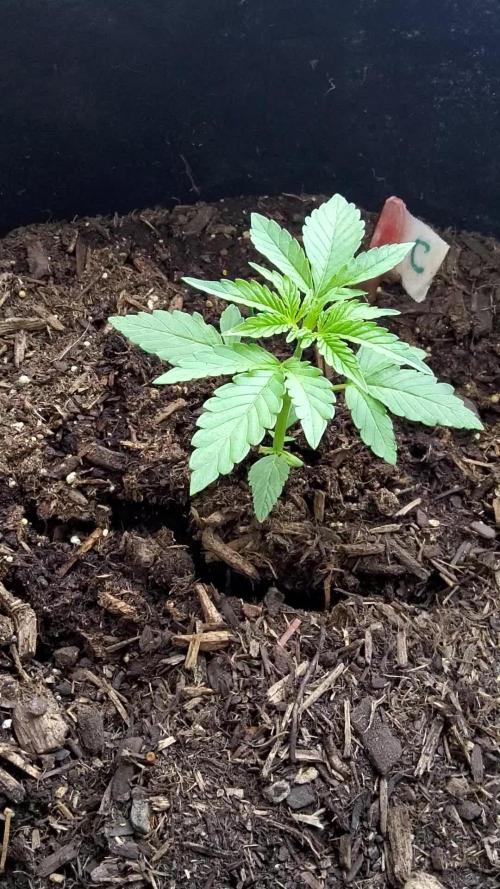
Week 3: The Big Move for Charlotte & Makayla
The "Solo Cup Sisters" are officially leveling up! This week was all about transitioning the Northern Lights into their permanent homes. They’ve handled the shift like champs and are looking vibrant and healthy as they settle into the 10-gallon fabric bags.
Growth & Vitals
Charlotte: Currently standing at 100 mm (approx. 4 inches). She’s showing great vigor and tight node spacing.
Makayla: Following close behind at 85 mm (approx. 3.3 inches). She might be the "little" sister for now, but her leaf structure is incredibly robust.
Appearance: Both plants are sporting a deep, healthy green with no signs of transplant shock. The internodal development is exactly where I want it to be for future training.
The Setup
Medium: Using the "secret sauce" 50/50 organic garden soil and potting soil blend.
Containers: 10-gallon fabric bags. These are perfect for providing the drainage and root aeration these girls need.
Environment: They’ve been spending time on the deck to soak up the morning sun. I’m keeping a close eye on the High Plains weather—bringing them inside when the Colorado wind gets a bit too rowdy to ensure they don't get beat up.
Strategy & Next Steps
Training: I’ve got some LST (Low Stress Training) hooks ready to go. I’ll start gently guiding their growth once they establish their roots in the new medium.
Trellis Prep: The plan is to let them grow into a trellis system set about 12 to 18 inches above the soil line. This should give us plenty of airflow and a manageable canopy.
Nutrients: Sticking with the organic regimen. I’ll be introducing the FOOP line—Veg, Bloom, and Sweetener—on a weekly schedule once they’ve fully recovered from the transplant.
**Note:** The focus for the next few days is purely on root establishment. I'm keeping the moisture levels consistent but being careful not to overwater while they adapt to the larger volume of soil.
#GrowDiaries #NorthernLights #Cannabiscommunity #Homegrown #OrganicGardening #Week3 #TransplantDay**

Likes
60
Share


@BudBoutique
Follow
Welcome to Bud Boutique Grow Diary - really appreciate all your love and support :)
Dont forget to check out my other current grows!
🗓️ This Week:
- Day 52: the end is near - fading out colors really yellowing
- Day 53: Trichomes check - looking super good almost all cloudy, a few amber and clear. perfect point to chop
- Day 54: this one is finished, let's chop them !! ✂️✂️✂️
- now its time to dry inside the tent at about 60%rh and less than 20°C/68°F trying to get it even lower for the next 10-14 days - in complete darkness
Thank you for still staying with me 💚
___________________________________________
--- 🌱 Strain (Sponsor) 🌱 ---
🏷️ Cookie Haze by Kannabia Seed Company
https://www.kannabia.com/en/feminized-cannabis-seeds/cookies-haze
--- 🥗 Nutrients and Feeding (sponsored by APTUS: APTUS Ambassador) ---
🍸 APTUS: full nutrient schedule extreme
-- Regulator, N-Boost, P-Boost, CaMg-Boost, K-Boost, Allin1 Liquid, Startbooster, Topbooster, Enzym+ every feeding
-- Fulvic-Blast, NutriSpray as Foliar each once a week
🔗 https://aptus-holland.com/
--- ♻️ Grow Control (Sponsor) ---
TROLMASTER: TENT-X + LM14 Light Adapter to dim/sunrise/sunset lights + Temp & rH Sensor all remote on App
🔗 https://www.trolmaster.eu/
--- 🚿 PetraGrow (Sponsor) ---
CannaFogger Foliar Spray
🔗 https://www.petratools.com/product/petragrow-cannafogger-atomizer-new-mini-fogger
--- 🏭 Grow Setup ---
💡LUMATEK Zeus Pro 600
* 🏠🌿 Indoor: Homebox 120x120x200cm (4x4)
* 📐🌀 PrimaKlima exhausting Fan 1180m3/h (running on 60-80%)
* 🌀 Can Light Filter 800m3/h & 1x Fanbox 1x Dyson fan for Air circulation
🔗 https://lumatek-lighting.com/zeus-600w-pro-29/
🔗 https://primaklima.com/de/shop/ventilatoren-de/ec-ventilatoren/pk160ec-tc/
🔗 https://canfilters.com/products/filters/
All Likes and comments are highly appreciated!!!
👨🌾 don't forget to check out my Instagram for daily educational content: budboutiquee
- Bud Boutique

Likes
103
Share


@HighTV
Follow
| 📅 Week 11 | 9/26 - 10/02
| 💡 1000w 📏34' |
| 🌡️️🌞 75- 82 |
| 🌡️️🌑 64 - 75 |
9/26 Weekly reservoir change and PH set to 5.8. Were on the finale week of the nutrient schedule we are using, but we will repeat last weeks nutrients till these girls are ready for ripen.
9/27 The purple is really starting to show in the leaves. Reservoir water refilled and Ph adjusted.
9/28 Reservoir PH adjusted to 5.8 and cleaned out the tent
9/29 Temps are looking just fine and the plants are coming along great
10/01 PH adjusted to 5.6 and I adjusted some of the scrog positions.
10/02 Reservoirs topped off, Scrog adjusted a little. PH adjusted to 5.8

Likes
13
Share

@MaestroBud
Follow
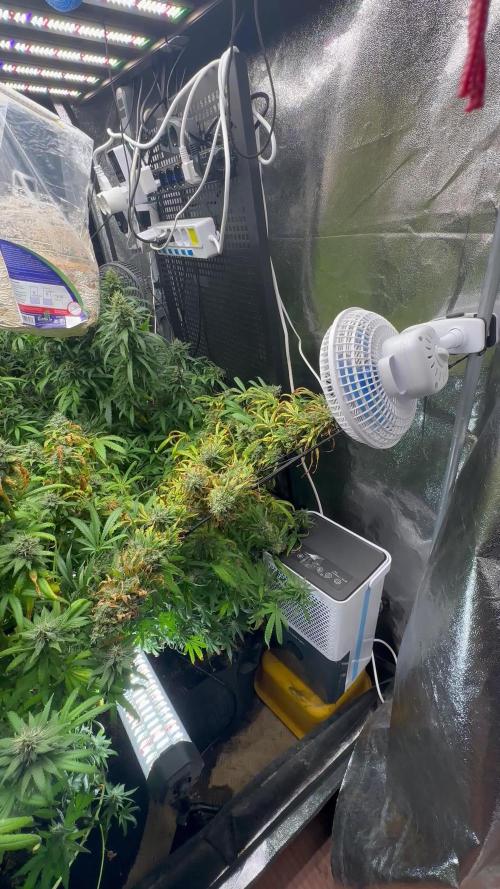
Week 8 of flowering:
Managed with only water this week. It's noticeable that this is a slightly slower strain: it's maturing slowly, with compact buds turning golden hues. The aroma is old-school, earthy-sweet, very promising.


Likes
5
Share


@Brickleberry
Follow
June 25 - transplanting to 35 LT pot! 💣🔞
June 27 - LST&HST Day! 💚
June 28 - The plant is growing great and fastly! 🛫


Likes
4
Share


@Hexahydrat666
Follow
Ich hätte den beiden gerne noch etwas mehr Zeit geben aber die Raubmilben haben das Problem mit den Thripslarven nicht in den Griff bekommen. Die Biester haben im Zelt ordentlich Party gefeiert und sich kräftig vermehrt so das ich mich entschlossen habe zu ernten damit ich genug Zeit habe zu trocknen und das Zelt zu desinfizieren bevor die nächsten Pflanzen einziehen. Beim nächsten Grow werde ich stärker auf die ersten Anzeichen für einen Schädlingsbefall achten. Das war das erste Mal dass ich Thripslarven im Zelt hatte weshalb ich sie nicht gleich entdeckt habe. Ich hätte nicht gedacht dass die Mistviecher so klein sind das ich sie mit dem bloßen Auge kaum sehen kann und ich auf die Fraßspuren hätte achten müssen .Man lernt halt ständig dazu😃

Likes
9
Share


@RdSkM
Follow
No fueron cosechadas todas al mismo tiempo. Unas empezaron floración primero que otras.

Likes
15
Share

@DomForester
Follow
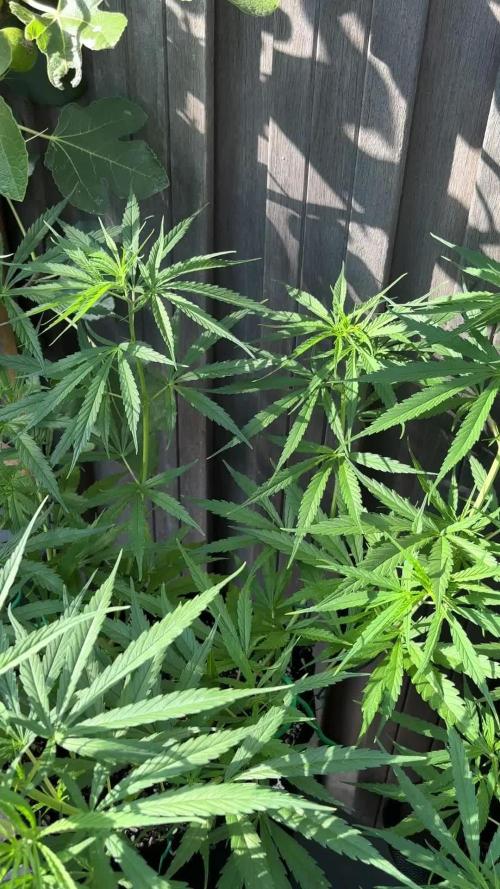
Lots going on this week.
Prince (LST’d Purple#1 - my favorite in structure) turned out male and I caught it just a day or two after moving him into his final 25l pot. He got a bit of a trim, re-repotted back to his 7l pot, and moved into a tiny grow box indoors under 12/12 light. I’ll keep him in there until pollen sacs are ready to go into the fridge to pollinate a bit of one of the Casamance Sativas later.
With that 25l pot (and a bunch of fresh soil) now available, I quickly moved Jimi in there and got a growth spurt almost immediately after.
With everyone in their final pots the table is getting crowded despite Prince moving out. Made me measure current canopy dimensions to start thinking about how to get them into the tent in a couple weeks. Turns out they’re all around 60x40cm in width/depth, which means I’ll get only three in there at best…
In other news - I’ve only just figured out that I might have been overfeeding them. BioBizz nutrient schedule says only up to 3ml/l Grow and I’ve been feeding up to 5ml/l. Does anyone have real experience to share?
Most importantly: Can you identify any male or female signs in the close up shots I’ve uploaded?

Likes
2
Share


@StickyBlack
Follow
Gorilla Zkittles - Smells like creamy musty cheese (in the best way possible). Such a strong nose on it. Good bud structure and spacing. Happy with the development so far.
Likes
26
Share


@donutgrower
Follow
Big week! I got my new EarthBoxes and a bunch of goodies. I picked up the Probiotic Farmer's Alliance kit from BuildASoil, so I also got some EM-1, Kashi Blend, dolomite lime and Malibu compost. Alongside that I picked up Colorado Worm Compost (vermicompost), Gnarley Barley (malted barley, corn and hemp) and Craft Blend (aprox 3-5-2 organic mix). Unfortunately there was a bag of soil missing, so I ended up using my own mix though I am somewhat scared of it being too clay-heavy for the SIP. I inoculated with EM-1 and began fermenting a batch of activated EM-1 to make the bottle last longer.
It looks about a week from LST, after that I hope to set up a two-tier SCROG setup and begin growing the bushes. I will begin spraying AEM-1/EM-FPE/EM-5 alternatively once a week for IPM, I will try to avoid using neem this round (unless I find this approach lacking). I also brewed a batch of EM-FPE with aloe that smells incredible, I can't wait to give it a go.


