Likes
Comments
Share
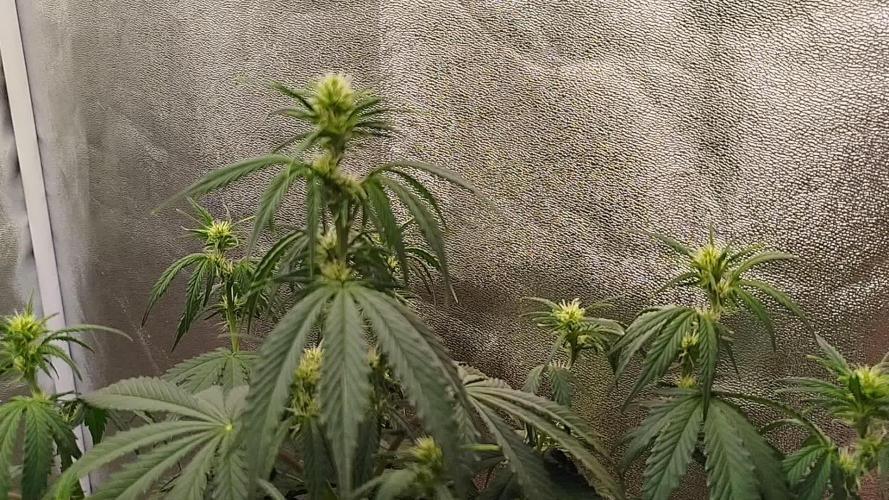
Die erstaunliche Seven Freeze hat in dieser Woche am heißesten Tag mit 35° C. etwas gelitten und hat leichte Trockenschäden bekommen, glücklicherweise nicht in den Knospen, sondern in voll ausgebildeten Blättern. Es passierte in den späten Nachmittagsstunden in der größten Hitze. Nachdem ich es entdeckt hatte wurde sofort gegossen und die Blätter hoben sich wieder, ein kleiner Schaden jedoch blieb unsd zeigte sich in den nächsten Tagen. Trotzdem wächst sie gut weiter und hat in dieser Woche noch einmal 14 cm zugelegt. Ich bin gespannt wie lange das noch weiter geht und welche Größe sie erreichen wird. --- The amazing Seven Freeze suffered a little this week on the hottest day, when the temperature reached 35°C, and sustained some minor drought damage; fortunately, this was not to the buds but to the fully developed leaves. It happened in the late afternoon during the peak of the heat. As soon as I noticed it, I watered it straight away and the leaves perked up again, though a small amount of damage remained and became apparent over the next few days. Nevertheless, it is continuing to grow well and has grown another 14 cm this week. I’m curious to see how long this will continue and how big it will eventually get.
Processing
Likes
15
Share
Finished week 2 of flower. I have been inspecting every single leaf for PM and have found a few spots, but quickly spot treated with solution. I have learned that PM is a SYSTEMIC disease and the spots on leaves are a symptom of an already infected plant. So the best thing I can do is keep the symptoms in check by spot spraying and its working! Only a few burned leaves as a result, but nothing like my first grow where it was widespread! Defoliated to thin out a bit and allow for better airflow. Light LST to a few of the taller stems to maintain an even canopy. Overall, I am happy with the way my 2nd indoor grow is progressing.
Likes
12
Share
Now Flora!! 💐💐 They are healthy and have enough buds for abundant flowering!!
Likes
10
Share
@Hawkbo
Follow
They are all putting on weight quickly and taking shape very impressed with all of them and they prob have another week or so before flush/harvest. REMEMBER , IF YOUR SHOPPING FOR GEAR YOU CAN USE THE CODE “BANGDANG” FOR 10% OFF YOUR ENTIRE PURCHASE FROM ANY OF THE FOLLOWING COMPANIES. @greenbuzzliquids @rainscience_growbags @gorilla_grow_tent @growlightscience.led NEW* @Rocbudinc Seeds on his website * *****Gorilla grow tent discounts extend to all companies affiliated with grow strong industries which include..***** @super.closet Lotus Nutrients Kind LED grow lights
Likes
72
Share
@BodyByVio
Follow
Day 65 : officially 1st day of flush . Changed the reservoir with fresh water and 1.2g/5 gallons of Yucca extract and 5ml/gallon of Cleanex from Botanicare . Day 68- I did some defoliate. Few more days until harvest.
Likes
563
Share
@Ju_Bps
Follow
Hello my friends 👩‍🌾👨‍🌾, Week was good, preflowering continues, Buds sites are forming 🌲🌲, we start to have a nice rectangular green screen 😀😍. The canope start to be good, I stopped to train the stems, I didn't removed leaves this week, just kick off the big leaves, probably a last defoliation next week. 💦 2 Watering this week 1.5l/plant . Water + Cannazym + Sugar Royal Water + Terra vega + Canna Boost PH@6 I continue to spray with water each day, they love it 😀. Lamp @100% As you can see, I've added the SP3000, will be setup next week 😋😋💡💡 Bisous 💋😘, and see you next week. Thanks community for follow, likes, comments, always a pleasure 👩‍🌾👨‍🌾❤️🌲 Mars Hydro - TS 1000 https://www.mars-hydro.com/ts-1000-led-grow-light Mars Hydro - FC3000 https://www.mars-hydro.com/fc-3000-samsung-lm301b-led-grow-light Mars Hydro - SP3000 https://www.mars-hydro.com/sp-3000-samsung-lm301b-greenhouse-led-grow-light The High Chameleon - Bisous Au THC 💋💋🌲🌲😘😘 https://www.thehighchameleon.com/shop/bisous-au-thc-83
Likes
17
Share
Got back on Day 42. Two are definitely in the flower stage. I was out of the country for 10 days for work. 😐 The self-watering system with water and BioBizz nutrients made it into the the plant. The reservoirs were almost completely empty after 10 days with 3L of water/nutrient in each. When I opened the tent, it was starting to smell and all of the plants had grown quite a bit while I was gone. I STILL CAN'T BELIEVE THIS WORKED!! I mean, I can. I was just nervous being gone for so long with no one checking on them. I'm going to keep the self-watering system in place. And I bought a better camera. I think this self-watering system will help me not over water so much. Also, since it's starting to smell, it's probably best not to open the tent too much. And yes, I have another work trip in two weeks. To another country. 😩 But I'll have a trusted friend coming by to check on things.
Likes
36
Share
Introducing some carbs this week (Bud candy & molasses) 🍬 some additional mycorrhizae (great white) with the Liquid Karma every water 🍵 will end the week with a final defoliation 🍅
Likes
9
Share
A nice bit of growth this week, one girl is shorter than the other 2, and slightly behind in terms of growth. Hoping to see a good spurt now with the first application of Evo 2.0 spray on day 25, abit more nutrients added and lights turned up to 400w. Onwards and upwards 🌱💯
Likes
2
Share
For most crops, a slightly acidic soil pH between 6.0 and 6.8 is ideal because it optimizes nutrient availability. When soil pH rises above 7.0 (alkaline), the concentration of hydrogen ions H+ drops significantly, and they are replaced by calcium, magnesium, or sodium ions on the clay colloid exchange sites. To naturally lower alkaline soil pH, you can add organic matter (carbon-rich materials), which produces weak organic acids as it decomposes. Maintaining this slightly acidic range stimulates a highly active, diverse microbial community; these microbes decompose organic matter and release carbon dioxide CO2, which plants absorb through their roots and leaves to boost photosynthesis and sugar production. Furthermore, the added organic carbon acts like a sponge, drastically improving the soil's water-holding capacity. While soil biological activity does involve cellular electron transport, electrical conductivity (EC) in soil is actually a measure of dissolved mineral salts, not a voltage carried by individual microbes. Soil microorganisms secrete organic acids and chelate metallic and non-metallic minerals, transforming locked-up inorganic compounds into bioavailable organic complexes. Unlike harsh synthetic fertilizers that can dehydrate soil life in high concentrations, these naturally chelated nutrients safely nourish the plant, creating a thriving, self-sustaining ecosystem where plants can efficiently synthesize their own food. Metal-based: Could include elements like iron, manganese, copper, or zinc, which are essential nutrients for plants but can exist in forms not readily accessible. Non-metal-based: Examples like calcium carbonate, phosphate, or sulfur are also important for plant growth and potentially serve as building blocks for the organic salt. Chelation in a plant medium is a chemical process where a chelating agent, a negatively charged organic compound, binds to positively charged metal ions, like iron, zinc, and manganese. This forms a stable, soluble complex that protects the micronutrient from becoming unavailable to the plant in the soil or solution. The chelate complex is then more easily absorbed by the plant's roots, preventing nutrient deficiency, improving nutrient uptake, and enhancing plant growth. Chelation is similar to how microorganisms create organic salts, as both involve using organic molecules to bind with metal ions, but chelation specifically forms ring-like structures, or chelates, while the "organic salts" of microorganisms primarily refer to metal-complexed low molecular weight organic acids like gluconic acid. Microorganisms use this process to solubilize soil phosphates by chelating cations such as iron (Fe) and calcium (Ca), increasing their availability. Added sugars stimulate soil microbial activity, but directly applying sugar, especially in viscous form, can be tricky to dilute. Adding to the soil is generally not a beneficial practice for the plant itself and is not a substitute for fertilizer. While beneficial microbes can be encouraged by the sugar, harmful ones may also be stimulated, and the added sugar is a poor source of essential plant nutrients. Sugar in soil acts as a food source for microbes, but its effects on plants vary significantly with the sugar's form and concentration: simple sugars like glucose can quickly boost microbial activity and nutrient release. But scavenge A LOT of oxygen in the process, precious oxygen. Overly high concentrations of any sugar can attract pests, cause root rot by disrupting osmotic balance, and lead to detrimental fungal growth. If you are one who likes warm tropical high rh, dead already. Beneficial, absolutely, but only to those who don't run out of oxygen. Blackstrap is mostly glucose, iirc regular molasses is mostly sucrose. Sugars, especially sucrose, act as signaling molecules that interact with plant hormones and regulate gene expression, which are critical for triggering the floral transition. When sucrose is added to the growth medium significantly influences its effect on floral transition. Probably wouldn't bother with blackstrap given its higher glucose content. Microbes in the soil consume the sugar and, in the process, draw nitrogen from the soil, which is the same nutrient the plant needs. Glucose is not an oxygen scavenger itself, but it acts as a substrate for the glucose oxidase (GOx) enzyme, effectively removing oxygen from a system. Regular molasses (powdered if you can), as soon as she flips to flower or a week before, the wrong form of sugar can delay flower, or worse. Wrong quantity, not great either. The timing of sucrose application is crucial. It was more complicated than I gave it credit for, that's for sure. When a medium's carbon-to-nitrogen (C:N) ratio reaches 24:1, it signifies an optimal balance for soil microbes to thrive, leading to efficient decomposition and nutrient cycling. At this ratio, soil microorganisms have enough nitrogen for their metabolic needs, allowing them to break down organic matter and release vital nutrients like phosphorus and zinc for plants. Exceeding this ratio results in slower decomposition and nitrogen immobilization, while a ratio below 24:1 leads to faster breakdown and excess nitrogen availability. Carbon and nitrogen are two elements in soils and are required by most biology for energy. Carbon and nitrogen occur in the soil as both organic and inorganic forms. The inorganic carbon in the soil has minimal effect on soil biochemical activity, whereas the organic forms of carbon are essential for biological activity. Inorganic carbon in the soil is primarily present as carbonates, whereas organic carbon is present in many forms, including live and dead plant materials and microorganisms; some are more labile and therefore can be easily decomposed, such as sugars, amino acids, and root exudates, while others are more recalcitrant, such as lignin, humin, and humic acids. Soil nitrogen is mostly present in organic forms (usually more than 95 % of the total soil nitrogen), but also in inorganic forms, such as nitrate and ammonium. Soil biology prefers a certain ratio of carbon to nitrogen (C:N). Amino acids make up proteins and are one of the nitrogen-containing compounds in the soil that are essential for biological energy. The C:N ratio of soil microbes is about 10:1, whereas the preferred C:N ratio of their food is 24:1 (USDA Natural Resource Conservation Service 2011). Soil bacteria (3-10:1 C:N ratio) generally have a lower C:N ratio than soil fungi (4-18:1 C:N ratio) (Hoorman & Islam 2010; Zhang and Elser 2017). It is also important to mention that the ratio of carbon to other nutrients, such as sulfur (S) and phosphorous (P) also are relevant to determine net mineralization/immobilization. For example, plant material with C:S ratio smaller than 200:1 will promote mineralization of sulfate, while C:S ratio higher than 400:1 will promote immobilization (Scherer 2001). In soil science and microbiology, the C:S ratio helps determine whether sulfur will be released (mineralized) or tied up (immobilized) by microorganisms. A carbon-to-sulfur (C:S) ratio smaller than 200:1 promotes the mineralization of sulfate, when the C:S ratio is low, it indicates that the organic matter decomposing in the soil is rich in sulfur relative to carbon. Microorganisms require both carbon and sulfur for their metabolic processes. With an excess of sulfur, microbes take what they need and release the surplus sulfur into the soil as plant-available sulfate A carbon-to-sulfur (C:S) ratio higher than 400:1 will promote the immobilization of sulfur from the soil. This occurs because when high-carbon, low-sulfur materials (like sawdust) are added to soil, microbes consume the carbon and pull sulfur from the soil to meet their nutritional needs, temporarily making it unavailable to plants. 200:1 C:S 400:1: In this range, both mineralization and immobilization can occur simultaneously, making the net availability of sulfur less predictable. This dynamic is similar to how the carbon-to-nitrogen (C:N) ratio regulates the availability of nitrogen in soil. Just as microbes need a certain amount of nitrogen to process carbon, they also require a balanced amount of sulfur. Both mineralization and immobilization are driven by the metabolic needs of the soil's microbial population. Sulfur is crucial for protein synthesis. A balanced ratio is particularly important in relation to nitrogen (N), as plants need adequate sulfur to efficiently use nitrogen. A severely imbalanced C:S ratio can hinder the efficient use of nitrogen, as seen in trials where adding nitrogen without balancing sulfur levels actually lowered crop yields. Maintaining a balanced carbon-to-sulfur (C:S) ratio is highly beneficial for plant growth, but this happens indirectly by regulating soil microbial activity. Unlike the C:N ratio, which is widely discussed for its direct effect on nutrient availability, the C:S ratio determines whether sulfur in the soil's organic matter is released (mineralized) or temporarily locked up (immobilized). Glucose will hinder oxygenation more than sucrose in a solution because glucose is consumed faster and has a higher oxygen demand, leading to a more rapid decrease in oxygen levels. When cells respire, they use oxygen to break down glucose, and this process requires more oxygen for glucose than for sucrose because sucrose must first be broken down into glucose and fructose before it can be metabolized. In a growth medium, glucose is a more immediate and universal signaling molecule for unicellular and multicellular organisms because it is directly used for energy and triggers a rapid gene expression response. In contrast, sucrose primarily acts as a signaling molecule in plants to regulate specific developmental processes by being transported or broken down, which can be a more complex and slower signaling process. Critical stuff.
Likes
26
Share
@Growin_it
Follow
Asal got a trim to open up the air flow and a LST to spread the canopy a little more. Thinking I am done with the lateral spread at this point. Benesh got the same treatment. Asman has been taking the hits when I have overdone the LSTing. Thank goodness for masking tape and time to repair!
Likes
21
Share
📆 Semana 8 La Variegated Sour GPP ha llegado al final de su ciclo, y aunque el resultado no ha sido el esperado en términos de cantidad, la calidad de los cogollos obtenidos es bastante aceptable. La planta ha madurado muy rápido, lo que ha permitido una cosecha temprana pero con una producción algo reducida. Antes de cortar, realizamos el lavado de raíces esta misma semana para garantizar un sabor limpio y libre de residuos. Durante el secado, estamos cuidando las condiciones para preservar al máximo el perfil de terpenos ácidos y picantes que ha desarrollado. El aspecto compacto y peculiar de las flores sigue llamando la atención, manteniendo esa estructura densa que ya había mostrado en etapas anteriores. A pesar de la baja producción, la resina sigue siendo abundante en las puntas principales. Esta cosecha rápida deja algunas lecciones para futuras tandas, especialmente en lo que respecta a maximizar el rendimiento sin sacrificar la velocidad de maduración. Seguimos creciendo fuerte ! 💪
Likes
248
Share
@Ju_Bps
Follow
Hello my friends 👨‍🌾👩‍🌾, I'm still in gd jail, since 2 weeks, Thanks for your coms and likes, can't reply you... The Banana Purple Punch 🍌🍌🍌💜💜💜🥊🥊🥊looking good buds continue to grow up Week was good, look a bit overfert, so I've given only watering last watering, and will give only water tomorrow. 💦 I've given 2x 1.75 l/plant Water + terra flores + canna boost Water Only PH@6 Lamp @75% See you next week and have a good week end my friends 🔥👨‍🌾👩‍🌾 Thank to Mars Hydro and @marshydrococo2 for sponsoring the FC3000 ❤️❤️, as well as @Fast_Buds for sponsoring the Seeds ❤️❤️ If you want a litle discount on your Mars Hydro order, add this coupon to your cart, "Ju_Bps" Thanks community for follow, likes, comments, always a pleasure 👩‍🌾👨‍🌾❤️🌲 Mars Hydro - FC3000 https://www.mars-hydro.com/fc-3000-samsung-lm301b-led-grow-light 42 Fast Buds - BANANA PURPLE PUNCH🍌🌲 https://2fast4buds.com/seeds/banana-purple-punch-auto
Likes
80
Share
@Qlimax
Follow
Hello and we are at the end finnaly!! I harvest them on day 64!!! Harvest was amazing some flowers diffrent then others but cus of my noob box and all i am rly imprest and heppy abaut whole journey,this site helped me alooot!!!TYWM!! Buds are rly nice and they smell even better!! 😂 I was thinking of buying LED but.......i will grow indoor onley at winter and MH/HPS give alot of heat so is kinda rly nice....and i rly love how they grow this time so.....🤘 🤝For next grow i decided i will ..🤝 👉.more&sooner& etter LST then this time! 👉more def on ending. 👉Gonna buy CaMg fot sure! and mybe smth for roots/flowerig (didnt decide yet) 👉Better/stronger fans for better air flow 👉Alredy ordered magnify tool....60x 🔬zoom for 5€ from wish(with shiping)i had 32x zoom now but it wasn't enought. Still cant see tricomes clearly with 32x 👉Better reflector 👉Brought glasses so i dont destroy my eyes cus this briht light!😎 👉Ordered TDS metter In few weeks i report final results:)...... and alredy 5 neew flowers are growing 3x blackberry 2x zkittlers from 42 😎😎🤗 Eejoy life!
Likes
Comments
Share
🌱 8×8 Adventure – Chem Brûlée (Plant B) | Week 4 A Different Sister, A Different Strategy Welcome back to another chapter of my 8×8 Adventure, a project dedicated to exploring how different genetics—and even different phenotypes from the same cultivar—express themselves when grown under identical conditions. Each plant receives the same environment, nutrition, lighting, and care, allowing their natural characteristics to shine without outside variables influencing the results. Today’s update focuses on Chem Brûlée – Plant B, and she’s already proving that even sisters can choose very different paths. While her sibling has been building a strong upright structure, this beautiful lady has embraced training remarkably well, opening herself into a wider, flatter canopy that promises excellent light distribution for the weeks ahead. Watching these individual personalities emerge is exactly why I love phenotype hunting. ⸻ 🌿 Life Inside the 8×8 Garden The entire room continues thriving under stable environmental conditions. Current room parameters: 🌡️ Temperature: 33.3°C 💧 Relative Humidity: 63% ⚡ Nutrient Solution EC: 1.36 mS/cm pH: 6.12 💦 Reservoir Temperature: 25.7°C Although temperatures remain on the warm side, constant air circulation keeps fresh air moving throughout the canopy, helping every cultivar continue vigorous growth while maintaining healthy transpiration. It’s always fascinating seeing twelve different cultivars respond to exactly the same environment, each revealing its own unique blueprint. ⸻ 💧 Feeding Program Chem Brûlée continues receiving the same nutrition as the rest of the 8×8 project. This week’s feeding includes: • Plagron Terra Grow • Plagron Power Roots • Plagron Pure Zym • Plagron Vita Race (foliar application) Everything appears perfectly balanced. Healthy green foliage, steady development, and vigorous new shoots suggest she’s making excellent use of every feeding. ⸻ 🌿 Growth & Development This phenotype has really begun showing her own identity. Instead of pushing strongly upward, she’s naturally spreading her energy across multiple growing tips, creating a much broader plant than her sister at the same stage. The most striking feature remains those gorgeous oversized fan leaves. They’re broad, healthy, beautifully coloured, and already acting like efficient solar panels, capturing every available photon while fueling explosive vegetative growth. The newest growth emerges vibrant lime green before gradually darkening as the leaves mature, a classic sign of healthy development. Every node appears active, with numerous secondary shoots beginning to accelerate now that the canopy has opened. She’s becoming increasingly bushy without ever looking crowded. The structure feels balanced, vigorous and full of potential. ⸻ ✂️ Low Stress Training This week the focus has been gentle Low Stress Training (LST). Rather than removing the main growing tip, the stem has been carefully bent and secured to encourage the plant to redistribute its growth hormones naturally. By lowering the dominant shoot, the plant begins directing energy into multiple side branches instead of concentrating everything into one central cola. The results are already becoming visible. Several new tops are racing upward together, creating a much flatter canopy that should make far better use of the available light during flowering. LST remains one of my favourite training techniques because it shapes the plant without slowing her down. Minimal stress. Maximum opportunity. Watching these secondary branches wake up over the coming weeks should be incredibly rewarding. ⸻ 🚀 Looking Ahead Chem Brûlée Plant B is setting herself up beautifully for the next stage of development. As the secondary branches continue catching up, the canopy should become increasingly even, giving every future flowering site access to strong light. The plan remains simple: Continue guiding the branches gently through LST. Allow the canopy to expand naturally. Maintain environmental stability. Then simply let the genetics do what they do best. Every day she’s becoming wider, fuller, and more balanced. ⸻ 💚 Final Thoughts One of the greatest lessons this project continues teaching is that no two plants—even sisters—tell exactly the same story. Chem Brûlée Plant B has embraced training with incredible enthusiasm. Her open structure… Those beautiful oversized fan leaves… The explosion of new growing tips… Everything points toward a plant that’s preparing to fill her space with an abundance of healthy flowering sites. She’s elegant. She’s vigorous. And she’s making every adjustment look effortless. I can’t wait to see how this beautifully trained structure develops once flowering truly begins. ⸻ A huge thank you to Plagron for providing the nutrition that keeps this entire garden thriving, Zamnesia for the fantastic genetics and equipment making this project possible, and of course to the amazing GrowDiaries community for following every step of this journey. Growers love and thank you all for the your encouragement, advice and support that continue making this adventure even more enjoyable. See you all in the next update, where Chem Brûlée Plant B will continue writing her own unique story inside the 8×8 Adventure. 🌱💚
Likes
34
Share
great strain hard buttons heavy total life of 88 days. 84 after being born, besides having broken it will give me a good yield I will wait 90g to dry, for an automatic with 5.5 liter pot I think this is great. easy to grow very, very cold, sweet, sour, aroma, I'm happy .. final summary the lady still gave me 110g dried without branches and leaves very clean .. I am very very satisfied with the result both in the quality of the herb and the yield @Fast_buds @spiderfarmer @advancednutrients @growdiaries
Likes
3
Share
Mz Blizz doing her. Dayyyum thang defo nutes #vgrowlea #automatic pilot #soilless
Likes
7
Share
Day 37 11/30/2021- Welcome to week four of flower. I see lots of trichomes everywhere and the smell is starting to pick up as well. Day 39 12/02/2021- Water day for them. Also camera needed update but made it work. IOS/ANDRIOD PAR METER APP. It is very accurate highly recommended this for everyone. https://apps.apple.com/us/app/photone-grow-light-meter/id1450079523 Will update daily will time lapse video. Day 40 12/03/2021- Lots of trichomes everywhere. Buds are also forming up nicely. Day 42 12/05/2021- Just water this girl today. Today also is the last day of the week, we should be have ways done hopefully harvest by the end of the month. Will do last top feed on Wednesday.