


Likes
Comments
Share


@Shizzlemanizzle
Follow
Day 36
Done nothing just let them grow and trimmed a few leaves
Day 37 - watered them with feeding. Decreased the amount by 25% except the base nutes. Added 12ml CalMag on 4L water by request of the community.
If leaves curl down more, I will consider a flush.
Day 38
No feed. Color changed from the middleone overnight, I think that’s a good sign. Maybe someone can comment on that 💪🏽. For me it looks very good, I know a few leaves show signs of nutrient burn but I decreased already and no new signs appeared
Day 39
No feed until tomorrow.
Day 40
Fed them with very low amount of fertilizer. I aimed for a ppm of 1000 but I went a bit higher until I have osmosis water . Runoff ppm was 2000, but I have to say I am measuring ppm since this week and will fix this problem
Day 42
No feed


Likes
9
Share


@Martymar021208
Follow
These girls are looking very lively and I'm very pleases to this point. Introduction to calmag at the appropriate time I am hoping for better harvest this go around. Hope your grows are all doing good.


Likes
111
Share


@Herbalize
Follow
Hello folks 😎
9th week of flowering, we are near the end !
1 more flush and it will be time to harvest 👌, I love to see the leaves fade like that 😍
This week the outside temperatures have dropped a lot, very cool for the end and especially for better drying so im happy !
All trichome are milky and some amber, I could leave it another week longer but I want to be able to smoke it the day, and not stay glued to the sofa 😁
So the harvest will be done after about 60/62 days
Anyway, I really liked this run ! and I would try other strains of this bank really soon
stay tuned and see you next week for the final upload guys 😘
I also have another diary with one Pineapple kush from RQS if you want to see
Peace Love & Weed GD Fam😍👊

Likes
34
Share


@Bread_n_Buds
Follow
Zenzation is fast, very fast, filled and took color quickly and quickly volge at the end. The flowers are full, very full and seem truly succulent, the bassine shape, I spoke many times of the sides that I left then if you want high plants to take advantage of the growboxes in height Make the topping, without LSS and leave only the main line cloning the center.
If instead you want a low plant you can leave side that will become very big and do some lst and fimming to keep them low and level them with the center that still weakens.
LIGHT >> MARSHYDRO SP3000 AT 100% OF POWER ..
TENT >> MARSHYDRO 120x60x180
CHECK IG >> https://www.instagram.com/marshydro_aliexpress2/
Buy >> marshydroled.aliexpress.com
TENT >> MARSHYDRO 120x60x180
CHECK IG >> https://www.instagram.com/marshydro_aliexpress2/
Buy >> marshydroled.aliexpress.com


Likes
46
Share


@GanjaReaper
Follow
Day 53:
Things are going well. I always make pictures before doing work.
As you can see, down below it starts to absord the nutrients our of the leafs( picture 3). This is a good sign that I have not been overfeeding and the plants even want to have more nutrients!
I might raise my EC to 2-2.2 after all.
Yet I don't expect big buds from this grow, Just many buds which is alright to me as well. Hopefully they will grow compact.
They will start to fatten up soon tought.

Likes
63
Share


@Ferenc
Follow
Day 65, 14th of November 2020:
She is the most calm from the Original Sensible Seeds genetics I am growing now...
She did not strech that much she is more that kind of smaller indica woth those little leaves but bushy. Topping helped to reduce the strech...
Nice little girl I am happy :)
Pre flowers out pistils coming :)
Fertilization happens every 2nd day with the ratio and mix above.
I set the lamp 15 minutes shorter to switch off earlier so she receives 11:45 of darkness. I would like to imitate the nature when longer nights come with time till the 4th week (when she will receive 13 hours darkness a day 15 minutes minus 4 times = 1hour) so every week 15 min longer darkness for 4 weeks and then back to 12/12 to have bigger buds from the 4th week....

Likes
5
Share


@AlpenZilla
Follow
🗓️ Week 10 – Flower Week 6 (MAC n Cheese only)
📉 Nutrient management:
At one point this week, MAC n Cheese showed elevated runoff EC values up to 2.2, signaling salt buildup.
Through adjusted watering and reduced feed strength, the runoff was successfully brought down to a stable ~1.6–1.7.
🌿 Plant status:
She looks vital and healthy – deep green foliage with no signs of fresh deficiencies or toxicity.
Responding well to the current input EC of 1.0–1.3.
📝 Summary:
Salt levels were close to the edge earlier in the week, but MAC n Cheese recovered well with a more balanced nutrient approach.
Bloom development is now progressing evenly.
Next week: Switching from Big Bud to Overdrive.

Likes
10
Share


@TiRobotProds
Follow
Les colas commencent a gonflé j'ai enlevé les grosses feuilles pour une meilleure qualité lumineuse. Pas signe de surengraissage(les pointe des feuilles ne sont pas décolorés), plante petite mais compacte avec une odeur d'agrume verte laissons la dans sa course pour la coupe de DuctchPassion@ la suite au prochain épisode.

Likes
57
Share

@BudVision_Genetics
Follow
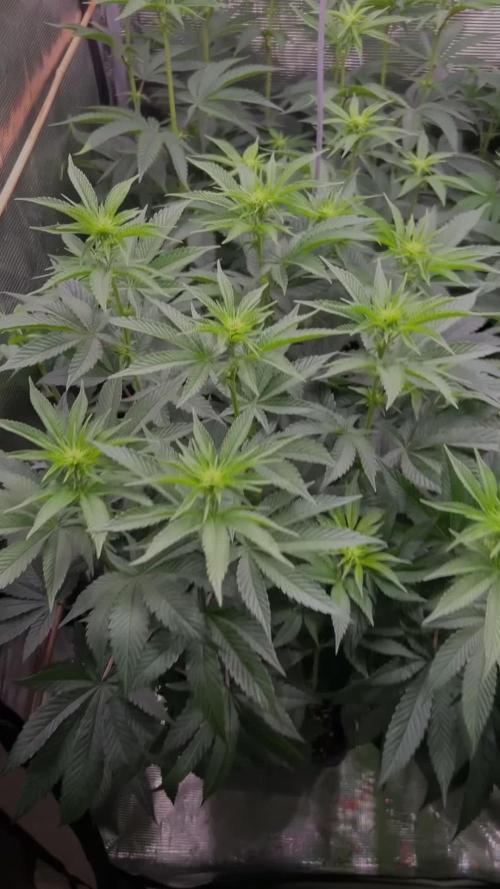
Hi Growers,
The first week of flower is behind us, and everything is progressing exactly as I had hoped. The plants are now fully underway, and their vigor has been outstanding. Every plant is healthy, strong, and full of energy, making the transition into flower completely smooth. I have to say I'm really happy that I chose to run this strain. Every plant is growing beautifully, showing great structure, and so far they've been an absolute pleasure to grow. If they continue at this pace, I think we have something special to look forward to.
------------------------------------------------------------------------------------------------------------------------------------------------
První týden květu je za námi a vše probíhá přesně tak, jak jsem si přál. Rostliny jsou naplno rozjeté a jejich vigor je opravdu ukázkový. Všechny jsou zdravé, silné a plné energie, takže přechod do květu proběhl naprosto bez problémů. Musím říct, že jsem opravdu rád, že jsem si vybral právě tento strain. Všechny rostliny rostou doslova ukázkově, mají skvělou stavbu a zatím mi dělají jen radost. Pokud budou pokračovat stejným tempem i nadále, myslím, že se máme na co těšit.
Peace and happy growing! ✌️


Likes
10
Share


@710Lino
Follow
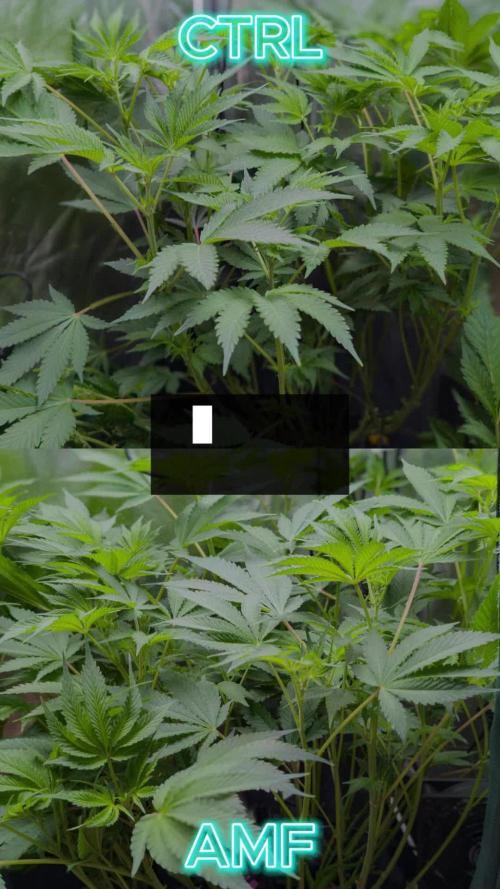
Doing great! 1 has a nitrogen deficiency but we fixing it slowly! Way to much coco core fiber cuz I ran outta my usual stuff with that pot


Likes
Comments
Share
@Bread_n_Buds
Follow
Zamnesia's Lemon Cherry Gelato is a very versatile plant, beautiful, fast-growing, and clones very well. We started from seed, and everything went very quickly, and the start of flowering is very promising.
We're in an 11-liter square pot, with little vegetative growth and growing upright.
Techniques chosen: the plant was left to grow upright, meaning only a little tidying up the lower parts to prevent unnecessary growth and to give the upper buds that potency they deserve.
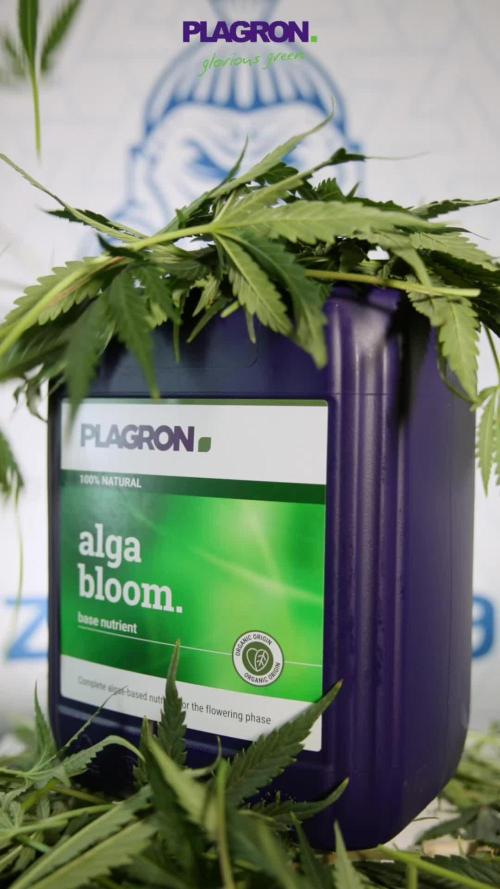
We're 100% organic and 1000% Plagron, as always.
The soil we've chosen is the recently launched Plagron Bio LightMix, which will allow us to get started more smoothly and reliably, without the sudden changes that liquid fertilizers can cause. A week is more than enough, so let's not overdo it.
We're in the early stages of flowering, but we're well-equipped with fertilizers and additives. We've added:
- Power Roots 1 ml/l (Always use it for the first two weeks of flowering, especially after transplanting)
- Pure Zym 1 ml/l
- Silic Rock 1 ml/l
- CalMag Pro 1 ml/l
- Sugar Royal 1 ml/l
- Alga Bloom 4 ml/l
- Power Buds 1 ml/l
Once a week as a foliar spray: (until the first two weeks of flowering)
- Vita Race 5 ml/l
Choose your favorite style and calculate your results on the website:
www.plagron.com
Our new 720W Spider King lamp from Vanguard Hydroponics is now at 80%
Z - https://www.zamnesia.io/en/531-growshop
A rocket start looks more than promising. Give it a try.
Z - https://www.zamnesia.io/en/11242-zamnesia-seeds-lemon-cherry-gelato.html
Z - Lemon Cherry Gelato is an extraordinary hybrid capable of offering a complete and satisfying experience to all growers and cannabis enthusiasts. This premium strain is the result of crossing Sunset Sherbet and Girl Scout Cookies, two strains renowned for their high quality and delicious aromas. With a genetic makeup composed of 60% indica and 40% sativa, Lemon Cherry Gelato produces stimulating and dynamic effects. With 26% THC, it infuses deeply relaxing vibes, keeping the mind clear and alert.
Lemon Cherry Gelato adapts easily to any growing environment. Indoor plants maintain a compact structure, reaching 110 cm in height, making them ideal for limited spaces. Outdoors, this strain grows up to 140 cm. Extremely adaptable, this strain responds well to cultivation techniques such as topping and low-stress training (LST), allowing growers to optimize space and increase final yields. Indoors, a minimum of 600 g/m² is possible after a flowering period of 8-9 weeks. Outdoors, plants will reach maturity in September and, in optimal conditions, will yield around 1000 g each. Thanks to its innate resistance, Lemon Cherry Gelato is perfect for both beginners and experienced growers.
You already know this, but I recommend it: here you will find many beautiful things, essentially "the best that nature has to offer."
Z - www.zamnesia.com
Music //
www.radionula.com
+ Feng Shui Music
+ Frequencies 432 Hz
Likes
14
Share


@Medicrexcellence
Follow
there are very few amber trichomes, so it still needs a week. it sure looks great though. It's extremely greasy to the touch, and rank with bright fruit flavor.
Likes
20
Share


@Hashy
Follow
Week 6
Light cycle=12/12
Light Power=150w
Extractor controller settings
High temp= 25c
Low temp= c
Temp step=0c
High Rh= 56%
Low Rh= %
Rh step=0%
Speed max=10
Speed min=2
Smart controller settings (during lights on).
Lights on=06.00am
Radiator on= below 21.5c
Radiator off= above 22.5c
Smart controller settings (during lights off).
Lights off=00.00am
Radiator on= below 18c
Radiator off= above 19c
VPD aim=0.6-1.4
DLI aim=28-34
EC aim=1.9
PH aim=6.3
Thur 1/2/24
💧💧💧💧💧💧💧💧💧💧💧💧💧💧💧💧
Method= automatic
Feed=water
Neutralise=0.1ml/L
Roots=0.2ml/L
Easy Ph down=0.ml/L
Ec=0.2 PH=6.6/6.6
Time start=12.00pm
Finish time=13.45pm
(11×5 minute runs with 5 minute gaps)
Total flow rate=181ml/min
Flow rate per plant=45ml/min.
Total volume made=14L
Total volume left=4L
Total volume used=10L
Volume per plant=2.5L (Est)
Runoff.
Total runoff=1L
Ec=2.0 PH=6.1/6.2
💧💧💧💧💧💧💧💧💧💧💧💧💧💧💧💧
#2 (Day 36)(Day 4 flower)
📋 H=56cm D=35cm DLI=29.0
Lifted light and increasd power to 196w.
H=56cm D=42cm DLI=30.5
Fri 2/2/24
#2 (Day 37)(Day 5 flower)
📋 raised camera, nearly touching the roof.
Sat 3/2/24
#2 (Day 38)(Day 6 flower)
📋 Defoliate a lot of lower leaves.
Sun 4/2/24
💧💧💧💧💧💧💧💧💧💧💧💧💧💧💧💧
Method= automatic
Feed=bloom nutes.
Neutralise=0.1ml/L
Silicon=1.0ml/L
Calmag=1.0ml/L
Terra Bloom=4.0ml/L
Sumo Boost=1.0ml/L
Roots=0.2ml/L
Easy Ph down=0.115ml/L
Ec=1.9 PH=6.1/6.5
Time start=12.00pm
Finish time=13.45pm
(11×5 minute runs with 5 minute gaps)
Total flow rate=190ml/min
Flow rate per plant=47ml/min.
Total volume made=13L
Total volume left=2.5L
Total volume used=10.5L
Volume per plant=2.62L (Est)
Runoff.
Total runoff=1.75L
Ec=2.4PH=5.9/6.2
💧💧💧💧💧💧💧💧💧💧💧💧💧💧💧💧
#2 (Day 39)(Day 7 flower)
📋
Mon 5/2/24
#2 (Day 40)(Day 8 flower)
📋 H=69cm D=29cm DLI=40.1
Tue 6/2/24
#2 (Day 41)(Day 9 flower)
📋 Looks like the weather is turning cold again over the next few days.
Wed 7/2/24
💧💧💧💧💧💧💧💧💧💧💧💧💧💧💧💧
Method= automatic
Feed=water
Neutralise=0.1ml/L
Roots=0.2ml/L
Easy Ph down=0.ml/L
Ec=0.2 PH=6.6/6.5
Time start=12.00pm
Finish time=13.45pm
(11×5 minute runs with 5 minute gaps)
Total flow rate=190ml/min
Flow rate per plant=47ml/min.
Total volume made=13L
Total volume left=2.5L
Total volume used=10.5L
Volume per plant=2.6L (Est)
Runoff.
Total runoff=1.5L
Ec=1.74 PH=6.6/
💧💧💧💧💧💧💧💧💧💧💧💧💧💧💧💧
#2 (Day 42)(Day 10 flower)
📋 H=77cm D=22cm DLI=50.5
HST 4 colas.
She is doing great, the smaller crafted cola has now reached the same hight as the others and has completely mended. Don't want much more Height hence the HST.
Back soon.
Take it easy.
Likes
6
Share


@YungSmoke
Follow
Weeeeek 9. What's cooking good looking.
She looks like she'll finish up on schedule in about 3 weeks time. Currently 20% milky 5% amber trichs. Been feeding with extra dose of bloom to give the buds extra weight and happy with progress this week.

Likes
14
Share


@9LittleGrow
Follow
The last day of week 7 vegetative stage and the next day I’ll change my light cycle from 18/6 to 12/12. I flushed my babies with tap water last 2 days ago and so they gonna be thirsty and tomorrow I’m gonna feed with flowering nutrients. So, I’m very excited with the flowering process of they gonna be.

