Likes
Comments
Share
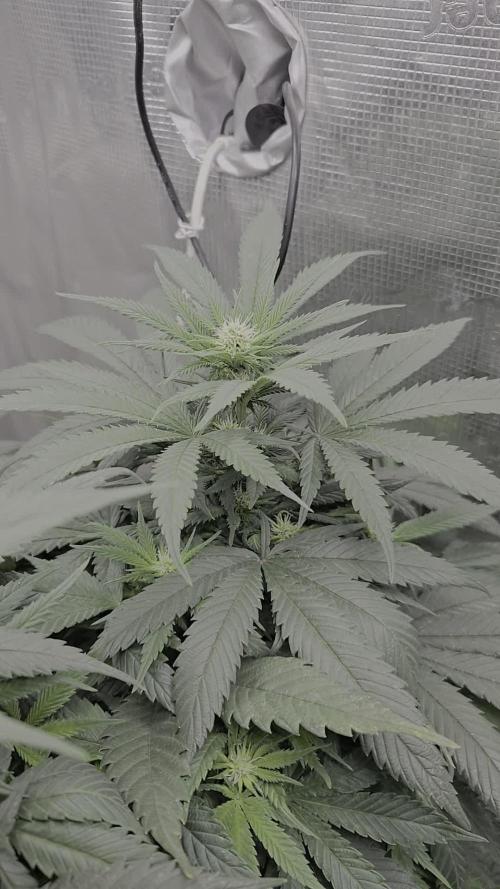
Hallo zusammen 🤙. Sie wächst sehr schön und macht keine Probleme
Likes
9
Share
@Trinidad
Follow
Frost Banger week 11. This one for sure is impressive. Quick growth, massive buds and covered in frost. Today I will harvest. We will see if she smokes as good as she looks.
Likes
3
Share
Día 39. La temperatura viene siendo un gran problema. Hace mucho frío y de noche en el lugar que está el indoor no tengo calefacción. Así que probablemente haya una merma en el resultado. De todos modos ya puse la lana de roca a remojo para germinar la próxima cepa. Ahora voy a ver bien que configuración uso para el próximo cultivo. Esta configuración que usé no fue un buen aprovechamiento del espacio.
Likes
Comments
Share
Likes
46
Share
@Seedler
Follow
WELL! What an experience. I made some mistakes, learned a lot and still got some excellent weed out of it. Super frosty, LOUD and SO dense it's ridiculous 😂 Sadly i got some (a lot for me) mold, i encountered for the very first time. With it being almost winter in Germany, the temps dropped really hard for some days and then even 60% humidity was too much for the strain. I also would say it isn't that resistant against mold, so just keep that in mind, the buds are so dense, it's really easy for them to trap water. I had to throw away like 1/4 of the yield, mostly the top buds 💀 That kinda sucked, but it could be worse, it's fire weed tho, i'll add pictures of the buds later.
Likes
26
Share
Start of week 6 of flowering for 4 Getting really frosty !!! Coming to and end of week 6 of flowering Tangie ,gg4,sweet creme and glueberry all.started.to.get flushed!!! Exciting.for.chop . The hazes are all looking amazing . Forgotten cookies is amazing =). Just added grapey walter and douple grape. =)
Likes
64
Share
@Ju_Bps
Follow
Hello happy Growers! This week was better than early, I've founded few very litle banana spend the week, I will continue to check this week, Harvest will be in 2 or 3 weeks, I hope can take situation under control untill harvest. If banana start to be too big, I'll remove the branch. If no, buds start to be compact, Nice sweet smeel and sticky, Probably my last fertilizer week, after I'll start flush Plant start to take less water, sign harvest for soon :) Have a good week my friends
Likes
13
Share
@IQuSX
Follow
Hi, topman! In this week, we are getting ready to last or pre-last defoliation in part of vegetation period. Also, we are use to Feeding by Green House Company. Watch and smile… ..see you.
Likes
11
Share
@Thigh
Follow
-At the moment there is bad weather but the little ones are getting better and better. Stand in the mini greenhouse in the evening, as long as it is dry and the sun comes out outdoors.👨🏽‍🌾 -Zurzeit ist schlechtes Wetter aber die kleinen machen sich immer besser. Stehen abends im Mini Gewächshaus, solange es trocken ist und die Sonne raus kommt im Freien.👨🏽‍🌾
Likes
8
Share
@AustinRon
Follow
Week 11 - Flower 7 Sangria - by Twenty20 Mendocino 4Q 2022 Flower Week 6: Wednesday 15 March - Tuesday 21 March 2023 Start of Week: [ 2022-03-15, SA20 78:F:11:1] End of Week: [ 2023-03-21, SA20 84:F:11:7] HeightWeekStart: [ 14.5, in] HeightWeekEnd: [14.5, in] Start Date: 28.12.2022 # Seeds Wet Harvest Window: 17 - 27 March 2023, 79 - 89 Days EnvironmentGermination - LightDistance: [ 14.5, in] - LightStrength: [911, 505, µmol/m2/s] - Temp: [ 79, 85, °F] - RH: [ 73, pct] - HumidifierTrigger: [ 69, %] Fertigation (BioAg, Mammoth-P) __________________________ Wednesday 15 March 2023 SA20 78:F:11:1 - BluMats allowed to water ~1/2 Gal . . . There’s a bubble in the top of the carrot, which is why it doesn’t shutdown. Sensor (carrot) tubes have to be AIR FREE. Will continue to manually start & stop. Thursday 16 March 2023 SA20 79:F:11:2 - Goal Today: Forward: Lower Lights to achieve < 79°F  - Top Watered: [ RootedLeafPeakBloom, 2, ml, l], amt: [ 1, l]: # Potassium Based Finisher Friday 17 March 2023 SA30 80:F:11:3 - [ ] Turn Water ON? Saturday 18 March 2023 SA20 81:F:11:4     Sunday 19 March 2023 SA20 82:F:11:5 - 1 Liter Resin Bloom @ 0.8 EC - TEMPS < 79F - RH ~65 Monday 20 March 2023 SA20 83:F:11:6 Tuesday 21 March 2023 - HARVEST DAY SA20 84:F:11:7 - Allowed probably 1/2 - 3/4 watering Thursday, 1 Liter of CalMag Fuel w/ Resin Bloom Friday, 1 Liter Resin Bloom @ 0.8 EC Sunday - Opened and cut - and THE HOUSE IS LOUD! Beautiful slightly (nicely) sweet floral with full spectrum of dark and medium tones. - Bottom Line: The Aroma of Sangria is inviting, friendly, and calming. It says, 'Hi there! Do you want to be my friend?'
Likes
4
Share
@TruTraTri
Follow
B8D7 end of week pictures + harvest (will follow after drying/curing otherwise I won't do it 😜) Was a little bit afraid of mold, no risk even if trichomes could use a few days more. Yield was okay (good for the strain), everything else outstanding 😚 Some pictures with flash light, some without. As outlook for the harvest a picture of the trim, ~30g 😲 Thought about not trimming, as this is all smokeable and high quality .... regarding what I get from outdoor autos 😂 You can see in the video there are no popcorn buds. Overall, hooked on indoor photos once again. 😅
Likes
45
Share
2nd net is up. Early bud formations are promising. holding up to the extremes pretty well, some leaves taking minor damage, but overall, she is holding up, gave her 1 night at 50F see how she would react, stressful. Not advised as it messes with her metabolism, but I want to see if it triggers any anthocyanin response. Love to see her purp up but no signs yet. Homework. If Rubisco activity is impaired and it cannot properly function or regenerate its substrate, the plant's leaves are likely to turn a pale green or lime green, a condition known as chlorosis. Essentially, Rubisco activity is highly regulated and susceptible to various environmental and metabolic factors that can cause it to become inhibited, leading to an apparent failure in RuBP regeneration due to a lack of consumption. Rubisco regeneration is intrinsically linked to nitrogen supply because Rubisco is a major sink for nitrogen in plants, typically accounting for 15% to over 25% of total leaf nitrogen. The regeneration phase itself consumes nitrogen through the synthesis of the Rubisco enzyme and associated proteins (like Rubisco activase), and overall nitrogen status heavily influences the efficiency of RuBP regeneration. RuBisCO is a very large enzyme that constitutes a significant proportion (up to 50%) of leaf soluble protein and requires large investments in nitrogen. Insufficient nitrogen supply limits the plant's ability to produce adequate amounts of RuBisCO, thereby limiting the overall capacity for photosynthesis and carbon fixation. Maintaining the optimal, slightly alkaline pH is crucial for the proper function and regeneration of Rubisco. Deviations in either direction (too high or too low) disrupt the enzyme's structure, activation state, and interaction with its substrates, leading to decreased activity and impaired RuBP regeneration. (LIME GREEN CHLOROSIS) Structural Component: Nitrogen is an essential building block for all proteins, and the sheer abundance of the Rubisco protein makes it the single largest storage of nitrogen in the leaf. Synthesis and Activity: Adequate nitrogen supply is crucial for the synthesis and maintenance of sufficient Rubisco enzyme and Rubisco activase (Rca), the regulatory protein responsible for maintaining Rubisco's active state. Nitrogen deficiency leads to a decrease in the content and activity of both Rubisco and Rca, which in turn limits the maximum carboxylation rate, Vmax, and the rate of RuBP regeneration Jmax, thus reducing overall photosynthetic capacity. Nitrogen Storage and Remobilization: Rubisco can act as a temporary nitrogen storage protein, which is degraded to remobilize nitrogen to other growing parts of the plant, especially under conditions of nitrogen deficiency or senescence. Nitrogen Use Efficiency (NUE): The allocation of nitrogen to Rubisco is a key determinant of a plant's photosynthetic nitrogen use efficiency (PNUE). In high-nitrogen conditions, plants may accumulate a surplus of Rubisco, which may not be fully activated, leading to a lower PNUE. Optimizing the amount and activity of Rubisco relative to nitrogen availability is a target for improving crop NUE. Photorespiration and Nitrogen Metabolism: Nitrogen metabolism is also linked to the photorespiration pathway (which competes with carboxylation at the Rubisco active site), particularly in the reassimilation of ammonia released during the process. To increase RuBisCO regeneration, which refers to the process of forming the CO2 acceptor molecule Ribulose-1,5-bisphosphate (RuBP) during photosynthesis, the primary methods involve optimizing the levels and activity of Rubisco activase (Rca) and enhancing the performance of other Calvin-Benson-Bassham (CBB) cycle enzymes. Biochemical and Environmental Approaches: Optimize Rubisco Activase (Rca) activity: Rca is a crucial chaperone protein that removes inhibitory sugar phosphates, such as CA1P (2-carboxy-D-arabinitol 1-phosphate), from the Rubisco active site, thus maintaining its catalytic competence. •Ensure optimal light conditions: Rca is light-activated via the chloroplast's redox status. Adequate light intensity ensures Rca can effectively maintain Rubisco in its active, carbamylated state. •Maintain optimal temperature: Rca is highly temperature-sensitive and can become unstable at moderately high temperatures (e.g., above 35°C/95F° in many C3 plants), which decreases its ability to activate Rubisco. Maintaining temperatures within the optimal range for a specific plant species is important. •Optimize Mg2+ concentration: Mg2+ is a key cofactor for both Rubisco carbamylation and Rca activity. In the light, Mg2+ concentration in the chloroplast stroma increases, promoting activation. •Manage ATP/ADP ratio: Rca activity depends on ATP hydrolysis and is inhibited by ADP. Conditions that maintain a high ATP/ADP ratio in the chloroplast stroma favor Rca activity. Enhance Calvin-Benson-Bassham (CBB) cycle enzyme activity: The overall rate of RuBP regeneration can be limited by other enzymes in the cycle. •Increase SBPase activity: Sedoheptulose-1,7-bisphosphatase (SBPase) is a key regulatory enzyme in the regeneration pathway, and increasing its activity can enhance RuBP regeneration and overall photosynthesis. •Optimize other enzymes: Overexpression of other CBB cycle enzymes such as fructose-1,6-bisphosphate aldolase (FBA) and triose phosphate isomerase (TPI) can also help to balance the metabolic flux and improve RuBP regeneration capacity. Magnesium ions, Mg2+, are specifically required for Rubisco activation because the cation plays a critical structural and chemical role in forming the active site: A specific lysine residue in the active site must be carbamylated by a CO2 molecule to activate the enzyme. The resulting negatively charged carbamyl group then facilitates the binding of the positively charged Mg2+ion. While other divalent metal ions like Mn2+ can bind to Rubisco, they alter the enzyme's substrate specificity and lead to dramatically lower activity or a higher rate of the non-productive oxygenation reaction compared to Mg2+, making them biologically unfavorable in the context of efficient carbon fixation. The concentration of Mg2+ in the chloroplast stroma naturally increases in the light due to ion potential balancing during ATP synthesis, providing a physiological mechanism to ensure the enzyme is activated when photosynthesis is possible. At the center of the porphyrin ring, nestled within its nitrogen atoms, is a Magnesium ion (Mg2+). This magnesium ion is crucial for the function of chlorophyll, and without it, the pigment cannot effectively capture and transfer light energy. Mg acts as a cofactor: Mg2+ binds to Rubisco after an activator CO2 molecule, forming a catalytically competent complex (Enzyme-CO2-Mg2+). High light + CO2) increases demand: Under high light (60 DLI is a very high intensity, potentially saturating) and high CO2, the plant's capacity for photosynthesis is high, and thus the demand for activated Rubisco and the necessary Mg2+ cofactor increases. Mg deficiency becomes limiting: If Mg2+ is deficient under these conditions, the higher levels of Rubisco and Rubisco activase produced cannot be fully activated, leading to lower photosynthetic rates and potential photo-oxidative damage. Optimal range: Studies show that adequate Mg2+ application can enhance Rubisco activation and stabilize net photosynthetic rates under stress conditions, but the required concentration is specific to the experimental setup. Monitoring is key: The most effective approach in a controlled environment is to monitor the plant's physiological responses e.g., leaf Mg2+ concentration, photosynthetic rate, Rubisco activation state, and adjust the nutrient solution/fertilizer to maintain adequate levels, rather than supplementing a fixed "extra" amount. In practice, this means ensuring that Mg2+ is not a limiting factor in the plant's standard nutrient solution when pushing the limits with high light and CO2. Applying Mg2+ through foliar spray is beneficial to Rubisco regeneration, particularly in alleviating the negative effects of magnesium (Mg) deficiency and high-temperature stress (HTS). While Mg can be leached from soil, within the plant it is considered a mobile nutrient, particularly in the phloem. Foliar-applied Mg is quickly absorbed by the leaves and can be translocate to other plant parts, including new growth and sink organs. Foliar application of: NATURES VERY OWN MgSO4 @ 15.0g L-1 in a spray bottle. Foliar sprays are often recommended as a rapid rescue measure for existing deficiencies or as a supplement during critical growth stages, when demand for Mg is high. Application in the early morning or late evening can improve absorption and prevent leaf burn. The starting point [of creativity] is curiosity: pondering why the default exists in the first place. We’re driven to question defaults when we experience vuja de, the opposite of déjà vu. Déjà vu occurs when we encounter something new, but it feels as if we’ve seen it before. Vuja de is the reverse—we face something familiar, but we see it with a fresh perspective that enables us to gain new insights into old problems. Come walk in the enchanted forest.
Likes
63
Share
Day 21 Flowering: Well what a week it has been this week growmies Dealing with flash heat waves , building soils , setting up new lights and generally trying to squeeze every last inch of my grow space for plants without creating a stagnant lower growth below the canopy . airflow is vital with such a cramped , hot and dense budded canopy starting. I have been feeding the Banana mash with a slightly lighter feed than the Purple monkey and they look a lot less toxic. Still way behind the Purple Monkey for bud production and density , theyvare stretching wildly still. The main 3 are very similar in size etc but #4 is really getting like a bowl of noodles now and will need some serious thinning out and brutal decisions in who goes to harvest time. Being in the middle of the canopy she is really trying to spread out wider too. The Banana mash are really good,vigorous growers with lots of side branching to create some really big plants full of budsites , the key will be if you can utilise all of that growth or if ,like me, you need to select the best branches and tips to focus on. The Purple Monkey are all doingreally good and for 21 days , the buds are very well developed. It could indicate an early flowering finish around 7 weeks possibly but I am hoping it is more about their intended finish being huge buds. The #1and #2 are really packing the weight on amd stacking the nodes already. this gives their buds a really solid appearance already and I will be very cautious of allowing moisture to build up with this density . The #3 is a different pheno to the other 2 and her buds are further apart and more spikey looking. She is also trying to hit the clouds still so need to be firmly held down if you want to keep them low. I have been supercropping the tallest of the limbs and trying to keep them upright enough to stay in the light available. She will need support once her buds pack the weight on. They are all starting to smell so sweet too and even now have a nice sticky appeal when touched. I could not recommend this strain enough and love growing it already. The purple is starting to appear in #2 already and should continue as it is not related to temp drops at all that can happen . Shebwill live up to her namesake i think. The other 2 are pure white and solent green looking buds which are a great examples of what they can do. I can only see a great yield from how they are going now and wishbinjad a room full of them .lol. The other 2 crosses are both starting to hit their stretch max now with the Exotic? really looking thick and bushy and showing her sex now. She needs to stretch now to get her mains up into the canopy without the tub underneath. The Mango X Mimosa is in full flowering mode for sure with no signs of any male gonads or hermie behaviour...It is making a huge plant so far and with the massive growth of the father being the main driver I think and she/he put out over 5oz. Fingers crossed for that size with beautiful exotic mango cream buds ..... So there we have it for this update growmies. Hope the video isn't too long this time guys but a lot happening in the room. Until next time. keep it green and be free .
Likes
18
Share
So we are going into flower, I have fed the bed this week, 8 tbsp bloom, 4 tbsp grow, 8 barley, 4 Frass and 2 tbsp of mycoboost, everything seems to be ticking along smoothly, might have to do another defoliation after the stretch, it's getting a bit dense again!! Thanks for stopping by 👍
Likes
Comments
Share
Lemon Cherry is maturing very fast, already looks, like i could harvest it very early now, but i do not. Both producing a lot of smell now, Lemon Cherry is more Cookie like, Papaya has a very fruity smell. 😎
Likes
47
Share
These ladies are looking damn fine and of the two they are what seems identical - 👍 Sweet Seeds for gen stability. Both were topped 7 days ago and the inside lower nodes all removed. I’m only looking for A,B grade colas on both. Stay safe, keep the ✌️
Likes
12
Share
@3adli
Follow
Watching my baby grow all symmetrical with somehow a fast pace.. Started using 2.0gm/liter instead of 1.5gm/liter of 19/19/19 NPK powder on day 38 (25.Nov.2018).
Likes
100
Share
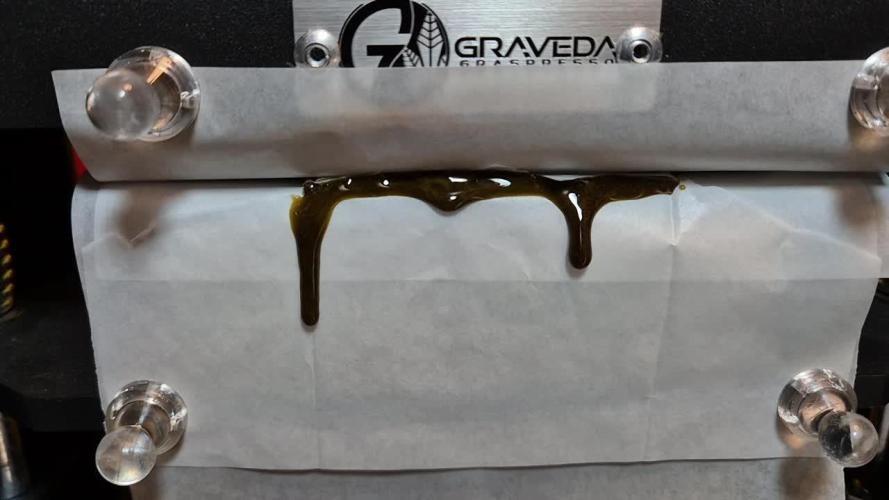
Giorno 74 E anche l'ultima pianta (Milk Monkey) è stata raccolta. Difficilmente coltivero indoor durante l'estate dato che sento di aver perso qualcosa in fatto di resina e terpeni visto le alte temperature. Questa pianta però rimane una bomba 💣!!! Lasciata appesa 7gg a 24° e 55% ur mi sono fumato i 3 grammi dei 103gr raccolti e già ora in bocca è un esplosione di sapori. Domina il cioccolato poi delle spezie e un fondo di gorilla glue#4. Tanta roba Exotic Genetics. Appena ho i soldi e trovo qualcosa di interessante è sicuro che compro ancora da voi. Aggiornerò diario con foto di fumi estrazione e dei fiori secchi. Grazie a tutti per i commenti e i like. Sono contento quando le genetiche serie vengono apprezzate ❤️😘
Likes
11
Share
1 - 2 week left before Harvest!! Smells like Grape and Blueberry if anyone's had blueberry hash they would understand what I'm smelling .Not A Huge yield but quality should be !
Likes
61
Share
@Dunk_Junk
Follow
Well she's chugging along this week. Just waiting for the trichomes to change from crystal clear.