Likes
Comments
Share
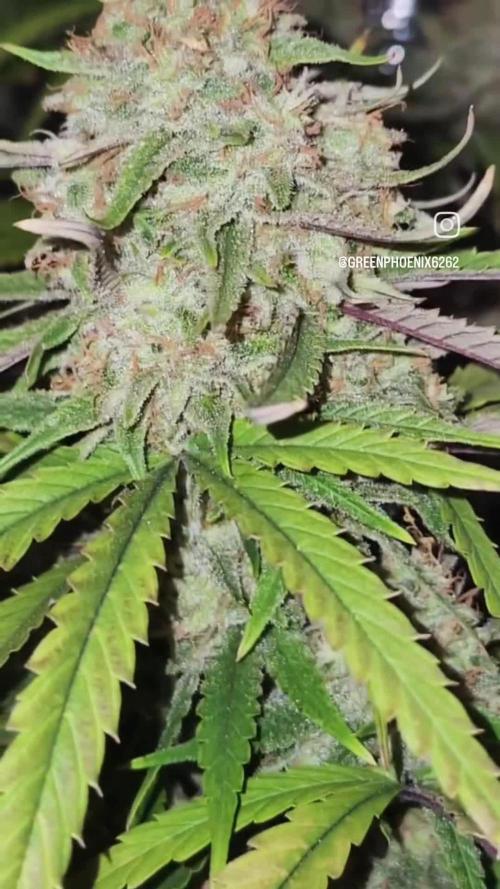
Vamos familia novena semana de floración de estás apollo black cherry de SeedStockers. Que ganas tengo de ver el progreso de esta variedad, las plantas están sanas, se ven con buen color. Ya estamos entrando en la recta final. La cantidad de agua cada 48h entre riegos. Esta semana quitamos ya los nutrientes de la gama Agrobeta. Las plantas están bastante bien subió algo la temperatura esta semana pero por el momento no les afectó, a ver si consigo bajar un poco la temperatura estas próximas semanas y acabamos todo bien.. Estas próximas semanas veremos como avanzan, terminan de engordar y madurar las flores. Mars hydro: Code discount: EL420 https://www.mars-hydro.com/ Agrobeta: https://www.agrobeta.com/agrobetatiendaonline/36-abonos-canamo Hasta aquí todo, Buenos humos 💨💨
Likes
58
Share
Das Wetter war durchgehend wechselhaft, aber nicht zu kalt. Die letzten banana konnten ausreifen, ohne zu schimmeln. Dank dem stetigen Wind auf dem balkon -->success .Die sweet zz Auto eins bis vier wachsen problemlos trotz kleinerer schädlingsprobleme, die sich aber von selbst lösten. Fette Colas bilden sie, groß wie liter flaschen.. hoffe da kommt kein budmold, wenn die dichter werden zum Ende .. Die critical nimmt das Training an und nach 3 Tagen schlecht wetter und Anpassung legt sie munter weiter los. Die special queen wurde mit l s t in die Spur gebracht und macht ihr Ding, so wie sie soll. Läuft 👍 bis nächste Woche ✌️
Likes
1
Share
@DrBud420
Follow
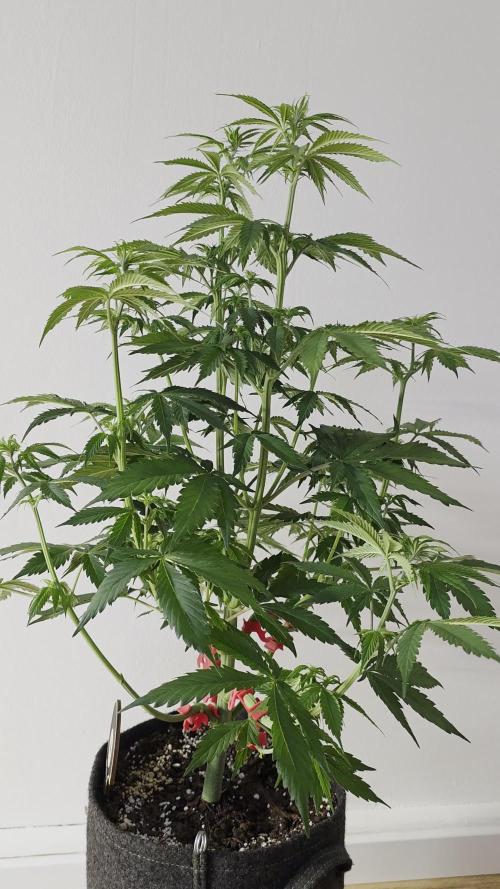
Today is the end of the fourth week for the plant. In a couple of days I will transplant it and top it off, the good weather is finally coming... The plants spent most of the day outside today, and at some moments there was a very strong wind, and I was not there, so now they are protesting a bit and probably angry that I left them..to apologize, I played them half an hour of quality reggae music, so I hope we'll be fine by tomorrow lol Stay high and keep growing my brothers ‘n’ sisters!!!
Likes
5
Share
Day 50 - Opened her up to expose lower and central flower nodes as it was DENSE in there. Removed any fan leaves that where in the way of bud sites. This should be the last LST session for this lady. Watered her with 2 litres of water with nutes listed above. Day 56 - Raised lights by about 3 inches as slight bleaching was noted on the top fan leaves.
Likes
6
Share
Noch ein bisschen dann schauen wir uns mal das ganze Mal in der Vergrößerung an👌✌️🤟🌱
Likes
15
Share
Empiezan a formarse los cogollos. Nueva oleada de resina, por lo tanto aumentaron también los aromas ya se persigue un olor claro, dulce, como a lavanda. Flores rojizas siguen apareciendo en toda la planta pero con tonos muy bajos, casi invisible a simple vista. Muy buen aroma (intensidad media) Apliqué por última ocasión preventivo de plagas, con tierra de Diatomeas.
Likes
90
Share
Aug 6th - Jack gets fed today; 3 gallons first meal w/all bloom nutes. Aug 7th - Whats happened is I have taken 2 of the smaller Colas from the back of the plant, and brought them Forward and out the front, low. They are official branches but they were really limited in that location. So down in front they, or it may even look a little lollipopped - Foliar feed tonight @ sundown - Kelp Meal worked into the Compost at the surface - Pistils are present on all branches, its Flower 🌸 time Aug 8 - 4 branches took off the last couple days, and they were levelled for the last time Aug 9 - plant looks great today, pic attached - Foliar spray tomorrow if possible. Then only 2 more next week finishes the fulvic acid / epsom salt addition through the leaves before proper flowering begins week 3 - next meal posted above; w/ Molasses (tomorrow) BUT, rain is forecast for the next 2 days, so the meal can wait. I have put some fresh compost on the base of the plant… 10th - massaging a few of the branches, and what a smell of Lemon - evening, heading right into Flower, I defoliated lower Nodes up to 29” and any obvious shadow makers - super-cropped a couple smaller branches at the half-way mark on the cage. Front & Center. Now they will participate 11th - looks strong - last 2 cups of liquid phish poop added to the compost 12th - solid rain overnite, more predicted. Looking at Sun/Mon feeding (15th/16th) - last Foliar Spray this morning b4 the heat or rain kicks in… and b4 too far into flower. Foliar spray is now done.
Likes
4
Share
@ValtripOG
Follow
Comienza la floración ya podemos ver algunos brotes
Likes
3
Share
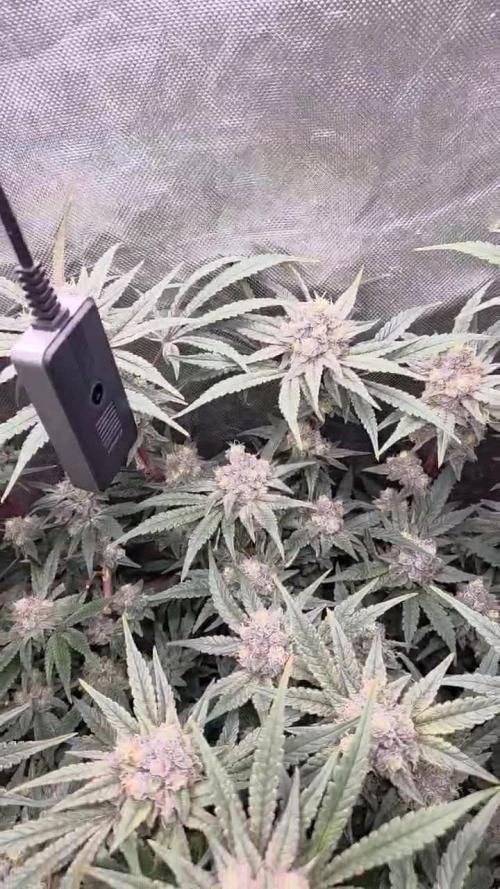
Die Pflanzen entwickeln sich gut, Buds werden dichter und zeigen erste Harzentwicklung. Stickstoffmangel erkennbar aber ich habe die Düngung leicht angepasst
Likes
25
Share
ANTHOCYANIN production is primarily controlled by the Cryptochrome (CR1) Photoreceptor ( !! UV and Blue Spectrums are primary drivers in the production of the pigment that replaces chlorophyll, isn't that awesome! 1. Diverse photoreceptors in plants Many civilizations, including the sun god of ancient Egypt, thought that the blessings of sunlight were the source of life. In fact, the survival of all life, including humans, is supported by the photosynthesis of plants that capture solar energy. Plants that perform photosynthesis have no means of transportation except for some algae. Therefore, it is necessary to monitor various changes in the external environment and respond appropriately to the place to survive. Among various environmental information, light is especially important information for plants that perform photosynthesis. In the process of evolution, plants acquired phytochrome, which mainly receives light in the red light region, and multiple blue light receptors, including his hytropin and phototropin, in order to sense the light environment. .. In addition to these, an ultraviolet light receptor named UVR8 was recently discovered. The latest image of the molecular structure and function of these various plant photoreceptors (Fig. 1), focusing on phytochrome and phototropin. Figure 1 Ultraviolet-visible absorption spectra of phytochrome, cryptochrome, phototropin, and UVR8. The dashed line represents each bioactive absorption spectrum. 2. Phytochrome; red-far red photoreversible molecular switch What is phytochrome? Phytochrome is a photochromic photoreceptor, and has two absorption types, a red light absorption type Pr (absorption maximum wavelength of about 665 nm) and a far-red light absorption type Pfr (730 nm). Reversible light conversion between the two by red light and far-red light, respectively(Fig. 1A, solid line and broken line). In general, Pfr is the active form that causes a physiological response. With some exceptions, phytochrome can be said to function as a photoreversible molecular switch. The background of the discovery is as follows. There are some types of plants that require light for germination (light seed germination). From that study, it was found that germination was induced by red light, the effect was inhibited by subsequent far-red light irradiation, and this could be repeated, and the existence of photoreceptors that reversibly photoconvert was predicted. In 1959, its existence was confirmed by the absorption spectrum measurement of the yellow sprout tissue, and it was named phytochrome. Why does the plant have a sensor to distinguish between such red light and far-red light? There is no big difference between the red and far-red light regions in the open-field spectrum of sunlight, but the proportion of red light is greatly reduced due to the absorption of chloroplasts in the shade of plants. Similar changes in light quality occur in the evening sunlight. Plants perceive this difference in light quality as the ratio of Pr and Pfr, recognize the light environment, and respond to it. Subsequent studies have revealed that it is responsible for various photomorphogenic reactions such as photoperiodic flowering induction, shade repellent, and deyellowing (greening). Furthermore, with the introduction of the model plant Arabidopsis thaliana (At) and the development of molecular biological analysis methods, research has progressed dramatically, and his five types of phytochromes (phyA-E) are present in Arabidopsis thaliana. all right. With the progress of the genome project, Fi’s tochrome-like photoreceptors were found in cyanobacteria, a photosynthetic prokaryotes other than plants. Furthermore, in non-photosynthetic bacteria, a homologue molecule called bacteriophytochrome photoreceptor (BphP) was found in Pseudomonas aeruginosa (Pa) and radiation-resistant bacteria (Deinococcus radiodurans, Dr). Domain structure of phytochrome molecule Phytochrome molecule can be roughly divided into N-terminal side and C-terminal side region. PAS (Per / Arndt / Sim: blue), GAF (cGMP phosphodiesterase / adenylyl cyclase / FhlA: green), PHY (phyto-chrome: purple) 3 in the N-terminal region of plant phytochrome (Fig. 2A) There are two domains and an N-terminal extension region (NTE: dark blue), and phytochromobilin (PΦB), which is one of the ring-opening tetrapyrroles, is thioether-bonded to the system stored in GAF as a chromophore. ing. PAS is a domain involved in the interaction between signal transduction-related proteins, and PHY is a phytochrome-specific domain. There are two PASs and her histidine kinase-related (HKR) domain (red) in the C-terminal region, but the histidine essential for kinase activity is not conserved. 3. Phototropin; photosynthetic efficiency optimized blue light receptor What is phototropin? Charles Darwin, who is famous for his theory of evolution, wrote in his book “The power of move-ment in plants” published in 1882 that plants bend toward blue light. Approximately 100 years later, the protein nph1 (nonphoto-tropic hypocotyl 1) encoded by one of the causative genes of Arabidopsis mutants causing phototropic abnormalities was identified as a blue photoreceptor. Later, another isotype npl1 was found and renamed phototropin 1 (phot1) and 2 (phot2), respectively. In addition to phototropism, phototropin is damaged by chloroplast photolocalization (chloroplasts move through the epidermal cells of the leaves and gather on the cell surface under appropriate light intensity for photosynthesis. As a photoreceptor for reactions such as escaping to the side of cells under dangerous strong light) and stomata (reactions that open stomata to optimize the uptake of carbon dioxide, which is the rate-determining process of photosynthetic reactions). It became clear that it worked. In this way, phototropin can be said to be a blue light receptor responsible for optimizing photosynthetic efficiency. Domain structure and LOV photoreaction of phototropin molecule Phototropin molecule has two photoreceptive domains (LOV1 and LOV2) called LOV (Light-Oxygen-Voltage sensing) on the N-terminal side, and serine / on the C-terminal side. It is a protein kinase that forms threonine kinase (STK) (Fig. 4Aa) and whose activity is regulated by light. LOV is one molecule as a chromophore, he binds FMN (flavin mononucleotide) non-covalently. The LOV forms an α/βfold, and the FMN is located on a β-sheet consisting of five antiparallel β-strands (Fig. 4B). The FMN in the ground state LOV shows the absorption spectrum of a typical oxidized flavin protein with a triplet oscillation structure and an absorption maximum wavelength of 450 nm, and is called D450 (Fig. 1C and Fig. 4E). After being excited to the singlet excited state by blue light, the FMN shifts to the triplet excited state (L660t *) due to intersystem crossing, and then the C4 (Fig. 4C) of the isoaroxazine ring of the FMN is conserved in the vicinity. It forms a transient accretionary prism with the tain (red part in Fig. 4B Eα) (S390I). When this cysteine is replaced with alanine (C / A substitution), the addition reaction does not occur. The effect of adduct formation propagates to the protein moiety, causing kinase activation (S390II). After that, the formed cysteine-flavin adduct spontaneously dissociates and returns to the original D450 (Fig. 4E, dark regression reaction). Phototropin kinase activity control mechanism by LOV2 Why does phototropin have two LOVs? Atphot1 was found as a protein that is rapidly autophosphorylated when irradiated with blue light. The effect of the above C / A substitution on this self-phosphorylation reaction and phototropism was investigated, and LOV2 is the main photomolecular switch in both self-phosphorylation and phototropism. It turns out that it functions as. After that, from experiments using artificial substrates, STK has a constitutive activity, LOV2 functions as an inhibitory domain of this activity, and the inhibition is eliminated by photoreaction, while LOV1 is kinase light. It was shown to modify the photosensitivity of the activation reaction. In addition to this, LOV1 was found to act as a dimerization site from the crystal structure and his SAXS. What kind of molecular mechanism does LOV2 use to photoregulate kinase activity? The following two modules play important roles in this intramolecular signal transduction. Figure 4 (A) Domain structure of LOV photoreceptors. a: Phototropin b: Neochrome c: FKF1 family protein d: Aureochrome (B) Crystal structure of auto barley phot1 LOV2. (C) Structure of FMN isoaroxazine ring. (D) Schematic diagram of the functional domain and module of Arabidopsis thaliana phot1. L, A’α, and Jα represent linker, A’α helix, and Jα helix, respectively. (E) LOV photoreaction. (F) Molecular structure model (mesh) of the LOV2-STK sample (black line) containing A’α of phot2 obtained based on SAXS under dark (top) and under bright (bottom). The yellow, red, and green space-filled models represent the crystal structures of LOV2-Jα, protein kinase A N-lobe, and C-robe, respectively, and black represents FMN. See the text for details. 1) Jα. LOV2 C of oat phot1-to α immediately after the terminus Rix (Jα) is present (Fig. 4D), which interacts with the β-sheet (Fig. 4B) that forms the FMN-bound scaffold of LOV2 in the dark, but unfolds and dissociates from the β-sheet with photoreaction. It was shown by NMR that it does. According to the crystal structure of LOV2-Jα, this Jα is located on the back surface of the β sheet and mainly has a hydrophobic interaction. The formation of S390II causes twisting of the isoaroxazine ring and protonation of N5 (Fig. 4C). As a result, the glutamine side chain present on his Iβ strand (Fig. 4B) in the β-sheet rotates to form a hydrogen bond with this protonated N5. Jα interacts with this his Iβ strand, and these changes are thought to cause the unfold-ing of Jα and dissociation from the β-sheet described above. Experiments such as amino acid substitution of Iβ strands revealed that kinases exhibit constitutive activity when this interaction is eliminated, and that Jα plays an important role in photoactivation of kinases. 2) A’α / Aβ gap. Recently, several results have been reported showing the involvement of amino acids near the A’α helix (Fig. 4D) located upstream of the N-terminal of LOV2 in kinase photoactivation. Therefore, he investigated the role of this A’α and its neighboring amino acids in kinase photoactivation, photoreaction, and Jα structural change for Atphot1. The LOV2-STK polypeptide (Fig. 4D, underlined in black) was used as a photocontrollable kinase for kinase activity analysis. As a result, it was found that the photoactivation of the kinase was abolished when amino acid substitution was introduced into the A’α / Aβ gap between A’α and Aβ of the LOV2 core. Interestingly, he had no effect on the structural changes in Jα examined on the peptide map due to the photoreaction of LOV2 or trypsin degradation. Therefore, the A’α / Aβ gap is considered to play an important role in intramolecular signal transduction after Jα. Structural changes detected by SAXS Structural changes of Jα have been detected by various biophysical methods other than NMR, but structural information on samples including up to STK is reported only by his results to his SAXS. Not. The SAXS measurement of the Atphot2 LOV2-STK polypeptide showed that the radius of inertia increased from 32.4 Å to 34.8 Å, and the molecular model (Fig. 4F) obtained by the ab initio modeling software GASBOR is that of LOV2 and STK. It was shown that the N lobes and C lobes lined up in tandem, and the relative position of LOV2 with respect to STK shifted by about 13 Å under light irradiation. The difference in the molecular model between the two is considered to reflect the structural changes that occur in the Jα and A’α / Aβ gaps mentioned above. Two phototropins with different photosensitivity In the phototropic reaction of Arabidopsis Arabidopsis, Arabidopsis responds to a very wide range of light intensities from 10–4 to 102 μmol photon / sec / m2. At that time, phot1 functions as an optical sensor in a wide range from low light to strong light, while phot2 reacts with light stronger than 1 μmol photon / sec / m2. What is the origin of these differences? As is well known, animal photoreceptors have a high photosensitivity due to the abundance of rhodopsin and the presence of biochemical amplification mechanisms. The exact abundance of phot1 and phot2 in vivo is unknown, but interesting results have been obtained in terms of amplification. The light intensity dependence of the photoactivation of the LOV2-STK polypeptide used in the above kinase analysis was investigated. It was found that phot1 was about 10 times more photosensitive than phot2. On the other hand, when the photochemical reactions of both were examined, it was found that the rate of the dark return reaction of phot1 was about 10 times slower than that of phot2. This result indicates that the longer the lifetime of S390II, which is in the kinase-activated state, the higher the photosensitivity of kinase activation. This correlation was further confirmed by extending the lifespan of her S390II with amino acid substitutions. This alone cannot explain the widespread differences in photosensitivity between phot1 and phot2, but it may explain some of them. Furthermore, it is necessary to investigate in detail protein modifications such as phosphorylation and the effects of phot interacting factors on photosensitivity. Other LOV photoreceptors Among fern plants and green algae, phytochrome ɾphotosensory module (PSM) on the N-terminal side and chimera photoreceptor with full-length phototropin on the C-terminal side, neochrome (Fig. There are types with 4Ab). It has been reported that some neochromes play a role in chloroplast photolocalization as a red light receiver. It is considered that fern plants have such a chimera photoreceptor in order to survive in a habitat such as undergrowth in a jungle where only red light reaches. In addition to this, plants have only one LOV domain, and three proteins involved in the degradation of photomorphogenesis-related proteins, FKF1 (Flavin-binding, Kelch repeat, F-box 1, ZTL (ZEITLUPE)), LKP2 ( There are LOV Kelch Protein2) (Fig. 4Ac) and aureochrome (Fig. 4Ad), which has a bZip domain on the N-terminal side of LOV and functions as a gene transcription factor. 4. Cryptochrome and UVR8 Cryptochrome is one of the blue photoreceptors and forms a superfamily with the DNA photoreceptor photolyase. It has FAD (flavin adenine dinucle-otide) as a chromophore and tetrahydrofolic acid, which is a condensing pigment. The ground state of FAD is considered to be the oxidized type, and the radical type (broken line in Fig. 1B) generated by blue light irradiation is considered to be the signaling state. The radical type also absorbs in the green to orange light region, and may widen the wavelength region of the plant morphogenesis reaction spectrum. Cryptochrome uses blue light to control physiological functions similar to phytochrome. It was identified as a photoreceptor from one of the causative genes of UVR8 Arabidopsis thaliana, and the chromophore is absorbed in the UVB region by a Trp triad consisting of three tryptophans (Fig. 1D). It is involved in the biosynthesis of flavonoids and anthocyanins that function as UV scavengers in plants. Conclusion It is thought that plants have acquired various photoreceptors necessary for their survival during a long evolutionary process. The photoreceptors that cover the existing far-red light to UVB mentioned here are considered to be some of them. More and more diverse photoreceptor genes are conserved in cyanobacteria and marine plankton. By examining these, it is thought that the understanding of plant photoreceptors will be further deepened.
Likes
6
Share
21.02.24 BT 32 Mahlzeit Buddy's 🙂 Den Lady's geht es Wunderbar Sie haben alle beide auf gehört sich zu Strecken. Jetzt geht es langsam los und die Buds Plustern sich auf. Jeden Tag bis Dienstag werden noch da und da ein paar Blätter entfernt aber ohne Sie zu stressen max 2 pro Pflanze am Tag. Es sind auch nur die Blätter die Bud's verdecken Heute gab es wieder lecker Futter 😋 Hesi Blüh Complex 5ml auf 1L Wasser , Hesi Booster 2ml auf 1L Wasser ,Hesi Phosphor + 0,4ml auf 1L Wasser und Hesi SuperVit. Alles zusammen ergab ein Super Nährstoff Trunk der Sie jetzt erst mal für 4 Tage versorgt . Skunk #1 riecht sehr stark aber das war klar und immer sehr sehr fein. Der Typische Skunk Geruch wird von einer schönen Zitronen 🍋 note abgerundet. Tangerine Sugar riecht sehr süß und fruchtig. Tricome bilden alle beide sehr gut, der Nodien Abstand der Skunk #1 ist definitiv kleiner somit gehe ich stark davon aus das sich fast ein dicker kolben zeigen wird und das an allen Haupt und Seitentriebe. Tangerine Sugar wird auch schöne Bud's zum Vorschein bringen aber halt keine durch gehende kolben 🙂 Ihre Triebe sind definitiv nicht so kräftig gewachsen wie die von der großen Schwester aber verstecken brauch Sie sich auch nicht. Mögen all eure Lady's Gesund und brächtig Wachsen und euch mit schmackhaften Stuff versorgen 😉 Danke für vorbei schauen bis zum nächsten Update✌️😊
Likes
10
Share
In the beginning, she amazed me. Currently, she is having lots of lite green leaves, and her height seems to be coming to an end. I feed her some fish fertilizer this weekend lets see how this fixes her.
Likes
16
Share
@TechDCo
Follow
10 /11 Weeks Flower¬¬ It's going to be a long flowering phase! 18/01/2024 Performed a mid-day clean using hydrogen peroxide Moved Spicy Temp to the flower tent Noted that the temperatures are a little high Searching for a new, large heatsink for the CropMaster Pro 1000 to resemble the SK600. Considering modifications to the CropMaster's heatsink as it is currently equipped with a 12-watt fan driver, PC fans, and connected to the LED mains power. It still works well, but planning to replace some LEDs once this grow is completed. Fed 200ml of organic random feed to 5 plants Discovered a sprouted seedling beneath the Forgotten Haze and relocated it to the veg tent 19/01/2024 Noted the arrival of the flowers 20/01/2024 Conducted a mid-day photoshoot Started using natural fertilizer as flowering has commenced, applied 150ml for every 5 liters of water 20-01-2024 Recorded a video of the pre-flowering stage, indicating anticipation of a substantial yield 20/01/2024 Performed defoliation before the onset of substantial flowering and cleaned up the lower growth Implemented SCROG (Screen of Green) 22/01/2024 Recorded a video of the pre-flowering stage 23/01/2024 No major changes, just observing more leaves and flowers 23/01/2024 Trimmed off the small undergrowth shoots Missed a few of the lower growth shoots 24/01/2024 Gently stretched the plant within the SCROG setup I'm aware that I need to reposition the pot more to the left to ensure the plants stretch evenly from both sides, but honestly, I'm feeling a bit lazy to do it tonight. I'll tackle it first thing in the morning, I promise! Originally, my plan was to have two plants in the set-up, but it turns out that Freaky Pablo is male. And now for a plant-related joke: Why did the Forgotten Haze Cakes go to therapy? Because she had too many hang-ups! _____________________________________ #IT WAS A RIDDLE YA DIDDLE SEE IT- "I was so stoned & baked last night and a little bit pebbled and tripped over a rake and then I finally had a ''eureka moment'' of what, ''Banana Shrimps are symbolic of! haha, my innocence is now ruined! The question I'm asking is; will I ever grow up? and leave Mushroom Town" _____________________________________. REAL CONCLUSION: The Skunk Of Trutn. Answer: Not for another 3-4 Weeks, then you get to leave Mushroom city. "But it's about Forgotten Haze Cake maturity in to woman hood begins. But she still stays in mushroom land, the land of the Forgotten, she's lost amongst the Haze and Cake strains of the cold damp soil where mushrroms grow. This is a Kind symbolic gesture reminder here, to keep the top soil clean during these colder times. We don't want mould or bud rot. Some hazes like to see 3 days of dropped temps to change her colours like a psychedelic trip during the start of maturity" "Shes always tripping over rakes, I have a little baby rake I use to freshen up her top soils" Allso she was living next door to Freaky Pablo that turned out to be male to where Bananas come from and shes the shrimp. This riddle is told by the perspective of the Plant realising she's a woman going through the stages womanhood" So, in conclusion, my fellow thinkers and growers, let's embrace the absurdity, cherish our innocence, and ponder the enigma of find a rake to trip over and lead us to that illuminating "eureka moment," no matter how stoned, baked, or pebbled we may be. Cheers to growth, both in the mind and the garden! _____________________________________ At mid-day on January 25th, 2024, I accidentally placed the light too close to the plants for a couple of hours, resulting in burnt leaves and pistils. It can't be a calcium deficiency since I have been feeding 6ml of calcium to 5 liters of water. The only difference was the proximity of the light.
Likes
35
Share
🎅 So, as for the smoke after 30 days of harvest day. Biscotti Mints have a high concentration of THC, definitely above 25%, you can feel it. Beginners should exercise caution. -The taste, I wouldn't exactly call it mint. It's similar to peppermint, but it doesn't taste like mint, it tastes like flowers. Bottom line, the taste is similar to pepper flowers. -The effect is only evening, not daytime. It will be good for an evening relaxation or in the company of friends. -The appearance is something beautiful. Everyone who saw him liked him. Dense, stone buds, green-violet color.
Likes
13
Share
@DrDuhboto
Follow
Trying to learn what plants I like to grow the most. This run is a test of each strain I ordered from seedsman. Blueberry is a clone from a seed, As I only had one of these seeds I didnt want to risk flowering it and losing a good pheno, So instead I grew that seed and cloned off of it. Maui Waui is from seed, and looks pretty wonky here, it got a bit out of hand during veg as I didn't have a screen in there. The seed has been vigourous though and I have high hopes for it being the only pure sativa in the bunch, Cheese is a clone taken from my last grow. I cloned it off the seeded plant before they went into flower. My last run with cheese went well with dense buds and good potency. Buttercream gelato is from a seed and has pretty interesting growth. It has been hard to keep nitrogen up in it and pales to lime much quicker than the other plants around it. Buttercream and Maui waui have been vegging for 2 months. Blueberry and chees have been vegging for 6 weeks
Likes
6
Share
Likes
Comments
Share
So here we go! Another start to something special and another grow off! Always fun. Anyways we have two Pablo's that both popped up through the soil and are on their way. I'm very Interested in seeing how well these genetics perform. They definitely came a long way from overseas so let's see how well the foreign competition is 😉. If their on GD I'm sure they're fire.
Likes
14
Share
1 more week ti go, smells more like earth or gasoline
Processing
Likes
Comments
Share
The wedding cake seeds have exploded in size since being potted into bigger pots and it has done nothing but helped them.
Processing
Likes
17
Share
I don't think I'm going to grow autoflowers for a while. I think I have much more control over photos and they are much more potent.
Likes
9
Share
@NanoLeaf
Follow
End of Week 9 (Second week of flower) Increased the CO2 to 1300ppm and the ladies have stopped stretching. The main top-sites are starting to form buds. I defoliated a few fan leaves again because the fan leaves are growing so fast and blocking bud sites I also gave a cup of worm castings as a top-up to each pot to give the microbes a boost and it replenishes vital minerals to the soil. Pest Report: None