




Likes
38
Share


@Silverback_Guerilla
Follow
8/31:
I fed today..8 gallons split between the 15 plants. Now that the 3 autos are out of the closet, they've all got a little more elbow room.
9/1:
Lotsa frost and aromas now..
9/4:
Fed today, rotated edge plants, plucked off some yellow and dead leaves, and sniffed them up really well..😋
I started germinating the next batch of beans today, so these bitches need to get busy...
9/6:
One of the FFT4's is starting to ripen up and show some senescence, and one of them is showing some potassium deficiency...
I'm switching over to Cha Ching and will be reducing the dosage of ONE at the next feed.
I lowered the lights to be at about 12" on the taller ones and 14" on the shorter ones shooting for maximum PAR for a few days...they'll either blow up really big or burn up really bad 😬

Likes
151
Share


@CANNASIM
Follow
------GENERAL COMMENT------
Exploding! Girls are amazing, super healthy, and growing very well.
------SM.BB COMMENT------
Less bud spots than the AK47, showing new branch attempts in the stem length. Liking a lot this strain, she is drinking around 1l everyday. Root mass is feeling very dense.

Likes
34
Share


@Herbz_Unkraut
Follow
I think the pro emit UVA do an awesome job...but i have to lower the length...some plants have a slight burn...right now they're on for 8h a day, will lower it to 6h
1 week to go
Now it's flushing time... only water till harvest


Likes
2
Share

@Vet_J
Follow
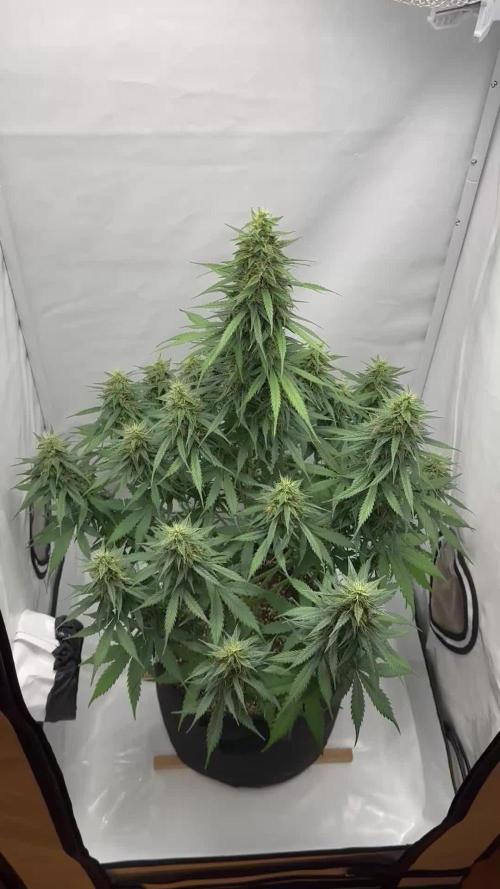
Day 75
Everything is going great again
I started looking at the trichomes under a microscope. On some buds, 90% of the trichomes are clear and 10% are milky to amber
On other buds, 80% are clear milky and 20% are milky to amber
I think I'll wait another week or so before flushing.
The soil pH has stabilized at 6.5 pH and the TDS is 1000-1100 ppm
The smell is already quite strong. If I turn off the fan for even 5 minutes, the whole house stinks
I think it would have been better to defoliate more aggressively than the last time, but it doesn't make sense now. I don't want to put too much stress on the plant so that all its energy goes into hardening and forming buds.
Let's see how it turns out.

Likes
14
Share


@Gamepichayut420
Follow
ตัดแล้ว Harvest เล่นเอาซะเหนื่อย แต่ก็มีความสุข ไม่อยากจะเชื่อว่า Aeroponics จะทรงพลังได้มากขนาดนี้ ชอบโดยรวมแล้วชอบมากๆเลย สุดยอดสุดสุด และถ้าปลูกต่อไปจะหาวิธีปลูก ป้องกันการอุดตันของหัวฉีด

Likes
11
Share


@MadeInGermany
Follow
Info:
Unfortunately, I had to find out that my account is used for fake pages in social media.
I am only active here on growdiaries.
I am not on facebook instagram twitter etc All accounts except this one are fake.
Have fun with the update.
Hey everyone :-)
quick update today.
She was further trimmed with topping.
It was poured twice with 1 l each time.
Everything was cleaned and checked.
Stay healthy 🙏🏻
You can buy this Strain at
https://www.amsterdamgenetics.com/product/kosher-tangie-kush/
Type:
Kosher Tangie Kush
☝️🏼
Genetics:
Kosher Kush
X
Tangie
👍
Vega lamp:
2 x Todogrow Led
Quantum Board 100 W
💡
Bloom Lamp :
2 x Todogrow Led
Cxb 3590 COB 3500 K 205W
💡💡☝️🏼
Soil :
Canna Coco Professional +
☝️🏼
Fertilizer:
Green House Powder Feeding
☝️🏼🌱
Water:
Osmosis water mixed with normal water (24 hours stale that the chlorine evaporates) to 0.2 EC. Add Cal / Mag to 0.4 Ec Ph with Organic Ph - to 5.5 - 5.8 .

Likes
Comments
Share


@Batista
Follow
We noticed this week that she's growing much faster and the side branches too.
See the difference between the pictures April 18th - Topping view and April 20th- Topping view, and how much the side branches had grown.
Other than that, it was a week without major events :)
Sorry again for the pictures under the grow light.

Likes
16
Share


@Alamo_Grower_210
Follow
day 70 into flower
day 87 from seed
today is the day im suppose to be harvesting, but the tricomes are not were i need to be. im giving them a couple of more days to finish off. hopefully day 73 might even go a little longer
one plant which was the runt was ready i did manage to trim and harvest i have it hanging letting dry out before i cure it in jars. nice yield on the little plant i haven't weight it yet. ive added a video time lapse of me harvesting the my one plant very dank smell to it. my fiskars got sticky. i saved all the trim for later date to make some bubble hash. right the plants are receiving water water a dose of grandmas molasses.
the plants look great cant wait to spark some up😵

Likes
6
Share

@BlaKX
Follow
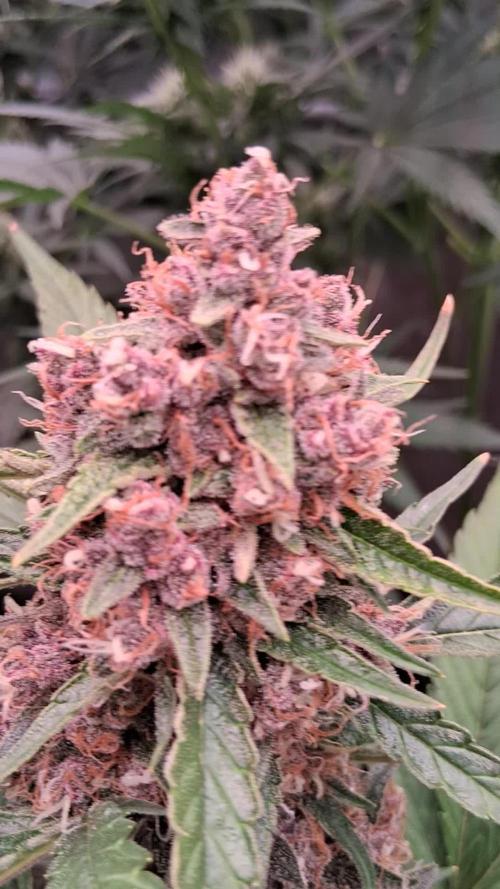
Ahoi Growmies Die Woche 7 ist vorbei und ich habe was die Trichomen Reife angeht etwas verschätzt ,
Bei den oberen Blüten fangen die ersten an Bernstein Farbe vereinzelt zu werden.
Habe die Fotos von unteren Blüten mit macro gecheckt und die man sieht die brauchen noch so 7-10 Tage bis zur Ernte !!!
Likes
16
Share


@Yoguibreeder
Follow
Al final se están recuperando de ese estiramiento en crecimiento! Espero que en 2 semanas más podamos ver ya fotos en condiciones de estas variedades de barneys

Likes
13
Share


@valiotoro
Follow
In love with the colors🤩
I have 3 different pheno
Pheno 1 : « black » big buds the smell is earthy & citrus🍋
Pheno 2 : purple the buds are looong sausage shaped the smell is sweet citrus & floral 🍭🍋
Pheno 3 : my favorite🤤long buds and the smell is tropical if you mix the Tropicana cookies & the orange sherbet from fast buds you have the smell!🌴🍊
See you in 1 month for the smoke review
Take care 😎

Likes
1
Share

@DrGL_Thumb
Follow
Dropped the 3 seeds in water bath with a little HESI rooting mix, little mycorrhizae.
On a heat mat, covered for complete darkness. 24 Hr soak -
then seeds moved into own Seed Germinator - Karl’s Bubatz Popper 😂
24 hrs after 22 degrees and 90-95% humidity seeds developed long enough roots to hit the soil. To avoid any chance of damage the cotton pads hit the soil too.


Likes
11
Share


@Skinnytalls420
Follow
Just as difficult to grow as the first time I done Afghan kush but still managed to get some nice purple bud out of it!!!


Likes
137
Share


@MrJones
Follow
🌱Slurricane #7 S1
@inhousegenetics_official
👨🌾🏽GD Grower: MrJones
🔹🔹🔹🔹🔹🔹GOALS🔹🔹🔹🔹🔹🔹
🌞Environment - 75/80℉ and 60% Humidity Good Old Mother Nature
💧 Feeding - The Green Sunshine Company - Earth Dust All-Natural Plant Nutrients
⚗️Soil - 35% ProMix MP / 25% Ocean Forest / 20% Tupur Royal Gold / 10% lobster Compost / 10% Additional Perlite
🍃Training / So this girl was 60 Inches and spread out under a 5x5 Trellis
🕷️ IPM - Will be using Green Cleaner" 1 OZ per Gallon, and CannControl from Mammoth alternating between products each month
🔹🔹🔹🔹🔹🔹🔹🔹🔹🔹🔹🔹🔹🔹🔹
📜 Rambling - Week 28, The bigger of the 2 plants is doing great, the smaller one is looking root bound, not a lot I can do for it at this stage, live and learn, next year all 50-gallon fabric pots.
🔹🔹🔹🔹🔹🔹🔹🔹🔹🔹🔹🔹🔹🔹🔹
▶️ Sunday - 08.15.21 / JJust watering daily with Dechlirnated H20 using the BOOGIE BLUE PLUS+ (High-Capacity Filter) to remove the Chlorine and Chloramine out of the water.
▶️ Monday - 08.16.21 / Just watering daily with Dechlirnated H20 using the BOOGIE BLUE PLUS+ (High-Capacity Filter) to remove the Chlorine and Chloramine out of the water.
▶️ Tuesday - 08.17.21 / Just watering daily with Dechlirnated H20 using the BOOGIE BLUE PLUS+ (High-Capacity Filter) to remove the Chlorine and Chloramine out of the water. IPM Treatment today.
▶️ Wednesday - 08.18.21/ Just watering daily with Dechlirnated H20 using the BOOGIE BLUE PLUS+ (High-Capacity Filter) to remove the Chlorine and Chloramine out of the water.
▶️ Thursday - 08.19.21 / Just watering daily with Dechlirnated H20 using the BOOGIE BLUE PLUS+ (High-Capacity Filter) to remove the Chlorine and Chloramine out of the water.
▶️ Friday - 08.20.21 / Just watering daily with Dechlirnated H20 using the BOOGIE BLUE PLUS+ (High-Capacity Filter) to remove the Chlorine and Chloramine out of the water.
▶️ Saturday - 08.21.21 / Just watering daily with Dechlirnated H20 using the BOOGIE BLUE PLUS+ (High-Capacity Filter) to remove the Chlorine and Chloramine out of the water.
🔹🔹🔹🔹🔹🔹🔹🔹🔹🔹🔹🔹🔹🔹🔹
Earth Dust - DESCRIPTION
🔹Earth Dust is our all-natural plant nutrient designed for indoor and outdoor flowering plant growers. You can grow easily by “just adding water” to your soil for the entire growth cycle. It creates a “living soil” so your plants thrive from seedling all the way through flower and harvest. Earth Dust represents an organic dry amendment method of gardening, it’s made of a natural powder of ingredients.
🔹Because you only need to water your soil with Earth Dust, you can concentrate on caring for your plants and getting a healthy crop “on autopilot”. Now you can grow without spending hours of your life mixing chemical nutrients, and you can do it naturally. What’s more, is you will enjoy the cleanest, most aromatic, and flavorful harvest you’ve ever experienced when a plant grows in a rich, organic web of living soil.
Product Highlights
🔹All-Natural Ingredients – Mostly plant-based – Safe around children and pets.
🔹Packaged in kraft paper bags that are recyclable and compostable.
🔹Easy to Use – Just mix the powder into the soil 3 separate times – then water only.
🔹Packed full of rich microbe food & contains billions of beneficial fungi and bacteria! Creates a resilient, living soil that defends against pests and diseases.
🔹Rich in trace minerals and nutrients for full plant expression. Sourced from rock dust, sea-farmed kelp, and land-grown crops.
🔹Soil Conditioners help balance pH and make nutrients more available in the soil. Achieved with ingredients like bat guano, worm castings, limestone, molasses, and humic acid.
🔹The correct balance of N-P-K nutrients for each stage of growth:
🔹Earth Dust Base (3-1-2) contains key nutrients for sustained vegetative growth. High nitrogen (N), Low Phosphorous (P), and Medium Potassium (K).
🔹Earth Dust Boost (2-3-6) contains accelerated-release nutrients for powerful flowering growth. Low nitrogen (N), Medium Phosphorous (P), and High
Potassium (K).
🔹Re-use soil harvest after harvest by simply adding more Earth Dust Base to begin again. Create your own living soil that gets better every time it’s used.
🔹Go organic, save time, and get predictable, healthy harvests.
🔹🔹🔹🔹🔹🔹🔹🔹🔹🔹🔹🔹🔹🔹🔹
Compost Tea for Vegetative Stage
Water 4 Gallons
3 Cups Composr (Your Favorite Worm)
4 TBL Molasses
4 TBL Seaweed Extract
4 TBL Fish Fertilizer
Use air Stone o the tea for 24/3 hours 70/75F, use at full strength for establishing plants and a half-strength for younger plants

Likes
14
Share

@Northern_Ent
Follow
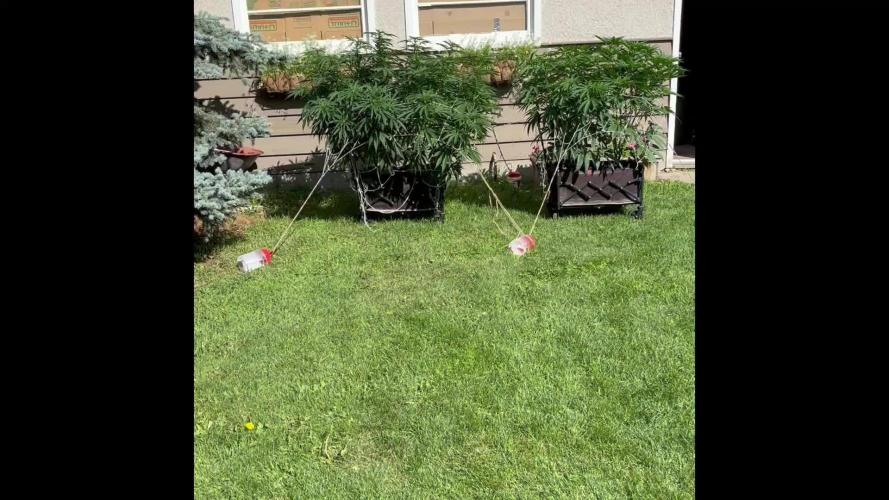
July 26: Lemon Cream Kush is doing just fine. Nicely recovered from me breaking one of the two main stems several weeks ago. I managed to tape it and she recovered quite well but it delayed things a bit and left her a bit asymmetric.
Did a fourth lazy compost tea, see video explaining how i do it without an air pump and using cheap ingredients like blackstrap molasses and Epsom salts.
July 29: defoliated lower fan leaves and small lower bud sites.
Aug 1: added another round of malted barley and Power Bloom because the cannabis plants are showing signs of P deficiency. Blue-ish leaves and reddish petioles on another plant should be fixed by the malt and Power Bloom.

Likes
2
Share

@FirstFarmer420
Follow
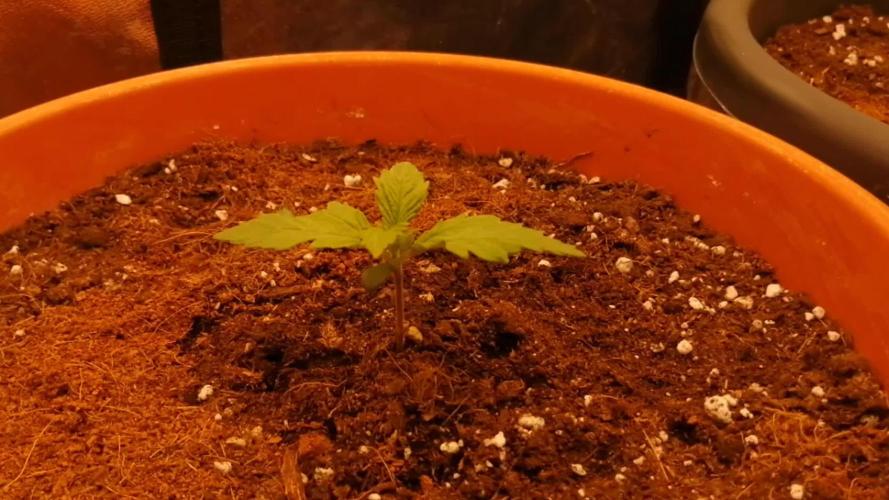
První týden vegetace je před námi. Holky rychle vykoukly nad povrch substrátu. Světlo je na 75 %. Ve výšce cca 51cm od vrcholku rostlin.
PPFD = 550
5.10.2025 - 2 dny na světě.
**Tropicana Cookies klíčí v zemi.
Doufejme, že se jejich růst synchronizuje.
Šťastný růst.


Likes
5
Share

@GorkedOut
Follow
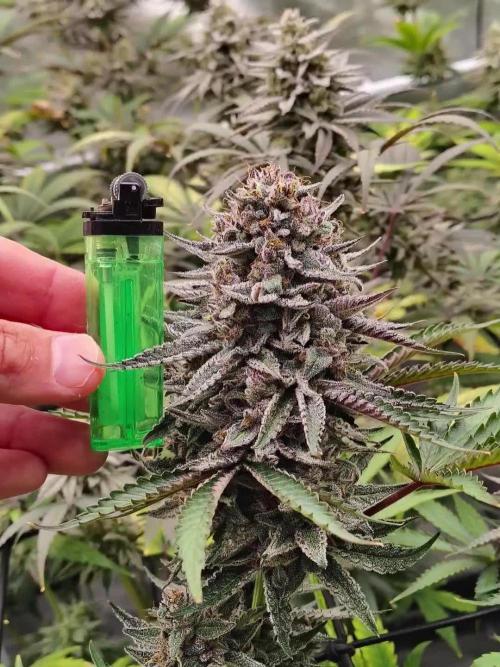
Day 91 of Life, Day 56 of Flowering. Very start of week 13. I checked the trichomes and im going to give them another week. My carbon filter is working Overtime.