


Likes
Comments
Share


@SmallCannabisDojo
Follow
Day 64: Her buds are filling out. Still no trichomes and very little smell, but she seems happy and will probably just take her time to develop her buds. Reducing the watering frequency to give her some drought stress.
Day 66: Trichome production slowly starts.

Likes
9
Share

@Fyno_TH
Follow
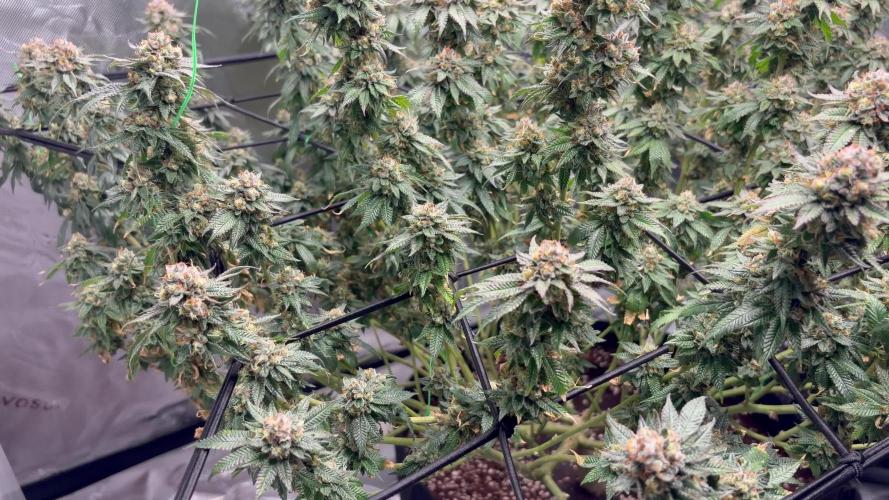
🌸 Flowering Week 8 — Mid Bloom Madness! 🔥❄️
Week 8 and she’s officially in her prime. Buds are swelling harder every day — stacking tight, pistils turning color, and the frost level just exploded this week. Trichomes are covering everything like sugar dust ❄️✨
Aroma also jumped to a new level… sweet, fruity and loud as soon as the tent unzips.
Energy is still strong, leaves healthy, and she’s cruising through mid-bloom like a champ.
counting down to the final push — next weeks should be all about density + resin 👑🌿

Likes
11
Share


@squirtle42
Follow
German:
Seit dem letzten Update ist nicht viel passiert.
Der ein oder andere Trieb ist noch ein wenig in der Höhe gewachsen.
English:
Not much has happened since the last update.
Some shoots have grown a little in height.

Likes
43
Share


@Indica_Jones
Follow
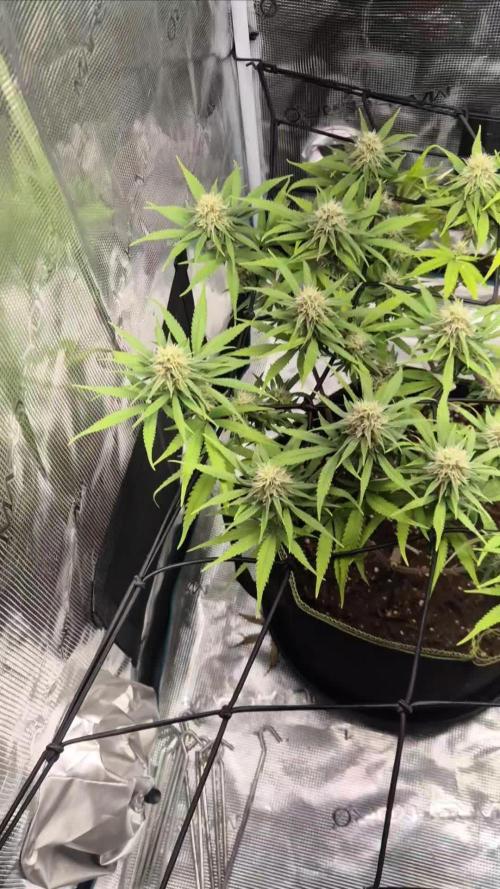
Diese Woche ist mir die Idee gekommen mein Noname Growlight einfach auf die Töpfe zu installieren dammit die unteren Buds auch Licht abbekommen. Zwei 5 Watt Ventilatoren wurden auch unterhalb der Pflanzen installiert Hunrig sind sie nach wie vor !



Likes
4
Share

@Brandenbluete
Follow
English below
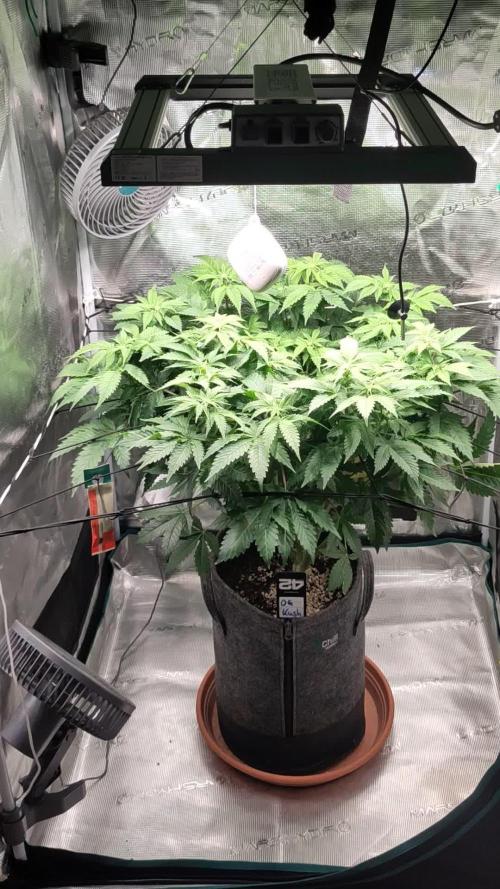
Nach einem stressigen Wochenende wollte ich eigentlich gestern noch präventiv gegen Schädlinge sprühen aber hatte Vergessen nachzukaufen also muss dass noch bis morgen warten.
Ansonsten hat sich die Pflanze größtenteils von der Unterdüngung während dem Urlaub erholt, die neuen Triebe haben wieder schön grüne Stängel. Ende der Woche steht dann auch die Entlaubung an. Ich bin gespannt wie es weiter geht.
------+
After a stressful weekend, I actually wanted to do a preventive pest spray yesterday, but I forgot to restock — so that’ll have to wait until tomorrow.
Other than that, the plant has mostly recovered from the underfeeding during my vacation. The new shoots now have nice, green stems again. Defoliation is planned for the end of the week, and I’m excited to see how things develop from here.
After a busy weekend

Likes
209
Share


@BioBuds
Follow
So this final week the buds on this Orange Hill Special are filling out. They are getting rock solid and the calyxes are doing their final swelling. Also, the trichomes have started forming and up close, they are forming a white sticky film over the whole bud. The buds feel heavy and compact, although their size could have been bigger but not complaining with this amount of bud.
I have just been feeding some perma tea and clean water since this soil is probably very high in nutes by now. I had some brown leaf points so just adjusted and all was fine. Now we go into the final one or two weeks. I did some final defoliation to expose some underside buds, they are swelling too.
Removed some sticky underside larf, kept it in a box to gradually dry for a preliminary taste test coming days.
Sunshine and me wish you a very merry Christmas (check our Christmas video) and hope we have more freedom next year instead of less and wish you all bountiful harvests!
Special thanks and well wishes to @MarsHydroLED, you gave us an excellent gift that keeps on giving, thank you!!

Likes
41
Share


@Silverback_Guerilla
Follow
2/12:
I put the fat one into the dark. The skinny one is almost dry...
2/13:
Harvested the fattie and washed her. She's hanging to dry now. The skinnier one is finally dry. I weighed and jarred her up, then I pressed about 6 grams of her larfy bud into some delicious sweet piney rosin. I actually dabbed her rosin before I even smoked her bud..a first! She weighed in at a meager 94g, but it's very dank and frosty bud. I'm sure the fattie will come close to being double that weight.


Likes
21
Share


@Lazuli
Follow
Was fun to grow and looks beautifull in any garden 💜 u can really taste the blueberry crossed in this strain
Likes
68
Share


@Roberts
Follow
Auto Northern Dragon Fuel is finishing up her bulking. Everything is looking good. She has a strong diesel smell with sour notes. Just letting her finish up. Thank you Medic Grow, and Super Sativa Seed Club. 🤜🏻🤛🏻🌱❄️🌱
Thank you grow diaries community for the 👇likes👇, follows, comments, and subscriptions on my YouTube channel👇. ❄️🌱🍻
Happy Growing 🌱🌱🌱
https://youtube.com/channel/UCAhN7yRzWLpcaRHhMIQ7X4g


Likes
27
Share


@HinduGod
Follow
ON DAY 23 REMOVED THE BOTTOM GROWTH FROM THE PLANT. DAY 26 THE PLANT RECIEVED A TOP DRESSING OF DRIED GROUND EGGSHELL,DRIED GROUND ORANGE PEEL AND BLACK GOLD! ( WORM CASTINGS ). WEATHER THIS PAST WEEK HAS BEEN MILD RANGING FROM 13-17 CELCIUS WITH 2 DAYS OF SOME RAIN. THE PLANT IS LOOKING VERY VERY STRONG AND HEALTHY!!
PLEASE COME AGAIN!!!😎
Likes
10
Share


@cjaygrows
Follow
Buds are super frosty and sticky, smell like sour dog shit I couldn't ask for anything more my best grow yet
Processing
Likes
5
Share


@Lowkey_Doc
Follow
I joined Grow diaries late in my growing career... I wish I would have found this site sooner..
Enjoy!
I personally enjoy growing mephisto genetics. I was very happy with the toof decay grow and end result. I ended up letting this cure for 2 months. It is number 2 in my book so far for my adventure with Mephisto seeds. Walter white is #1.
I grew this in colder conditions through the winter of 2019.
Super dense buds loaded trichs, very loud smell, and great appeal! I have more of these seeds so I will do a start to finish eventually.
Happy growing✌️🏽

Likes
57
Share

@Roberts
Follow
Runtz Punch is still getting slight spotting over the week. She was showing nitrogen toxicity as well. So I did a solution change. Plus my ph pen was .3 off. So she has basically had a reset button hit on nutrition. Hopefully she pulls out of it now. She got some lst and defoliation today. She should be ready to go now. Thank you Herbies seeds, Athena, and Spider Farmer.🤜🏻🤛🏻🌱🌱🌱
Thank you grow diaries community for the 👇likes👇, follows, comments, and subscriptions on my YouTube channel👇.
❄️🌱🍻 Happy Growing 🌱🌱🌱
https://youtube.com/channel/UCAhN7yRzWLpcaRHhMIQ7X4g

Likes
27
Share


@adam_pawloski87
Follow
This week went really well ! Today we are at day 79 from seed an looking beautiful! One Forbiddin Runtz got chopped an hung to dry out an the rest are still flushing out through the rest of this week! Very nice looking fades coming along on the fan leafs from purple to green , so beautiful ! So happy with these genetics from @fastbuds_genetics! Super sticky an smell is so amazing, room full of purple punch’s an Forbiddin Runtz the smell you can’t beat, so many berries!!! Well stay tuned for next week! Cheers y’all
Likes
247
Share


@PremiumBudsEU
Follow
Hey Growmies 🤟
Great news, Mars Hydro TS 1000 has arrived, a big thank you to the Mars Hydro team.💪
All seedlings look good and healthy, they grow very fast.
They got a light amount of fertilizer, Bio Grow and Rootjuice.💚
The distance between the lamp and the plants is 30 cm and I use 25% power.🔥

Likes
7
Share


@Ieiogrow94
Follow
Eccoci qui...
Ormai manca davvero poco ci siamo quasi.... Ora niente più fertilizzanti solo acqua ed attendiamo la maturazione..
Seguiranno aggiornamenti, grazie a tutti per il supporto🔥🌲❤️
Likes
101
Share


@morganfreeman420
Follow
Una cosecha linda y abundante como toda cosecha exterior las flores de muy lindo color huelen mucho y muy bien, se ve mucho tricoma y mucha resina tengo muchas ganas de probar los resultados
