
Likes
3
Share
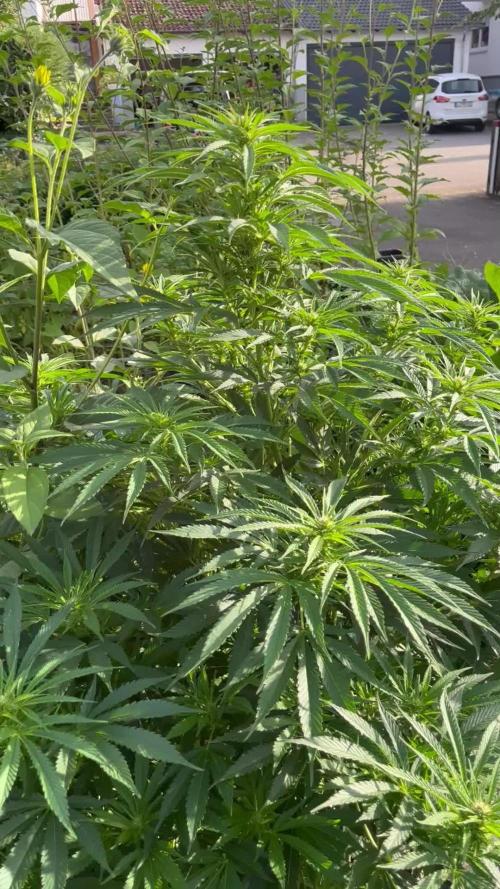
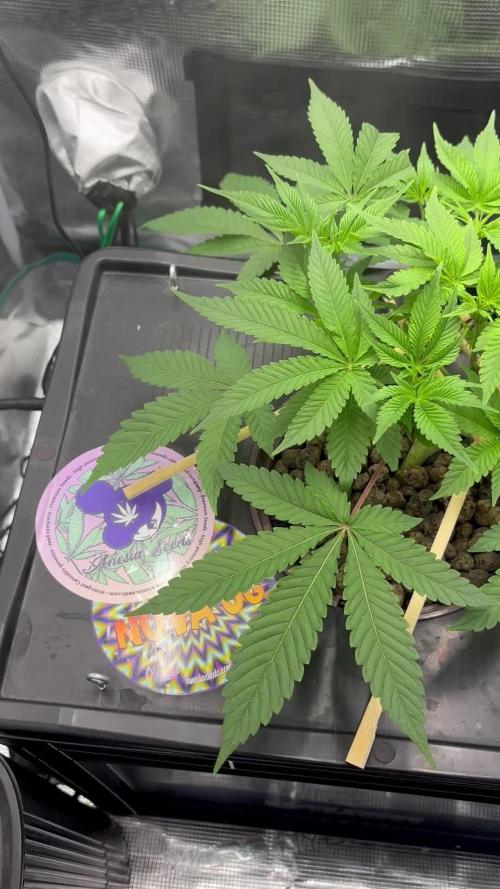
Привет садоводы и огородники !!! На этой неделе возникли проблемы с гидропоникой Из за неисправной работы PH инструмента я перелил кислоты в раствор и тем самым уронил сильно PH растение испытало сильный стресс похожий на анабиоз надеюсь отойдет . но если нет. то нет
Likes
5
Share
@Mattyice
Follow
Buds are definitely getting bigger the smell is so stab you in the nose potent it almost makes me sick up close. I really can't believe this is an autoflower that I barley trained. Definitely will be producing anywhere from 80-100g+ by the time its done I think is a good estimate. What I failed to mention in the first update is every branch has outgrown the main cola. It is buried but still growing strong apparently. It's impressive actually it grew like that without training. All those branches will be thicker than the main cola by far they already are. It's got me so excited this plant is frigging huge although short it is wide. It's so big the base of the main stem is probably the size of two fingers and it has roots growing out of all sides and a mess of roots underneath the cloth pot
Likes
97
Share
Another Fast buds Whoo Hooo im excited for this one! Germination has started ill post a update when i notice a change :D This will be the most detailed diary ever! Check out my Youtube Channel https://www.youtube.com/channel/UCZ-gBYG2-KToKkyimcKxG-g Come join our Cannabis Discord https://discord.gg/ervdsDs5 Tons of weekly prizes !
Likes
21
Share
I ended up running these plants a total of 60 days. Topped each plant 2-3 times. Once flipped to flower the plant does not stretch much. The final product is dense, sticky, frosty buds with a fruit punch and piney gas aroma. Yield for this pheno is above average, but I highly recommend trying to get a top in every trellis hole to get maximum yield. Overall I pulled a little over 3lbs off of 16 plants. Notes: Room size: I'm not sure what to put as grow room size below... room was 8x8x6.7 Gram per watt: Gram per watt per plant doesn't seem to be the best measure in my opinion as it would encourage you to grow fewer plants with longer veg times to get the same yield. Unless I'm missing something? The actual power draw from the wall for each light is = 355watts per 315 LEC x 4 = 1420 watts in Flower. The yield was 1380 grams which makes the total Gram/Watt ration = 0.9718 ***Sorry for the shitty pics... my phone camera is still shit right now and these are all the pics I could get at the moment.
Likes
35
Share
🍼Greenhouse Feeding BioGrow & Bio Bloom ⛺️MARSHYDRO The ⛺️ has a small door 🚪 on the sides which is useful for mid section groom room work. 🤩 ☀️ by VIPARSPECTRA (models: P2000 & XS 2000)
Likes
20
Share
@DanM1727
Follow
Plant is coming along nicely. Getting some amber trichromes but likely a week to go. The video includes the Pineapple Express and White Crystal... apologies for the video quality, I just got the magnifier.
Likes
63
Share
Holy Chunkers! I know I had been noticing some nice phat buds forming but DAMN! I had to get in there and throw another pack of bamboo supports in b/c the nugs are soooo damn heavy! It was much needed too and the canopy looks much better for it, there was some droopy shit up in there! I see some spots that i should definilty defoliate a bit but i'm sorta just letting the girls ride it out! Always shooting for about 12 weeks and for most of the plants i think that is about on schedule!
Likes
5
Share
Amazing citric terps. Very very lemony and gassy, can't even believe it didn't expect that type of smell at all I thought she was gonna be very sweet, the aroma is so powerful but she smells very citric and gassy, can't wait to try her smoke ❄️🤤 let's see how she performs at the end! Let's keep on working. 💚👨‍🌾🌱❤️💛
Likes
14
Share
Aug 9: Now done three weeks of flowering for Tropicana Cookies EV. She is the youngest plant but also the tallest and looking quite happy. Got the UV led lights from AC Infinity going for the first time. Used these last year and they seem to work. UV lights stimulates trichome production and makes up for weak sunlight this far north. Aug 12: has stretched again but the bud sites are filling nicely. Pistils have started to turn pink. This plant is looking very happy and will likely be a big producer. Added another top dressing of malted barley and Power Bloom. It has been about two weeks at least since the last round, and this will be the final round. Stopped using molasses about two weeks ago. Great for growing but I don’t want to be smoking sugar. Use during veg stage but only 2-3 weeks into flowering.
Likes
47
Share
2nd net is up. Early bud formations are promising. holding up to the extremes pretty well, some leaves taking minor damage, but overall, she is holding up, gave her 1 night at 50F see how she would react, stressful. Not advised as it messes with her metabolism, but I want to see if it triggers any anthocyanin response. Love to see her purp up but no signs yet. Remember, For every molecule of glucose produced during photosynthesis, a plant needs to split six molecules of water. This process provides the hydrogen needed for synthesizing glucose and other organic compounds, while oxygen is released as a byproduct. Homework. If Rubisco activity is impaired and it cannot properly function or regenerate its substrate, the plant's leaves are likely to turn a pale green or lime green, a condition known as chlorosis. Essentially, Rubisco activity is highly regulated and susceptible to various environmental and metabolic factors that can cause it to become inhibited, leading to an apparent failure in RuBP regeneration due to a lack of consumption. Rubisco regeneration is intrinsically linked to nitrogen supply because Rubisco is a major sink for nitrogen in plants, typically accounting for 15% to over 25% of total leaf nitrogen. The regeneration phase itself consumes nitrogen through the synthesis of the Rubisco enzyme and associated proteins (like Rubisco activase), and overall nitrogen status heavily influences the efficiency of RuBP regeneration. RuBisCO is a very large enzyme that constitutes a significant proportion (up to 50%) of leaf soluble protein and requires large investments in nitrogen. Insufficient nitrogen supply limits the plant's ability to produce adequate amounts of RuBisCO, thereby limiting the overall capacity for photosynthesis and carbon fixation. Maintaining the optimal, slightly alkaline pH is crucial for the proper function and regeneration of Rubisco. Deviations in either direction (too high or too low) disrupt the enzyme's structure, activation state, and interaction with its substrates, leading to decreased activity and impaired RuBP regeneration. (Lime/yellowing) Structural Component: Nitrogen is an essential building block for all proteins, and the sheer abundance of the Rubisco protein makes it the single largest storage of nitrogen in the leaf. Synthesis and Activity: Adequate nitrogen supply is crucial for the synthesis and maintenance of sufficient Rubisco enzyme and Rubisco activase (Rca), the regulatory protein responsible for maintaining Rubisco's active state. Nitrogen deficiency leads to a decrease in the content and activity of both Rubisco and Rca, which in turn limits the maximum carboxylation rate, Vmax, and the rate of RuBP regeneration Jmax, thus reducing overall photosynthetic capacity. Nitrogen Storage and Remobilization: Rubisco can act as a temporary nitrogen storage protein, which is degraded to remobilize nitrogen to other growing parts of the plant, especially under conditions of nitrogen deficiency or senescence. Nitrogen Use Efficiency (NUE): The allocation of nitrogen to Rubisco is a key determinant of a plant's photosynthetic nitrogen use efficiency (PNUE). In high-nitrogen conditions, plants may accumulate a surplus of Rubisco, which may not be fully activated, leading to a lower PNUE. Optimizing the amount and activity of Rubisco relative to nitrogen availability is a target for improving crop NUE. Photorespiration and Nitrogen Metabolism: Nitrogen metabolism is also linked to the photorespiration pathway (which competes with carboxylation at the Rubisco active site), particularly in the reassimilation of ammonia released during the process. To increase RuBisCO regeneration, which refers to the process of forming the CO2 acceptor molecule Ribulose-1,5-bisphosphate (RuBP) during photosynthesis, the primary methods involve optimizing the levels and activity of Rubisco activase (Rca) and enhancing the performance of other Calvin-Benson-Bassham (CBB) cycle enzymes. Biochemical and Environmental Approaches: Optimize Rubisco Activase (Rca) activity: Rca is a crucial chaperone protein that removes inhibitory sugar phosphates, such as CA1P (2-carboxy-D-arabinitol 1-phosphate), from the Rubisco active site, thus maintaining its catalytic competence. •Ensure optimal light conditions: Rca is light-activated via the chloroplast's redox status. Adequate light intensity ensures Rca can effectively maintain Rubisco in its active, carbamylated state. •Maintain optimal temperature: Rca is highly temperature-sensitive and can become unstable at moderately high temperatures (e.g., above 35°C/95F° in many C3 plants), which decreases its ability to activate Rubisco. Maintaining temperatures within the optimal range for a specific plant species is important. •Optimize Mg2+ concentration: Mg2+ is a key cofactor for both Rubisco carbamylation and Rca activity. In the light, Mg2+ concentration in the chloroplast stroma increases, promoting activation. •Manage ATP/ADP ratio: Rca activity depends on ATP hydrolysis and is inhibited by ADP. Conditions that maintain a high ATP/ADP ratio in the chloroplast stroma favor Rca activity. Enhance Calvin-Benson-Bassham (CBB) cycle enzyme activity: The overall rate of RuBP regeneration can be limited by other enzymes in the cycle. •Increase SBPase activity: Sedoheptulose-1,7-bisphosphatase (SBPase) is a key regulatory enzyme in the regeneration pathway, and increasing its activity can enhance RuBP regeneration and overall photosynthesis. •Optimize other enzymes: Overexpression of other CBB cycle enzymes such as fructose-1,6-bisphosphate aldolase (FBA) and triose phosphate isomerase (TPI) can also help to balance the metabolic flux and improve RuBP regeneration capacity. Magnesium ions, Mg2+, are specifically required for Rubisco activation because the cation plays a critical structural and chemical role in forming the active site: A specific lysine residue in the active site must be carbamylated by a CO2 molecule to activate the enzyme. The resulting negatively charged carbamyl group then facilitates the binding of the positively charged Mg2+ion. While other divalent metal ions like Mn2+ can bind to Rubisco, they alter the enzyme's substrate specificity and lead to dramatically lower activity or a higher rate of the non-productive oxygenation reaction compared to Mg2+, making them biologically unfavorable in the context of efficient carbon fixation. The concentration of Mg2+ in the chloroplast stroma naturally increases in the light due to ion potential balancing during ATP synthesis, providing a physiological mechanism to ensure the enzyme is activated when photosynthesis is possible. At the center of the porphyrin ring, nestled within its nitrogen atoms, is a Magnesium ion (Mg2+). This magnesium ion is crucial for the function of chlorophyll, and without it, the pigment cannot effectively capture and transfer light energy. Mg acts as a cofactor: Mg2+ binds to Rubisco after an activator CO2 molecule, forming a catalytically competent complex (Enzyme-CO2-Mg2+). High light + CO2) increases demand: Under high light (60 DLI is a very high intensity, potentially saturating) and high CO2, the plant's capacity for photosynthesis is high, and thus the demand for activated Rubisco and the necessary Mg2+ cofactor increases. Mg deficiency becomes limiting: If Mg2+ is deficient under these conditions, the higher levels of Rubisco and Rubisco activase produced cannot be fully activated, leading to lower photosynthetic rates and potential photo-oxidative damage. Optimal range: Studies show that adequate Mg2+ application can enhance Rubisco activation and stabilize net photosynthetic rates under stress conditions, but the required concentration is specific to the experimental setup. Monitoring is key: The most effective approach in a controlled environment is to monitor the plant's physiological responses e.g., leaf Mg2+ concentration, photosynthetic rate, Rubisco activation state, and adjust the nutrient solution/fertilizer to maintain adequate levels, rather than supplementing a fixed "extra" amount. In practice, this means ensuring that Mg2+ is not a limiting factor in the plant's standard nutrient solution when pushing the limits with high light and CO2. Applying Mg2+ through foliar spray is beneficial to Rubisco regeneration, particularly in alleviating the negative effects of magnesium (Mg) deficiency and high-temperature stress (HTS). While Mg can be leached from soil, within the plant it is considered a mobile nutrient, particularly in the phloem. Foliar-applied Mg is quickly absorbed by the leaves and can be translocate to other plant parts, including new growth and sink organs. Foliar application of: NATURES VERY OWN MgSO4 @ 15.0g L-1 in a spray bottle. For those high-intensity workouts when 1 meal a day is just not enough! Foliar sprays are often recommended as a rapid rescue measure for existing deficiencies or as a supplement during critical growth stages, when demand for Mg is high. Application in the early morning or late evening can improve absorption and prevent leaf burn. The plant was getting a little limey yellow in the centre. Shortly thereafter, she was back in business, green mostly regenerated. The starting point [of creativity] is curiosity: pondering why the default exists in the first place. We’re driven to question defaults when we experience vuja de, the opposite of déjà vu. Déjà vu occurs when we encounter something new, but it feels as if we’ve seen it before. Vuja de is the reverse—we face something familiar, but we see it with a fresh perspective that enables us to gain new insights into old problems. Confidence is evidence... nothing more. You are confident because you have driven 10,000 times, you are confident because you have spoken 10,000 times. People think confidence is a feeling, but it's not. If you want more confidence, then you need to create evidence, take more shots, collect more data, build more experiences, take more risks; fail, confidence doesn't come first; it is the reward you get for doing the work. no one else wants to do.
Likes
17
Share
@Lazuli
Follow
August 1: These clones are now next to the motherplant and august 3 will be the start of flowering when the light goes off. The nutrients are now just calmag, micro and bloom at 500ppm untill they hit week 3 flower August 10th: the clones are now at day 7 flower and they just got trimmed (lower branches and biggest leaf on top of the plants) i dont go too agressive on defoliation with this strain, on the last short video of this week u can see what i cut off at this stage, this was done at day 7 flower
Likes
6
Share
@Growin_it
Follow
Needed to defoliate to create airflow and start shaping the ladies. Stretching out the lower colas across the base. Fimmed the ends of the longer stems to get a split going for more colas. Recharge added to feed after stripping 30%+ of the lower canopy. Will turn to flower in a week or too. Notes: slow growth due to the lower heat in the tent. Okay with that because the Lecky bills have been huge with all the price gouging going on.
Likes
6
Share
@ZeroKnown
Follow
i noticed some good signs of flowering so i started feed her with bio bloom and top max
Likes
10
Share
Let me know what y’all think I went all out on the training and defoliation 🤟🏻Started adding some molasses into the water schedule there’s a couple that are stunned for sure already budding. Just trying to learn as much as possible thanks gromies! Ps Excuse my long toes🤣
Likes
16
Share
Fat girl 💙 i used "Flower Fuel" nutrient 3 times Throughout lifetimes
Likes
9
Share
This was my first grow and I did a bunch of research but I mostly figured it out as I went and I really enjoyed this strain. It was very resistant and took about 90-92 days from germination to harvest. The strain seemed to bounce back extremely well even after a heavy trimming. Did not really run into any health issues with the strain other than what I diagnosed as Leaf Septoria which is caused from to much humidity and not enough circulation. But overall will grow again and was very accurately advertised by Canuk Seeds. Ended up with 256grams from this grow which I was pleasantly surprised with. Saved all the shake and made Cannabutter and Bubble Hash. Both turned out okay but with room for improvement in the future.