





@Jschnabs
Volgen
This strain is amazing. Super frosty and the buds are rock hard. I suggest wait an extra week at the end of flower before harvest. The buds really pack on new large calyx the last week. The First smaller one yielded 3.68 oz including all the sugar leaf trim shown in the sticky note Pic. Second larger pot yielded.....
I learned a lesson to use a bigger container for future grows. My smaller plant was small due to the 3gal container. My larger plant was in a 5gal and grew much better. My buds are much larger on the bigger container. I will be using minimum 7gal from now on. Smaller plant I harvested 2 weeks earlier and had 3.68oz dry. Larger plant 2 has wet weight of 630g.
I pulled clones from the larger one before flower to test pure organic nutrients and soil I'm am building against advanced nutrients and happy frog soil. New diary to come in the future with the comparison.


@Ultraviolet
Volgen
Lacewings seemed to have mostly killed themselves by flying into hot light fixtures. I may have left the UV on which was smart of me :) Done very little to combat if anything but make a sea of carcasses, on the bright side its good nutrition for the soil.
Made a concoction of ethanol 70%, equal parts water, and cayenne pepper with a couple of squirts of dish soap.
Took around an hour of good scrubbing the entire canopy.
Worked a lot more effectively and way cheaper.
Scorched earth right now, but it seems to have wiped them out almost entirely very pleased.
Attempted a "Fudge I Missed" for the topping. So just time to wait and see how it goes.
Question?
If I attached a plant to two separate pots but it was connected by rootzone, one has a pH of 7.5 ish the other has 4.5. Would the Intelligence of the plant able to dictate each pot separately to uptake the nutrients best suited to pH or would it still try to draw nitrogen from a pot with a pH where nitrogen struggles to uptake?
Food for stoner thought experiments!
Another was on my mind.
What happens when a plant gets too much light?
Well, it burns and curls up leaves.
That's the heat radiation, let's remove excess heat, now what?
I've always read it's just bad, or not good, but when I look for an explanation on a deeper level it's just bad and you shouldn't do it.
So I did.
How much can a cannabis plant absorb, 40 moles in a day, ok I'll give it 60 moles. 80 nothing bad ever happened.
The answer, finally. Oh great........more questions........
Reactive oxygen species (ROS) are molecules capable of independent existence, containing at least one oxygen atom and one or more unpaired electrons.
"Sunlight is the essential source of energy for most photosynthetic organisms, yet sunlight in excess of the organism’s photosynthetic capacity can generate reactive oxygen species (ROS) that lead to cellular damage. To avoid damage, plants respond to high light (HL) by activating photophysical pathways that safely convert excess energy to heat, which is known as nonphotochemical quenching (NPQ) (Rochaix, 2014). While NPQ allows for healthy growth, it also limits the overall photosynthetic efficiency under many conditions. If NPQ were optimized for biomass, yields would improve dramatically, potentially by up to 30% (Kromdijk et al., 2016; Zhu et al., 2010). However, critical information to guide optimization is still lacking, including the molecular origin of NPQ and the mechanism of regulation."
What I found most interesting was research pointing out that pH is linked to this defense mechanism. The organism can better facilitate "quenching" when oversaturated with light in a low pH. Now I Know during photosynthesis plants naturally produce exudates (chemicals that are secreted through their roots). Do they have the ability to alter pH themselves using these excretions? Or is that done by the beneficial bacteria?
If I can prevent reactive oxygen species from causing damage by "too much light".
The extra water needed to keep this level of burn cooled though, I must learn to crawl before I can run.
Reactive oxygen species (ROS) are key signaling molecules that enable cells to rapidly respond to different stimuli. In plants, ROS plays a crucial role in abiotic and biotic stress sensing, integration of different environmental signals, and activation of stress-response networks, thus contributing to the establishment of defense mechanisms and plant resilience. Recent advances in the study of ROS signaling in plants include the identification of ROS receptors and key regulatory hubs that connect ROS signaling with other important stress-response signal transduction pathways and hormones, as well as new roles for ROS in organelle-to-organelle and cell-to-cell signaling. Our understanding of how ROS are regulated in cells by balancing production, scavenging, and transport has also increased. In this Review, we discuss these promising developments and how they might be used to increase plant resilience to environmental stress.
Temperature stress is one of the major abiotic stresses that adversely affect agricultural productivity worldwide. Temperatures beyond a plant's physiological optimum can trigger significant physiological and biochemical perturbations, reducing plant growth and tolerance to stress. Improving a plant's tolerance to these temperature fluctuations requires a deep understanding of its responses to environmental change. To adapt to temperature fluctuations, plants tailor their acclimatory signal transduction events, specifically, cellular redox state, that are governed by plant hormones, reactive oxygen species (ROS) regulatory systems, and other molecular components. The role of ROS in plants as important signaling molecules during stress acclimation has recently been established. Here, hormone-triggered ROS produced by NADPH oxidases, feedback regulation, and integrated signaling events during temperature stress activate stress-response pathways and induce acclimation or defense mechanisms. At the other extreme, excess ROS accumulation, following temperature-induced oxidative stress, can have negative consequences on plant growth and stress acclimation. The excessive ROS is regulated by the ROS scavenging system, which subsequently promotes plant tolerance. All these signaling events, including crosstalk between hormones and ROS, modify the plant's transcriptomic, metabolomic, and biochemical states and promote plant acclimation, tolerance, and survival. Here, we provide a comprehensive review of the ROS, hormones, and their joint role in shaping a plant's responses to high and low temperatures, and we conclude by outlining hormone/ROS-regulated plant-responsive strategies for developing stress-tolerant crops to combat temperature changes.
Onward upward for now.
Next!
Adenosine triphosphate
(ATP) is an energy-carrying molecule known as "the energy currency of life" or "the fuel of life," because it's the universal energy source for all living cells.1
Every living organism consists of cells that rely on ATP for their energy needs. ATP is made by converting the food we eat into energy. It's an essential building block for all life forms. Without ATP, cells wouldn't have the fuel or power to perform functions necessary to stay alive, and they would eventually die. All forms of life rely on ATP to do the things they must do to survive.2
ATP is made of a nitrogen base (adenine) and a sugar molecule (ribose), which create adenosine, plus three phosphate molecules. If adenosine only has one phosphate molecule, it’s called adenosine monophosphate (AMP). If it has two phosphates, it’s called adenosine diphosphate (ADP).
Although adenosine is a fundamental part of ATP, when it comes to providing energy to a cell and fueling cellular processes, the phosphate molecules are what really matter. The most energy-loaded composition for adenosine is ATP, which has three phosphates.3
ATP was first discovered in the 1920s. In 1929, Karl Lohmann—a German chemist studying muscle contractions—isolated what we now call adenosine triphosphate in a laboratory. At the time, Lohmann called ATP by a different name. It wasn't until a decade later, in 1939, that Nobel Prize–-winner Fritz Lipmann established that ATP is the universal carrier of energy in all living cells and coined the term "energy-rich phosphate bonds."45
Lipmann focused on phosphate bonds as the key to ATP being the universal energy source for all living cells, because adenosine triphosphate releases energy when one of its three phosphate bonds breaks off to form ADP. ATP is a high-energy molecule with three phosphate bonds; ADP is low-energy with only two phosphate bonds.
The Twos and Threes of ATP and ADP
Adenosine triphosphate (ATP) becomes adenosine diphosphate (ADP) when one of its three phosphate molecules breaks free and releases energy (“tri” means “three,” while “di” means “two”). Conversely, ADP becomes ATP when a phosphate molecule is added. As part of an ongoing energy cycle, ADP is constantly recycled back into ATP.3
Much like a rechargeable battery with a fluctuating state of charge, ATP represents a fully charged battery, and ADP represents a "low-power mode." Every time a fully charged ATP molecule loses a phosphate bond, it becomes ADP; energy is released via the process of ATP becoming ADP.
On the flip side, when a phosphate bond is added, ADP becomes ATP. When ADP becomes ATP, what was previously a low-charged energy adenosine molecule (ADP) becomes fully charged ATP. This energy-creation and energy-depletion cycle happens time and time again, much like your smartphone battery can be recharged countless times during its lifespan.
The human body uses molecules held in the fats, proteins, and carbohydrates we eat or drink as sources of energy to make ATP. This happens through a process called hydrolysis
.
After food is digested, it's synthesized into glucose, which is a form of sugar. Glucose is the main source of fuel that our cells' mitochondria
use to convert caloric energy from food into ATP, which is an energy form that can be used by cells.
ATP is made via a process called cellular respiration that occurs in the mitochondria of a cell. Mitochondria are tiny subunits within a cell that specialize in extracting energy from the foods we eat and converting it into ATP.
Mitochondria can convert glucose into ATP via two different types of cellular respiration:
Aerobic (with oxygen)
Anaerobic (without oxygen)
Aerobic cellular respiration transforms glucose into ATP in a three-step process, as follows:
Step 1: Glycolysis
Step 2: The Krebs cycle (also called the citric acid cycle)
Step 3: Electron transport chain
During glycolysis, glucose (i.e., sugar) from food sources is broken down into pyruvate
molecules. This is followed by the Krebs cycle, which is an aerobic process that uses oxygen to finish breaking down sugar and harnesses energy into electron carriers that fuel the synthesis of ATP. Lastly, the electron transport chain (ETC) pumps positively charged protons that drive ATP production throughout the mitochondria’s inner membrane.2
ATP can also be produced without oxygen (i.e., anaerobic), which is something plants, algae, and some bacteria do by converting the energy held in sunlight into energy that can be used by a cell via photosynthesis.
Anaerobic exercise means that your body is working out "without oxygen." Anaerobic glycolysis occurs in human cells when there isn't enough oxygen available during an anaerobic workout. If no oxygen is present during cellular respiration, pyruvate can't enter the Krebs cycle and is oxidized into lactic acid. In the absence of oxygen, lactic acid fermentation makes ATP anaerobically.
The burning sensation you feel in your muscles when you're huffing and puffing during anaerobic high-intensity interval training (HIIT) that maxes out your aerobic capacity or during a strenuous weight-lifting workout is lactic acid, which is used to make ATP via anaerobic glycolysis.
During aerobic exercise, mitochondria have enough oxygen to make ATP aerobically. However, when you're out of breath and your cells don’t have enough oxygen to perform cellular respiration aerobically, the process can still happen anaerobically, but it creates a temporary burning sensation in your skeletal muscles.
Why ATP Is So Important?
ATP is essential for life and makes it possible for us to do the things we do. Without ATP, cells wouldn't be able to use the energy held in food to fuel cellular processes, and an organism couldn't stay alive.
As a real-world example, when a car runs out of gas and is parked on the side of the road, the only thing that will make the car drivable again is putting some gasoline back in the tank. For all living cells, ATP is like the gas in a car's fuel tank. Without ATP, cells wouldn't have a source of usable energy, and the organism would die.
Eating a well-balanced diet and staying hydrated should give your body all the resources it needs to produce plenty of ATP. Although some athletes may slightly improve their performance by taking supplements or ergonomic aids designed to increase ATP production, it's debatable that oral adenosine triphosphate supplementation actually increases energy.
An average cell in the human body uses about 10 million ATP molecules per second and can recycle all of its ATP in less than a minute. Over 24 hours, the human body turns over its weight in ATP.
You can last weeks without food.
You can last days without water.
You can last minutes without oxygen.
You can last 16 seconds at most without ATP.
Food amounts to one-third of ATP production within the human body.


@TheCannaProphet
Volgen
~ GG4 SHERBET FAST FLOWER by FastBuds ~
Well fam, here we go again with another epic strain from FastBuds Fast Flowering stable. After having such tremendous success growing their Gorilla Cookies Fast Flower outdoors last year, I've decided to run another of their fast flowering strains outdoors this year... GG4 Sherbet Fast Flower!
The best description of this awesome cultivar comes directly from my friends at FastBuds which is as follows:
"Bred from extremely potent and flavorful Gorilla Glue and Orange Sherbet genetics, GG4 Sherbet FF (Fast-Flowering) takes all the best traits to the next level, offering a high-yielding strain that can produce up to 600 g/m2 in a 7-week flowering time. This super resilient Indica-leaning hybrid thrives indoors and outdoors, and in all types of climates while producing mouth-watering sweet, fruity, spicy and earthy terps that translate into a delicious sugary hazelnut aroma. Expect an extremely relaxing and overall happy effect that’ll leave you with a huge smile from ear to ear. It’s the perfect strain for growers of all levels of experience seeking low-maintenance yet highly productive photoperiod varieties that deliver quality and quantity without extra effort.
GG4 Sherbet FF grows chunky buds with long dark orange hairs and spade-shaped calyxes that get encrusted with trichomes by harvest time, giving them a gorgeous silvery-white appearance. This medium-sized photoperiod can reach up to 200 cm in height and yields up to 650 g/m2 while developing that typical hybrid structure. GG4 Sherbet FF grows with a stocky, bushy appearance, developing one sturdy main cola and fat side branches that support huge yields without much effort. This super-fast variety produces distinctive light-green buds with a high bud-to-leaf ratio, making your trimming sessions a breeze. It’s a top-notch resin producer that doesn’t need much maintenance and will thrive in almost every climate, rewarding growers of all levels with extremely flavorful resin that makes for outstanding hash end extracts."
________________________________________________________________________________________________________________________________________________________________________________________________________________________________________________________________________________________________________________________
The Setup:
This is going to be an outdoor grow, but I have started the GG4 Sherbet Fast Flower indoors as our weather is still too cold to put her outside (nighttime temp's dipping regularly into the 30's℉).
The plan is simple... let her grow inside under a 19/5 light schedule until the nighttime temperatures stay above the mid 40's℉, at which point she'll be moved outside and transplanted into the soil which I have already setup and inoculated with beneficial microbes, and then let the fun begin!🤪💚
________________________________________________________________________________________________________________________________________________________________________________________________________________________________________________________________________________________________________________________
Weekly Updates:
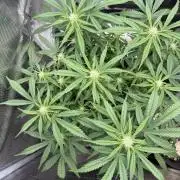
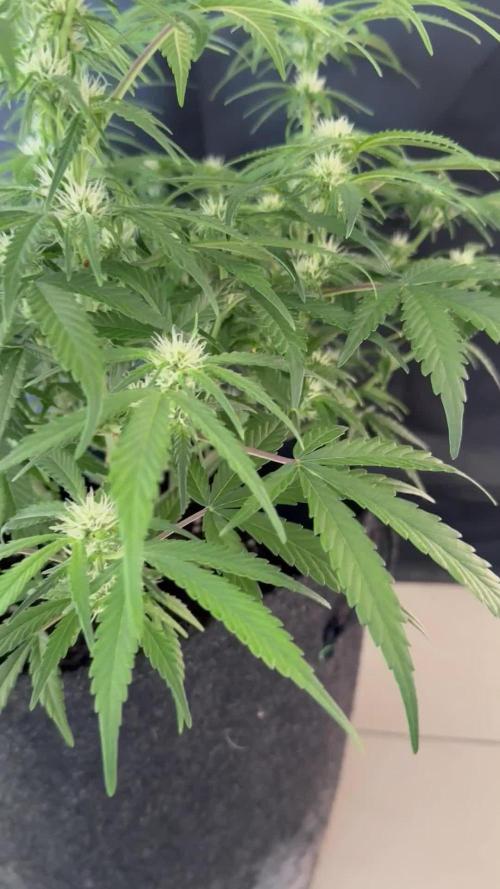
9/12- Here we GO fam! The time is drawing near for the FastBuds GG4 Sherbet Fast Flower to finally be harvested and I won't lie, I am thankful that she's just about finished as our weather has turned cool and wet, which is a HUGE no bueno for big dense cannabis flowers which are prone to Boytris(bud rot).
9/14- Today I took some final pic's and a video of the FastBuds GG4 Sherbet Fast Flower in preperation of the harvest. I also defoliated her, removing a ton of shade leaves which will hopefully help with air circulation around her flowers.
9/15- Chop Day for the GG4 Sherbet Fast Flower from FastBuds! I got up just before sunrise today and took her down. After cutting off sections of the plant, I then transferred them inside to a climate controlled room. Once hung, I set the RH in the room to 50% for the first 24-36 hours to knock down the enormous moisture content present when the plants are freshly hung. I also have the temperature set to 65℉ and have two fans circulating the air in the room without blowing directly onto the hanging plants (very important). The GG4 will hang for 10-12 days, at which point I'll be locked in 'Trim Jail' for a few days at least! Thank you so very much for following along this journey with me and for all the positivity and love that has been expressed!😎🙏💚💚💚 See you at the Harvest Report!
Thank you for checking out my diary, your positive comments and support make it all worthwhile! 💚Growers Love!💚😎🙏


@DE_BW
Volgen
Week 7: She is staying compact but stacking nicely, with all bud sites now clearly exposed after a light inner defoliation. Stretch has been moderate, so I’m focusing on maximizing canopy efficiency and light penetration rather than height. Lights are being lowered gradually while monitoring for stress, and overall she looks healthy and dialed in.


@ILoVeThiSpLaNt
Volgen
Giorno 65
Ad oggi ho tagliato le due Rainbow Belts (qualche giorno prima per esaltarne il gusto Zkittlez) e le due Zombie Kush una al giorno 58 l'altra giorno 63.
Rimane questa bestia di Milk Monkey. Sento biscotti sento vaniglia ma sento anche dell'acido. Mai avuto cime così piene di resina. Mamma mia che spettacolo di banca semi questa Exotic Genetics (meglio spendere qualche euro in più e avere erba che vale 20/25euro al grammo che spendere poco per avere erba commerciale)
Saluti e a settimane prossima 🖐️ ❤️


shorts_status_processing


@cherokee
Volgen
Добрейшие вечерочек ребятушки 🖖.
Вторая неделя вегитации по зади.
Я устроил чистку растениям, удалил 2 нижних этажа и большие верные листья. Также на растения были одеты 2 кольца для выращивания по технике "кольцевание" это кольцо передавит стебель и не даст сокам так опускаться так быстро, тем самым я увеличу количество питательных веществ в столе куста и ускорю на 5-9 дней время созревания. Также техника кольцевание делает кустики небольшими, но густым, это кольцо контролирует высо у куста. Подписывайтесь на меня, будет интересно 💪🔥😝
________________________________________________________________________________________________________________________________________
Ребята предлагаю всем желающим подписаться на мои социальные сети где я делаю еще больше контента о каннабисе.
Подписывайтесь пожалуйста буду рад всем 😜 !!!
👽 Instagram - https://www.instagram.com/jedi_genetics/?hl=ru
👻 YouTube - https://www.youtube.com/channel/UCRFN2LzgQ4gxDj-6CIIr82g
________________________________________________________________________________________________________________________________________


@Ieiogrow94
Volgen
Piante spettacolari con grosse teste!!!
Odore incredibile e resina gommosa e appiccicosa perfetta per estratti!!!
Grazie a tutti per il supporto e a @Barneys per la collaborazione ne vedremo delle belle!!!!
❤️🔥🌲


@Guerillafarm
Volgen
Ich habe die kleinen triebe von unten entfernt aber keine Blätter.
Mein zelt ist 100x100x200cm groß.


@Pietcandwcbucket
Volgen
All plants are doing very well.. Will see in the morning how it went with transplant.. Lol


@Gram_Solo
Volgen
🙌👀🙌
Ze strudleez! 🇩🇪🇩🇪🇩🇪🍰🍰🍰
Lots of buds sites firing now🔥🔥🔥
I've added a new SpiderFarmer Dehumidifier to the grow plus another Co2 bag. Dialed into 55% humidity now.


@MrGrow
Volgen
30.11.2021
48 giorni di vegetativa, purtroppo in settimana mi sono accorto che tante foglie di una delle 6 piante presentavano strane macchiette bianche, e sulla parte bassa vicino alla base c erano delle piccole ragnatele.
Da un paio di giorni sto trattando le piante con olio di neem, spero di risolvere in pochi giorni per poi applicare lo scrog e passare alla fioritura.
Aggiornamento la pross settimana🙏💚



@Alpha_Green
Volgen
Some of you may have wondered:
Why do I use CO2 at average 950 ppfd μmol/m2/s (moral flow)?
The answer is quite simple. Because of lack of space in some regions of my cultivation area, I simply cannot keep the ideal distance to my Sanlight high-performance lamp, due to some height growth of various strains. And so some of the main colas have ppfd values of 1250 μmol/m2/s and even more...
So this is how I manage to achieve and compensate for such high radiation levels even with a CO 2 balance. And I have to say, my strategy to avoid various light stress symptoms works just fabulously. In combination with CO 2 implementation, my babies are simply unbeatably insensitive to light. Thats it!
Beginning of 3rd week flowering:
Again feeding my babies by 36 hours fermented potions of Bio Tabs Kompost Tea PK-Booster (15 g pro Liter) and added:
5ml Orgatrex/Liter
1 Spoon of Bactrex
1 Spoon of Mycotrex
1 Spoon of Mycco-Vital
1 Spoon of Dynomyco
A little tip for those who are interested in small modifications that have a big difference or influence - on the result - effect - beauty - health - taste! Before adding microorganisms or beneficial bacteria or Mycorrizae and Trichodermas, please use oxygen-saturated water. On the one hand, unwanted chlorine gases evaporate and the small world of the microbiome becomes even faster and more rewarding in compost tea to sprout.
Last but not least for this week, I would like to introduce my reasons, why I prefer growing biologically and sustainably.
First of all, it’s something which suits very well in these times/days we are living now. Sustainability is a big need and task for our planet. 🌎 Nature means life. Our home, the air we breathe and everything that surrounds us. Not just today. Hopefully tomorrow as well.
Maybe I'm starting to protect our environment on a small scale, but maybe I can also make a big difference at all.
If you change the way you look at things, the things you look at change...
I thought about what’s the difference, between Mineral Feeding and Super Soil Feeding.
It’s very easy. Biologically Growing is a similar process than the natural soil activities out there in the lap of nature’s. So plants has to work and interact with the microorganisms and microbiomic communities in the soil. So the plants will never get lazy like the lazy ones of mineral feeding growers.
If you grow biologically, you will feed the soil first and the microorganisms will support every parameter next to your plant conditions. And that will generate an unbelievable spectrum of Terpenes and Trichomes you will never forget.
It’s the same comparison, when you daily visit McDonalds and you eat only fast food. How does your body and mind react on this shit for money?!?!
May I invite you to think about it…
See you next week dear Growmies! Have a nice Weekend and take care…
Peace out!
Addendum for Day 53:
At the moment we unfortunately have another winter onset here in Germany. This means that I am forced to take additional heating measures due to structural facts in order to be able to keep the temperatures constant. After all, just tonight the thermometer climbs again to -1 degree Celsius.
In addition, my exhaust air system runs out of my bedroom terrace and I therefore grow winter and summer with the patio door open. Well, sometimes I experience real weather-related challenges. But all in all, no problem...
"Where there's a will, there's a way."
Addendum to pouring out the fermented PK tea: I always administer half a liter of lukewarm aerated water with 3.5 ml of cannazyme per liter to each plant. This means that the "root machine" is not supplied with supplies unprepared and the nutrient solution can thus also be better distributed in the soil. Since I also work with cloth shoes, I spray them evenly moistened everywhere with water that is also warm before pouring them out from the outside. This has the advantage that the moisture stays where it should: in the pot!
... I did the math today ;-) We are still in week 7 until this Friday. And week 8 starts on Friday! OMG... still so much time yeahh!
Today my Fast Buds Sour Jealousy and Sweet Seeds Big Devil and Dark Devil Automatics arrived. I'm looking forward to it.
This time Fast Buds next Time Sweet Seeds. Love them too. Very beautiful genetics.
Today a review video of the beginning of week 3.
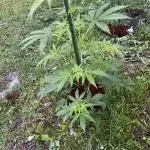
At the time of the pictures, I had minor signs of nitrogen excess. (Light peaks first at the crown of the roof and then slightly continuing to the middle section.) I then painstakingly racked my brains as to why this could be. I found that very slight dry spots had formed and therefore the root found small accumulations of nitrogen that caused its problems. But then, when I carefully homogeneously checked the moisture content in the substrate, the problem evaporated again. However, they had not shown any loss of growth rate during this time. Nevertheless, they developed as expected.
They Strawnanas had no problem with that.
In the end, I always have a hard time killing them. But I guess that's the way things go.
We live and die.
We come and go.
But it's not there yet. ;-)
Tomorrow is day 56.
Tomorrow’s updating day!
Can't wait to see their progress.
Have a good time and see you tomorrow… 🏽🕊️
🏽 ☮️🕊️

@SouthGermanGrowGirl
Volgen
Week5 here on the 31.08.2025
Gina (White Widow auto) grows very good so far.
Get every 3-4 Days about 15L Water with Nutrients (Metrop MR1+2+AminoXtreme)
Buds are building too


@Springbokke
Volgen
Всех с новым годом!
Сегодня 117 дней жизни моей девочки и ровно 8 недель как перевел ее на цвет. листья заметно пожелтели но она еще не готова, думаю ей осталось еще две недели, как и предполагалось. Сегодня я промыл ее FloraKleen - 3мл/л - 10л. Завтрашнего дня в течение двух недель(за исключением пожалуй последних нескольких дней) буду давать Ripen по 5мл/л.
shorts_status_processing


@wickedb
Volgen
i love the flowering stage .........im new to this site i love to get or give advice very open minded into new styles of growing!!!!!!!!!!.....................i kept up my lst 5th day 2nd week of flower im all caught up on my update!!!


@grow_hobby
Volgen
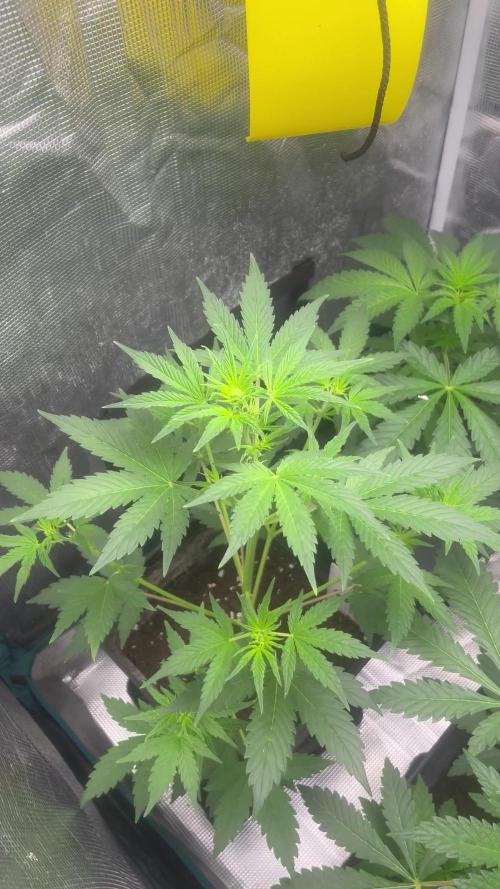
I finally found the spray on the leaves according to my ideas!
1. Produces mist with fine droplets
2. works in 360 ° position ...
3. After pressing, it sprays for another 3 seconds.
I have not found it in any gardening or growshops ... You can find these spray bottles in a hairdressing shop. Price $ 12, volume 350m!

@eldruida_lamota
Volgen
Que pasa familia, vamos con la quinta y última semana de crecimiento de estas GG4 feminizadas de MSNL.
Vamos al lío ,se trasplantaron en macetas de 7 litros definitivamente.
El ph se controla en 6.0 , la temperatura la tenemos entre 24/20 grados y la humedad ronda el 50%.
El ciclo de crecimiento puse 16h de luz, el foco está al 50% de potencia.
De momento van creciendo a buen ritmo y tienen un buen color, estaban muy bien enraizadas al realizarle el trasplante se notaba la abundancia radicular, aplique el delta 9 de manera foliar para preparar la floración próximamente.
Agradecer a todo el equipo de Agrobeta por el envío del kit gold series para esta temporada, soys unos jefes 🙏.
- os dejo por aquí un CÓDIGO: Eldruida
Descuento para la tienda de MARS HYDRO.
https://www.mars-hydro.com
Hasta aquí todo, Buenos humos 💨💨💨


@gottagrowsometime
Volgen
Welcome to my Apricot Auto Diary sponsored by Fastbuds & Xpert Nutrients, with Spider-Farmer lights from sponsored last Yr.
Days 49-56 Week 8, 2nd Fattening Week
She's bulking up nicely. Buds are swelling by the Day, armoa is super fruity. Defo lives up to its name. Hints of fuel (associated with a strong THC pheno). Sticky Fingers + Sugar Shot is making a huge difference in the aroma. Extremely frosty, Resin glands popping.
Nutrients
[ Master Bloom + Bloom Booster 1.5ML/L 550 core NPK grow + Bloom Stimulate, Ph 6.1 to 6.7 ]
[ Enzyme + Master Root 1ML/L 400 ppm PH 6.4, PH'ed to 6.8 ]
[ Sticky Fingers / Sugar Shot 1ml/L 300ppm PH 6.2 to 6.7 ]
[ Slica .8ml/L 200ppm 8.9 ph'ed to 6.7 ]
[ Water 105ppm PH 6.7 ]
700ml of each solution given weekly. Master Bloom + bloom booster 2x a week
DLI 52 1050PPF for 14hrs a Day.
Thanks to my sponsors, much appreciated for allowing to test your products
Appreciated to my viewers also. DISCOUNT CODE FROM XPERT NUTRIENTS 20% (code:ggst). Thanks for stopping by.