


Likes
Comments
Share


@Mik21
Follow
7 weeks! from what sweet seeds says now I should just wait another week or two and then I could cut it easily, but I don't know. If anyone can advise me on automatic plants I would be grateful! in summary the question is: with automatics only 5/6 weeks of flowering are needed? 🌱

Processing
Likes
30
Share


Likes
52
Share


@Ogchemst
Follow
Quick kush is called quick for a reason 👌, nice big indica leaves starting to grow and stretch pretty fast, i had to re pot one of the girls so one of them might look a bit sad but she will get better (its the salts)
Flushing and Buffering-
I am personally using Canna Coco Coir,mix with one brick of plagron coco coir(had one left).
1. Why you Should buffer your Coco. Lets get to reading! (Its Worth it for those that dont know about it)
There are cation exchange sites in coco that will interfere with nutrition until they are buffered. The cation exchange sites in coco naturally come loaded with sodium (Na) and potassium (K) cations. However, the Na and the K are only weakly held to the exchange sites. In the presence of calcium (Ca) or magnesium (Mg), the sites will release their Na or K cations and lock onto the Ca or Mg. These processes are known as “cation exchanges”.
Buffering coco is accomplished by soaking it in Ca and Mg. This allows the cation exchanges to take place prior to adding plants. Simply soak your coco in a solution of Cal/Mag water and the exchange sites will release their K and Na cations and lock onto the Ca and Mg. When the cation exchange sites bond with Ca and Mg rather than Na and K, it is “buffered”. The bonds that hold the Ca and Mg to the sites are very strong and cation exchange will largely stop. This means that all of the nutrients that you add to the water will be available to the plant at the ratios that you provide them.
2. Alot of growers Grow in Unbuffered coco coir and its a big mistake guys, I myself was a "victim"😬of unbuffered coco and it does cause alot of problems... now i am going to try and fix them!
-----GROWING IN UNBUFFERED COCO---
Many growers are unaware of the need to buffer the coco and they try to grow plants in unbuffered coco. In unbuffered coco, the cation exchange sites will strip the nutrient solution of the Ca and Mg and replace those cations with Na and K. This creates a sub-optimal Nutrient Element Ratio (NER) and renders Ca and Mg unavailable to the plant.
Failing to buffer the coco is why so many growers suffer calcium deficiencies in coco grows. Manufacturers of prepared coco products try to exploit these problems and convince growers that only their proprietary products are suitable for growing. However, it is actually very simple to properly buffer your coco yourself. This tutorial walks you through the process and provides all the information you need to turn even the cheapest brick of dehydrated coco into a superior growing medium.
I hope i Helped out someone who didnt know about this link on how to Buffer your Coco Coir is Here https://www.youtube.com/watch?v=OQi8AMMIyyA&t=18s
14/02/2019- I Decided tp raise up the amout of nutes and im giving them 1,5 ml per L so 15 ml's for 10 L / 2 Gallons of water

Likes
5
Share

@Thedibber
Follow
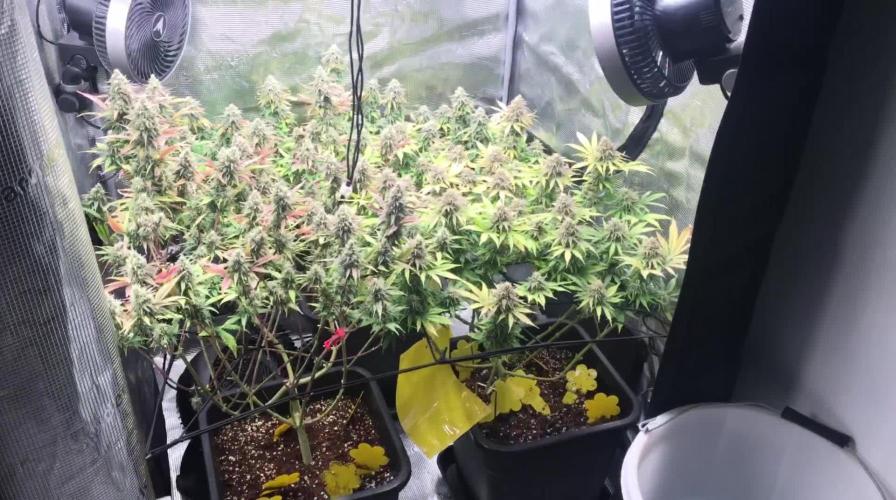
31/10/25 - Not long now until the 2x Bubba cheesecake can move into the 3x3 and flip to flower under a scrog. 2x bubba cheesecake + 1x Badazz OG cheese going into the 3x3.

Processing
Likes
49
Share


@leafy
Follow
day 95 - start of week 14 : its getting a little cold in my grow room because of winter and i dont have much heat source in there . i hope it wont affect the flowers . im gonna defoliate one last time at the end of this week and then 2-3 more weeks of light then i harverst ,we'll see when we get there :)
-day 99 : i moved her into another room where is more warmth . she will be fine now . i just flushed her because someone suggested it that she might be locked . im waiting for the soil to dry now . im wondering how much longer does she have till harvest

Likes
4
Share


@Dr_4NdY
Follow
275g dry net weight
Pics are taken directly before harvest
85% heads 15% popcorn (will be used for rosin)


Likes
3
Share


@RakonGrow
Follow
+
data online : rakongrow.lima.zone/growme-godfeather-og-f1-auto-016.html
added trichome zoom
+
Likes
150
Share


@FrenchxFarmer63
Follow
Cette semaine à était très riche en engrais naturelle et en eau !!!!
*Fumier de vache pour les différents apport qu'ajoute cet engrais au fil du temps ,
*Marc de café ,
*Purin d'ortie ,
*Peau de banane
*Cendre de bois
Arrosage tous les jours en petites quantités pour aider à assimiler tous les apports donné
Et voilà que c'est demoiselle ont pris un coup de speed pour la poussée , obligé de continuer le palissage encore à ce stade... Ça grandit , ça grandit !!
Nous sommes fin Juillet , je suis dans l'attente que les jours réduisent pour le passage en floraison naturel grasse à la nuit...
Je ne sais pas si je dois procéder à une grosse défoliation pour les feuilles du dessous sur le principe d'un "Lollipopping" , qu'en dites vous ??
Des avis ?
Des questions ?
Des choses à dire ?
C'est toujours intéressant de discuter sur les différents mode de culture !!

Likes
73
Share


@Herbz_Unkraut
Follow
i looked awesome all growcycle...i streched alot & i noticed it drank alot more then the other plants while growing...had a good yield, i´m very happy overall


Processing
Likes
35
Share


@Roberts
Follow
I do my updates on Saturday. So I started this 4 days ago. So for exact amount of days will have to minus 3. New to hydro soil so here goes nothing. Thanks again for support and followers. Same with youtube.

Likes
10
Share


@SamDo
Follow
Week 28 – Flowering Week 5
This week represents an important transition phase in the Pineapple Upside Down’s flowering cycle.
Early floral sites are clearly evolving into real buds.
Density is starting to build, and the plant is visibly shifting from initial flower formation toward true bud stacking.
This change is now easy to observe in photos, making this a critical stage not to miss.
To support this transition, PK levels were slightly increased.
The goal is not to force growth, but to ensure the plant has sufficient resources to bulk steadily and without stress.
Light intensity remains unchanged from the previous week.
PPFD has not been increased yet, as the plant is responding well and stability remains the priority.
Nutrient management and environmental consistency are the main focus this week.
pH is monitored closely and maintained within a 5.8 to 6.2 range to ensure optimal uptake during this sensitive phase.
No other major interventions were made.
The strategy remains simple: observe, maintain balance, and allow the plant to progress naturally into heavier bud development.
See you next weeek.

Processing
Likes
15
Share


@CannabisAprendiz
Follow
Hola con esta semana ya quedamos al dia con el seguimiento ya que estaba atrasado en el tiempo. Se nota una producción de resina notable en esta genética que nos ha gustado mucho por su olor y estructura de las plantas .
hemos creado un video por cada una de las 14 plantas del seguimiento, hay varias muy llamativas que están "pre-seleccionadas" para mantener a futuro, el olor que se llega a sentir es muy florar y dulce, si tienen alguna pregunta no duden en preguntar saludos.
Hello with this week we are already up to date with the follow-up since I was late in time. There is a remarkable resin production in this genetics that we liked a lot for its smell and structure of plants.
We have created a video for each of the 14 floors of the follow-up, there are several very striking that are "pre-selected" to keep in the future, the smell you get to feel is very flowery and sweet, if you have any questions do not hesitate to Ask greetings.
Likes
16
Share

@CannabisAprendiz
Follow
Hola gente aqui seguimos con el seguimiento de estas MelónBall. Fueron transplantadas a maceteros de 3 litros. Ademas ocupamos sustrato ligh mix de Biobizz el cual fue fertilizado por los productos de Yeskaya.cl productos nacionales de chile🇨🇱.
Agregamos Kodamaque nos ayuda con la solubilizacion de fosforo y contiene fitohormonas promotoras del crecimiento.
Yeskashi nos aporta bokashi, humus y zeolitas contiene micro y macro nutrientes.
Phoskaya contiene fosfito, silicio, calcio y fosforo.
También comenzaremos a agregar bacterias y tricodermas del colectivo_científico.

Likes
13
Share


@MotasKush
Follow
14 days of flowering, the last 4 days I have a problem with lower temperature overnight and day .. cold weather, I have a house without heating, and I would say that it blooms more slowly.


Likes
13
Share

@Suemchen
Follow
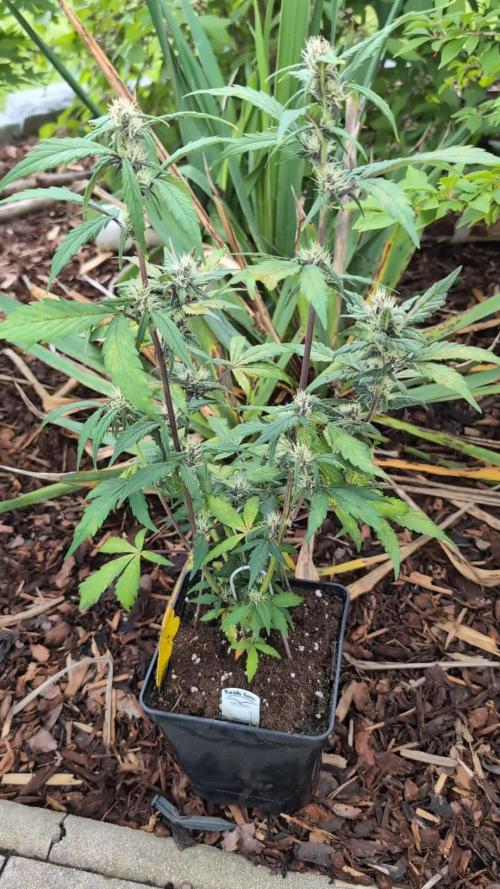
Outside during the day INSIDE during the night
Day 44-54: On Vacation, automatic watering with Rain water.
Day 54: Automatic watering system Watered way to much ?. Better than Last year though 🤣. She streched quit a Bit. Letting the soil dry out and then I'll see how she took IT.🙏
Day 55: looking better 🤗, needs more Magnesium and the soil is still very wet. Needs to dry out more👌🏻
Day 56: looking good 🤗 almost dry🤗
Likes
17
Share


@420DeepGrow
Follow
Gracias al equipo de FastBuds y XpertNutrients sin ellos esto no sería posible
💐🍁 Ztrawberriez:
Ganadora de la AAC 2024, con hasta un 25 % de THC, la Ztrawberriez Auto surge del cruce de dos variedades californianas conocidas por sus extraordinarios perfiles de terpenos y su potencia. Esta variedad no solo produce hasta 600 g/m² de hermosos cogollos duros como rocas en 9-10 semanas, sino que también llevará a tus papilas gustativas en un viaje en montaña rusa por toda la gama de terpenos dulces y afrutados
🚀 Consigue aqui tus semillas:
https://2fast4buds.com/es/seeds/ztrawberriez-auto#description
⛽ XpertNutrients: es una empresa especializada en la producción y comercialización de fertilizantes líquidos 🍶y sustratos🐛, que garantizan los mejores resultados y cosechas de la más alta calidad. A través de una cuidadosa selección de materias primas y un proceso de producción avanzado, sus productos son sinónimo de resultados confiables.
🛒 Consigue aqui tus fertilizantes:
https://xpertnutrients.com/es/sobre-nosotros/#:~:text=Xpert%20Nutrients%20es%20una%20empresa,de%20la%20m%C3%A1s%20alta%20calidad.
📆 Semana 4:
*Las fotos se hacen 1 dia antes para poder cuadrar diarios de guerrilla.
Buena semana en la cual se ha trasladado a su lugar definitivo y se ha puesto directamente en tierra fértil ♥️🚀, espero que esta tirada sea de provecho, pero parece que se va hacer hermosa .
Aplicación de nutrientes 1/3 segun la dosis recomendada por el fabricante.




Likes
20
Share


@Ultraviolet
Follow
Not particularly growing for speed or any dedicated reason this time round, just adding water and a abundande of positivity, gotta admit I do like the autoseed logo. Off we go again into the magical forest.
(Arthrospira platensis) cultivated in high-alkaline, mineral-rich water in Kailua-Kona, Hawaii. It is renowned for having a higher nutrient content, including more carotenoids and essential fats, compared to other spirulina brands. It is frequently cited as a "complete food" due to its dense concentration of proteins, vitamins, minerals, and pigments.
The nutritional profile of standard dried Spirulina platensis biomass. 3kg of spirulina powder has an approximate NPK ratio of 10-2-1 (or 10% Nitrogen, 2% Phosphorus, and 1% Potassium).
Here is the breakdown of the nutrient content for 3kg of powder:
Nitrogen (N): ~300g (10% of total mass)
Phosphorus (P): ~60g (roughly 2% of total mass)
Potassium (K): ~30g (roughly 1% of total mass)
3kg of spirulina powder is more than enough nitrogen for 4 cannabis plants in a 100-gallon pot—in fact, it is likely excessive and could cause severe nutrient burn or toxicity if not properly managed. Spirulina has a very high protein content (46% to 63% dry weight), which translates to a significant nitrogen source. It is often described as a 5-1-1 NPK fertilizer.
3kg (3000g) of powder in 100 gallons means 30g per gallon. General organic recommendations for potent amendments (like frass) are often around 1–3 tablespoons per gallon. 30g of powder is roughly 2-3 tablespoons, making this a very high-strength application rate if added all at once. Balance this with calcium/magnesium, and organic nutrient delivery in soil growing can lead to deficiencies in these nutrients.
Not all of that 100 gallon is used, so figuring out precise measurements was ballpark, but there is about 10kg of engineered biochar in that pot. Mostly in the top half. Ideally, I'd have 25kg in a full active 100-gallon, but......... don't mess with something that is not broken. Roots do not utilize the entire 100 gallons. This has been a couple of years of trial and error, mostly error. The amount of cations you can add in grams depends entirely on the specific cation exchange capacity (CEC) of your biochar and the type of cation being added. Biochar CEC values vary widely, typically ranging from 4 to over 300cmolc/kg. Multiple Biochars in use, ranging upwards of 100cmolc/km.
Different cations have different atomic weights
Potassium K+ 39.1g/mol.
Calcium Ca2+ 40.1g/mol.
Magnesium Mg2+ 24.3g/mol.
Nitrogen NH4+ 18.04g/mol.
You get more nitrogen bang for your buck. It all depends on the CEC of the biochar you use, but brrrrrrrrrr roughly I'm looking at 500-600 grams worth of elemental cation exchange capacity, give or take. That's just for the biochar alone. Elemental cation exchange capacity refers to the ability of materials—such as soil, minerals, and biochar to adsorb, hold, and release positively charged ions Ca2+, Mg2+, K+, Na+, Al3+, and Zn2+. This capacity is a critical measure of nutrient availability in soil and energy density in electrochemical systems.
Added calmag 2:1 to complement spirulina.
Calcium (Ca): Approximately 150g - 300g of elemental calcium.
Magnesium (Mg): Approximately 75g - 150g of elemental magnesium.
So long as pH stays in 6.3 to 6.7 ish, the plant will unlock hydrogen. Plants will be able to cycle CEC for their own needs. Hydrogen ion pumping (proton pumping) is a fundamental mechanism used by plant roots to facilitate the cycling of nutrients within a medium's Cation Exchange Capacity (CEC), directly increasing nutrient availability. A growing medium's Cation Exchange Capacity (CEC) does not contribute directly to Electrical Conductivity (EC). CEC represents potential nutrient storage, while EC represents active nutrients in the water/soil solution. A medium with a high CEC can hold many nutrients, but if there is no water present, the EC will be low.
98% of plant nutrient uptake comes directly from the soil solution.
2% of nutrient uptake is directly from soil particles.
Nutrients held on exchange sites (CEC) are not directly measured by EC until they are released into the soil solution through exchange with other ions (e.g., hydrogen ions from roots or fertilizer).
Plants source the H+ ions (protons) used in cation exchange primarily by exuding carbon sugars into the rhizosphere, then microorganisms perform root respiration, which reacts with soil water to form carbonic acid H2CO3 that dissociates into H+ and bicarbonate. Roots also actively pump out H+ ions directly to acidify the rhizosphere, plants trade hydrogen produced through metabolism for essential nutrients held by the soil.
In plant cells, the H+ (protons) used in proton pumping across the plasma membrane come primarily from the cytoplasm (cytosol). The protons are derived from internal cellular sources, including metabolic processes that release H+, and the regulation of intracellular pH homeostasis.
Distilled water is highly useful in managing the electrical conductivity (EC) of a growing medium by allowing for precise control over nutrient concentration and assisting in the mobilization of nutrients from the cation exchange capacity (CEC) into the active, plant-available nutrient solution.
Just add water & positive energy.
Potential hydrogen. pH. + - , potential charge balance for hydrogen.
So long as there is adequate oxygen in the soil and air and water moves at a decent interval, its practically impossible for the pH to skew in a soil that is taking in oxygen and releasing CO2 and nitrogen, I say practically, but meh, even with plenty of oxygen, the process of converting ammonium NH4+ to nitrate NO3- by bacteria releases hydrogen ions H+, which directly causes acidification (lowering pH). While water movement is necessary, consistent water moving through the soil can leach away basic cations Ca2+, Mg2+, K+, Na+, leaving behind acidic hydrogen and aluminum ions, causing pH to drop, especially in humid regions. High levels of CO2 in the soil (from intense respiration) dissolve in soil water to create carbonic acid, H2CO3, which lowers the pH. (barometric pumping removes that possibility) The pH in a cannabis cultivation environment, particularly in hydroponic or soilless setups, will often naturally drift towards acidic (lower pH) over time. Understand how to know when to lime the pH back up. Complex but critical. Once I understood this it helped ease the pain of understanding pH.
Base saturation directly reflects the percentage of CEC occupied by base cations. Generally, as base saturation increases, soil pH increases because fewer acidic cations, H+ and Al3,+ are present on the soil colloid surfaces.
At a pH of 7 or higher, the soil colloids are saturated with base cations, resulting in a base saturation of 90+%.
While many sources include Sodium Na+ as a base cation, some calculations focused specifically on plant nutrients (like in some nutrient management contexts) may focus solely on the "Big 3": Ca2+, Mg2+, and K+. However, in soil science and CEC (Cation Exchange Capacity) measurements, sodium is usually included in the definition of total base cations, making it the "Big 4" base cations.
At a pH around 5.5, soils often have a 45–55% base saturation, while a soil with a pH between 6.5 and 6.8 generally has an 80–90% base saturation.
Base saturation is considered a reliable, albeit complex, indicator of soil fertility and the degree of soil weathering, acting as a crucial metric in soil classification and management.
Once you take full control of the pH, so long as there is oxygen, and one keeps tabs on base saturation levels. Its near impossible for anything to go wrong. All you are essentially doing is adding water and waiting for any sign of deficiency. Not so much growing as eliminating the possibilities of things going sideways. Can't over or under water, can't skew pH, can't go anaerobic. Everything runs in optimal cycles, watering every 2 to 3 days or as required, depending on the rate of combined ET. A little warmer, a little drier, but never short on water. All the nutrients are already there in the medium, we still focus on the water, just not adding salts, but to mobilize nutrients held in the Cation Exchange Capacity (CEC) and move them into the active soil solution for plant uptake, the best supplements to add to water are fulvic acid, humic acid, or seaweed/kelp extract. Liquid solutions with high concentrations of essential trace elements. Distilled water has no alkalinity or minerals to help buffer or release nutrients. Adding these supplements turns the "empty" water into an active agent that forces nutrients off the CEC colloids into the solution for plant uptake.
When to water? When Electrical Conductivity of soil gets low. No water, no conductivity.

Likes
27
Share


@m0use
Follow
SPONSORED DIARY===SPONSORED DIARY===SPONSORED DIARY
This has been explosive in growth, both plants have put on some impressive growth. I feel the light being only 100w has contributed to some of the extra stretching between the nodes and this would not have happened under brighter settings.
Added in some bokashi grain to the medium to help breakdown anything that maybe unavailable to the plants. everything is on course for success.
It should be time for a top dressing of Acti-Sol in the next week., might use up whats left of my Gaia Green U•CANN line up as well.
SPONSORED DIARY===SPONSORED DIARY===SPONSORED DIARY
Big shout out to @SpiderFarmer for supplying the 2x2x5 Grow tent and The SF1000 100w LED light.
I will be uploading all relevant photos of the products in the next week when they arrive, maybe do a little unboxing video. Who knows.
A 2nd big shout out to Dr.Seeds for supplying the 3x5pac of seeds I will only be featuring two of the three strains in two separate diaries.
You the users will get to decide what ones I grow. I have setup a Grow Question on each diary to vote for your strain of choice for that diary.
https://growdiaries.com/grow-questions/47600-drseeds-1-vote-what-i-grow "Diary #1"
https://growdiaries.com/grow-questions/47600-drseeds-1-vote-what-i-grow "Diary #2"
Cast your vote for each diary.
Thought I would add in the relevant links if you wanted to read up on any of the products that will be officially featured in this grow.
https://www.spider-farmer.com/
https://growdiaries.com/grow-lights/spider-farmer (+) https://www.spider-farmer.com/products/sf-1000-led-grow-light/
https://growdiaries.com/grow-tents/spider-farmer (+) https://www.spider-farmer.com/products/sf-2-x2-indoor-grow-tent-hydroponic-home-plant-reflective-aluminum-oxford-cloth/
https://drseeds.net/
https://growdiaries.com/seedbank/dr-seeds
(+)
https://drseeds.net/product/granddaddy-purple-autoflowering-cannabis-seeds/ (+) https://growdiaries.com/seedbank/dr-seeds/granddaddy-purple [Photoperiod not Autoflowering]
https://drseeds.net/product/60-day-wonder-autoflowering-cannabis-seeds/ (+) https://growdiaries.com/seedbank/dr-seeds/60-day-wonder-autoflowering

Likes
5
Share


@Stickybudz420
Follow
New addition to the family donated kindly by @dropseedsnotbombs, just managed to squeeze this girl in hopefully she takes a liking to her new habitat an 19hrs light schedule 😃🌲🙏
